Haver Analytics
Haver Analytics

Economy in Brief: 2026

  • The U.K. distributive trades survey in retaliating for the second quarter of 2026 shows some improvement in the business situation expected over the next six months as that reading rose to -15 from -34 in the first quarter, putting it only slightly weaker than its third-quarter 2025 reading of -10. Still, it is a very weak reading.

    The employment reading also improved in the second quarter to -30 from -40 in the first quarter. That reading, however, is still lower than its -19 reading in the fourth quarter and its -14 reading on the third quarters of 2025.

    Capital spending plans on the quarter for the year ahead registered -52 in the second quarter, compared to -46 in the first quarter; this reading has steadily deteriorated.

    Imports have improved slightly in the second quarter, with the reading at 7 compared to 10 in the first quarter and 13 in the fourth quarter.

    The expected selling price compared to what it registered a year ago is at 42, compared to 40 in the first quarter; they compared to even stronger values at the end of last year. Expected employment in the second quarter fell sharply to -44 from -23 in the first quarter, and this reading has steadily and strongly deteriorated, particularly in the second quarter itself.

    Comparing the trailing 4-quarter to 8-quarter averages shows clear deterioration across the board, except for prices. That clarifies the overall story and trend for retailing.

    The retail rankings are uniformly weak, with the exception that the selling price has a 43.6 percentile standing, which is still below its historic median ranking. However, the standings for imports, capital spending, and employment are all below the 10th percentile, with the business situation coming in an 11.4 percentile standing. The expected selling price has a 63.6 percentile standing, well above its historic median (the median occurs at a ranking of 50%). Meanwhile, employment, looking ahead, has only a 2.9 percentile standing, clearly not much of a vote of confidence in the outlook for the economy.

    The wholesaling portion of the distributive trades report also registers weak standings, but they are higher than those seen in retailing, with the business situation at an 18.6 percentile standing, imports at a 25.7 percentile standing, and employment at a 17.1 percentile standing, while capital spending plans are at a very weak 5.7 percentile standing. All these metrics are generally stronger than for retailing; they're still poor readings and generally below their respective medians. The only exception is the selling price with a 77.9 percentile standing, which is only a vote of confidence for inflation. The expected selling price compared to a year ago has a 44.3 percentile standing, while employment expectations compared to a year ago are at a 35-percentile standing.

    Similarly, in wholesaling as for retailing, the comparison of 4-quarter to 8-quarter averages shows across the board deterioration, except for prices. The distributive trades sector for retailing as well as for wholesaling is fading.

    Summing up The United Kingdom distributive trades survey is telling us clearly that it is a weak environment for the distributive trades. The standings of the current readings are weak, and the outlook and forward-looking portions of the survey are weak as well. The economy continues to fight inflation that has been over the top for some time, and inflation is still above target, keeping the BOE inflation-vigilant. Global conditions are mixed with the cutoff of goods shipments through the Straits of Hormuz impacting economies globally. The second quarter survey is a depressing statement on the state of the outlook for the U.K. economy.

  • In this week’s Letter, we examine the ongoing Middle East situation through another lens — namely, the fiscal costs it has imposed on Asian economies and the strains that are already beginning to emerge. While the recent surge in bond yields has largely been attributed to inflation-related concerns, yield spikes in some Asian economies have also arguably been driven by fiscal concerns, as governments step up bond issuance to finance support measures (chart 1).

    In India, cracks are beginning to show in its fuel subsidy programme, with fuel prices now being raised as previously subsidised rates appear increasingly unsustainable, underscoring the inherently finite nature of such measures (chart 2). While Indonesia continues to hold the line by keeping Pertalite fuel prices unchanged, hikes in more premium fuel grades, coupled with the government’s broader slate of spending initiatives, have left investors increasingly on edge over the country’s fiscal sustainability (chart 3). In Japan, the cabinet is reportedly seeking to put together an additional budget to help cushion inflationary pressures stemming from the Middle East conflict. Although the Prime Minister has sought to allay concerns over additional bond issuance, broader fiscal concerns remain (chart 4).

    Against this backdrop of fiscal strain , inflation risks, and geopolitical instability, it is also important to keep in mind the growth-supportive factors still in place across parts of Asia. In particular, the ongoing AI upcycle continues to support exports in several regional economies (chart 5). Taking these crosscurrents into account, we then turn to the week ahead, where central banks will continue to navigate the trade-off between growth and inflation amid a heavy slate of upcoming data releases, particularly across East Asia (chart 6).

    Bond markets Global yields have remained elevated, although some pullback has been seen in recent days (chart 1). Inflation-related concerns arising from elevated oil prices linked to the Middle East conflict remain front and centre and are still widely cited as the main driver of the recent spike in nominal yields. However, other factors are also at play, particularly in certain economies. Contributing to the rise in yields in some economies are fiscal concerns. Regarding the US-Iran situation, hopes for a peace deal have once again been raised in recent days, only to be subsequently dampened, underscoring how little concrete progress has ultimately been made. In addition, fresh US strikes on Iranian missile launch sites and boats highlight the continued fragility of the situation. On balance, the world remains stuck in a state of limbo, holding its breath for a positive peace outcome — particularly the reopening of the Strait of Hormuz — while the economic effects of its closure continue to weigh on the global economy.

  • GfK consumer climate for Germany improves slightly to -29.8 in June from -33.1 in May. In terms of monthly point changes, it's a reasonable improvement month-to-month however this is now the 10th weakest monthly consumer climate reading over the last 25 years and so it's an extremely weak reading. Last month was an even weaker reading, but that was the 7th weakest reading all time for this index. All the other even weaker readings were during Covid. This is a very weak report, it ranks 286th out of 296 observations.

    A very weak month despite some technical improvement GfK projects a climate figure for June, however, it's underlying data for components are up to date through May. As of May, economic expectations improved slightly to -11.2 from -13.7. Income expectations improved a lot more to -13.0 from -24.4. However, that -24.4 figure was a collapse from -6.3 the month before, so that the rebound in May still leaves a significant net decline over the last two months. We should not be too focused on the month-to-month improvement. Income expectation’s April reading was likely a shock reaction to global events in the Middle East. The propensity to buy index improved to -13.2 in May from -14.4 but once again it's a case of there still being a 2-month decline on the books since the March reading was -10.9 for the propensity to buy. The even weaker propensity to buy readings historically were all in the wake of Covid.

    Very weak rank standing On the whole it's another week reading from the GfK survey. This is further underscored by the rank- or the count-percentile standing of the headline which stands in its lower 3.1 percentile. Economic expectations are in their lower 19th-percentile, income expectations are in their lower 13th-percentile and the propensity to buy is in its lower 23.9-percentile. All of these are rankings that are infrequently weaker than their readings in May.

    Select European comparisons As a comparison I include the most up-to-date readings for Italy, France, and the UK on confidence. Italy and France have up-to-date readings through April; the UK has an up-to-date reading through May. The three countries all show declines in confidence from April to May; the UK shows a slight improvement from May to June. If we look at the most current readings, the percentile standing for Italy is a 50-percentile standing, which implies that the current reading is right on top of its median. For France it's a 5.8 percentile standing, marking the reading as weaker less than 6% of the time. For the UK, the May standing is a 26.5 percentile standing, just above the lower quartile of its historic queue of data.

    Wrap up There was nothing reassuring in these data. The economies are struggling as we saw in the S&P PMI data from yesterday from the early reporters of PMI statistics. Of course, the inflation data are uniformly poor globally, so it remains a difficult time and the consumers are feeling a good deal of pressure from inflation and a certain amount of economic uncertainty.

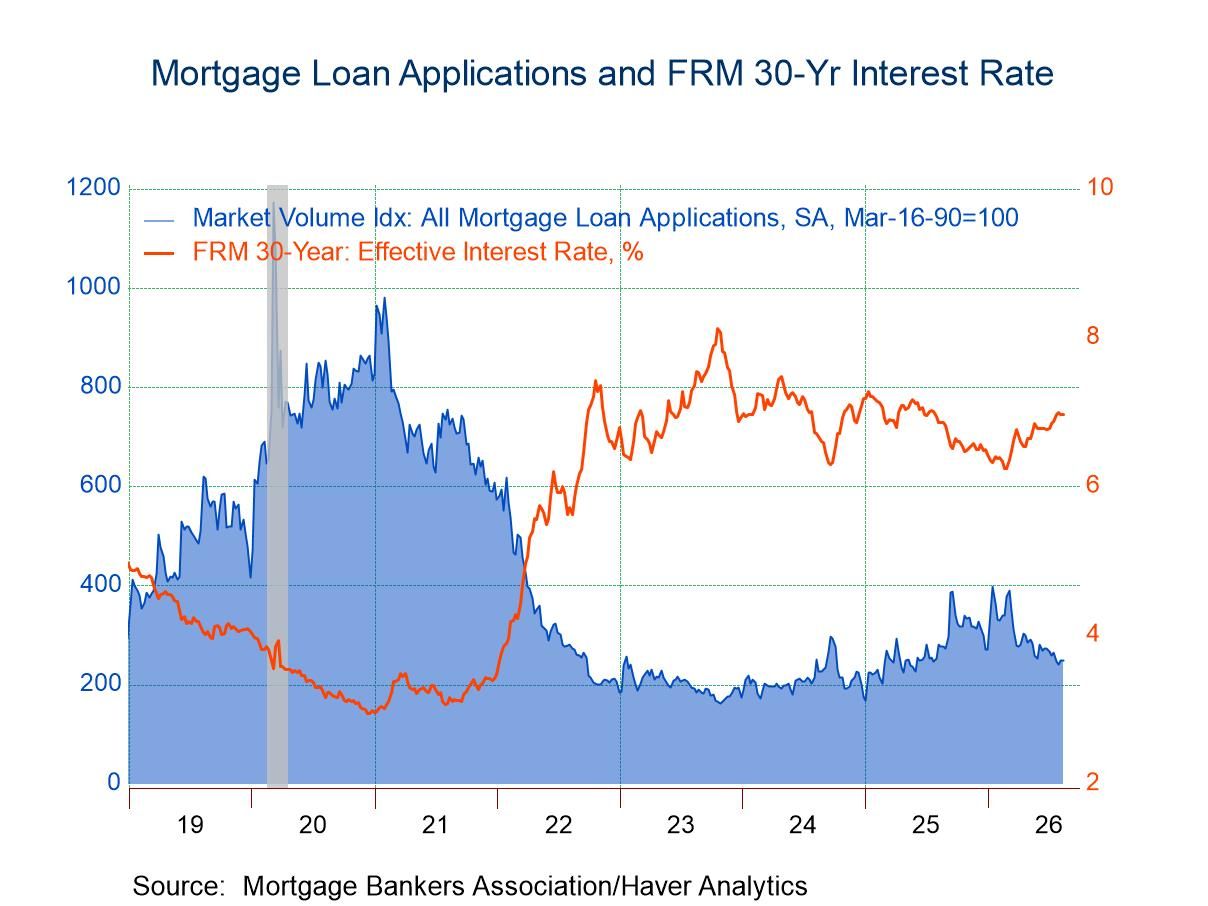
    • March & April brought the best two-month performance since late 2023.
    • Multi-family activity has led the advance; single-family activity lags.
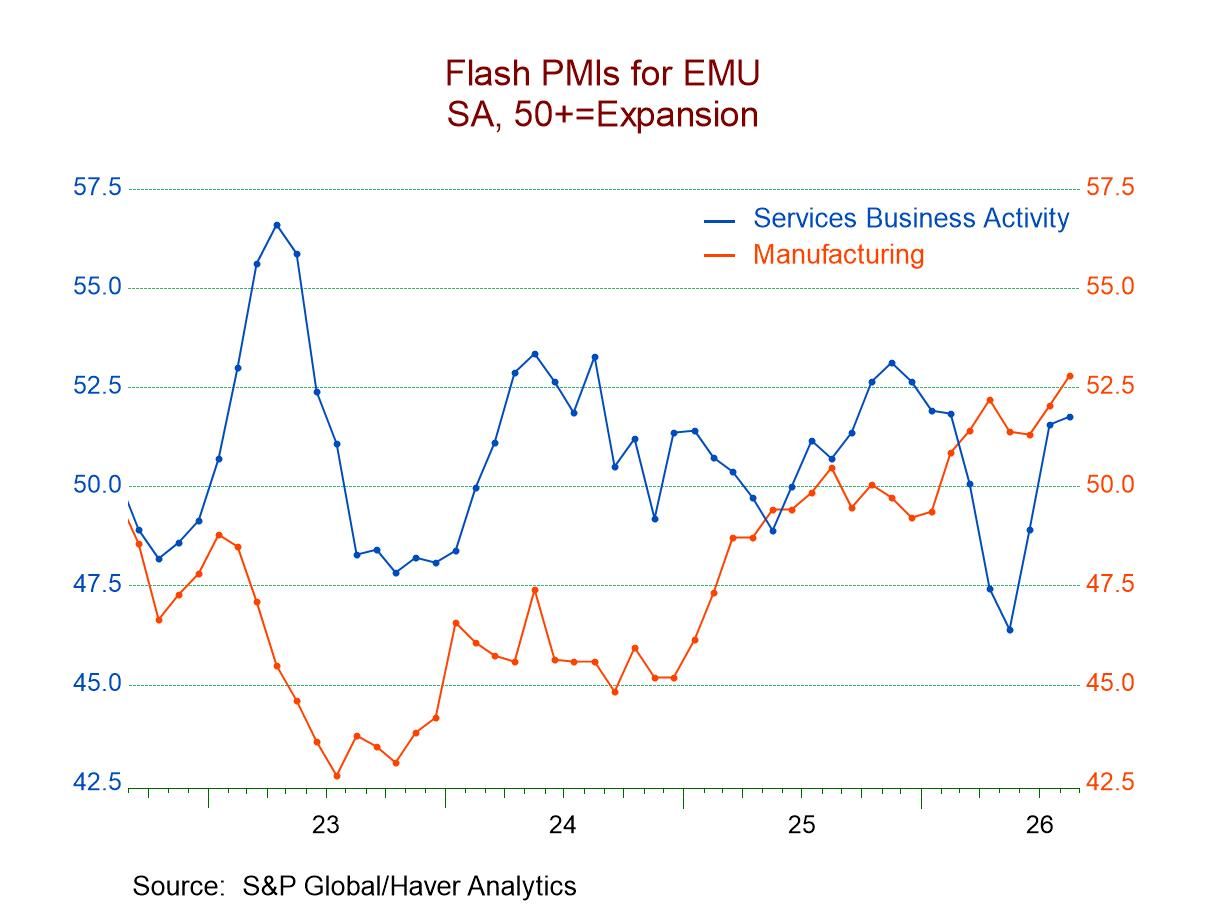
  • You may recognize the excerpted headline quote as "borrowing" from US Admiral David Farragut. It is a famous quote from a US Civil war battle in which he charged ahead in his ship regardless of the risk. This month the global manufacturing PMIs themselves are charging ahead regardless of the rise of inflation, the war in Ukraine, the war in Iran, the closure or impedance in the strait of Hormuz, and the mucking up of oil and nonoil supply lines. Full speed ahead!

    Trend… The chart shows an ongoing recovery in manufacturing. It also shows that conditions are only ‘better’ and not ‘strong.’ Yet when we rank these individual PMIs against their historic results back to January 2022, the median rank across these 18 reporters is 90.8-percent, signaling that they have been higher less than 10% of the time back to 2022. Of course, 2022-2023 represented low points for manufacturing after Covid. There was a strong recovery from Covid and then the sucker-punch from the invasion of Ukraine by Russia. Nonetheless on that timeline recovery is still in progress and – so far- not even the Middle East war and other geopolitical turmoil, including a real donnybrook within NATO, has sidetracked it despite the impact on oil prices. That may not last, but it is the current situation.

    A test for central banks With inflation rising central banks are being put to the test. They failed the post Covid test and waited too long to hike rates. We did get recovery but inflation, too. Will they do that again? Or will they hike rates sooner? Will they try not to make the same mistake and make, instead, a new mistake by getting too tight too soon? Markets simply do not know. But in the US and UK there are five years of missing monetary inflation targets and in other key countries the inflation targets also have been broadly missed even if headline inflation recently had dipped into the target range in the last few months or so. Central banks are facing a challenge after their last challenge was not met with success and after a relatively long period – a solid legacy- of missing on the promises they made to the public on inflation.

    Solid PMI trends: The sequential, as well as the current, monthly data show how widespread change has been tilted in a positive direction. While conditions are broadly better, the current month’s median reading is only at a PMI value 52.4. So, manufacturing conditions are only slightly above breakeven (a PMI of 50) but they have been weak for so long that this is an exceptionally strong reading compared to the last four and half years of results.

    Some examples: The weak manufacturing readings on the month by ranking are for Turkey, Russia, India, and Indonesia. However, these are own-PMI comparisons and India is one of the strongest readings in April on a cross-section basis (Compared to other countries in April, rather than to its own history) having the third strongest manufacturing reading in April. Malaysia, South Korea. Taiwan, and Japan each have the strongest readings (or nearly so) since January of 2022; as a result, Taiwan and Japan also rank one and two among 19-reporter readings in April. South Korea ranks sixth, But Malaysia has been so weak it still ranks only 11th despite a 99.2% high-low standing.

    In Sum: The bottom line is that recovery has not been derailed. Yet… But this is only an April report. And, given time, this rebound could be untracked. It is only a rebound from the lows. So, the expansion is still at risk even with global labor markets still tight based on unemployment readings. Economic growth is a slippery slope; the trend is only your friend until it turns on you.

  • Ongoing geopolitical tensions in the Middle East and the associated surge in energy prices have pushed inflation and bond market concerns back to the forefront of global financial markets. Investors are increasingly worried that central banks may now face even greater difficulty in bringing inflation fully under control, particularly in economies where underlying price pressures had already remained sticky prior to the latest energy shock. Recent upside surprises in US labour market and inflation data have already contributed to higher Treasury yields and a broader global backup in short-term government bond yields across the major economies (charts 1 and 2). Yet the picture is not entirely one-sided. Labour’s share of US national income remains historically weak, suggesting limited underlying wage bargaining power and helping explain why broader inflation persistence could ultimately remain contained (chart 3). Meanwhile, oil prices have remained elevated despite some moderation in broader geopolitical risk indicators, reflecting persistent supply-side disruption and ongoing stress surrounding key global energy and shipping routes (chart 4). Even so, recent core inflation data from economies including the UK, Canada and Austria suggest that pass-through from higher energy costs into broader underlying inflation has so far remained relatively limited (chart 5). At the same time, financial markets continue to be supported by an extraordinary AI-driven investment boom, with technology firms engaged in an unprecedented surge in spending on data centres, semiconductors and energy infrastructure (chart 6). Increasingly, the global economy appears caught between two powerful and competing forces: renewed supply-side inflation risks on one side and a historic wave of AI-driven technological investment on the other.

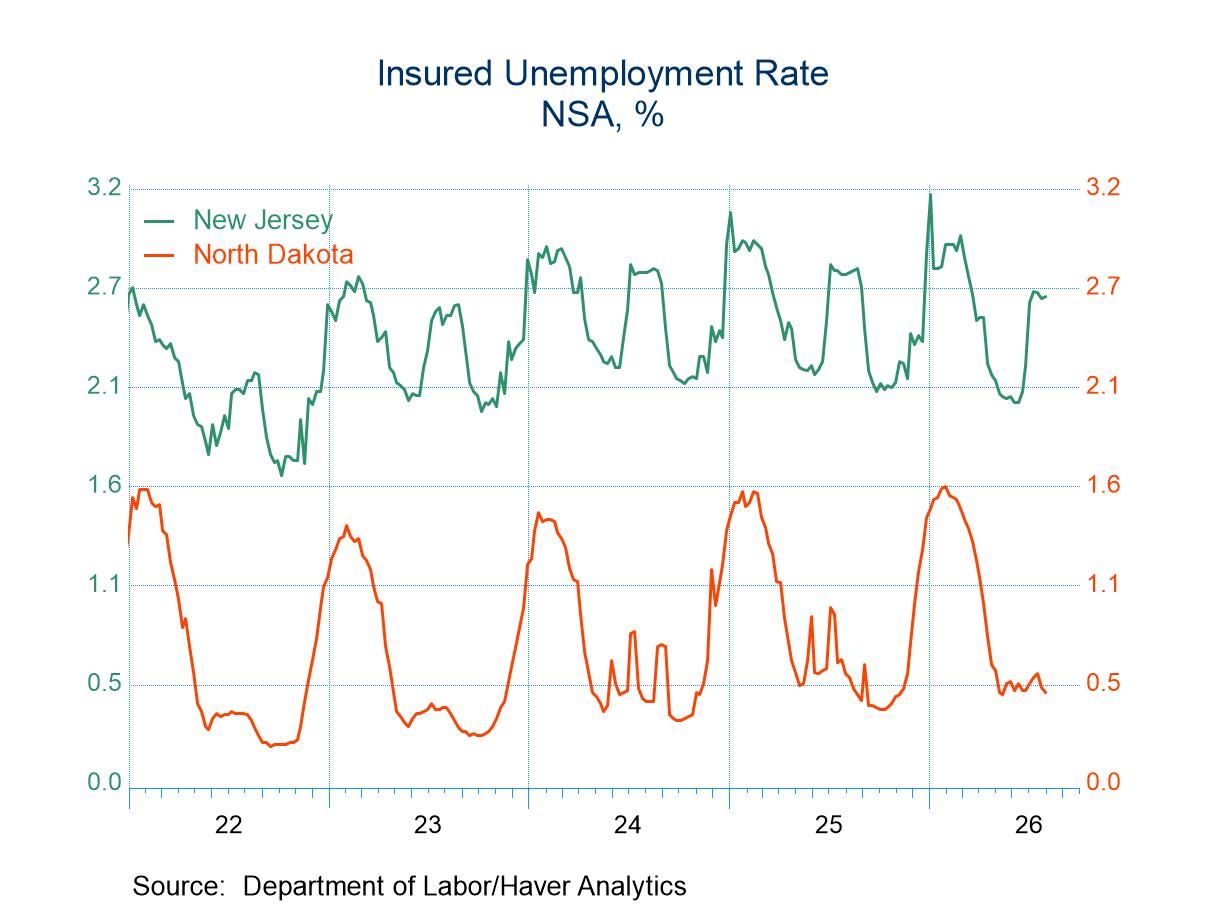
    • New claims declined by 3,000 to 209,000 in the week ending May 16.
    • Continuing claims rose by 6,000 to 1.782 million.
    • The insured unemployment rate was unchanged at 1.2% in the week of May 9.
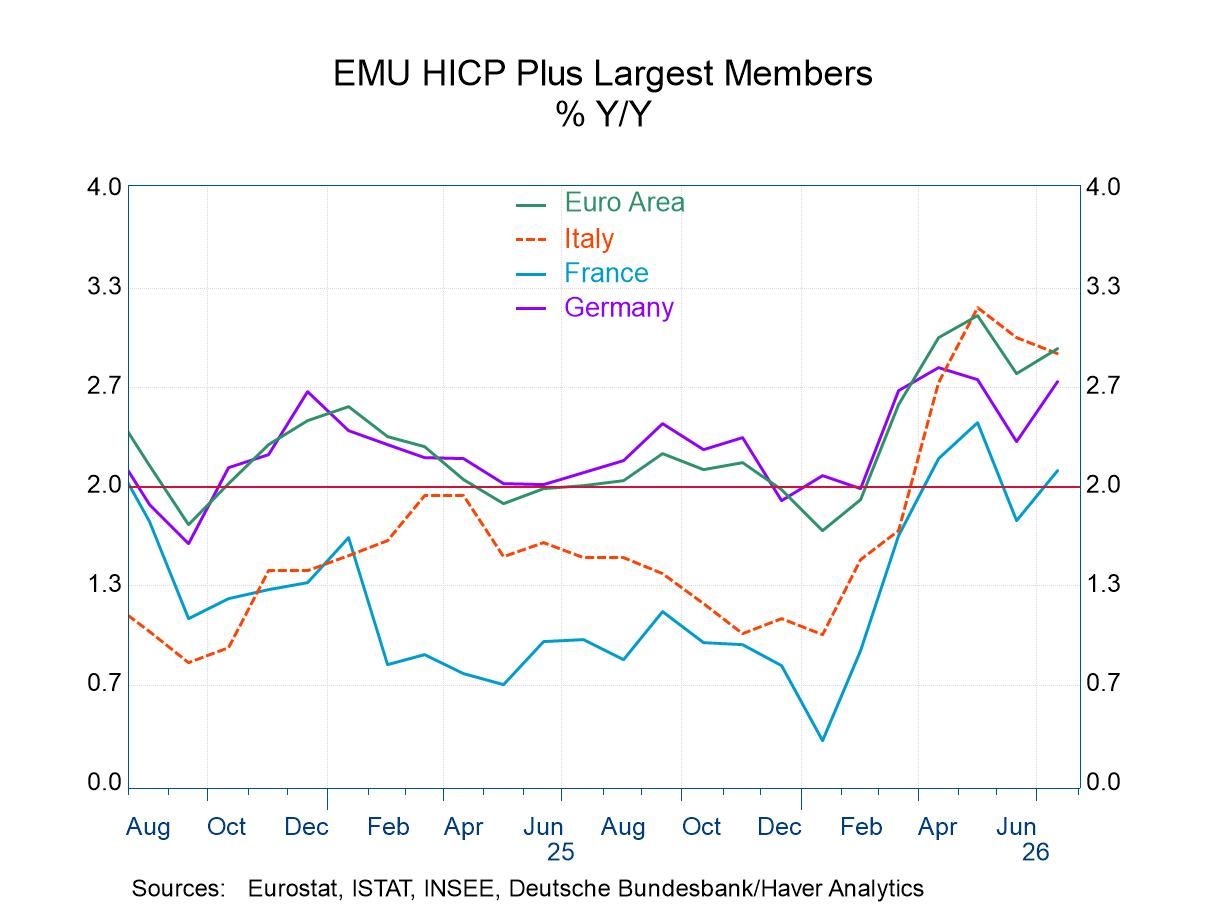
  • CPI inflation in the UK eased sharply in April with the headline making no change at all and the core rising by only 0.1%. The headline is a marked departures from March when the UK CPI rose by 0.4% as the core put in another good month, rising 0.1%. Sequentially, UK inflation as measured by the CPIH has been relatively stable with a 3% growth rate over 12 months, a 3% annual rate over three-months, and a gain of 2.9% annualized over six-months; it's about as steady as you can get. The core (CPH excluding energy, food, alcohol, and tobacco) rises 2.9% over 12 months, eases to a 2.7% annual rate over six-months, then rises at a 2% annual rate over three-months.

    Low inflation amid a global surge in oil prices The core is showing significant temperance and sequential improvement. Meanwhile, globally oil prices are flaring sharply, and most countries are seeing inflation rates rise. An energy cap in the UK is holding energy costs down and helping to keep the headline rate of inflation low. However, the cap can only work its magic for so long, eventually persisting strength in oil prices are going to show through into the headline index.

    Acceleration tendencies abate In April, 50% of the categories of the CPI H showed acceleration compared to March; in March only 41% had accelerated compared to February; in February only 41% had accelerated compared to January. On a broad basis, inflation acceleration has been substantially neutralized or controlled. Sequential calculations show that over three-months acceleration has occurred in 50% of the categories, over six-months and 12-months, however, acceleration has occurred in only 33% of the categories, indicating that there has been a relatively long-lived environment of inflation temperance.

    Still Too high However, inflation in the UK remains relatively high. The HICP measure, which is comparable to the measures used on the continent by the European Central Bank, has a 69th-percentile standing when ranked on data back to 2000. The CPIH has a 75.1-percentile standing and the CPIH-core has an 81.5 percentile standing. These are based on year-over-year percent changes and the two inflation gauges.

    Inflation rankings tell us that inflation in the UK is still relatively high compared to how it has performed over the last 25 years. However, what's most important is inflation relative to the target of 2%. At 3% the inflation rate is too high and at 2.9% the core inflation rate is too-high as well. However, we see the shorter-term inflation rates particularly for the core have come down. The core rate over three-months has even reached the 2% mark, which is both encouraging and surprising. The UK economy has been performing poorly. The Bank of England will certainly be making its next monetary policy decision based on the performance of inflation with some assessment and how the trend is faring as well as with reference to economic performance which has been marginal. We will have to see how the BOE looks at the effect of the energy cap. At the same time there's a great deal of political turmoil in the UK to pair with difficult global geopolitical conditions