

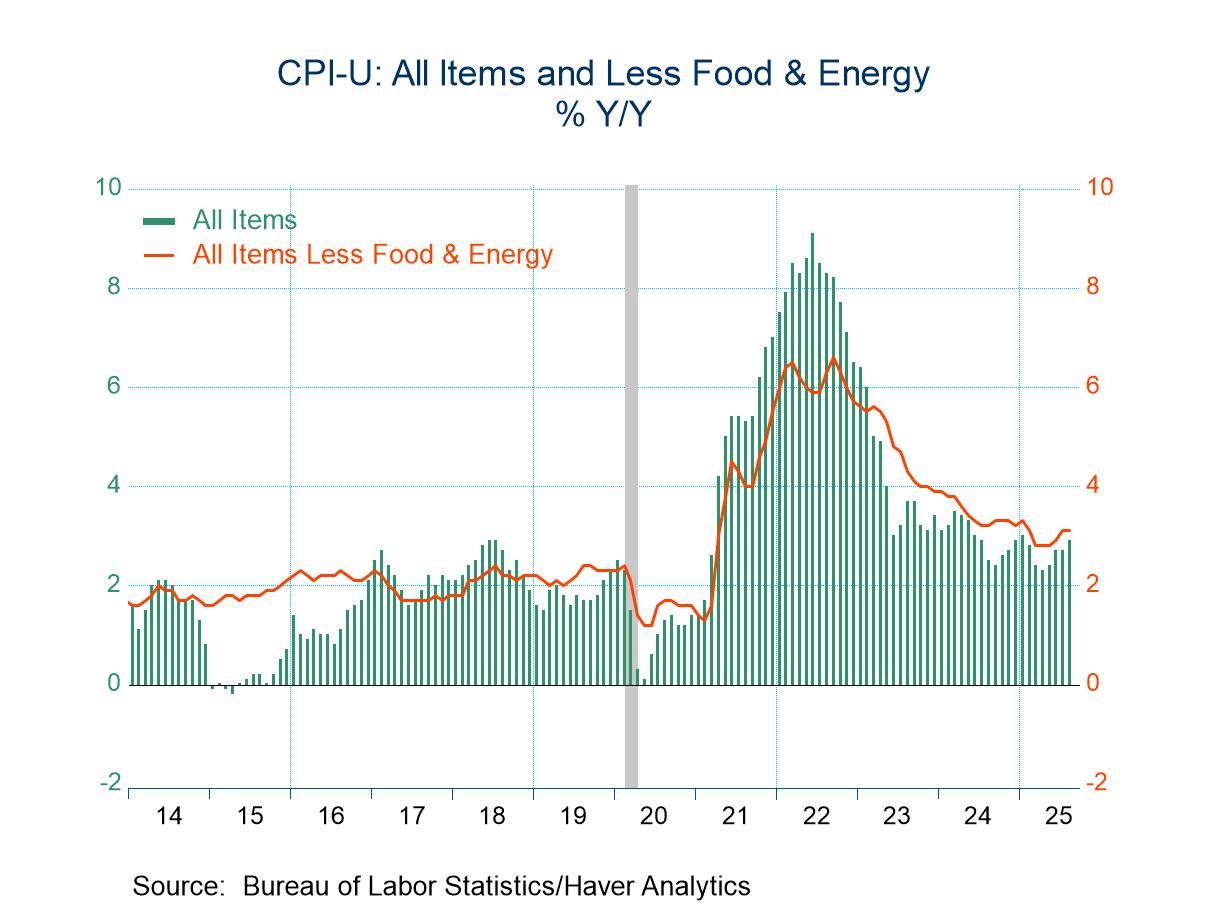
- Energy & food prices strengthen.
- Core inflation steadies.
- Core goods gain increases but core services inflation eases.
 USA| Sep 11 2025
U.S. Consumer Price Inflation Firms in August
by:Tom Moeller
|in:Economy in Brief
 USA| Sep 11 2025
U.S. Federal Budget Deficit Deepens in August
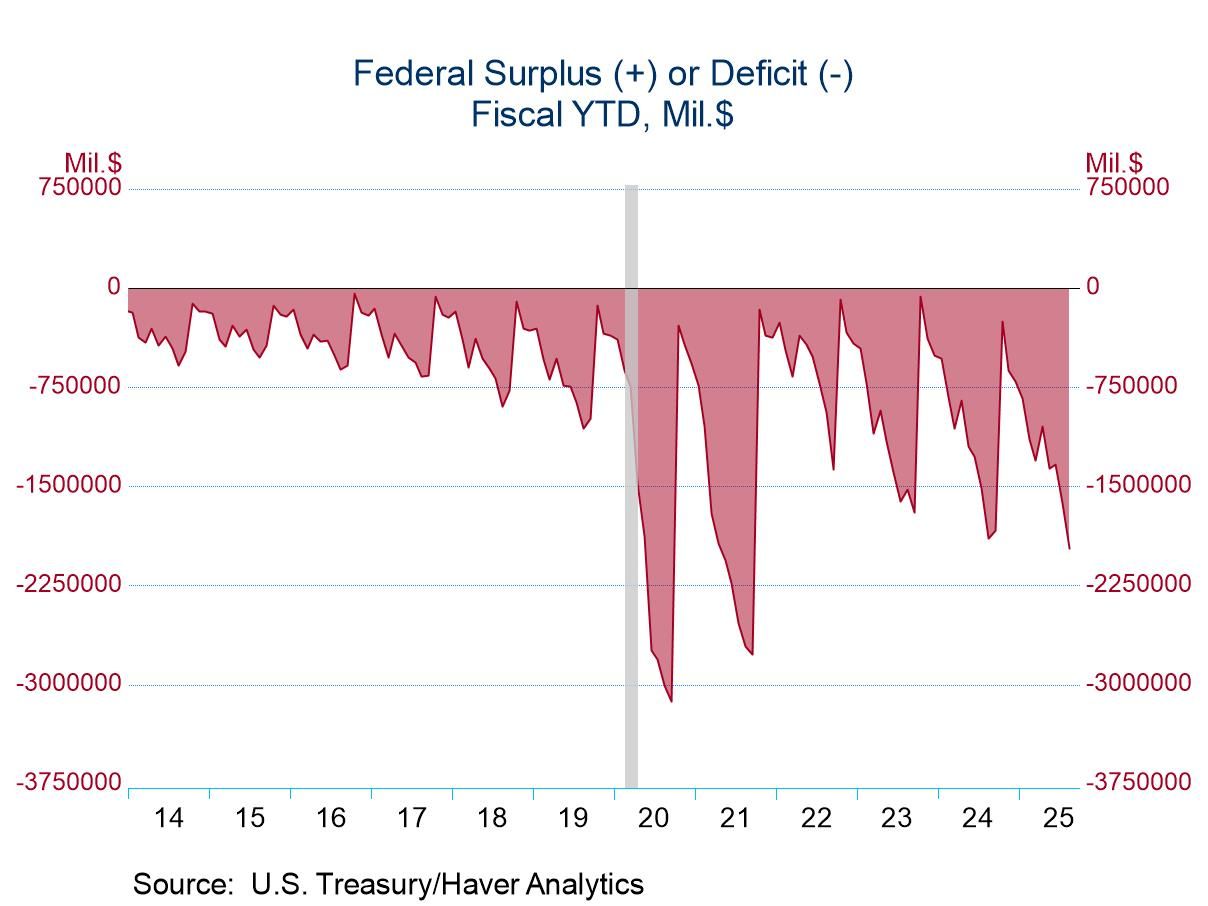
- Monthly deficit is well above expectations.
- Revenues rise moderately while outlays surge.
- Deficit increases in first eleven months of FY’25.
by:Tom Moeller
|in:Economy in Brief
 USA| Sep 11 2025
U.S. Initial Unemployment Insurance Claims Jumped in Latest Week
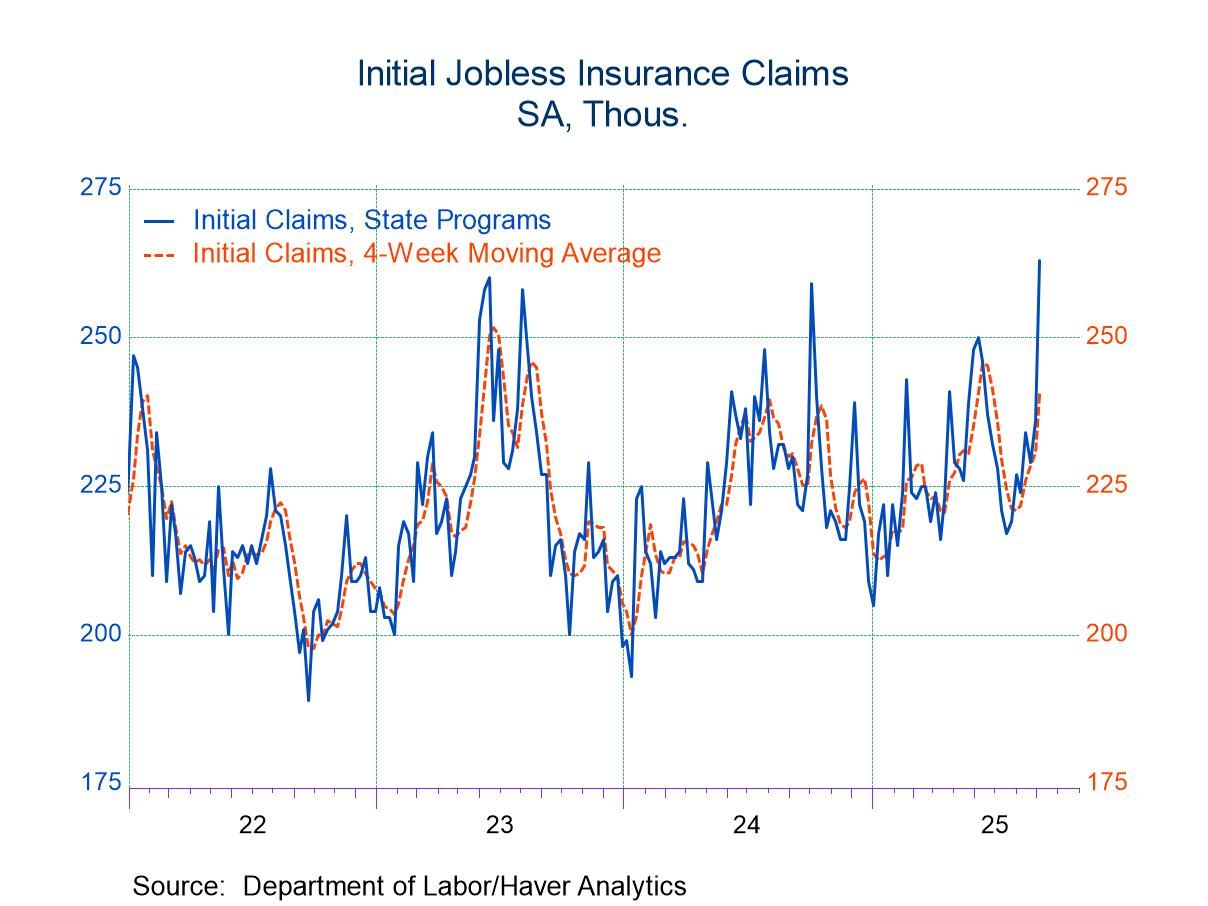
- Initial claims jumped 27,000 in latest week containing the Labor Day Weekend.
- Continuing claims were unchanged.
- Insured unemployment rate holds steady.
 Japan| Sep 11 2025
Japan’s PPI Plods Ahead
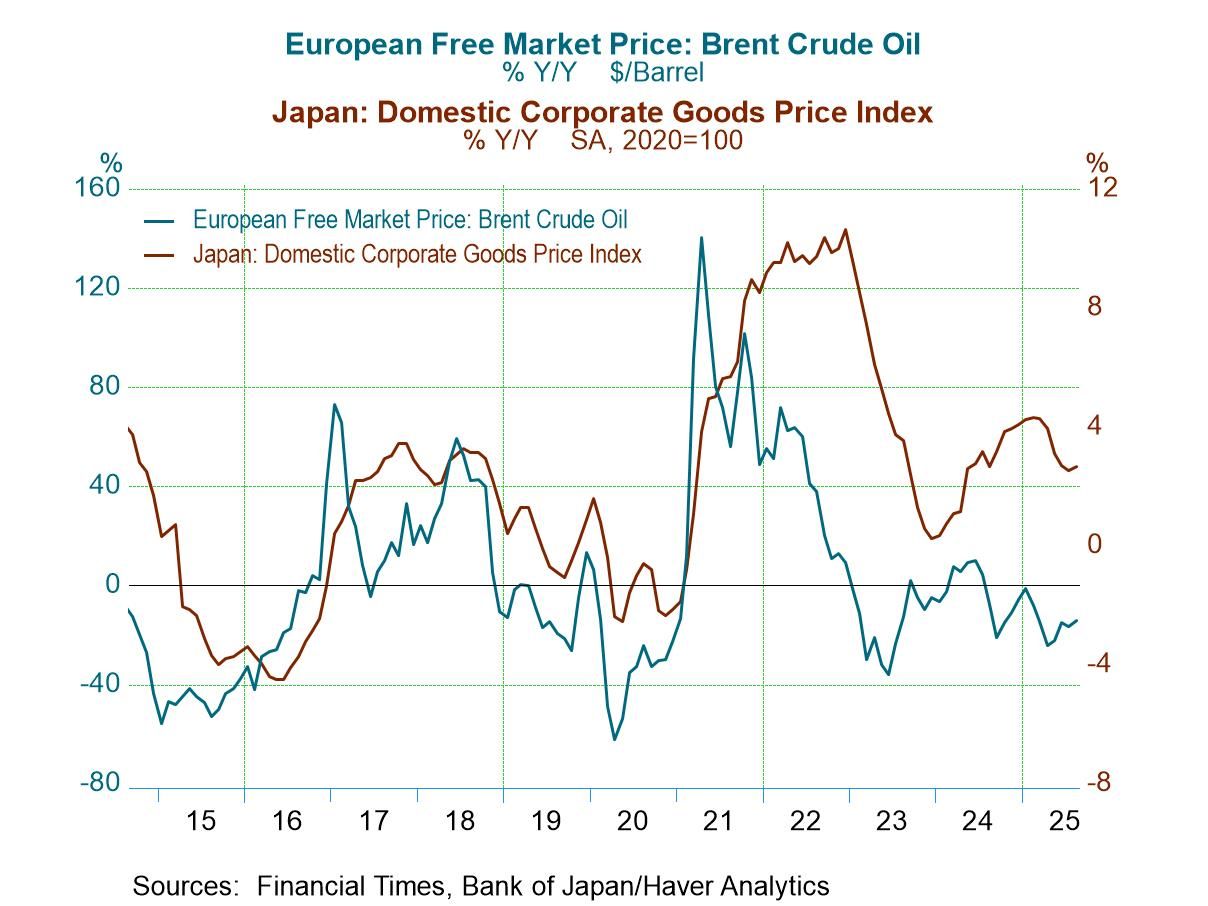
Japan’s PPI data reveal that not all the inflation measures are flashing danger or warning signals. Japan's preferred CPI gauge that excludes energy & fresh food, for example, is one of the hottest gauges of inflation. It happens to be the gauge that the Bank of Japan emphasizes the most and so it has put policy somewhat on edge worried about inflation.
However, the other Japanese metrics are not showing the same degree of inflation that that one is showing. The PPI from Japan was up by 0.2% for the second month in a row in August after falling by 0.2% in June – a very restrained performance. The 12-month inflation rate is 2.7% that falls to 1.1% over six months, then to 0.6% over three months – all at annual rates. For all of manufacturing, the PPI is up by 1.6% over 12 months, flat over six months and then back up to 1.3% over three months; none of these are particularly troubling inflation gauges although I recognize that the PPI is not the CPI and this is not the target of monetary policy.
Still, for Japan, it's reassuring to see that inflation is not simply running wild. In fact, when viewed in several different ways, it's actually rather controlled.
Viewing inflation in Japan and the context of trends in the United States and then the European monetary Union, we find that the broad pressure inflation is concentrated in the U.S. although it may not be tariff-related. In Europe, inflation is broadly controlled. The U.S. is showing the most pressure and of course it has the strongest economy, and it also has an ongoing problem with tariffs that are putting some extra measure of pressure on prices. The U.S. PPI generates a very strong inflation rate over three months - and even an elevated 12-month reading of 3.5%. However, we don't see anything like that coming out of the European Monetary Union where year-over-year inflation is barely positive even though over the most recent three months inflation has accelerated to a 2.2% annualized rate. That's still a relatively subdued rate.
In Japan, the ordinary CPI and the core show relatively subdued inflation over the last year. The headline CPI is 3.1% over 12 months, but it dives under 2% over six months and to a 2.2% pace over three months. Japan's core is only 1.6% over 12 months and its annual rates are under 2% for six months as well as for three months. The inflation situation in Japan, particularly for producer prices, seems to be in pretty good shape with the quarter-to-date inflation rate for the PPI at 0.6% and for all of manufacturing at 0.8%. With oil prices remaining moderate, the outlook for inflation to remain in this more moderate range is still good, and Japan continues to have weak growth; demand should not be putting pressure on inflation. The Bank of Japan should be relatively happy with Japan's producer price number, the domestic corporate goods price index for August.
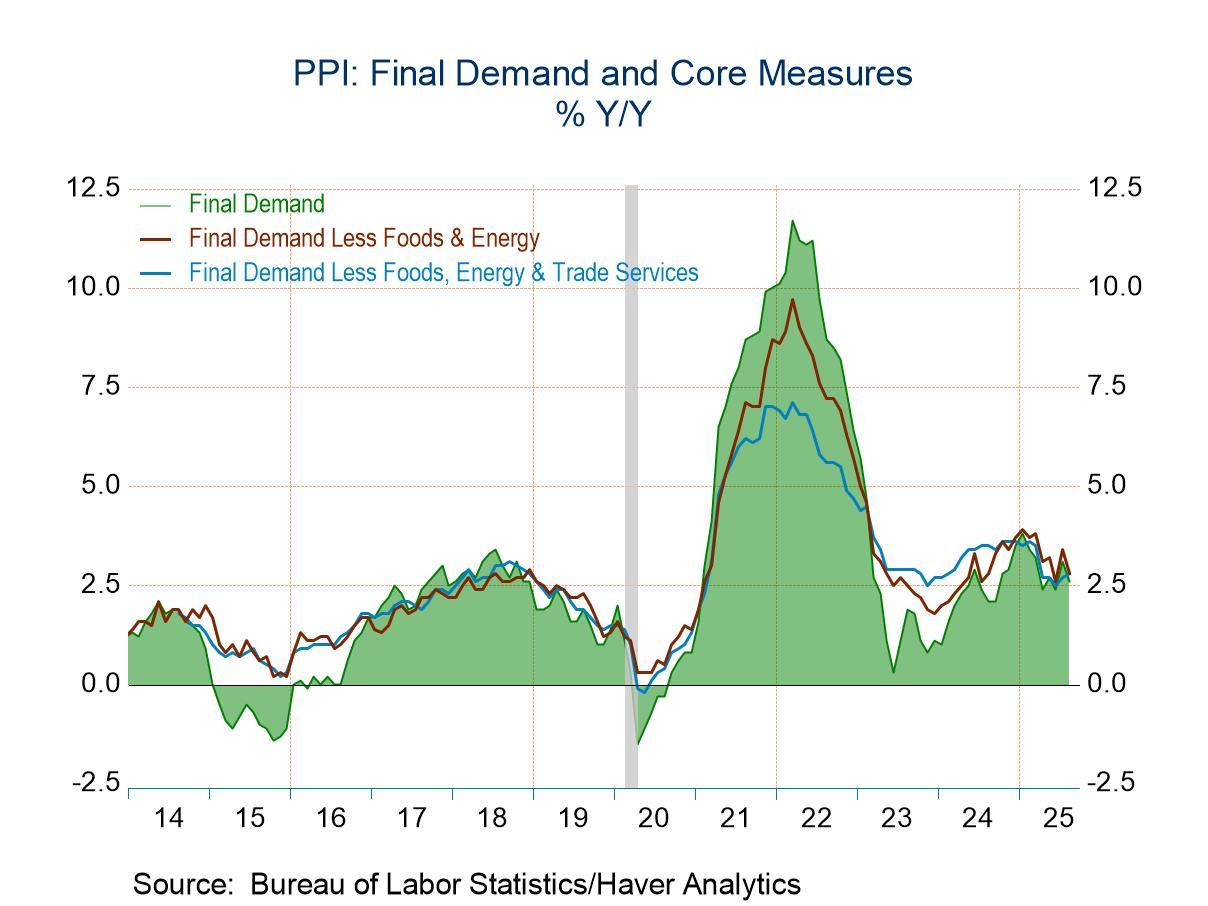
- Energy prices fall while food prices edge higher.
- Trade service prices decline after sharp increase.
- Core goods price inflation eases.
by:Tom Moeller
|in:Economy in Brief
 USA| Sep 10 2025
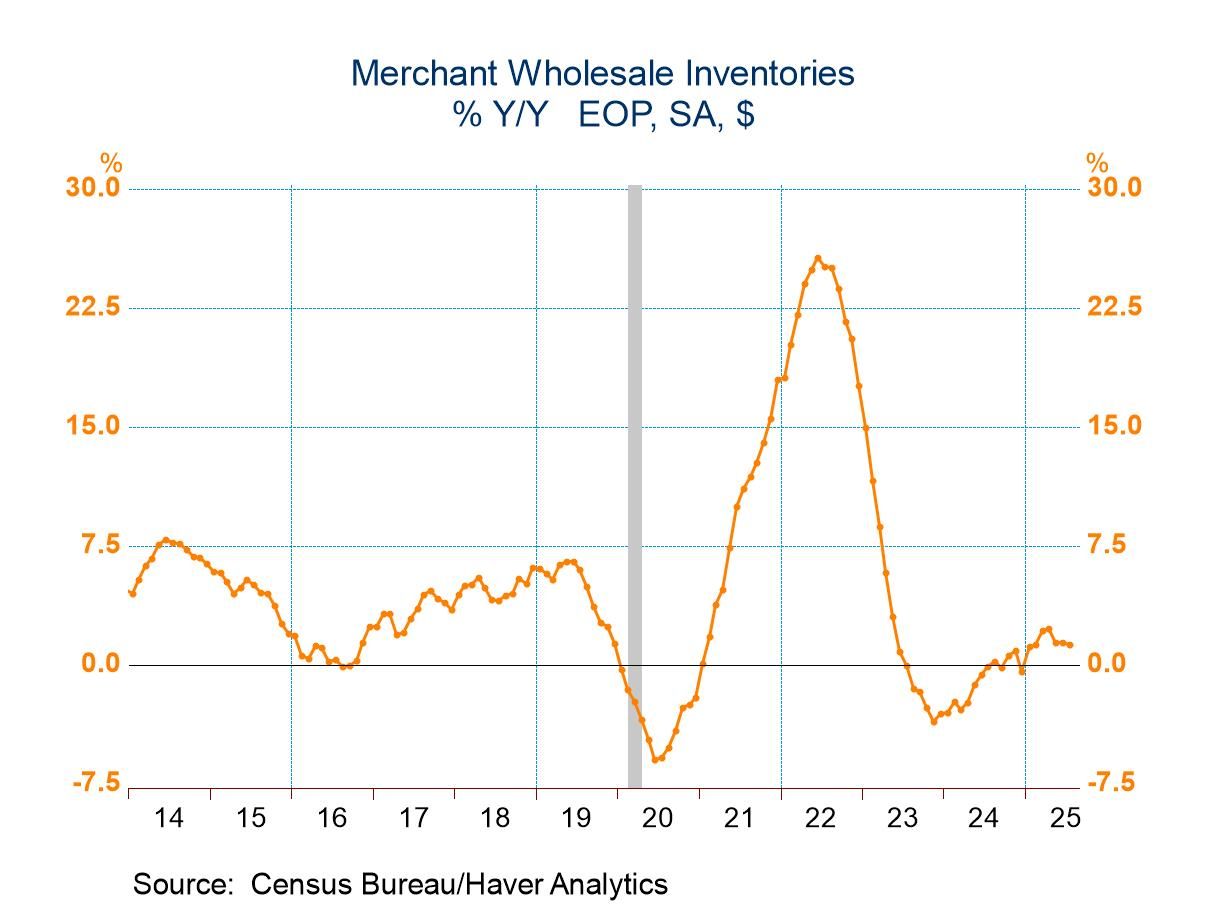
U.S. Wholesale Inventories Edge Higher in July; Sales Surge
- Durable goods inventories fall as nondurables rise.
- Sales strengthen broadly.
- I/S ratio eases to another three-year low.
by:Tom Moeller
|in:Economy in Brief
 USA| Sep 10 2025
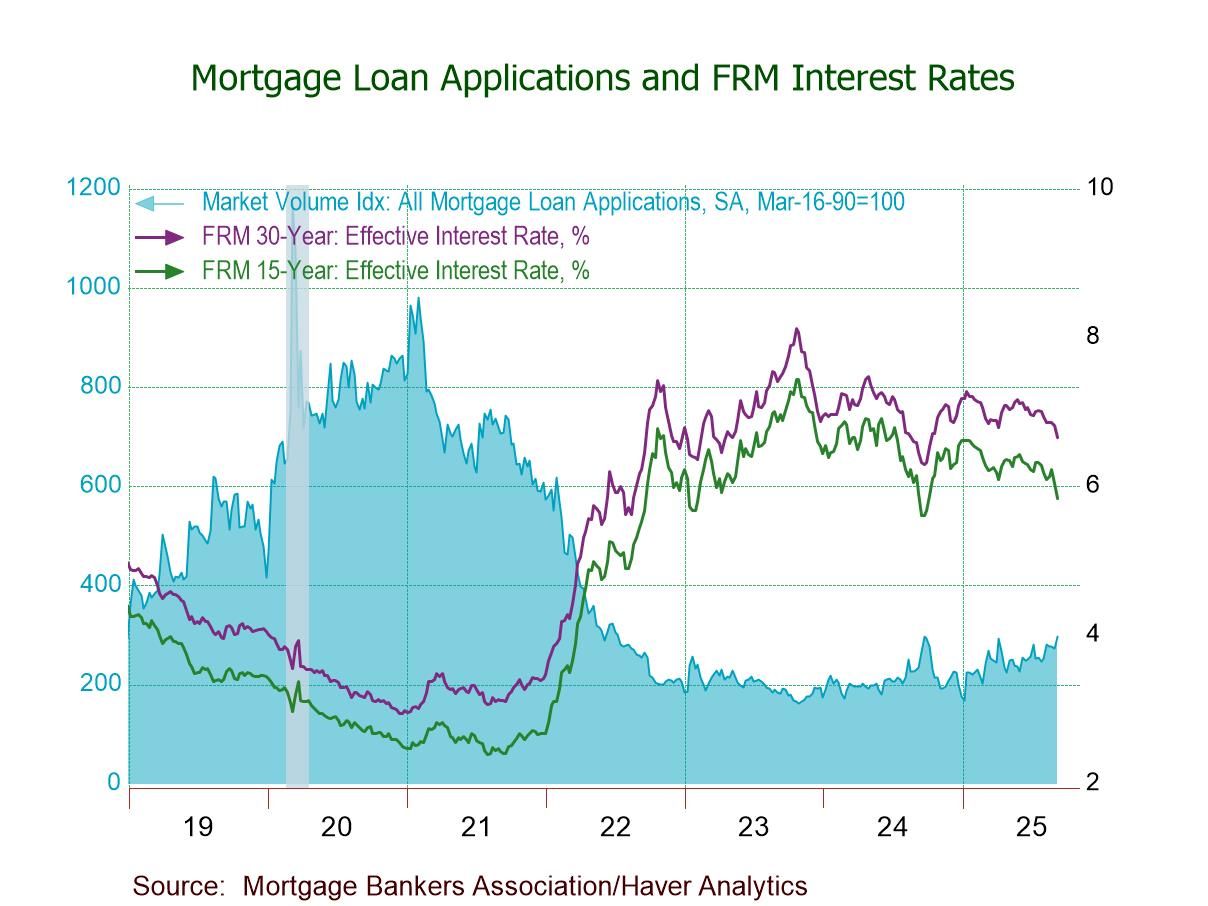
U.S. Mortgage Applications Rebound 9.2% in the September 5 Week
- Purchase applications +6.6% w/w; refinancing loan applications +12.2% w/w.
- Effective interest rate on 30-year fixed-rate loans falls to 6.66%, the lowest since October.
- Average loan size rises to the highest level since the April 11 week.
 Europe| Sep 10 2025
Euro Area IP Tends to Weaken in July
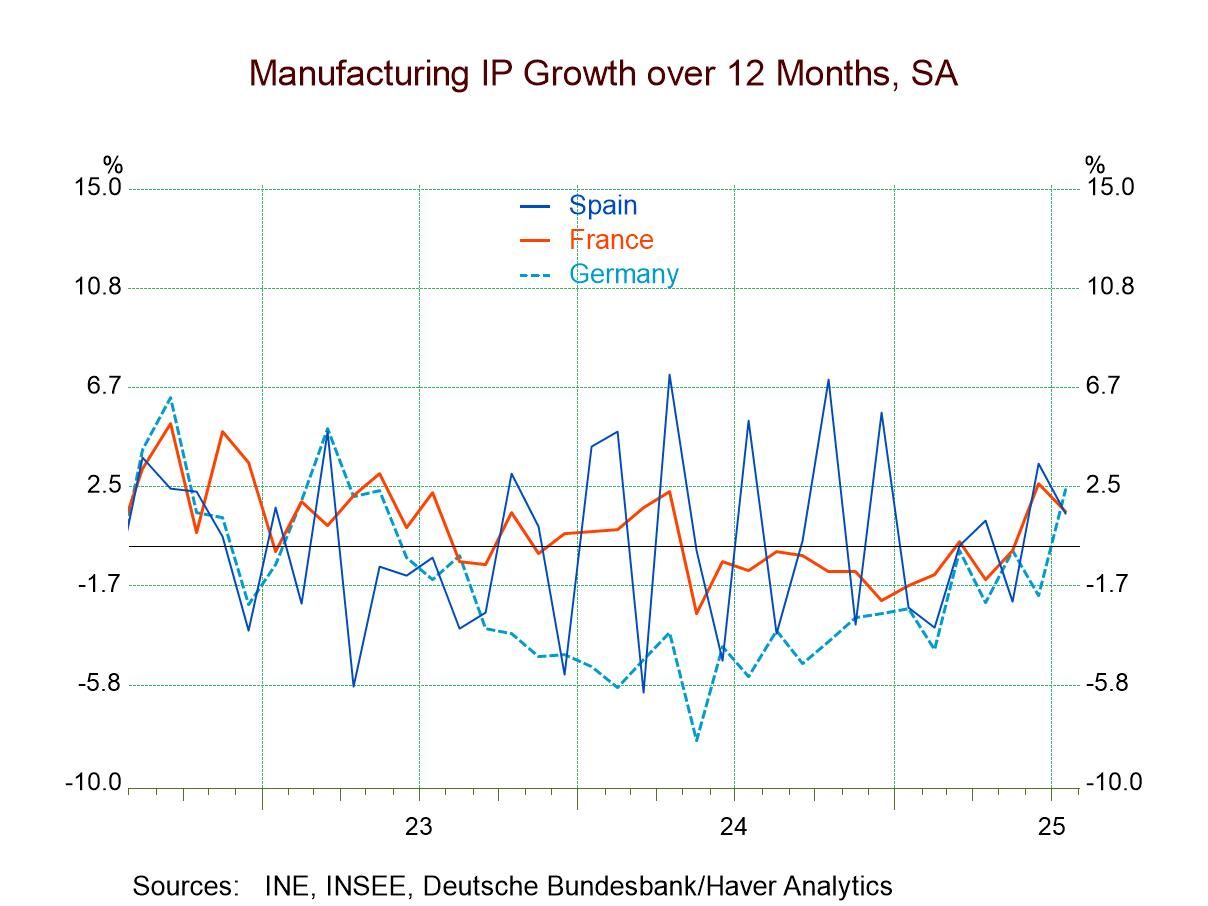
Industrial output in the European Monetary Union predominantly fell in July as 14 early reporting monetary union or economic union members demonstrated that 8 of them logged a decline in industrial production in July. Sticking to only monetary union members there were declines in eight of the 12 reporting countries – a poor month for EMU members.
For the full group of 14, the median change was a decline of 1% in July after logging a median increase of 0.2% in June and a median decline of 0.7% in May. Sequential results show a median increase over 12 months of 1.4% for this full group, a median increase of 4.5% using annual rate data over six months, followed by a 3-month annual rate median decline of 1.4%.
Over three months among the 14 reporting countries, 8 show increases; however, 6 show declines and the declines that are logged are all large, starting with the decline of 21% at an annual rate in Luxembourg, 13.4% in Finland, a decline of 10.8% in Portugal, a decline of 8.3% in Malta, a decline of 4.9% in the Netherlands, and a decline of 4.3% in Ireland. The countries with declines over three months are experiencing very significant and sharp declines.
Looking at the full slate of countries over three months, only 33.3% are showing output accelerations. That compares to 6-months when only 30.8% show output accelerations; however, over 12 months compared to 12-months ago, two-thirds show output acceleration. Acceleration is fairly broad-based when compared to a year ago, but over shorter horizons there's clearly more of a slowing in progress and less uniformity.
This is early in the third quarter; industrial production data show six countries already indicating quarter-to-date output declines in Q3.
Interestingly, the queue rankings data executed on year-over-year growth rates have become much firmer and stronger. There are only 4 reporting countries in the table with year-over-year growth rates ranked below the 50th percentile: Finland, the Netherlands, Greece, and Luxembourg. The average of the median ranks is at the 64th percentile mark, a nearly top one-third standing. Germany, France and Italy have standings well into their respective 60th percentiles– for Germany, in the 70th percentile. IP growth in manufacturing is scoring out at a more resilient performance level despite the drift into recently weaker growth rates. This will be a trend worth watching.
- of164Go to 88 page