

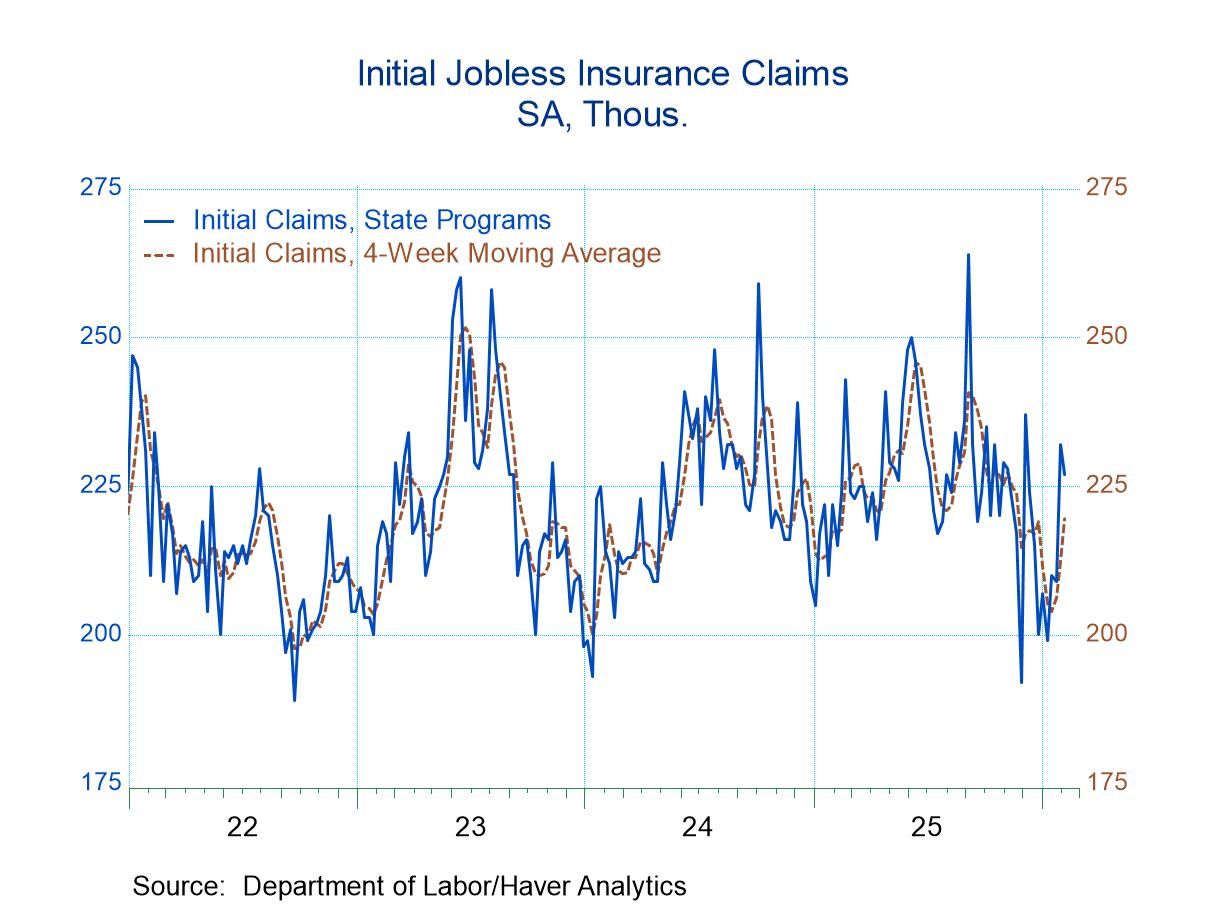
- New claims dropped 5,000 to 227,000.
- Continuing claims rose to 1.862 million.
- The insured unemployment rate remained at 1.2% for the tenth consecutive week.
 USA| Feb 12 2026
U.S. Initial Unemployment Claims Declined in Latest Week
 United Kingdom| Feb 12 2026
U.K. Second Half GDP Slows to a Crawl
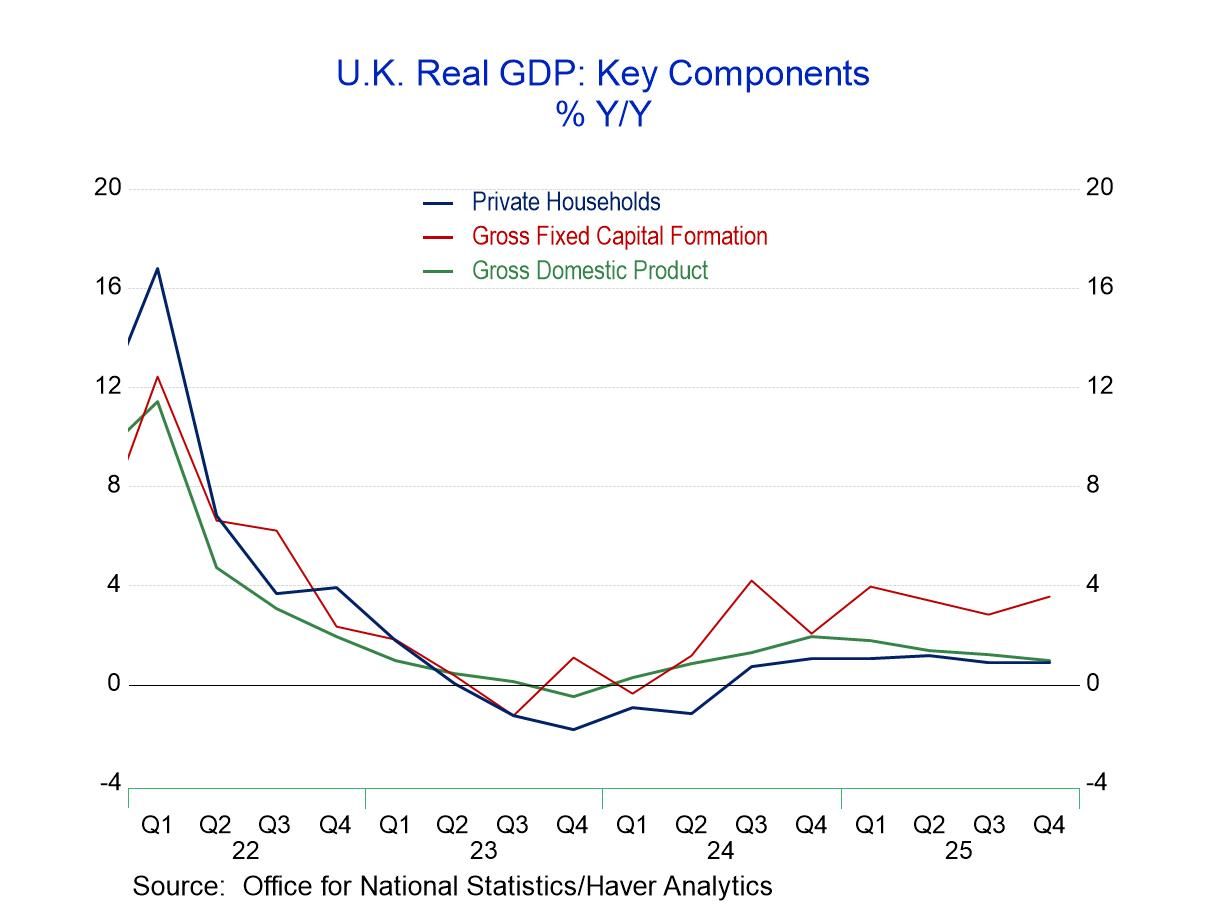
U.K. GDP slowed to a crawl at the end of the year, with growth at a 0.2% (annualized) rate logged in both the third and fourth quarters as 2025 drew to a close. The year had started with a strong 2.7% growth rate in Q1, which slipped to a 0.8% pace in the second quarter and decelerated to negligible growth at the end of the year.
These quarterly growth rates correspond to higher but obviously declining year over year growth rates. Because the quarterly growth rates diminished as the year progressed, year over year growth to start 2025 was at 1.8%; growth slipped to 1.4% in the second quarter and then to 1.2% in the third quarter. By the end of the year, growth had slipped to 1%.
The quarterly growth rates in the fourth quarter show public spending picked up to a 1.7% annual rate following 1% in the third quarter and erratic behavior in the first two quarters. Capital formation has remained relatively strong but has also oscillated, with first quarter growth at a blowout annual rate of 14.3%, falling to a contraction of 3.1% in Q2, rising back to 4.4% in Q3, and then declining at a 0.5% annual rate in Q4. So the year-over-year growth rates for capital formation during the course of the year only slipped from 4% in the first quarter to 3.6% in the fourth quarter, holding up fairly solidly and indicating strong rates of expansion for capital spending.
Housing, which was firm and strong in Q1 and Q2, slipped to a 0.8% annual rate of growth in the third quarter, and then housing investment fell at a 9.1% annualized rate in the fourth quarter. Year over year trends for housing show mostly low to moderate spending growth for residential investment.
U.K. exports have been floundering quarter-to-quarter, alternating between expanding and contracting; this corresponds to year over year growth rates that steadily diminish. In the first quarter of 2025, exports grew 3.5% year-over-year; that slipped to a 2% growth rate in Q2, then to a 1.5% growth rate in the third quarter. In the fourth quarter, U.K. exports are falling at a 0.5% annual rate of growth.
The export pattern contrasts with U.K. imports. They have mostly continued to grow, posting positive growth rates in three of the four quarters, starting the year with 5% quarterly growth and ending the fourth quarter with a 3.3% annual growth rate. Import growth rates have slipped, but not as much as other growth rates in GDP. For example, first quarter import growth was extremely strong at 7.6%; that year over year growth rate slips to 2.1% in Q2, then rises back to 5.3% in Q3, and finishes the year at 2.3%. There is slippage, but still significant growth, and the year began on a really high note.
Domestic demand has been fluctuating. In both quarterly and annual terms, there is unevenness. Quarterly growth rates range from 3.1% at an annual rate in Q1, to a 0.6% and 0.7% annual rate in the middle two quarters of the year; domestic demand ends the fourth quarter with a quarterly growth rate of 2.1% annualized. This causes year-over-year growth to be 2.9% in the first quarter; that falls to 1.2% in the second quarter, rebounds to 2.1% in the third quarter, and ends the year at 1.6% year-over-year.
Domestic demand has consistently been stronger than private consumption and it has been supported by both public consumption and by capital formation. Private consumption in 2025 has been erratic, logging 1.2% quarterly growth, annualized, in the first quarter; growth dropped to 0.2% in Q2, rising back to 1.7% in Q3, and then ending the year at a 0.6% rate of expansion quarter-over-quarter. The year-over-year data showed private consumption slipping but not dramatically, at a pace of 1.1% in the first quarter, up to 1.2% in the second quarter and then logging 0.9% in both the third and fourth quarters of 2025 as domestic demand ended the year stronger.
All of the U.K. growth rates are consistently and substantially below their five year growth rates. The economy continues to have a problem with inflation. Some recent inflation signals, however, suggest that there may be deceleration and progress, but the Bank of England hasn’t been convinced yet, even though Monetary Policy Committee members continue to speak favorably about the prospects for rate reductions ahead. The U.K. also has a corseted fiscal situation as there’s not much flexibility to spend more given its relatively bloated budget. The economy is waffling. The current administration has had its share of political issues, having recently had to eject several members from leadership positions in government. The outlook for growth is still touch and go. The outlook for inflation holds slightly more promise for deescalation. But overall, there is a lot of uncertainty over events and the growth path for the U.K. economy.
 USA| Feb 11 2026
January Employment Report: The Labor Market Has a Pulse
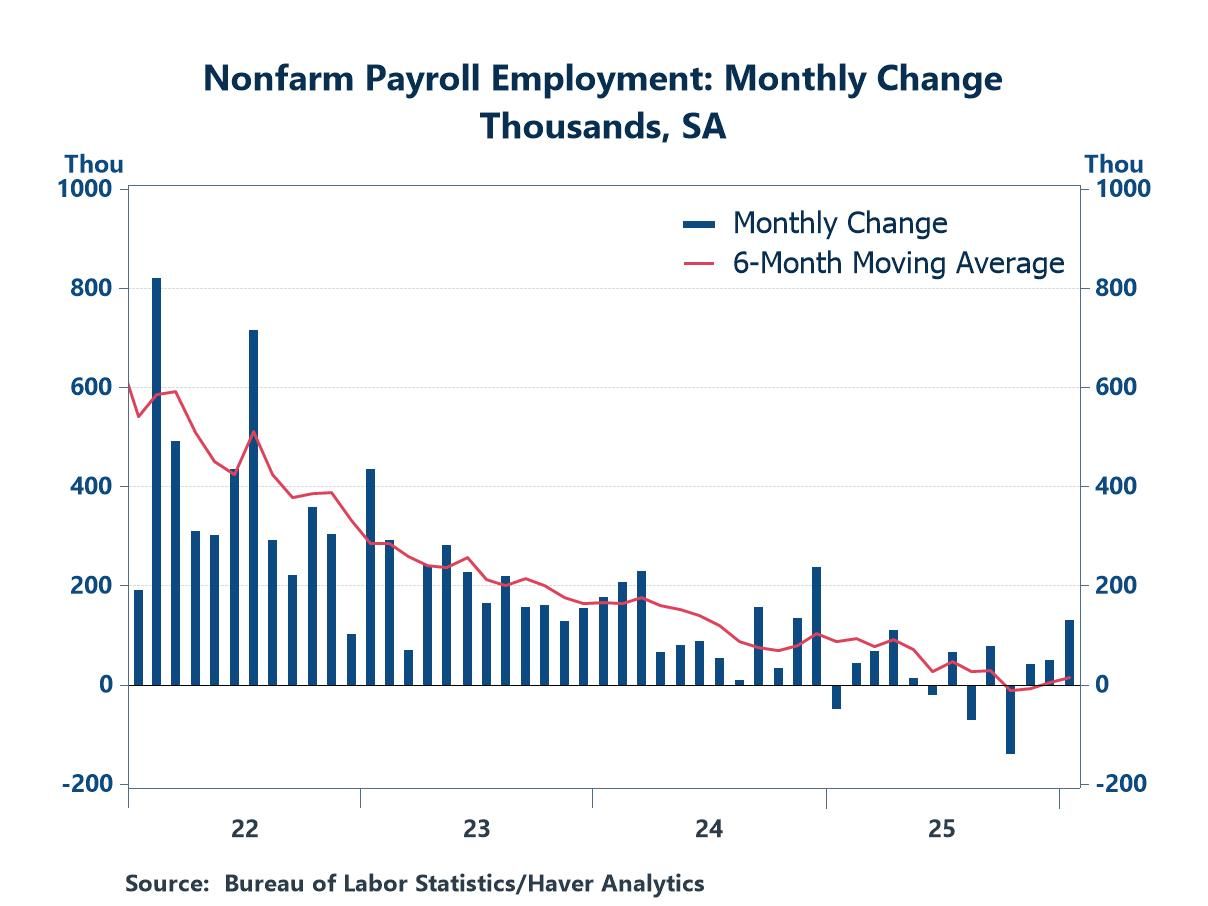
• The increase in employment in January was firm, although narrowly based. • The unemployment rate dipped for the second consecutive month, led by strong employment as measured by the household survey. • The benchmark revision included with this report showed that job growth in much of 2024 and early 2025 was softer than previously believed.
 Italy| Feb 11 2026
Italian IP Shows Gains in Progress
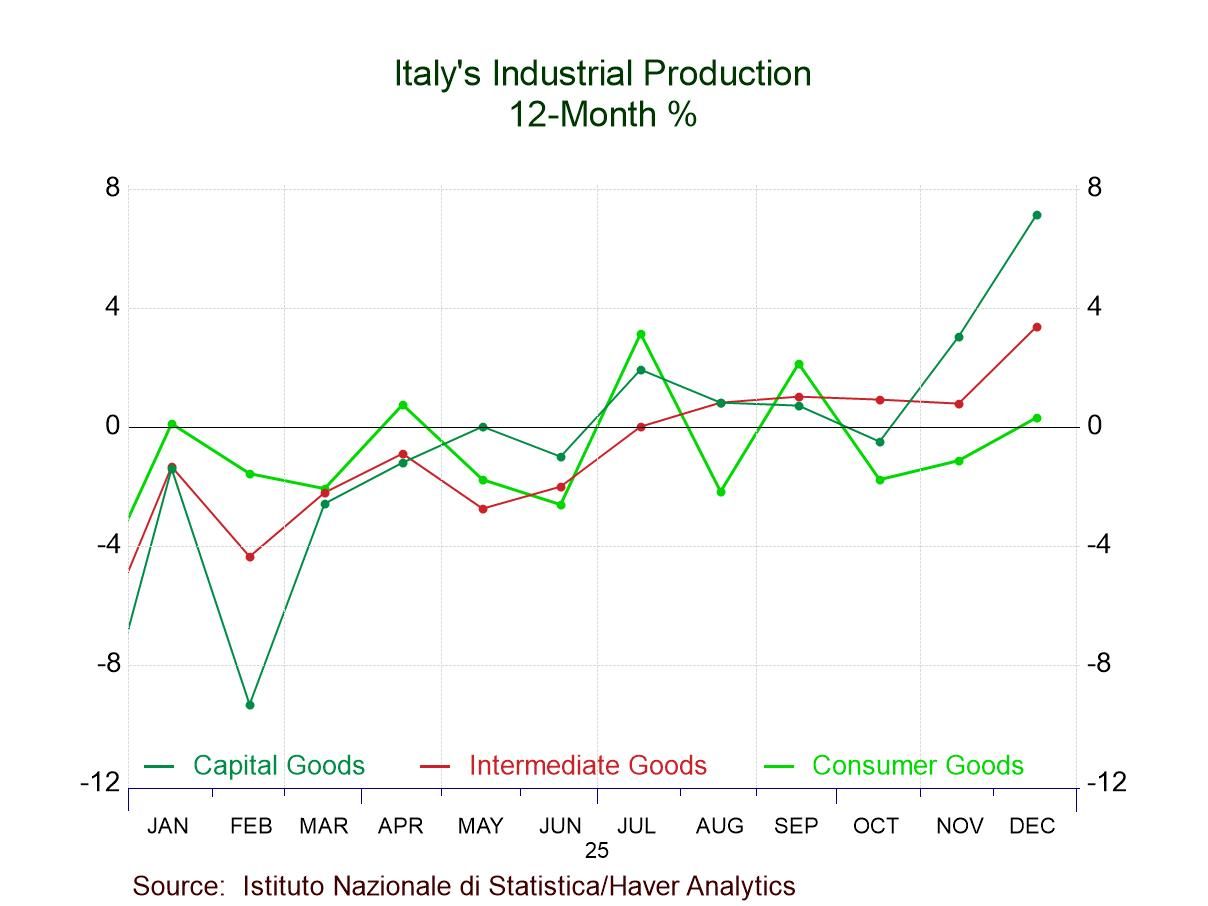
Italian industrial production fell nearly across the board. In December, headline production fell by 0.2%; consumer goods output fell by 0.9% and intermediate goods output fell by 0.4%, while capital goods output was the exception, rising by 0.5%. Output had risen in all sectors in November; it had fallen across all sectors in October. As a result, the recent data are quite choppy and it's hard to make sense of what the underlying trend is or what might be developing.
Sequential data offer some opinions on this idea of where the trend is going. The headline output shows a 3.6% gain over 12 months, advances at a 1.1% annual rate over six months, and then declines at a 1.3% annualized rate over three months. The headline rate is clearly in a persistently declining phase. That phase is supported by intermediate goods where output is up 3.4% over 12 months, rises at a 0.7% annual rate over six months, and then falls at a 2.2% annualized pace over three months. Consumer goods and capital goods do not offer much clarity, swinging sequentially and failing to provide steppingstones to a new trend. Consumer goods output shows a 12-month gain of 0.3%, but that is substantially undermined by a 6.1% annualized decline over three months. However, for capital goods, a 7.2% growth rate over 12 months is quite similar to a 7% annualized gain over three months, showing that capital goods output has hardly lost a step despite a stumble over six months.
Output in the transportation sector in Italy is contrarily showing a tendency to acceleration in monthly data from October to November to December. Sequentially, this series is giving us no clear signals.
Other trends In the quarter to date, Italian output is falling by a 0.8% annual rate, led by a 4.3% annual rate decline in consumer goods. However, capital goods output is increasing at a 3.4% annual rate, and intermediate goods output is up at a tepid 1.6% annualized pace. Since January 2021, the cumulative change in output is lower for manufacturing overall, for consumer goods output, and for intermediate goods, while capital goods output is up by 1.6% over that span. The ranking of year-over-year growth rates on data back to 2004 shows all the sectors with growth rates above the 50% mark, indicating that year-over-year growth across the Italian sectors is greater than their median over this broad period. Headline growth is exceptionally solid, with the ranking in its 81st percentile. The transportation sector, however, has a growth rate that ranks only at its 24th percentile.
Indicators and surveys The bottom panel of the table presents performance by surveys; these tend to be more up-to-date, and they've come to be relied upon. Here we feature indicators from the EU industrial survey and from Istat on current orders and on the outlook for current production. In December, all three of these metrics showed declines; in November they all showed increases, and they showed increases in October similar to the increases logged in November. The changes in the levels of the variables over different horizons show a mild tendency toward weakening, but nothing that is clear or dramatic, looking at changes from 3-months. to 6-months, to 12-months. In the just-completed quarter (QTD), the change in the indicators is either flat or lower. All of them track below their historic median levels (rankings <50). The indicators clearly are showing weaker conditions than actual production data. These sorts of rifts are common between accounting data and survey-style diffusion data. They also generate controversy about which is right. I favor the accounting data.
 USA| Feb 11 2026
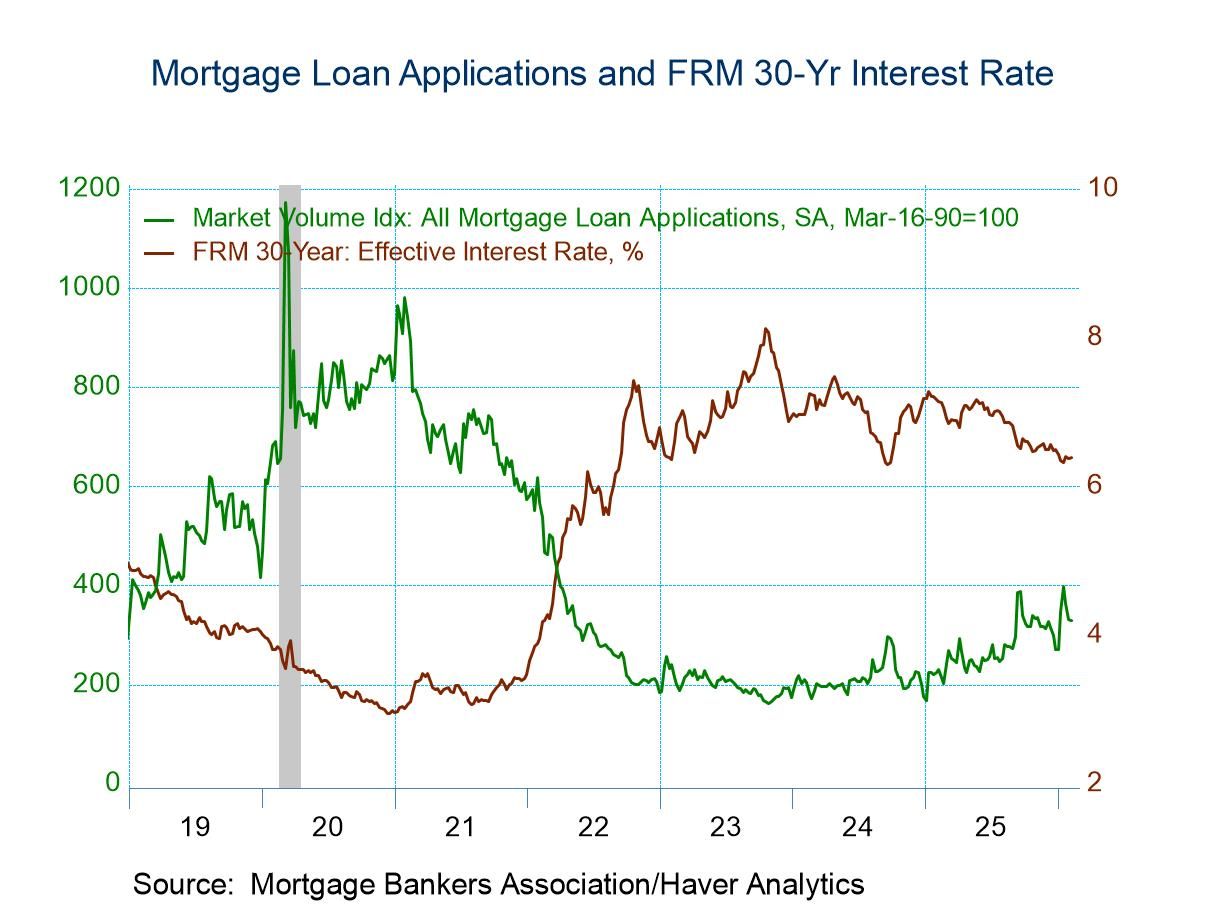
U.S. Mortgage Applications Edged Down in the February 6 Week
- Applications for loans to purchase declined in the latest week while refinancing loan applications rose.
- Effective interest rate on 30-year fixed loans rose 1bp to 6.38%.
- Average loan size declined.
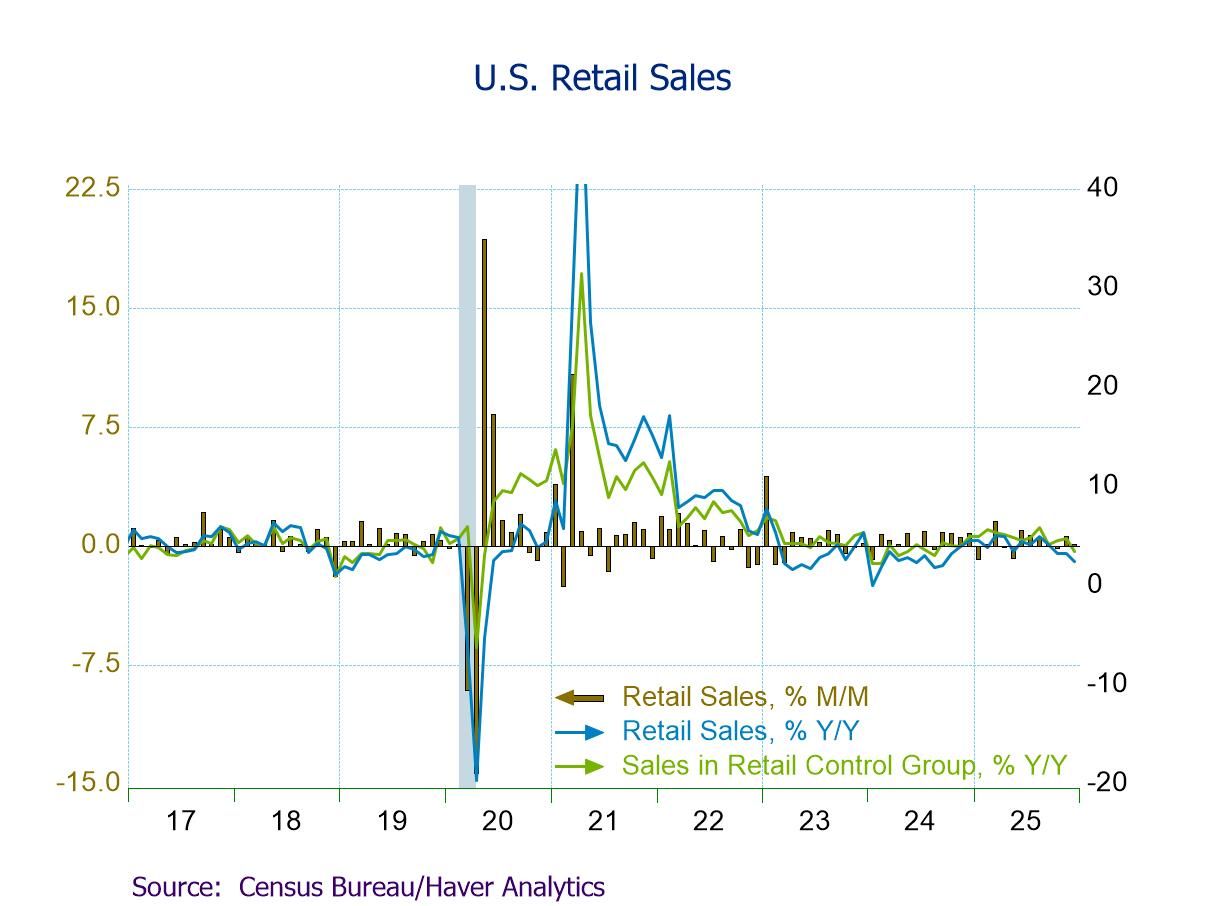
- December total retail sales -0.02%, below expectations; +2.4% y/y, lowest since Sept. ’24.
- Ex-auto sales +0.02% (+3.3% y/y) after six straight m/m rises; auto sales -0.2% (-1.1% y/y).
- Declines m/m: furniture stores (-0.9%), misc. stores (-0.9%), clothing stores (-0.7%).
- Gains m/m: bldg. materials (+1.2%), sporting goods (+0.4%), gasoline stations (+0.3%).
 USA| Feb 10 2026
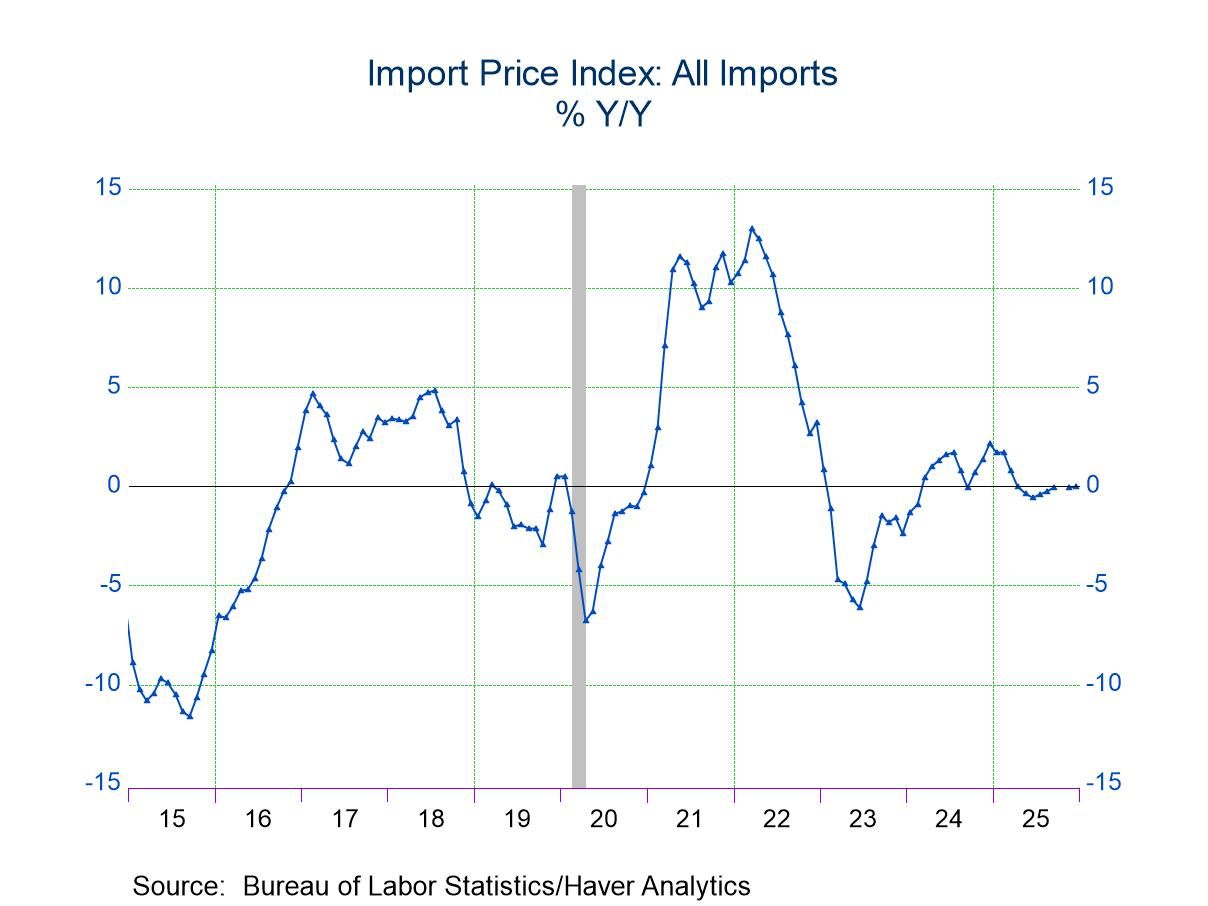
U.S. Import and Export Prices Rise in December
- Import prices rose 0.1% m/m in December, in line with expectations.
- The December increase reflected a 0.2% monthly gain in non-fuel import prices and a 0.8% m/m decline in fuel prices.
- Export prices rose 0.3% m/m against expectations of a 0.1% m/m increase. Both agricultural and nonagricultural prices rose in December.
by:Sandy Batten
|in:Economy in Brief
 USA| Feb 10 2026
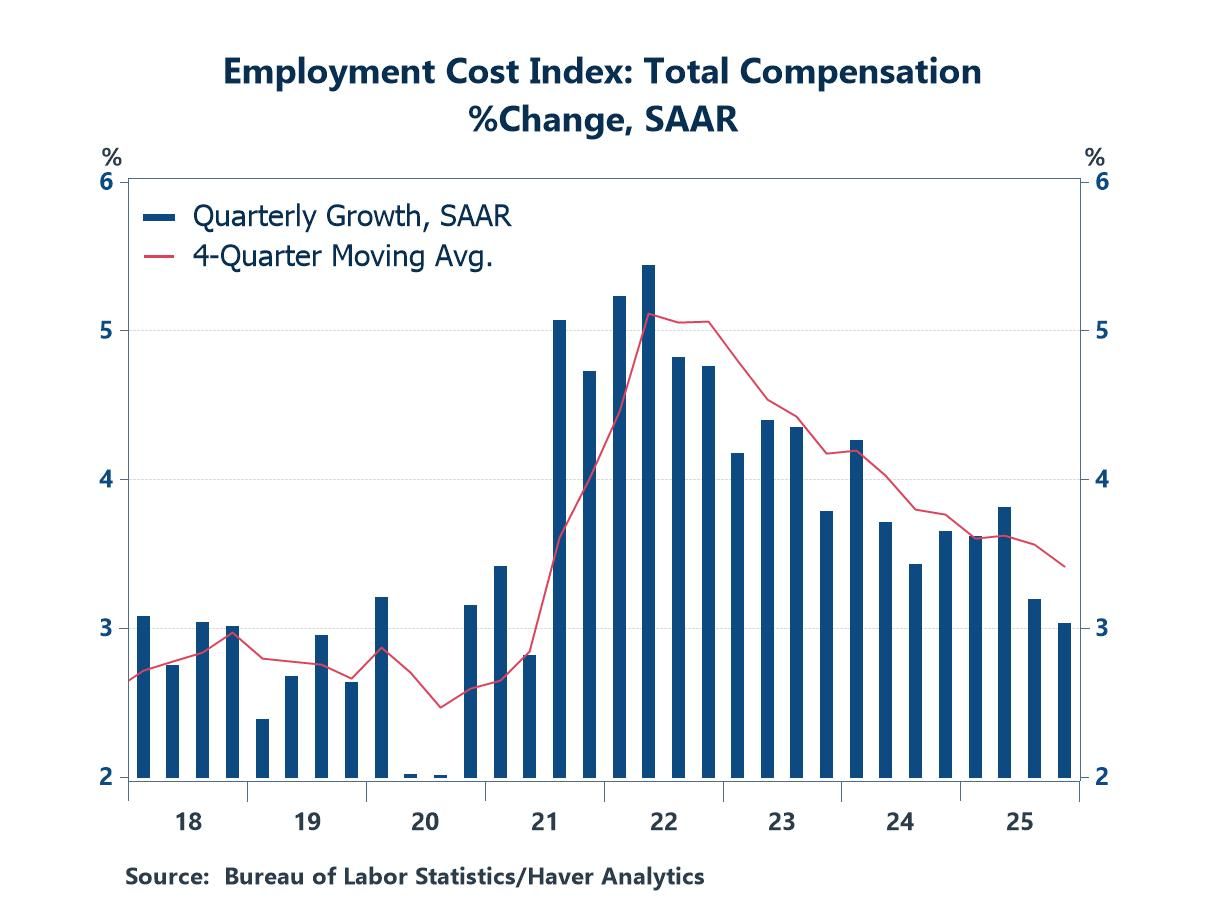
Employment Cost Index: Continued Deceleration
- Vigorous growth during the pandemic-related recovery gives way to moderate advances recently.
- Labor costs seem in line with the Fed’s inflation target.
- of164Go to 52 page