Haver Analytics
Haver Analytics

Economy in Brief: May 2026

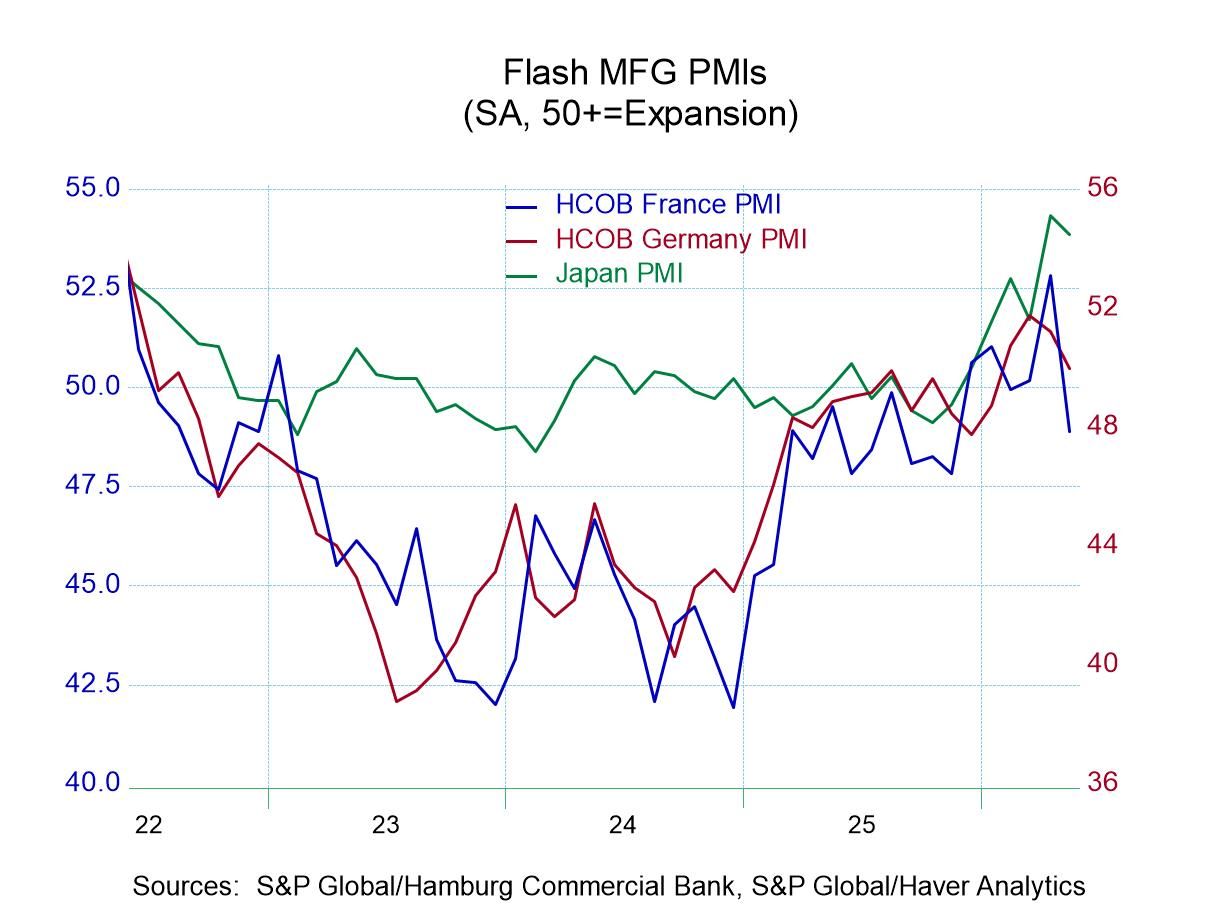
  • You may recognize the excerpted headline quote as "borrowing" from US Admiral David Farragut. It is a famous quote from a US Civil war battle in which he charged ahead in his ship regardless of the risk. This month the global manufacturing PMIs themselves are charging ahead regardless of the rise of inflation, the war in Ukraine, the war in Iran, the closure or impedance in the strait of Hormuz, and the mucking up of oil and nonoil supply lines. Full speed ahead!

    Trend… The chart shows an ongoing recovery in manufacturing. It also shows that conditions are only ‘better’ and not ‘strong.’ Yet when we rank these individual PMIs against their historic results back to January 2022, the median rank across these 18 reporters is 90.8-percent, signaling that they have been higher less than 10% of the time back to 2022. Of course, 2022-2023 represented low points for manufacturing after Covid. There was a strong recovery from Covid and then the sucker-punch from the invasion of Ukraine by Russia. Nonetheless on that timeline recovery is still in progress and – so far- not even the Middle East war and other geopolitical turmoil, including a real donnybrook within NATO, has sidetracked it despite the impact on oil prices. That may not last, but it is the current situation.

    A test for central banks With inflation rising central banks are being put to the test. They failed the post Covid test and waited too long to hike rates. We did get recovery but inflation, too. Will they do that again? Or will they hike rates sooner? Will they try not to make the same mistake and make, instead, a new mistake by getting too tight too soon? Markets simply do not know. But in the US and UK there are five years of missing monetary inflation targets and in other key countries the inflation targets also have been broadly missed even if headline inflation recently had dipped into the target range in the last few months or so. Central banks are facing a challenge after their last challenge was not met with success and after a relatively long period – a solid legacy- of missing on the promises they made to the public on inflation.

    Solid PMI trends: The sequential, as well as the current, monthly data show how widespread change has been tilted in a positive direction. While conditions are broadly better, the current month’s median reading is only at a PMI value 52.4. So, manufacturing conditions are only slightly above breakeven (a PMI of 50) but they have been weak for so long that this is an exceptionally strong reading compared to the last four and half years of results.

    Some examples: The weak manufacturing readings on the month by ranking are for Turkey, Russia, India, and Indonesia. However, these are own-PMI comparisons and India is one of the strongest readings in April on a cross-section basis (Compared to other countries in April, rather than to its own history) having the third strongest manufacturing reading in April. Malaysia, South Korea. Taiwan, and Japan each have the strongest readings (or nearly so) since January of 2022; as a result, Taiwan and Japan also rank one and two among 19-reporter readings in April. South Korea ranks sixth, But Malaysia has been so weak it still ranks only 11th despite a 99.2% high-low standing.

    In Sum: The bottom line is that recovery has not been derailed. Yet… But this is only an April report. And, given time, this rebound could be untracked. It is only a rebound from the lows. So, the expansion is still at risk even with global labor markets still tight based on unemployment readings. Economic growth is a slippery slope; the trend is only your friend until it turns on you.
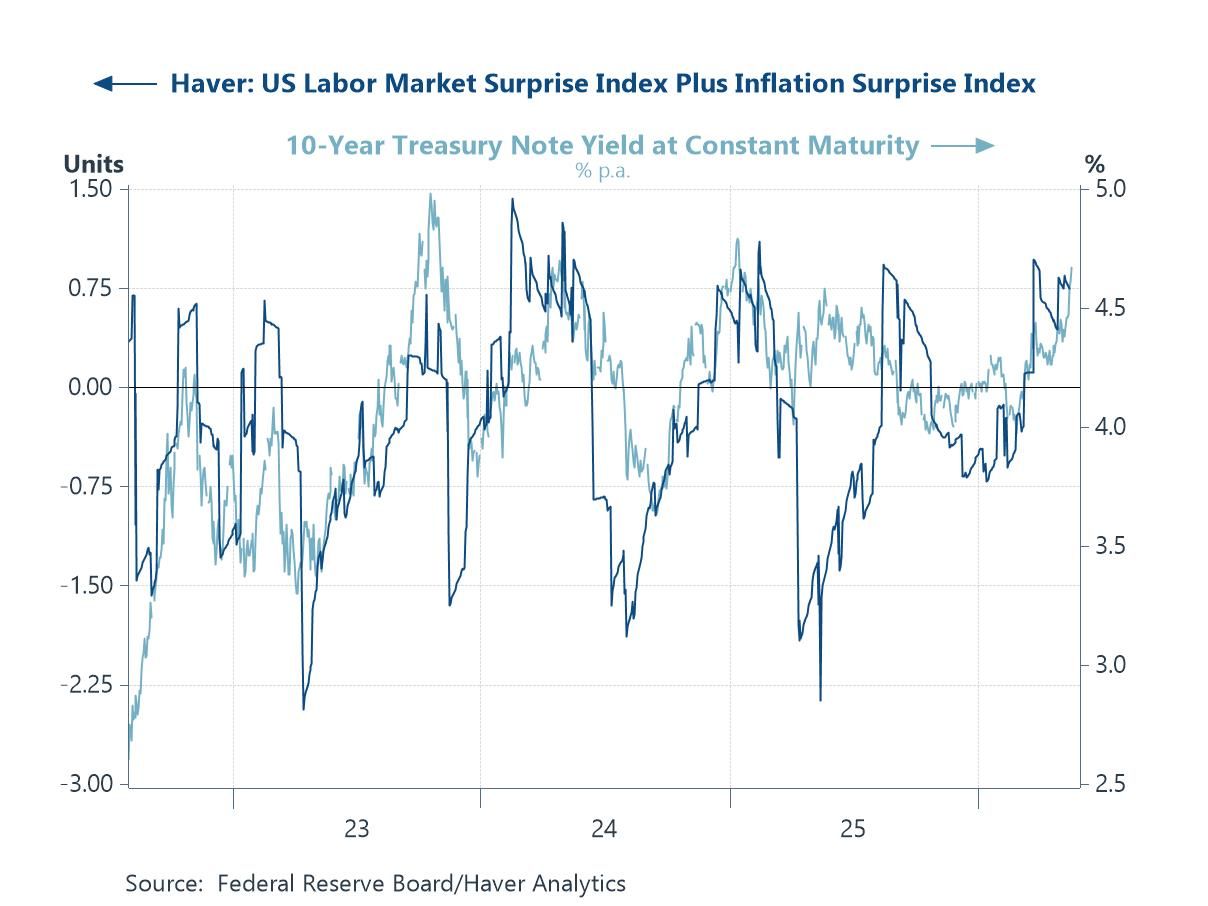
  • Ongoing geopolitical tensions in the Middle East and the associated surge in energy prices have pushed inflation and bond market concerns back to the forefront of global financial markets. Investors are increasingly worried that central banks may now face even greater difficulty in bringing inflation fully under control, particularly in economies where underlying price pressures had already remained sticky prior to the latest energy shock. Recent upside surprises in US labour market and inflation data have already contributed to higher Treasury yields and a broader global backup in short-term government bond yields across the major economies (charts 1 and 2). Yet the picture is not entirely one-sided. Labour’s share of US national income remains historically weak, suggesting limited underlying wage bargaining power and helping explain why broader inflation persistence could ultimately remain contained (chart 3). Meanwhile, oil prices have remained elevated despite some moderation in broader geopolitical risk indicators, reflecting persistent supply-side disruption and ongoing stress surrounding key global energy and shipping routes (chart 4). Even so, recent core inflation data from economies including the UK, Canada and Austria suggest that pass-through from higher energy costs into broader underlying inflation has so far remained relatively limited (chart 5). At the same time, financial markets continue to be supported by an extraordinary AI-driven investment boom, with technology firms engaged in an unprecedented surge in spending on data centres, semiconductors and energy infrastructure (chart 6). Increasingly, the global economy appears caught between two powerful and competing forces: renewed supply-side inflation risks on one side and a historic wave of AI-driven technological investment on the other.

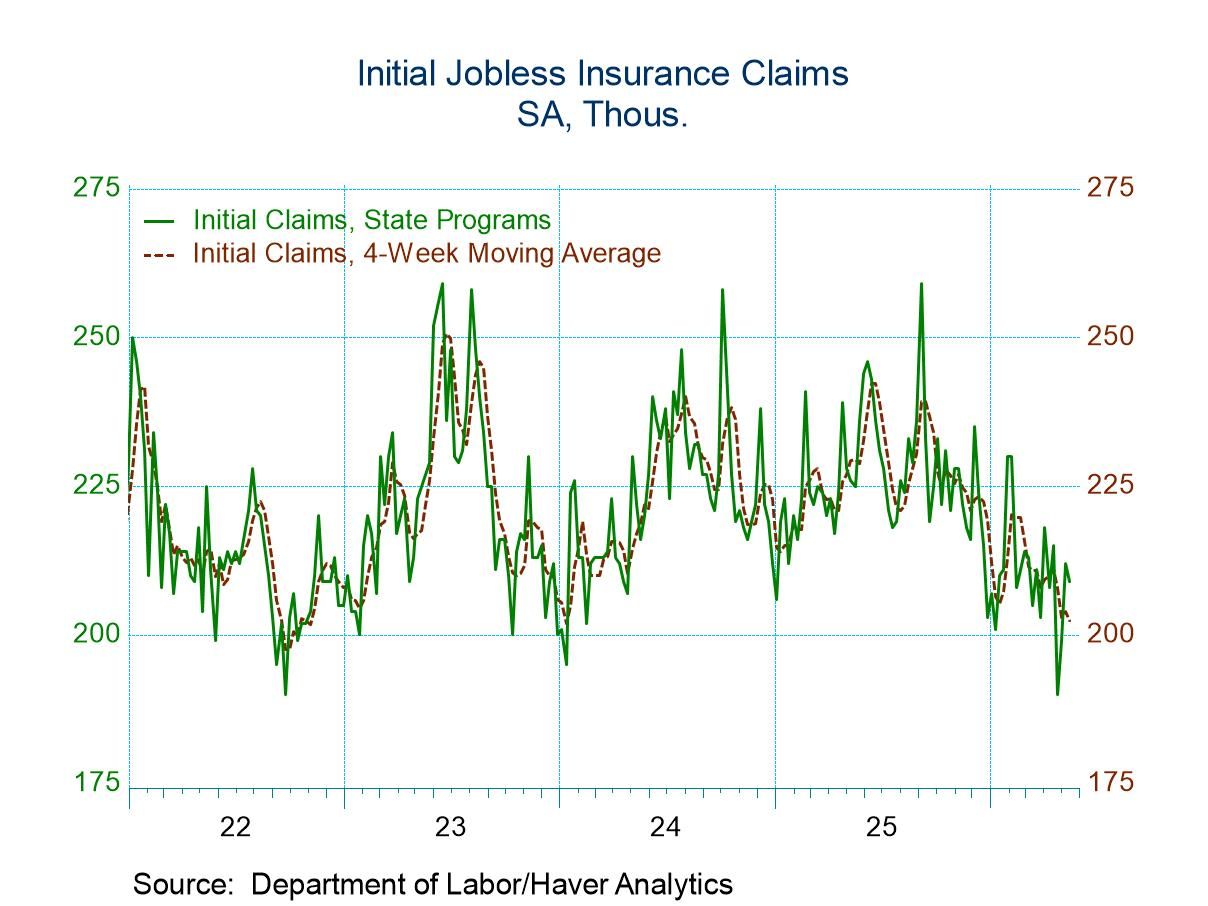
    • New claims declined by 3,000 to 209,000 in the week ending May 16.
    • Continuing claims rose by 6,000 to 1.782 million.
    • The insured unemployment rate was unchanged at 1.2% in the week of May 9.
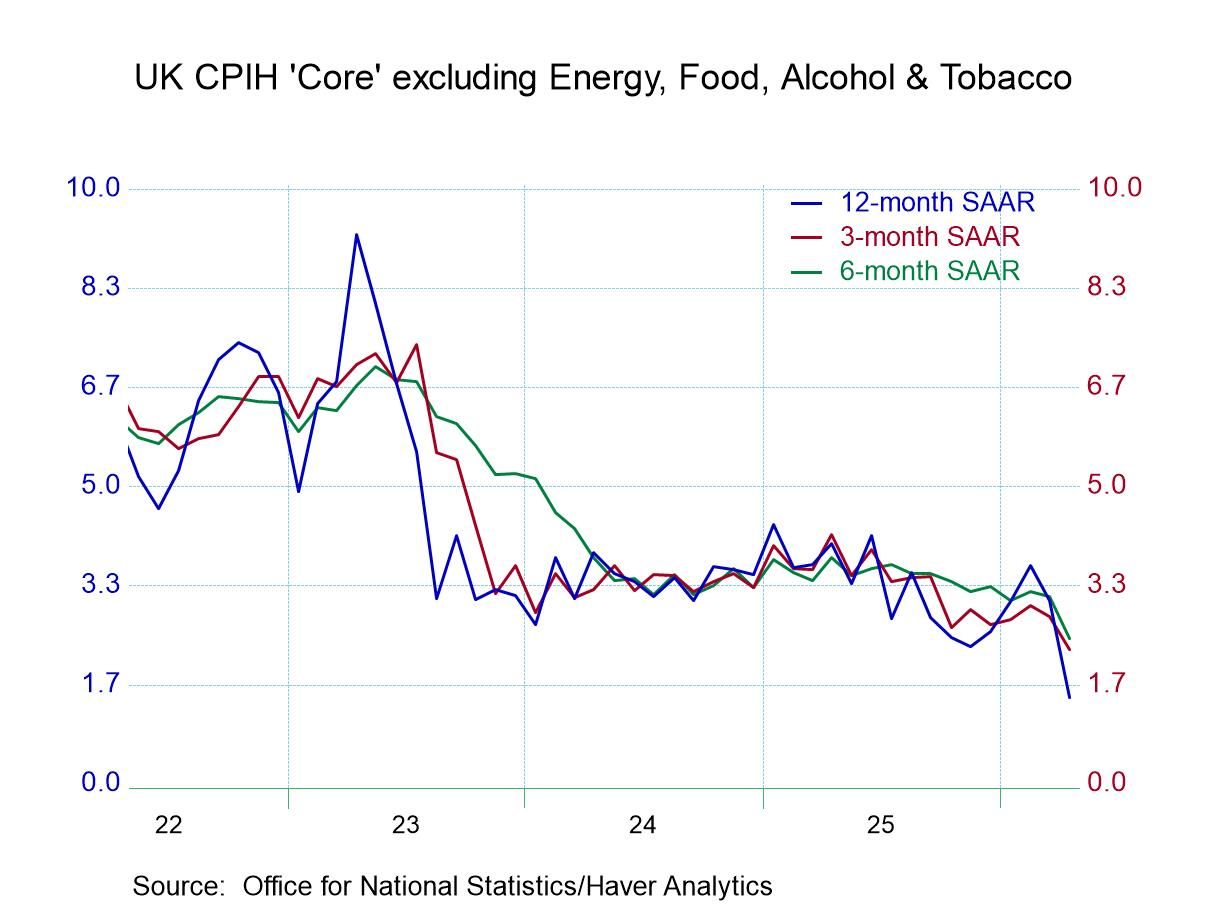
  • CPI inflation in the UK eased sharply in April with the headline making no change at all and the core rising by only 0.1%. The headline is a marked departures from March when the UK CPI rose by 0.4% as the core put in another good month, rising 0.1%. Sequentially, UK inflation as measured by the CPIH has been relatively stable with a 3% growth rate over 12 months, a 3% annual rate over three-months, and a gain of 2.9% annualized over six-months; it's about as steady as you can get. The core (CPH excluding energy, food, alcohol, and tobacco) rises 2.9% over 12 months, eases to a 2.7% annual rate over six-months, then rises at a 2% annual rate over three-months.

    Low inflation amid a global surge in oil prices The core is showing significant temperance and sequential improvement. Meanwhile, globally oil prices are flaring sharply, and most countries are seeing inflation rates rise. An energy cap in the UK is holding energy costs down and helping to keep the headline rate of inflation low. However, the cap can only work its magic for so long, eventually persisting strength in oil prices are going to show through into the headline index.

    Acceleration tendencies abate In April, 50% of the categories of the CPI H showed acceleration compared to March; in March only 41% had accelerated compared to February; in February only 41% had accelerated compared to January. On a broad basis, inflation acceleration has been substantially neutralized or controlled. Sequential calculations show that over three-months acceleration has occurred in 50% of the categories, over six-months and 12-months, however, acceleration has occurred in only 33% of the categories, indicating that there has been a relatively long-lived environment of inflation temperance.

    Still Too high However, inflation in the UK remains relatively high. The HICP measure, which is comparable to the measures used on the continent by the European Central Bank, has a 69th-percentile standing when ranked on data back to 2000. The CPIH has a 75.1-percentile standing and the CPIH-core has an 81.5 percentile standing. These are based on year-over-year percent changes and the two inflation gauges.

    Inflation rankings tell us that inflation in the UK is still relatively high compared to how it has performed over the last 25 years. However, what's most important is inflation relative to the target of 2%. At 3% the inflation rate is too high and at 2.9% the core inflation rate is too-high as well. However, we see the shorter-term inflation rates particularly for the core have come down. The core rate over three-months has even reached the 2% mark, which is both encouraging and surprising. The UK economy has been performing poorly. The Bank of England will certainly be making its next monetary policy decision based on the performance of inflation with some assessment and how the trend is faring as well as with reference to economic performance which has been marginal. We will have to see how the BOE looks at the effect of the energy cap. At the same time there's a great deal of political turmoil in the UK to pair with difficult global geopolitical conditions

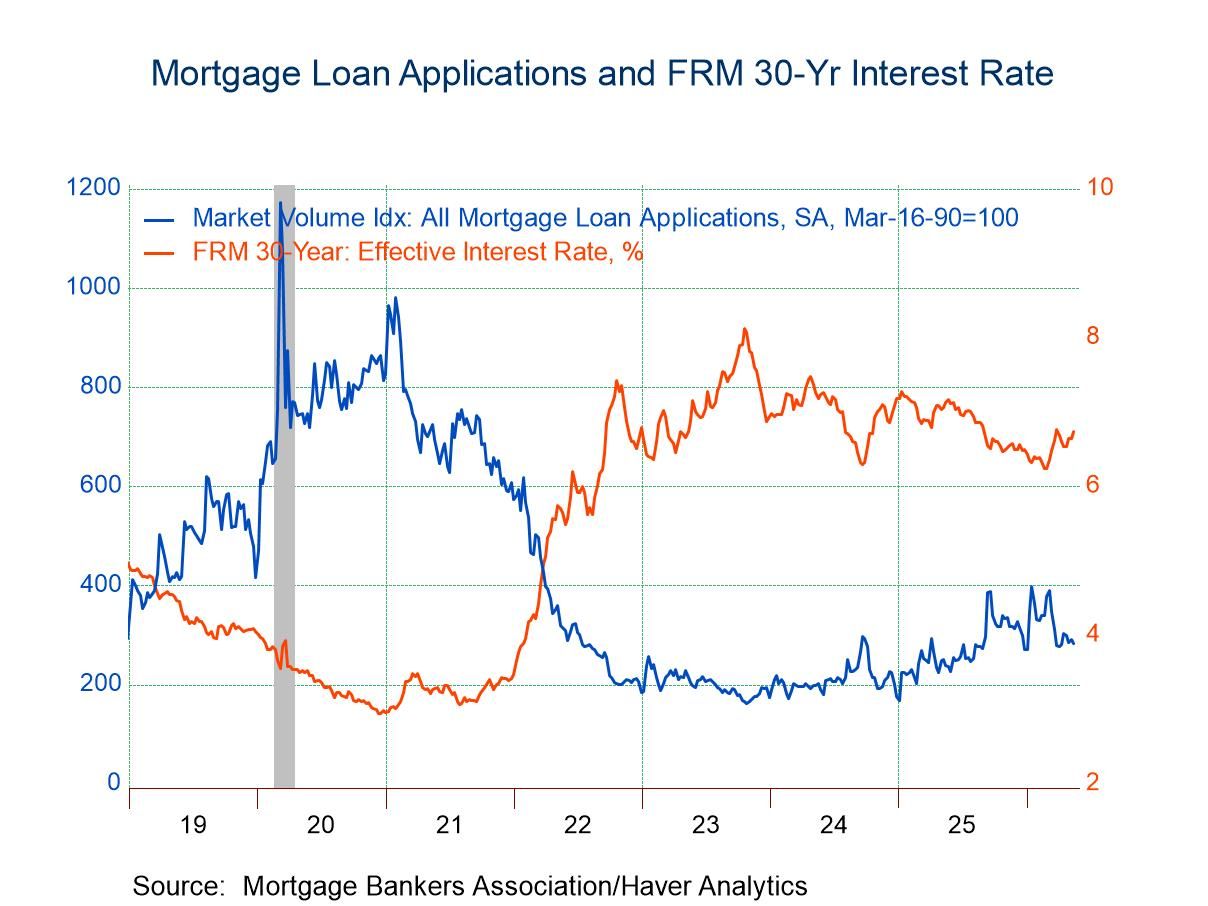
    • Both applications for loans to purchase and applications for loan refinancing declined in the latest week.
    • Interest rate on 30-year fixed-rate loans rose 9bps to 6.73%.
    • Average loan size declined.
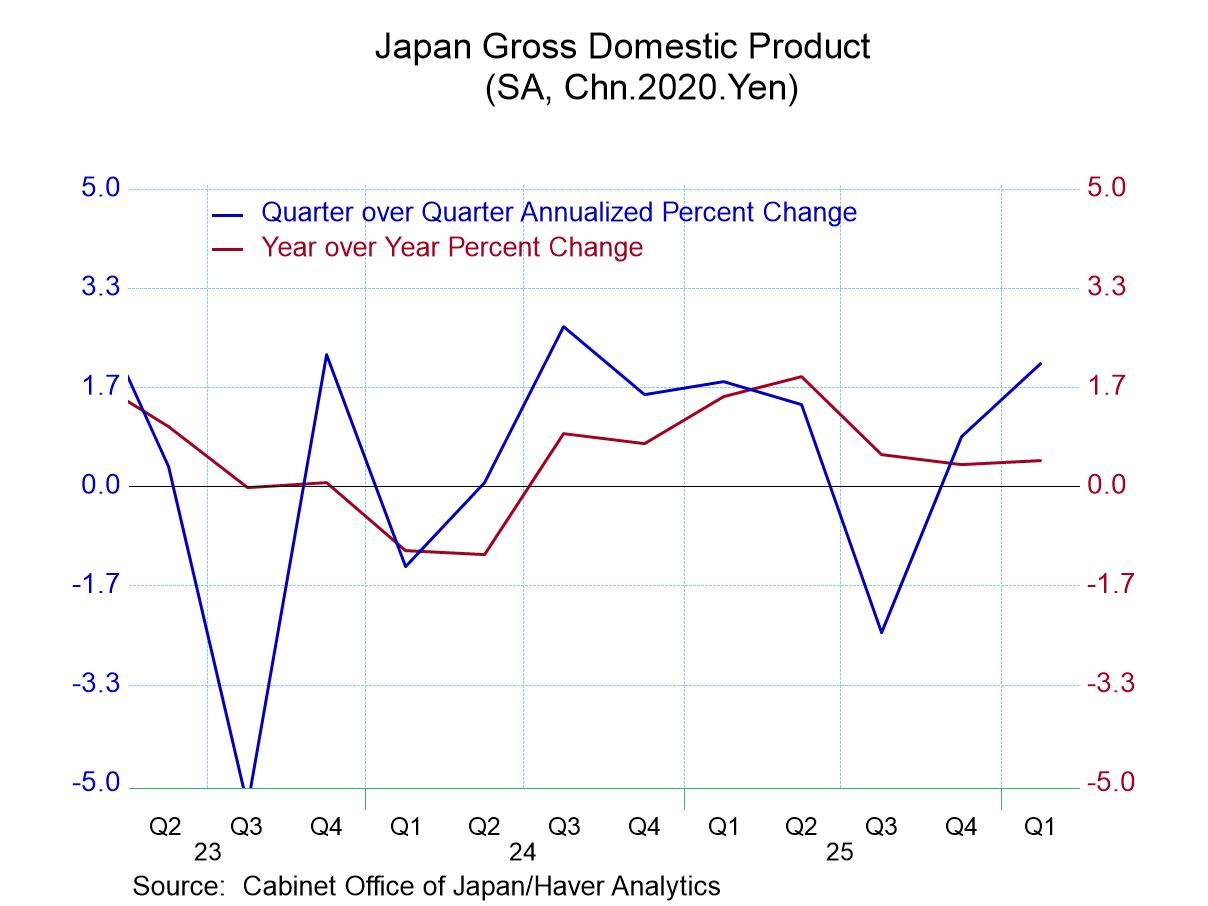
  • Japan’s GDP rose 2.1% annualized in 2026-Q1. The gain beat expectations for the quarter. The 2.1% rise was the largest gain since a 2.7% rise in 2024-Q3. However, it still leaves the year-on-year gain for GDP at 0.4%, the same as for 2025-Q4. And these are the weakest growth rates since Q1 and Q2 of 2024 when Japan’s GDP was declining.

    Private consumption in 2026-Q1 rose by 1.1% quarterly at an annualized rate, its strongest gain in a year. Still, the year-on-year rise in private consumption slowed to 1% from 1.4% in 2025 Q4. Growth in private consumption on a year-on-year basis is the weakest it has been since 2024-Q4.

    Despite some signs of GDP/Consumption stirring, the quarterly performance is not enough to boost the year-on-year growth rates to a position of strength, let alone firmness. Japan has simply been struggling for a while. And now with inflation bulging the BoJ has been super careful to move rates exceptionally slowly so that real interest rates in Japan remain exceptionally low (negative, still) and the prospect of rate normalization in Japan still seems to be a distant dream.

    New PM Sanae Takaichi called her snap election and improved her grip on government and is still looking to stimulate the economy, but Japan’s fiscal position is now so precarious that even the usual incantation that Japan owns most of its debt to itself (its own residents) has not been reassuring. Japan has become wary of is debt-to-GDP ratio. The time for a fiscal surge has passed and there is talk instead of a new industrialization policy to try to stimulate the economy within the realm of current spending trends by offering improved incentives for growth.

    Capital formation in GDP grew by 2.1% in 2026-Q1, a down shift for 2025-Q4, but capital spending is in a period of some volatility. The year-on-year gains show a step up in Q1 spending to a pace of 1.5% from 1.2% in the previous quarter. The five-year growth rate for capital spending is only 0.8% per year. Still there is not much here to build economic revival on.

    Plant and equipment spending has weakened in Q1, showing an annualized Q/Q gain of 1.1% and that compares to five-year annualized growth of 1.8%. Year-on-year plant and equipment growth is at 2.8%.

    Spending on housing turned sharply higher in Q4 with a smaller continued gain Q/Q in 2026-Q1. Still, after some considerable weakness quarterly, the year-on-year gain in housing spending in Japan in 2026-Q1 is -3.1% marking the third quarter in a row of declining spending on housing year-over-year.

    Net exports in Japan turned sharply higher in 2026-Q1 and year-on-year the change in the GDP-net exports balance swung from negative to positive. The annual improvement in the net export position is still only half of what it had been over the last five years. Export growth spiked while import growth stepped up in 2025-Q1. Exports and imports over the past year both growth more slowly than their 5-year averages.

    Domestic demand picked up a bit Q/Q in 2026, but the year-on-year growth slipped to 0.3% compared to a gain of 1.2% in the previous quarter.

    Japanese officials are engaged in active market talk to try to restrain further slippage in the yen. Markets buzz with rumors of intervention that has not happened for over a month. Japan’s decision on interest rate is also caught up in its concerns about the yen. Meanwhile, as Japan imports all its fuel and rising energy prices are a concern in Japan. Yet the concern is about the future more than anything else since Japan tends to sign long-dated energy contracts and likely has locked up its oil price costs for this year. Still, the ongoing pressure has put conditions in doubt for the year ahead.

    On balance Japan growth in 2026-Q1 was somewhat better than expected but it has done nothing to assuage concerns about the way forward. Ongoing inflation and a reticence to hike rates to address inflation continue to stalk the policy outlook as PM Takaichi looks for a way out of Japan’s weak growth trap.

  • In this week’s Letter, we review the key outcomes from last week’s US–China summit, which, while largely symbolic as a reset in bilateral relations, also yielded several notable trade-related agreements (chart 1). We also examine China’s latest monthly data releases, which extended last month’s moderation in growth and further highlighted the increasingly two-speed nature of its economy (chart 2). Turning to Japan, we look ahead to this week’s key data releases. Q1 GDP growth appears likely to be supported by resilient exports, while the domestic picture—reflected in indicators such as household spending—continues to lag (chart 3). On the inflation front, upcoming CPI readings will be closely watched; if price pressures accelerate further alongside continued yen weakness, this could revive a policy dilemma for the Bank of Japan (chart 4). Zooming out, inflation appears to have reasserted itself as the dominant market driver, with nominal yields rising across markets (chart 5). At the same time, AI-related optimism has taken a back seat for now, as equity markets pull back from recent rallies (chart 6).

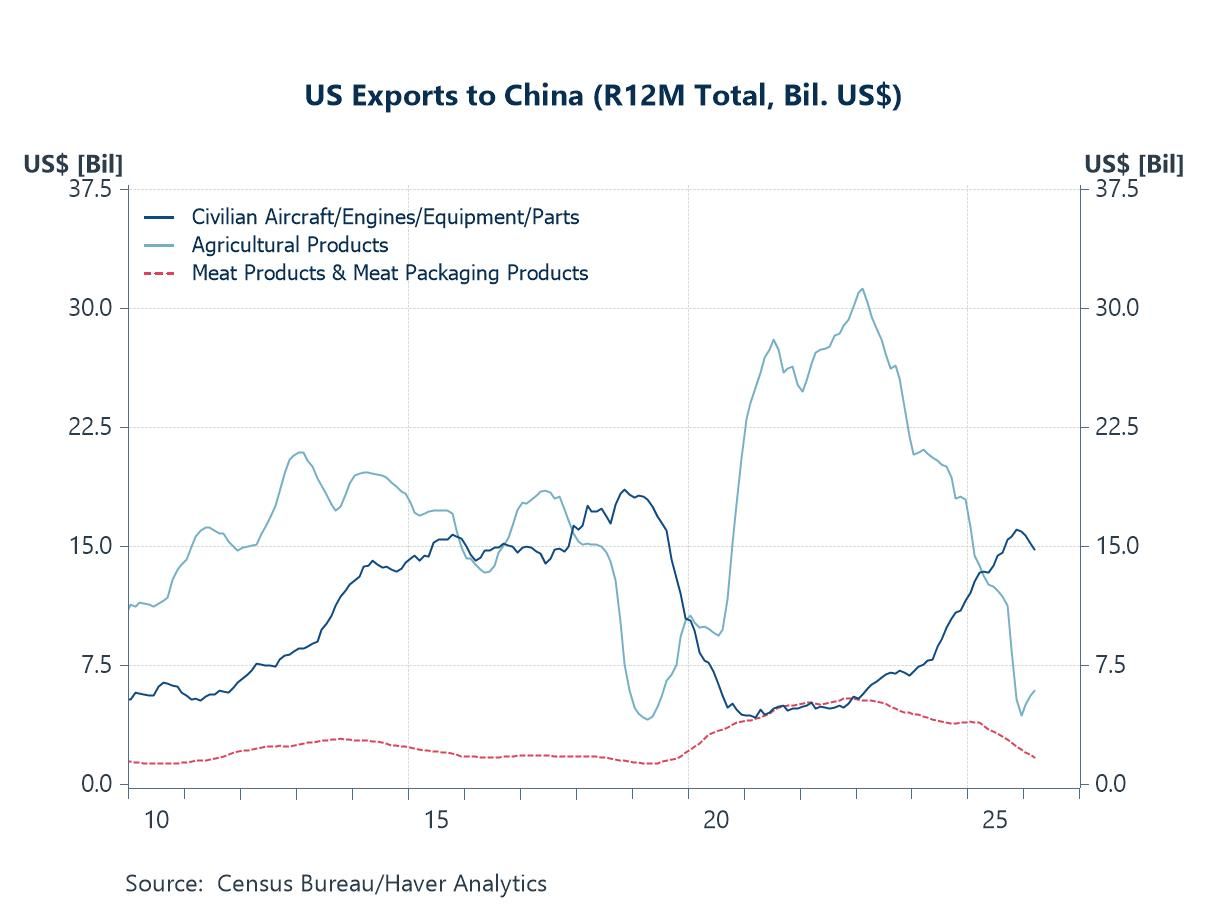
    The US-China summit The highly anticipated US–China summit concluded last week, with few details released immediately afterward. More information emerged early this week, as the White House outlined several key developments. Perhaps most importantly, though largely symbolic at this stage, the two sides agreed to build a “constructive relationship of strategic stability.” While the phrase does not imply any concrete policy actions, it may signal a shift away from the repeated tensions and frictions that have characterized recent interactions. The US and China also agreed that the Strait of Hormuz should be reopened, although no specific measures were announced to achieve this. On more tangible outcomes, the White House said China approved an initial purchase of 200 Boeing aircraft for Chinese airlines and committed to buying at least $17 billion of US agricultural products annually from 2026 to 2028. China also restored market access for US beef by renewing expired registrations for more than 400 US beef facilities and adding new listings, while resuming imports of US poultry.

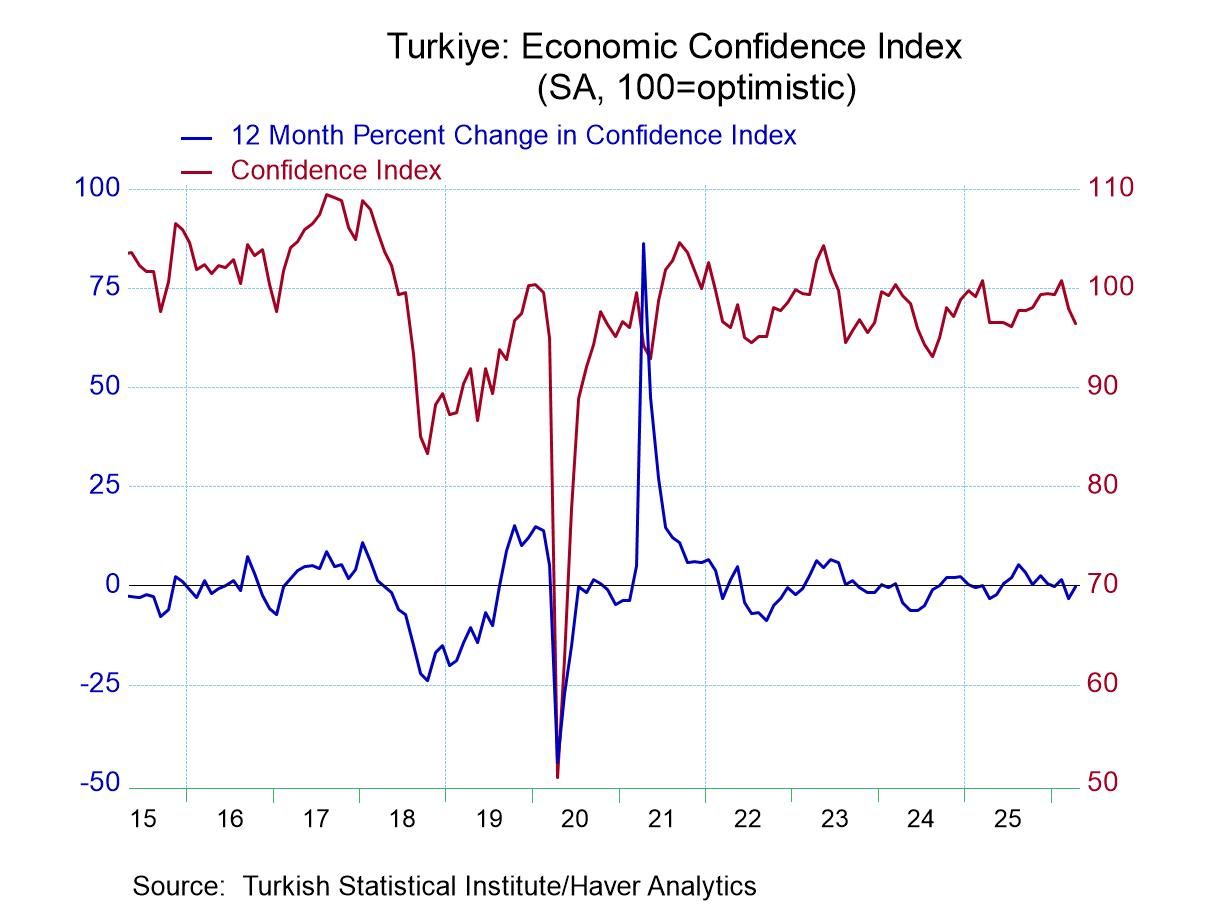
  • Confidence for Turkey in April improved rising by 1.5% month-to-month to an index value of 96.42. Services and retail confidence both rose on the month as confidence in Construction fell by a sharp 3.6%, partly reversing an even sharper gain form a month ago.

    The sequential performance of confidence in Turkey finds overall, services and retail sector confidence accelerating. Construction confidence is stronger over 3-months than over 12-months but its six-month gain shows slowing. Performance is still getting settled and the service and retail sector readings are still lower on balance over 12-months, even as they show acceleration and growth in train. Turky is a work in progress.

    The individual sector standings of the confidence metrics by sector are surprisingly similar and cluster around the 20-percentile mark. Overall confidence at 22.7% has the strongest reading while the weakest sector reading is 17.4-percent and it finds construction and services in a tie for the lowest index rank standing.

    The table also ranks confidence by growth rates, comparing growth over the past year across the sector readings. The growth sectors have relatively strong reading that the sector index standings. That is an admission that conditions currently have, when compared back to 2012, ranked weaker than the level of economic conditions (as proxied by confidence, of course) evaluated over the same period. It is evidence that some improvement in conditions (perceived improvement) is underway. The growth rate rankings stretch from the 32nd percentile to the 53rd percentile- all the growth standings exceed the index standings.

    The growth in construction at a 53.5-perntiel standing is above its median growth rate since January 2012. Overall confidence still has a growth rate below its median at a 41.9 percentile standing; the shortfall is significant but not severe. Services and retail are more significant laggard with growth rate standings in their respective 32nd- and 33rd-percentiles – historically, reading that are higher about two-thirds of the time on the timeline back to early 2012.

    Turkey continues to experience high inflation at 33% over the last year, a small deceleration from the month before. With global energy price pressures rising, Turkey’s central bank has recently lifted its outlook for inflation hear as well. The economy grew about 3.6% this year; it is on track for about 3% growth. Confidence readings suggest some ambivalence to these conditions. By this time, the population has gotten used to the high inflation. But growth has not stepped up significantly. That could be the key driver for improved expectations and confidence. But it is not yet a reality. Turkey is still, affected, of course, by the war-time conditions in Iran that is right on its border.