

- Slight rise is first since early August.
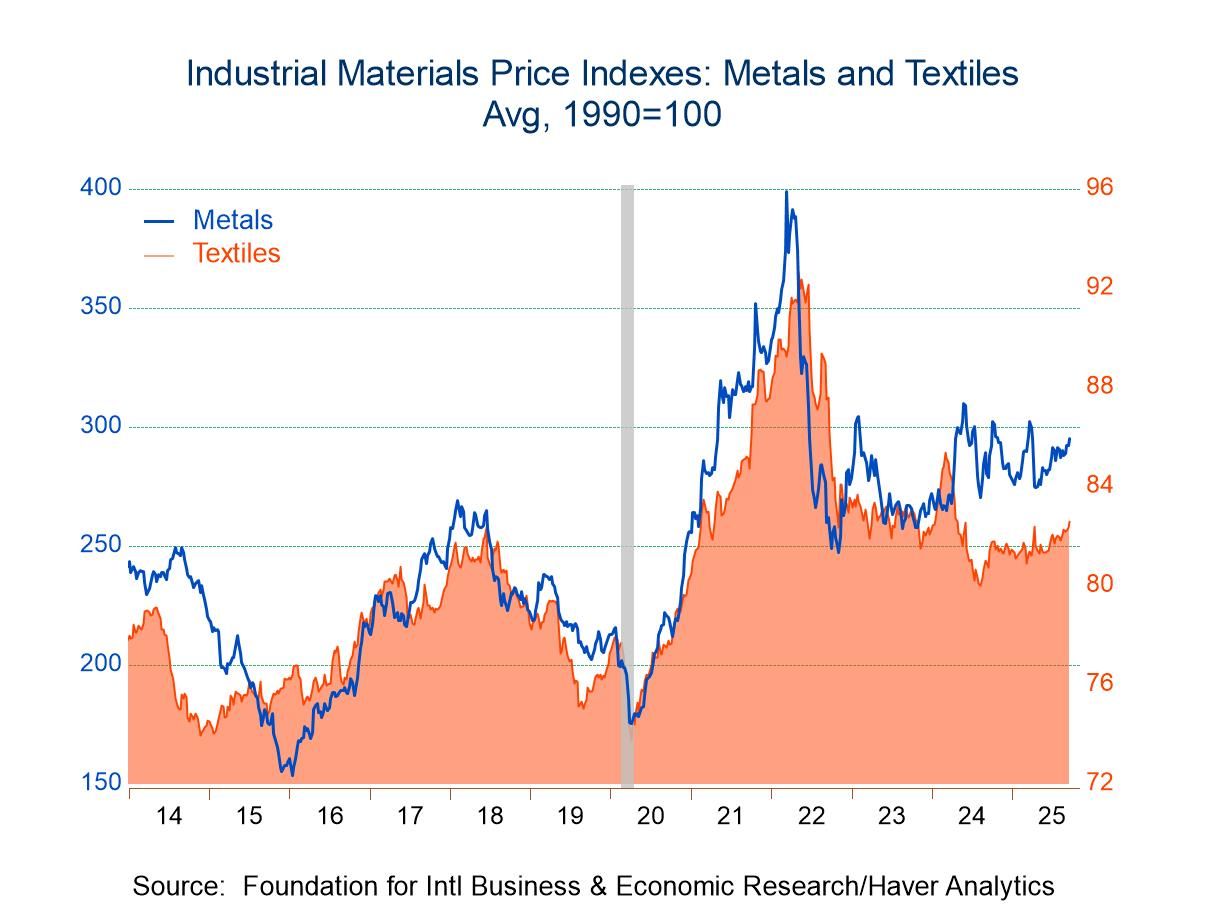
- Metals prices strengthen while textile costs improve.
- Lumber & crude oil prices decline.
by:Tom Moeller
|in:Economy in Brief
 Germany| Sep 19 2025
German PPI Shows Ongoing Release of Inflation Pressure
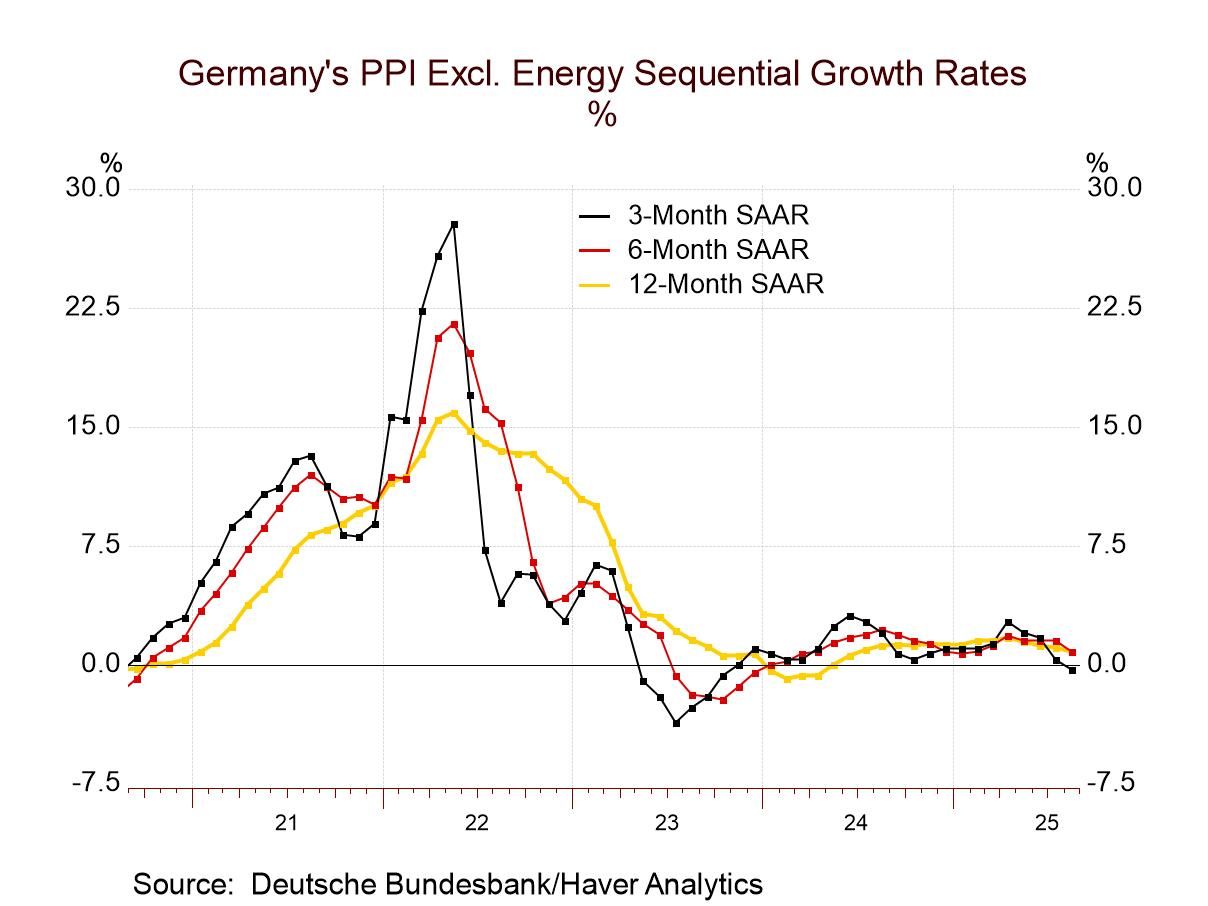
The German PPI report showed a drop of 0.5% in the August headline, continuing a string of inflation data on the producer price front that is laying a solid disinflationary trend for the German economy. The PPI rose by 0.1% in July and in June. Sequentially the PPI falls 2.2% over 12 months, falls at 3.9% annual rate over six months, and falls at a 1.3% annual rate over three months, an impressive record of inflation discipline at a time that consumer inflation has been running hot globally.
Germany's PPI excluding energy also fell in August, dropping by 0.2% on the month after being flat in July and rising 0.1% in June. The PPI excluding energy for Germany rises 0.8% over 12 months, rises at a 0.8% annual rate over six months, and falls at a 0.3% annual rate over three months. The inflation discipline extends past energy; it is not simply disciplined energy prices although that has been part of the story.
Sectoral German PPI data are not seasonally adjusted making their sequential patterns a little bit less dependable. However, sequentially German consumer prices show inflation has been dropping, the same is true for investment goods, whereas for intermediate goods, not only is inflation dropping but prices are dropping too; inflation is negative over 12 months, six months and three months with the 3-month drop in intermediate prices at a -3.4% annual rate.
The behavior of producer prices compares to modest results on the CPI front where, sequentially, the German CPI rose 2.3% over 12 months, at a 1.8% pace over six months, and then at a 2% pace over three months, all well-contained changes. The CPI excluding energy rose by 2.6% over 12 months, 2.5% over six months, and 2.4% over three months showing a very slight deceleration with inflation looking still very sticky at about 1/2 of a percentage point above what is the target pace set by the ECB for the European Monetary Union as a whole.
 Global| Sep 18 2025
Charts of the Week: Faith in the Fed, Faith in Fiber
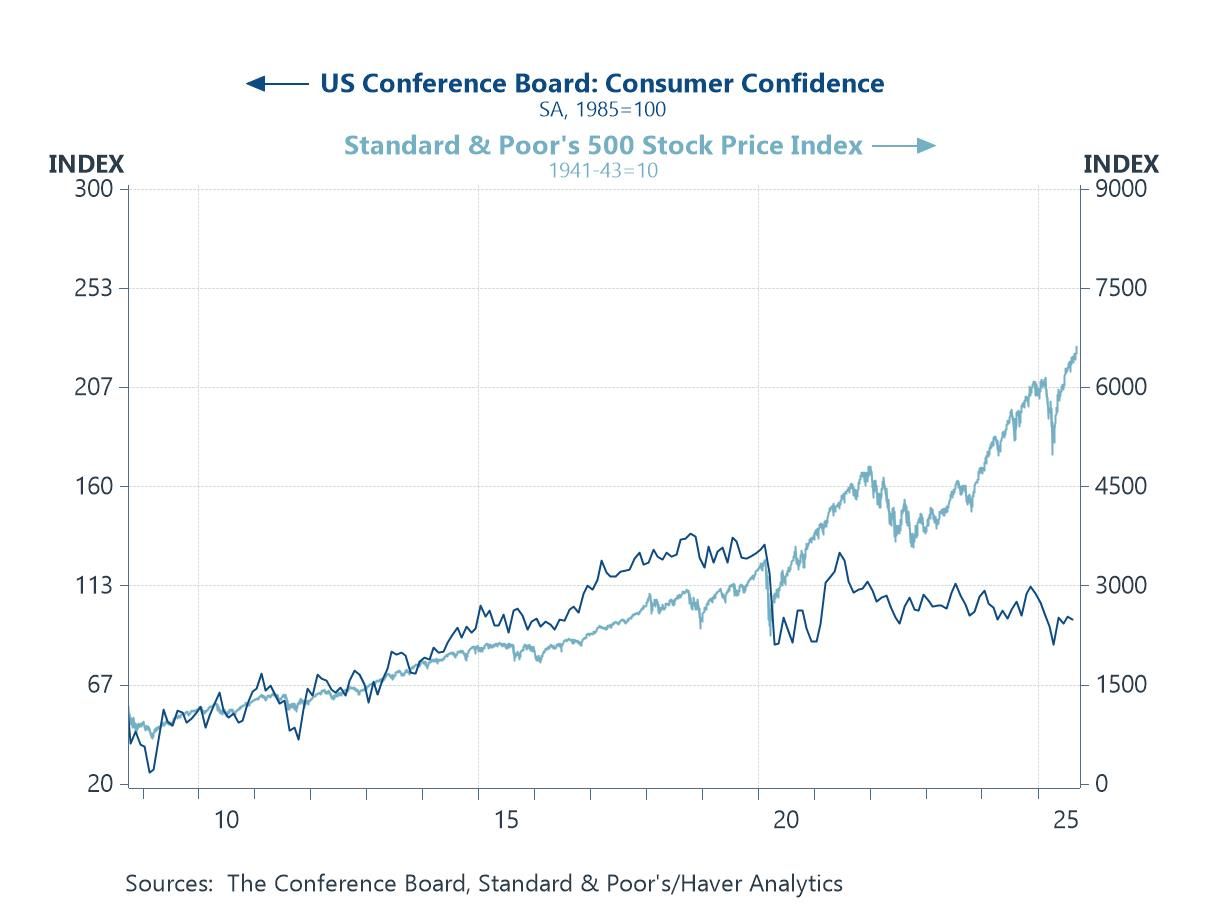
Global equity markets have remained near record highs over the past few days following the Fed’s 25bp cut on Wednesday, and which investors have seen as a key prop even without a full dovish pivot. AI optimism is also arguably doing some heavy lifting: markets are pricing a step-change in economy-wide productivity and margins from AI adoption, lifting multiples—especially among AI-exposed companies. However, some of this week’s charts frame the hurdles those hopes must clear: US consumer confidence remains subdued even as equities rise (chart 1); the Fed’s forward path is potentially becoming more politicised and inflation expectations have not softened in line with oil (chart 2); economists’ 2025 profit growth forecasts, in the meantime, have been marked lower and dispersion is wide, leaving valuations reliant on an AI-led earnings re-acceleration (chart 3). Elsewhere in Asia, earlier and ongoing easing underscores weak domestic demand and tariff risks rather than robust momentum (chart 4). Commodity dynamics could help at the margin—food prices have eased on better harvests and smoother supply chains (chart 5). Finally, and ahead of this week’s BoE decision in the UK, elevated services inflation tied to still-lofty pay growth is complicating the scope for further policy easing. In sum, the equity narrative arguably leans heavily on AI delivering tangible, near-term earnings power while policy remains credible and inflation contained; disappointment on any front in other words could challenge today’s valuations.
by:Andrew Cates
|in:Economy in Brief
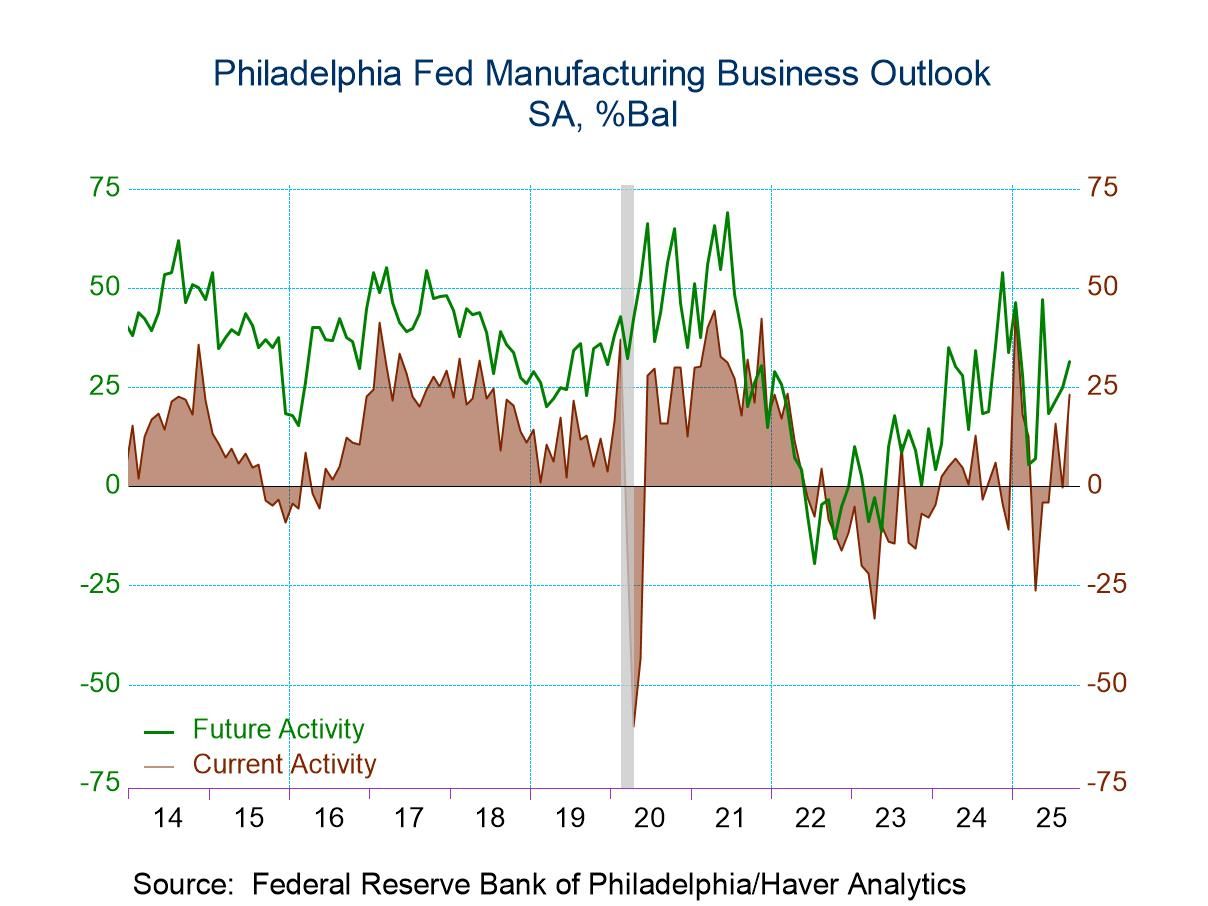
- Current General Activity Index improves to highest level since January.
- Inflation reading declines to seven-month low.
- Future General Activity Index continues upward movement.
by:Tom Moeller
|in:Economy in Brief
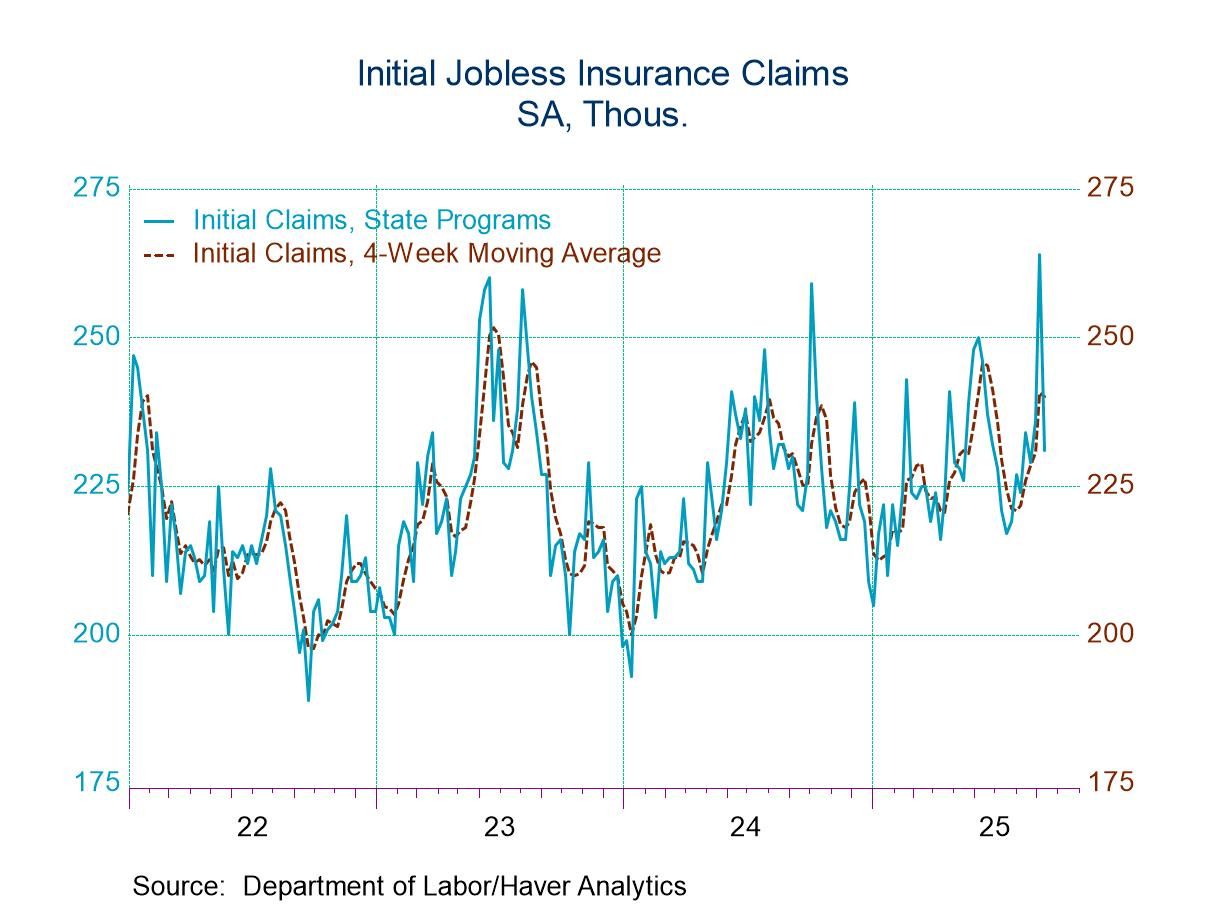
- Initial claims declined 33,000 in latest week.
- Continuing claims were down slightly.
- Insured unemployment rate holds steady.
 Australia| Sep 18 2025
Australian Unemployment Steady and Low Despite a Broader Rising Trend
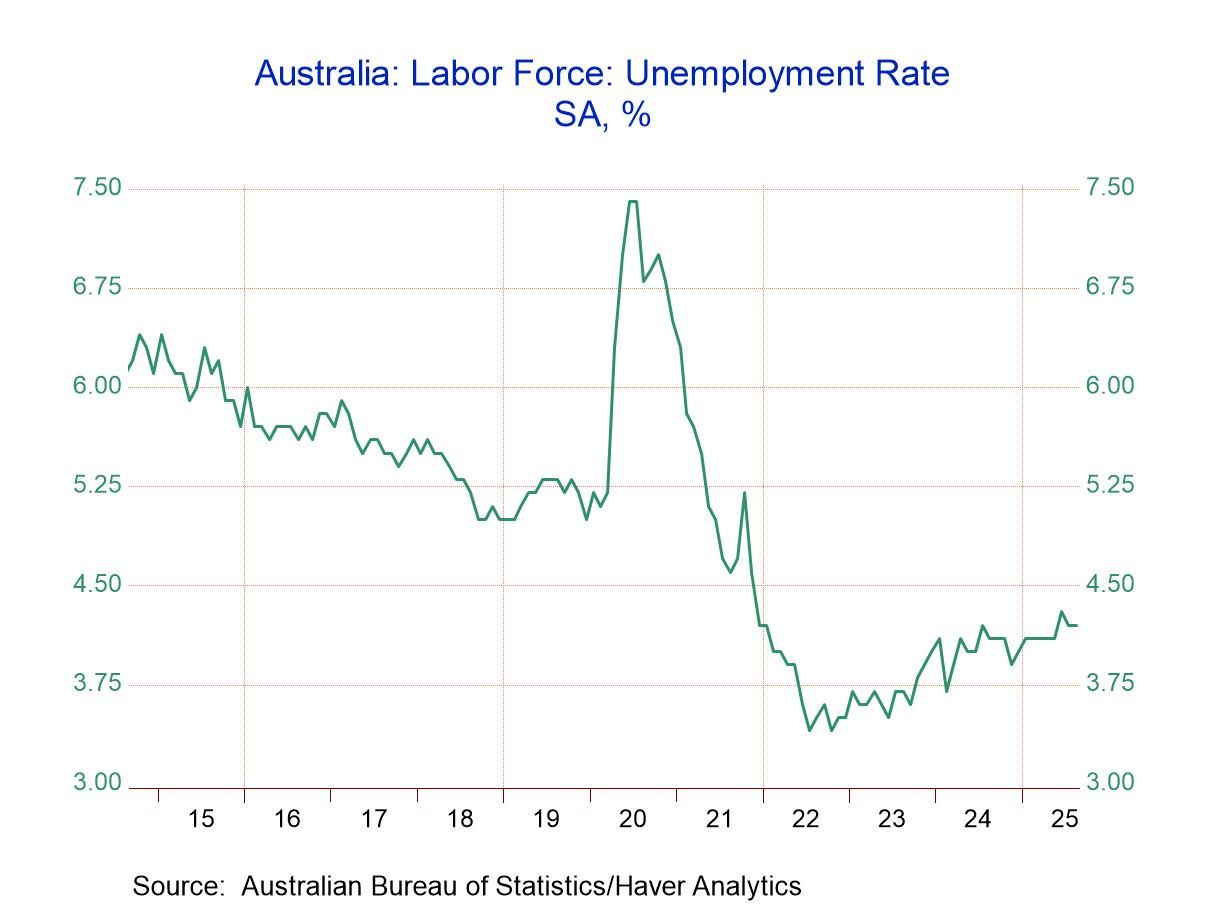
Unemployment in Australia in August remained low, standing at 4.2%, the level it dropped to in July. June brought a rise in unemployment to 4.3% after posting 4.1% in May. However, at 4.2% the unemployment rate in Australia is low, since about 2000 the unemployment rate has been lower only about 16% of the time.
The labor force participation rate in August fell to 66.8 from 67.0 where it had been for the previous several months. The participation rate, however, is high on historic comparison at about the 95th percentile; the participation from people ages 15 to 64 is even higher with a 97.7 percentile standing on the participation rate of 80.6%.
However, employment gains in Australia have been slowing. The year-over-year gain is 1.5%, over six months, employment speeded up, gaining a pace of 1.9% at an annual rate, but over three months the growth rate for employment has fallen to a sharply lower 0.6% annualized.
Australia's labor force fell by 0.5% in August after rising robustly in previous months. The labor force was rising by 1.6% over 12 months, at a 2.2% annual rate over six months and at a 1.3% annual rate over three months. There's been some variability in labor force growth, but it still seems to be relatively solid. The year-over-year growth rate, however, has a ranking only in its 33 percentiles historically back to the year 2000- a lower one-third standing.
In terms of the overall economy, retail sales have picked up; some of this is inflation. The growth rate for retail sales over three months is 7.1%; over 12 months it's 4.9%. Headline inflation grew by 2.8% over 12 months, but it's rising over three months at a stronger 4.2% annual rate. Inflation excluding volatile measures has been relatively stable over three months, six months, and 12 months. However, it picked up quite considerably in June, rising at a very rapid double-digit pace.
Australia's low and consistent unemployment rate is in step with what's going on internationally. Globally there is stability or some small backtracking on unemployment gains made since COVID. In the European Monetary Union, we're looking at unemployment rates consistently low over 12 months, 3 months, and 6 months at a historically low level. Japan's unemployment rates are consistent and low near historically low levels as well. In the United States and in the United Kingdom, unemployment rates are relatively stable. The U.K. shows some drift up in its unemployment rate. But both the U.S. and the U.K. have unemployment rates that have been lower only about 30% of the time.

- FOMC lowers funds rate target by quarter point after stability since December 2024.
- The decision was approved by all but one FOMC voter.
- Expected GDP growth & price expectations raised.
by:Tom Moeller
|in:Economy in Brief
 USA| Sep 17 2025
U.S. Housing Starts and Building Permits Decline in August
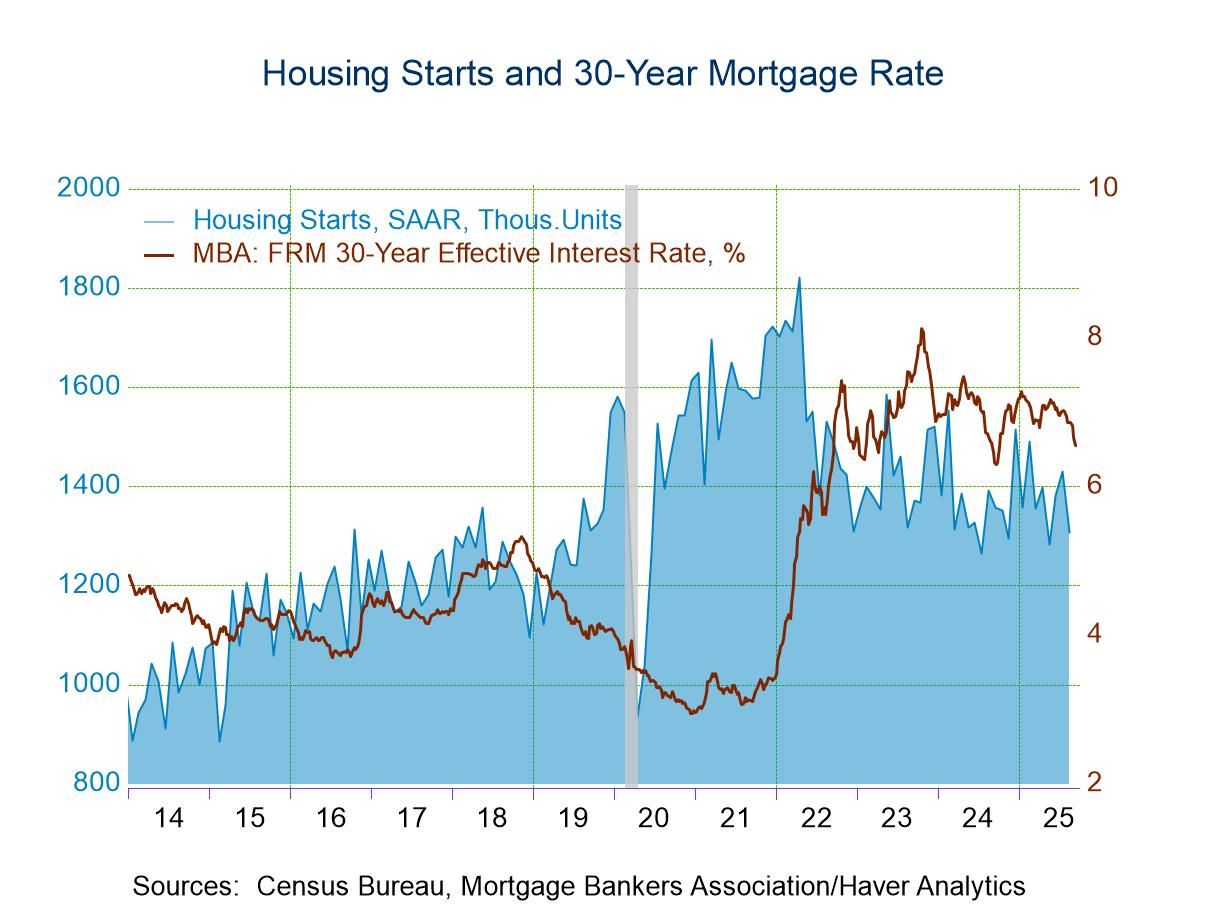
- Downturn reverses June/July improvement.
- Single & multi-family starts decline.
- Building permits drop to five-year low.
by:Tom Moeller
|in:Economy in Brief
- of10Go to 4 page