Global| Jul 21 2026
ZEW Shows Mixed Gains in July
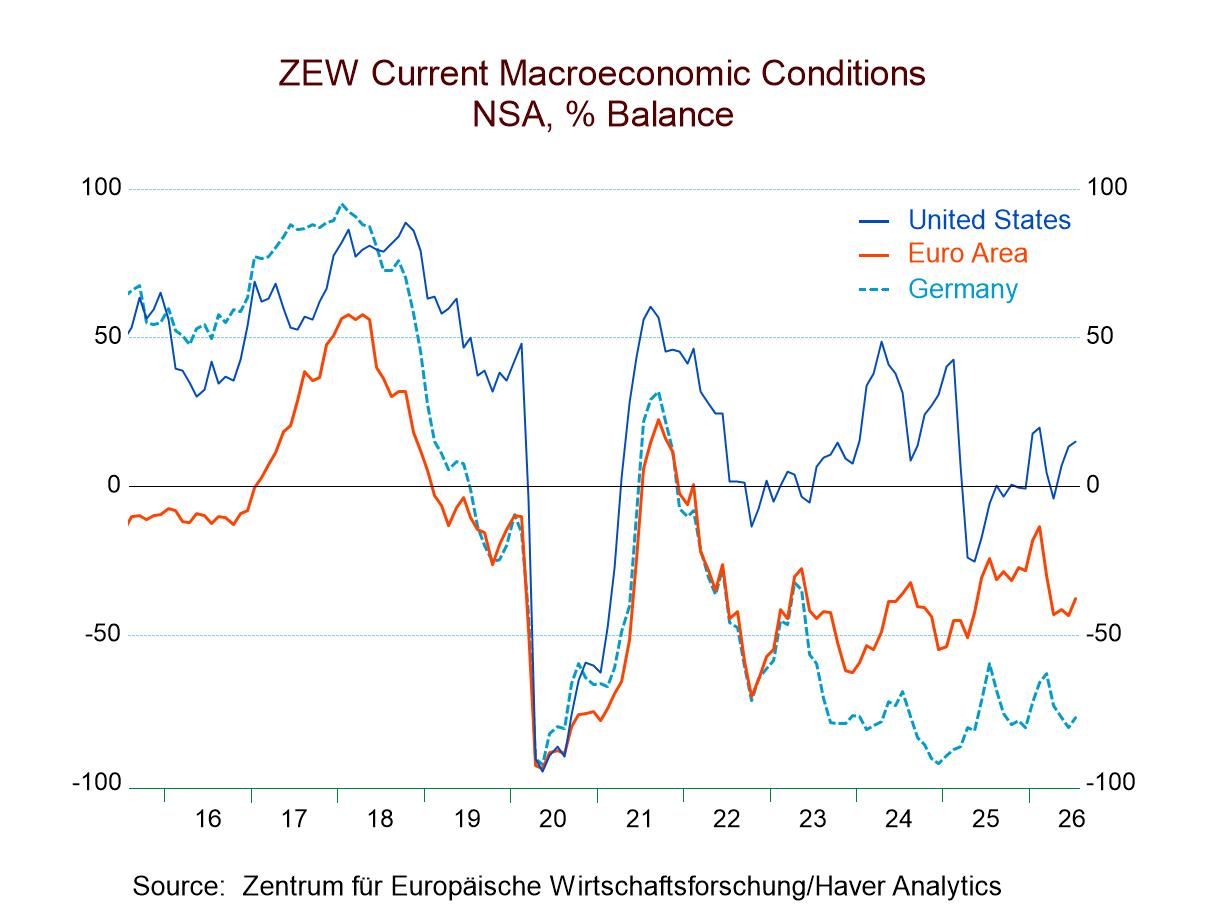
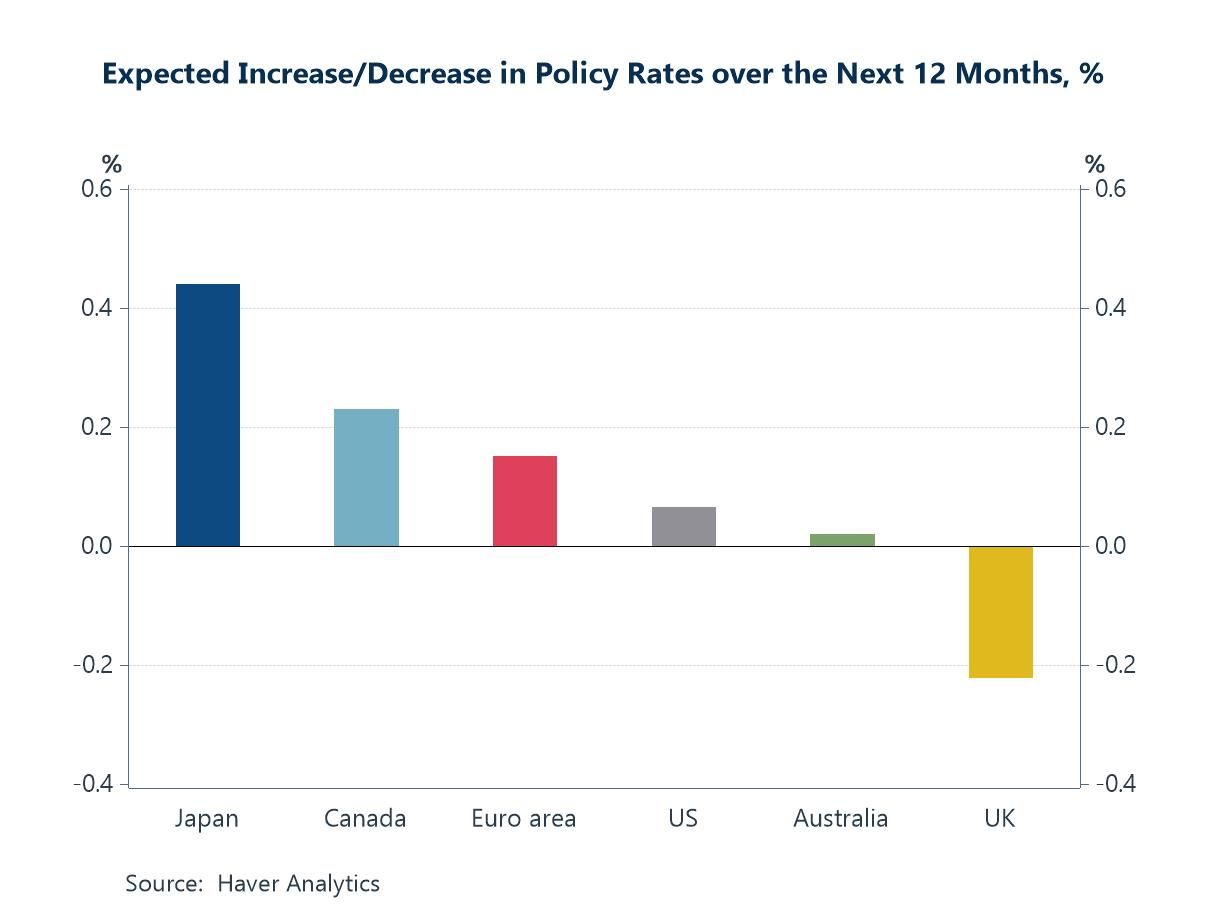
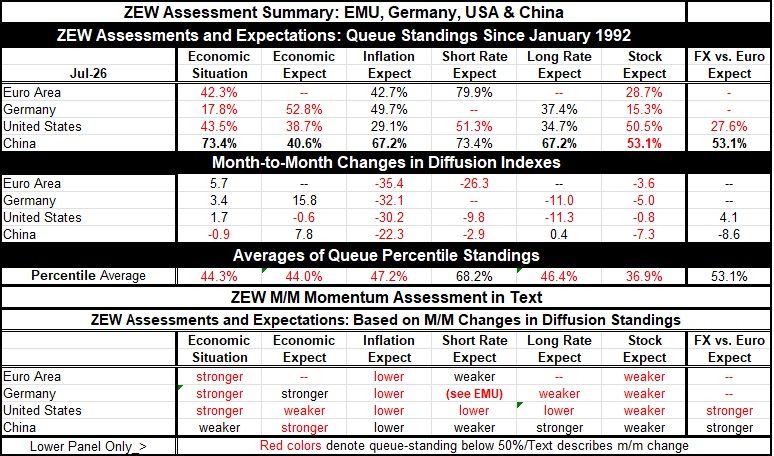
The ZEW survey, assessing the opinions of German financial experts for July, showed continuing weak but improving conditions in the euro area, Germany, and the United States, with a slight step back in China. Economic expectations improved month-to-month for Germany and China, while posting a slight setback in the United States. Inflation expectations weakened month-to-month sharply and significantly across the board in all four economic units. Short-term interest rates are broadly expected to fall, while long-term interest rates are also expected to ease, with the exception of China, where some small increases are anticipated. Stock markets are showing weaker performance, with moderate step backs across all four areas.
The average of the percentile standings for the four economic units surveyed is a standing in the 44th percentile. That average reflects China as the only survey member above its median observation. Germany has the lowest reading at a 17.8 percentile standing. Next, economic expectations have a 44-percentile average as Germany is the only one above its 50th percentile mark, putting it above its median. The U.S. and China show weaker level standings around their respective 40th percentiles. Inflation expectations have a midstream ranking at their 47th percentile, below their historic medians, with China above its historic median, Germany very close to its historic median, and the euro area and the U.S. posting more moderate standings. Short-term rate expectations have an average standing in their 68th percentile; all of the readings are above their 50th percentile mark, marginally so for the U.S. but more substantially for China and the euro area. Long-rate expectations have a 46.4 percentile average standing, with China well above its median on a ranking above the 50th percentile and with rankings between the 35th and 40th percentiles for Germany and the U.S. Stock market expectations average a 36.9 percentile standing for the four economic units, with the U.S. and China above their 50th percentile mark and the euro area and Germany, substantially weaker.
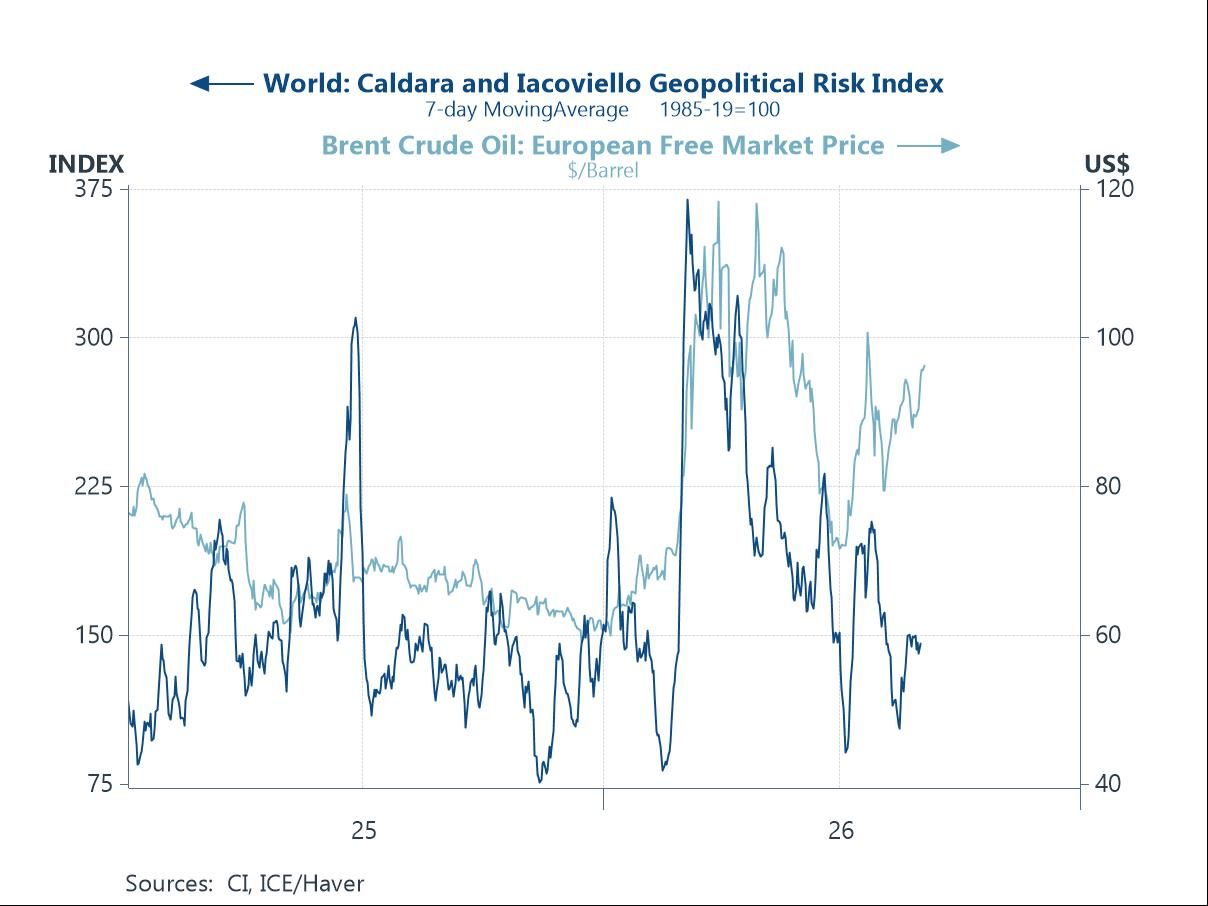
Most notably, inflation expectations fell sharply in July across the board. But that was probably earlier in the month and reflected a belief that the U.S.-Iran ceasefire would hold. Now that is largely reversed as the hot war is back in Iran. So, we will expect to see backtracking in this survey next month. Of course, that means that the interest rate portion of the survey might also be in for a rehash. That will be something to watch for.

Robert Brusca
AuthorMore in Author Profile »Robert A. Brusca is Chief Economist of Fact and Opinion Economics, a consulting firm he founded in Manhattan. He has been an economist on Wall Street for over 25 years. He has visited central banking and large institutional clients in over 30 countries in his career as an economist. Mr. Brusca was a Divisional Research Chief at the Federal Reserve Bank of NY (Chief of the International Financial markets Division), a Fed Watcher at Irving Trust and Chief Economist at Nikko Securities International. He is widely quoted and appears in various media. Mr. Brusca holds an MA and Ph.D. in economics from Michigan State University and a BA in Economics from the University of Michigan. His research pursues his strong interests in non aligned policy economics as well as international economics. FAO Economics’ research targets investors to assist them in making better investment decisions in stocks, bonds and in a variety of international assets. The company does not manage money and has no conflicts in giving economic advice.
More Economy in Brief