

U.S. Payroll Employment Surged in August
by:Sandy Batten
|in:Economy in Brief
Summary
- U.S. nonfarm payrolls surged 162,000 in August with upward revisions to both June and July.
- The market consensus looked for a 52,000 increase.
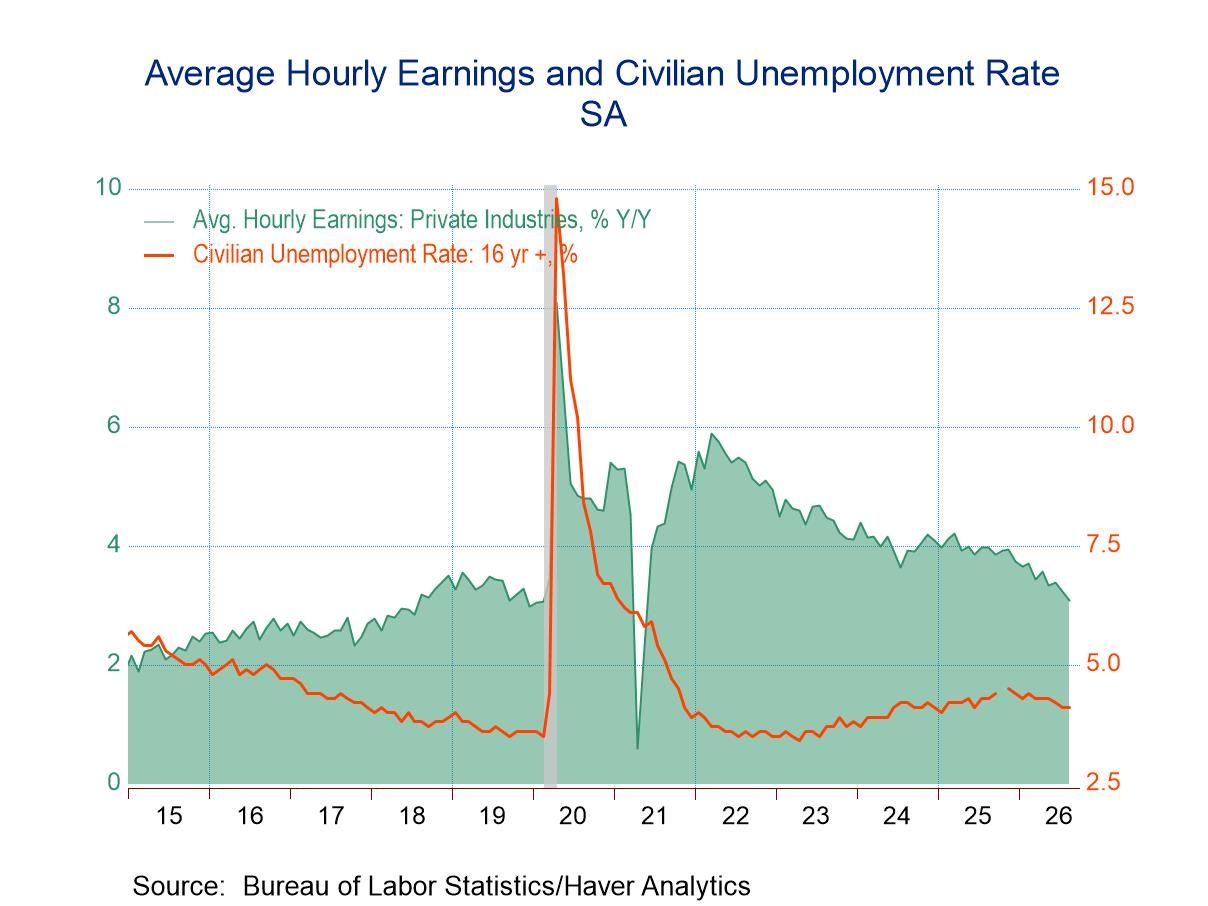
- The unemployment rate was unchanged at 4.1%, the lowest rate since June 2025.
- In the household survey, employment jumped 569,000, its largest population-adjusted increase since November 2023.
- Average hourly earnings rose 0.3% m/m, but the y/y rate continued to trend down, sliding to 3.1%, the lowest since May 2021.
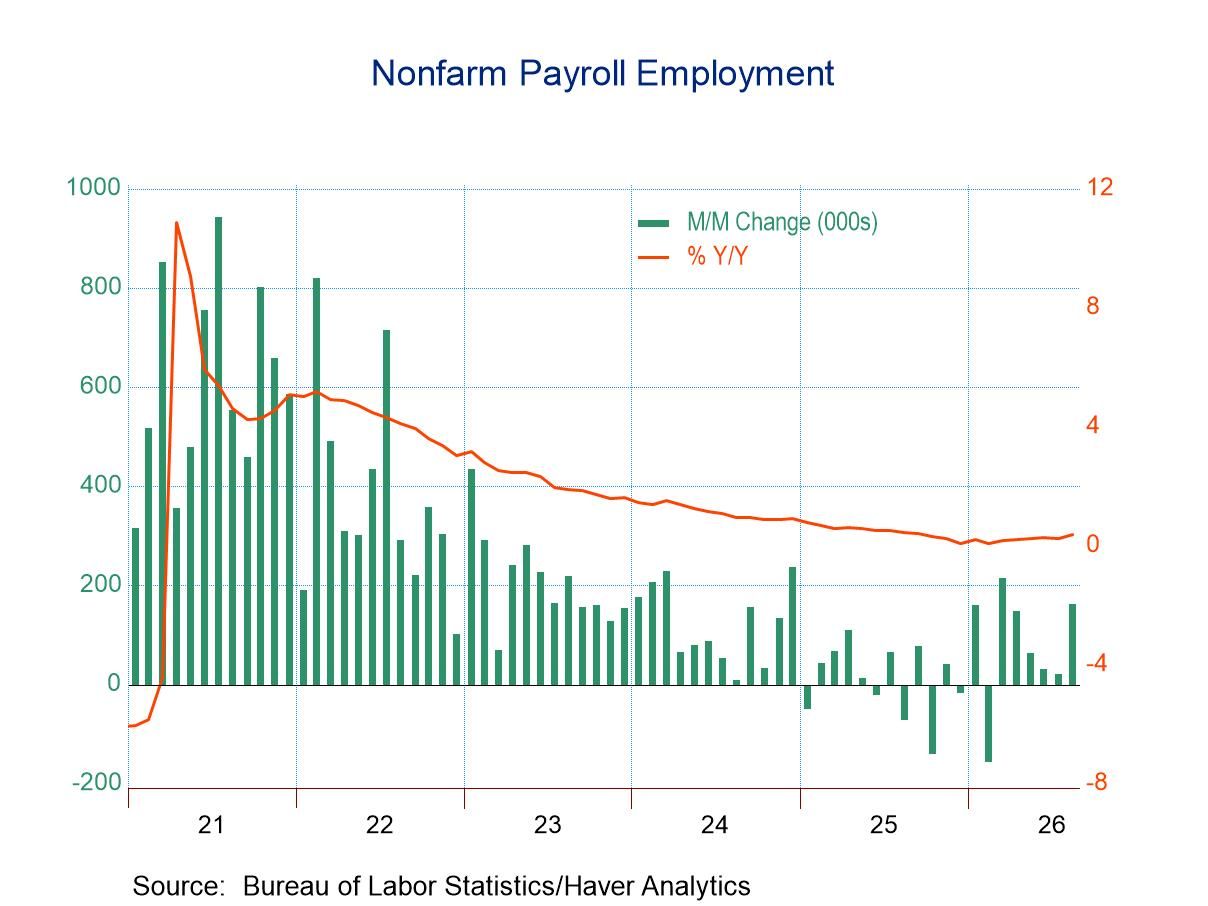
After two consecutive months of disappointingly weak employment reports, the August report was much stronger than expected. Nonfarm payrolls increased 162,000 with meaningful upward revisions to both June and July, according to today’s report from the Bureau of Labor Statistics. The Action Economics Forecast Survey expected an increase of 52,000. The 23,000 decline previously reported for July was revised up to a 21,000 increase while the 20,000 increase previously reported for June was revised up to a 31,000 gain. The average gain over the past three months rebounded to 71,000 from 38,000 in July while the average increase over the past six months jumped to 106,000 from 54,000 in July. Both are on a modest uptrend and remain significantly stronger than in the second half of last year.
Private-sector payrolls also rose much more than expected in August after having disappointed in both June and July. They increased 127,000 against an expected increase of 46,000 with upward revisions to both June and July totaling 48,000. Government employment rebounded in August, increasing 35,000 after falling 50,000 in July. The swing from July to August was due to local government education jobs, which fell 58,000 in July but jumped 42,000 in August. It is usually difficult to seasonally adjust education jobs in the summer, but this seemed to be even more difficult this year. The July collapse in education jobs was the largest fall since September 2020 while the August rebound was the largest increase since July 2022.
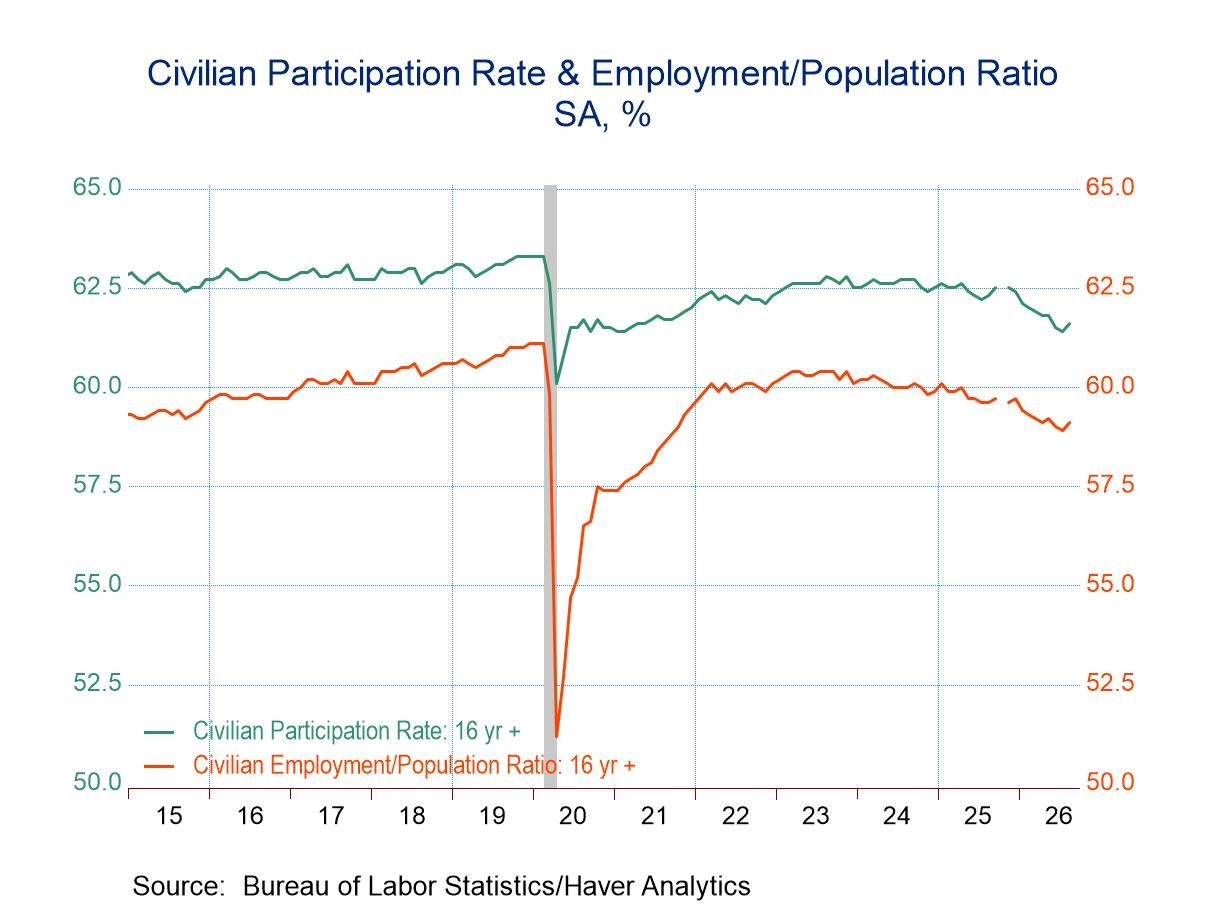
The stronger-than-expected payroll report was echoed by a very strong report from the household survey. The civilian labor force jumped 683,000, the largest population-adjusted monthly increase since October 2020. The labor force had declined in four of the preceding five months. Employment increased 569,000 in August, again after having declined in four of the previous five months. The August rise was the largest population-adjusted monthly gain since November 2023. The number of unemployed increased 115,000 in August, its first increase in four months while the unemployment rate was unchanged at 4.1%, the lowest reading since June 2025. The labor force participation rate rebounded to 61.6 in August from 61.4 in July.
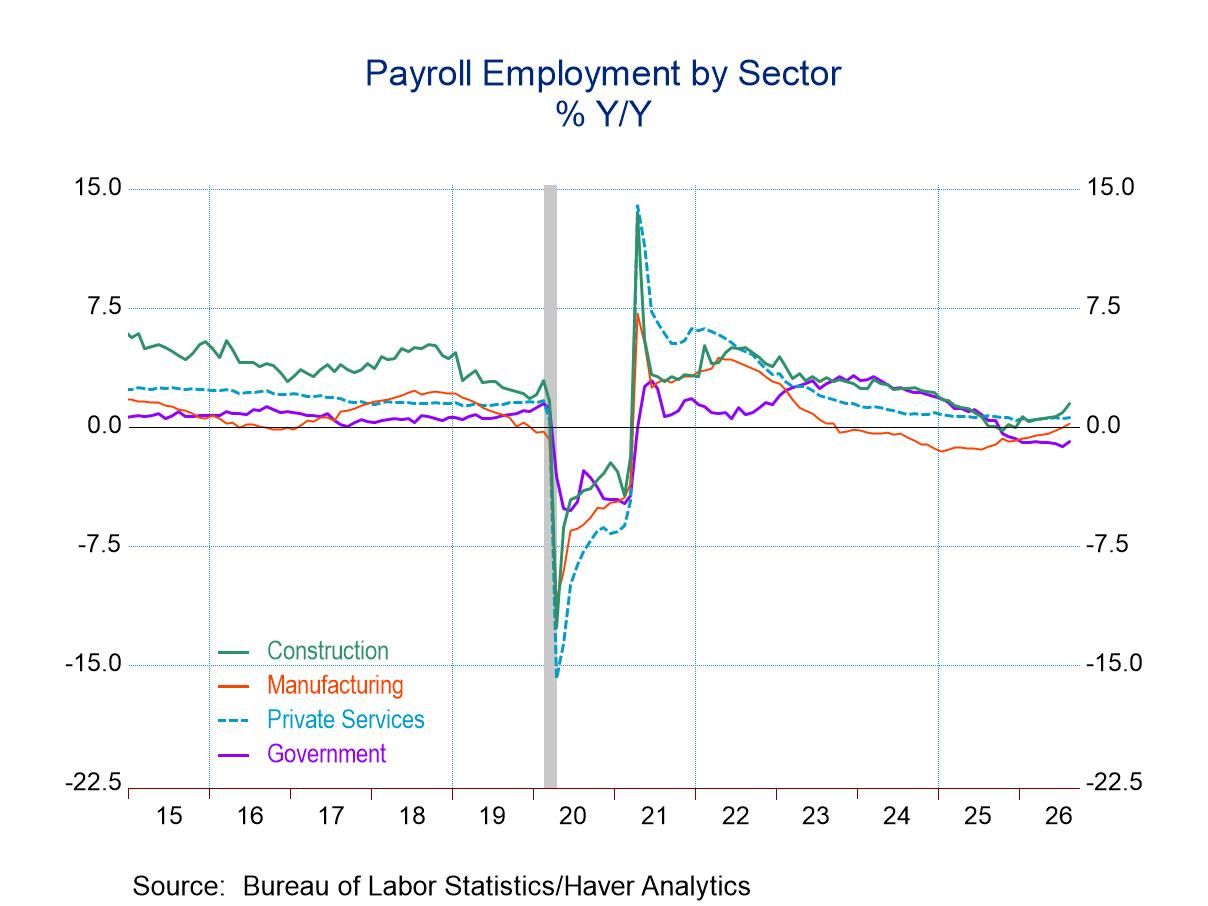
In the establishment survey, private-sector goods-producing jobs increased a strong 41,000 in August, the largest monthly gain since January, on top of an upwardly revised 29,000 in July. Construction jobs rose 22,000 in August, the sixth consecutive monthly increase, while manufacturing jobs increased 16,000 in August, the third consecutive monthly gain and the largest since November 2023. Private-sector service-producing jobs rose 86,000 in August following an upwardly revised 42,000 gain in July (previously +5,000). The August increase in service-producing jobs was led by a surprising 62,000 increase in leisure and hospitality jobs following monthly declines in both June and July. The World Cup had been widely expected to generate jobs but leisure jobs fell in both June and July. So, the August rebound was surprising and accounted for nearly ¾ of the total increase in service-producing jobs. Healthcare and social assistance added 28,000 jobs in August while information jobs fell 23,000, the fourth monthly decline in the past five months, and financial activities jobs declined 11,000, the fifth monthly decline in the past six months. The declines in information and financial jobs may be related to AI.
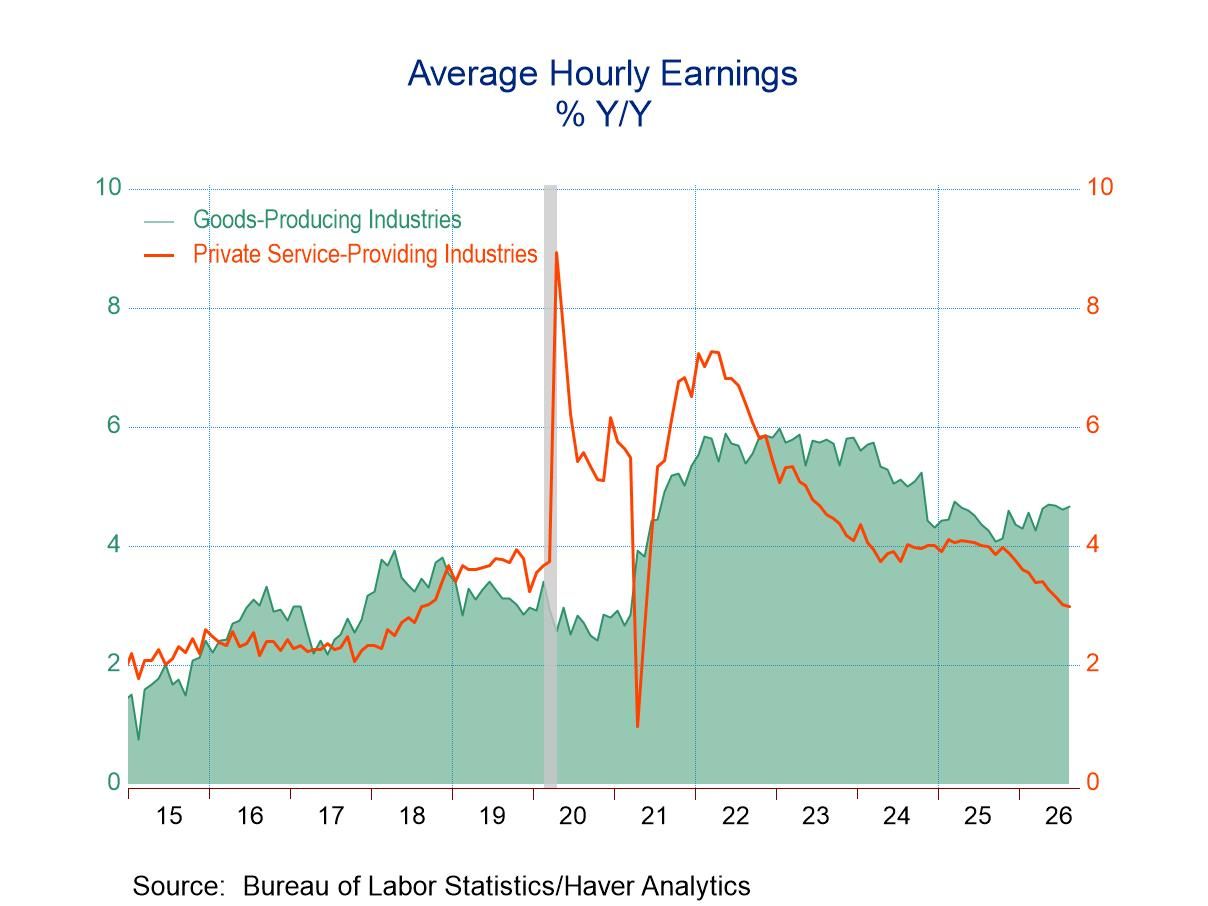
The monthly change in private-sector average hourly earnings picked up a bit in August, rising 0.3% m/m versus an upwardly revised 0.2% monthly gain in July. The 0.3% monthly increase was in line with market expectations. However, the y/y rate continued to trend down with the y/y rate sliding to 3.1% in August, the lowest rate since May 2021, from 3.2% y/y in July. Wages in private service-producing firms rose 0.3% m/m in August versus 0.1% m/m in July but the y/y rate slowed to 2.9% from 3.0% in July. Goods-producing wages rose 0.2% m/m (4.0% y/y) in August, down slightly from a 0.3% monthly gain in July.
The breadth of private job growth widened markedly in August from July with the one-month diffusion index jumping to 55.6, its highest reading since December 2024, from 52.8 in July. This was well above the key 50 level and indicates that more industries were adding jobs than losing them. Moreover, the six-month diffusion index rose to 55.8 in August, its highest reading since January 2024.
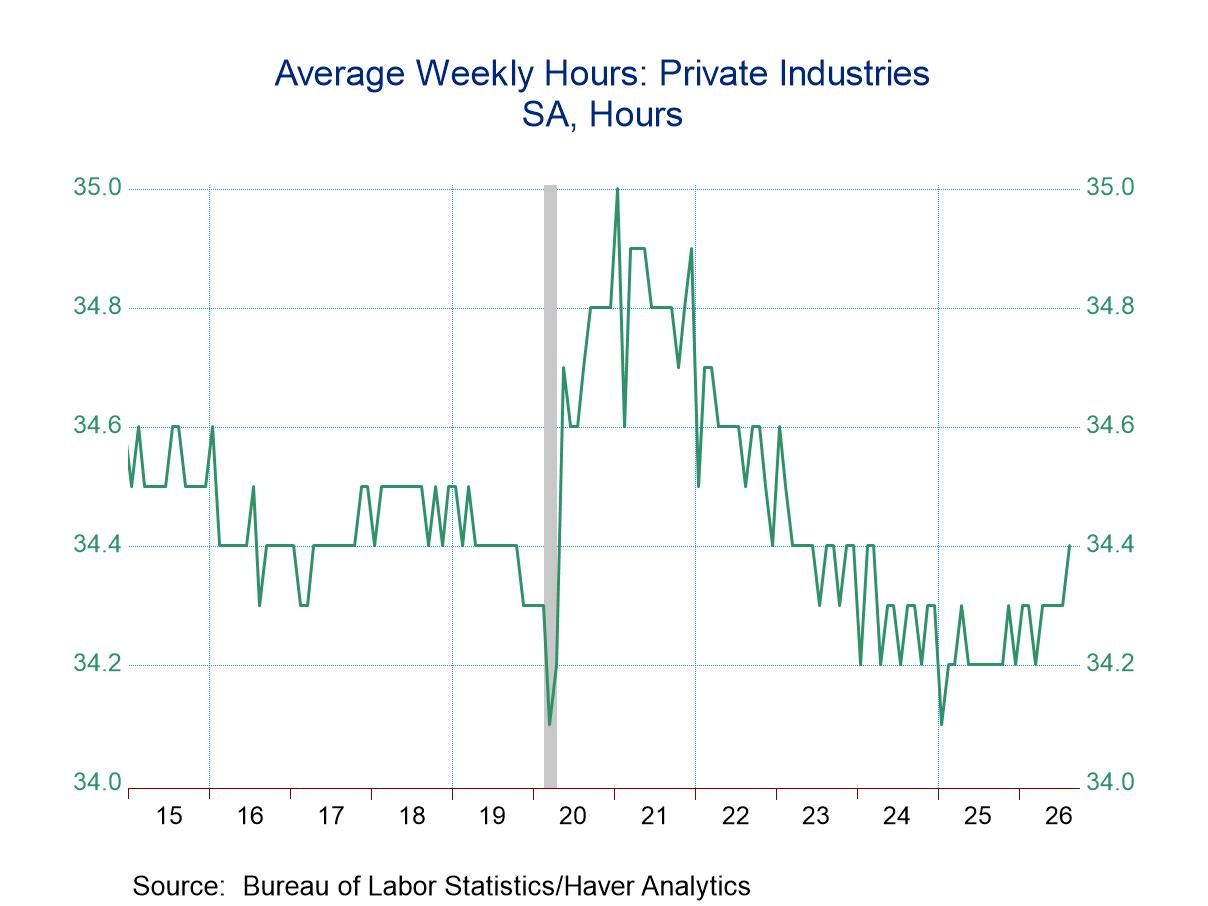
The workweek lengthened to 34.4 hours in August, the longest week since March 2024, from 34.3 hours in July. The longer workweek and the jump in employment combined to pushed up aggregate weekly hours index by 0.3% m/m, the largest monthly gain since April.
The employment and earnings data are collected from surveys taken each month during the week containing the 12th day of the month. The labor market data are contained in Haver's USECON database. Detailed figures are in the EMPL and LABOR databases. The expectations figures are in the AS1REPNA database.

Sandy Batten
AuthorMore in Author Profile »Sandy Batten has more than 30 years of experience analyzing industrial economies and financial markets and a wide range of experience across the financial services sector, government, and academia. Before joining Haver Analytics, Sandy was a Vice President and Senior Economist at Citibank; Senior Credit Market Analyst at CDC Investment Management, Managing Director at Bear Stearns, and Executive Director at JPMorgan. In 2008, Sandy was named the most accurate US forecaster by the National Association for Business Economics. He is a member of the New York Forecasters Club, NABE, and the American Economic Association. Prior to his time in the financial services sector, Sandy was a Research Officer at the Federal Reserve Bank of St. Louis, Senior Staff Economist on the President’s Council of Economic Advisors, Deputy Assistant Secretary for Economic Policy at the US Treasury, and Economist at the International Monetary Fund. Sandy has taught economics at St. Louis University, Denison University, and Muskingun College. He has published numerous peer-reviewed articles in a wide range of academic publications. He has a B.A. in economics from the University of Richmond and a M.A. and Ph.D. in economics from The Ohio State University.
More Economy in Brief
 Global