U.S. Consumer Prices Increased More Than Expected in October
by:Sandy Batten
|in:Economy in Brief
Summary
- The headline CPI increased 0.4% m/m in October with the core index rising 0.3% m/m, both slightly larger than expectations.
- Y/Y rates (calculated by Haver) continued to rise.
- Shelter prices rose 0.3% m/m, accounting for more than 30% of the increase in the headline rate.
- Food prices jumped 0.5% m/m, the largest increase this year, while the rise in energy prices slowed markedly.
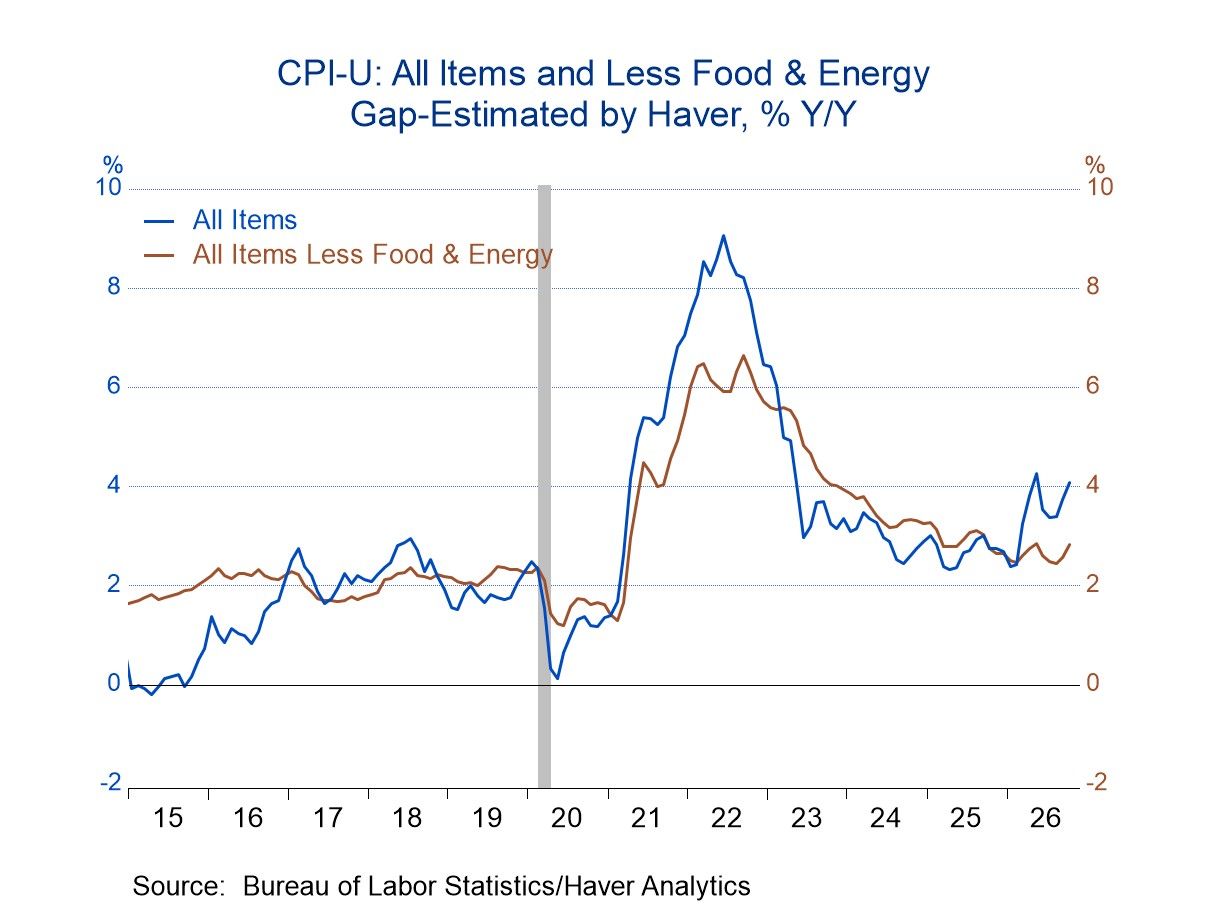
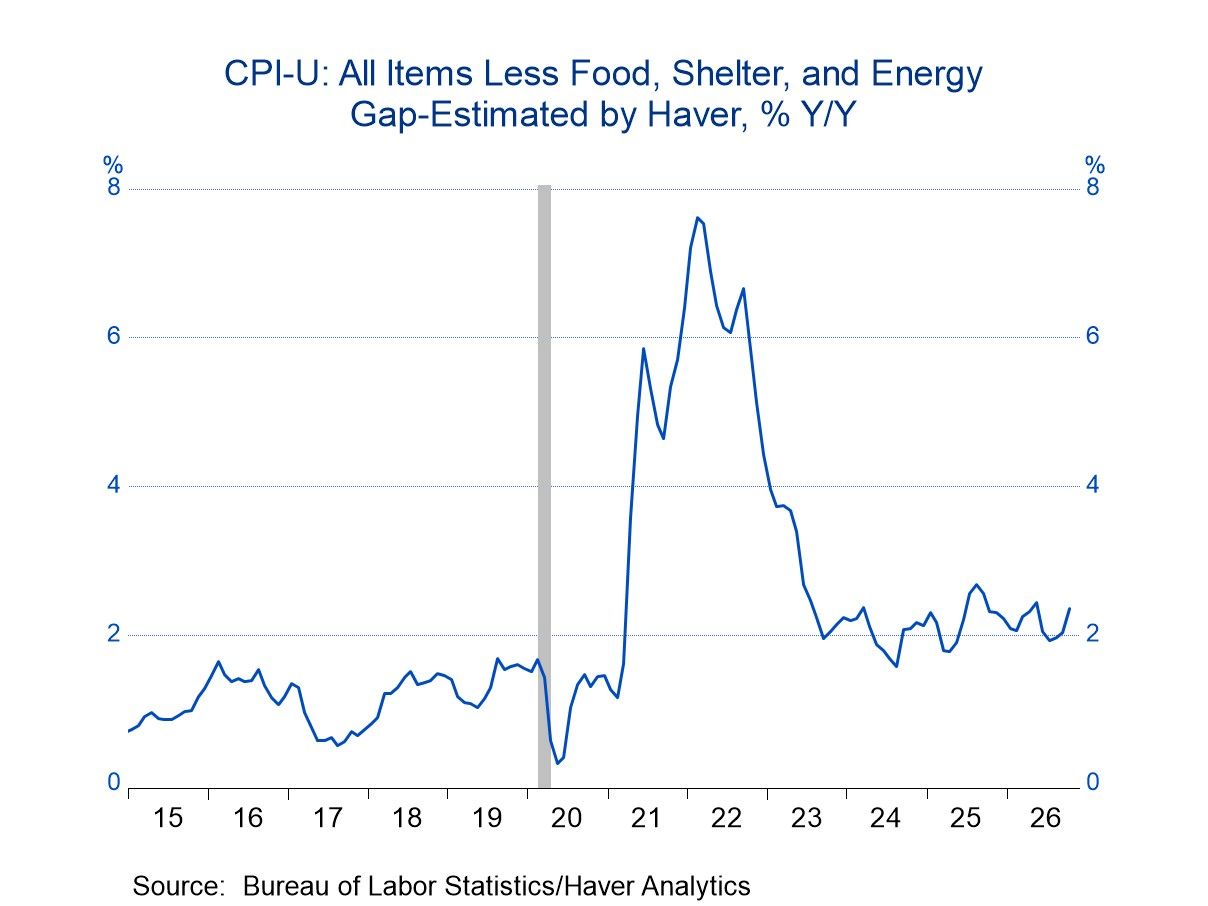
The anxiously anticipated October CPI report was stronger than expected and was not received well by financial markets. The headline CPI increased 0.4% m/m following a 0.6% monthly decline in September. The core index (excluding food and energy prices) rose 0.3% m/m, the same monthly increase as in September. The Action Economics Forecast Survey looked for a 0.3% monthly gain in the headline index and a 0.2% m/m increase in the core rate. Due to the federal government shutdown at this time last year, there was no October 2025 CPI calculated. Consequently, a year/year rate for October 2026 was not released. However, Haver Analytics estimated an October 2025 value which then enables the calculation of a year/year change for October 2026. This calculated year/year rate increased in October for both the headline and the core indexes. The headline y/y rate rose to 4.1%, the highest since May, from 3.7% in September. The core y/y rate increased to 2.8%, also the highest since May, from 2.6% in September.
Combined with the much stronger-than-expected employment report released last week, today’s firmer-than-expected inflation report has convinced financial markets that a 25bps increase in the fed funds rate is all but assured at the next FOMC meeting on December 8-9. There will be one more employment report before the next FOMC meeting, but today’s CPI report was the last one before that meeting. The fed funds futures market is currently pricing in a 99% probability of a 25bps increase in December. Moreover, one Fed official has noted that the current inflation environment may even bring into consideration a larger than 25bps increase in December.
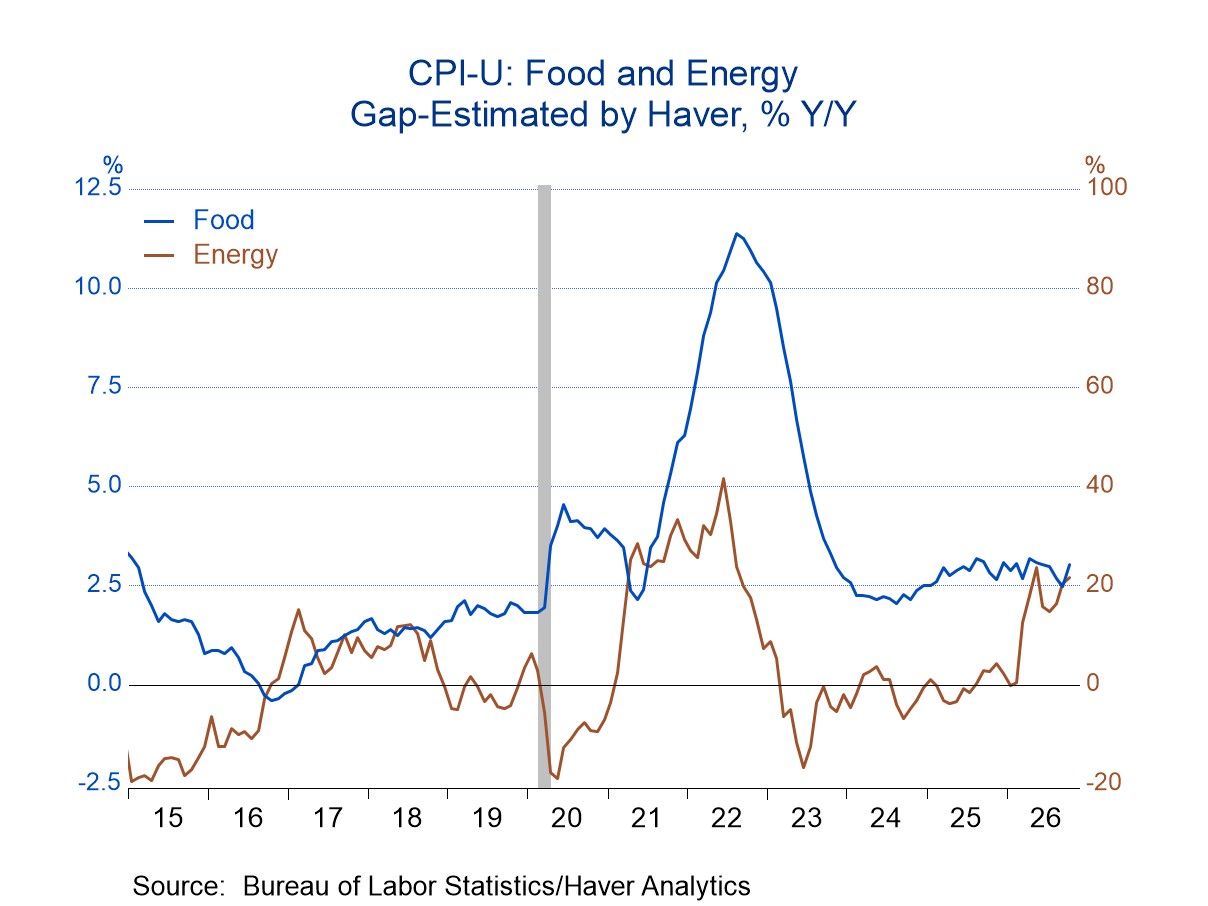
Increases in shelter and food prices were major factors behind the increase in the headline rate in October. Shelter prices increased 0.3% m/m while food prices jumped 0.5% m/m, the largest increase of this year. Together, the two increases accounted for almost 50% of the increase in the headline rate. Energy prices continued to rise in October but only by 0.7% m/m following a 5.2% m/m jump in September with gasoline prices up 1.0% m/m in October. Natural gas price eased 0.8% m/m in October, their second consecutive monthly decline.
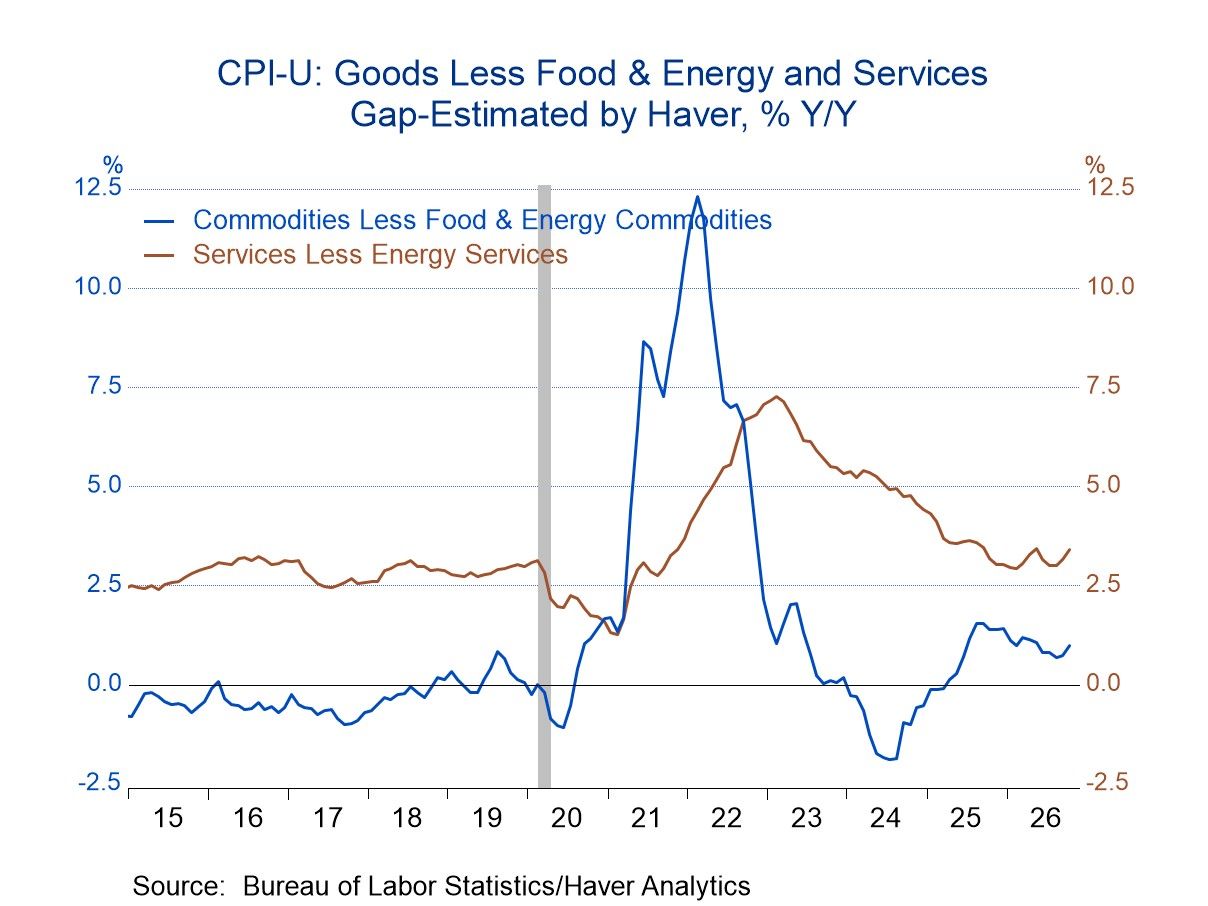
Goods prices excluding food and energy rose 0.2% m/m in October, down slightly from a 0.3% monthly gain in September. A 1.2% m/m decline in prices of used cars and trucks tempered widespread increases in all other major components. Services prices excluding energy increased 0.3% m/m in October, down slightly from a 0.4% m/m gain in September. Prices of transportation services rose 0.8% m/m, their largest monthly increase since January, following a 0.6% m/m increase in September. Medical services prices rose 0.3% m/m in October, the same monthly gain as in September. The 0.3% m/m rise in shelter prices was led by a 0.7% m/m increase in other lodging away from home.
CPI services prices less energy services and the two rent measures is a relatively new core measure that is watched carefully by the Federal Reserve. It increased 0.4% m/m in October, the same monthly increase as in September, with the y/y rate rising to 3.5% from 3.1% in September, another bit of discouraging news for the Fed.
The Consumer Price figures can be found in Haver's USECON database. The expectations figure is contained in the AS1REPNA database.

Sandy Batten
AuthorMore in Author Profile »Sandy Batten has more than 30 years of experience analyzing industrial economies and financial markets and a wide range of experience across the financial services sector, government, and academia. Before joining Haver Analytics, Sandy was a Vice President and Senior Economist at Citibank; Senior Credit Market Analyst at CDC Investment Management, Managing Director at Bear Stearns, and Executive Director at JPMorgan. In 2008, Sandy was named the most accurate US forecaster by the National Association for Business Economics. He is a member of the New York Forecasters Club, NABE, and the American Economic Association. Prior to his time in the financial services sector, Sandy was a Research Officer at the Federal Reserve Bank of St. Louis, Senior Staff Economist on the President’s Council of Economic Advisors, Deputy Assistant Secretary for Economic Policy at the US Treasury, and Economist at the International Monetary Fund. Sandy has taught economics at St. Louis University, Denison University, and Muskingun College. He has published numerous peer-reviewed articles in a wide range of academic publications. He has a B.A. in economics from the University of Richmond and a M.A. and Ph.D. in economics from The Ohio State University.
More Economy in Brief
 Asia