Asia| Nov 10 2026
Economic Letter from Asia: AI and Data Centres
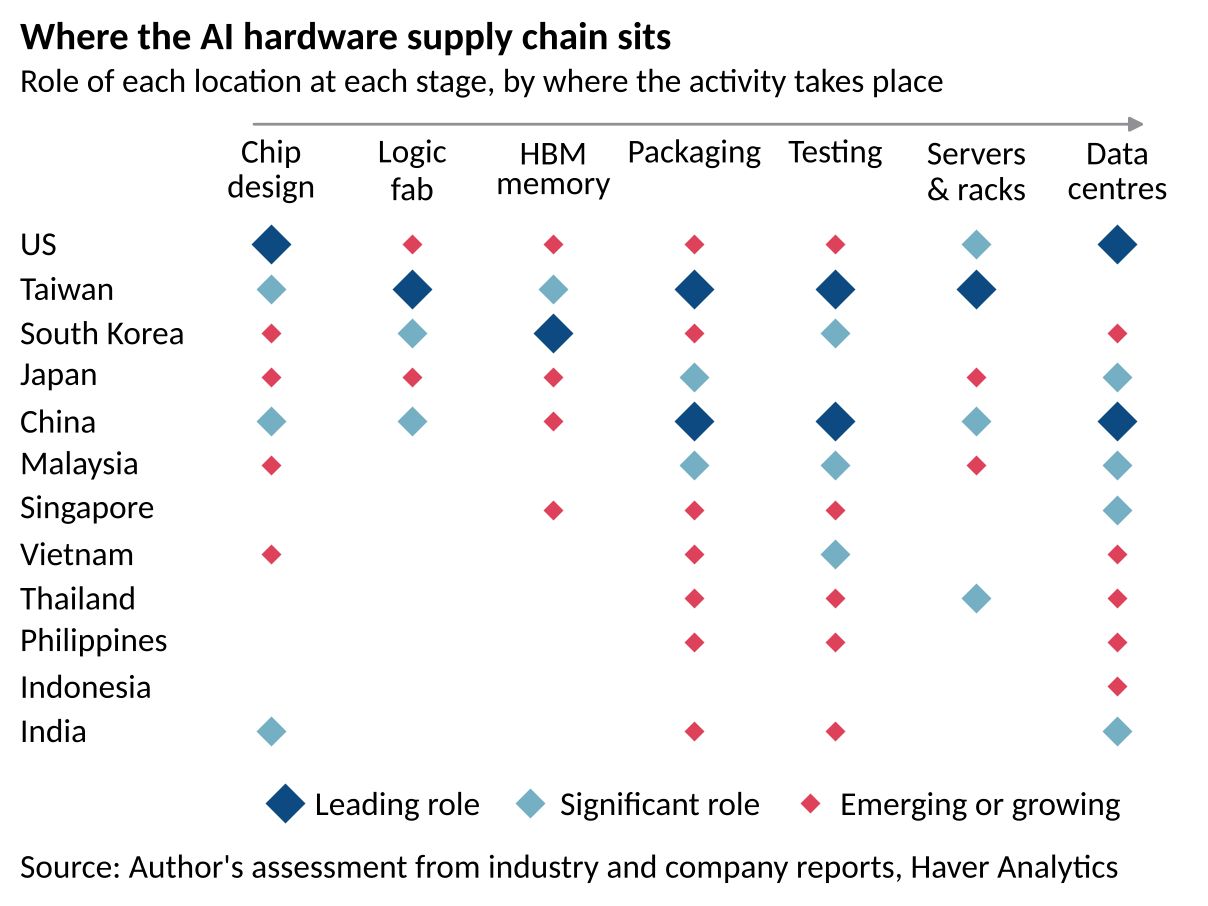
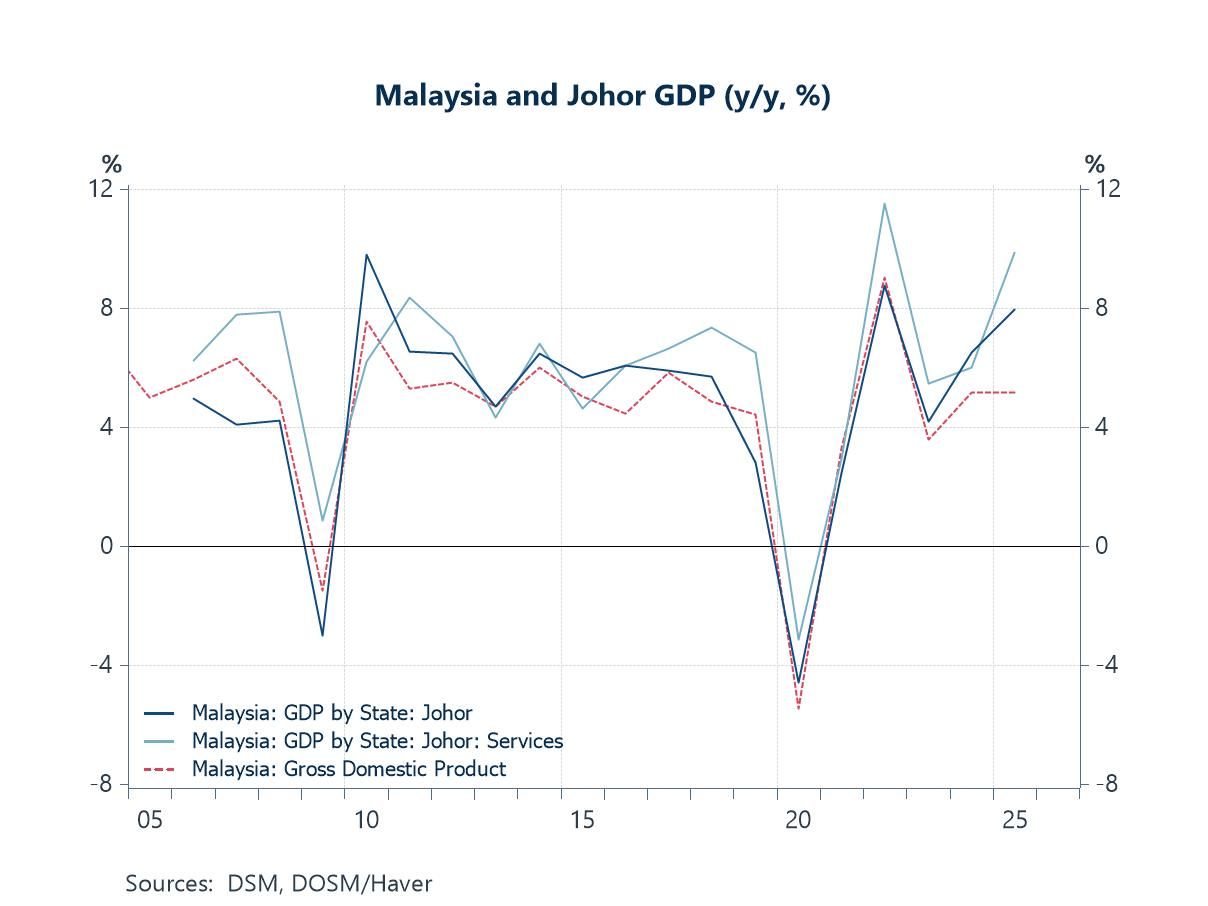
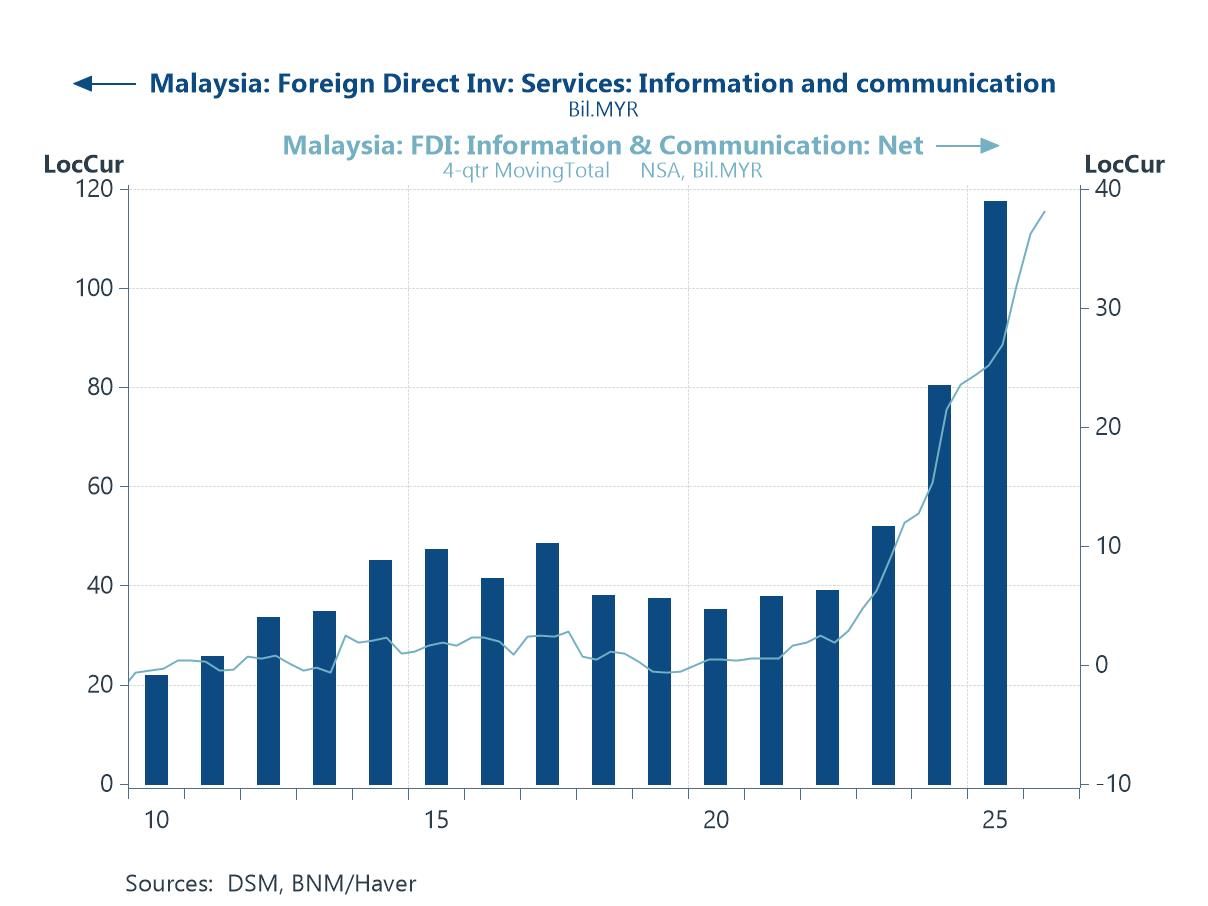
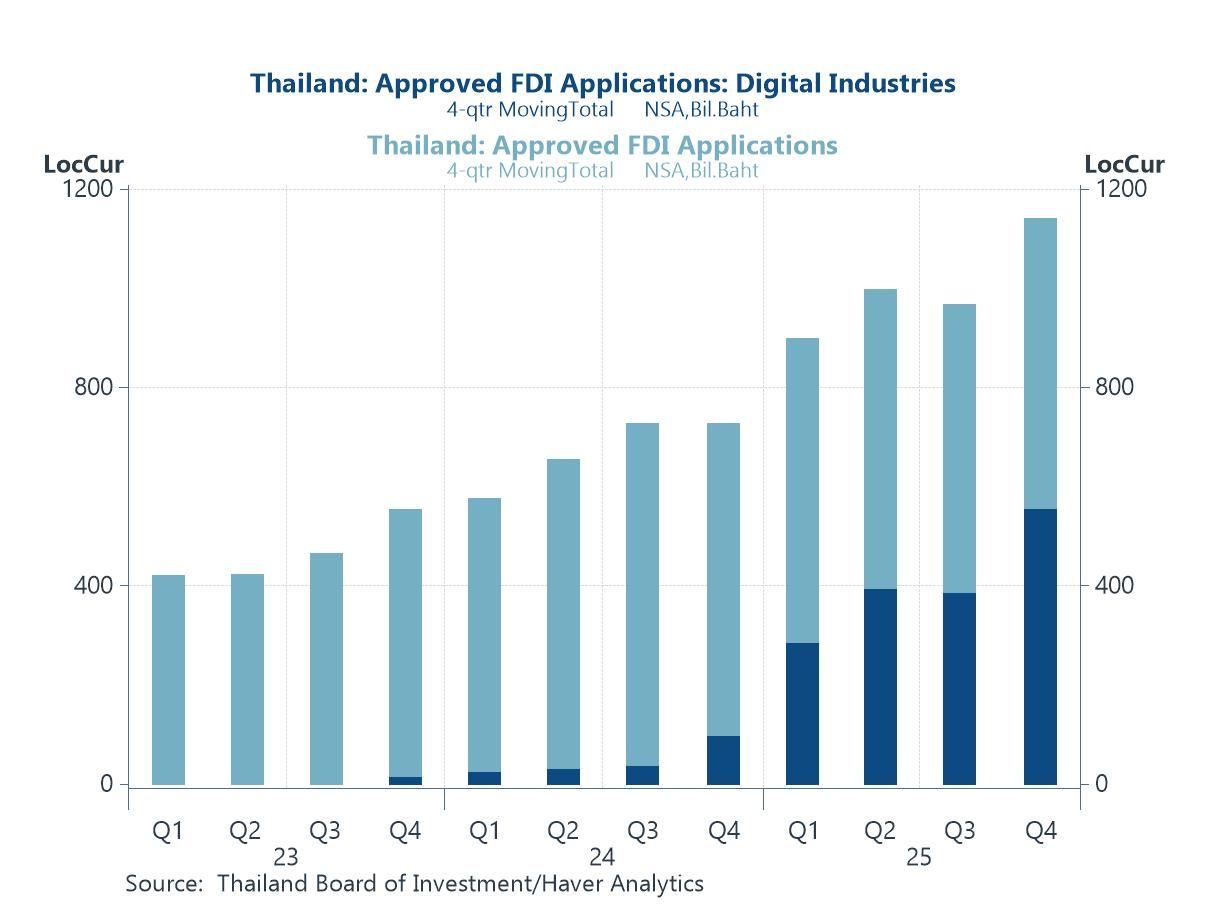
In this week’s Letter, we look at Southeast Asia’s race to host the data centres behind the AI boom, and at how much of the gain stays at home. Asia already anchors the AI hardware supply chain, from Taiwan’s chip fabrication to South Korea’s memory, while Southeast Asia has centred on packaging, testing and assembly (chart 1). The region is now moving to the final stage: hosting the computing capacity itself. Malaysia offers the clearest example. National growth held above 5% in 2024 and 2025, but Johor grew 8.0% last year as its services sector expanded 9.9% (chart 2). Foreign direct investment underpins the boom, with Malaysia’s FDI position in information and communication tripling between 2022 and 2025 (chart 3). Strains on power and water have followed, prompting new tariffs and tighter approvals. Thailand is on a similar path. Digital industries, including data centres, took almost half of approved FDI in 2025, while approvals elsewhere fell (chart 4). Concentration in the water-stressed Eastern Economic Corridor and gaps in oversight have led the Board of Investment to pause new data centre applications. Singapore offers a cautionary tale. Operating surplus in its data processing and hosting industry rose roughly sevenfold between 2018 and 2024 (chart 5). Yet resource constraints prompted a moratorium on new data centres from 2019 to 2022, which partly redirected investment to Johor. Finally, we ask where the gains go (chart 6). Imported equipment absorbs much of the build phase, while foreign ownership, depreciation and thin staffing shrink what residents keep once facilities are running. The wedge between GDP and national income is largest where facilities are foreign-owned and capital-heavy, as under the region’s FDI-led model.
The AI supply chain and Asia Asia already sits at the heart of the AI hardware supply chain (chart 1). Taiwan leads in logic fabrication, packaging, testing and server assembly, while South Korea leads in high-bandwidth memory. China holds leading positions in packaging, testing and data centres. Southeast Asia’s role has so far sat further along the chain. Malaysia plays a significant part in packaging and testing, Vietnam in testing and Thailand in server and rack assembly. The region’s ambitions are now moving to the final stage. Malaysia and Singapore already play a significant role in hosting data centres, while Thailand, Indonesia, Vietnam and the Philippines are emerging players. For economies that earned their place by assembling and testing chips, hosting the computing capacity those chips power is a natural next step. It is also a resource-hungry one, as the rest of this Letter shows.
Chart 1: The AI supply chain and Asia
Malaysia Malaysia’s economy has held up well. Real GDP grew above 5% in both 2024 and 2025, helped by electrical and electronics (E&E) exports, which rose 18.3% to MYR 711.6bn last year. Within that national picture, Johor stands out (chart 2). The state’s GDP grew 8.0% in 2025, outpacing Malaysia as a whole for a third straight year. The gap has also widened, from 0.6 percentage points in 2023 to 2.8 points in 2025. Services have done most of the work, and now make up 54.8% of Johor’s economy. Johor’s services output expanded 9.9% in 2025, against 4.0% for its manufacturing, and accounted for two-thirds of the state’s growth. The ongoing data centre boom has been a key driver, with the industry classified within information and communication services.
Chart 2: Malaysia and Johor GDP
Foreign direct investment underpins the boom. Malaysia’s FDI position in information and communication, the sector that includes data centres, tripled from MYR 39.0bn in 2022 to MYR 117.4bn in 2025 (chart 3). Net inflows over four quarters have climbed from MYR 2.9bn in 2022 to MYR 38.1bn in the year to Q2 2026. Johor is the main destination, hosting over 70% of Malaysia’s operational data centre capacity, and the Johor-Singapore Special Economic Zone offers preferential tax incentives for the sector. The facilities are hungry for power and water, and authorities have responded on both fronts. A dedicated ultra-high-voltage tariff took effect in July 2025, followed by a separate water tariff for data centres in August. Approvals have also tightened. Johor has capped water usage effectiveness, and the federal government said in October that states without sufficient water will not host new projects.
Chart 3: Malaysia FDI into the information and communication sector
Thailand Thailand is on a similar path. Approved FDI applications in digital industries, which include data centres and cloud services, reached THB 553.0bn in 2025, up from THB 95.2bn in 2024 (chart 4). Their share of total approved FDI rose from 13.1% to 48.5%, and they more than accounted for the overall increase. Approvals outside digital industries fell 7.0%. The projects cluster in the Eastern Economic Corridor (EEC) south-east of Bangkok, notably in Chonburi and Rayong, where parts of the region already face water scarcity. The concerns echo Malaysia’s: strain on power and water, and gaps in oversight. Some operators can set up without seeking Board of Investment (BOI) promotion, and Thailand lacks a unified system for overseeing the industry. Policy has shifted accordingly. The BOI has accepted no new data centre applications since April 2026, and the cabinet approved a national data centre policy committee in August.
Chart 4: Thailand approved FDI and digital industries
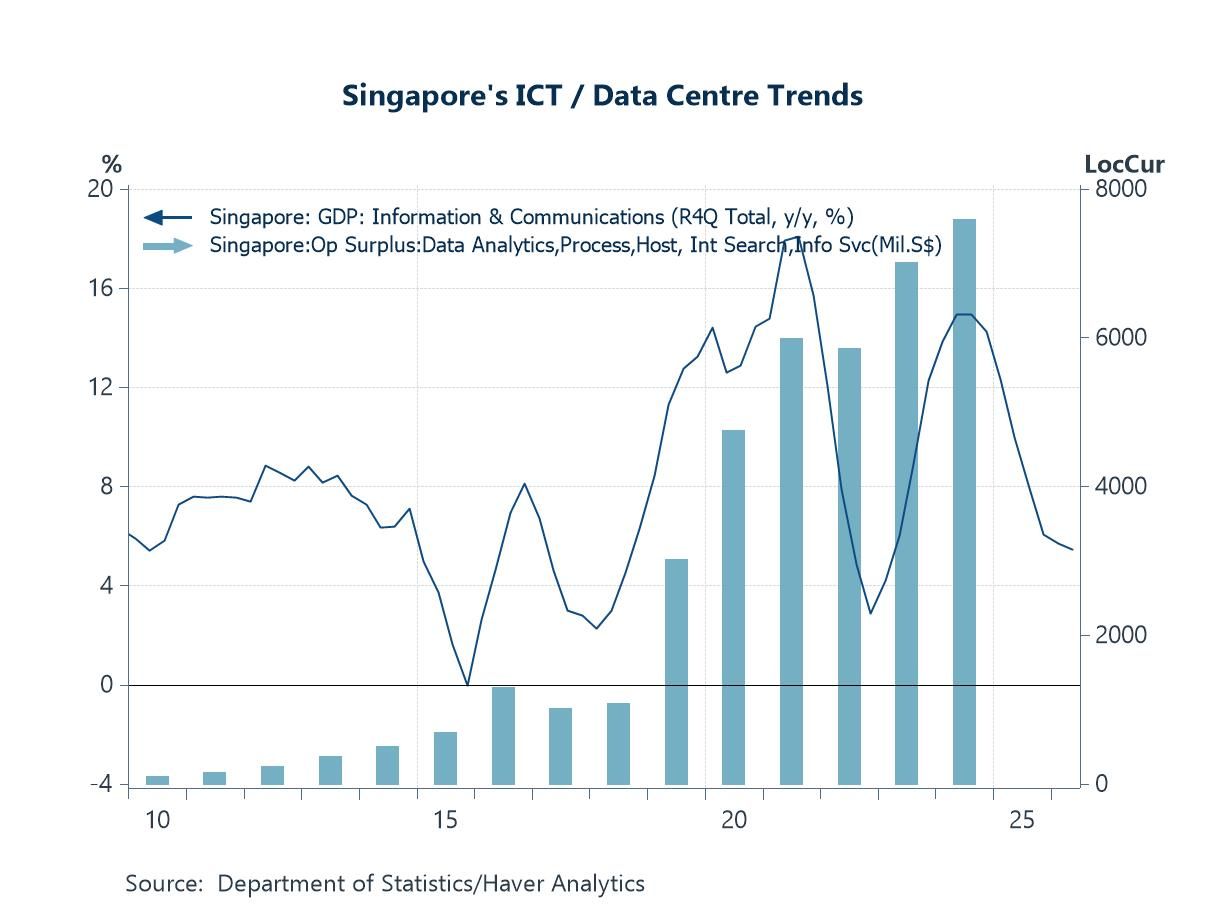
Singapore Singapore offers a cautionary tale. Data centres sit within its information and communications (ICT) sector, which grew at double-digit rates around the turn of the decade and peaked at around 18% in 2021 (chart 5). The industry that houses them, data processing and hosting, also includes internet search. Its operating surplus, the profit component of value added, rose roughly sevenfold from SGD 1.1bn in 2018 to SGD 7.6bn in 2024, with the sharpest jump in 2019. That growth came up against resource constraints. Singapore imposed a moratorium on new data centres from 2019 to 2022, yet the industry’s surplus still nearly doubled over the period, to SGD 5.9bn. The cap on new capacity was also a partial driver of data centre investment into neighbouring Johor. For its neighbours, Singapore’s experience shows that the gains from data centres eventually run up against the resources needed to host them.
Chart 5: Singapore ICT and data centre trends
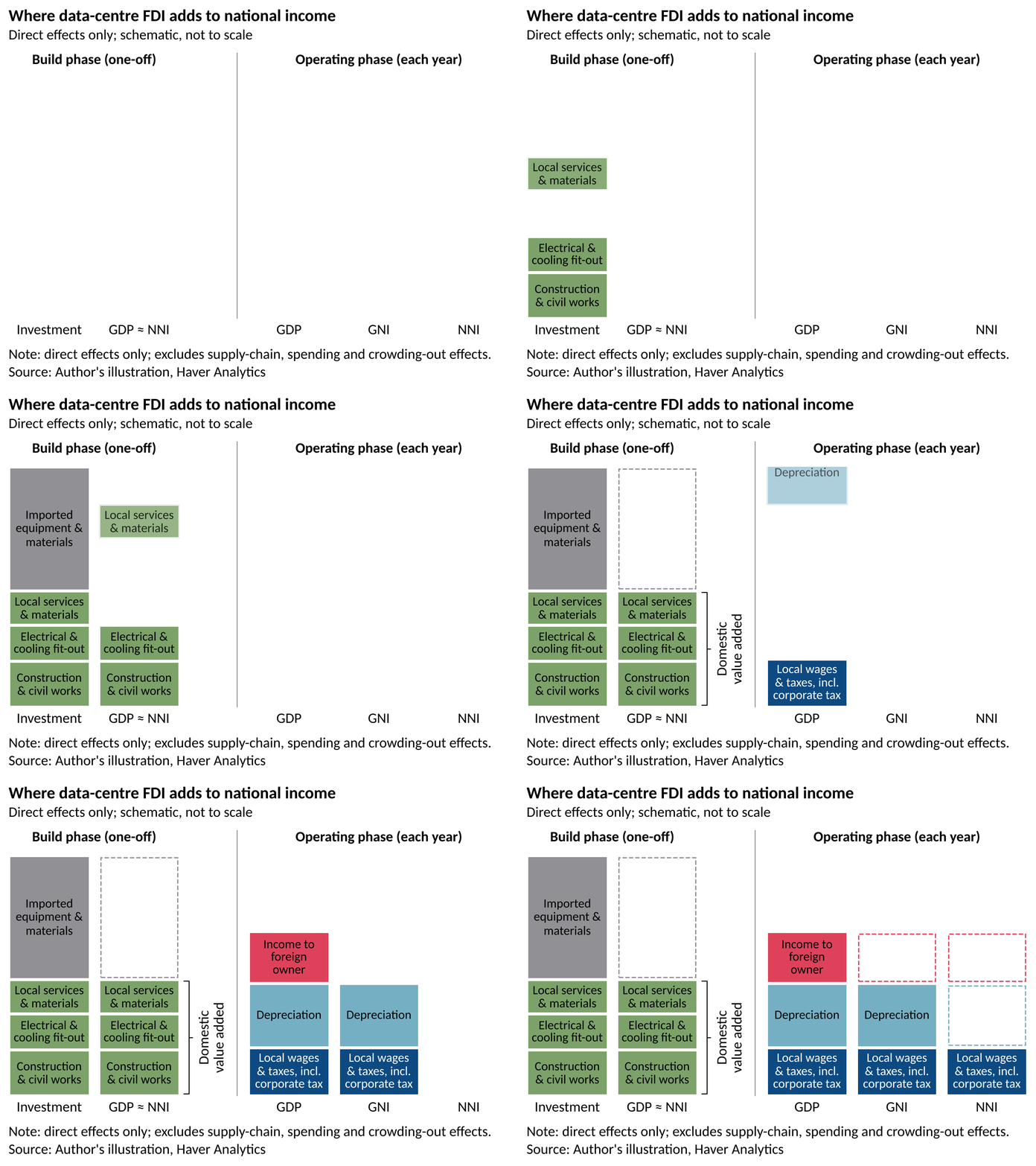
Gains from data centres Then there is the question of where the gains go (chart 6). The build phase is a one-off. Headline investment looks large, but much of it goes on imported servers, chips and equipment, which higher imports offset in GDP. What remains is domestic value added from construction, fit-out and local services, which fades once building is complete. The operating phase recurs each year, but less of it accrues to residents than GDP implies. If a facility is foreign-owned, the after-tax profits accruing to its owners are counted in GDP but not in gross national income (GNI). Depreciation is further excluded from net national income (NNI), and both measures sit closer to resident welfare than GDP. What stays is local wages and taxes, including corporate tax. Data centres need few staff once running, so their labour share is low and the lasting employment gain small. The wedge between GDP and NNI is therefore largest where facilities are foreign-owned and capital-heavy, as under the FDI-led model above. The chart captures direct effects only, leaving aside supply-chain spillovers and crowding out.
Chart 6: Gains from data centres in GDP, GNI, and NNI

Tian Yong Woon
AuthorMore in Author Profile »Tian Yong joined Haver Analytics as an Economist in 2023. Previously, Tian Yong worked as an Economist with Deutsche Bank, covering Emerging Asian economies while also writing on thematic issues within the broader Asia region. Prior to his work with Deutsche Bank, he worked as an Economic Analyst with the International Monetary Fund, where he contributed to Article IV consultations with Singapore and Malaysia, and to the regular surveillance of financial stability issues in the Asia Pacific region.
Tian Yong holds a Master of Science in Quantitative Finance from the Singapore Management University, a Master of Science in Analytics from the Georgia Institute of Technology, a Bachelor of Science in Mathematics from the Singapore University of Social Sciences, and a Bachelor of Science in Banking and Finance from the University of London.
More Economy in Brief