U.S. ADP Employment Disappoints in July
by:Sandy Batten
|in:Economy in Brief
Summary
- Private sector jobs rose only 44,000 in July versus 95,000 in June.
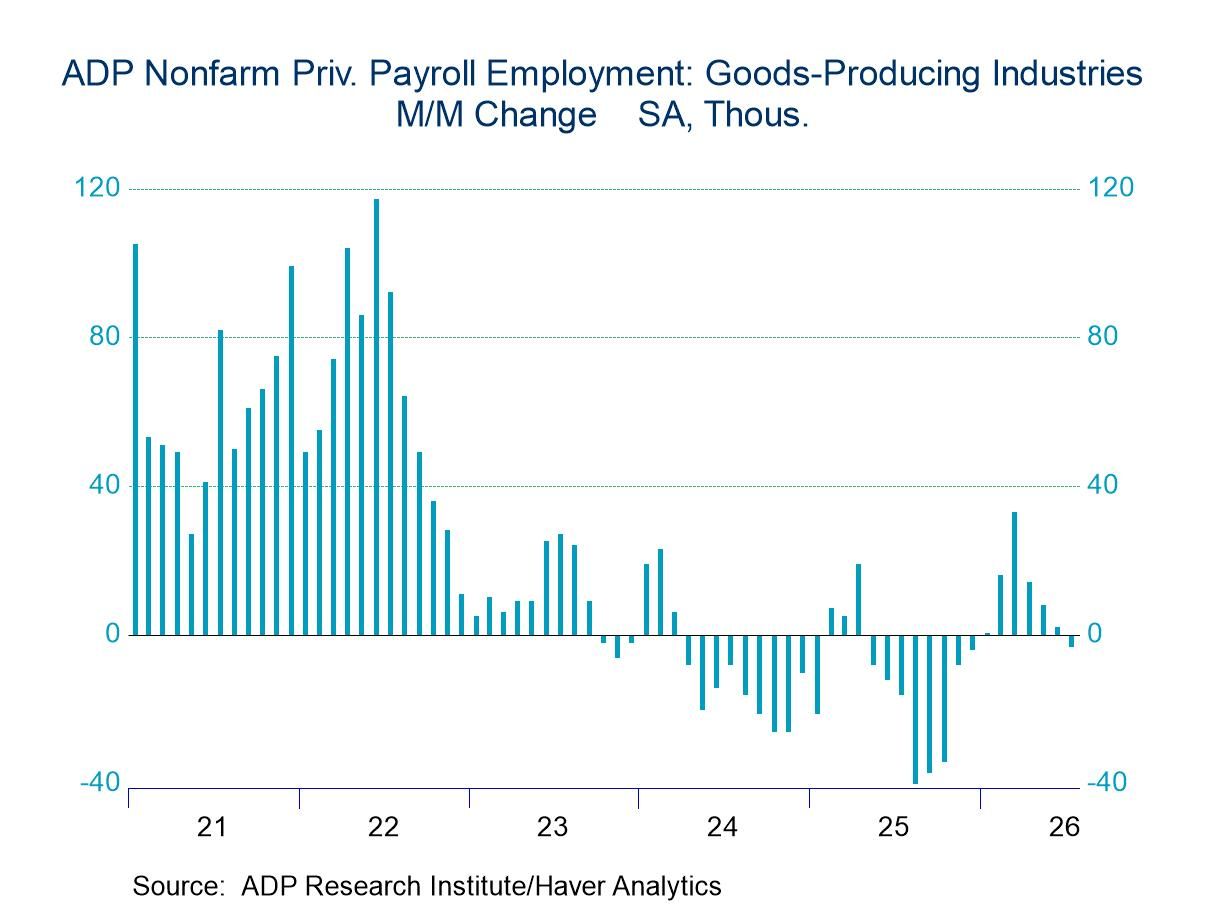
- Goods-producing jobs fell 3,000, the first monthly decline in seven months.
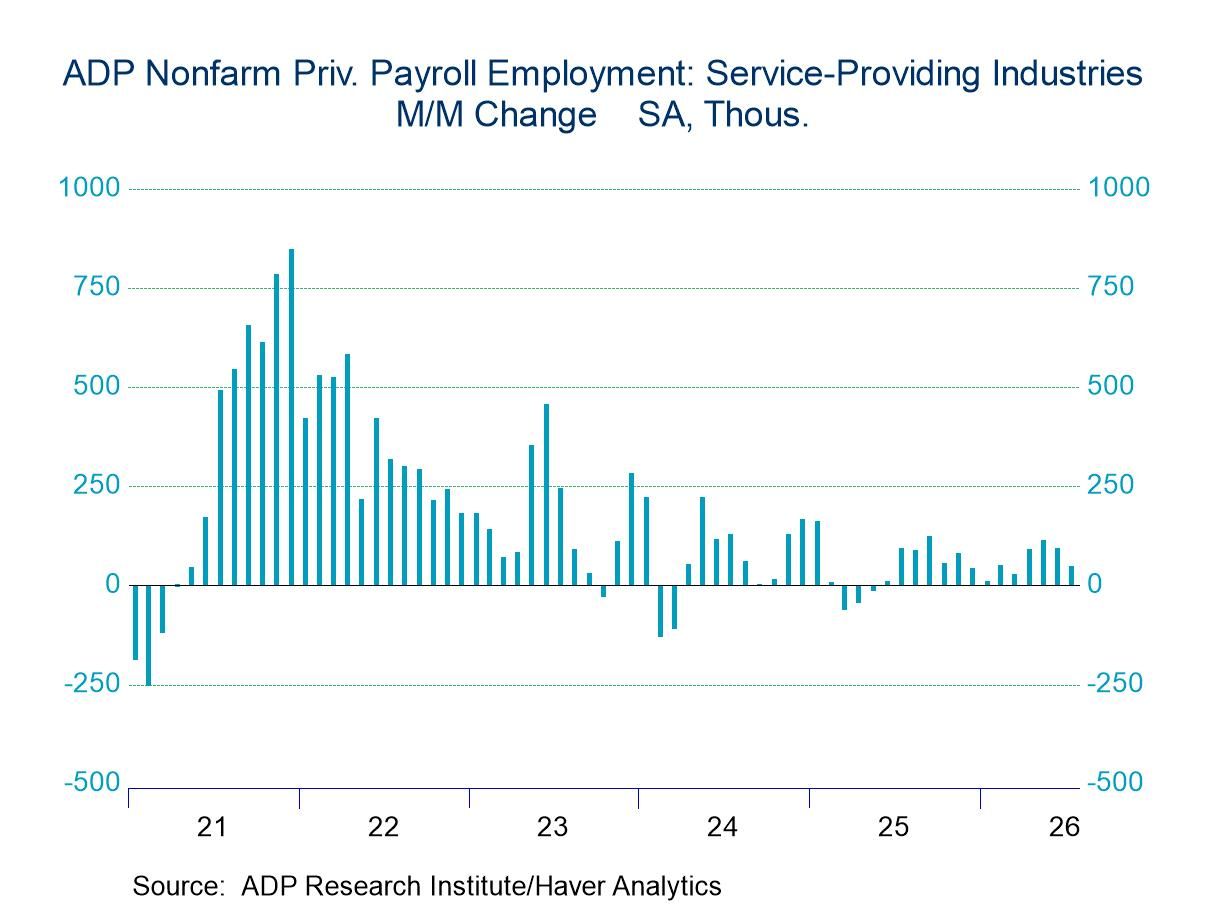
- Service-producing jobs rose 47,000, the smallest monthly increase in four months.
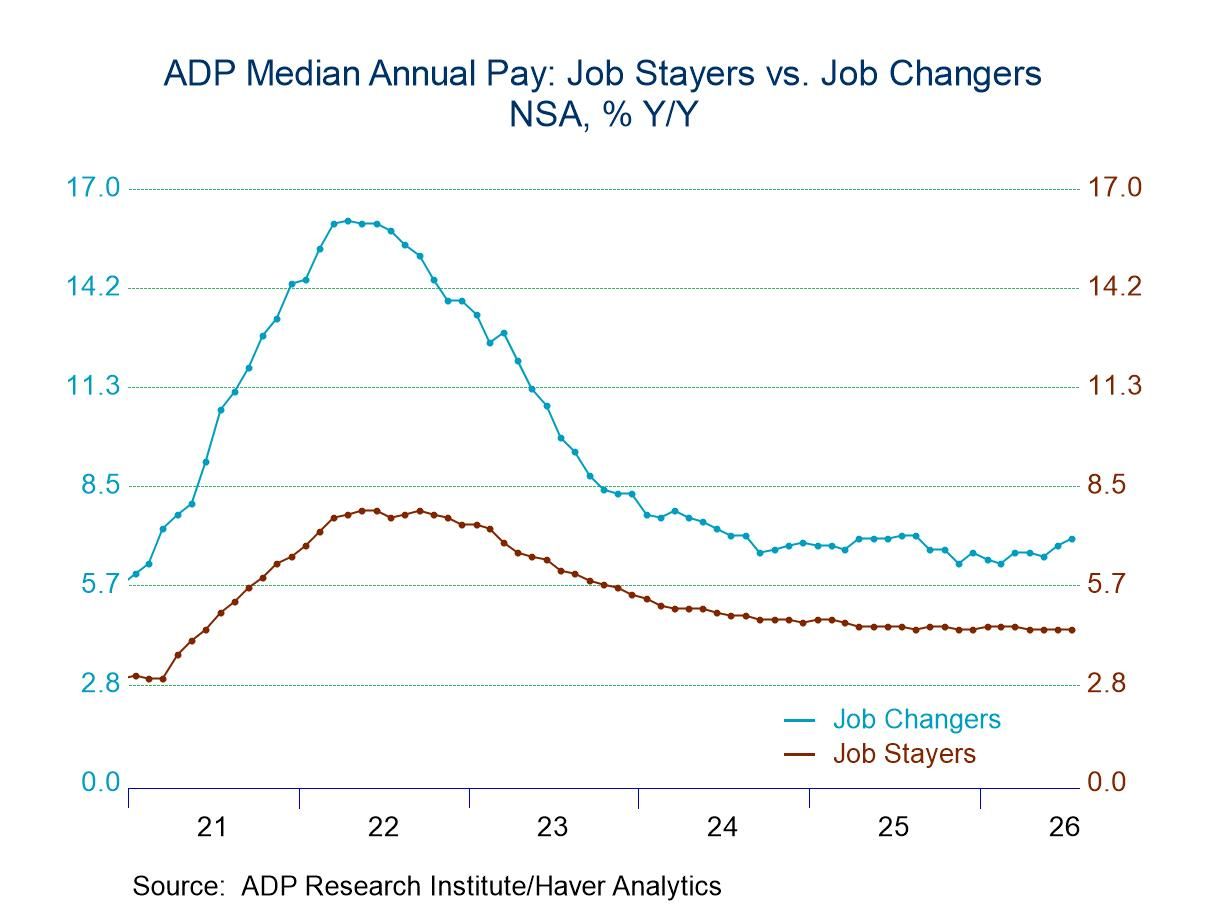
- Wage growth for job changers picked up for the second consecutive month.
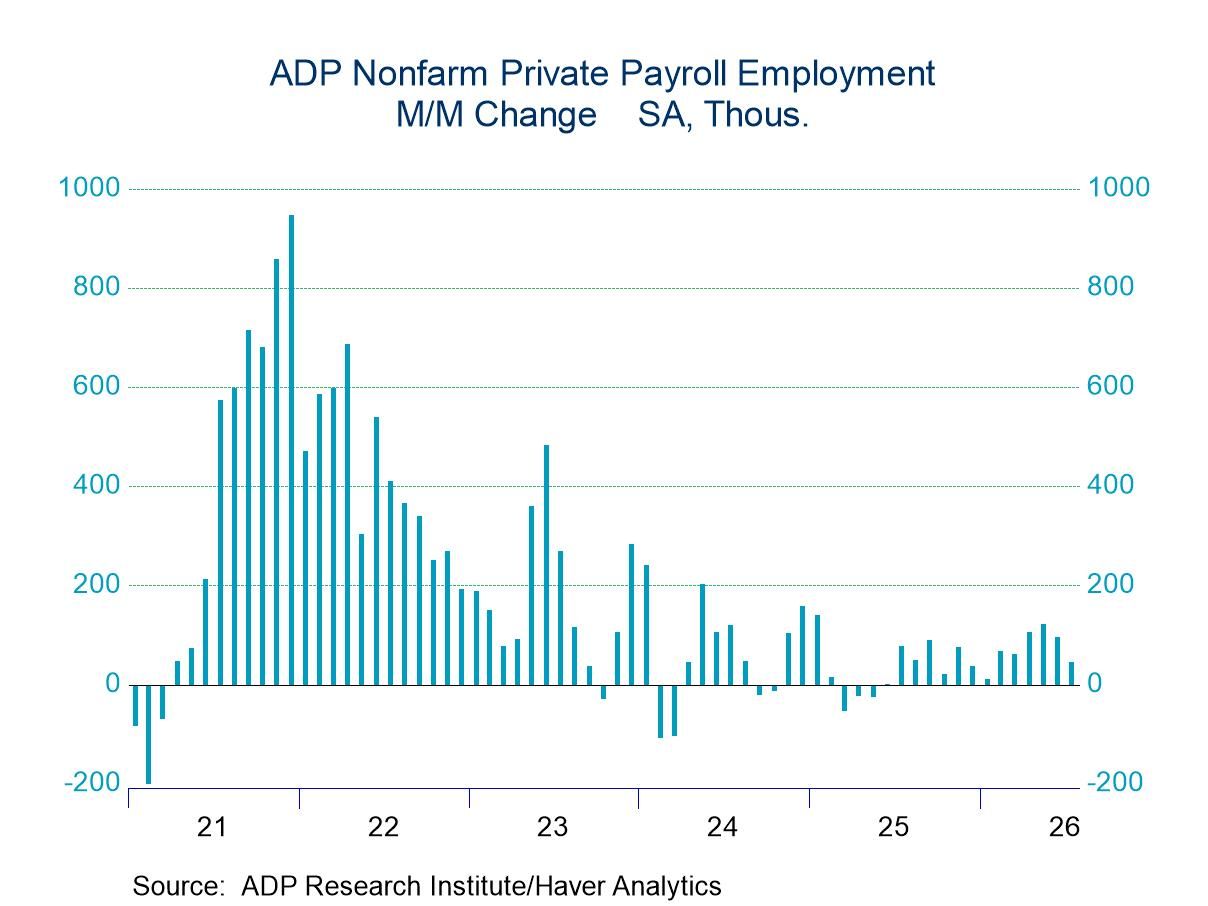
U.S. nonfarm private sector payrolls rose a significantly less-than-expected 44,000 in July, the smallest monthly gain since January, following a downwardly revised 95,000 increase in June (previously +98,000), according to the ADP National Employment Report. The Action Economic Forecast Survey expected a 75,000 increase. The three-month average slid to 87,000 from 107,000 in June.
Employment growth slowed across all business sizes in July. Employment at small firms (less than 50 employees) rose 23,000, the smallest monthly gain since January, following a 53,000 increase in June. Employment at medium-sized firms (50-499 employees) edged up 8,000 in July versus a 29,000 increase in June. Employment at large firms (500 or more employees) increased just 13,000 in July, the weakest performance since March, after a 23,000 increase in June.
Goods-producing jobs fell 3,000 in July, the first monthly decline since December 2025. Construction employment edged up 1,000 while manufacturing employment rose 2,000, its third consecutive monthly gain. By contrast, employment in natural resources and mining fell 6,000 in July, its third consecutive monthly decline. Service-producing jobs increased by 47,000 in July, the smallest monthly gain since March, following a 93,000 increase in June. The largest monthly gain in July was a 36,000 increase of education and health services jobs, but this was the smallest monthly increase in this sector since August 2025 and down from a 48,000 increase in June. The financial sector added 10,000 jobs in July while professional and business services gained 9,000 jobs. By contrast, leisure and hospitality jobs fell 11,000 and trade, transportation and utilities jobs declined 8,000.
By major region, private-sector payrolls rose 37,000 in the Northeast, the largest monthly gain since March 2024, 9,000 in the South and 7,000 in the West. By contrast, payrolls fell 9,000 in the Midwest, the first monthly decline in four months.
Wage growth for job changers accelerated further in July with the y/y growth rate rising to 7.0%, the fastest pace since August 2025, from 6.8% in June and 6.5% in May. A faster pace of wage growth for job changers may indicate some supply constraints in parts of the labor market. By contrast, wage growth for job stayers was unchanged at 4.4% y/y for the fourth consecutive month. By industry, wage growth picked up to 5.0% y/y in manufacturing and to 5.2% in financial activities but either slowed or was unchanged in the other sectors.
The ADP National Employment Report and Pay Insights data can be found in Haver's USECON database. Historical figures date back to January 2010 for private employment. Pay data date back to October 2020. The expectation figure is available in Haver's AS1REPNA database.

Sandy Batten
AuthorMore in Author Profile »Sandy Batten has more than 30 years of experience analyzing industrial economies and financial markets and a wide range of experience across the financial services sector, government, and academia. Before joining Haver Analytics, Sandy was a Vice President and Senior Economist at Citibank; Senior Credit Market Analyst at CDC Investment Management, Managing Director at Bear Stearns, and Executive Director at JPMorgan. In 2008, Sandy was named the most accurate US forecaster by the National Association for Business Economics. He is a member of the New York Forecasters Club, NABE, and the American Economic Association. Prior to his time in the financial services sector, Sandy was a Research Officer at the Federal Reserve Bank of St. Louis, Senior Staff Economist on the President’s Council of Economic Advisors, Deputy Assistant Secretary for Economic Policy at the US Treasury, and Economist at the International Monetary Fund. Sandy has taught economics at St. Louis University, Denison University, and Muskingun College. He has published numerous peer-reviewed articles in a wide range of academic publications. He has a B.A. in economics from the University of Richmond and a M.A. and Ph.D. in economics from The Ohio State University.
More Economy in Brief
 Global