US International Trade: Deficit Surges in July and August
Summary
- The past few months have shown strong imports and soft exports
- Net exports are likely to be a substantial drag on GDP growth in Q3
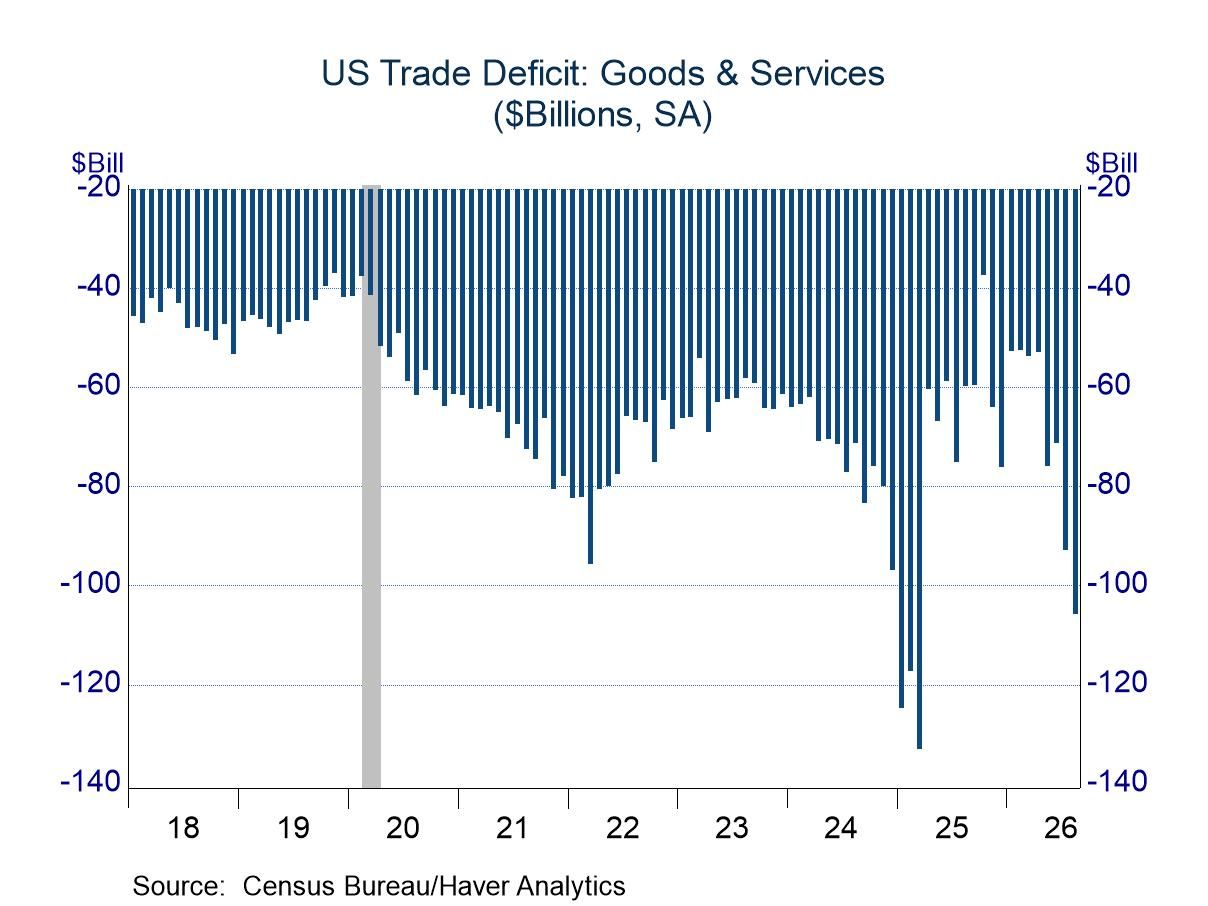
The US deficit in international trade in August widened by $12.7 billion (13.7%) to $105.6 billion, adding to notable slippage in July, when the deficit widened by $21.6 billion (30.4%). The recent deficits are well shy of the shortfalls seen in early 2025, when the rush to front-run likely tariffs led to surges in imports. Still, they are among the widest seen in the past few years, and they are well beyond readings seen before the pandemic (chart, left).
The trade results in the past few months have been driven by both strong imports and soft exports. Imports have increased noticeably in three of the past four months (and six of the past seven), with the increases in July and August being especially sharp at approximately 4% each. Exports, in contrast, eased from May through July before registering a small advance in August (chart, below). The shifts in exports and imports have largely been on the goods side; trade in services has shown modest changes recently, with the net result being a slight improvement in the services surplus.
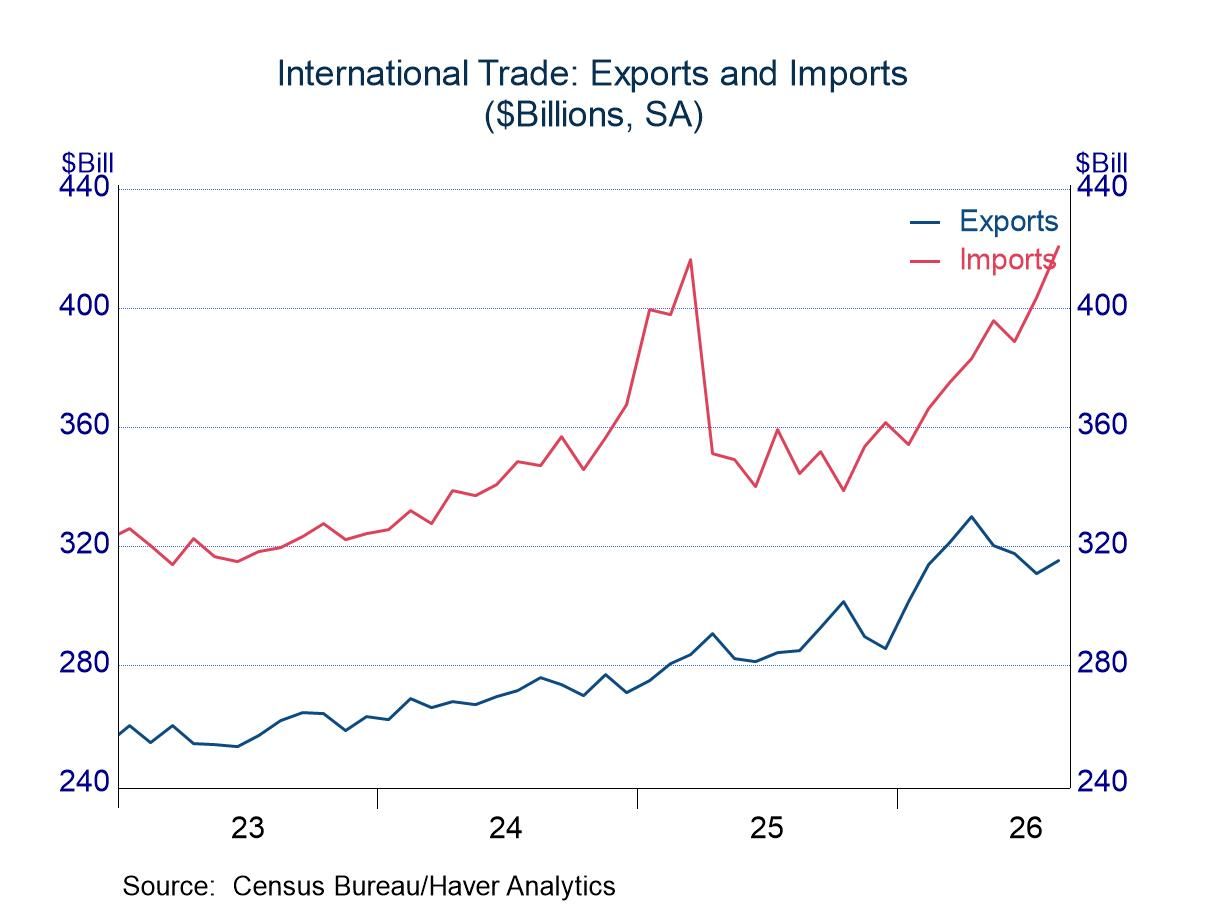
It might seem as though the surge in goods imports in recent months can be explained by another rush to beat the imposition of tariffs. President Trump in July signed proclamations imposing 50% tariffs on a broad range of Canadian goods, and the duties became effective on August 22. However, this presidential action did not seem to have a meaningful impact on trade. Imports from Canada in July were in the middle of the range from the past year; they moved into the upper portion of that range in August, but the magnitude of the change did not suggest a marked shift in behavior by Canadian exporters. A review of trade with other countries shows noticeable increases in US imports from several in July and August, while US exports to numerous countries have softened in recent months.
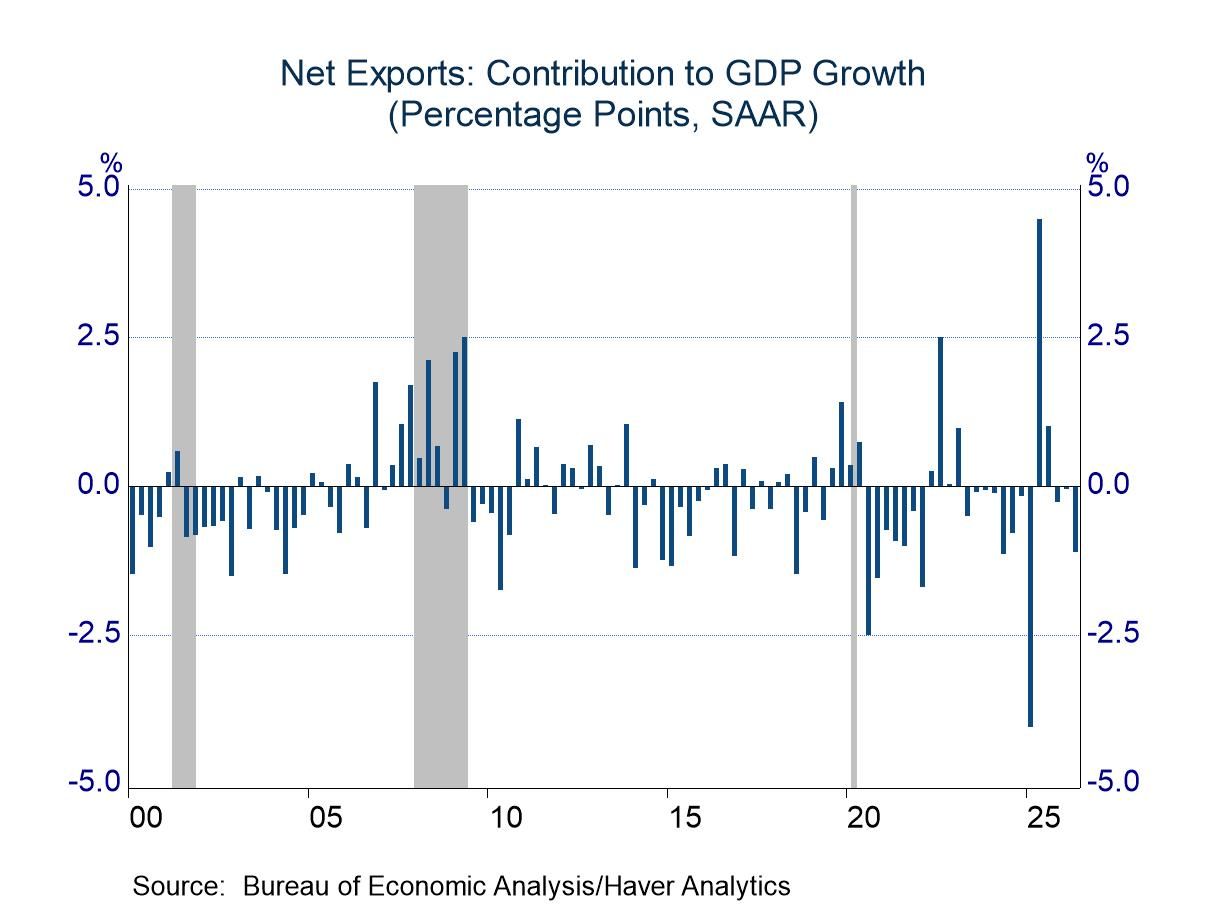
The trade figures for July and August suggest that net exports will be a notable drag on GDP growth in the third quarter. The figures on goods trade in the past two months point to a negative contribution from net exports to GDP growth of approximately three percentage points, which would be one of the largest drags in modern history (chart, left). This estimate, of course, could shift. The data in hand could be revised, and September results could provide an offset. Also, the improvement in services trade will partly offset the slippage in goods trade, although the existing figures suggest only a modest influence.

Michael J. Moran
AuthorMore in Author Profile »Before joining Haver Analytics in 2025, Michael J. Moran was the chief economist of Daiwa Capital Markets America Inc. He was responsible for preparing the firm’s economic forecast and interest rate outlook. He traveled frequently to visit the clients of Daiwa Capital Markets and wrote weekly economic commentary. Mr. Moran also was involved in the flux of financial markets, as he spent a portion of each day on Daiwa’s trading floor interpreting economic statistics and Federal Reserve activity for traders and salespeople. Mr. Moran is quoted frequently in the financial press, and he appears regularly on cable news shows. He also has published articles in several journals and periodicals. Before joining Daiwa Capital Markets America, Mr. Moran worked as an economist at the Federal Reserve Board in Washington, D.C. where he analyzed a broad range of issues dealing with the financial sector of the economy and regularly briefed the Board of Governors. He was on the faculty of Pennsylvania State University from 1979 to 1980 and taught on a part-time basis at George Washington University from 1980 to 1987.
Mr. Moran received his Ph.D. in economics from Pennsylvania State University in 1980 and a B.S. in business administration from the University of Bridgeport in 1975. He was a CFA charter holder from 2002 until 2016.
More Economy in Brief
 Global