U.S. Existing Home Sales Fell Again in July
by:Sandy Batten
|in:Economy in Brief
Summary
- Total sales fell 1.7% m/m to 4.06 million units at an annual rate in July after a 1.4% monthly decline in June but were up 0.7% from a year ago.
- Monthly sales increased in the Northeast, held steady in the West, and declined in the Midwest and South.
- Year-over-year sales rose in the Midwest and West and were unchanged in the Northeast and South.
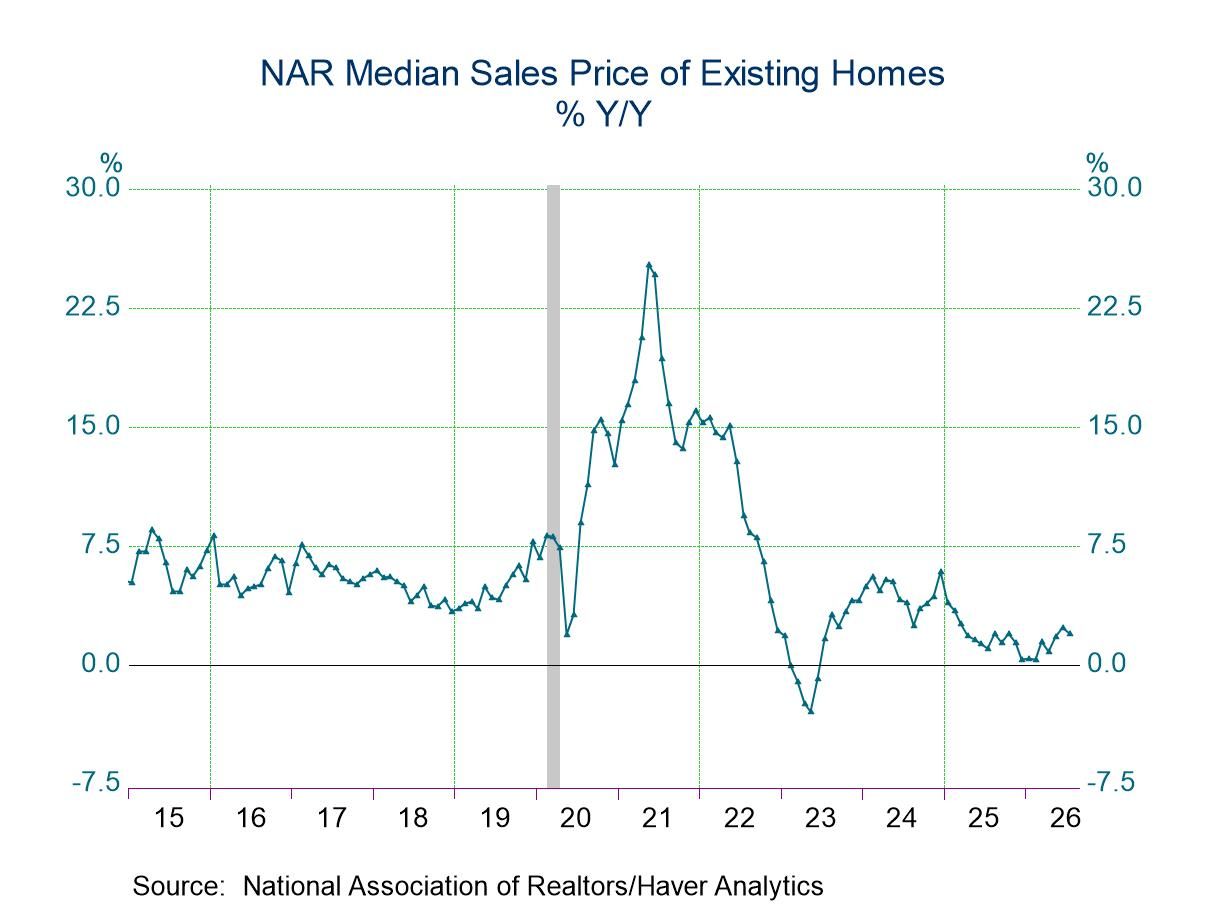
- The median sales price fell 2.0% m/m NSA in July but rose 2.0% from a year ago.
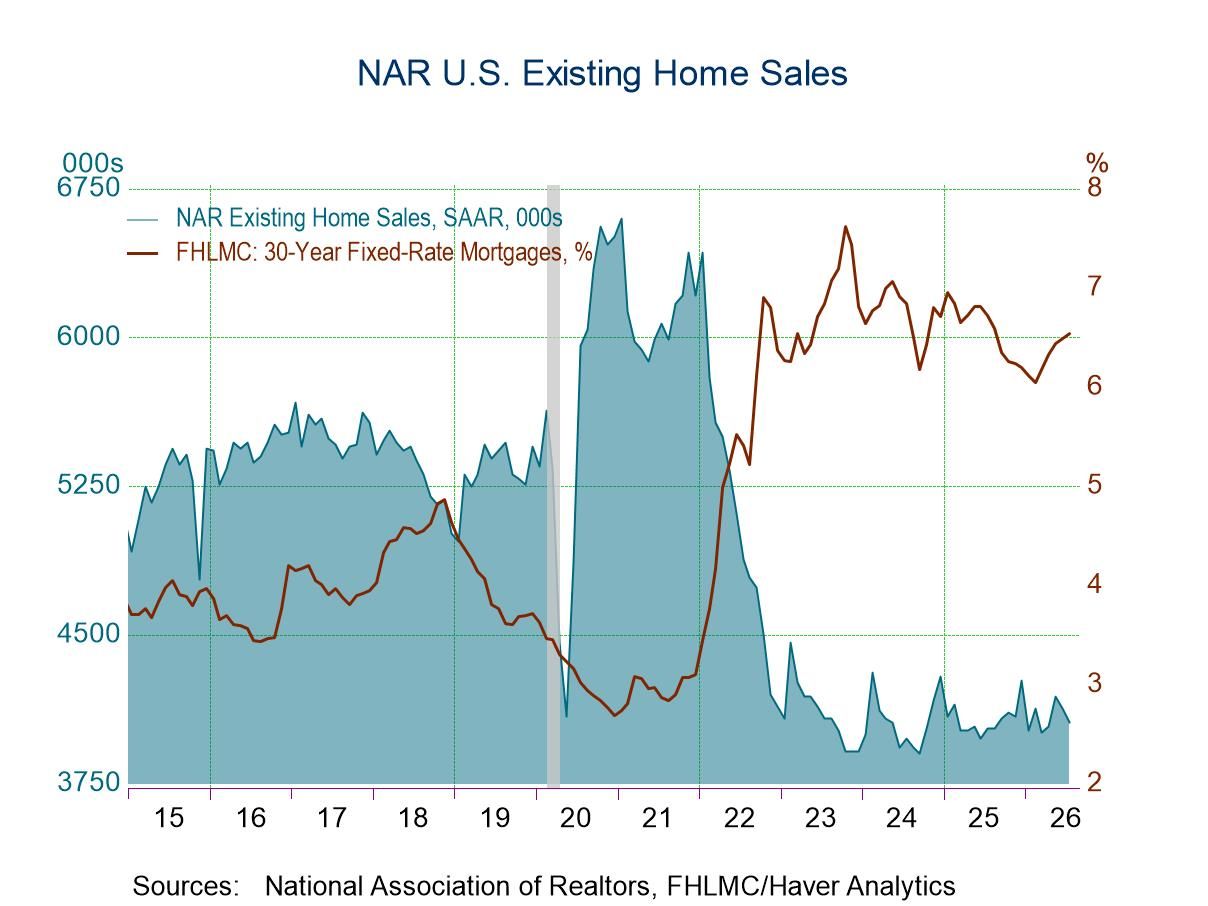
Existing home sales fell 1.7% m/m (+0.7% y/y) to 4.06 million units at an annual rate in July after a downwardly revised 1.4% monthly decline in June (previously -2.4% m/m), according to the National Association of Realtors (NAR). The July level of sales was the lowest in three months. The Action Economics Forecast Survey expected a 1.0% m/m decline in July. The interest rate on the 30-year fixed-rate mortgage continued its ascent in July, rising to 6.89% from 6.78% in June. This rate has risen 59 basis points since its recent low in February, a rise that continues to restrain home sales. The sales figures are based on closings of sales contracts signed over the past couple of months.
Sales of existing single-family homes fell 1.9% m/m (+0.8% y/y) in July on top of a 1.6% monthly decline in June. Sales of condos and co-ops were unchanged in July from June and also unchanged from a year ago.
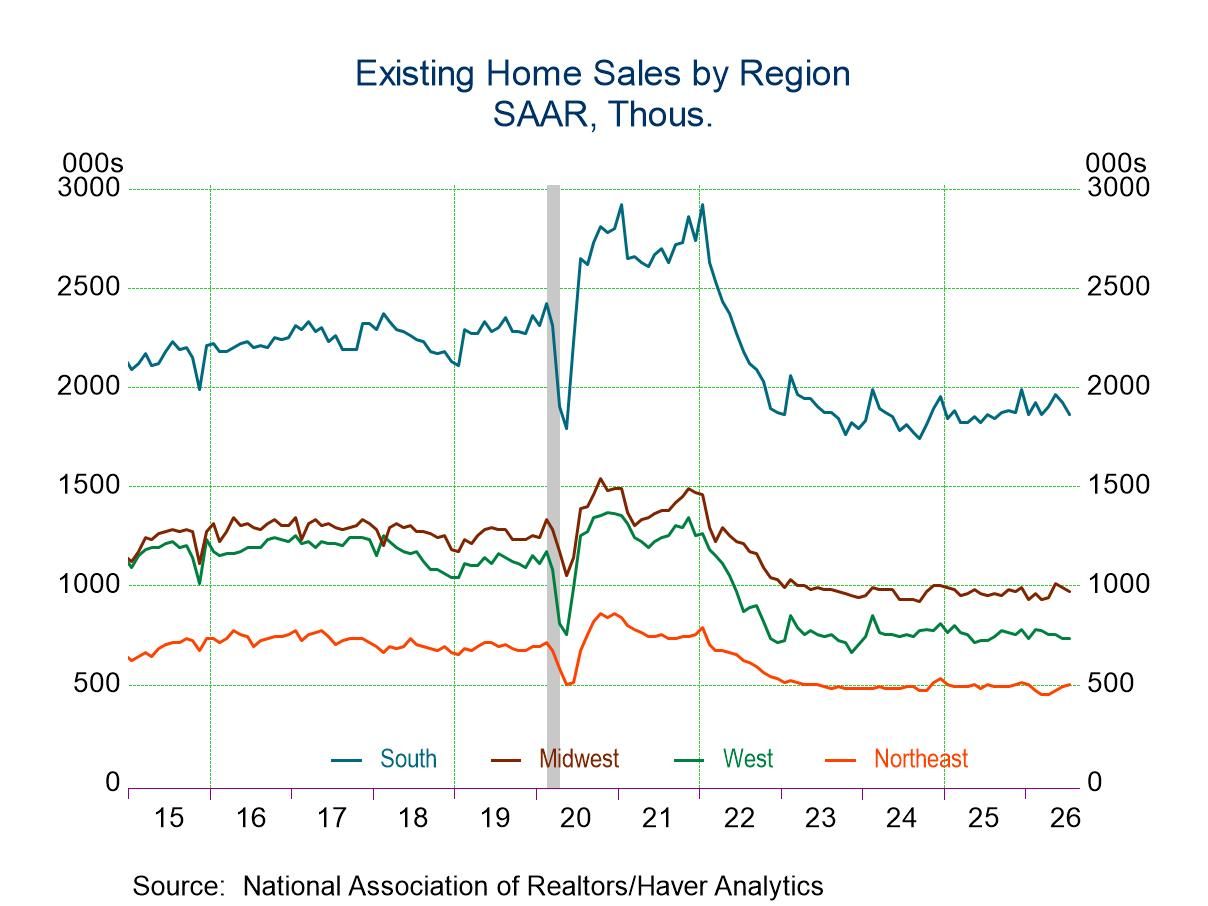
Regionally, monthly sales increased in the Northeast (2.0% m/m, the third consecutive monthly increase), were unchanged in the West, and declined in the Midwest (-2.0% m/m) and South (-3.1% m/m). Year-over-year sales rose in the Midwest (2.1% y/y) and West (1.4% y/y) and were unchanged in the Northeast and South.
The nationwide median sales price fell 2.0% m/m NSA (+2.0% y/y) to $434,100 in July. After trending down during 2025, the y/y rate of advance of the median price has trended up slightly so far in 2026. The median sales prices of single-family home declined 1.9% m/m NSA (+1.9% y/y) in July while the median price of a condo/co-op fell 2.7% m/m NSA (+2.2% y/y). Regionally, the median sales price declined in all four major regions in July from June but rose from a year ago in each region.
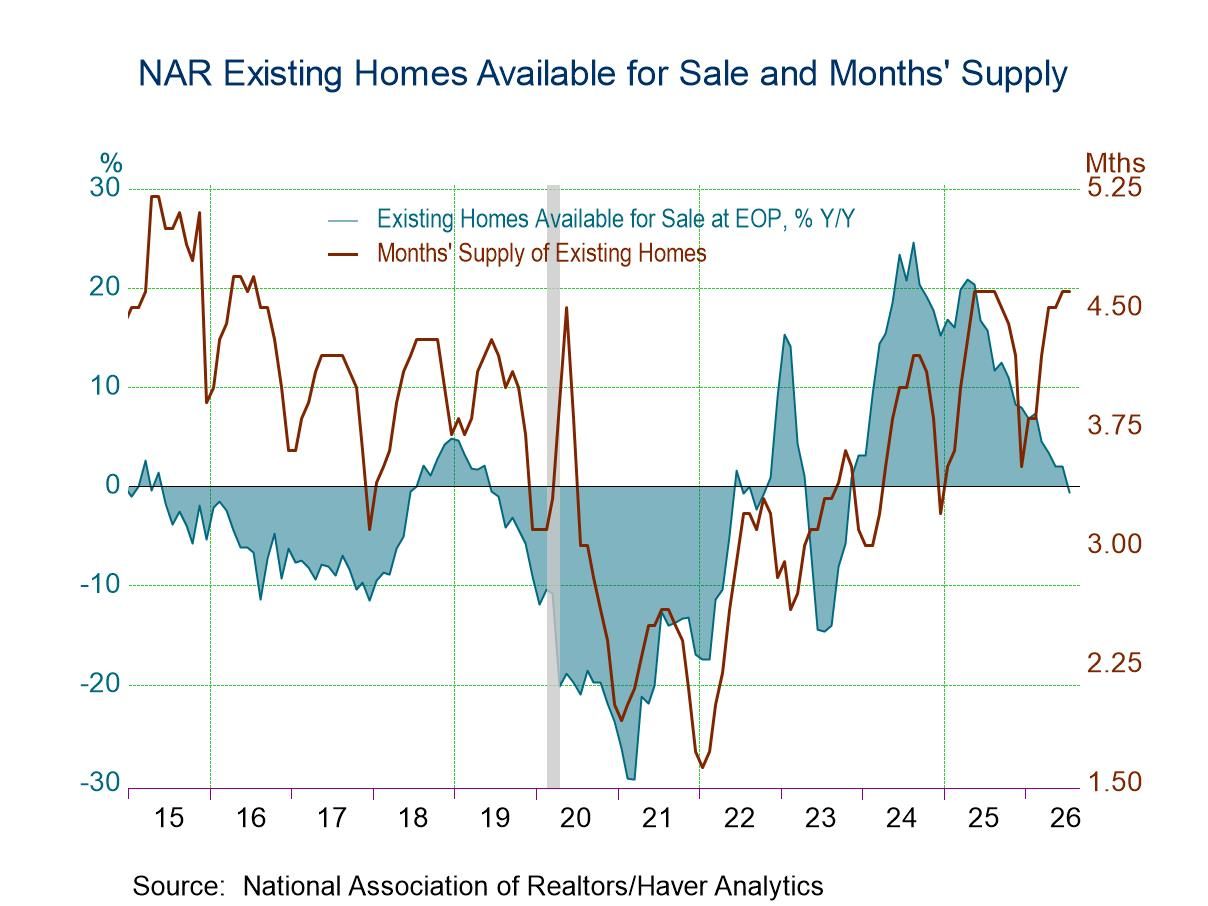
There were 1.54 million homes NSA available for sale at the end of July, down 1.9% from June and 0.6% from a year ago. At the current selling pace, this level amounted to 4.6 months of unsold inventory, unchanged from both last month and July 2025.
The Fixed Rate Mortgage Housing Affordability Index edged up to 103.3 in July from 101.8 in June but is still well below the recent peak of 116.5 reached in January. Housing affordability slipped slightly in the Northeast but rose in the Midwest, South and West in July from June. The affordability index measures whether a median income family income qualifies for an 80% mortgage on a median-priced single-family home. Rising values above 100 indicate that more buyers can afford this mortgage.
The data on existing home sales, prices and affordability are compiled by the National Association of Realtors. The data on single-family home sales extend back to February 1968. Total sales and price data and regional sales can be found in Haver's USECON database. Regional price and affordability data and national inventory data are available in the REALTOR database. Mortgage interest rates can be found in the WEEKLY database. The expectations figure is from the Action Economics Forecast Survey, reported in the AS1REPNA database.

Sandy Batten
AuthorMore in Author Profile »Sandy Batten has more than 30 years of experience analyzing industrial economies and financial markets and a wide range of experience across the financial services sector, government, and academia. Before joining Haver Analytics, Sandy was a Vice President and Senior Economist at Citibank; Senior Credit Market Analyst at CDC Investment Management, Managing Director at Bear Stearns, and Executive Director at JPMorgan. In 2008, Sandy was named the most accurate US forecaster by the National Association for Business Economics. He is a member of the New York Forecasters Club, NABE, and the American Economic Association. Prior to his time in the financial services sector, Sandy was a Research Officer at the Federal Reserve Bank of St. Louis, Senior Staff Economist on the President’s Council of Economic Advisors, Deputy Assistant Secretary for Economic Policy at the US Treasury, and Economist at the International Monetary Fund. Sandy has taught economics at St. Louis University, Denison University, and Muskingun College. He has published numerous peer-reviewed articles in a wide range of academic publications. He has a B.A. in economics from the University of Richmond and a M.A. and Ph.D. in economics from The Ohio State University.
More Economy in Brief
 Global