Swiss Inflation: Nonexistent; Switzerland: Existent!
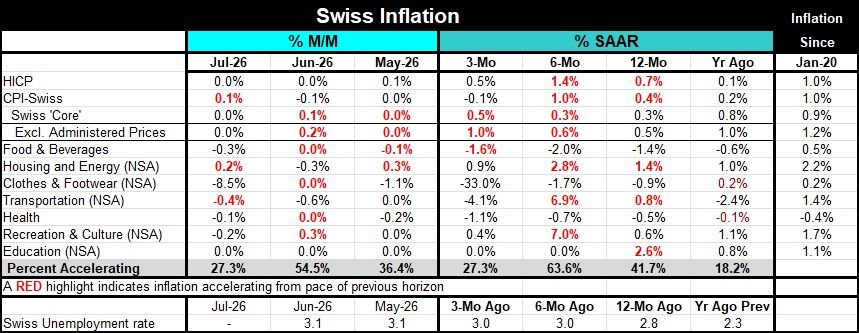
Swiss HICP inflation in July was zero month-to-month. In June, it was zero month-to-month. In May, it was 0.1% month-to-month. Year-over-year HICP inflation is 0.7%, compared to a year ago when it was 0.1% over 12 months.
The same metrics viewed through the domestic measure of Swiss inflation are even lower. In July, domestic prices rose 0.1%; in June, they fell by 0.1%; and in May, they were unchanged. The 12-month inflation rate for the Swiss CPI in July was 0.4%; a year ago the 12-month change was 0.2%. Pinch me! Am I dreaming?
And yes, Switzerland is on the same planet as the United States, Europe, and the United Kingdom.
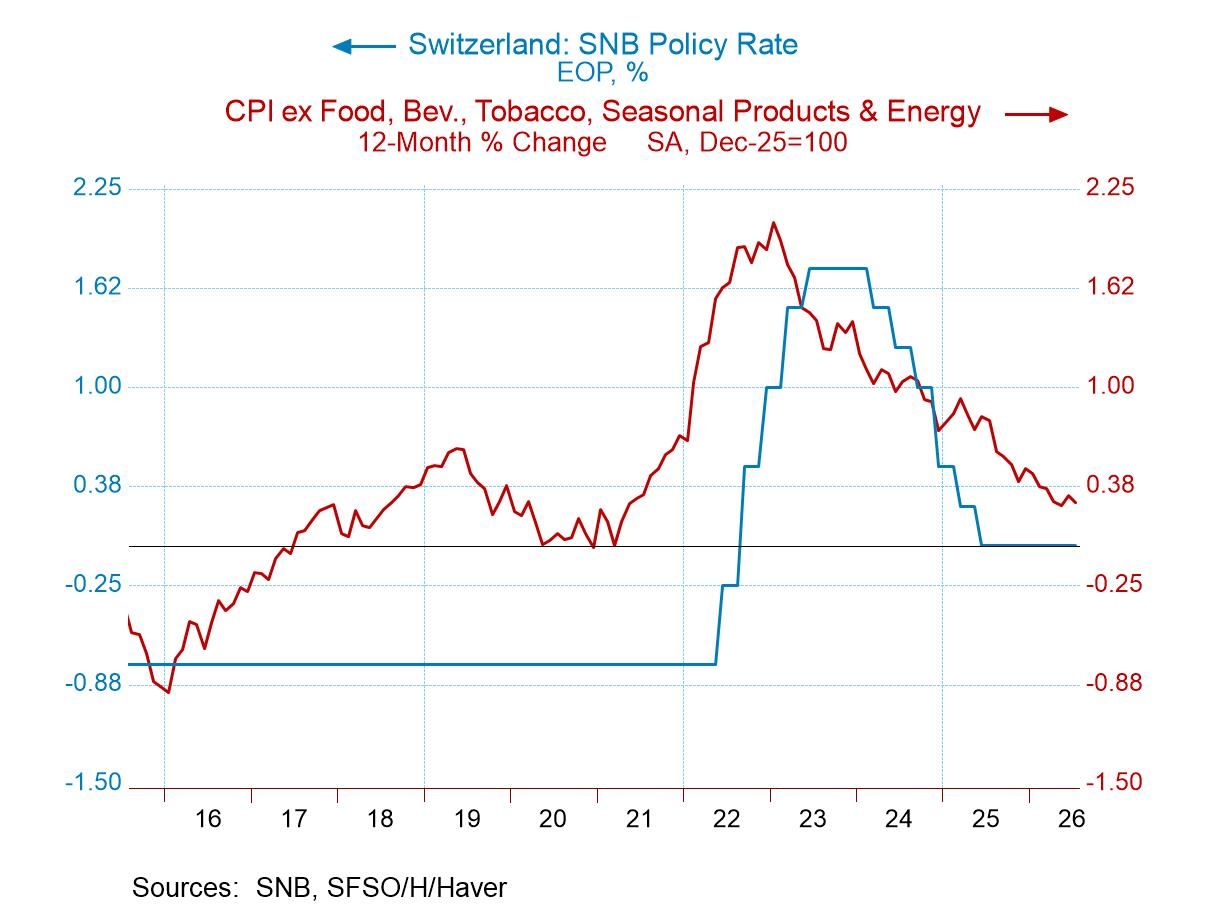
Swiss inflation going back to 2020 has a peak year-over-year rate in its core of 2% based on monthly data. The headline 12-month rate at its peak was 3.4%. Excluding administered prices, the peak inflation rate in Switzerland was 2.7%. One of the main things that Switzerland has going forward is that the Swiss National Bank (SNB) has incredible credibility. It waited as long as the Fed did to raise interest rates, but it raised rates quickly up to the level of the core inflation rate. Once inflation began to fall, the SNB continued to raise rates until it became clear that the policy rate had begun to hover above the inflation rate. At that point, the bank flattened out its rate profile, then turned into a rate-cutting mode.
Once again after the inflation rate had been arrested and fell below 1%, the SNB continued to cut rates until inflation was at zero and so were rates.
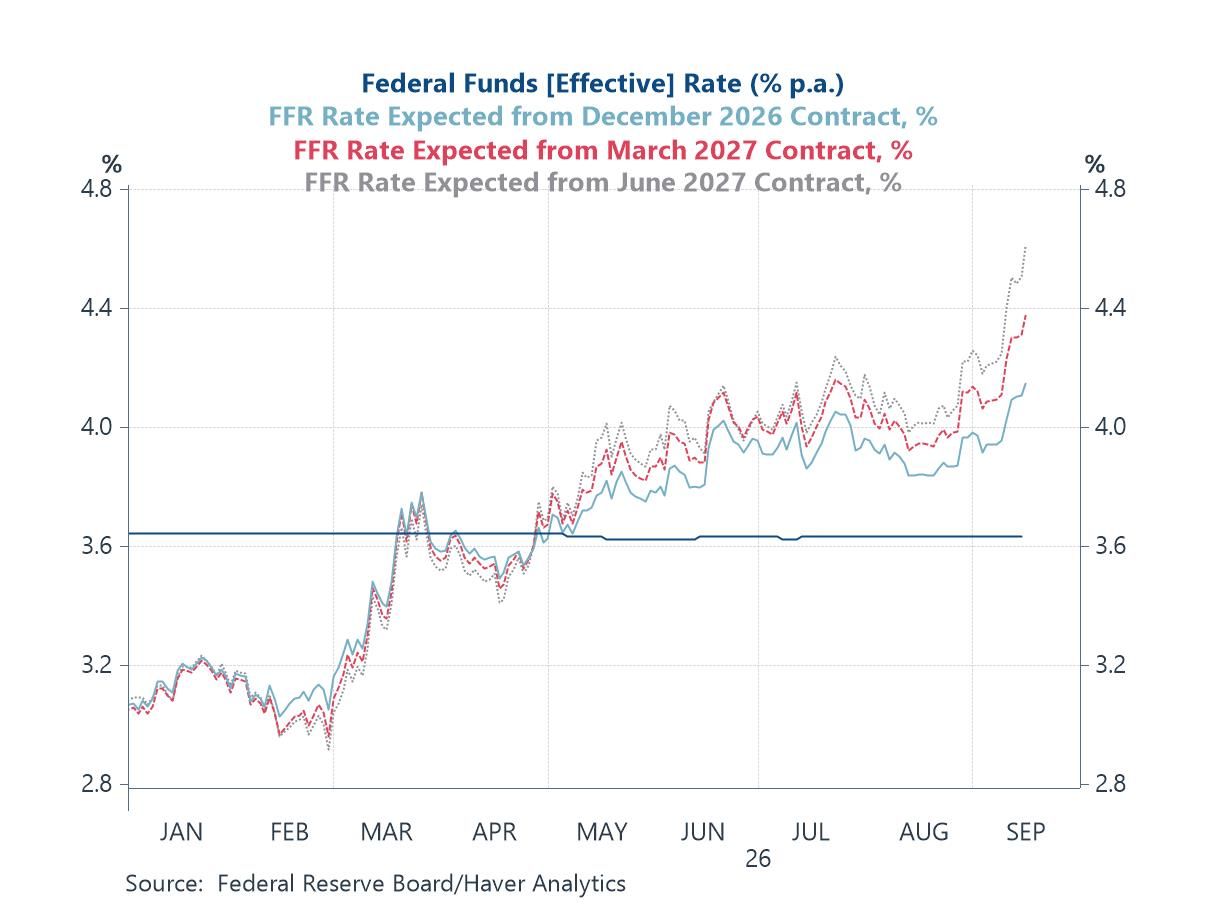
The U.S. has not had the same experience with inflation. U.S. inflation has lingered and the Federal Reserve has continued to hold its policy rate above the 12-month trailing inflation rate.
Swiss performance is unique, suggesting that monetary policy right now is not needed to control inflation, at least not in Switzerland. But this undoubtedly has a lot to do with expectations about the behavior of the SNB and the dynamics of the Swiss economy and capital markets.
Swiss inflation began to track the 1% mark in early 2024. The core rate fell into line at the same time, with very little lag. This also is very unlike the U.S. experience.
The Federal Reserve likes to tout its credibility. However, it's hard to see a central bank crowing about its credibility when it's missing its inflation target for five years; it continues to miss its inflation target as it observes inflation is still stubborn and possibly accelerating, and yet doing nothing about it.
The Federal Reserve makes policy in a way that is deeply rooted in the concepts of modern neo-Keynesian theory, policies that have completely embraced to the point of smothering the concept that expectations matter. Treasury Secretary Bessent has authored an article in The International Economy magazine entitled “The Fed’s ‘Gain of Function’ Monetary Policy” in which he is critical of this idea that by talking to markets the Fed can change expectations and control inflation. While this is a precept of modern monetary economics, it only works if the central bank is as good as its word and the Fed has been far from that. So, it's unclear how a central bank, with an inflation target that it is (or has been) ambivalent about hitting, carries the credibility to hit it in the future when it's only willing to put forth a de minimis effort.
Switzerland is an example of how well monetary policy can work and how well expectations can work when the central bank really has credibility. The Federal Reserve knows how important credibility is and so it tries to assert that it has it. However, credibility is not the kind of thing that you can assert. It's the kind of thing that a central bank has to earn. When Powell was Fed Chair, he tried to harken back to the days of Paul Volcker and say, “see what we can do.” However, it was clear to everyone that Powell was not Volcker, and he was unwilling to do any of the things that Volcker did.
As that played out, Powell eventually took this system of inflation targeting that Bernanke had put in place and turned it into a system of unemployment rate targeting and began a process of missing the inflation target for five years running. At some point, the Fed pays the price for that, and the price it pays is an erosion of its credibility. But that is something the Fed is never going to admit that it has lost. Switzerland is the perfect example of what it looks like when a central bank has that credibility. Monetary policy works much better and is almost effortless.

Robert Brusca
AuthorMore in Author Profile »Robert A. Brusca is Chief Economist of Fact and Opinion Economics, a consulting firm he founded in Manhattan. He has been an economist on Wall Street for over 25 years. He has visited central banking and large institutional clients in over 30 countries in his career as an economist. Mr. Brusca was a Divisional Research Chief at the Federal Reserve Bank of NY (Chief of the International Financial markets Division), a Fed Watcher at Irving Trust and Chief Economist at Nikko Securities International. He is widely quoted and appears in various media. Mr. Brusca holds an MA and Ph.D. in economics from Michigan State University and a BA in Economics from the University of Michigan. His research pursues his strong interests in non aligned policy economics as well as international economics. FAO Economics’ research targets investors to assist them in making better investment decisions in stocks, bonds and in a variety of international assets. The company does not manage money and has no conflicts in giving economic advice.
More Economy in Brief
 Asia
Asia