Producer Prices in October: Better Than Expected, but Still Firmer Than Desired
Summary
- Energy prices dipped, but many other measures were at the high end of recent ranges.
- Intermediate prices are trending upward.
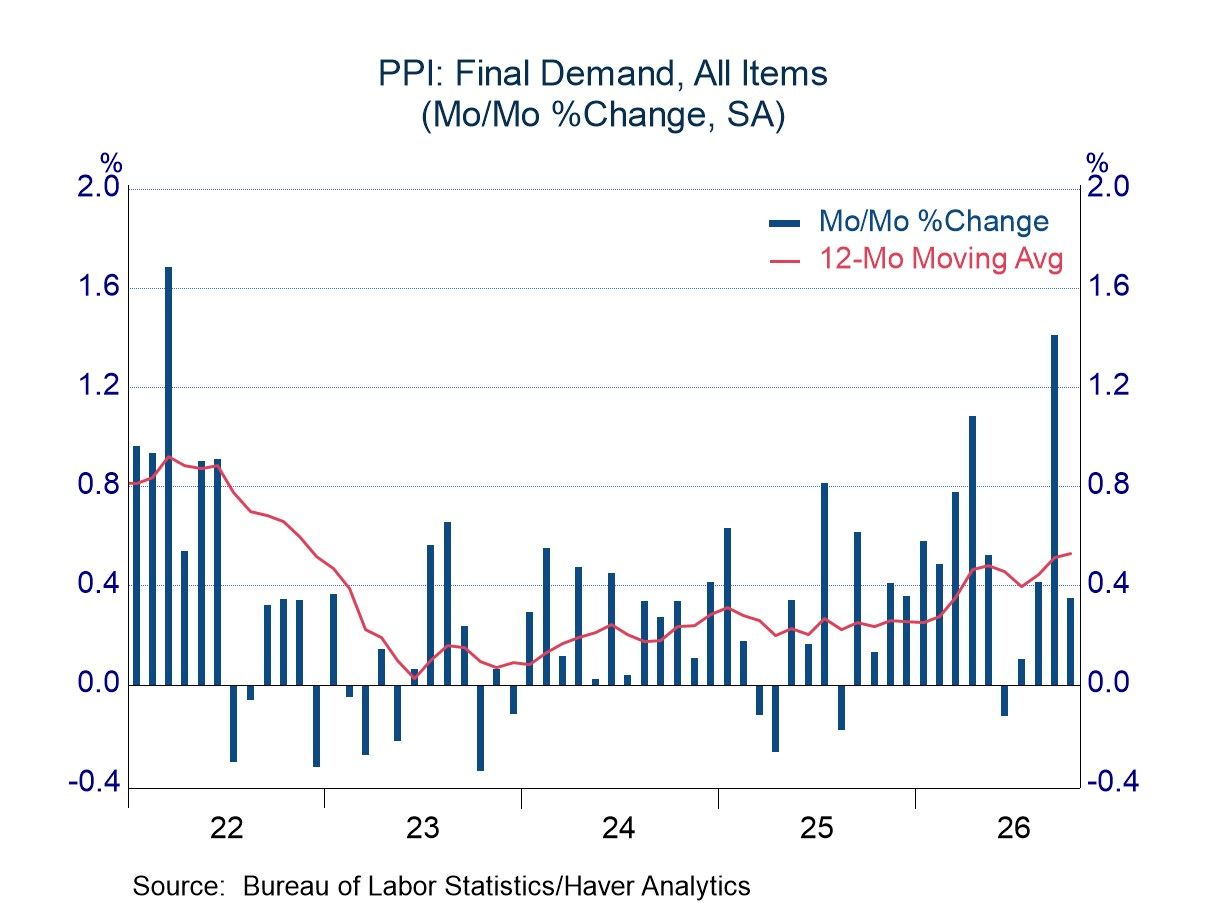
The Producer Price Index for final demand rose 0.3% in October, less than the expected increase of 0.4%. The surprise occurred in the energy sector, where prices dipped 0.1%. This decline, while welcome, followed increases of 10.0% in September and 4.2% in August, and thus did little to temper the pronounced year-over-year change. In fact, the latest 12-month reading of 37.0% was the sharpest increase since energy became an issue in the early months of the year. Food prices jumped 1.3% after an increase of 1.1% in September, but these increases followed declines in the prior three months, and the year-over-year change was tame at 1.7%.
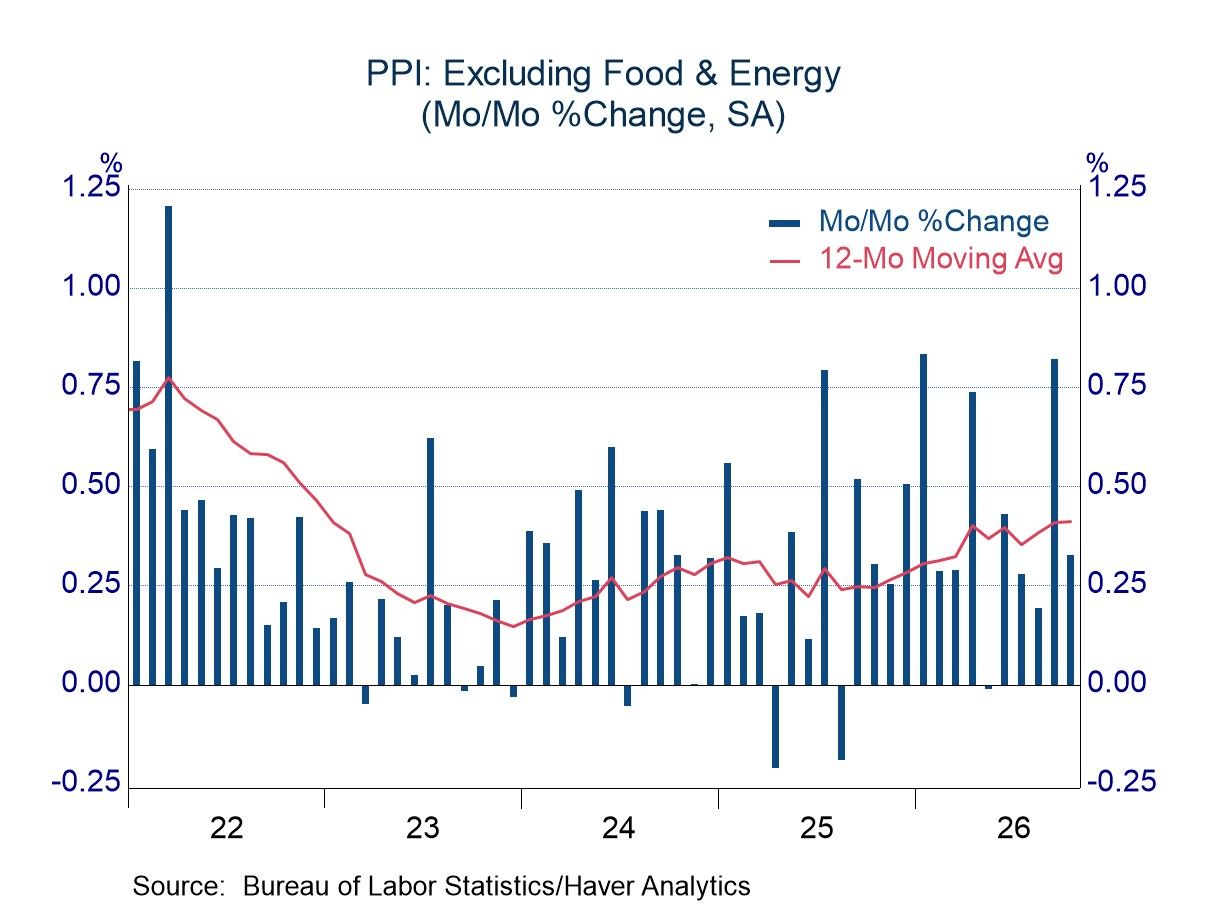
Prices excluding food and energy rose 0.3%, in line with expectations. Although this component did not involve a surprise, it could still be viewed as unsettling, as it left the year-over-year change at 5.0%, the same as in September and matching the fastest pace in the past few years.
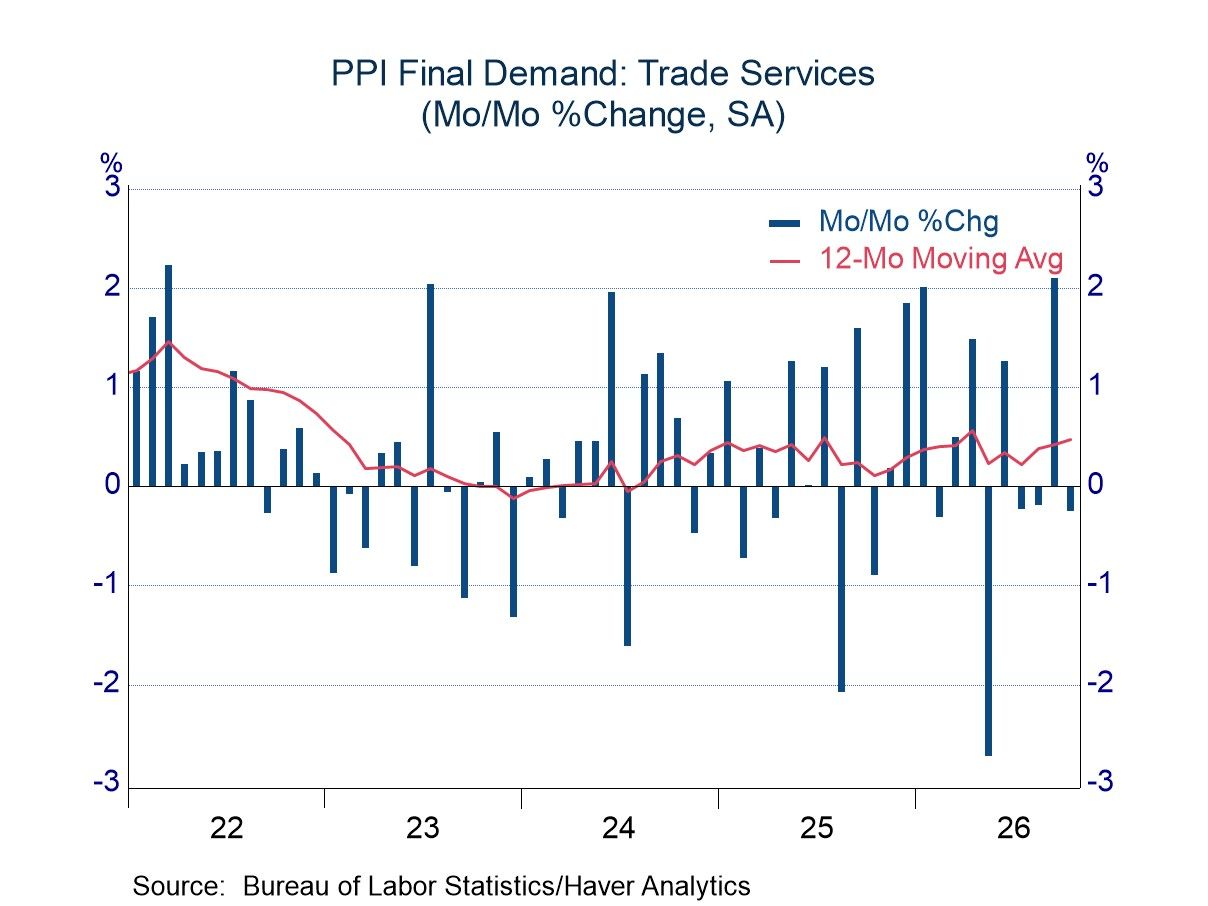
In addition to the prices of food and energy, the Bureau of Labor Statistics recommends excluding the prices of trade services to smooth the noise in monthly changes and to better gauge underlying inflation. This component is indeed volatile, as shown by the sharp ups and downs in the chart below. Prices of trade services fell 0.2% in October, which left a jump of 0.5% in the PPI excluding food, energy, and trade services. The year-over-year change totaled 4.9%, just shy of the recent high of 5.0% and a sign of a significant inflation impulse in the economy. (Trade services are the margins earned by retailers; that is, the spread between the price paid by the final purchaser and the price paid by the selling vendor.)
Many observers view the PPI as a measure of prices in the early stages of the production and distribution process. This was true in the past (years ago the index was called the Wholesale Price Index), but the BLS changed the nature of the measure in 2014, and it now includes prices of many goods and services purchased by the ultimate user (hence the name of the headline measure: PPI for final demand). However, the report also includes prices of goods and services at earlier stages (intermediate demand PPI).
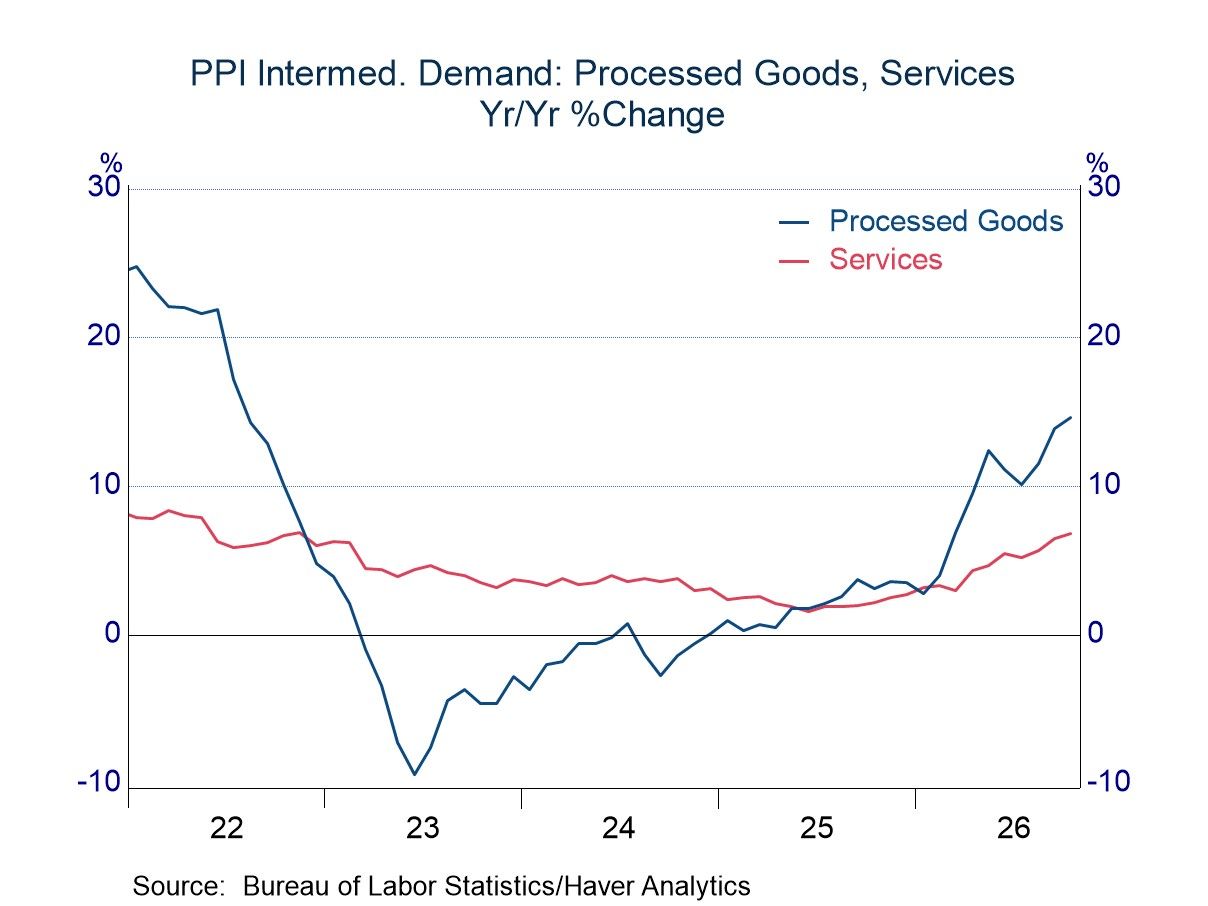
Prices of intermediate demand for processed goods can swing widely, and they are on an upward path now. Prices have increased more than 1.0% in six of the ten months so far this year (and more than 2.0% in four of these months). The change in October was mild by comparison (0.4%), but the year-over-year change totaled 14.6%. Prices of intermediate demand for services have been less volatile, but they rose 0.6% in October, and the upward-trending year-over-year change totaled 6.8%. Unsettling.
The PPI data are published by the Bureau of Labor Statistics and can be found in Haver’s USECON database. Further detail is contained in PPI and PPIR. The expectations figures are available in the AS1REPNA database.

Michael J. Moran
AuthorMore in Author Profile »Before joining Haver Analytics in 2025, Michael J. Moran was the chief economist of Daiwa Capital Markets America Inc. He was responsible for preparing the firm’s economic forecast and interest rate outlook. He traveled frequently to visit the clients of Daiwa Capital Markets and wrote weekly economic commentary. Mr. Moran also was involved in the flux of financial markets, as he spent a portion of each day on Daiwa’s trading floor interpreting economic statistics and Federal Reserve activity for traders and salespeople. Mr. Moran is quoted frequently in the financial press, and he appears regularly on cable news shows. He also has published articles in several journals and periodicals. Before joining Daiwa Capital Markets America, Mr. Moran worked as an economist at the Federal Reserve Board in Washington, D.C. where he analyzed a broad range of issues dealing with the financial sector of the economy and regularly briefed the Board of Governors. He was on the faculty of Pennsylvania State University from 1979 to 1980 and taught on a part-time basis at George Washington University from 1980 to 1987.
Mr. Moran received his Ph.D. in economics from Pennsylvania State University in 1980 and a B.S. in business administration from the University of Bridgeport in 1975. He was a CFA charter holder from 2002 until 2016.
More Economy in Brief
 Global