Personal Income, Consumption, and Prices in August
Summary
- Higher energy prices and still-firm increases in core prices.
- Households spend briskly after a pause in July; Q3 activity appears strong.
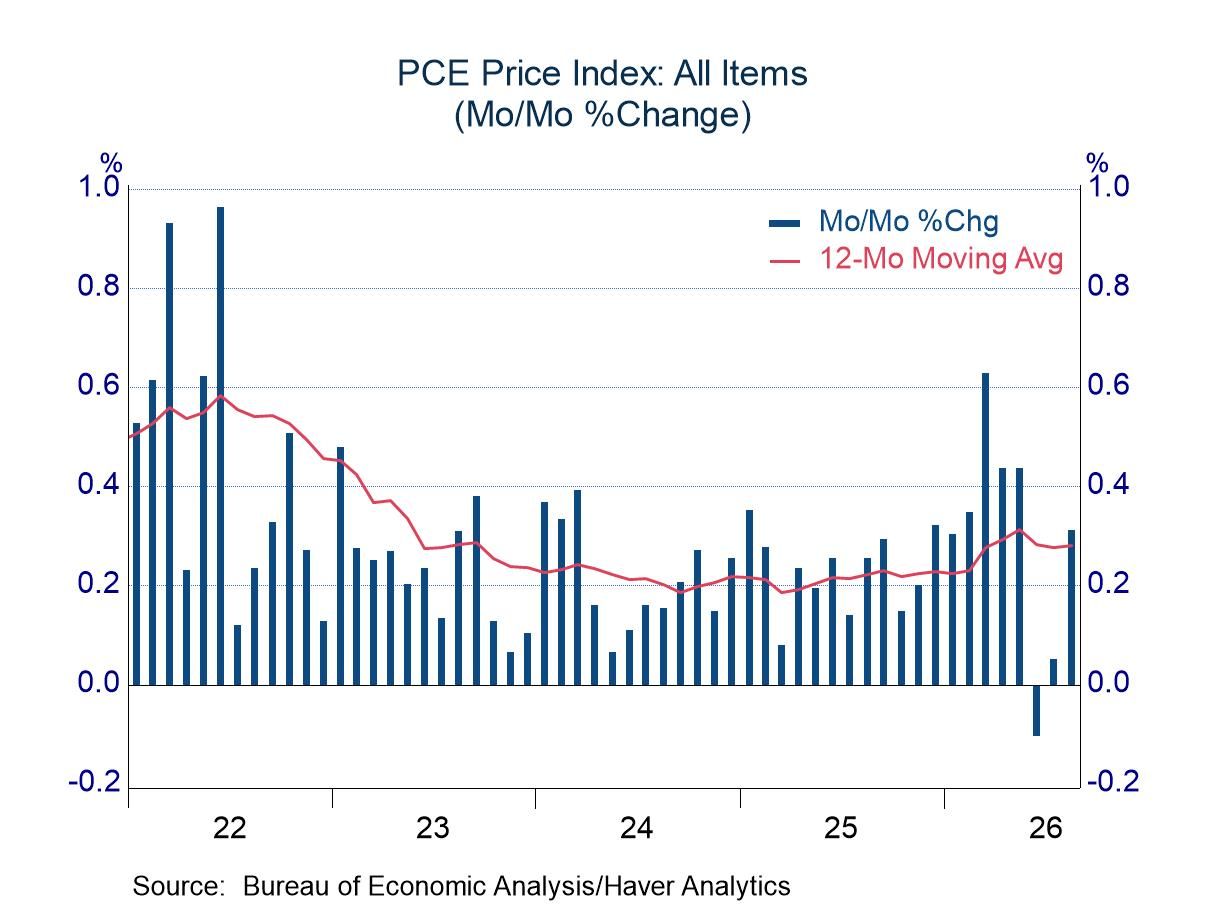
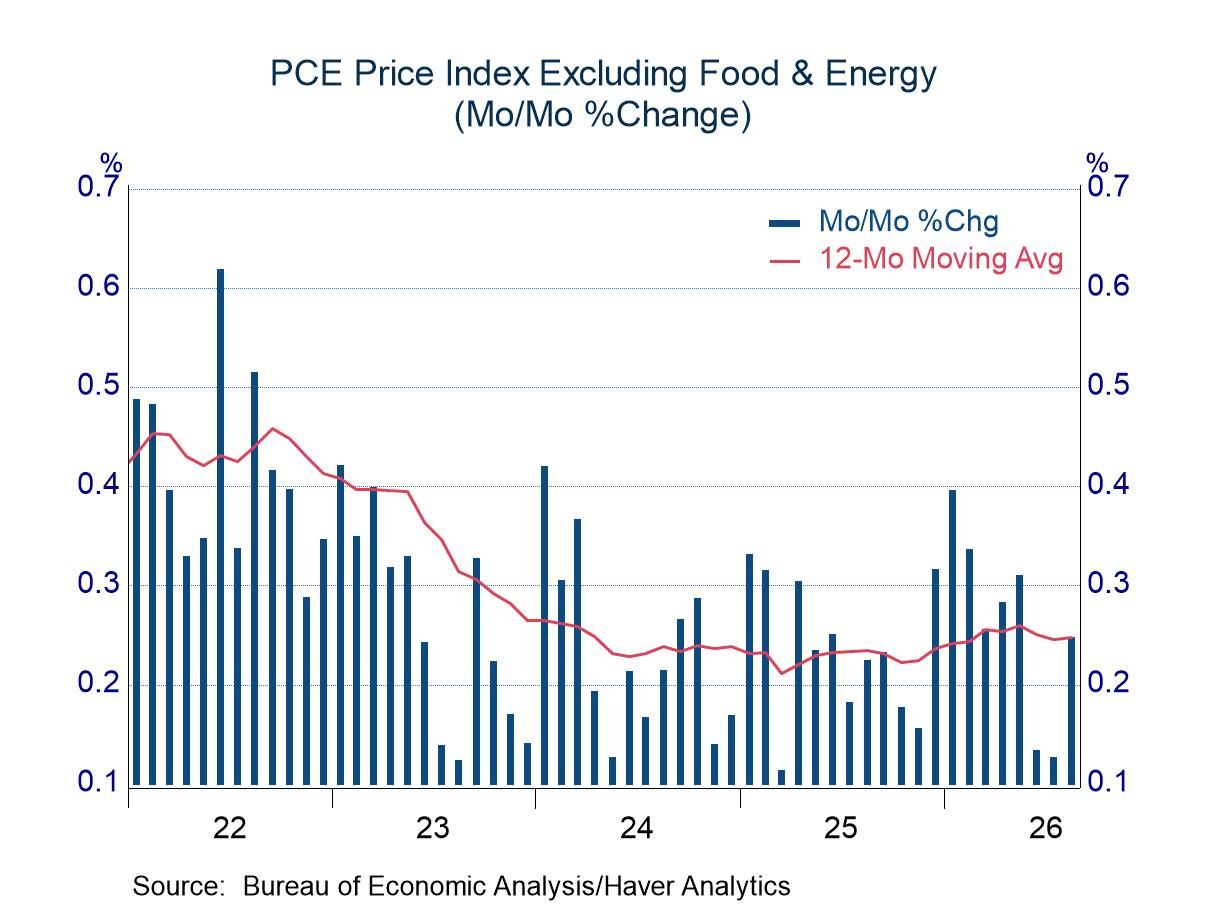
With inflation and tighter monetary policy now front-line issues, the price index for personal consumption expenditures has arguably become the most important component of this report. Results for August were a bit unsettling. Energy prices jumped 2.3% month-to-month, which left a year-over-year change of 16.8%. Prices excluding food and energy (the core index), rose 0.2%, but the measure almost rounded up to 0.3% (0.247%). The year-over-year change in the core index totaled 3.0%, in line with other readings this year and a full percentage point above the target of the Federal Reserve. Food prices were tame in August: unchanged month-to month and up 1.9% in the past year.
Today’s report included annual benchmark revisions, which affected results back to 2021. The adjustments left the recent year-over-year changes in the PCE price indexes a touch lighter than previously believed. The headline figure for July now shows an increase of 3.4% rather than 3.7%; the core posted a revised advance of 3.0% rather than 3.3%.
The revisions to the price indexes primarily reflected changes in source data. The BEA shifted its source of data on legal services from the CPI to the PPI. Prices for computer software and accessories are now based on information from both the CPI and the PPI rather than the CPI alone. Finally, in calculating the price of portfolio management and investment-advice services, the BEA shifted from the PPI to an implicit-price measure derived from an employment statistic.
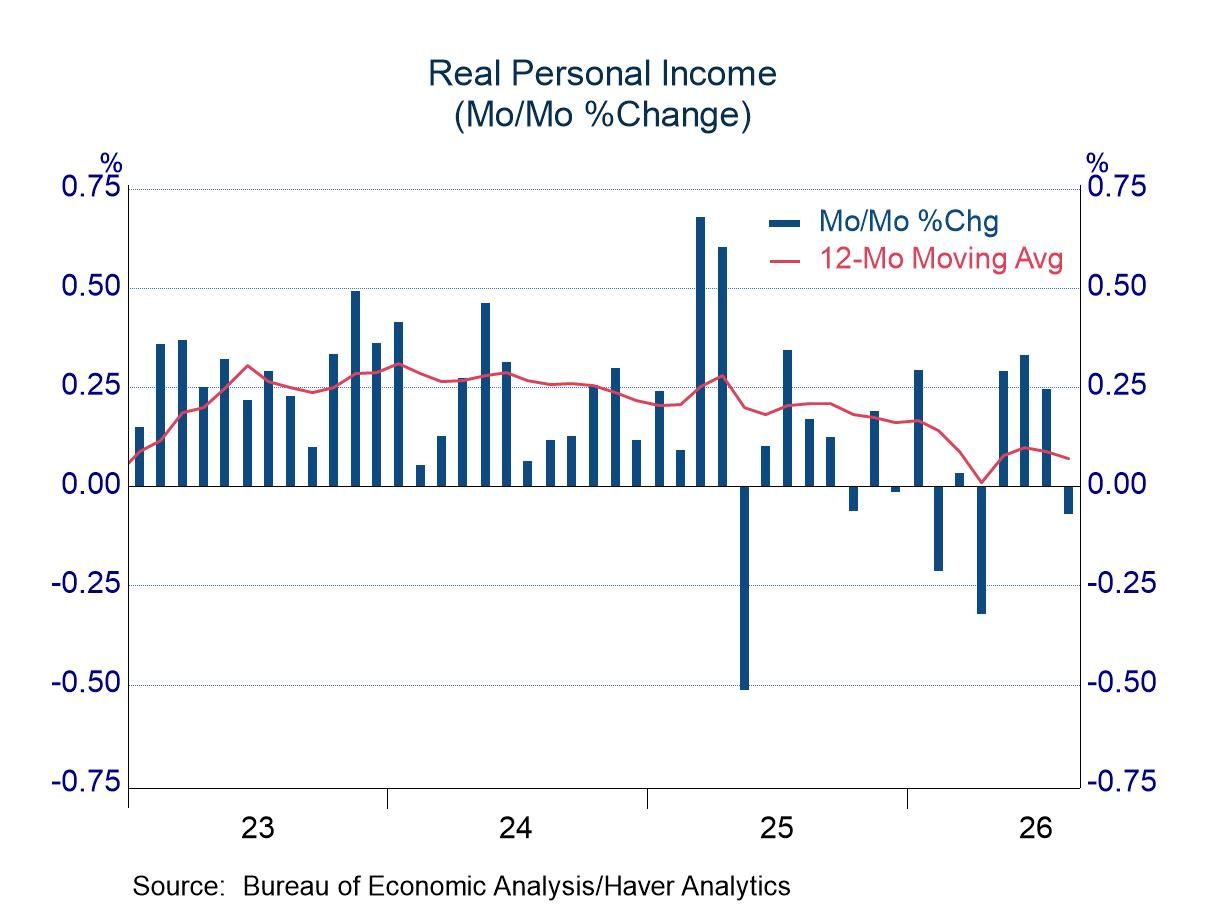
The price indexes will probably capture most of the media and market attention, but the income and consumption components are important as well. Nominal personal income rose 0.2% in August, lighter than the averages of 0.4% in the first seven months of this year and in all of 2025. After adjusting for inflation, real personal income fell 0.1%. Compensation of employees and proprietors’ income both rose 0.3% in nominal terms, but these results would translate to little change after adjusting for inflation. Rental income, interest income, and dividends were all light (less than 0.1% in nominal terms).
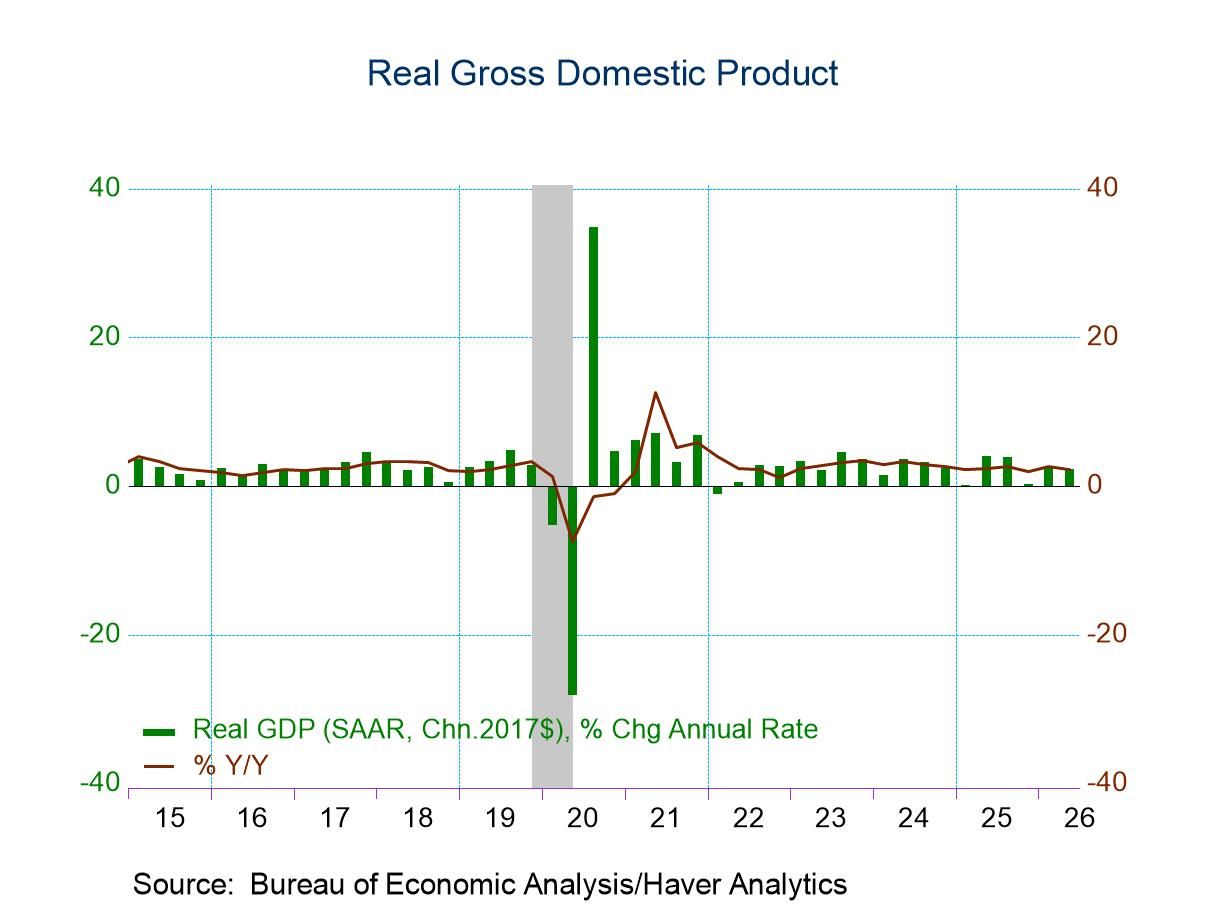
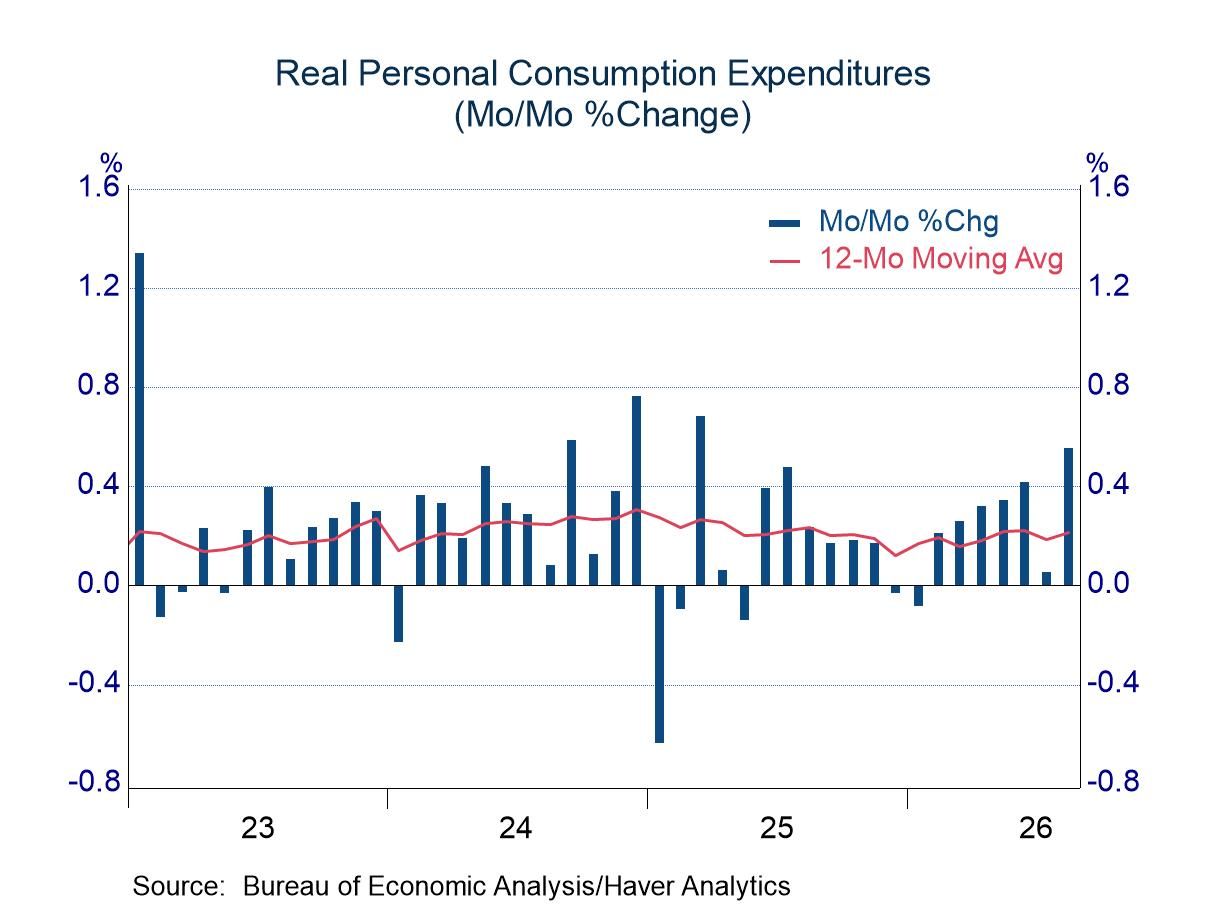
Despite underwhelming income in August, households spent vigorously, with nominal outlays increasing 0.9% and real spending up 0.6%. Part of this performance could be viewed as catch-up after light spending in July (real outlays up 0.1%), but the data still signal strong economic support from consumers. The figures from this report feed directly into GDP, and results for the first two months of Q3 suggest that the growth of real consumer spending in Q3 could exceed 3.0%, firmer than the average of 2.2% in the first half of this year and 2.1% over the four quarters of 2025.
The personal income and consumption figures are available in Haver’s USECON database with detail in the USNA database. The Action Economics forecasts are in AS1REPNA.

Michael J. Moran
AuthorMore in Author Profile »Before joining Haver Analytics in 2025, Michael J. Moran was the chief economist of Daiwa Capital Markets America Inc. He was responsible for preparing the firm’s economic forecast and interest rate outlook. He traveled frequently to visit the clients of Daiwa Capital Markets and wrote weekly economic commentary. Mr. Moran also was involved in the flux of financial markets, as he spent a portion of each day on Daiwa’s trading floor interpreting economic statistics and Federal Reserve activity for traders and salespeople. Mr. Moran is quoted frequently in the financial press, and he appears regularly on cable news shows. He also has published articles in several journals and periodicals. Before joining Daiwa Capital Markets America, Mr. Moran worked as an economist at the Federal Reserve Board in Washington, D.C. where he analyzed a broad range of issues dealing with the financial sector of the economy and regularly briefed the Board of Governors. He was on the faculty of Pennsylvania State University from 1979 to 1980 and taught on a part-time basis at George Washington University from 1980 to 1987.
Mr. Moran received his Ph.D. in economics from Pennsylvania State University in 1980 and a B.S. in business administration from the University of Bridgeport in 1975. He was a CFA charter holder from 2002 until 2016.
More Economy in Brief
 Global