Job Openings: Slippage in November, but still respectable by historical standards
Summary
- Job openings have eased considerably from the elevated levels seen during the post-pandemic recovery, but they are in line with pre-pandemic norms.
- Businesses are not rushing to fill posted positions.
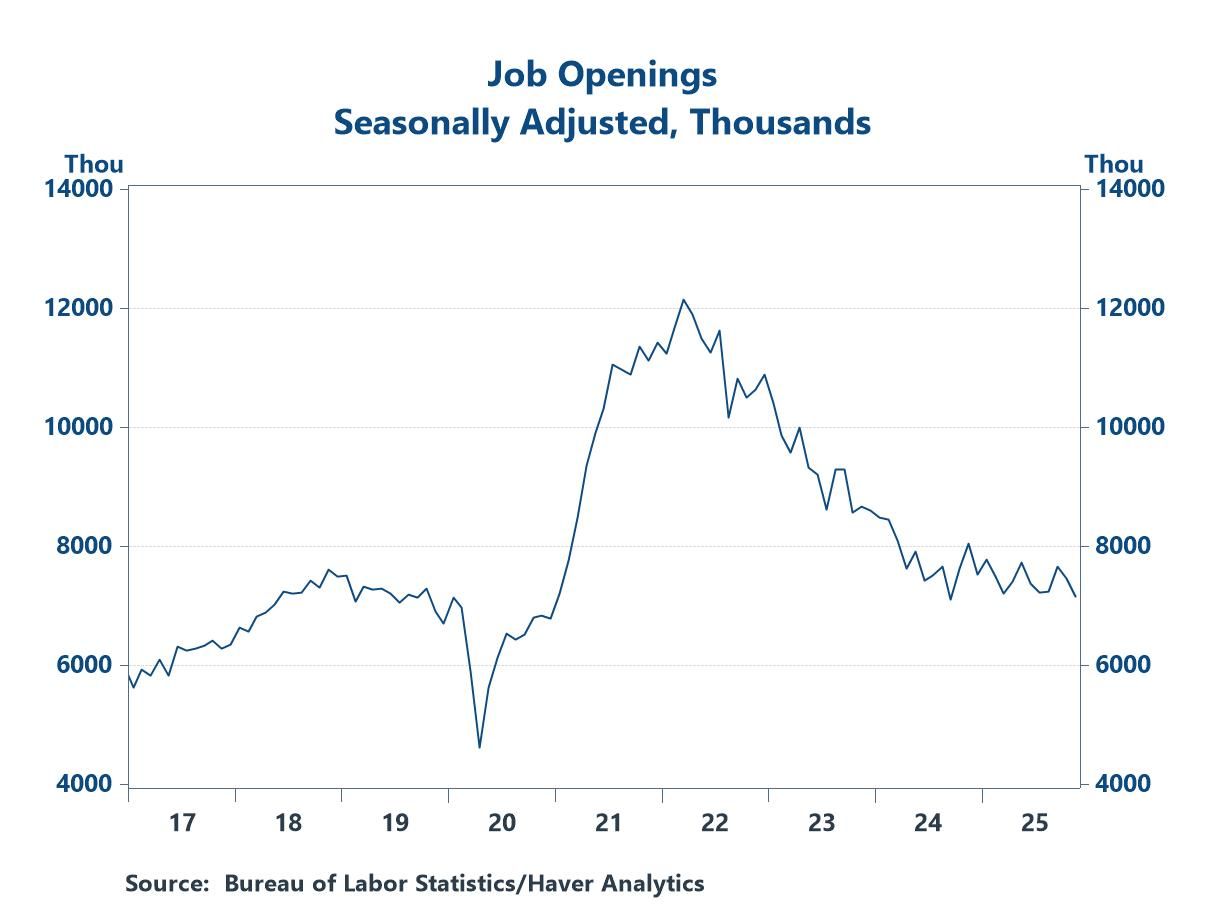
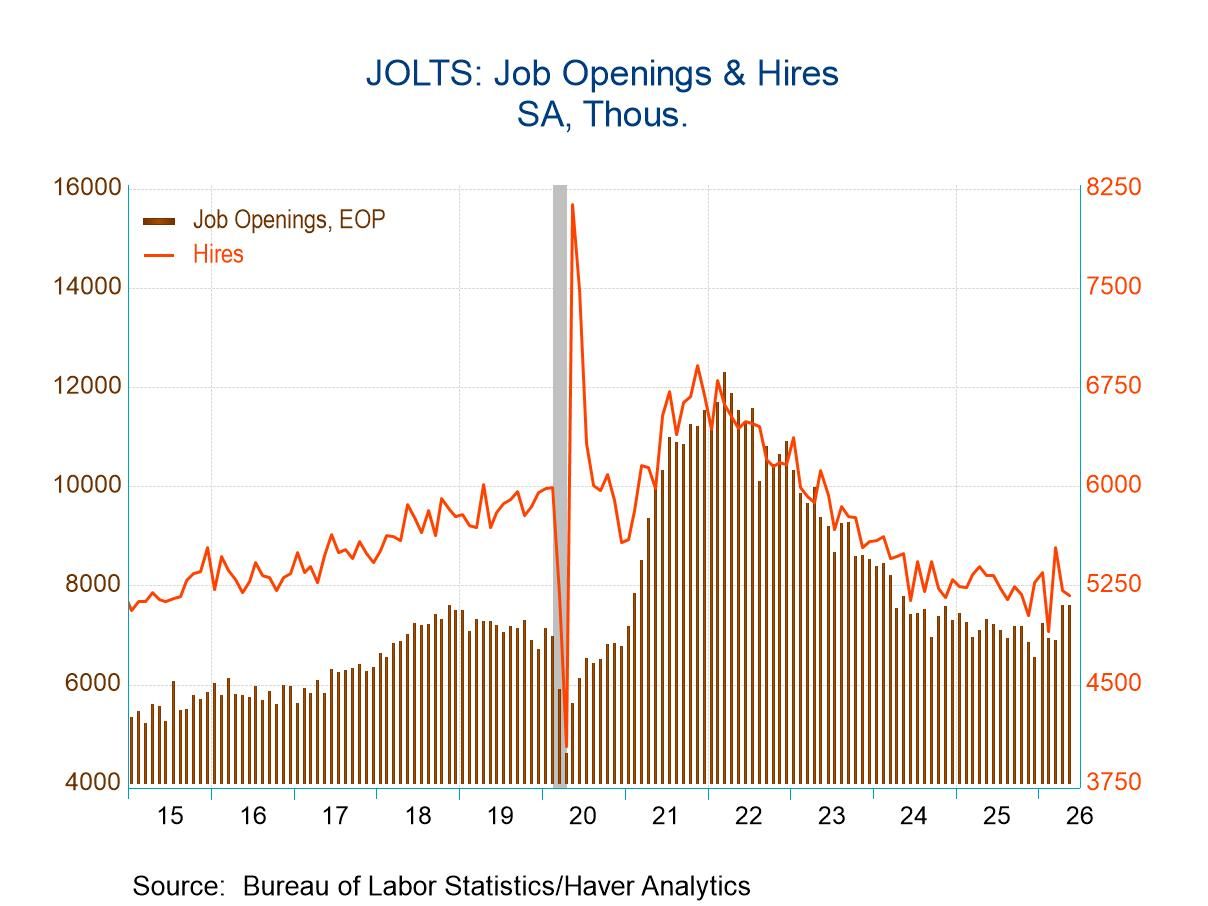
The November report on Job Openings and Labor Turnover (JOLTs) showed a drop of 4.1% in job openings from a downward revised level in October (revised lower by 2.9%). The combined changes pushed the latest total to the lowest level of the year. Although the latest results were soft, they were not deeply disappointing. Openings in November were still within the range of observations from the past two years, and they were in line with the pre-pandemic averages in 2018 and 2019. The November reading was noticeably firmer than observations before 2018. Scaling by the size of the labor force does not change the picture: November results were in the low end of the recent range, but they were similar to results in 2018-19 and they were firm relative to observations in earlier years.
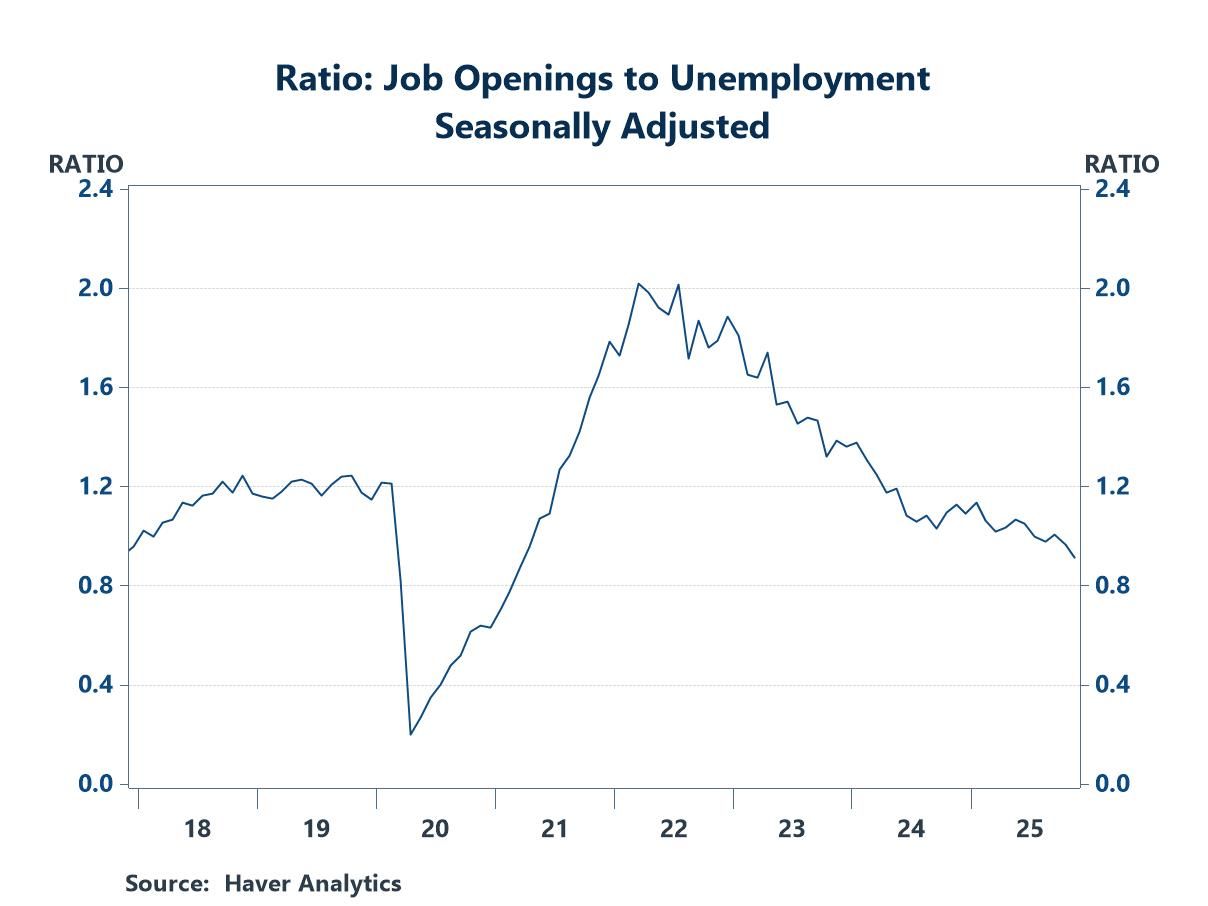
The easing in job openings in the past few years has led to a drop in the ratio of openings to unemployed individuals. However, recent results for this measure also are respectable relative to historical standards. The current reading of 0.913 trails the average of 1.160 in 2018-19, but the shortfall is moderate, and the results in those years represent a strong standard. This ratio never reached the 1.0 threshold until 2018, and the strongest average before 2018 was 0.878 in 2017. Every year before 2017 showed an even lighter average.
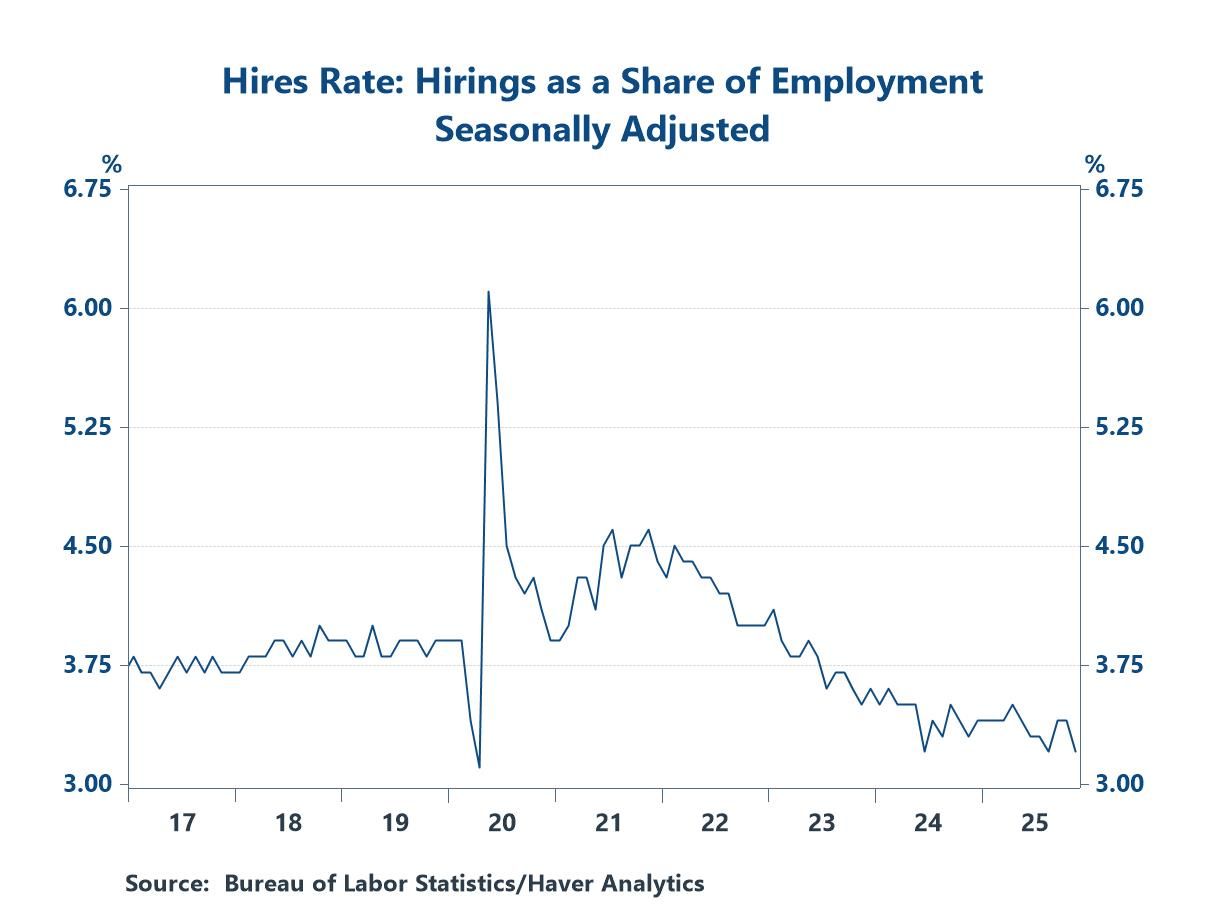
The still-respectable level of job postings suggests that businesses are seeking workers, but they are being cautious in making offers. The hires rate (the number of new hires relative to employment) fell 0.2 percentage point in November to 3.2%, matching the lowest reading in the current cycle. Moreover, results in the past two years have been noticeably shy of the pre-pandemic norms in 2018-19.
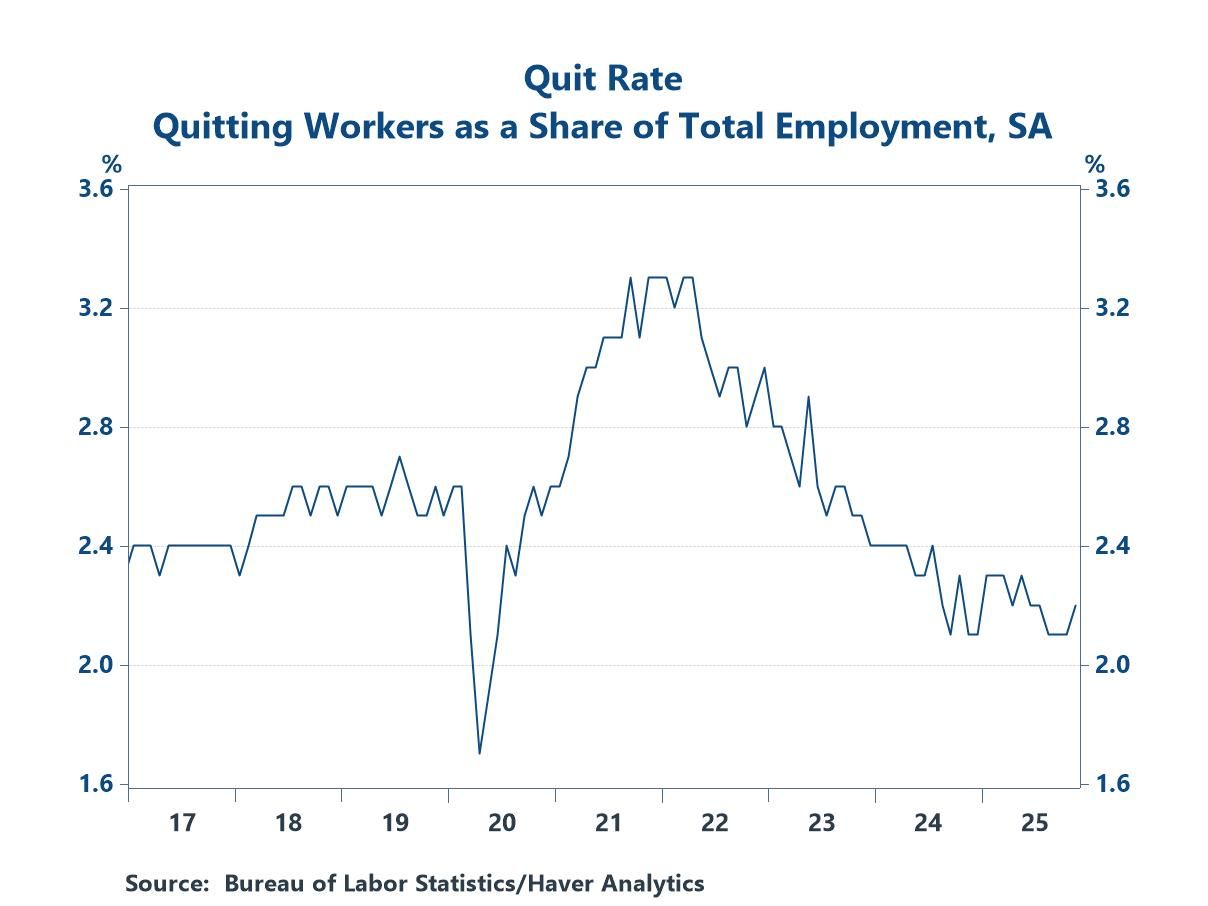
Individuals apparently have noticed the reluctance of businesses to hire, as few are quitting their jobs to seek new opportunities. The quits rate has been range bound since mid-2024 at a level that is well below observations in 2018-19.
The Job Openings and Labor Turnover Survey (JOLTS) data are available in Haver’s USECON database.

Michael J. Moran
AuthorMore in Author Profile »Before joining Haver Analytics in 2025, Michael J. Moran was the chief economist of Daiwa Capital Markets America Inc. He was responsible for preparing the firm’s economic forecast and interest rate outlook. He traveled frequently to visit the clients of Daiwa Capital Markets and wrote weekly economic commentary. Mr. Moran also was involved in the flux of financial markets, as he spent a portion of each day on Daiwa’s trading floor interpreting economic statistics and Federal Reserve activity for traders and salespeople. Mr. Moran is quoted frequently in the financial press, and he appears regularly on cable news shows. He also has published articles in several journals and periodicals. Before joining Daiwa Capital Markets America, Mr. Moran worked as an economist at the Federal Reserve Board in Washington, D.C. where he analyzed a broad range of issues dealing with the financial sector of the economy and regularly briefed the Board of Governors. He was on the faculty of Pennsylvania State University from 1979 to 1980 and taught on a part-time basis at George Washington University from 1980 to 1987.
Mr. Moran received his Ph.D. in economics from Pennsylvania State University in 1980 and a B.S. in business administration from the University of Bridgeport in 1975. He was a CFA charter holder from 2002 until 2016.
More Economy in Brief