Japan’s CPI Is Misbehaving as BOJ Faces a Stern Test
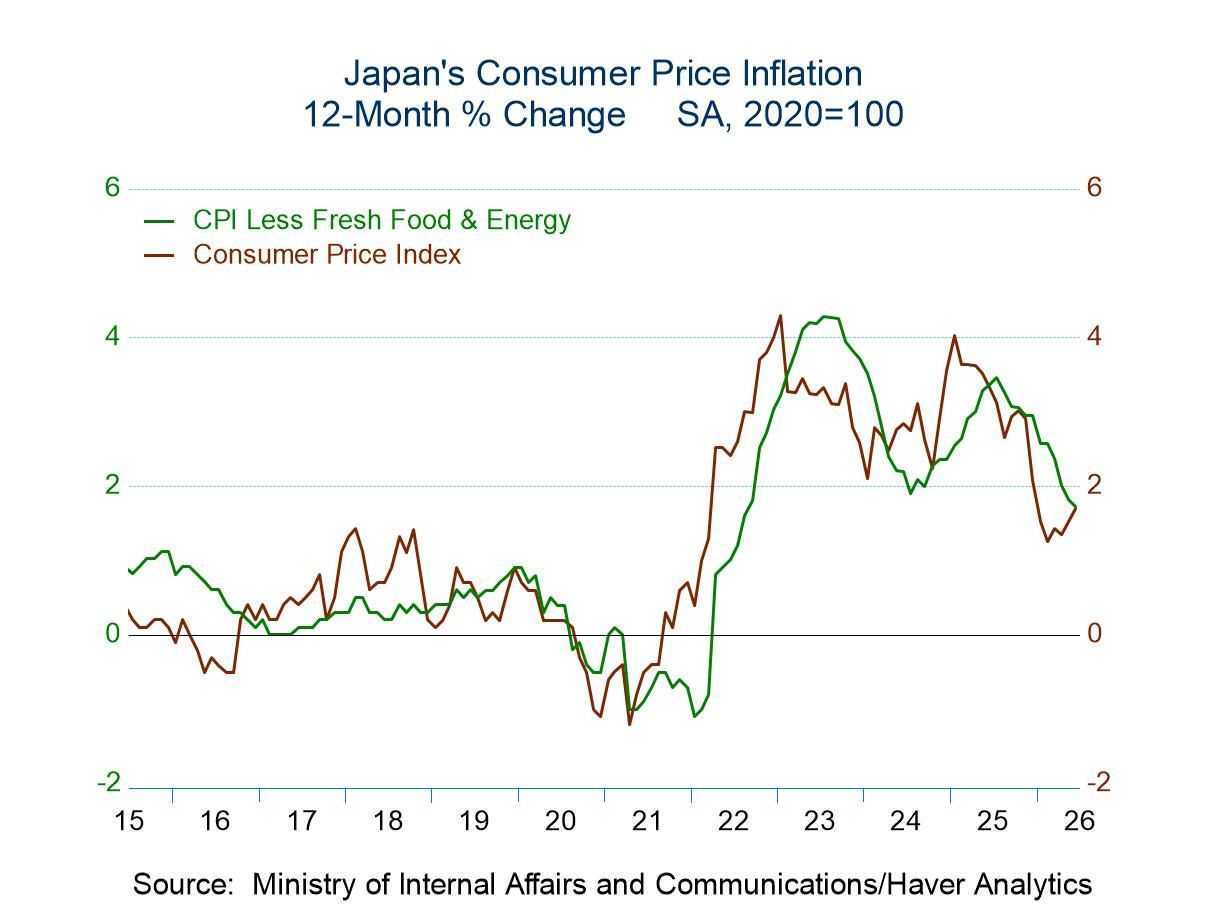
The Bank of Japan is in a bit of a policy pickle. Inflation has picked up. After a long period of super-low inflation and interest rates, the policy rate itself has only been lifted to 1%. The BOJ faces a world with key geopolitical strains, higher inflation, supply chain disruptions, and rising oil prices with gains in other commodity prices as well. The war in Iran and the closure of the Strait of Hormuz, after a brief respite in June, is back in force. The future is again clouded and has led to negativism.
The yen has been weakening; that has put the BOJ in another difficult spot. So far, it has been unwilling to use interest rates to defend it. And we know that intervention is only a fleeting tool and not any sort of lasting solution.
But with all this on its plate, the BOJ has to deal now with some unexpected fiscal stimulus. The Takaichi government, like every Japanese government, has a special relationship with the central bank having two representatives at BOJ meetings, one from the MOF and another from the Cabinet Office. These representatives do not vote but can request that policy moves be delayed. Still, the BOJ has become more independent since 1998 when governing laws were changed. BOJ is directed to cooperate with government and to act independently. Earlier this year, when inflation flared on rising oil prices, the Takaichi government took steps to mute the impact on Japan’s inflation. So its inflation data have been dressed up a bit by inflation-suppressing government programs, which also make it seem less pressing that the BOJ act.
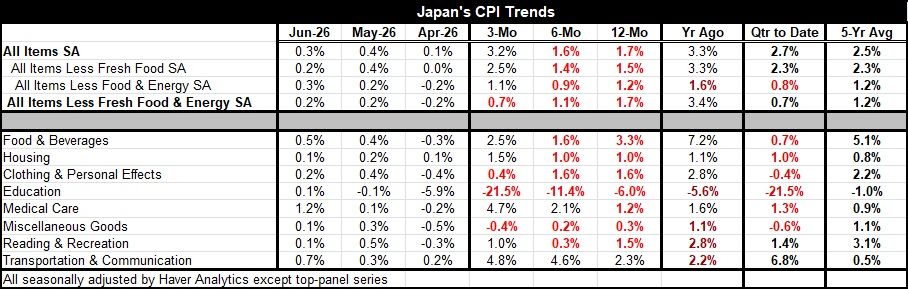
Still, inflation is heating up. The core inflation rate, which excludes fresh foods & energy, is now at 1.7% year-on-year, while the suppressing impact of some of the government programs is still in force. For its part, the BOJ has seen firms reporting more pass-throughs of prices and cost increases, making it more wary of building inflation pressures.
Takaichi’s government has just finished a new policy blueprint that it is promoting, with a pool of $2.3 trillion (yes, dollar equivalent) being committed in public and private funds to finance new technologies in a government-industry joint effort. This comes after Takaichi had been elected knowing she has plans for a stimulus but being aware that Japan has a fragile excessive fiscal spending situation and a massive debt-to-GDP ratio. It was thought that she could promote some deregulation impediments and take some steps to promote research, but this sort of commitment of funds was not on the radar. Her new plan sets the old goal of fiscal austerity aside and promotes a new era of dedicated spending to improve industry. Her first blueprint draft contained language that offended markets because it seemed to bully the BOJ. The final version of the blueprint is a revised statement with a note urging the BOJ to do what it can to achieve its inflation target and make it clear that the BOJ is not being bullied. But was it?
For its part, the BOJ has recently said that it could hike rates faster and it connects that to the weakness of the yen. The BOJ has specifically said it is not tied to rising rates only every six months.
The government is also trying to get investment firms, especially pension funds, to buy more JGBs and to invest less aggressively outside the yen area. If firms do this, some pressure will be off the yen, and the government will find its rising deficit easier to fund. While this might seem manipulative, and it is, the U.S. is doing the same sort of thing. A proposal for U.S. treasuries held by banks to incur no capital change is the same sort of fudge. That will encourage banks to buy and hold more U.S. treasuries. The bottom line is that countries with large fiscal deficits will go to great lengths not to deal with the problem and to instead finance kicking the can down the road some more.
The BOJ is still in a tough spot in Japan. It is trying to deliver price stabilizing policy. The government has hidden building inflation pressures by providing subsidies and programs that blunted the impact of inflation on the economy. That kept inflation down and gave the BOJ a less urgent inflation situation to deal with. The government then uncorked a blueprint that was far more expansive than what had been expected, shelving the previous tilt toward fiscal austerity. On one hand, the expansion of the fiscal deficit from such a pre-existing large position is surprising. But spending is not classical demand stimulus; it is targeted to improve the supply side and that may explain why markets have not reacted as adversely to this spending. Still, there continue to be hints and scattered evidence of the government using its influence to try to slow down BOJ rate hikes. So far, this is all talking and worrying around the fringes. The BOJ has managed to make the policy it wants. But this will be something to continue to watch as the BOJ tries to get its policy rate back up to neutral while the government is trying to stimulate growth.

Robert Brusca
AuthorMore in Author Profile »Robert A. Brusca is Chief Economist of Fact and Opinion Economics, a consulting firm he founded in Manhattan. He has been an economist on Wall Street for over 25 years. He has visited central banking and large institutional clients in over 30 countries in his career as an economist. Mr. Brusca was a Divisional Research Chief at the Federal Reserve Bank of NY (Chief of the International Financial markets Division), a Fed Watcher at Irving Trust and Chief Economist at Nikko Securities International. He is widely quoted and appears in various media. Mr. Brusca holds an MA and Ph.D. in economics from Michigan State University and a BA in Economics from the University of Michigan. His research pursues his strong interests in non aligned policy economics as well as international economics. FAO Economics’ research targets investors to assist them in making better investment decisions in stocks, bonds and in a variety of international assets. The company does not manage money and has no conflicts in giving economic advice.
More Economy in Brief
 Global