January PPI: Wild Swings in Volatile Areas
Summary
- Prices of food and energy fell sharply, while prices of trade services surged.
- Other noisy areas (transportation & warehouse services, construction) posted high-side increases.
- Excluding the (apparently) random shifts, results were tame.
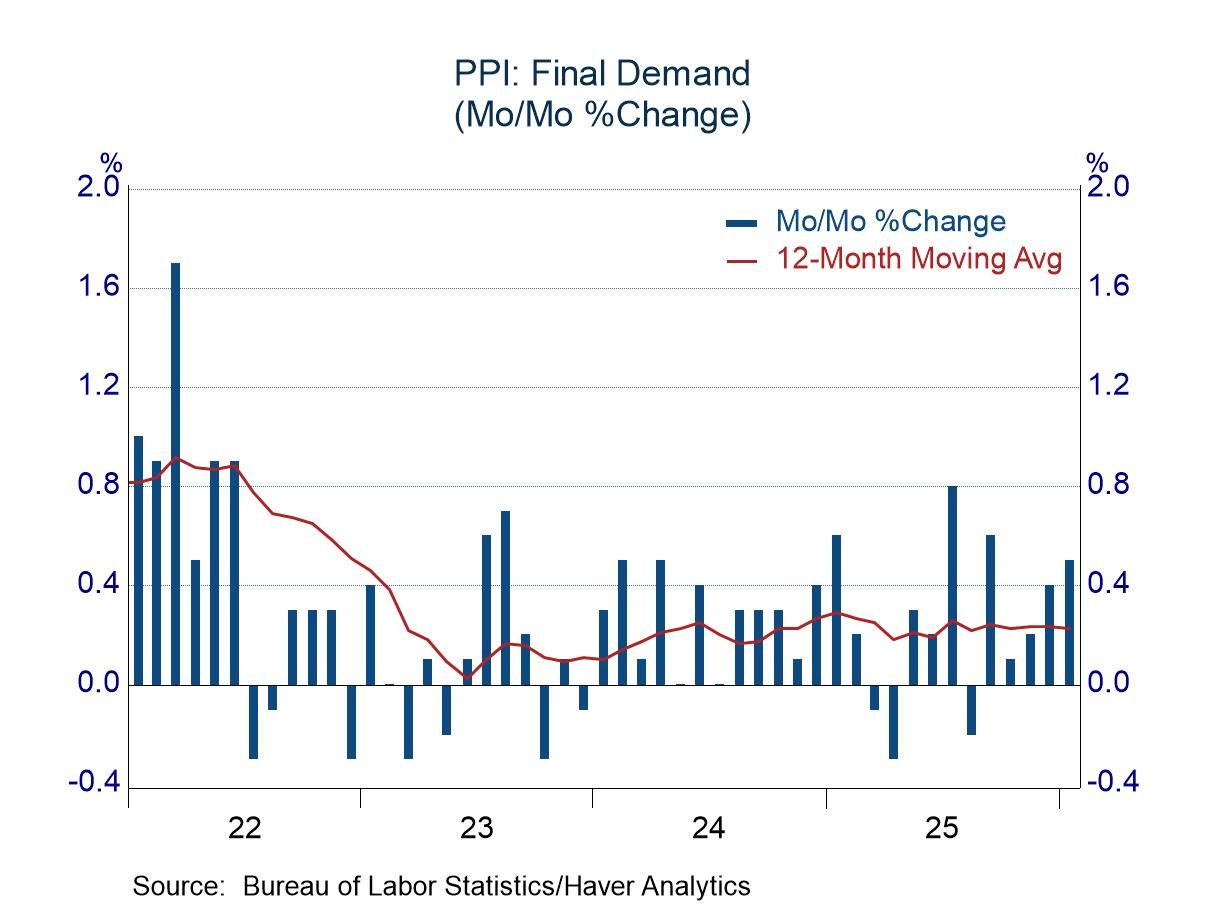
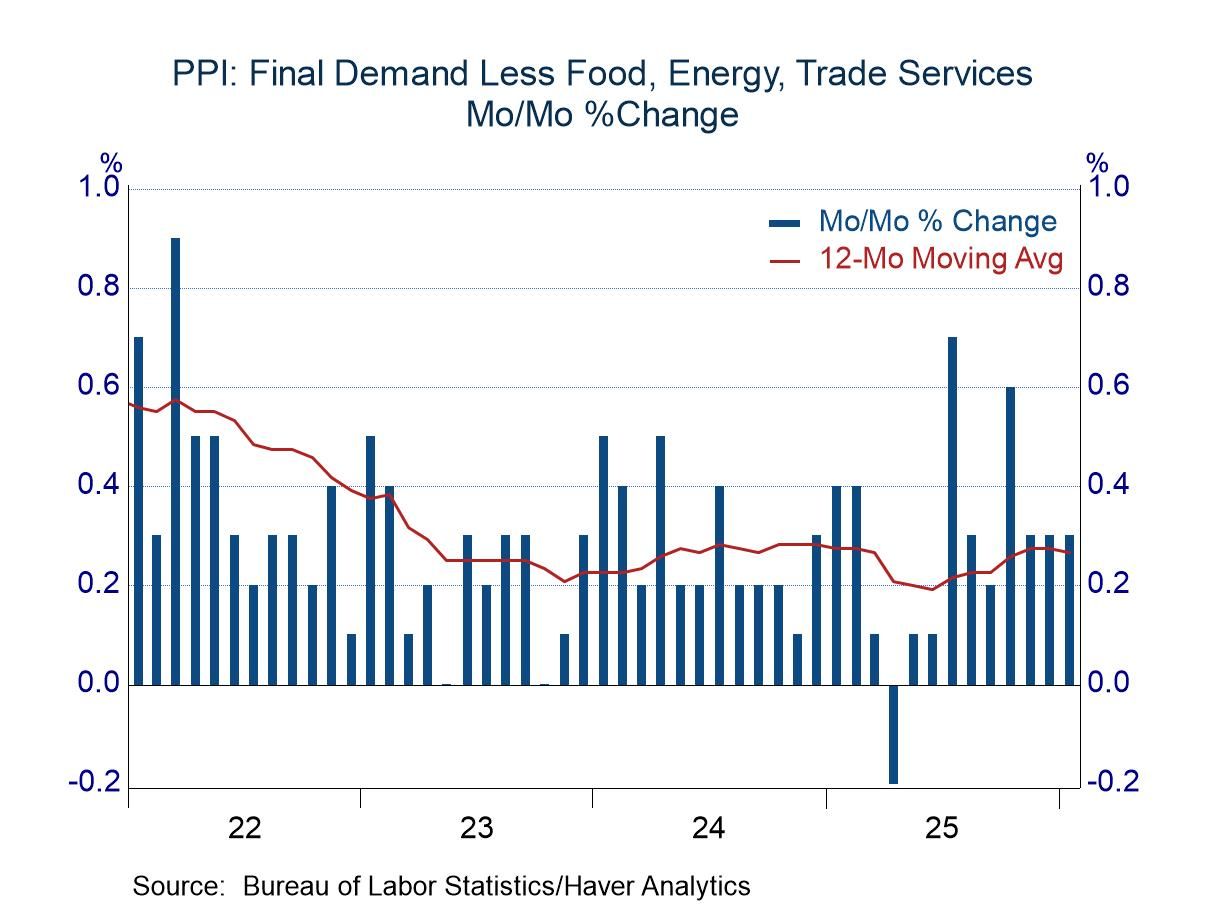
The headline PPI and its components sometimes move erratically, and that was certainly the case in January. The headline index (so-called final demand PPI) jumped 0.5%, one of the firmer readings of the past few years. However, a quick review of the detail in the report shows that marked changes in frequently noisy areas accounted for most of the pressure. Without such noise, the headline measure would have increased moderately, perhaps 0.1% or 0.2%.
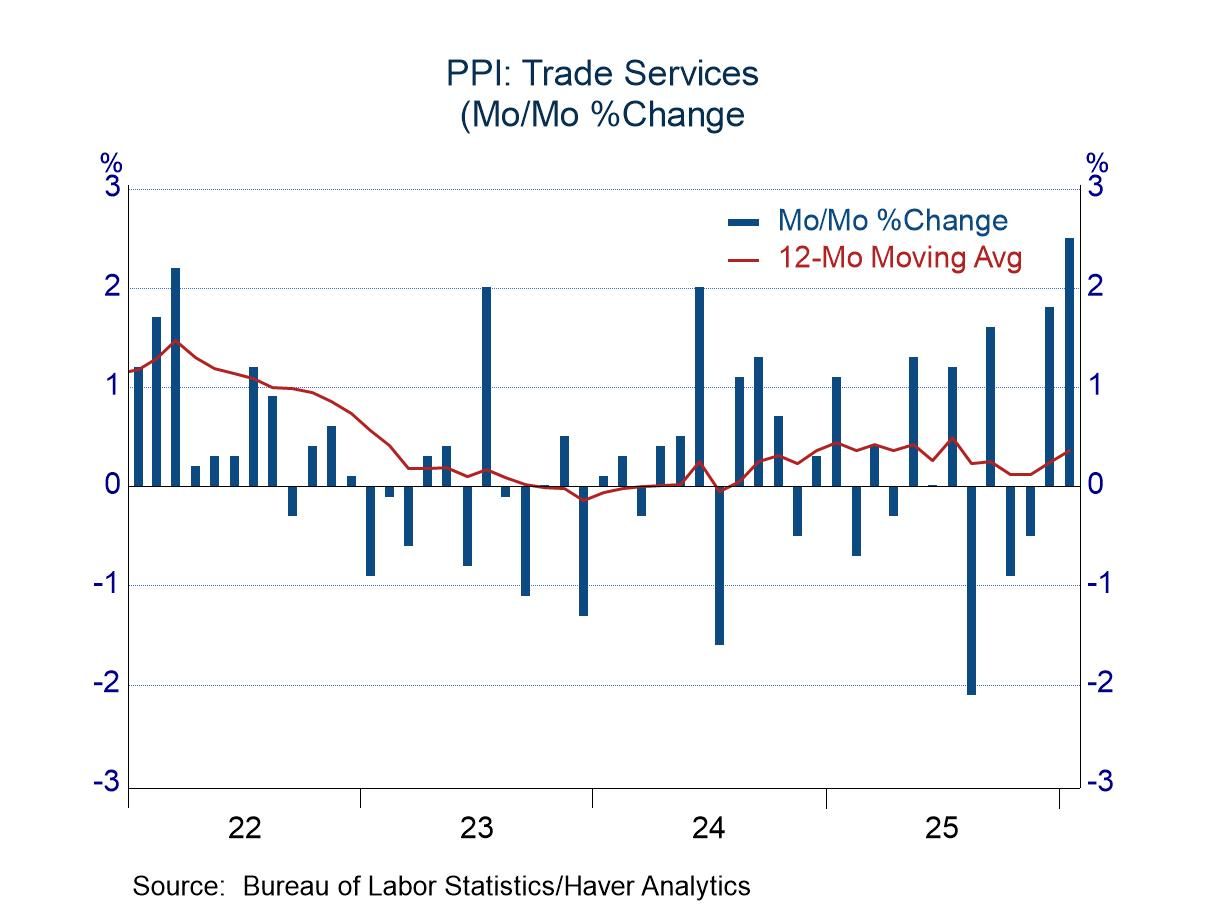
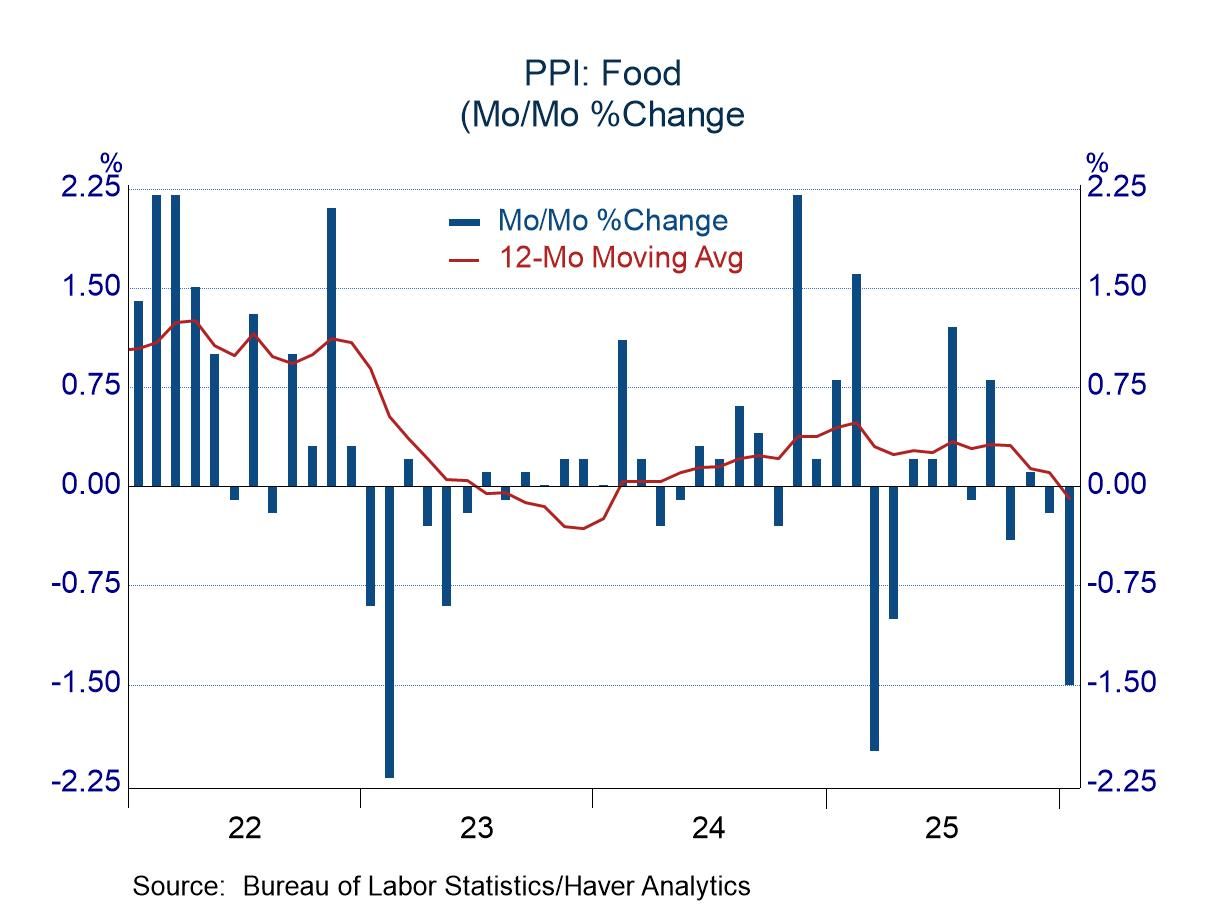
Prices of food and energy are well known to move erratically, and they showed noticeable downside changes in January (off 1.5% and 2.7%, respectively). However, the highly volatile trade services category provided an offset with a surge of 2.5%, the sharpest monthly increase on record (data back to 2010). The Bureau of Labor Services is well aware of the volatile nature of these areas and offers an index excluding food, energy, and trade services to provide a perspective on underlying trends. This measure rose 0.3% in January, in line with other recent month-to-month changes. The year-over-year increase of 2.9% was comfortably within the recent range of observations (2.7% to 3.2% since mid-2025).
The change in prices excluding food, energy, and trade services seems tolerable in that it is comparable to other recent readings. However, some observers will highlight the uncomfortable rate of increase (3.0% versus a benchmark of 2.0% in the minds of many). Also, the sideways nature of the year-over-year change suggests little prospect of deceleration.
These points are well taken, but additional detail in the report offered a hint of softness. Another volatile item in the service category (transportation and warehouse services) rose 1.0% in January. This measure does not match the volatility in trade services, but it often shifts erratically. For example, last year this component rose 1.4% in one month and more than 0.5% in four other months, yet the average for the year was 0.2%. Future readings are likely to be well shy of the January advance.
An increase of 1.2% in the construction component also looks suspicious. This figure is reported to be seasonally adjusted, but there is a strong tendency to post high-side increases in the first month of a quarter. Observations in the next two months are likely to be noticeably softer, and the average for the year most likely will be well shy of 1.2%. The average increase last year was 0.2%.
The PPI data are published by the Bureau of Labor Statistics and can be found in Haver’s USECON database. Further detail is contained in PPI and PPIR. The expectations figures are available in the AS1REPNA database.

Michael J. Moran
AuthorMore in Author Profile »Before joining Haver Analytics in 2025, Michael J. Moran was the chief economist of Daiwa Capital Markets America Inc. He was responsible for preparing the firm’s economic forecast and interest rate outlook. He traveled frequently to visit the clients of Daiwa Capital Markets and wrote weekly economic commentary. Mr. Moran also was involved in the flux of financial markets, as he spent a portion of each day on Daiwa’s trading floor interpreting economic statistics and Federal Reserve activity for traders and salespeople. Mr. Moran is quoted frequently in the financial press, and he appears regularly on cable news shows. He also has published articles in several journals and periodicals. Before joining Daiwa Capital Markets America, Mr. Moran worked as an economist at the Federal Reserve Board in Washington, D.C. where he analyzed a broad range of issues dealing with the financial sector of the economy and regularly briefed the Board of Governors. He was on the faculty of Pennsylvania State University from 1979 to 1980 and taught on a part-time basis at George Washington University from 1980 to 1987.
Mr. Moran received his Ph.D. in economics from Pennsylvania State University in 1980 and a B.S. in business administration from the University of Bridgeport in 1975. He was a CFA charter holder from 2002 until 2016.
More Economy in Brief
 Global