U.S. Philadelphia Fed Index Climbs in April to Highest Level Since Jan. ’25
Summary
- Current General Activity Index up 8.6 pts. to 26.7 in Apr.; fourth consecutive m/m rise.
- Positive: Shipments (34.0), highest since May ’22; New Orders (33.0), highest since Nov. ’21.
- Negative: Employment (-5.1), lowest since June ’25; Unfilled Orders (-10.2), ninth straight contraction.
- Inflation indicators at eight-month highs and well above long-run nonrecession avgs.
- Future General Activity Index up to 40.8; most subindexes down but still positive; future price indexes still above long-run avgs.
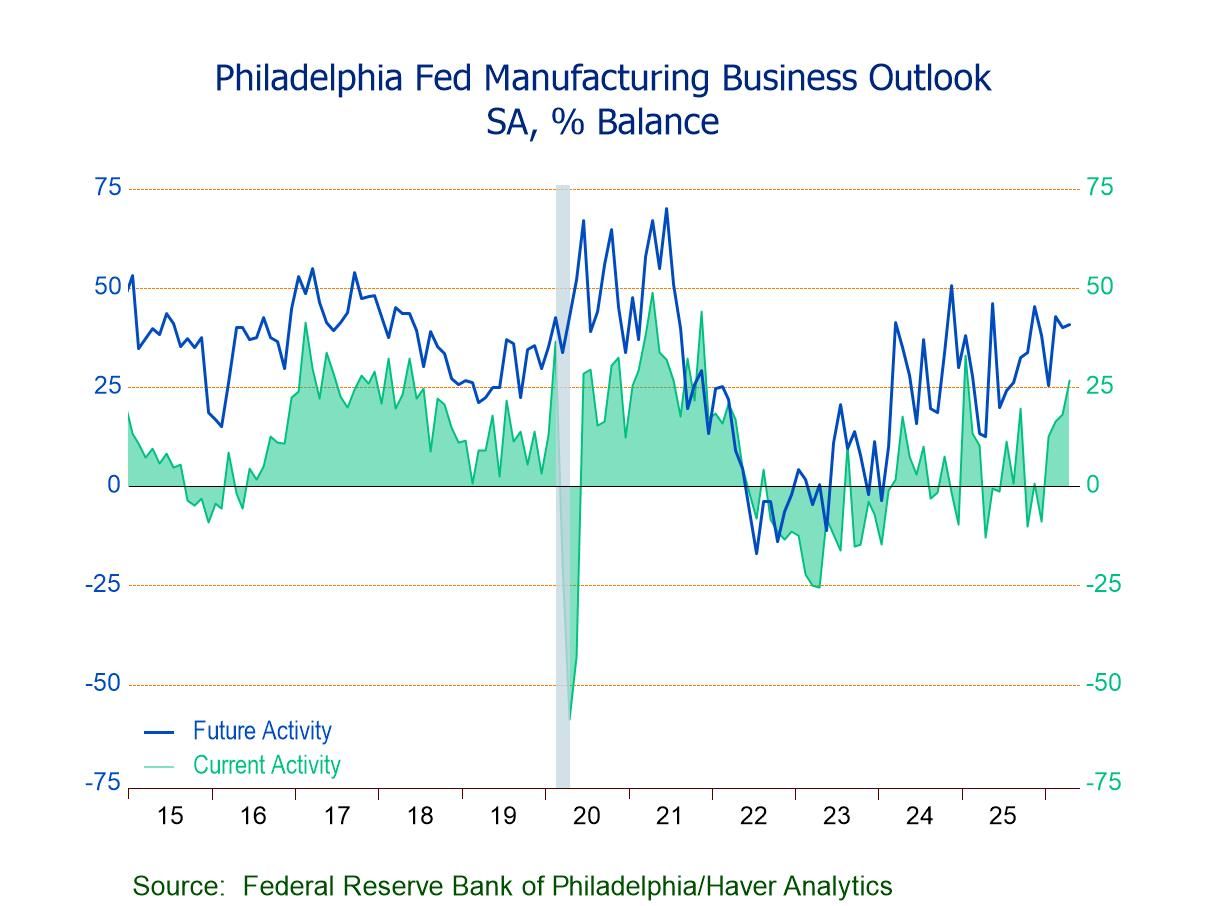
The current general activity diffusion index unexpectedly jumped to 26.7 in April from 18.1 in March and 16.3 in February, the latest Manufacturing Business Outlook Survey (MBOS) from the Federal Reserve Bank of Philadelphia showed, indicating continued expansion in manufacturing activity in the Third Federal Reserve District this month and at the highest level since January 2025. April was the fourth successive m/m increase and the fifth in six months, showing a sharp improvement from -12.9 in April 2025. A reading of 15.0 for April had been expected by the Action Economics Forecast Survey. In April, 32.6% of firms reported increases in current general activity (down from 39.2% in March), while 5.9% reported decreases (down from 21.1%); 61.5% reported no change (up from 34.6%). Survey responses were collected from April 6 to April 13.
Haver Analytics calculates an ISM-adjusted current activity diffusion index from five key components using the methodology along the lines of the national ISM index. The index eased to 54.5 in April after a 6.2-point rebound to 54.8 in March, indicating manufacturing activity expanded for the fourth time in five months; it was above a contraction-level 44.8 in April 2025.
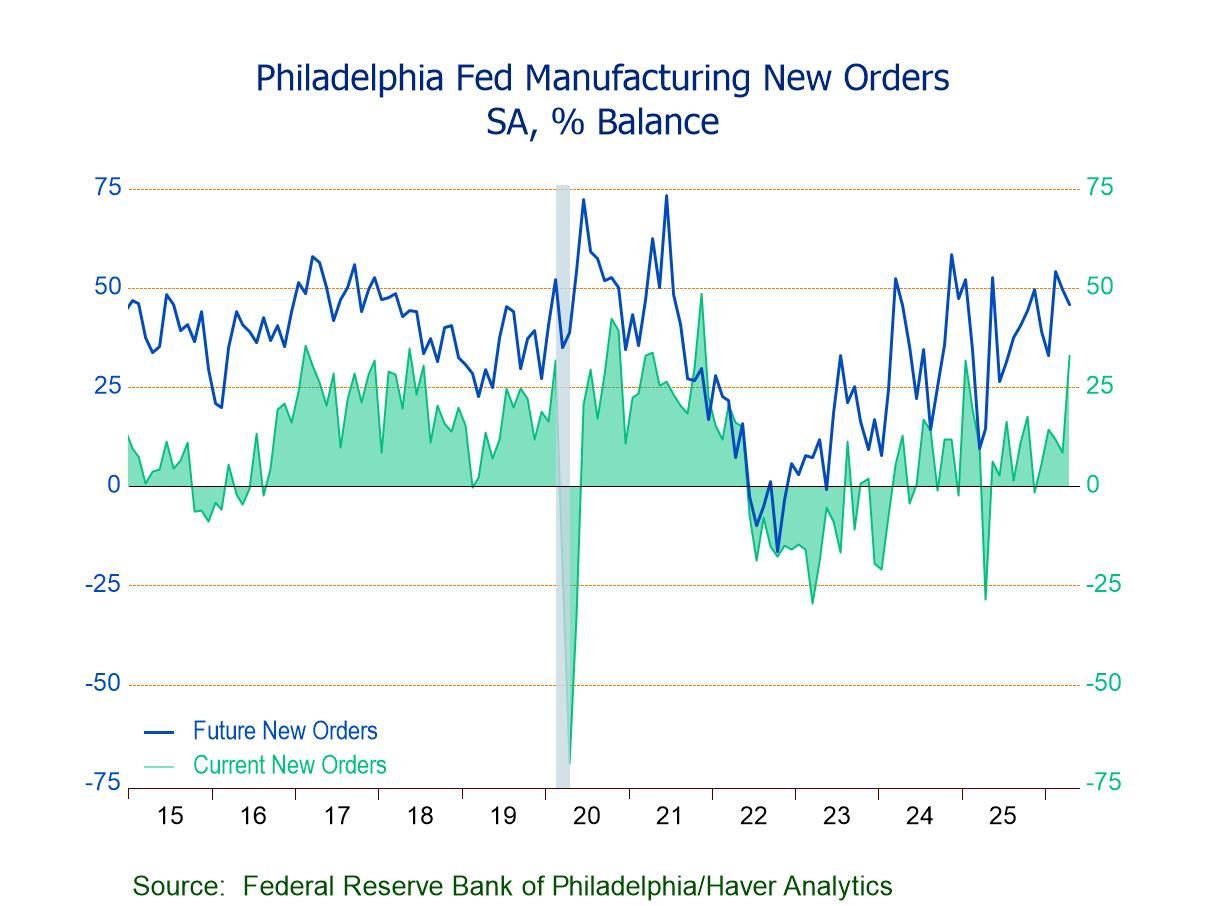
In the latest survey, the new orders index surged to 33.0 in April from 8.6 in March, signaling new orders expanded for the fifth straight month and at the highest level since November 2021. The shipments index advanced to 34.0 this month from 22.2 in March, marking the fifth consecutive expansion and the highest level since May 2022. In contrast, the unfilled orders index dropped to -10.2 in April from -4.7 in March, extending its ninth straight contraction. The inventories index decreased to -1.9 this month from 1.4 in March, showing the third contraction in four months. Meanwhile, the delivery times index fell to a near‑neutral 1.7 in April from 18.9 in March (the highest reading since April 2022), suggesting a rapid easing of supply‑chain pressures rather than a demand‑driven slowdown.
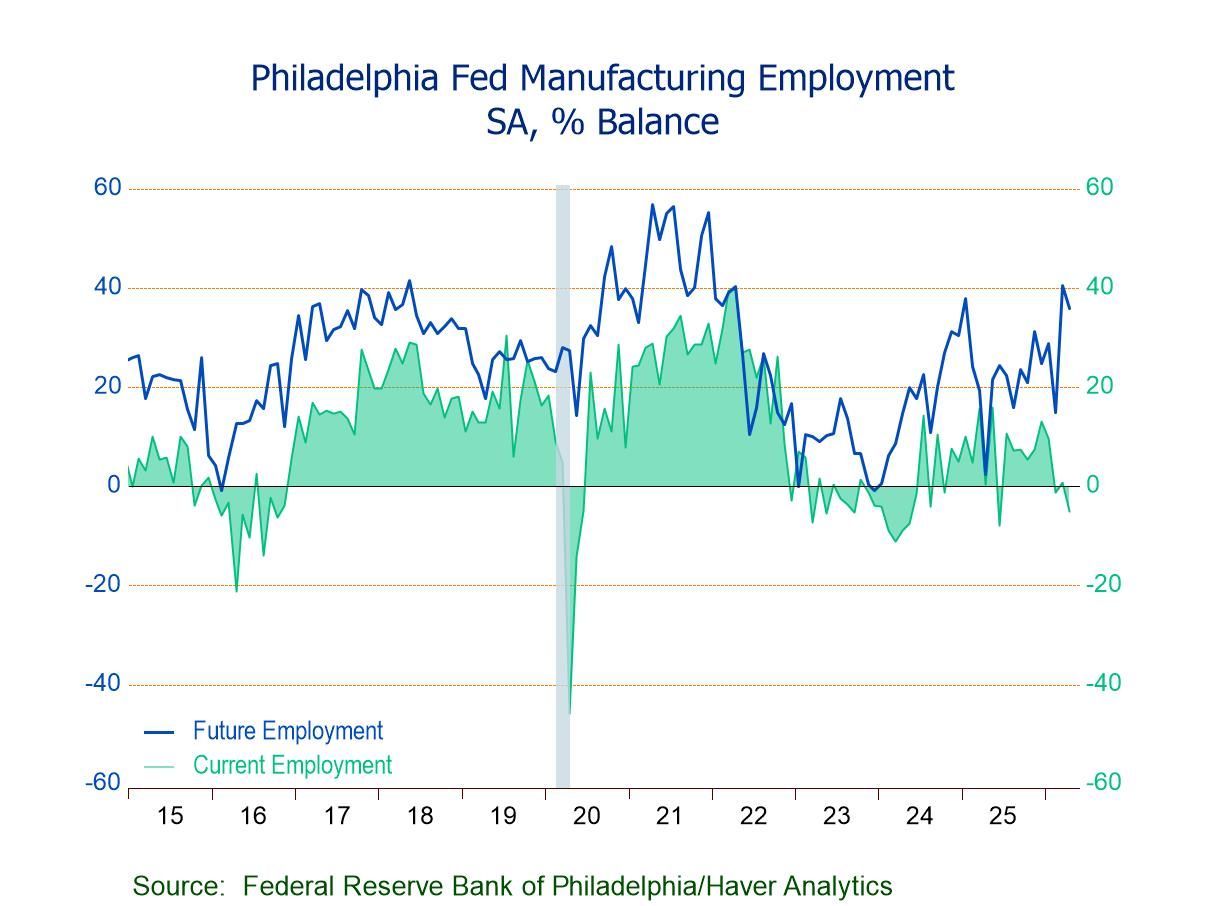
On the labor front, the number of employees index slid to -5.1 in April from 0.8 in March, indicating employment contracted for the second time in three months and hit its lowest level since June 2025. In April, 10.1% of respondents reported increases in employment, while a higher 15.2% reported declines; 70.4% reported no change in employment levels. The average employee workweek index rose to 7.7 this month, the highest reading since January, from 2.8 in March.
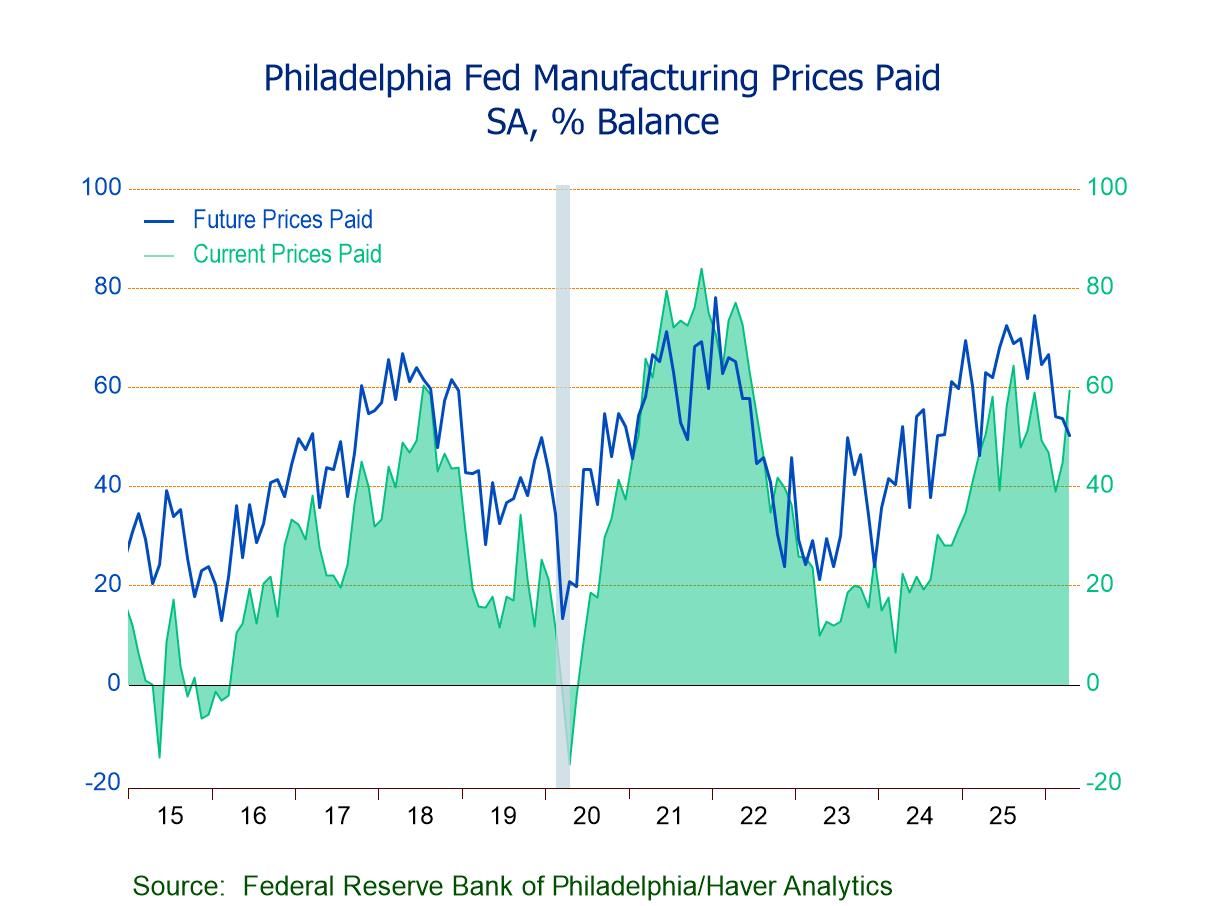
Inflation indicators remained elevated in April. The prices paid index jumped to 59.3 this month, the highest level since August, after a 5.8-point rise to 44.7 in March. A higher 61.4% of respondents reported increases in input prices in April, while only 2.1% reported decreases. The prices received index rose to 33.5, an eight-month high, after a 4.5-point March increase to 21.2. In April, 33.5% of respondents reported increases in prices received, while 0.0% reported decreases.
The future indexes generally remained in positive territory, signaling continued overall growth over the next six months, although most future indicators declined. The future general activity diffusion index rebounded to 40.8 in April from 40.0 in March, staying positive since February 2024. The following future indexes fell in April (vs. March) but remained in positive territory: new orders (45.7 vs. 49.6), shipments (40.8 vs. 53.6), and employment (35.9 vs. 40.4). Future indexes for unfilled orders (-4.1 vs. 15.3) and inventories (-0.7 vs. 16.8) moved into contraction in April after expanding in March. Notably, the future capital expenditures index rose to 35.2 this month, the highest level since August, from 25.8 in March. Prices continued to increase, with the future prices paid index easing to a still‑high 50.2 in April from 53.7 in March and the future prices received index rising to a three-month-high 50.2 from 38.4.
The Manufacturing Business Outlook Survey (MBOS), conducted by the Federal Reserve Bank of Philadelphia, is a monthly survey of manufacturers in the Third Federal Reserve District. Participants indicate the direction of change in overall business activity and in the various measures of activity at their plants. The diffusion indexes in the MBOS represent the percentage of respondents indicating an increase minus the percentage indicating a decrease. The indexes range from -100 to +100 with positive values indicating an increase in activity. The series from the survey dating back to May 1968 can be found in Haver’s SURVEYS database. The expectations forecast figures are from the Action Economics Forecast Survey in AS1REPNA.

Winnie Tapasanun
AuthorMore in Author Profile »Winnie Tapasanun has been working for Haver Analytics since 2013. She has 20+ years of working in the financial services industry. As Vice President and Economic Analyst at Globicus International, Inc., a New York-based company specializing in macroeconomics and financial markets, Winnie oversaw the company’s business operations, managed financial and economic data, and wrote daily reports on macroeconomics and financial markets. Prior to working at Globicus, she was Investment Promotion Officer at the New York Office of the Thailand Board of Investment (BOI) where she wrote monthly reports on the U.S. economic outlook, wrote reports on the outlook of key U.S. industries, and assisted investors on doing business and investment in Thailand. Prior to joining the BOI, she was Adjunct Professor teaching International Political Economy/International Relations at the City College of New York. Prior to her teaching experience at the CCNY, Winnie successfully completed internships at the United Nations. Winnie holds an MA Degree from Long Island University, New York. She also did graduate studies at Columbia University in the City of New York and doctoral requirements at the Graduate Center of the City University of New York. Her areas of specialization are international political economy, macroeconomics, financial markets, political economy, international relations, and business development/business strategy. Her regional specialization includes, but not limited to, Southeast Asia and East Asia. Winnie is bilingual in English and Thai with competency in French. She loves to travel (~30 countries) to better understand each country’s unique economy, fascinating culture and people as well as the global economy as a whole.
More Economy in Brief
 Asia
Asia