Import and Export Prices in July: Petroleum-Led Restraint
Summary
- The retreat in the price of crude oil pushed both import and export prices lower.
- Prices of capital goods are under upward pressure on both sides of the trade ledger.
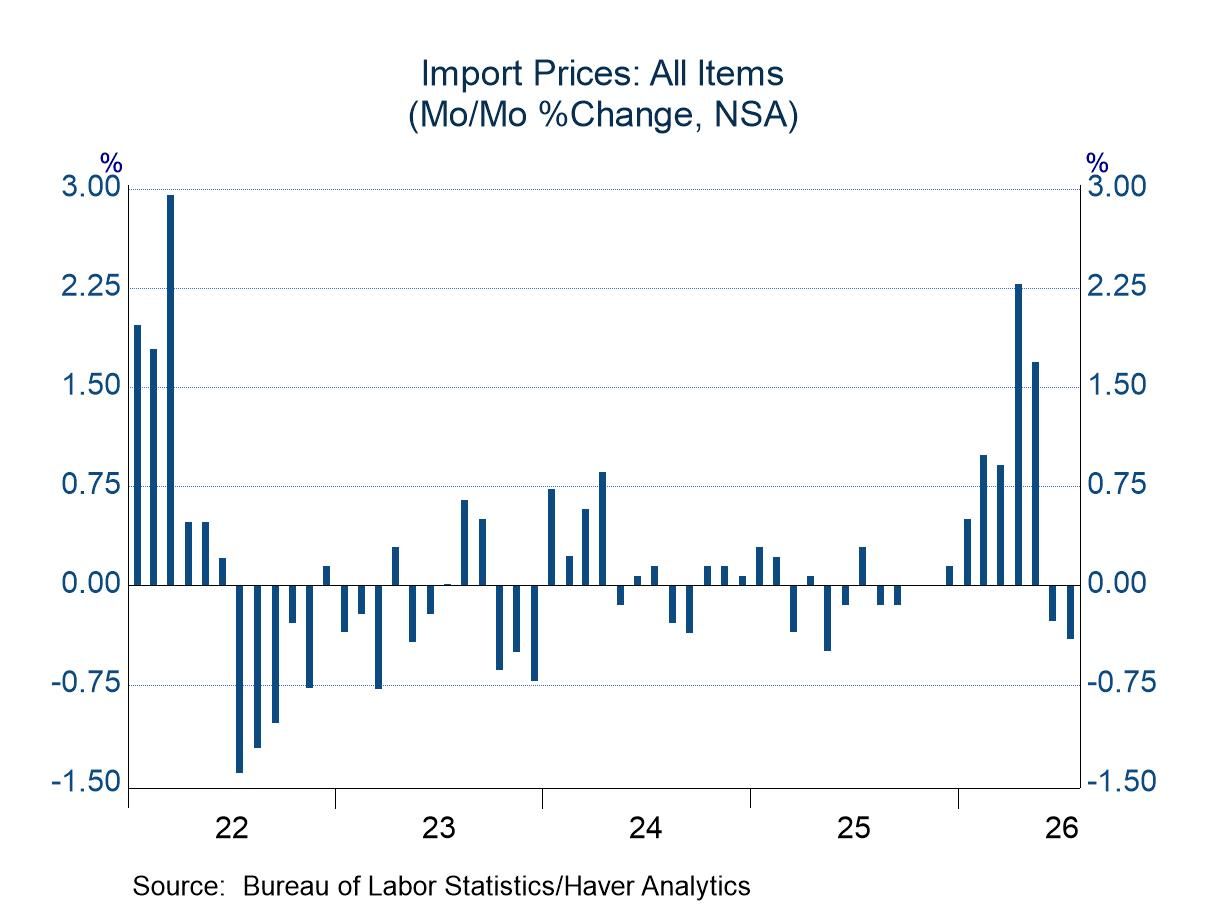
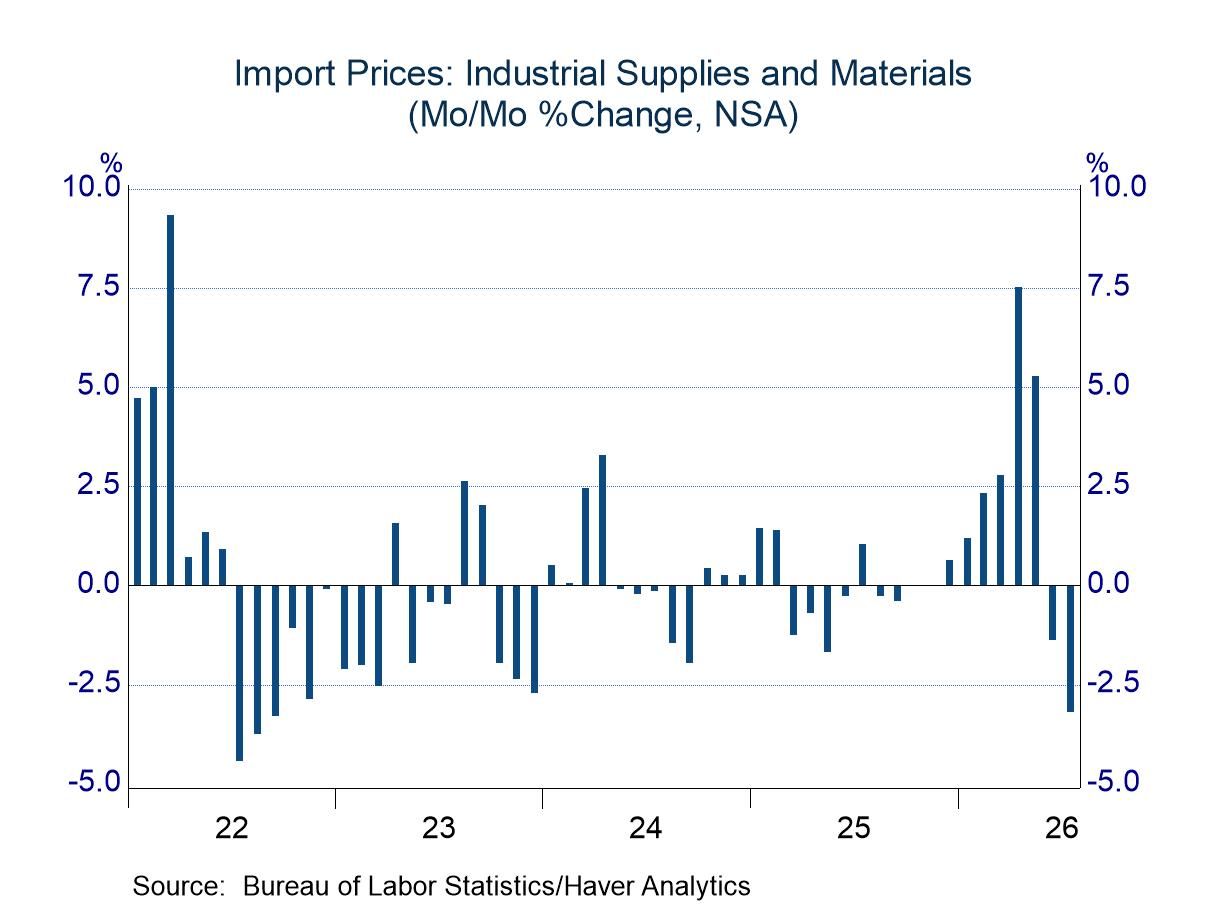
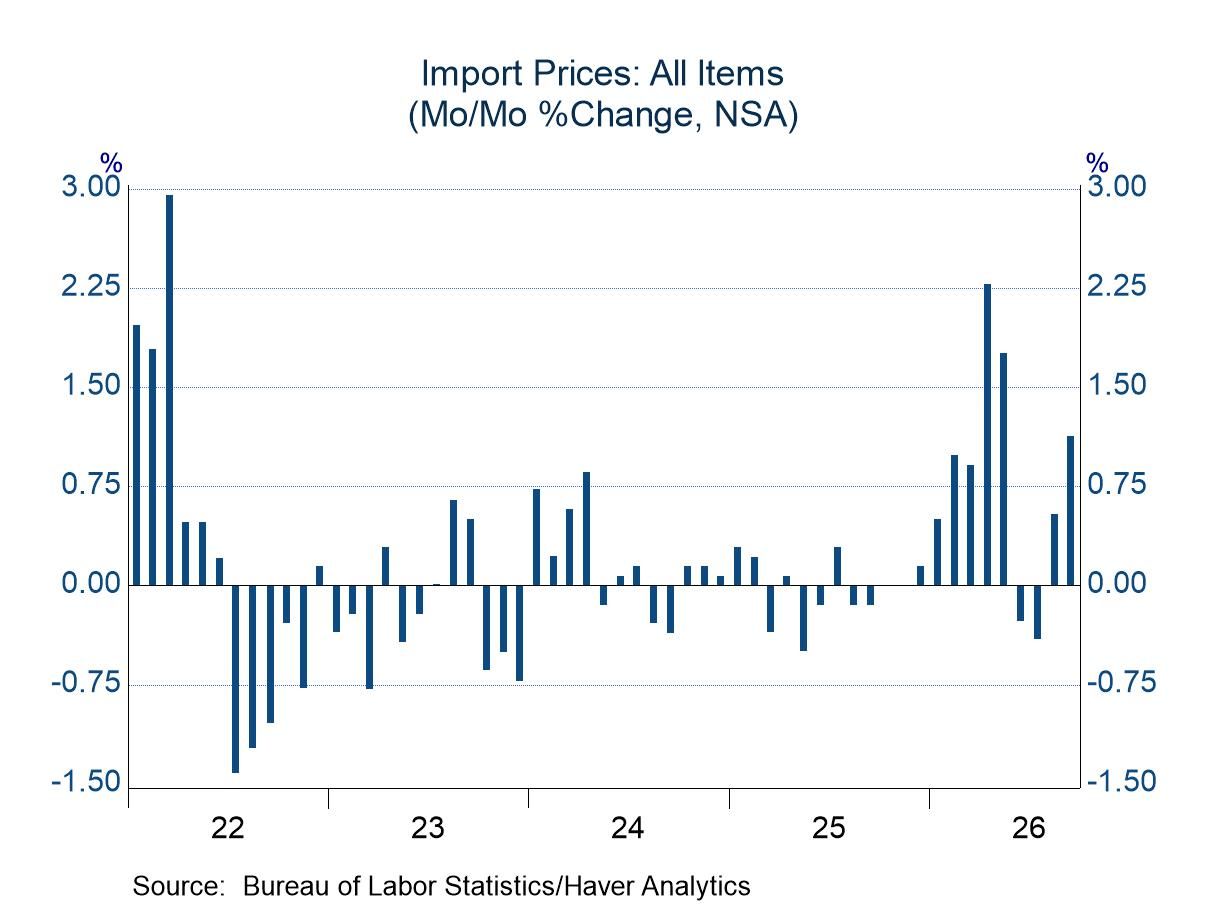
Import prices fell 0.4% in July, led by a drop of 3.2% in industrial supplies and materials, which, in turn, was heavily influenced by prices of petroleum products. July marked the second consecutive decline in the industrial supply category (off 1.4% in June), but these changes followed pronounced increases in the preceding three months. Prices of industrial supplies were still noticeably higher than readings before the start of the conflict with Iran (up 15.7% yr/yr).
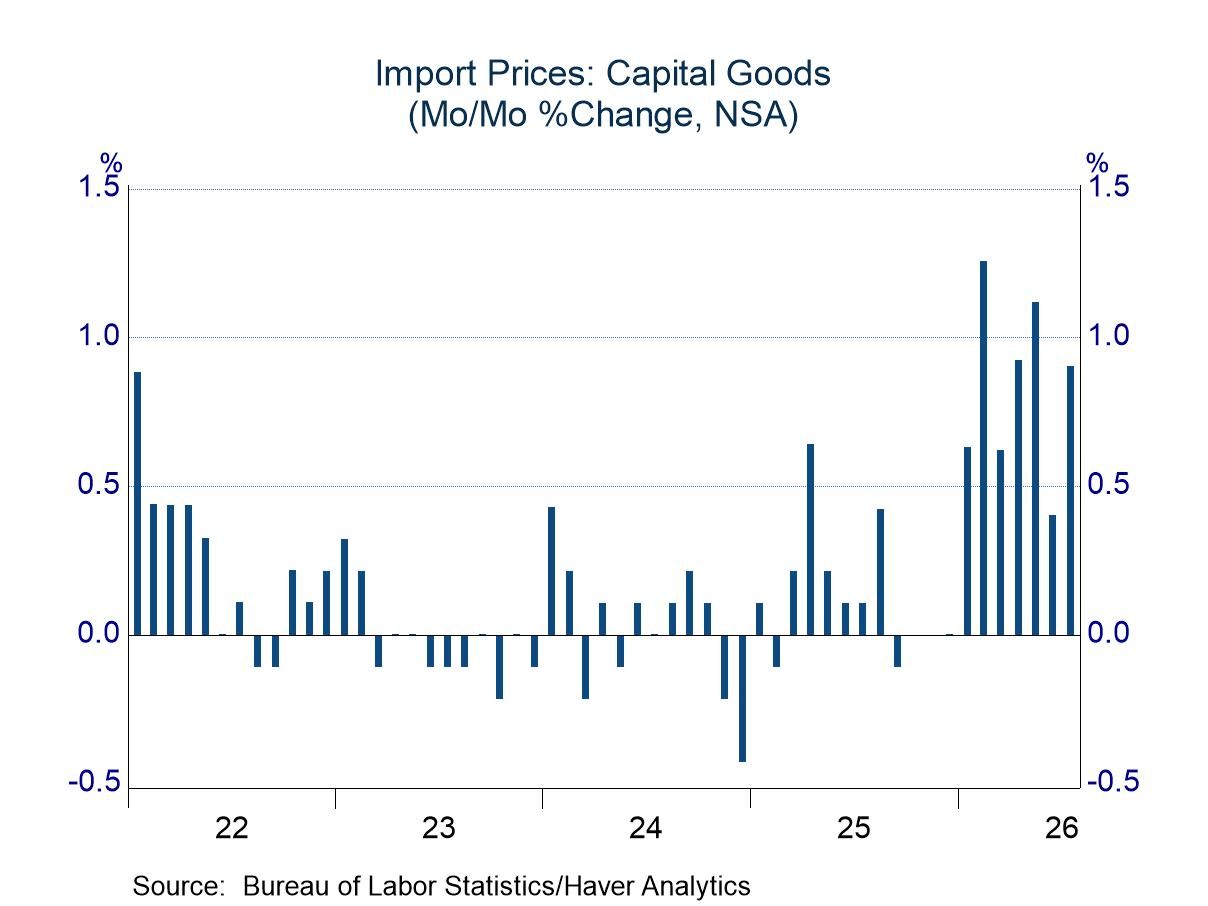
Excluding petroleum products, import prices rose 0.3%, with a jump of 0.9% in the prices of capital goods standing out. Prices of imported capital goods have climbed steadily throughout the year, with the year-over-year increase totaling 6.6%. The pressure was no doubt led by tech investment.
Other categories of import prices were generally contained. Prices of imported food jumped 0.9% in July, but they had declined in the prior two months and were well contained in preceding months. The year-over-year change in the prices of imported food totaled only 0.2%. Motor vehicles also have been restrained in the past year. They rose 0.2% in July, but softness in prior months left a year-over-year change of -0.1%. Prices of imported consumer goods were unchanged in July, and they were well behaved in most prior months. However, the latest report brought an upward revision of 1.1 percentage points in April, which was followed by an increase of 0.4% in May. The consumer goods category rose 2.3% in the past 12 months.
Some observers might be seeking clues to the effects of tariffs on import prices. The upward revision to consumer goods prices in April might stir thoughts of a tariff effect. However, prices in this report are based on invoices before the imposition of tariffs. If a foreign business was absorbing the effect of a tariff, that would be reflected in a lower price or a smaller increase than would have occurred otherwise. Such unpacking is difficult with these figures.
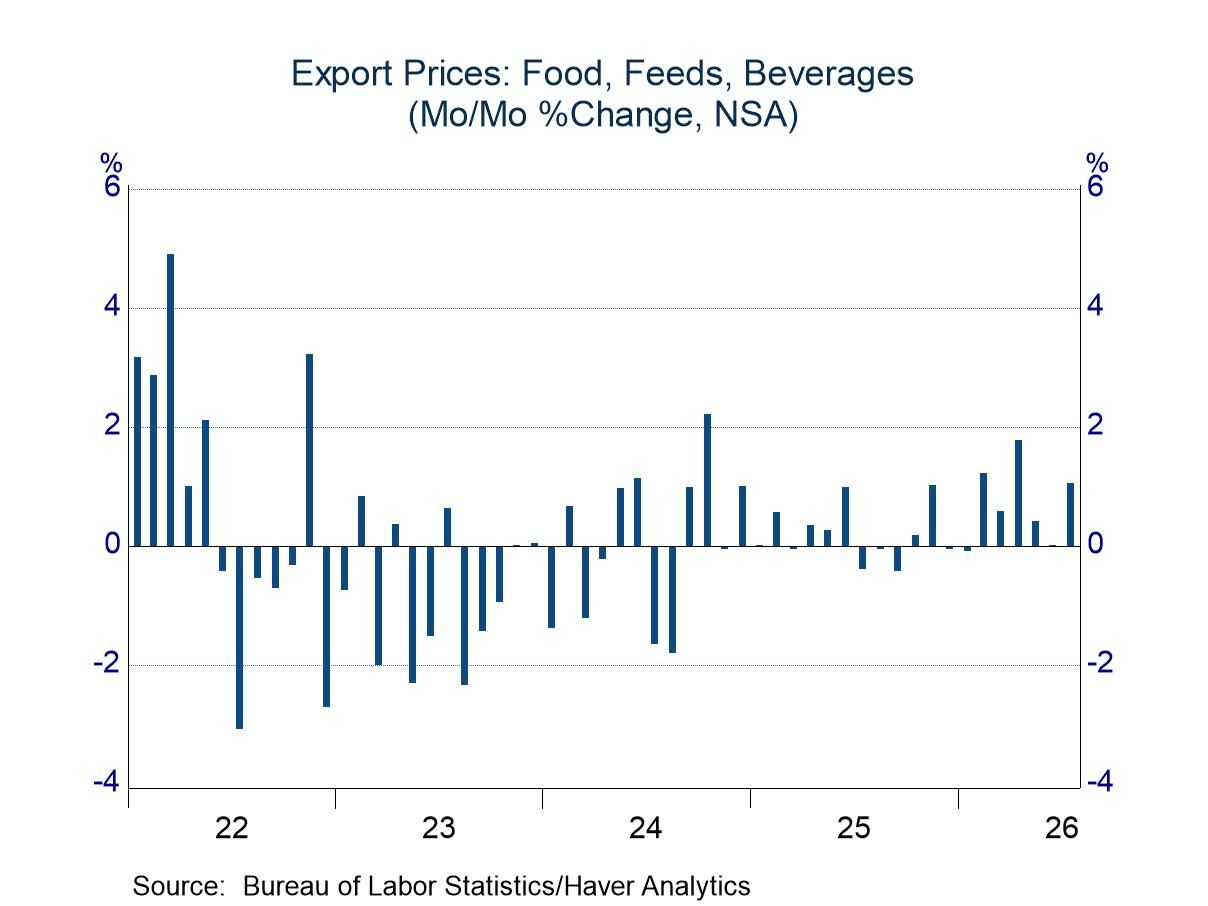
On the export side, prices fell 1.3%, with a drop of 4.0% in the industrial supplies category generating all of the decline. The industrial supply category also fell in June (off 2.0%), but was up 15.7% in the past year. Capital goods prices, like those on the import side, have been under upward pressure, although the degree of pressure has been less intense. Prices rose 0.5% in July and were up 3.6% in the past year. Prices of exported food have moved erratically, but they are trending noticeably higher on balance. An increase of 1.0% in July, along with spikes in other recent months, has left a year-over-year increase of 5.7% in food exports. Prices of motor vehicles jumped 0.7% in July, but they have been subdued in many recent months, resulting in a year-over-year advance of 2.3%. Prices of exported consumer goods rose 3.5% in the past year, but most of the increase occurred in late 2025 and early this year; this category has been quiet in recent months (averaging increases of 0.1% in the past three months).
These import and export price series are not seasonally adjusted; they can be found in Haver’s USECON database. Detailed figures are available in the USINT database. The expectations figure from the Action Economics Forecast Survey is in the AS1REPNA database.

Michael J. Moran
AuthorMore in Author Profile »Before joining Haver Analytics in 2025, Michael J. Moran was the chief economist of Daiwa Capital Markets America Inc. He was responsible for preparing the firm’s economic forecast and interest rate outlook. He traveled frequently to visit the clients of Daiwa Capital Markets and wrote weekly economic commentary. Mr. Moran also was involved in the flux of financial markets, as he spent a portion of each day on Daiwa’s trading floor interpreting economic statistics and Federal Reserve activity for traders and salespeople. Mr. Moran is quoted frequently in the financial press, and he appears regularly on cable news shows. He also has published articles in several journals and periodicals. Before joining Daiwa Capital Markets America, Mr. Moran worked as an economist at the Federal Reserve Board in Washington, D.C. where he analyzed a broad range of issues dealing with the financial sector of the economy and regularly briefed the Board of Governors. He was on the faculty of Pennsylvania State University from 1979 to 1980 and taught on a part-time basis at George Washington University from 1980 to 1987.
Mr. Moran received his Ph.D. in economics from Pennsylvania State University in 1980 and a B.S. in business administration from the University of Bridgeport in 1975. He was a CFA charter holder from 2002 until 2016.
More Economy in Brief
 Asia
Asia