Import & Export Prices in September: Pressure on Both Sides of the Trade Ledger
Summary
- Higher prices of industrial supplies and capital goods stand out.
- Prices of motor vehicles and non-auto consumer goods are stirring.
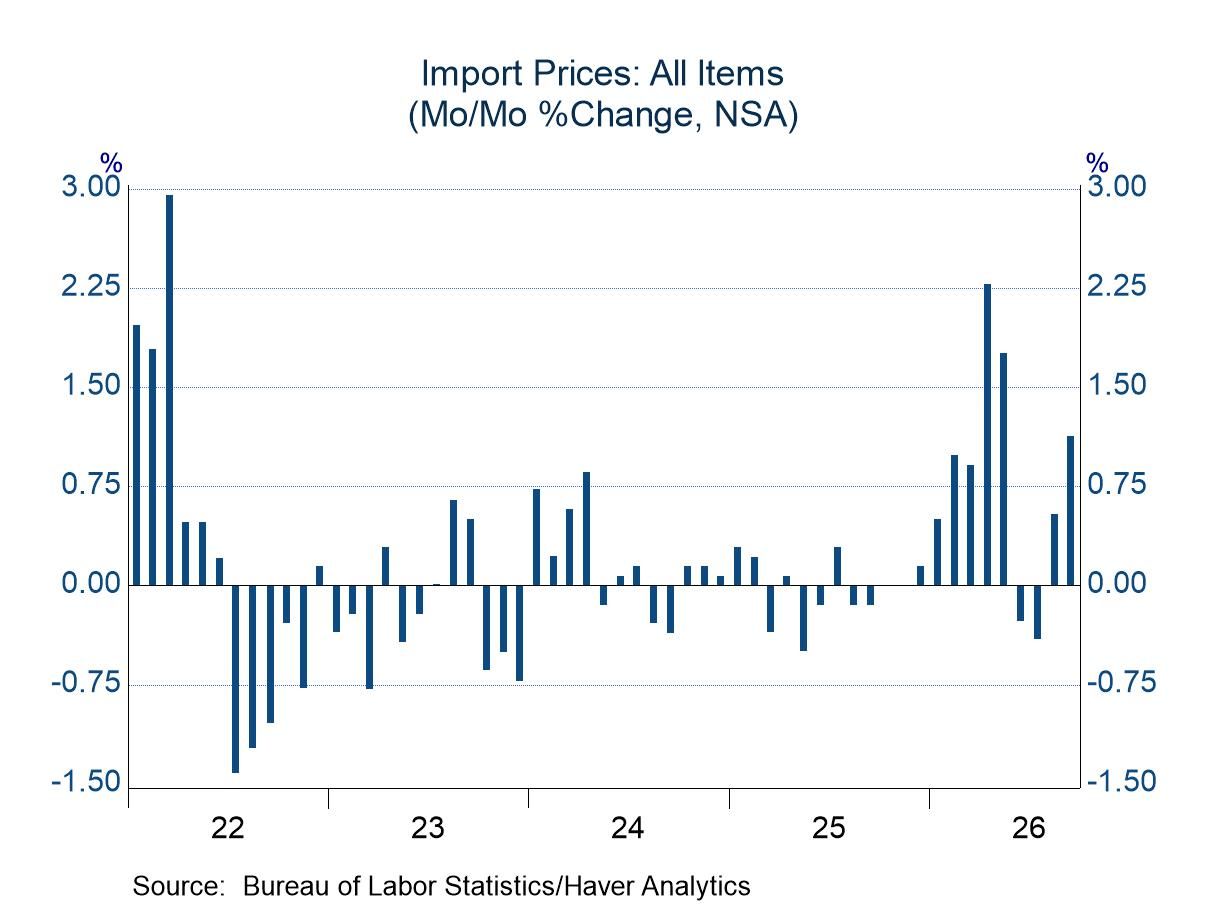
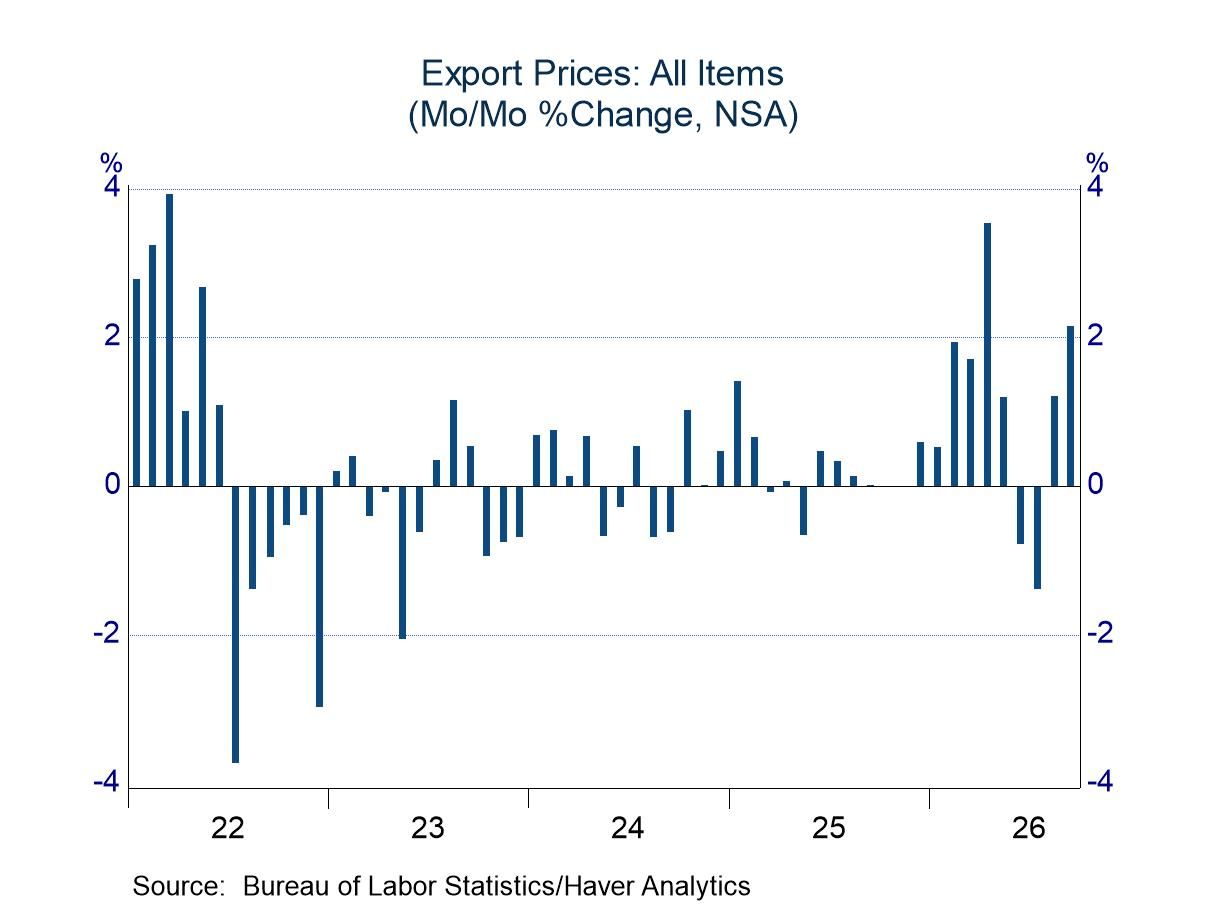
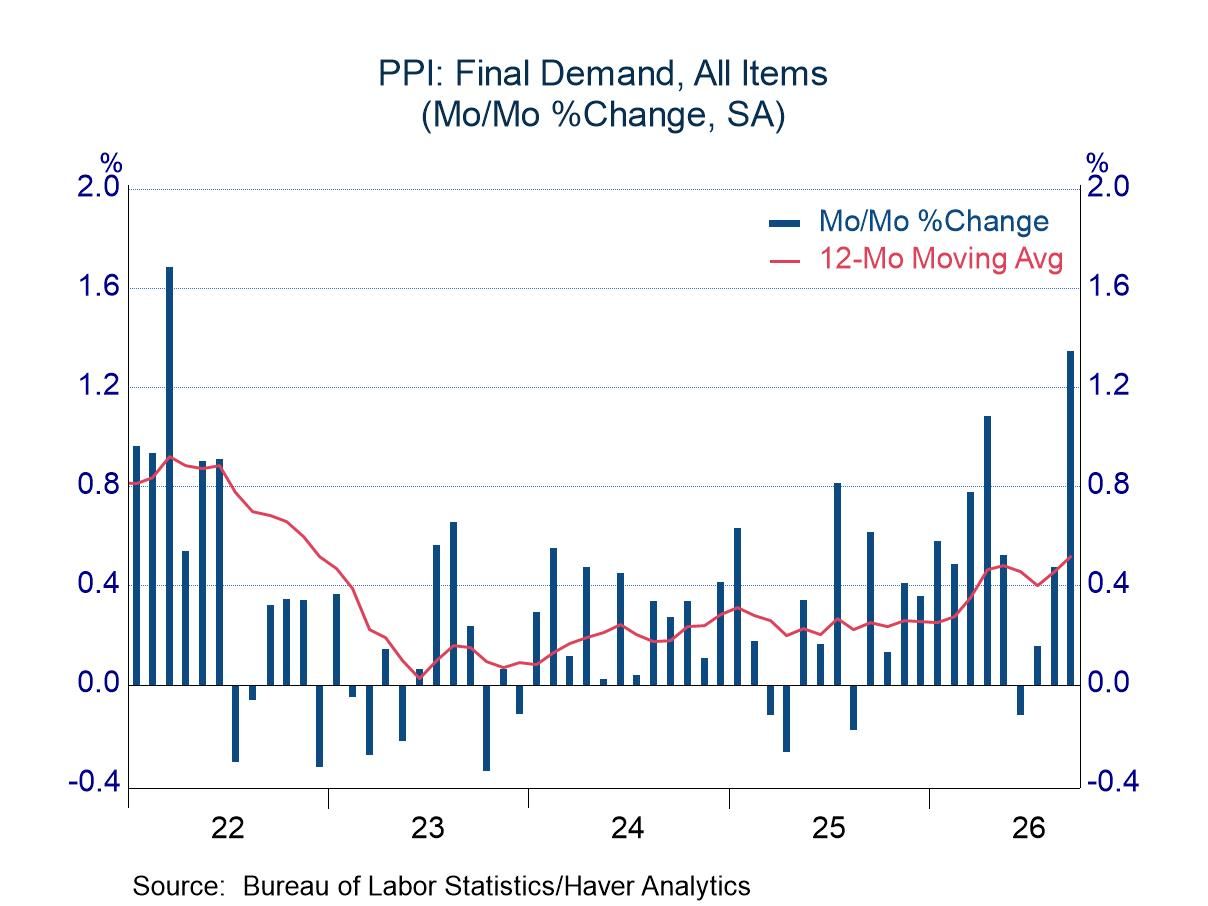
The consumer price index and the producer price index both showed unsettling increases in September, and export and import prices followed this lead. Import prices jumped 1.1% in September, easily exceeding an expected increase of 0.6%, while export prices surged 2.2%, dwarfing an expected change of 0.7% (expectations from the survey of Action Economics). The monthly results left the year-over-year increase at 8.1% for import prices and 11.6% for export prices.
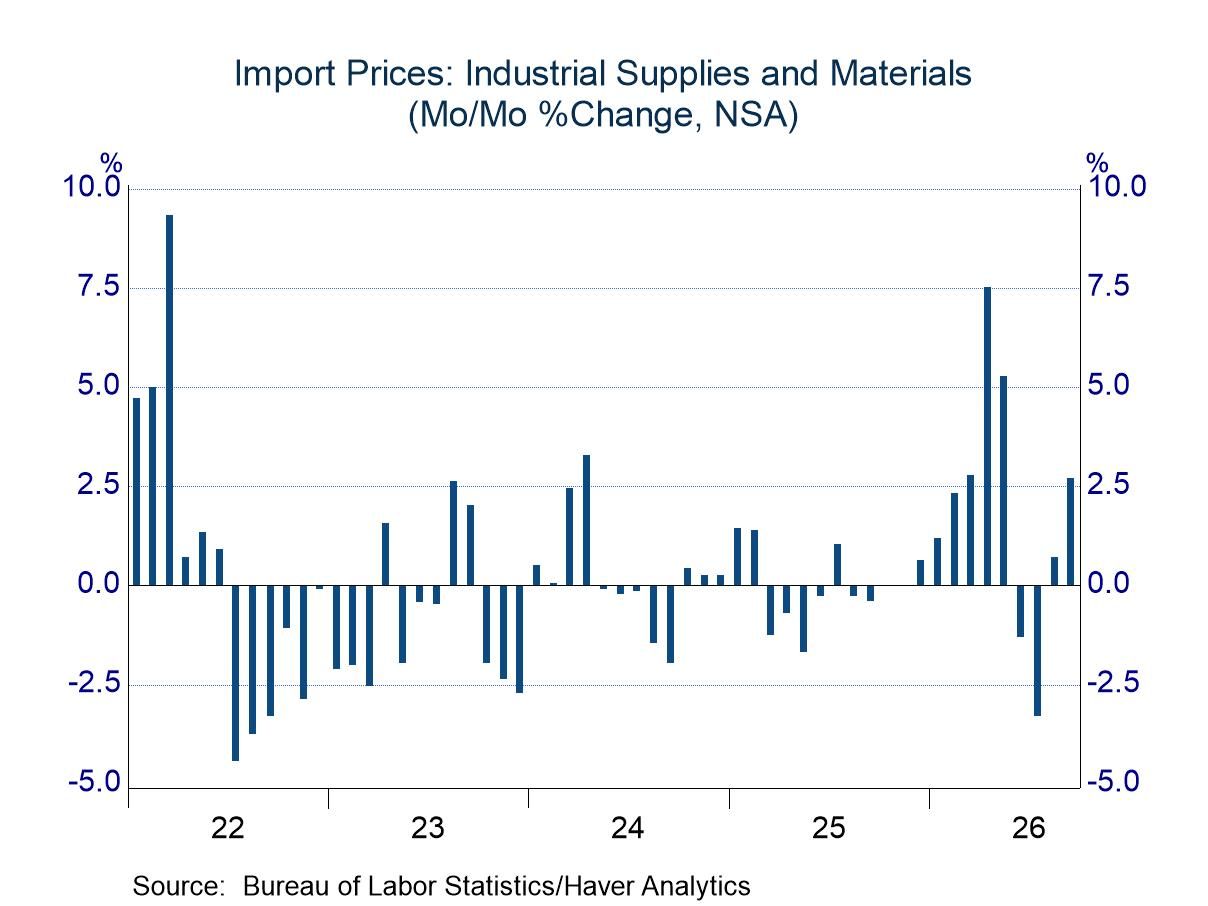
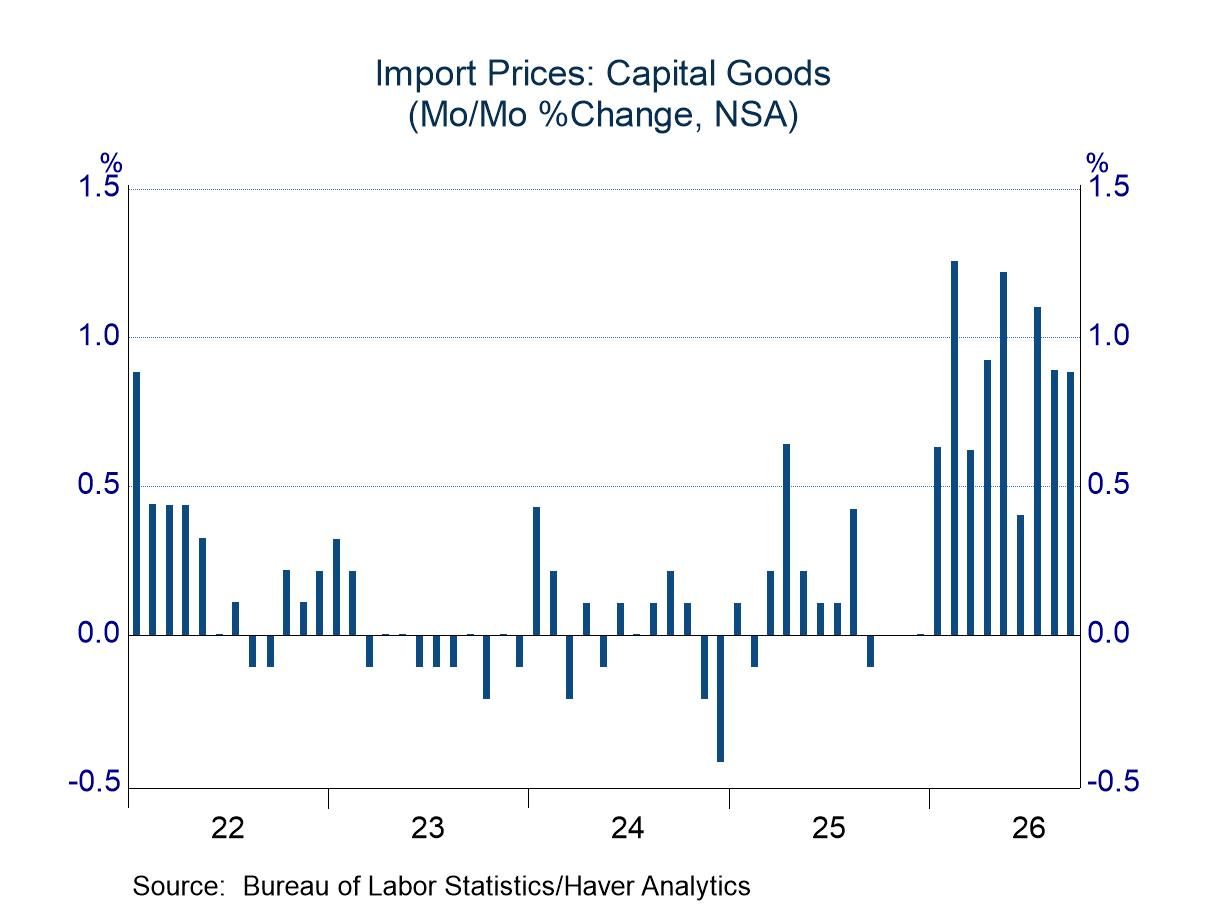
The industrial-supply category stood out on the import side, increasing 2.7%, which left an advance of 20.4% in the past 12 months. Petroleum prices were the driving force behind the monthly change in this category, with a jump of 4.6%. September followed three quiet months for prices of petroleum products, leaving the level of prices below the peak in May. Prices of imported capital goods, responding to strong business investment in the US, have registered notable increases every month this year, ranging from 0.4% to 1.3%. September brought an increase of 0.9%, which left a year-over-year change of 8.4%.
Prices of imported motor vehicles and non-auto consumer goods had been quiet for much of last year and early this year, but both have registered noticeable increases in recent months. Prices of motor vehicles rose 0.6% in July, held that advance in August, and increased another 0.3% in September. The year-over-year change has moved from -0.4% in June to 1.1% in September. Prices of imported consumer goods declined 0.5% over the 12 months of 2025, but after increases in six of the nine months this year, the year-over-year increase moved to 2.7% in September.
Some observers might be seeking clues to the effects of tariffs on import prices. However, prices in this report are based on invoices before the imposition of tariffs. If a foreign business wished to absorb a tariff in order to remain competitive in the US, that would be reflected in a lower price or a smaller increase than would have occurred otherwise. Such unpacking is difficult with these figures.
On the export side, the monthly increase of 2.2% in the headline measure was led by the industrial-supply category (4.0% mo/mo, 23.3% yr/yr), no doubt influenced by petroleum products. Prices of capital goods also rose noticeably (0.5% mo/mo, 4.2% yr/yr), but the pressure was less intense than that for imported capital goods. The food component provided a surprise. After increasing at an average monthly rate of 0.6% in the first eight months of the year, prices of exported food jumped 2.7% in September, leaving a year-over-year increase of 9.0%.
Like their counterparts on the import side, prices of exported motor vehicles and non-auto consumer goods have stirred recently. After showing modest changes from late 2025 through the first six months of this year, prices of exported motor vehicles have increased at an average monthly rate of 0.5% in the past three months. Prices of exported non-auto consumer goods, after four quiet months, jumped 1.1% in September, leaving a year-over-year increase of 4.0%.
These import and export price series are not seasonally adjusted; they can be found in Haver’s USECON database. Detailed figures are available in the USINT database. The expectations figure from the Action Economics Forecast Survey is in the AS1REPNA database.

Michael J. Moran
AuthorMore in Author Profile »Before joining Haver Analytics in 2025, Michael J. Moran was the chief economist of Daiwa Capital Markets America Inc. He was responsible for preparing the firm’s economic forecast and interest rate outlook. He traveled frequently to visit the clients of Daiwa Capital Markets and wrote weekly economic commentary. Mr. Moran also was involved in the flux of financial markets, as he spent a portion of each day on Daiwa’s trading floor interpreting economic statistics and Federal Reserve activity for traders and salespeople. Mr. Moran is quoted frequently in the financial press, and he appears regularly on cable news shows. He also has published articles in several journals and periodicals. Before joining Daiwa Capital Markets America, Mr. Moran worked as an economist at the Federal Reserve Board in Washington, D.C. where he analyzed a broad range of issues dealing with the financial sector of the economy and regularly briefed the Board of Governors. He was on the faculty of Pennsylvania State University from 1979 to 1980 and taught on a part-time basis at George Washington University from 1980 to 1987.
Mr. Moran received his Ph.D. in economics from Pennsylvania State University in 1980 and a B.S. in business administration from the University of Bridgeport in 1975. He was a CFA charter holder from 2002 until 2016.
More Economy in Brief
 Global