September PPI: High-Side Readings on Food and Energy; Uncomfortable increase in Core
Summary
- Results exceed expectations by wide margins.
- Yr/Yr percent changes were the sharpest since December 2022.
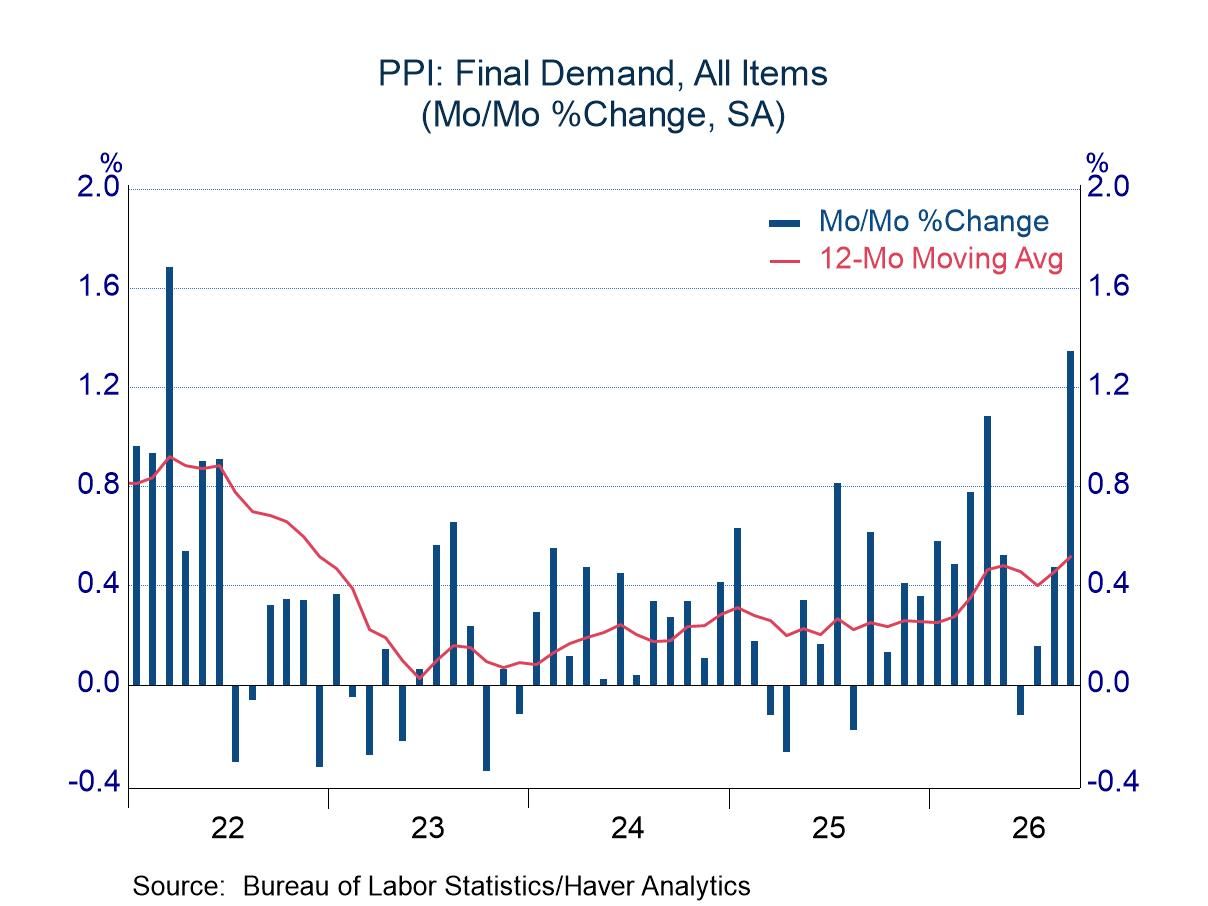
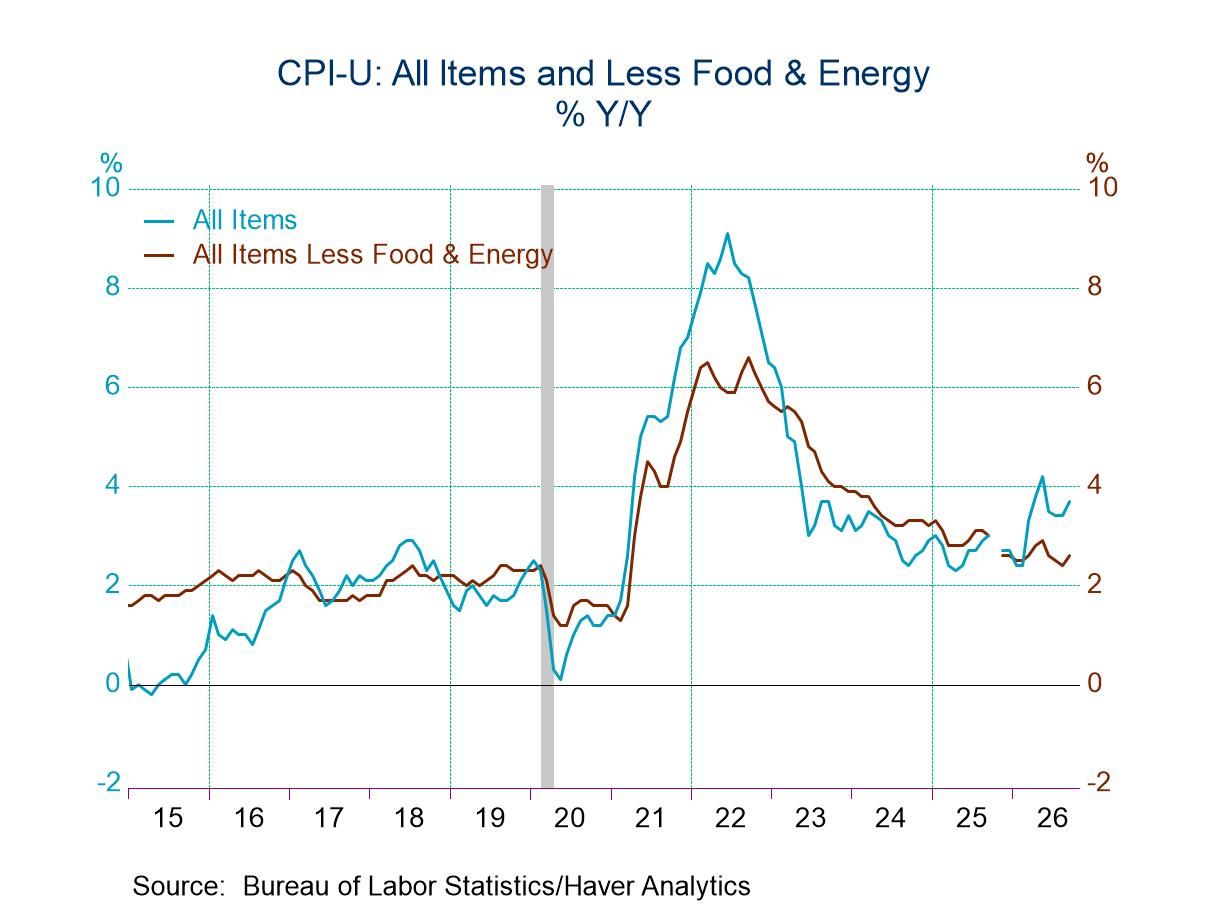
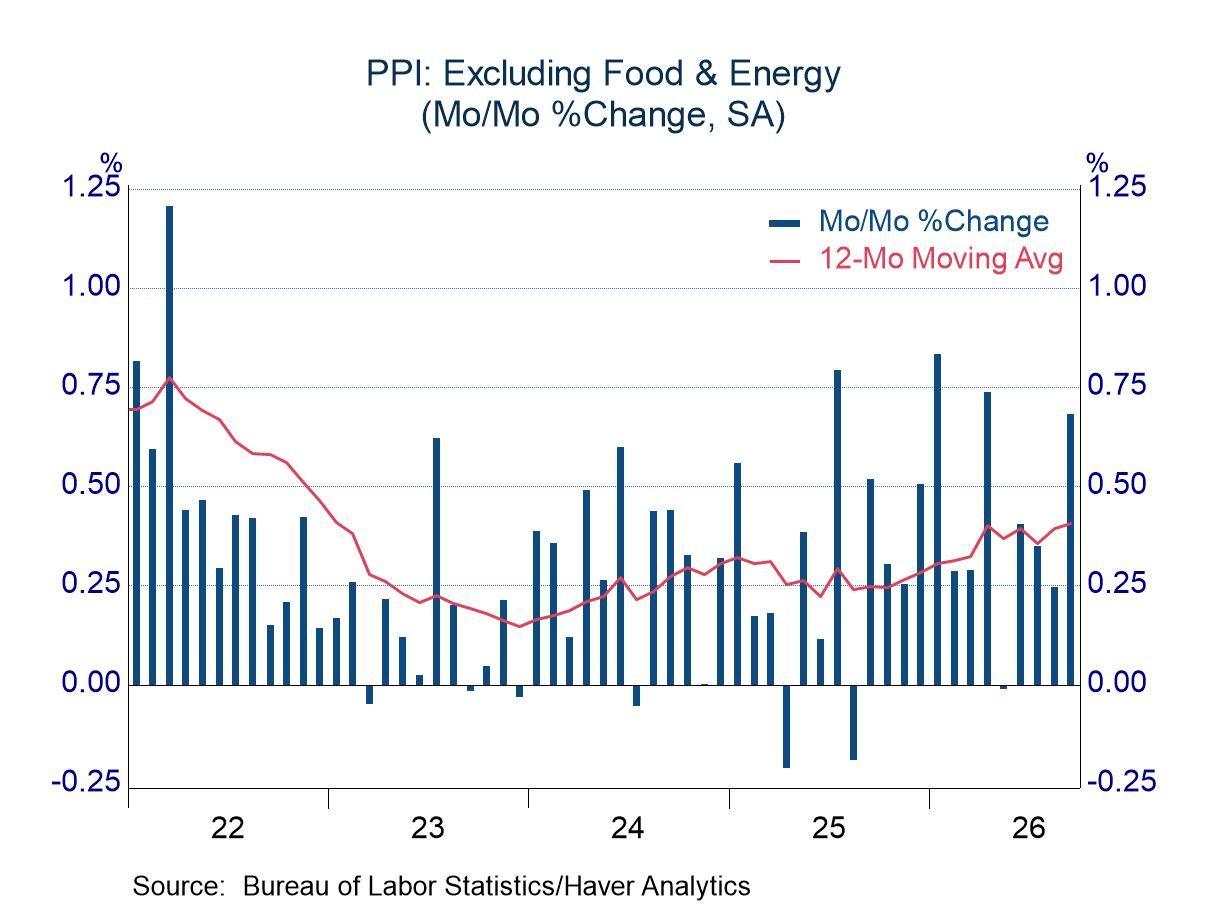
The consumer price index for September (published yesterday) made for unpleasant reading (up 0.6% overall and 0.3% excluding food and energy), but the producer price index was downright nasty. The headline index rose 1.3%, a far cry from the expectation of 0.5%, and prices excluding food and energy rose 0.7% (versus an expectation of 0.3%). The latest changes left the year-over-year increase in the headline measure at 6.3% and the index excluding food and energy at 5.0%. Both measures posted their sharpest year-over-year changes since December 2022, when inflation was decelerating from the burst in 2021–22.
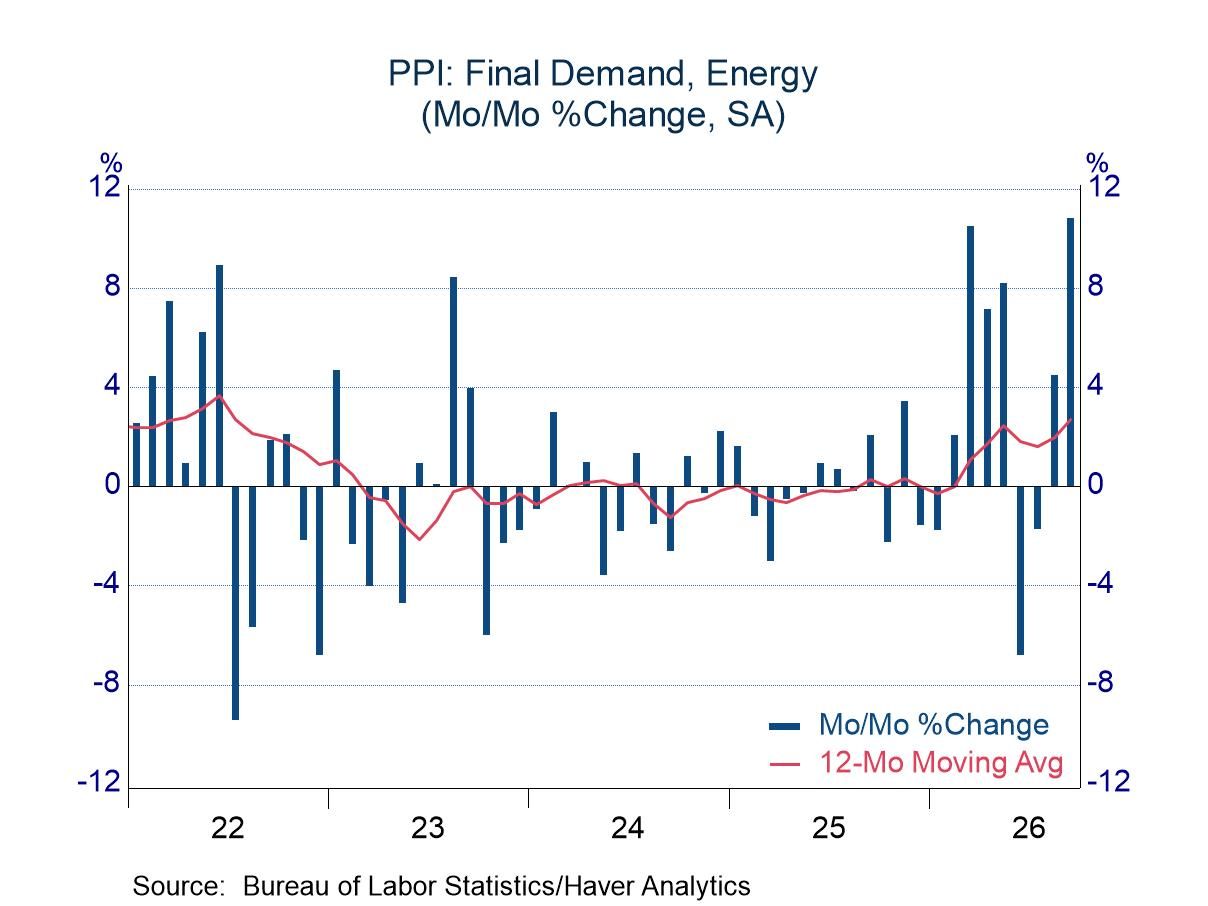
Analysts were expecting pressure on energy prices, but they probably got more than they bargained for, as this component jumped 10.8%. The surge exceeded the jump of 10.5% in March, when the initial effects of the war with Iran became evident. As in other recent months, changes in petroleum-based energy prices (gasoline, diesel, heating oil) accounted for most of the increase, but prices for natural gas liquids and residential electricity added to the mix with jumps of 14.6% and 1.4%, respectively.
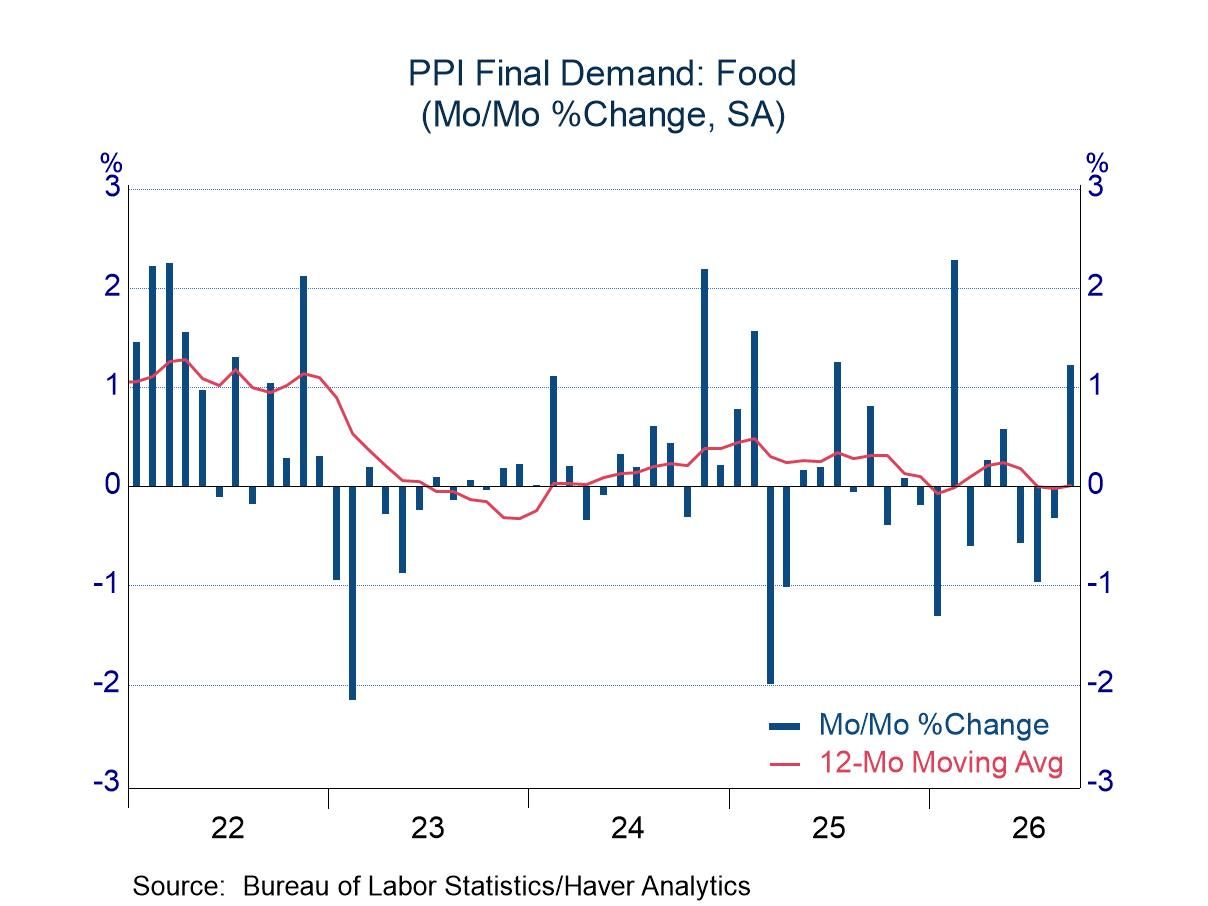
Food prices provided a surprise with an increase of 1.2%. However, this change was not especially troubling, as most of the pressure was the result of food destined for export (4.3%). Consumer food prices also rose sharply in September (0.8%), but this area has been calm for some time, with the year-over-year change showing a decline of 0.9% even with the latest jump.
Producer prices excluding food and energy (0.7%) reflected pressure in both the goods and services sectors. Core goods prices rose 0.3% in September, a reading comfortably within the recent range, but that range has involved several high-side readings. The year-over-year increase of 5.1% was unsettling. This pace is a touch lower than the recent highs of 5.2% in May and June, but otherwise it is the fastest since February 2023, when inflation was decelerating.
The service component of the PPI is volatile, and thus interpretation can be difficult. Recent readings, though, involve noticeable pressure. The September change totaled 0.8%, a reading at the upper end of the recent range. The frequent high-side readings left a year-over-year increase of 4.9%, a touch below the recent high of 5.0% in April, but otherwise the highest since 5.2% in December 2022.
The CPI and the price index for personal consumption expenditures will most likely dominate the discussion of inflation at the Federal Reserve, but the PPI is not irrelevant. Recent results suggest that an inflation impulse is evident in the economy.
The PPI data are published by the Bureau of Labor Statistics and can be found in Haver’s USECON database. Further detail is contained in PPI and PPIR. The expectations figures are available in the AS1REPNA database.

Michael J. Moran
AuthorMore in Author Profile »Before joining Haver Analytics in 2025, Michael J. Moran was the chief economist of Daiwa Capital Markets America Inc. He was responsible for preparing the firm’s economic forecast and interest rate outlook. He traveled frequently to visit the clients of Daiwa Capital Markets and wrote weekly economic commentary. Mr. Moran also was involved in the flux of financial markets, as he spent a portion of each day on Daiwa’s trading floor interpreting economic statistics and Federal Reserve activity for traders and salespeople. Mr. Moran is quoted frequently in the financial press, and he appears regularly on cable news shows. He also has published articles in several journals and periodicals. Before joining Daiwa Capital Markets America, Mr. Moran worked as an economist at the Federal Reserve Board in Washington, D.C. where he analyzed a broad range of issues dealing with the financial sector of the economy and regularly briefed the Board of Governors. He was on the faculty of Pennsylvania State University from 1979 to 1980 and taught on a part-time basis at George Washington University from 1980 to 1987.
Mr. Moran received his Ph.D. in economics from Pennsylvania State University in 1980 and a B.S. in business administration from the University of Bridgeport in 1975. He was a CFA charter holder from 2002 until 2016.
More Economy in Brief
 Global