U.S. Consumer Price Index: Energy and Core Pressures Keep Fed Tightening Debate Active
Summary
- Energy drives headline gain.
- Food prices tame.
- Core shows underlying price pressures in both goods and services.
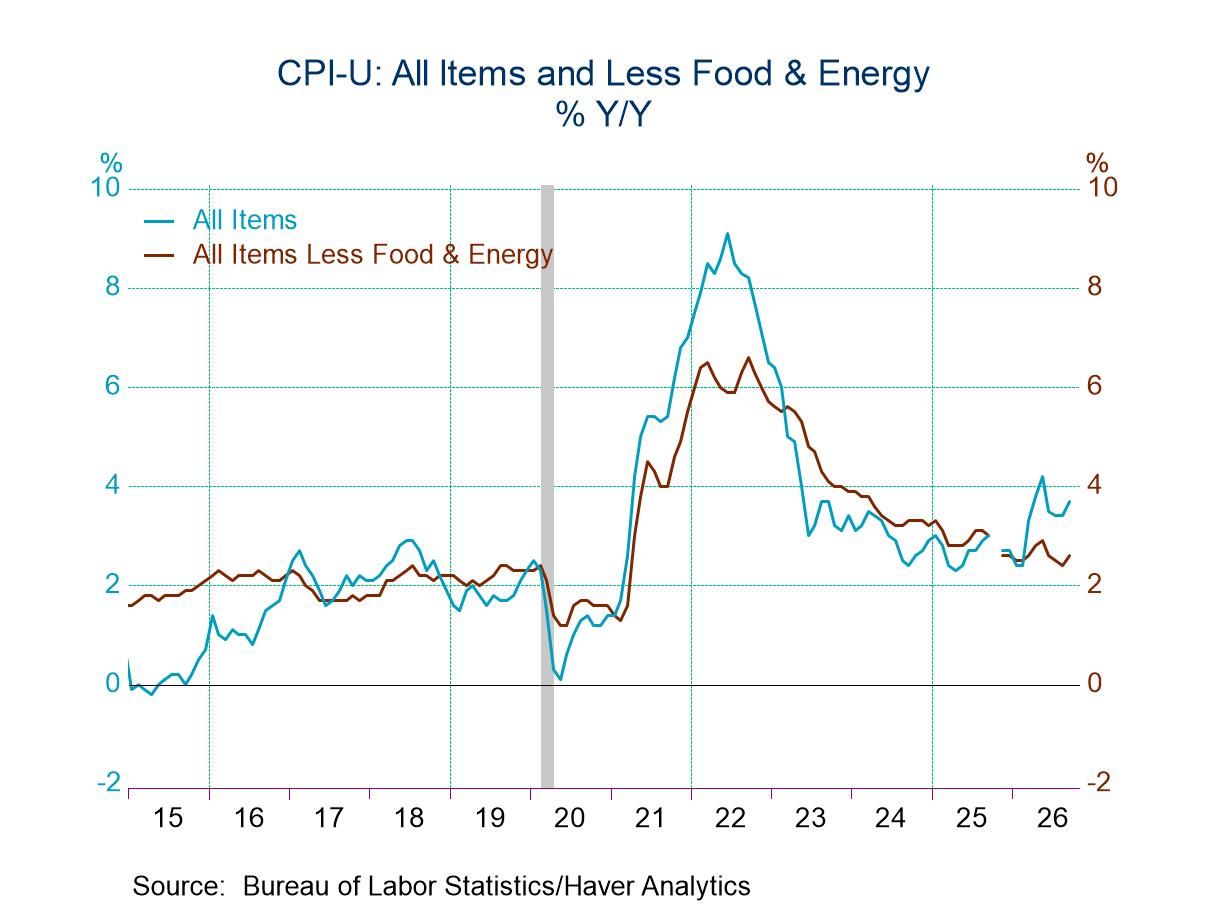
The U.S. Consumer Price Index (CPI) rose 0.6% month-over-month (MoM) in September. Historically speaking, how rare is a 0.6% MoM increase? Monthly gains of 0.6% or larger took place about 15% of the time in the postwar period; that number drops to a 3% hit rate since 2000. More recently, there were twelve occurrences in 2021 (after the COVID-19 pandemic) and 2022 (after Russia’s invasion of Ukraine). For 2026, besides September, there were two others at the onset of the Iran War in March and April 2026.
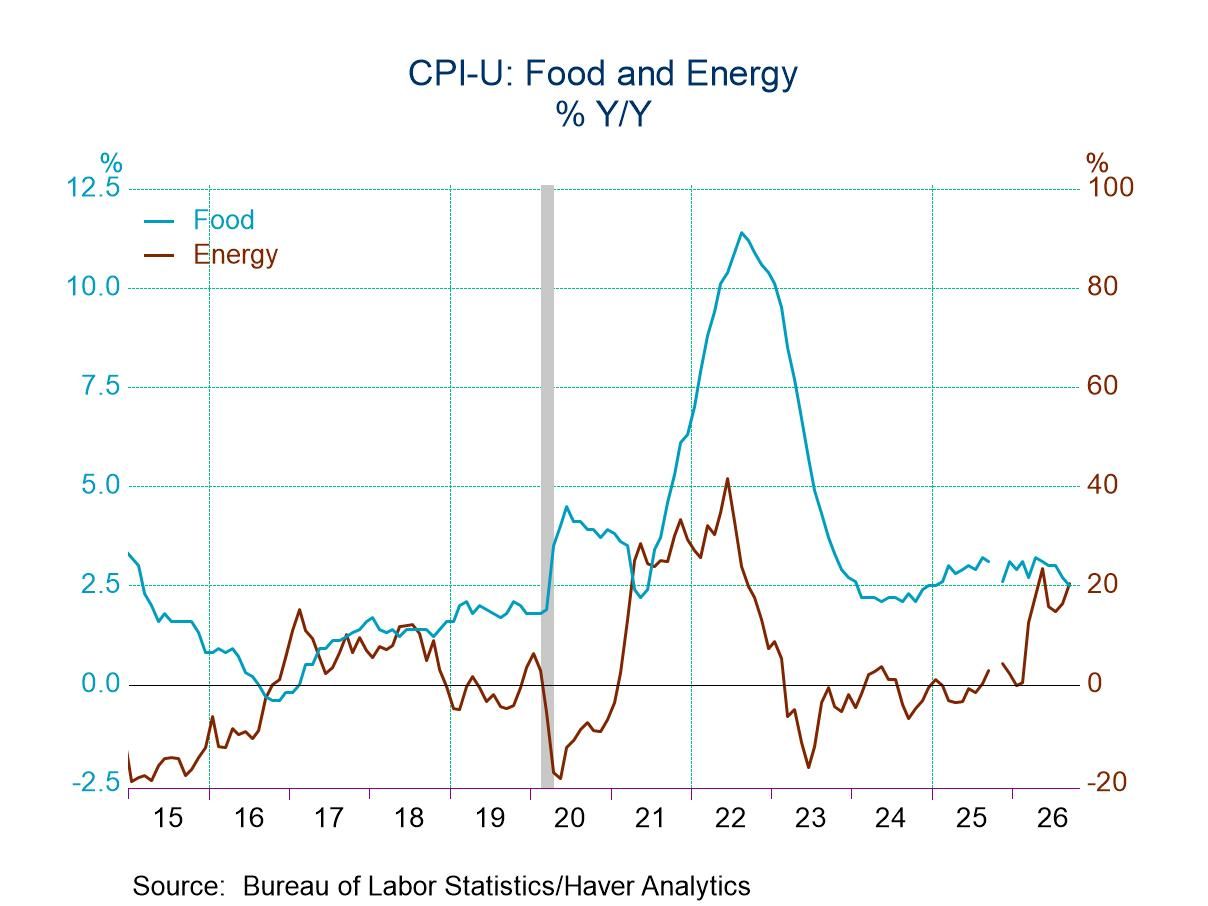
Energy was a big part of the sequential performance, while food was not. The CPI for energy increased 5.2% in September following a 2.1% rise in August. Gasoline was a significant mover, posted a 9.1% MoM advance. This accounted “for over half of the monthly all items increase,” according to the Bureau of Labor Statistics (BLS). The CPI food index registered a flat reading in September, the first unchanged reading since March. The tame showing was generated by a 0.1% MoM decrease in Food at home, the second monthly drop in the last three months, while Food away from home rose at a lesser 0.2% MoM after back-to-back 0.3% gains.
Core CPI, excluding food and energy, rose 0.3% MoM in September matching August’s rise. Price pressures were propped up by both core goods (up 0.3% MoM from 0.1%) and core services (up 0.4% MoM versus 0.3%). The 0.3% core beat market expectations for a 0.2% increase and lifted probably for a Fed rate hike at the October 28th meeting to 44% from last Friday’s low of 17%.
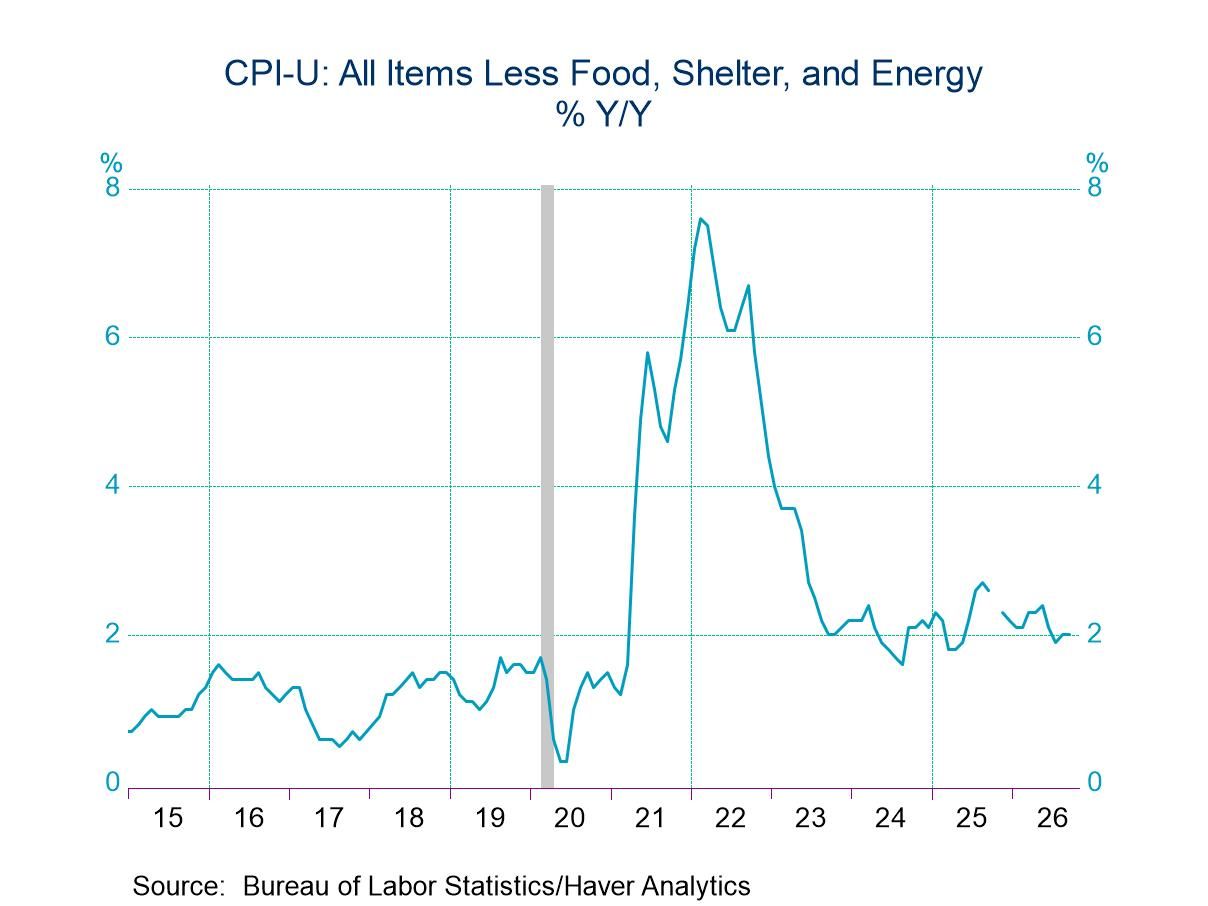
On a year-over-year (YoY) basis, CPI inflation came in at 3.7%, up from the prior month’s 3.4%. CPI has posted a YoY inflation rate above 3% for the last seven months ended September. This hasn’t happened since the seven months ended May 2024. Core CPI inflation edged up to 2.6% YoY in September from 2.4% YoY in August. While core remains in a down channel of lower highs and lower lows, it remained above the key 2% level for the 65th month running. The last time core CPI inflation had a string above 2% for a similar duration, it was the latter half of the 1990s.
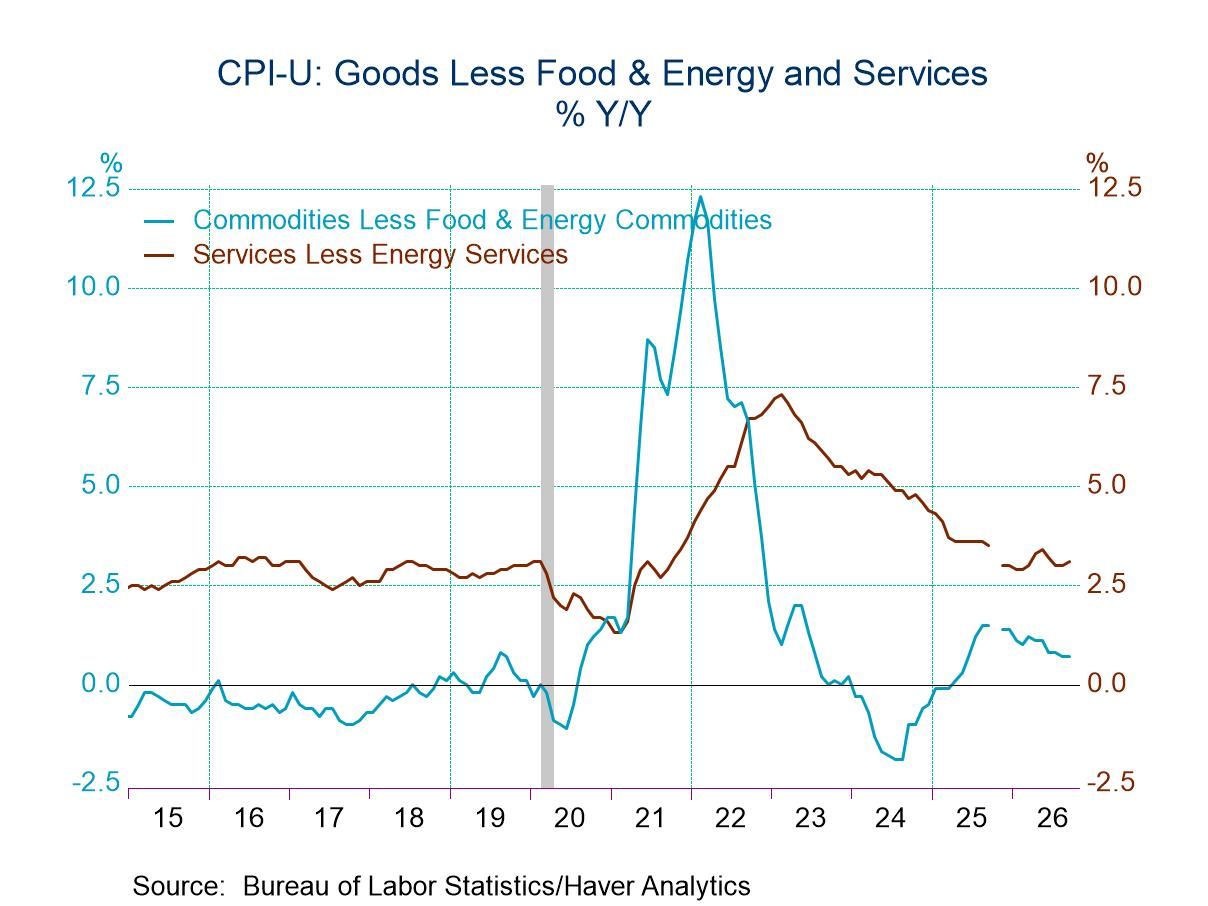
Core services inflation is to blame as it stubbornly stayed north of the 3% mark in September (at 3.1% YoY). After persistent easing from the post-pandemic peak to the 2.9% YoY rates in January/February 2026, no further progress has been made to the downside. Core goods inflation, on the other hand, has grinded lower to 0.7% YoY rates in both August and September, less than half the 1.5% YoY figures reported in August and September 2025.
Shelter is a key reason why core CPI inflation isn’t back in line with the Fed’s target rate. When shelter is excluded from the core, the underlying inflation picture is tepid. September’s 2.0% YoY rate echoed August’s, and June’s and July’s respective 2.1% and 1.9% YoY rates averaged 2.0%. These non-threatening results present a compelling argument against Fed tightening over the balance of the year.
The Consumer Price figures can be found in Haver's USECON database. The expectations figure is contained in the AS1REPNA database.

Jonathan Basile
AuthorMore in Author Profile »Jonathan Basile is Street veteran of more than three decades with extensive experience analyzing the global macro environment from the perspectives of sell-side economist, sovereign analyst, and buy-side strategist. He joined Danielle DiMartino Booth at Quill Intelligence in June 2025 as Director of Research where he regularly taps his assets for the firm’s key products, Weekly Quill, Saturday Intelligence Briefing, and Daily Feather.
The prior 11 years were spent at AIG’s and Corebridge Financial’s Investment arms as Head of Global Macro Strategy where his macro and market knowledge were utilized by key stakeholders, like the CIO teams, portfolio managers and third-party clients. Before the Corebridge spin-off from AIG, he built the Global Macro desk from scratch to become an integral part of the active investment process. He streamlined investment practices by steering a centralized monthly global macro discussion allowing subsequent asset-class meetings to be focused on strategy. Jonathan’s tactical rate views were frequently employed by public credit portfolio managers and traders. His storytelling prowess was displayed in a colorful weekly rant whose internal distribution grew steadily and organically.
Jonathan’s past experience with the likes of Dr. Lacy Hunt, Christopher Low, Ian Shepherdson, Elliott Platt, Dr. Neal Soss, and Kathleen Stephansen (twice) prepared him for almost anything thrown his way from the economy and the markets. His years at HSBC, DLJ and Credit Suisse combined saw him cover the economies of the US, Canada, Japan and the UK. He has been recognized as a four-time winning team member of the Marketwatch US Forecaster of the Month and was ranked by Bloomberg as a top forecaster of the Canadian economy.
Jonathan is married with three children – one of which is a Red Sox fan in a Yankees household. You can find Jonathan running or biking on weekends or catching for his men’s baseball team during the spring and summer. He holds a BA in Economics from Princeton University.
More Economy in Brief
 Asia
Asia