Asia| Aug 03 2026
Economic Letter from Asia: On Again, Off Again
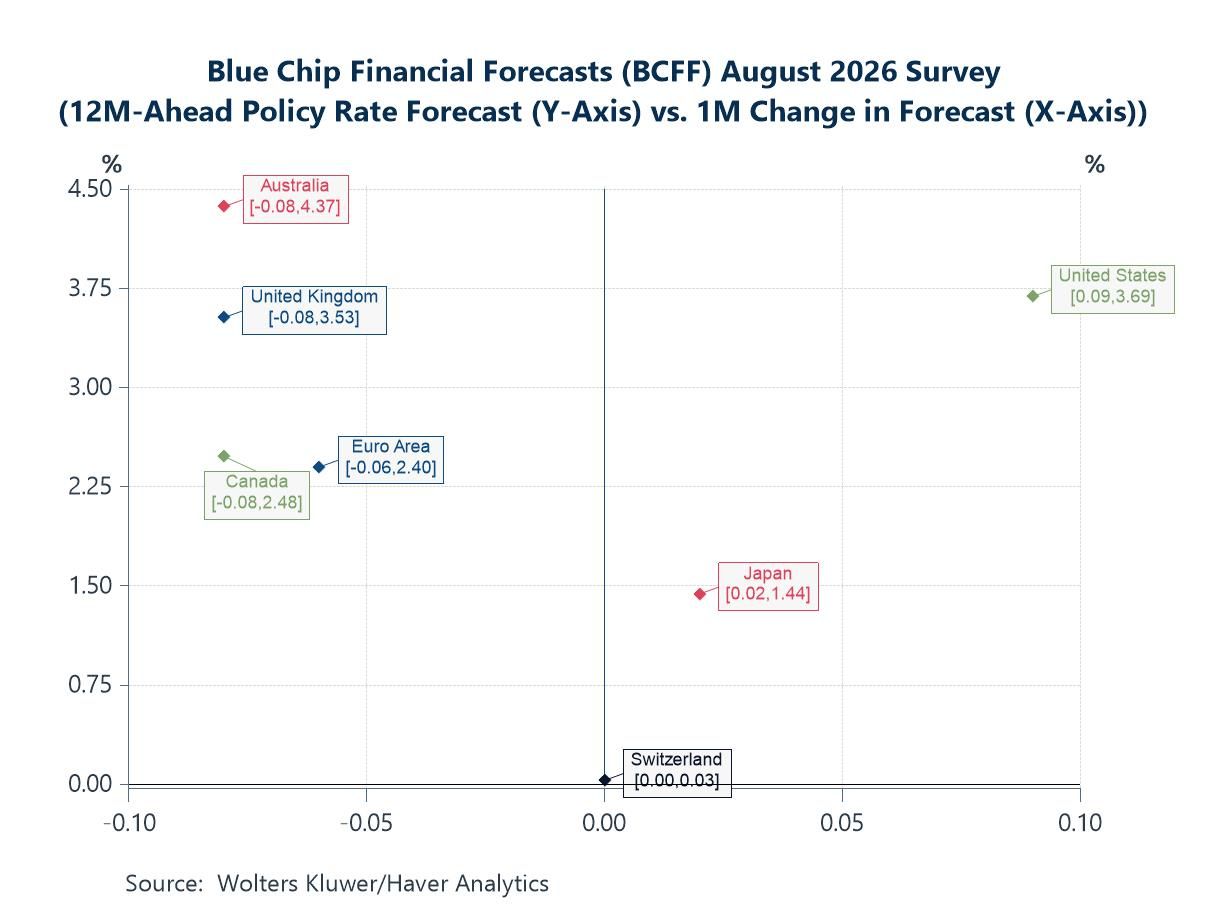
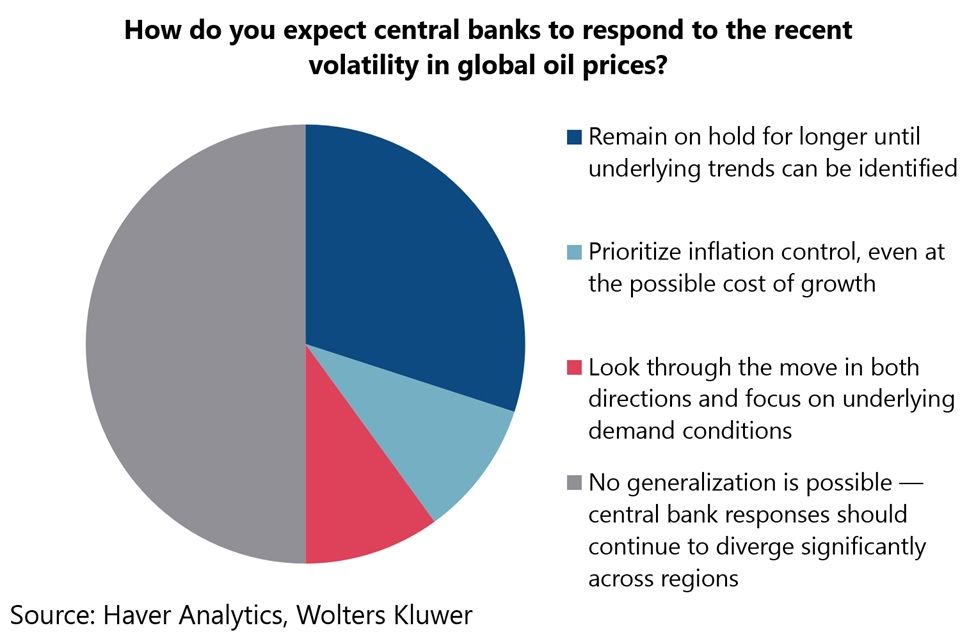
In this week's Letter, we dive into the latest Blue Chip Financial Forecast (BCFF) survey results in light of key developments around Asia and the broader world economy. We find that, despite the recent flare-up in US-Iran tensions, panellist expectations for policy rates remain little changed, bar the US (chart 1). Central banks are still seen as likely to continue diverging significantly across regions in response to the volatility in global oil prices (chart 2). The latest on the US-Iran conflict brings hopes of another deal on the horizon, as part of a broad on-again, off-again pattern. Those hopes have sent crude oil prices lower, albeit with flows through the Strait of Hormuz remaining at a trickle (chart 3). As global oil supply remains constrained, one key area to watch is Chinese crude oil imports (chart 4), which have slumped since the conflict broke out. There is no telling when Chinese buying will recover, if ever, and if so, by how much. Moving to Japan, and taking these developments into account, the Bank of Japan held its policy rate steady at its recent meeting. Inflation risk is still flagged as being tied to the upside (chart 5). That may threaten to upend real wage gains this year, should a price flare-up materialise extensively enough. Yen intervention talk has also returned to the fore, with the US and Japan confirming recent intervention moves. Both have signalled that more may come if needed, although the yen remains squarely within its longer-term weakening trend (chart 6).
Blue Chip Financial Forecasts Last week, we published the August 2026 Blue Chip Financial Forecast survey results. Despite the flurry of recent headline developments around the world, we found panellist expectations only modestly changed from last month. In particular, views of 12-month ahead policy rates were little changed or unchanged for every economy bar the US (chart 1). US expectations now point to slightly higher policy rates than a month ago. Among the economies covered by the survey, the highest expected 12-month ahead policy rates still relate to Australia, followed by the US and the UK. At the other end, the lowest expected rates relate to Japan and Switzerland. The slightly higher expected US policy rate may well incorporate, among other factors, the recent re-escalation in US-Iran tensions and the inclinations of new Fed Chair Warsh. We return to those tensions in a later section below.
Chart 1: Blue Chip Financial Forecasts survey – Policy rate expectations
Touching further on the recent oil price volatility, the survey also gauged how panellists expect central banks to respond. Half of panellists (50%) thought no generalisation was possible, since central bank responses are likely to continue diverging significantly across regions. A sizeable minority (30%), however, expected central banks to stay on hold for longer until underlying trends become clearer. The US-Iran MoU has recently broken down, with an associated rebound in energy prices. Even so, most panellists (55%) reported no change this month in how they assess the balance of risks between employment and inflation. In both the US and the rest of the world, a majority saw upside risks to inflation as the greater concern (US: 67%; ex-US: 60%). Only a small minority pointed to downside risks to employment (US: 10%; ex-US: 12%), with the remaining 25% or so viewing the risks as broadly balanced.
Chart 2: Blue Chip Financial Forecasts survey – Central bank responses to global oil price volatility
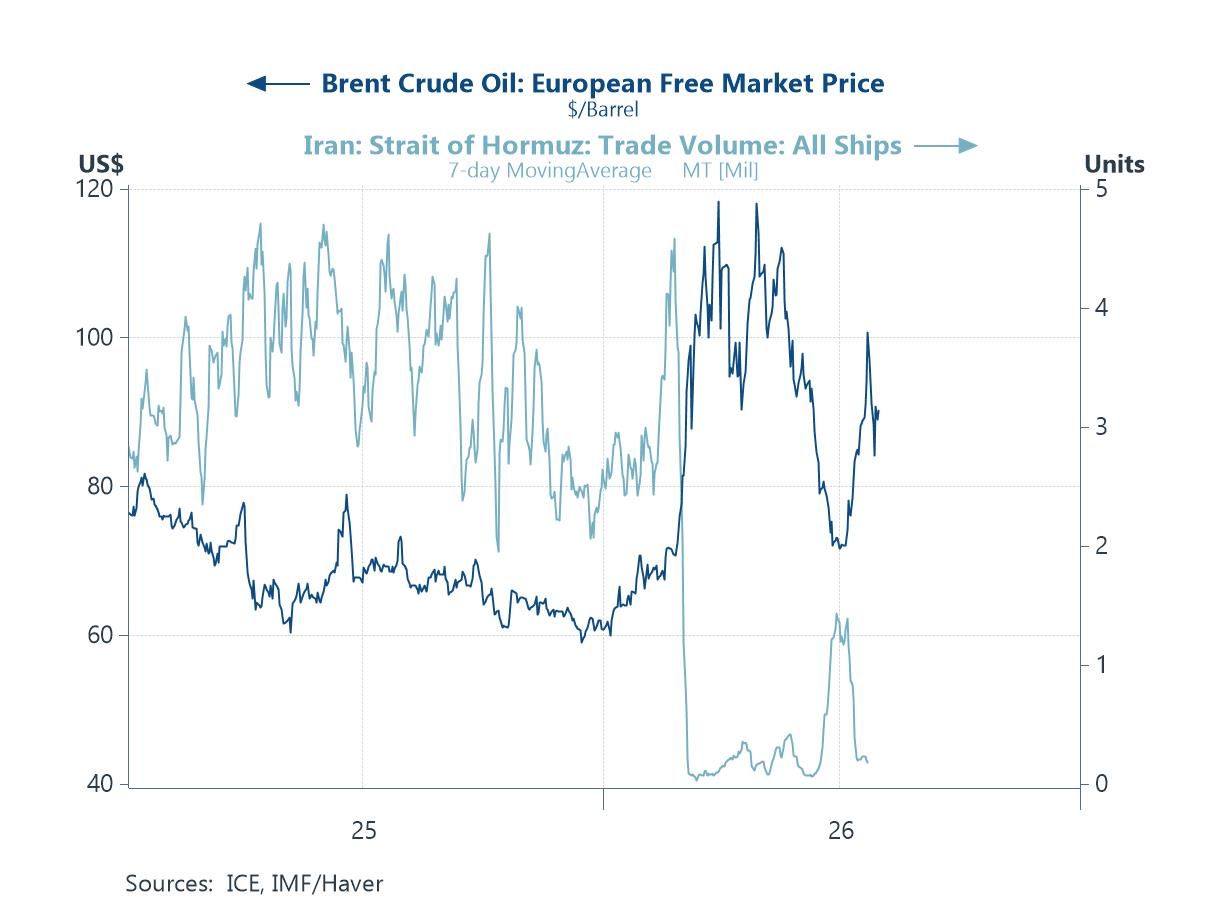
Energy Digging deeper into the Strait of Hormuz situation, the latest position at the time of writing is that the US is holding off additional military strikes on Iran. A deal on the Strait with Iran is reportedly close, with negotiations set to resume today. All of these developments came after the latest BCFF survey period. In the meantime, US-Iran hostilities have been on-again, off-again, and with them the accessibility of the crucial Strait as a trade waterway. That pattern has left crude oil prices whipsawing of late (chart 3), underscoring how fluid the Middle East situation remains. Beneath all the oil price movements, shipping flows remain reduced to a trickle, a small fraction of pre-conflict levels.
Chart 3: Brent crude prices and Strait of Hormuz shipping volume
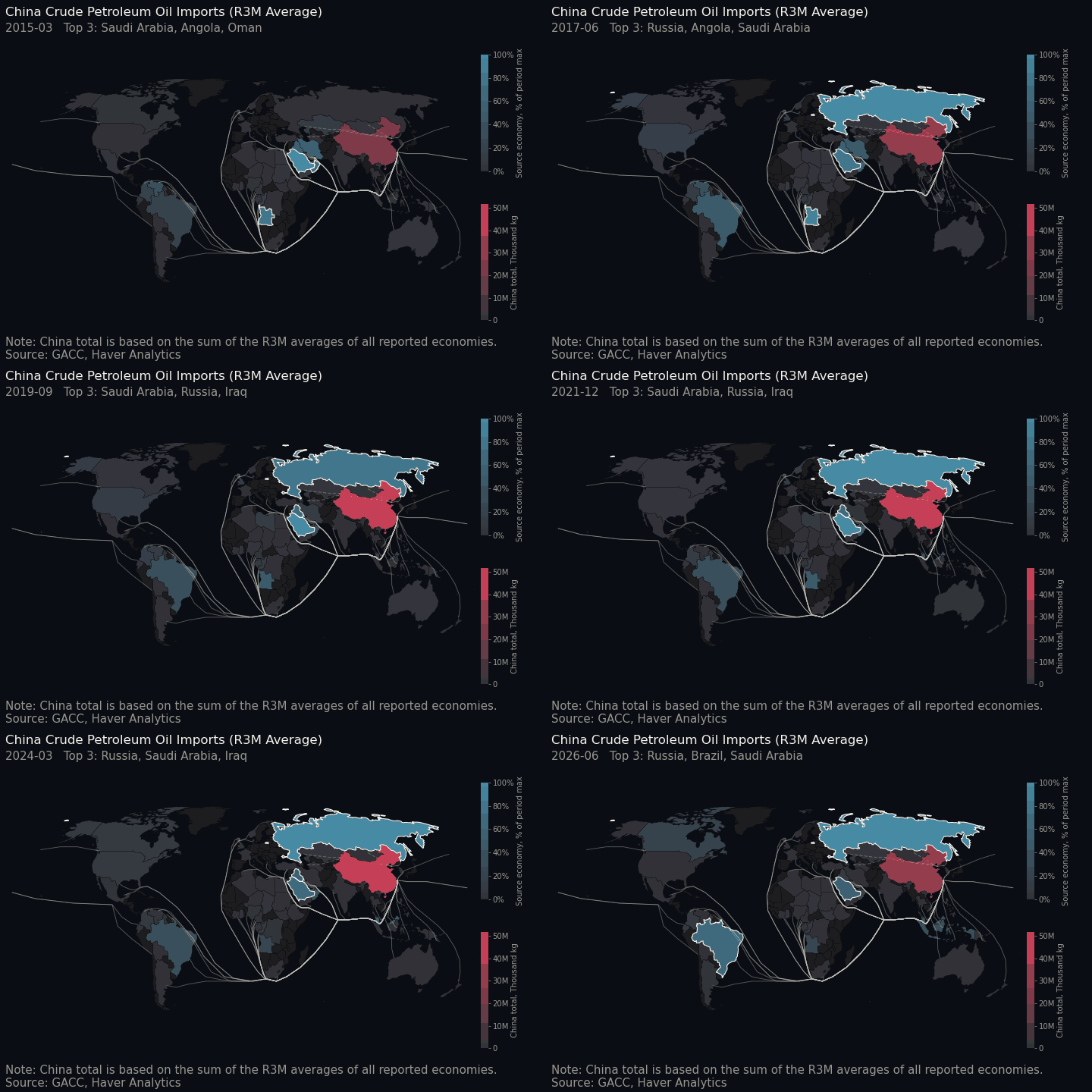
Against this backdrop one key factor worth some discussion is China's crude oil imports. These slumped following the outbreak of the conflict, though part of that slump may have been involuntary, with the Strait closure limiting available supply. An animated map tracks the evolution of Chinese crude imports over time (chart 4). Among other things, it shows the slump in recent months, denoted by the fading red shading over China. It also shows the rise of Russia as a key source of imports over the past decades. More recently, Brazil has risen as a source, as supplies through the Strait of Hormuz, and by extension from much of the Middle East, got choked off. It remains to be seen whether Chinese imports will recover any time soon, and if so, by how much. There is also an interplay between crude oil prices, Chinese importers' sensitivity to those prices, and eventual Chinese imports.
Chart 4: China crude petroleum oil imports
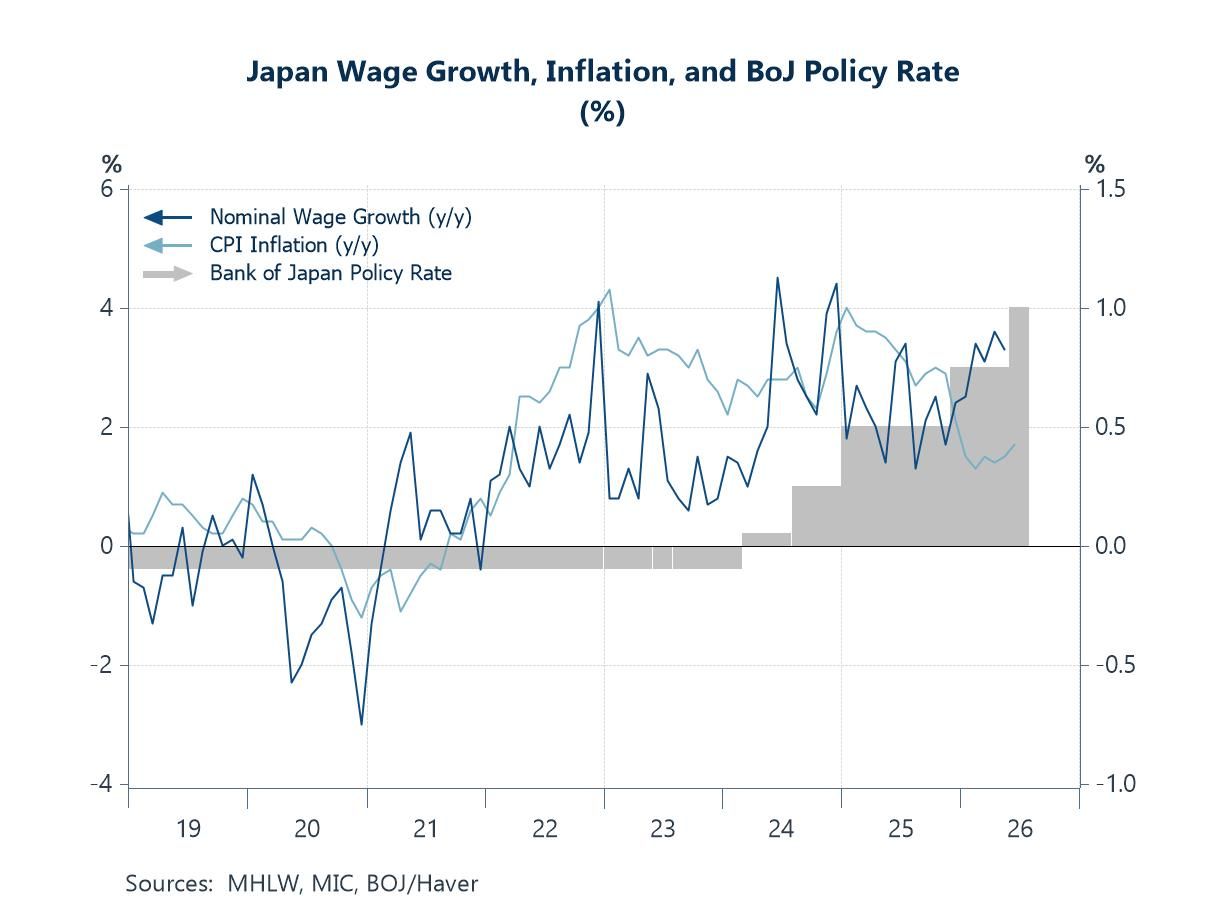
Japan Moving to Japan, and taking the above developments into account, we also saw last week that the Bank of Japan (BoJ) held its policy rate at 1% (chart 5). The hold came with some warnings about the possible rate of future inflation, leading some investors to infer that another policy rate hike may well be on the horizon. Specifically, the BoJ warned in its updated outlook report that underlying CPI inflation risks deviating above the price stability target of 2%. The central bank's updated forecasts echo that sentiment, with CPI inflation less fresh food now seen at 2.5% for fiscal 2026, albeit down from 2.8% in April. CPI inflation less fresh food and energy is also seen at 2.5% for fiscal 2026, slightly down from 2.6%. However, another positive development has taken place despite the latent upside risks to inflation, in the form of wages. Real wages have grown consistently this year, although that may be upended if the inflation rate accelerates to outpace wage growth.
Chart 5: Japan nominal wage growth, CPI inflation, and policy rate
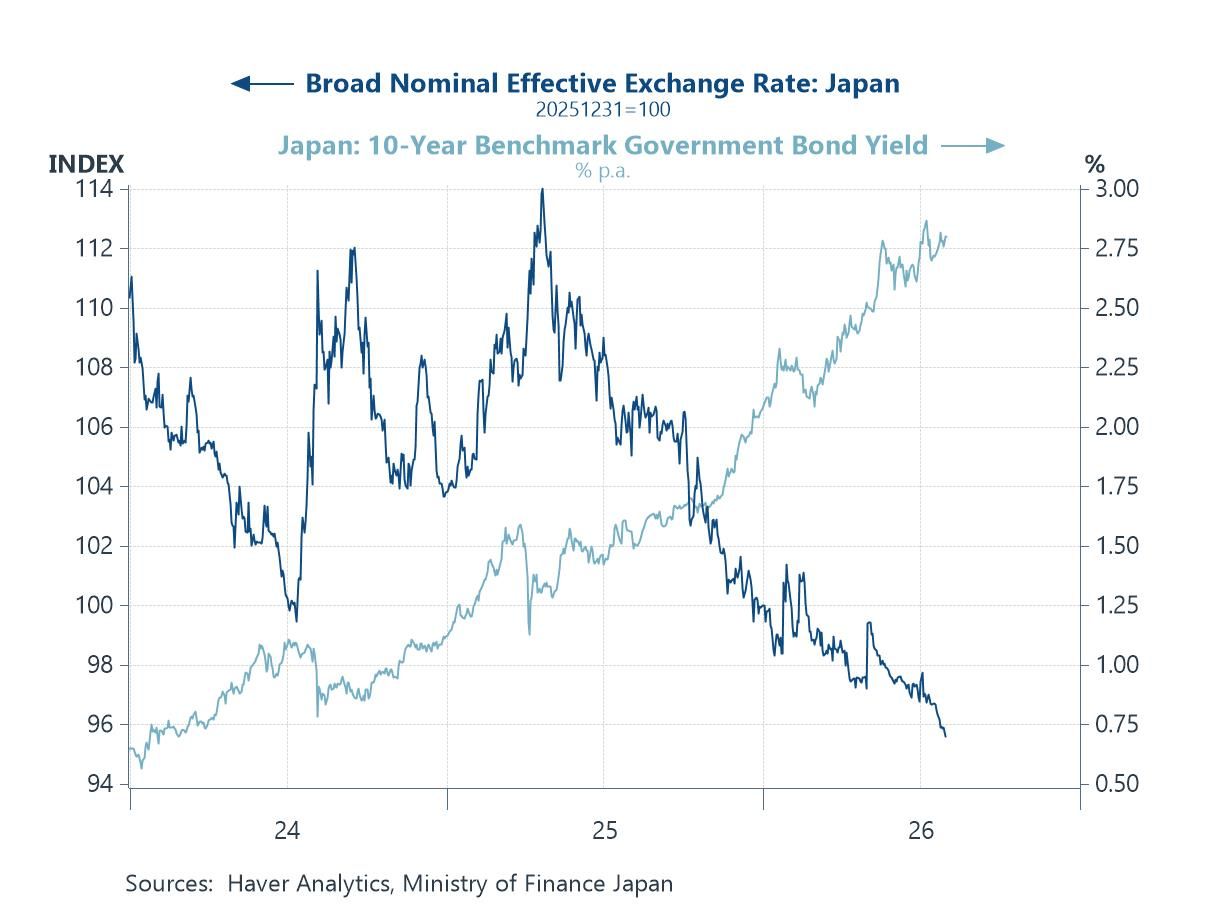
Last but not least is the recent talk about intervention in the Japanese yen market. Japan's Ministry of Finance, in a rare admission, confirmed earlier today that Japan and the US jointly conducted yen intervention to support the currency on Friday. The ministry added that the two countries will not hesitate to jointly intervene again. Additionally, US Treasury Secretary Bessent said the US will consider increasing the size of the Fed's Foreign and International Monetary Authorities (FIMA) repo facility in coming months. The facility provides temporary dollar liquidity, allowing Japan to raise dollars without outright sales of US Treasuries and easing funding pressures for intervention needs. As shown on chart 6, the yen has embarked on a depreciating trend since early 2025 against a basket of trading partner currencies. That weakening has come even despite a broad narrowing of policy yield differentials between the BoJ and its major central bank peers. The BoJ has persisted with gradual rate hikes, whilst major peers mostly stood pat.
Chart 6: The Japanese yen and yields

Tian Yong Woon
AuthorMore in Author Profile »Tian Yong joined Haver Analytics as an Economist in 2023. Previously, Tian Yong worked as an Economist with Deutsche Bank, covering Emerging Asian economies while also writing on thematic issues within the broader Asia region. Prior to his work with Deutsche Bank, he worked as an Economic Analyst with the International Monetary Fund, where he contributed to Article IV consultations with Singapore and Malaysia, and to the regular surveillance of financial stability issues in the Asia Pacific region.
Tian Yong holds a Master of Science in Quantitative Finance from the Singapore Management University, a Master of Science in Analytics from the Georgia Institute of Technology, a Bachelor of Science in Mathematics from the Singapore University of Social Sciences, and a Bachelor of Science in Banking and Finance from the University of London.
More Economy in Brief