Asia| Feb 10 2026
Economic Letter from Asia: Of Ballots and Bots
In our Letter this week, we explore Asia in two parts. The first reviews key developments from the past week, focusing on snap election outcomes in Japan (chart 1) and Thailand (chart 2), both of which delivered victories for incumbent parties and helped reduce near-term political uncertainty.
The second, and larger, section builds on last week’s discussion of Asia and AI, shifting the focus to AI’s potential impact on the region from an end-user perspective. On the upside, Asia stands to benefit meaningfully from the eventual large-scale adoption of AI-powered robotics, reflecting the region’s relatively high share of manufacturing value added (chart 3). That said, important considerations remain, including the cost viability of transitioning towards humanoid robotics given the sizeable upfront capital expenditure involved. Beyond manufacturing, AI adoption could also deliver gains in healthcare, particularly as many Asian economies grapple with ageing populations—implying a growing care burden alongside a shrinking domestic caregiver base (chart 4). However, regulatory, ethical, and implementation challenges persist.
At the same time, the AI transition will likely displace certain jobs, making this a race not only of adoption but of adaptability, where education—while an imperfect proxy—offers some insight into which economies may be better positioned to adjust (chart 5). Finally, bureaucratic frictions also matter (chart 6), although even traditionally more bureaucratic economies have begun introducing fast-track frameworks to avoid falling behind in what could prove to be a pivotal transition reshaping the regional, and potentially global, economic landscape.
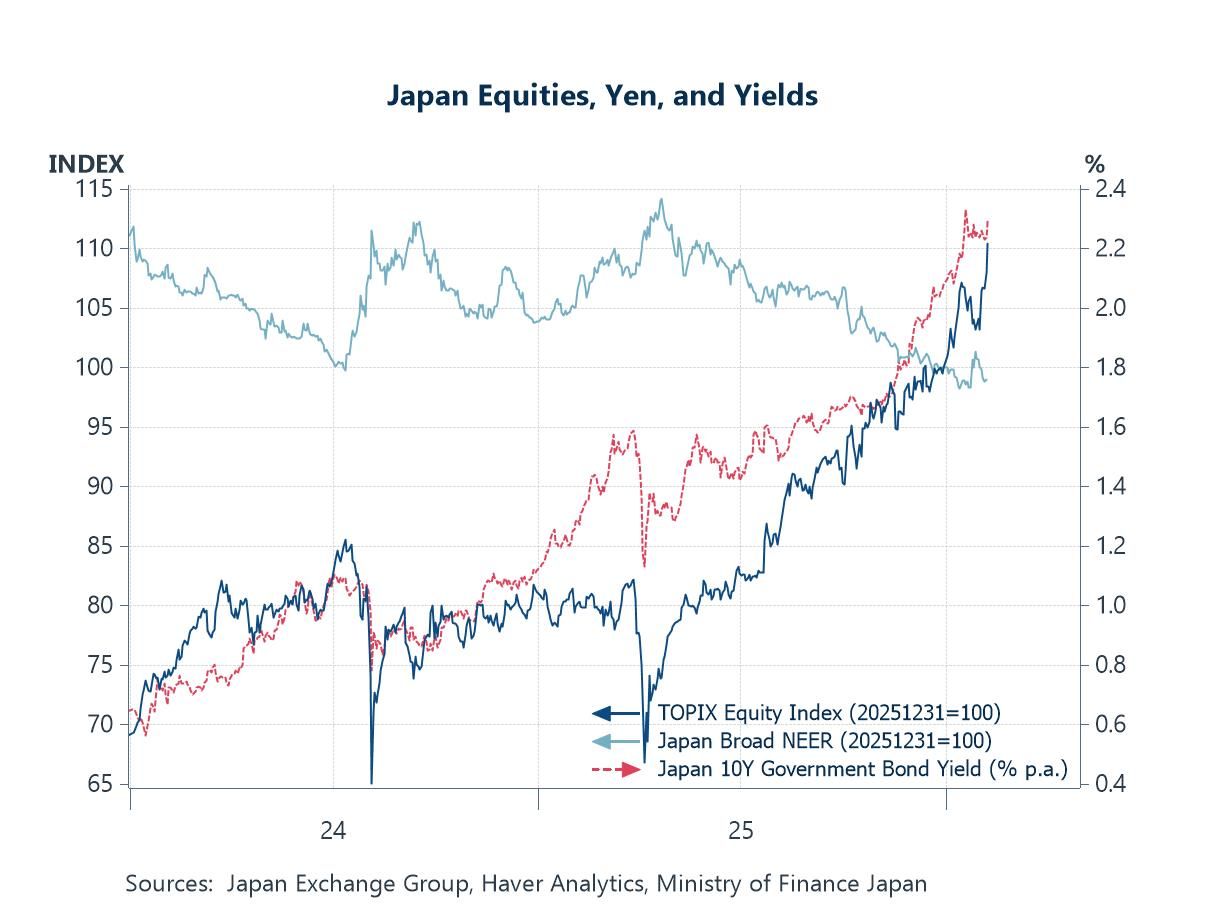
Japan’s snap election Following a snap election held on Sunday, Japanese Prime Minister Takaichi’s Liberal Democratic Party (LDP) secured a historic landslide victory, winning a more than two-thirds majority in Japan’s 456-seat Lower House. The LDP’s coalition partner, the Japan Innovation Party, also expanded its presence to 36 seats. The outcome suggests that Takaichi’s political gamble to capitalise on strong opinion polling has paid off. While the election result has removed a key source of near-term political uncertainty for Japan, attention now turns to the policy agenda enabled by the government’s newly strengthened mandate. Among the first expected moves, Takaichi appears set to proceed with a temporary food tax pause, reducing the 8% consumption tax on food to 0% for two years. This proposal reinforces the perception that her policy stance is fiscally accommodative, even as critics raise concerns around fiscal discipline and long-term sustainability. As for the market reaction, Japanese equities rallied on stimulus expectations, bond yields rose on prospects of increased issuance to fund higher spending, while the yen recorded only muted net moves (chart 1)—prompting some speculation that some intervention may have taken place.
Chart 1: Japanese equities, yen, and yields
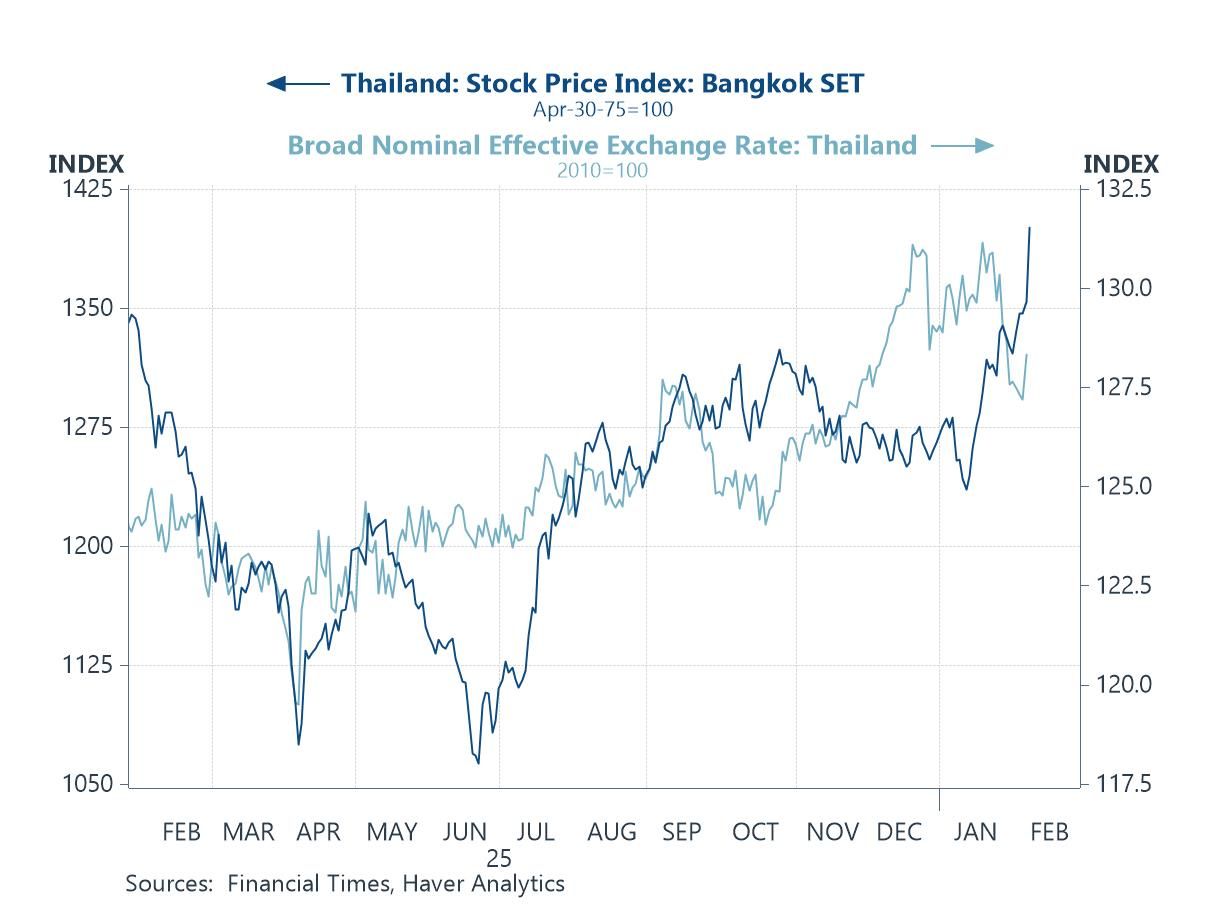
Thailand’s snap election Thailand also held snap elections last Sunday, which saw the incumbent deliver a strong showing at the polls. Unlike Japan’s election outcome, however, the scale of the increase in the incumbent Bhumjaithai (BJT) Party’s parliamentary footprint came as a surprise to many observers. That said, despite these sizable gains, the BJT Party fell short of an outright majority, securing 193 of the 500 seats in parliament, implying that a coalition government will likely still be required to pass legislation smoothly. Thai equities and the baht nevertheless rallied on the election results (chart 2). Attention now turns to whether—and how—Prime Minister Anutin will follow through on key campaign promises, including the revival of a popular shopping subsidy programme. While such measures would provide a near-term boost to consumption, they would also raise concerns around fiscal sustainability. Beyond the parliamentary vote, Thai voters also approved a proposal to replace the constitution. If pursued, this could pave the way for deeper structural reforms to Thailand’s economy.
Chart 2: Thai equities and baht
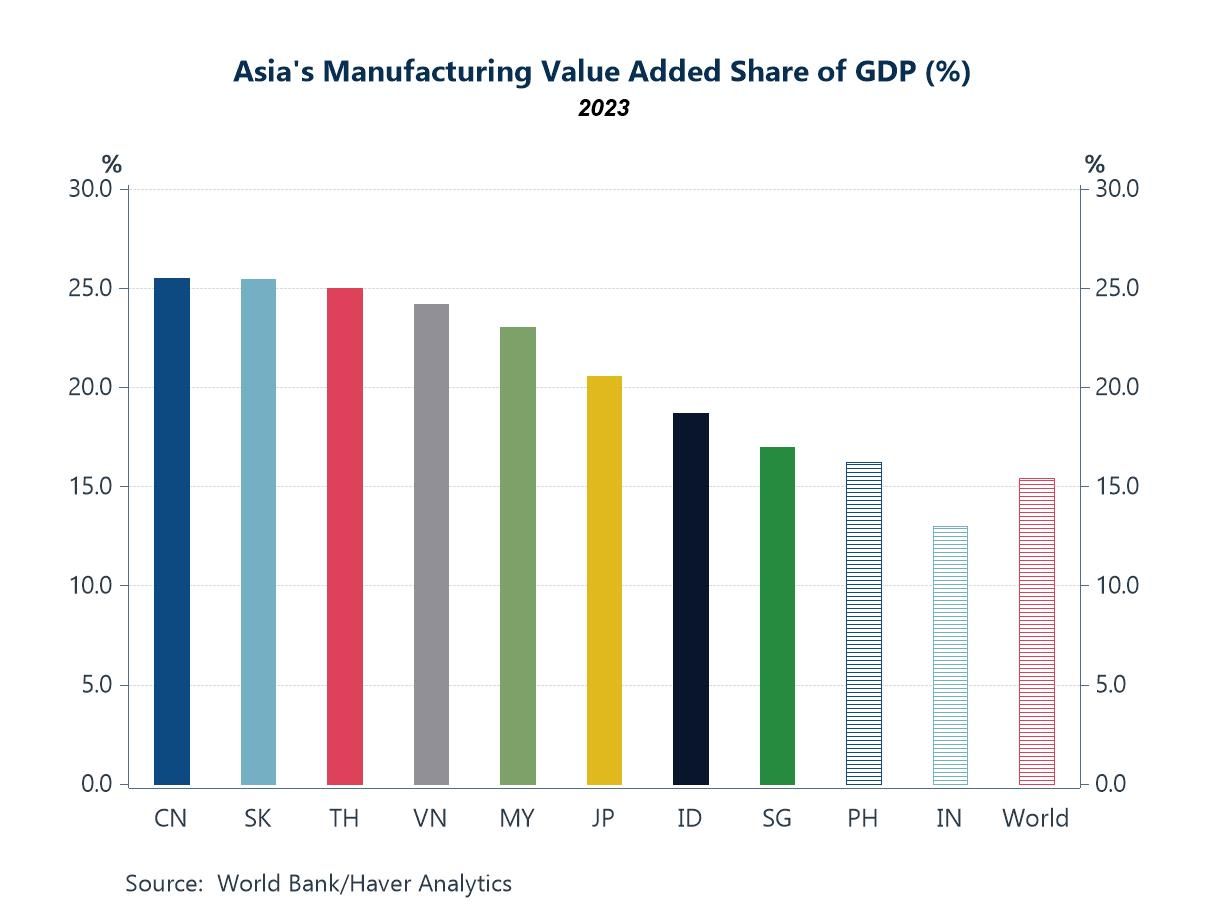
AI’s (potential) impact on Asia We now turn to the longer, second part of this week’s letter, where we examine AI’s potential impact on Asia. In contrast to last week’s discussion, the focus here is on Asia’s role as an end-user of AI, rather than its position within the global AI supply chain. While AI broadly promises substantial productivity gains if deeply embedded across economies, one sector where Asia may benefit disproportionately is manufacturing. This reflects the relatively high share of manufacturing value added in GDP across many Asian economies compared with the global average (chart 3). In particular, Asia stands to reap significant productivity gains through the widespread adoption of AI-powered robotics. Cost, however, remains a key consideration: relative to the overall cost of human labour, AI-enabled robots have yet to become unequivocally competitive once high upfront capital outlays are taken into account. That said, recent advances in humanoid, AI-enabled robots have demonstrated increasingly broad and sophisticated capabilities in replicating human tasks, including delicate and precision operations. Over time, this could meaningfully alleviate a persistent structural challenge facing many advanced Asian economies—ageing populations and the associated labour constraints.
Chart 3: Asia manufacturing value-added share of GDP
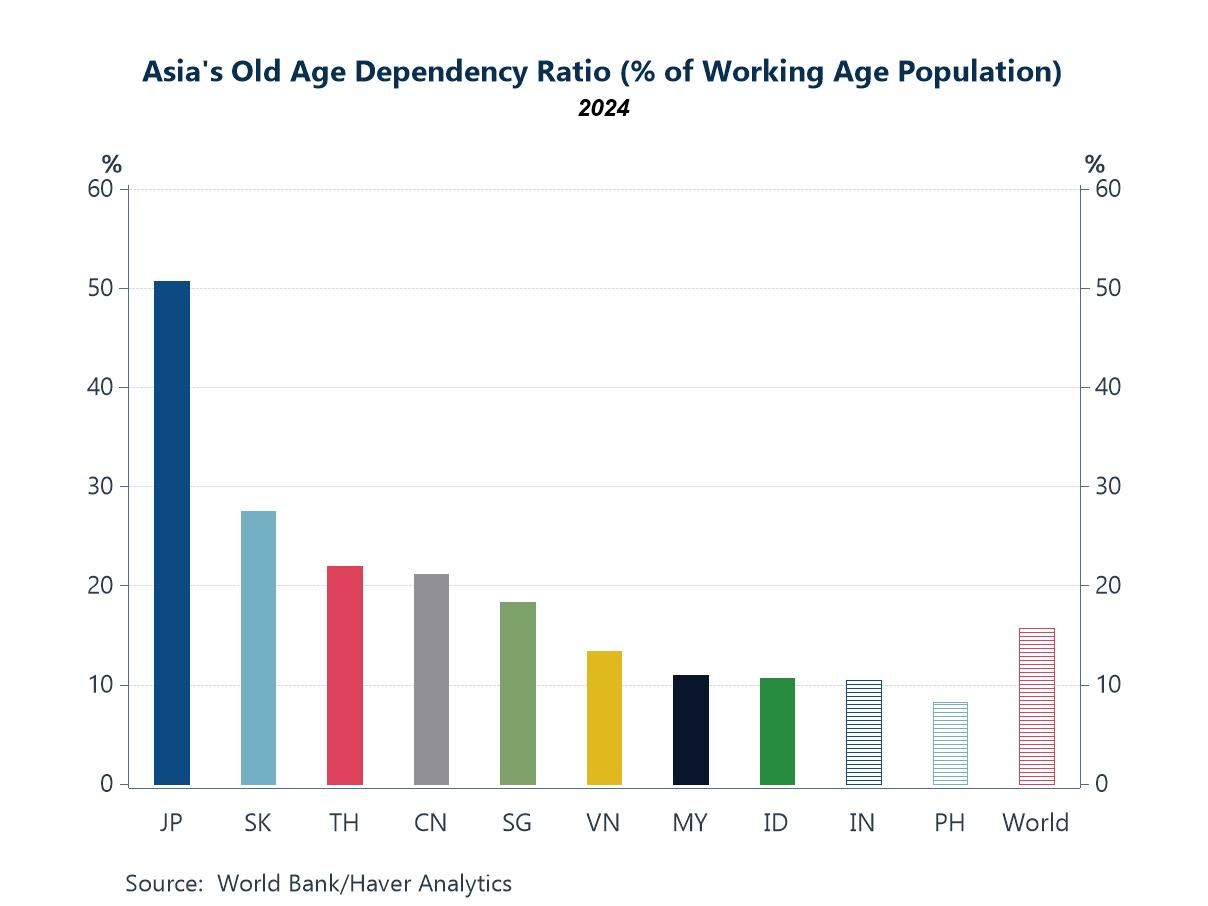
Digging deeper into the ageing population challenge faced by many Asian economies, another area where AI and robotics could play a meaningful role is healthcare. Ageing societies face a twin burden: a rising number of elderly individuals requiring care alongside a shrinking pool of working-age caregivers, absent offsetting labour inflows. One proxy for this imbalance is the old-age dependency, which, as shown in chart 4, is already relatively high in several Asian economies, including China, Japan, and South Korea. That said, adoption remains at a very early stage. Significant barriers to widespread deployment persist, including regulatory and ethical considerations, high implementation costs, and questions around the consistency, reliability, and safety of AI-enabled systems in delivering healthcare-related tasks.
Chart 4: Asia old age dependency ratio
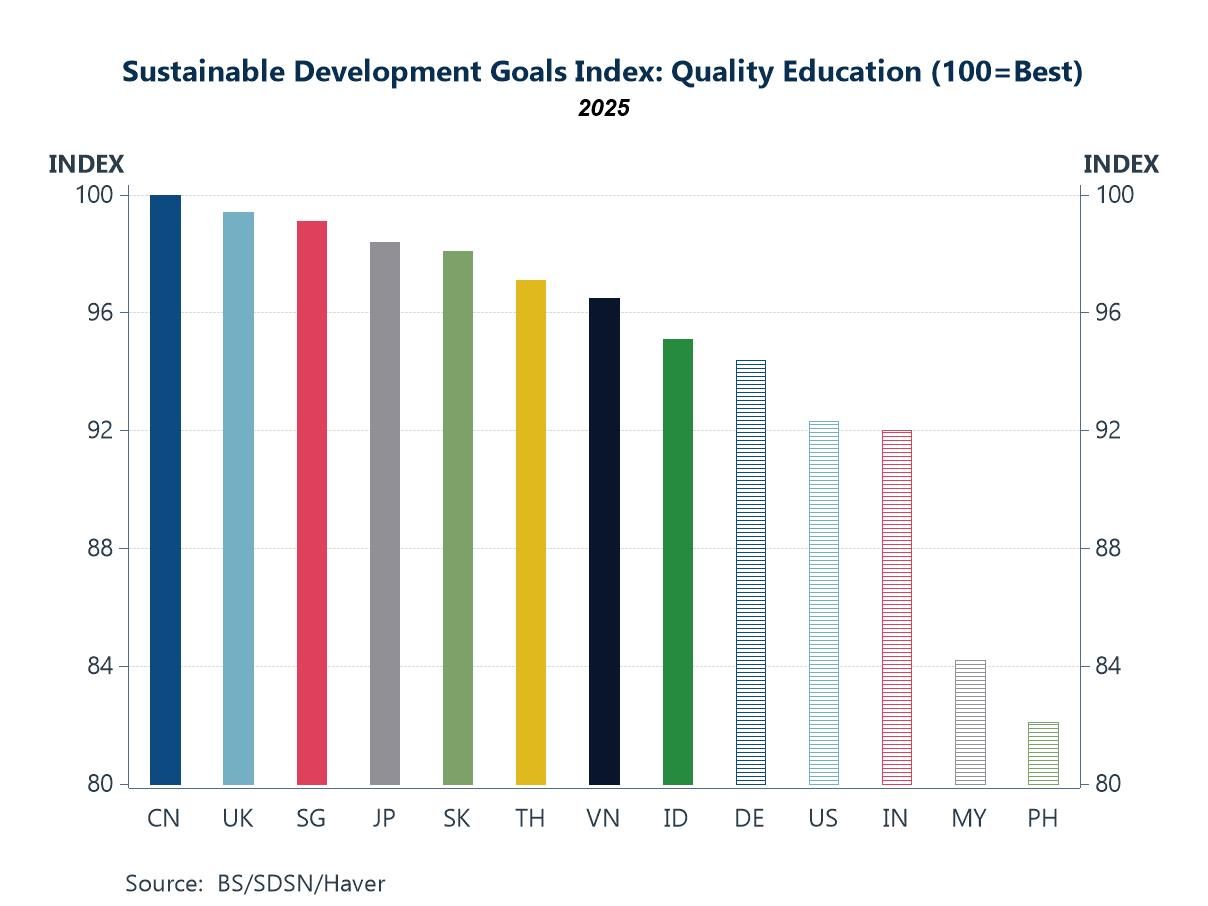
Asia’s challenges in AI adoption That said, the outlook is not entirely positive for Asia in the context of widespread AI adoption. As with previous waves of transformative technology, AI will inevitably render some jobs—at least in their current form—obsolete, even as it creates new roles and reshapes others. This implies that many Asian economies will need to navigate a significant structural adjustment in their labour markets, as certain types of work are displaced while demand for new skill sets emerges. How effectively Asia manages this transition will be critical in determining whether its economies move ahead of—or fall behind—the global shift towards AI. At present, and using education quality as a rough proxy, some Asian economies appear better positioned to manage this adjustment than others. As illustrated in chart 5, economies such as China, Singapore, Japan, and South Korea seem relatively well placed to absorb and adapt to the coming changes. That said, education quality is only an imperfect indicator. Other factors will also matter, including the capacity to rapidly retool and reskill the workforce, as well as the inclusiveness of the transition. Ensuring that lower-skilled and more vulnerable segments of society are not left behind will be an important determinant of the long-term economic and social outcomes of AI adoption across the region.
Chart 5: Sustainable Development Goals Index – Quality Education
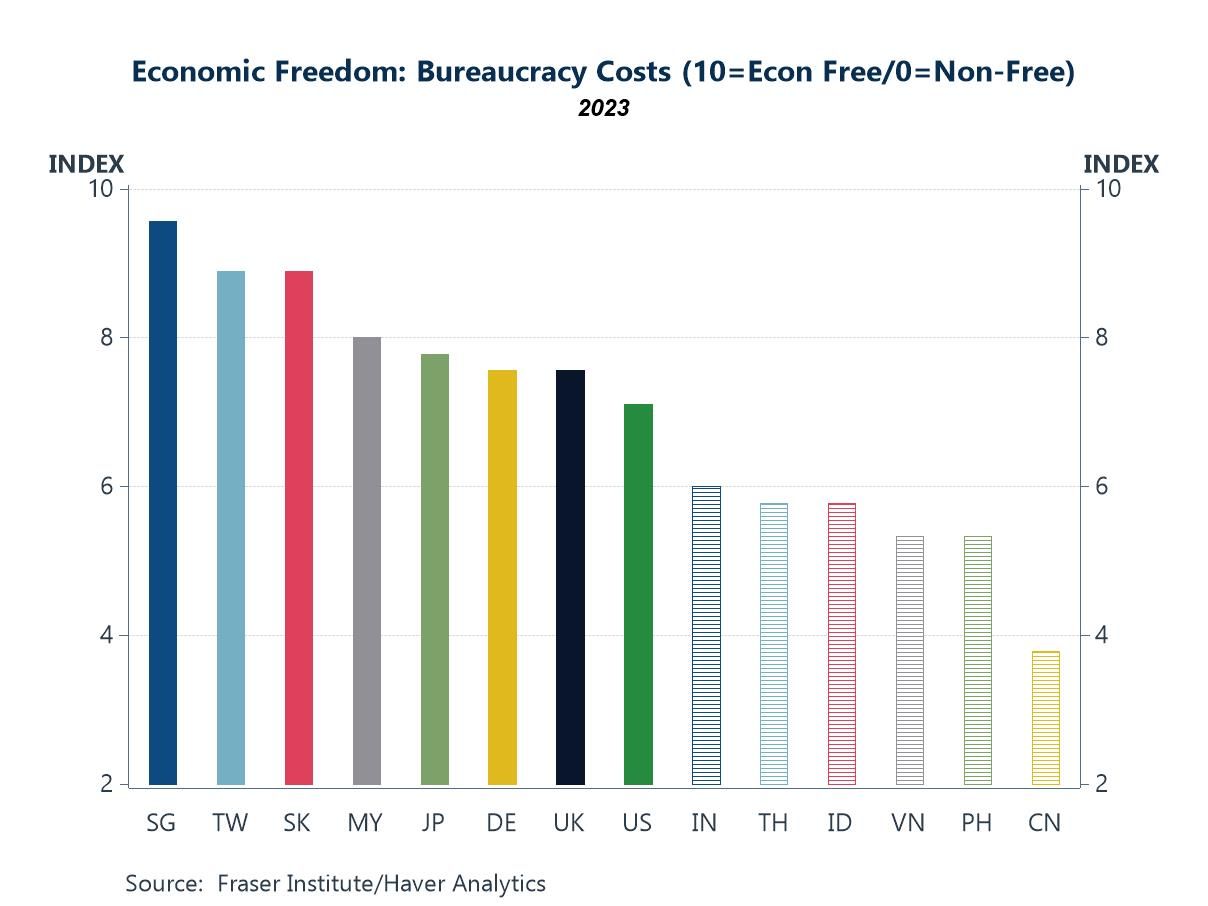
Another potential hurdle relates to bureaucratic costs, which—when elevated—can act as a meaningful source of friction in the adoption of new AI-driven technologies. On this front, some Asian economies stand out for having comparatively low bureaucratic burdens, notably Singapore, Taiwan, and South Korea, while others, such as Vietnam, the Philippines, and China, tend to lag (chart 6). That said, as with many broad-based indicators, this picture masks important nuances. Several of these economies have introduced industry-specific—particularly AI-focused—fast-tracking initiatives aimed at accelerating development within targeted domestic sectors. Even so, in an increasingly competitive and intensifying global race to adopt AI and capture its economic upside, we may see a growing tendency toward an “adopt first, regulate later” approach in the years ahead. This is likely to persist unless and until major incidents or heightened concerns emerge that materially slow the pace of AI adoption.
Chart 6: Bureaucracy costs in Asia vs. developed economies

Tian Yong Woon
AuthorMore in Author Profile »Tian Yong joined Haver Analytics as an Economist in 2023. Previously, Tian Yong worked as an Economist with Deutsche Bank, covering Emerging Asian economies while also writing on thematic issues within the broader Asia region. Prior to his work with Deutsche Bank, he worked as an Economic Analyst with the International Monetary Fund, where he contributed to Article IV consultations with Singapore and Malaysia, and to the regular surveillance of financial stability issues in the Asia Pacific region.
Tian Yong holds a Master of Science in Quantitative Finance from the Singapore Management University, a Master of Science in Analytics from the Georgia Institute of Technology, a Bachelor of Science in Mathematics from the Singapore University of Social Sciences, and a Bachelor of Science in Banking and Finance from the University of London.
More Economy in Brief