

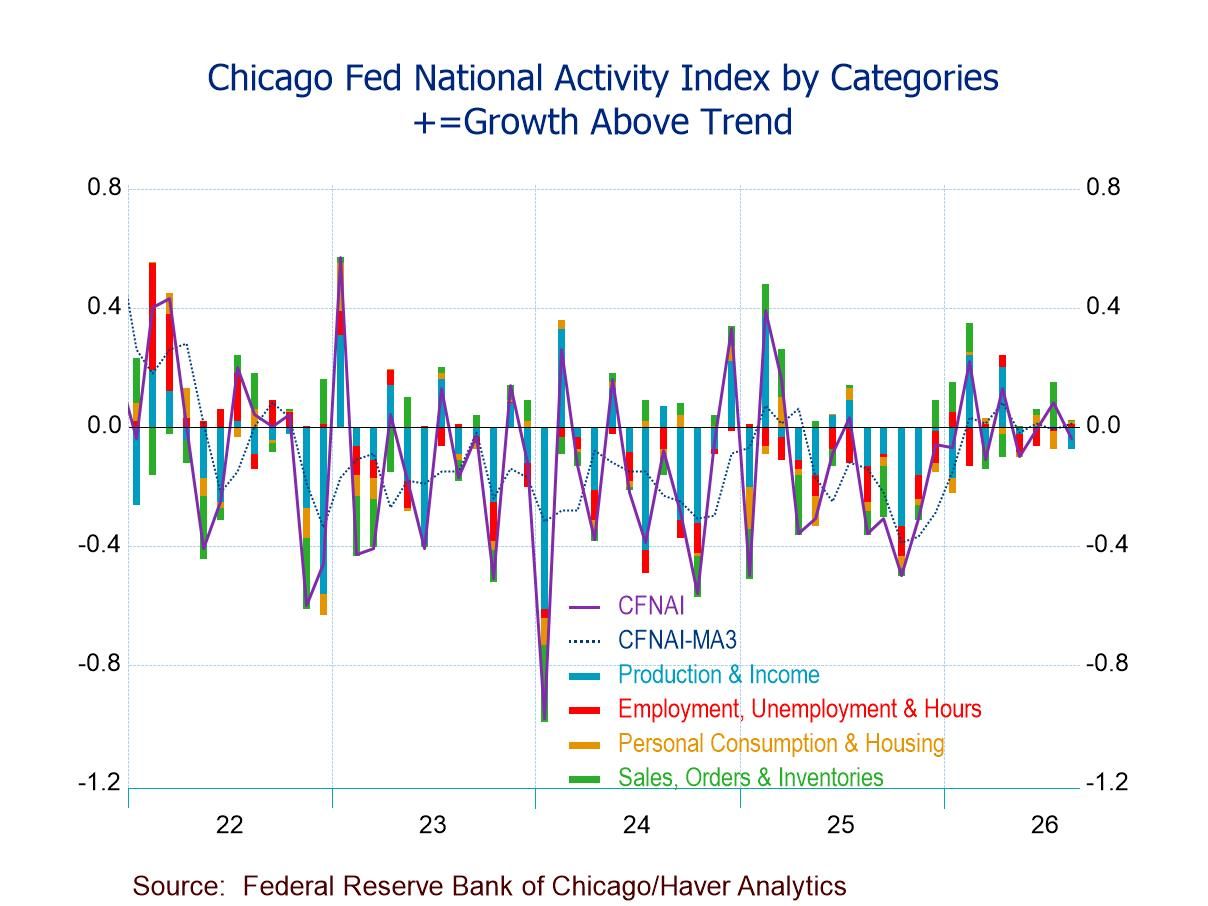
- CFNAI down to -0.04 in Aug., negative for the third time in four mths.
- Two of four CFNAI components down m/m; one makes a negative contribution.
- CFNAI-MA3 up to +0.01, second positive reading in three mths.; above -0.70 (recession signal).
- CFNAI Diffusion Index down to +0.02, still positive for the sixth straight mth.
Introducing
Winnie Tapasanun
in:Our Authors
Winnie Tapasanun has been working for Haver Analytics since 2013. She has 20+ years of working in the financial services industry. As Vice President and Economic Analyst at Globicus International, Inc., a New York-based company specializing in macroeconomics and financial markets, Winnie oversaw the company’s business operations, managed financial and economic data, and wrote daily reports on macroeconomics and financial markets. Prior to working at Globicus, she was Investment Promotion Officer at the New York Office of the Thailand Board of Investment (BOI) where she wrote monthly reports on the U.S. economic outlook, wrote reports on the outlook of key U.S. industries, and assisted investors on doing business and investment in Thailand. Prior to joining the BOI, she was Adjunct Professor teaching International Political Economy/International Relations at the City College of New York. Prior to her teaching experience at the CCNY, Winnie successfully completed internships at the United Nations. Winnie holds an MA Degree from Long Island University, New York. She also did graduate studies at Columbia University in the City of New York and doctoral requirements at the Graduate Center of the City University of New York. Her areas of specialization are international political economy, macroeconomics, financial markets, political economy, international relations, and business development/business strategy. Her regional specialization includes, but not limited to, Southeast Asia and East Asia. Winnie is bilingual in English and Thai with competency in French. She loves to travel (~30 countries) to better understand each country’s unique economy, fascinating culture and people as well as the global economy as a whole.

Publications by Winnie Tapasanun
 USA| Sep 21 2026
Chicago Fed National Activity Index Negative in August After July’s Upwardly Revised Positive Level
 USA| Sep 18 2026
U.S. Industrial Production Flat in August; Manufacturing IP Down
- August IP 0.0% (+1.4% y/y) after four consecutive m/m increases, remaining on an upward trend.
- Manufacturing -0.3% (+0.9% y/y), first m/m decline since Dec., w/ durables -0.5% and nondurables 0.0%.
- Selected high-tech 0.0% after four straight m/m rises; motor vehicles -1.2%, second successive m/m drop.
- Utilities +1.8% (+6.2% y/y), fourth rise in five mths., led by a 2.1% gain in electric utilities output.
- Mining +0.1% (+0.3% y/y), up for the fourth time in five mths.
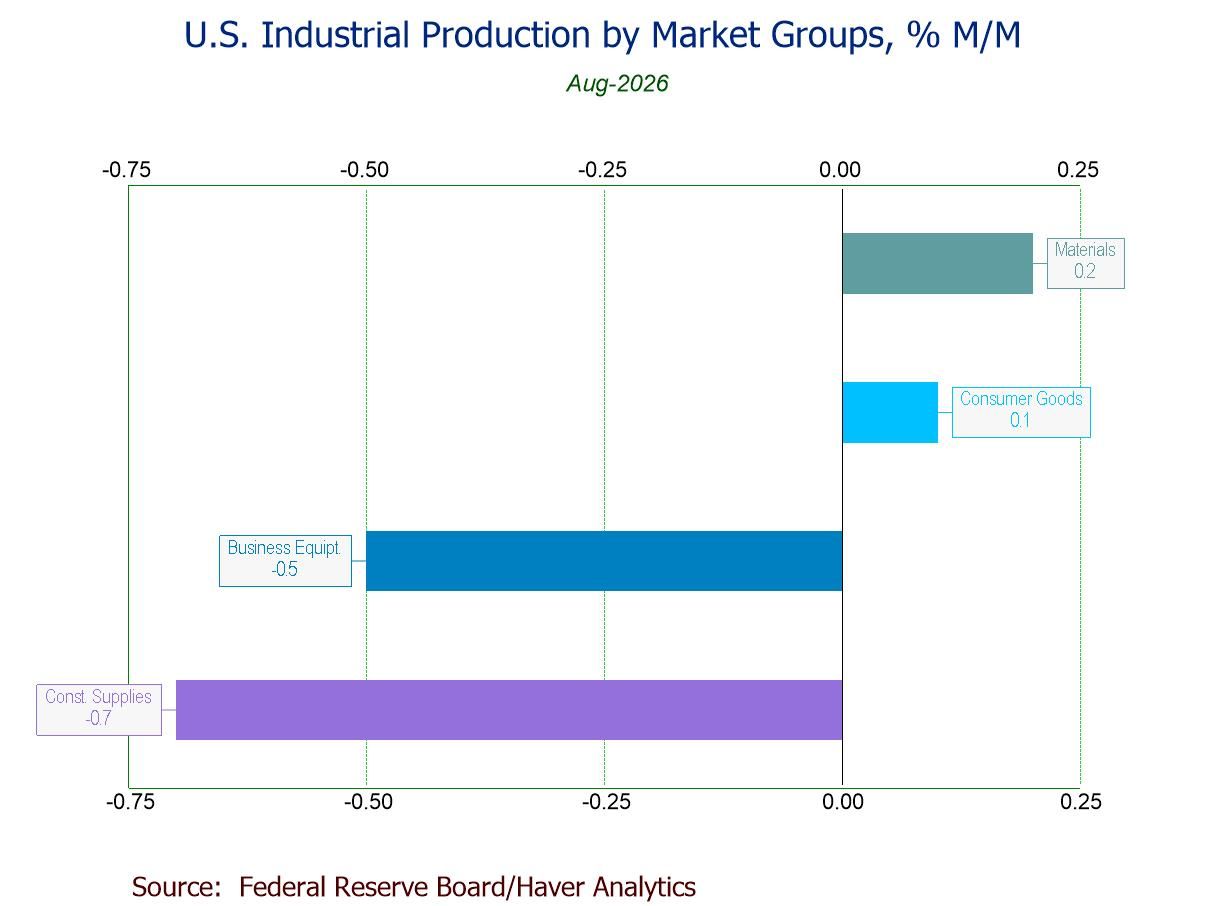
- Key categories in market groups post mixed results.
- Capacity utilization steady at 76.3%, highest since July ’25; mfg. capacity utilization down to 75.7%, lowest since March.
 USA| Sep 16 2026
U.S. Retail Sales Rebound in August, Exceeding Forecasts
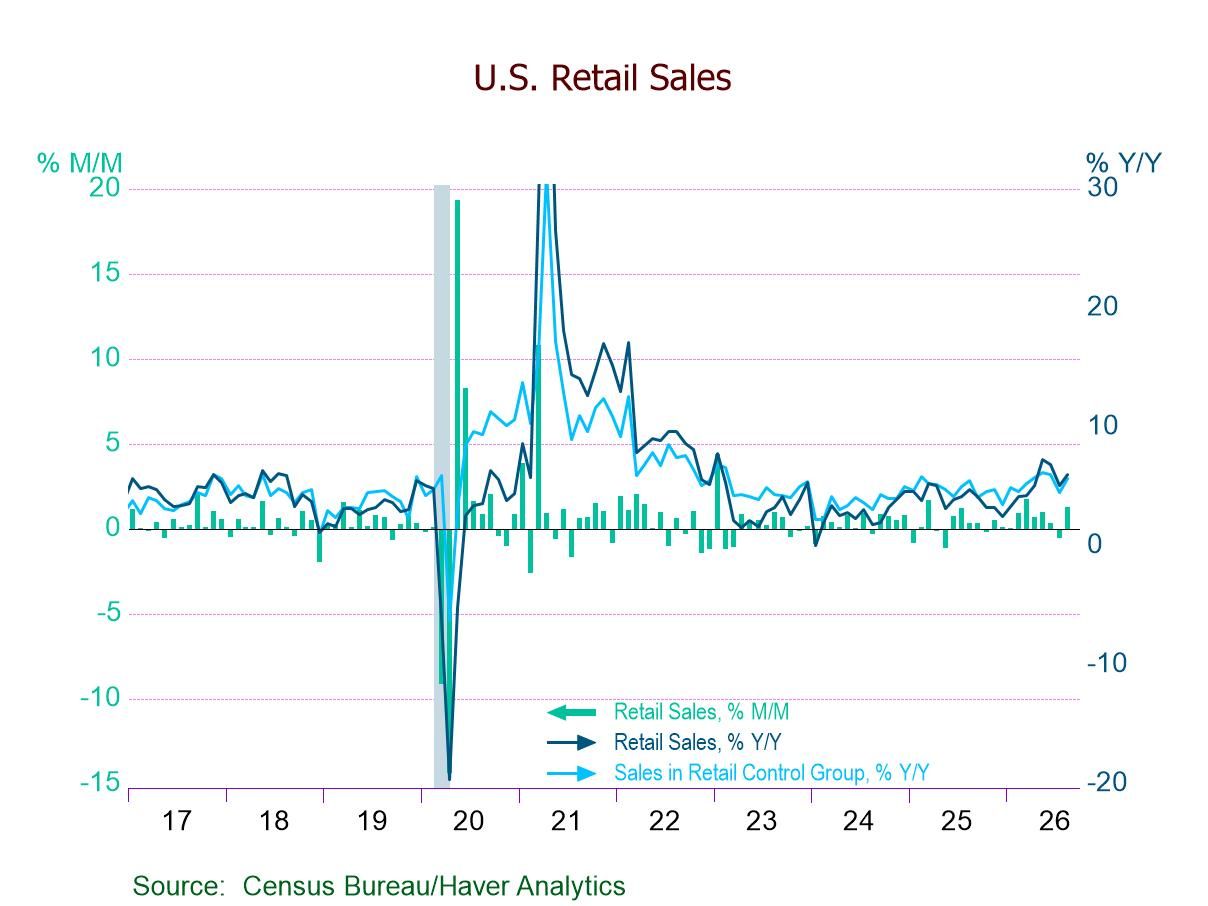
- Total retail sales +1.2% (+6.0% y/y) in August; sixth m/m increase in seven mths.
- Ex-auto sales +1.4% (+6.9% y/y), first m/m rise since May; auto sales +0.6% (+2.1% y/y), third rise in four mths.
- Ex-gas sales +1.1% (+4.9% y/y) and ex-auto & gas sales +1.2% (+5.6% y/y); both up m/m from Jan. through Aug. except July.
- Retail control group +1.4% (+5.6% y/y), seventh m/m gain in eight mths., pointing to solid underlying consumer demand in Q3 ’26.
- Gains m/m: gasoline stations (+3.1%), nonstore sales (+2.6%), misc. stores (+1.9%), electronics stores (+1.6%).
- Declines m/m: department stores (-0.8%), building materials & garden equipt. stores (-0.2%).
 USA| Sep 15 2026
U.S. Empire State Manufacturing Index Cools Sharply in September
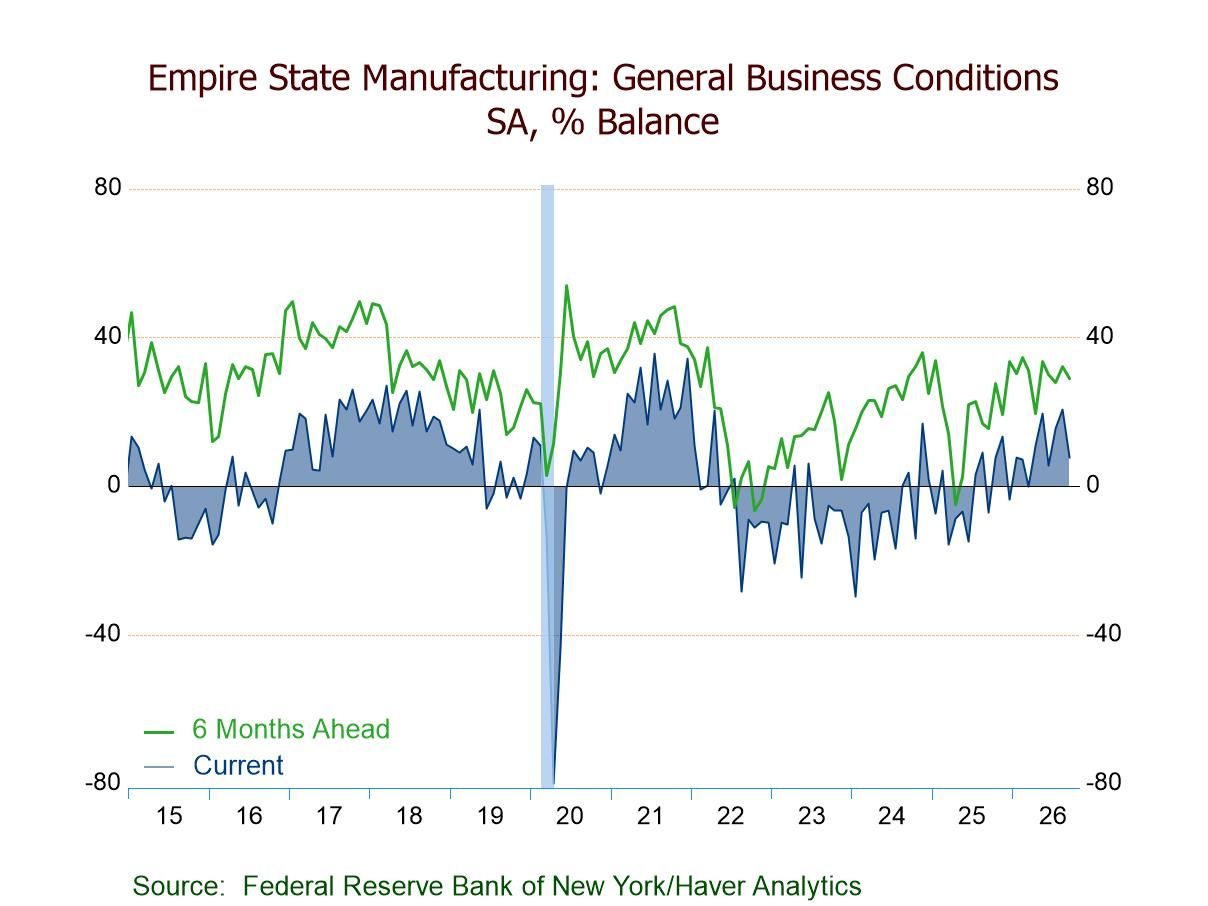
- General Business Conditions Index down 13.0 pts. to 7.6 in Sept.; sixth straight expansion.
- New orders (2.0), down 15.3 pts.; weakest level since Dec. ’25, still indicating expansion.
- Shipments (-3.2), down 14.9 pts.; first negative reading since March.
- Unfilled orders (5.9), down 9.6 pts. but staying positive; inventories (8.9), highest since May.
- Employment (10.6), up 1.3 pts.; eighth consecutive expansion.
- Prices paid (63.1), highest since July '22; prices received (28.1), a three-month high.
- Firms still optimistic: Future Business Conditions Index down to a still-expansionary 29.0; future prices paid rising to 67.3, highest since June ’22.
 USA| Sep 11 2026
U.S. Consumer Price Inflation Steady in August at 3.4% Y/Y
- Monthly gains in headline CPI (0.4%) & core CPI (0.3%) advance.
- Year-over-year rates unchanged for headline CPI (3.4%) and slightly down for core CPI (2.4%), both remaining above the Fed’s target.
- Energy prices up 2.1% m/m, w/ the y/y rate accelerating to 16.3%, highest since May.
- Services prices up 0.3% m/m, w/ the y/y rate steady at 3.0%.
- Shelter prices up 0.3% m/m, w/ the y/y rate easing to 3.0% from 3.2%.
- Supercore CPI up 0.5%, w/ the y/y rate accelerating to 3.0% from 2.8%.
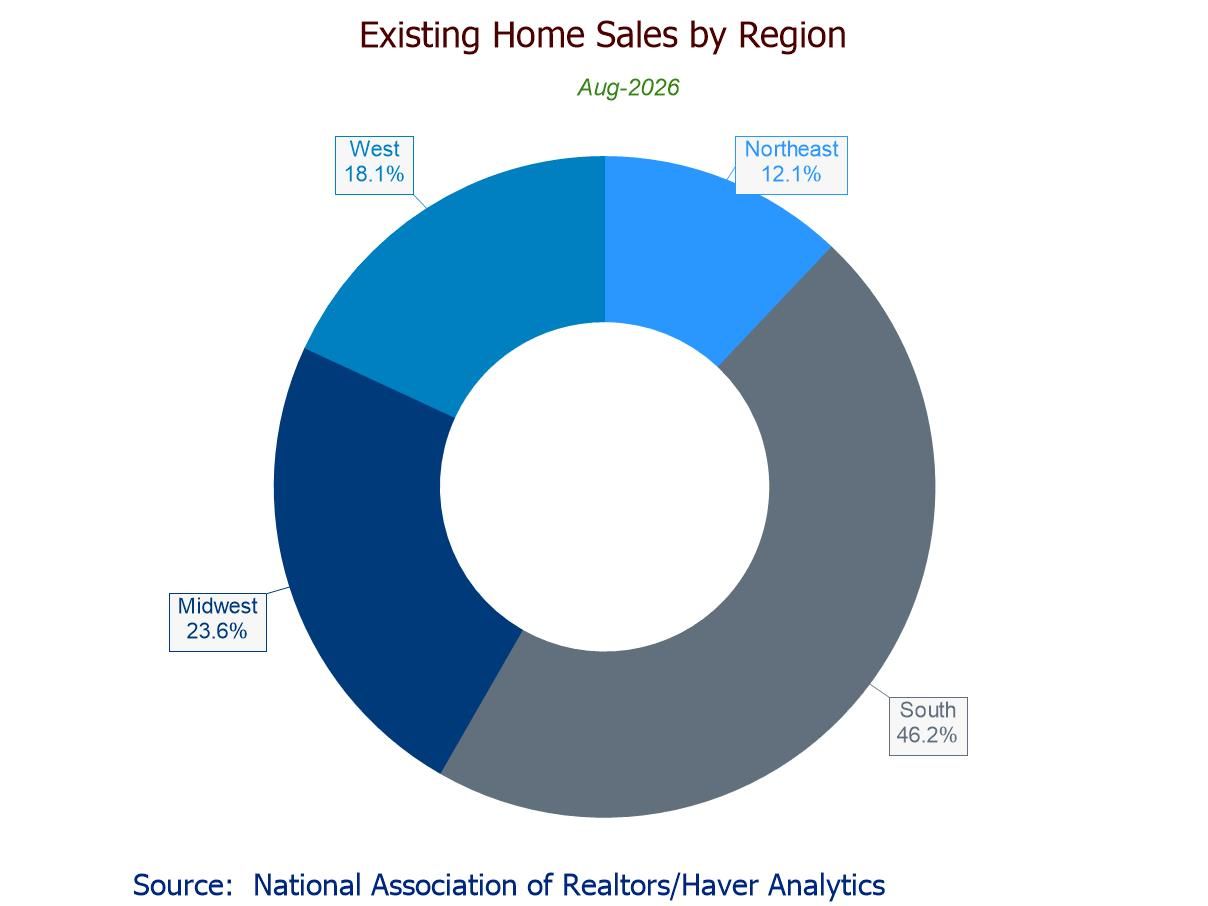
- August sales -2.0% m/m to 3.98 mil., third straight m/m fall; -1.2% y/y, first y/y drop since March.
- Sales m/m down in the Northeast (-4.0%), Midwest (-3.1%), and South (-1.6%); flat in the West.
- Sales y/y down in three regions; unchanged in the South.
- Median sales price -1.7% (+1.6% y/y) to $429,100, a four-month low.
- Unsold inventory +3.2% (+5.9% y/y) to 1.62 mil. units, highest level since Nov. ’19; 4.9 months' supply, highest since Nov. ’15.
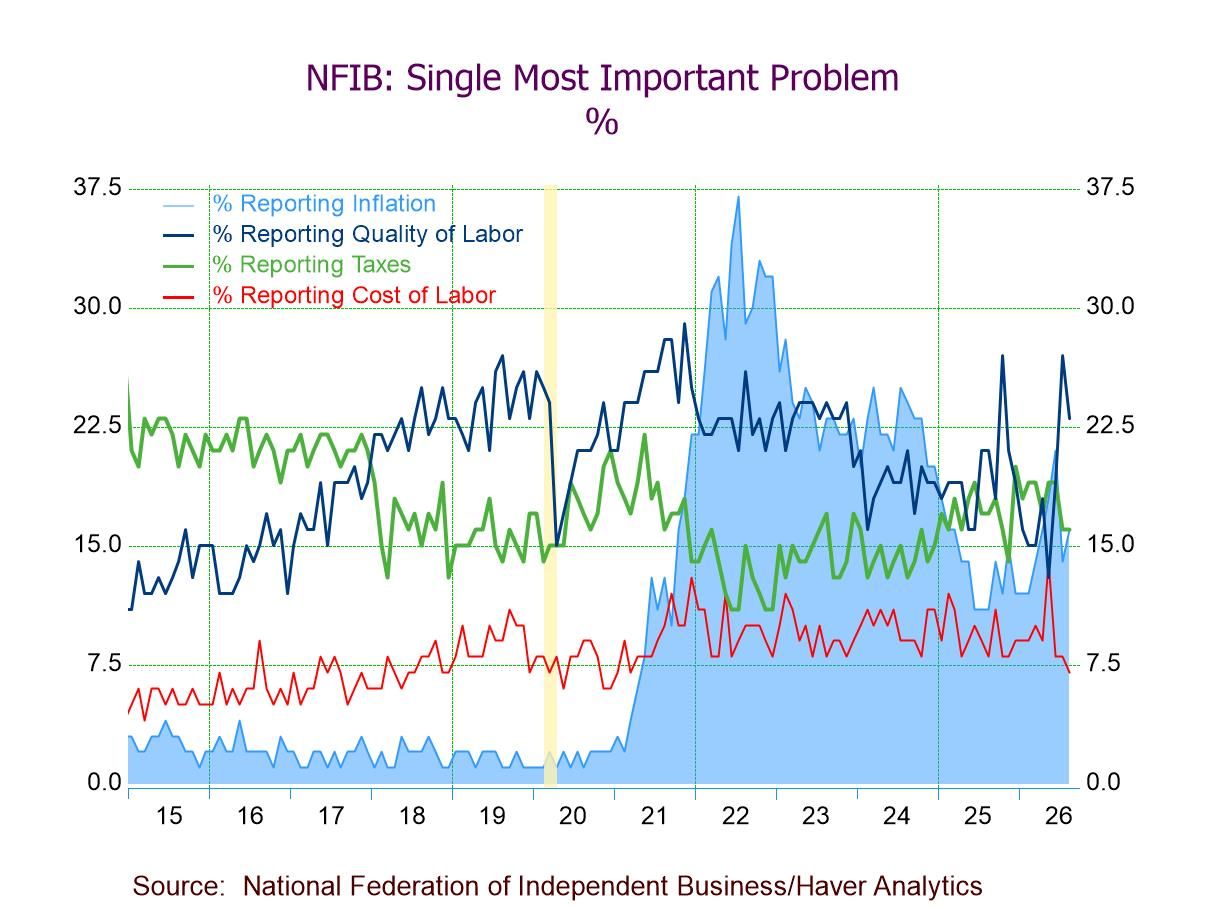
- NFIB Small Business Optimism Idx down 1.1 pts. to 98.7 in Aug., still above its 52-year avg. of 98.0.
- Uncertainty Idx down 2 pts. to 89, remaining above the historical avg. of 68.
- Expectations for economy down 5 pts. to 10%, lowest since May.
- Hiring plans down 3 pts. to 17%; earnings trends down 3 pts. to -19%.
- Expected real sales down 1 pt. to 6%, a three-month low.
- Plans to expand business unchanged at 12%, highest since Feb.
- Firms raising avg. selling prices steady at 31%, lowest since April.
- Top three business concerns: labor quality (23%), taxes (16%), and inflation (16%).
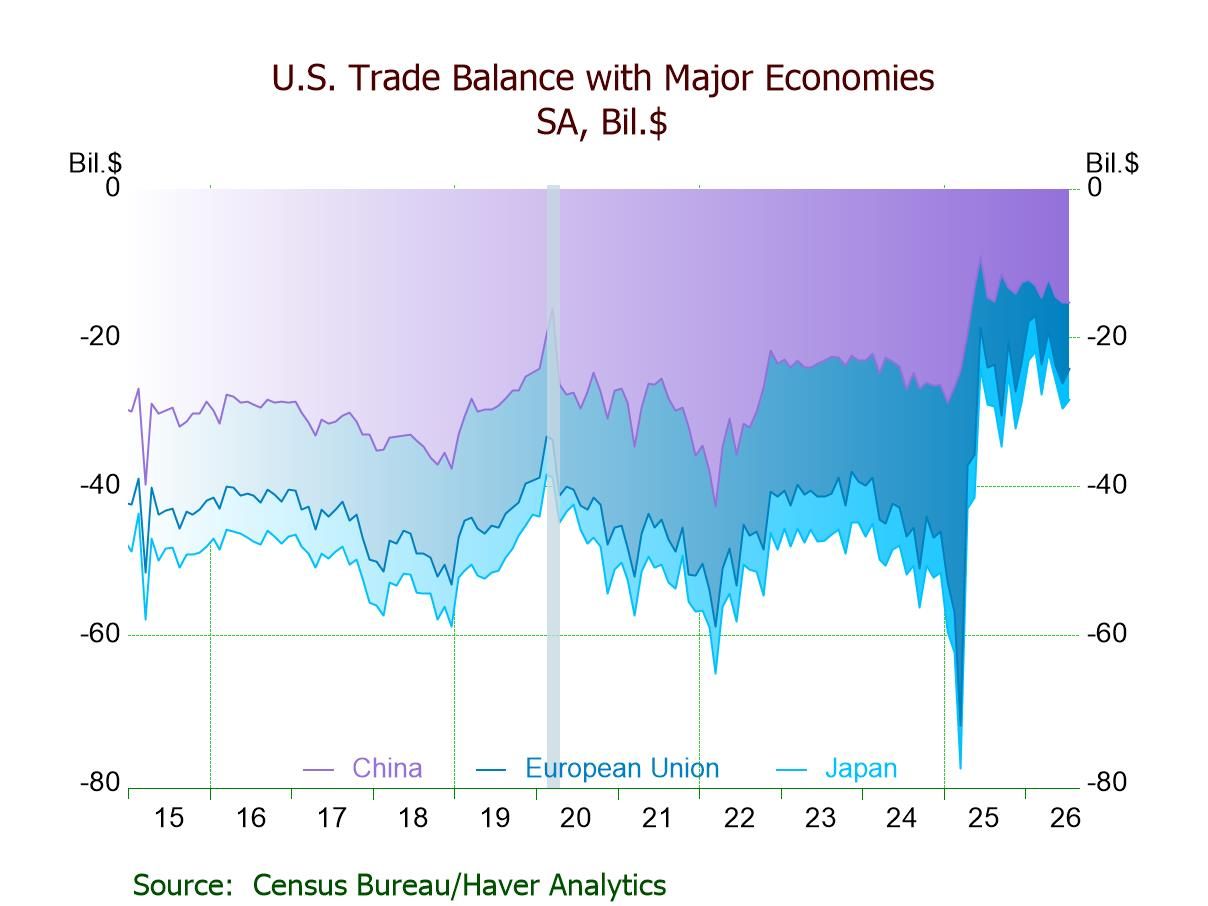
- Deficit: $88.6 bil. in July, up from $71.2 bil. in June, reflecting $119.6 bil. goods deficit & $31.0 bil. services surplus.
- Exports -2.1%, third straight m/m decline, driven by a plunge in nonmonetary gold exports.
- Imports +2.8%, fifth m/m increase in six months, boosted by a rise in capital goods imports.
- Real goods trade deficit widens to $106.4 bil., largest since Mar. ’25.
- Goods trade deficits w/ China down to a still-high $15.2 bil., w/ EU down to a 3-month low, and w/ Japan up to a 5-month high.
 USA| Sep 02 2026
U.S. Factory Orders Rebound More Than Expected in July on Strong Nondefense Aircraft Orders
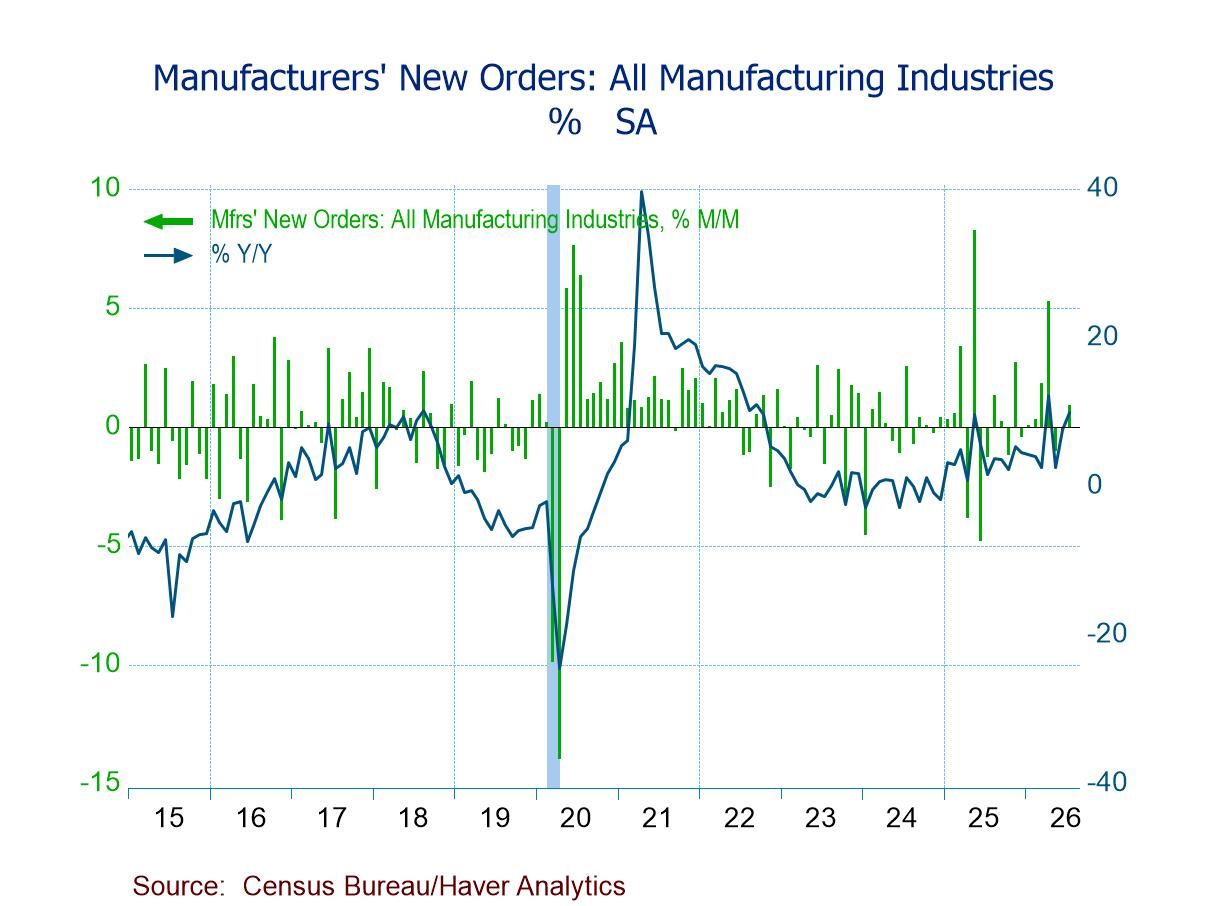
- Factory orders +0.9% (+9.9% y/y) in July, first m/m increase since Apr.; 15.2% above the Jan. ’24 low.
- Durable goods orders +1.1%, fourth m/m rise in five mths.; nondurable goods orders +0.7% and shipments +0.8%, seventh m/m gains in eight mths.
- Transportation orders +2.3%, led by a 12.7% jump in nondefense aircraft orders.
- Unfilled orders +0.6%, 12th straight m/m increase.
- Inventories +0.4%, ninth consecutive m/m rise.
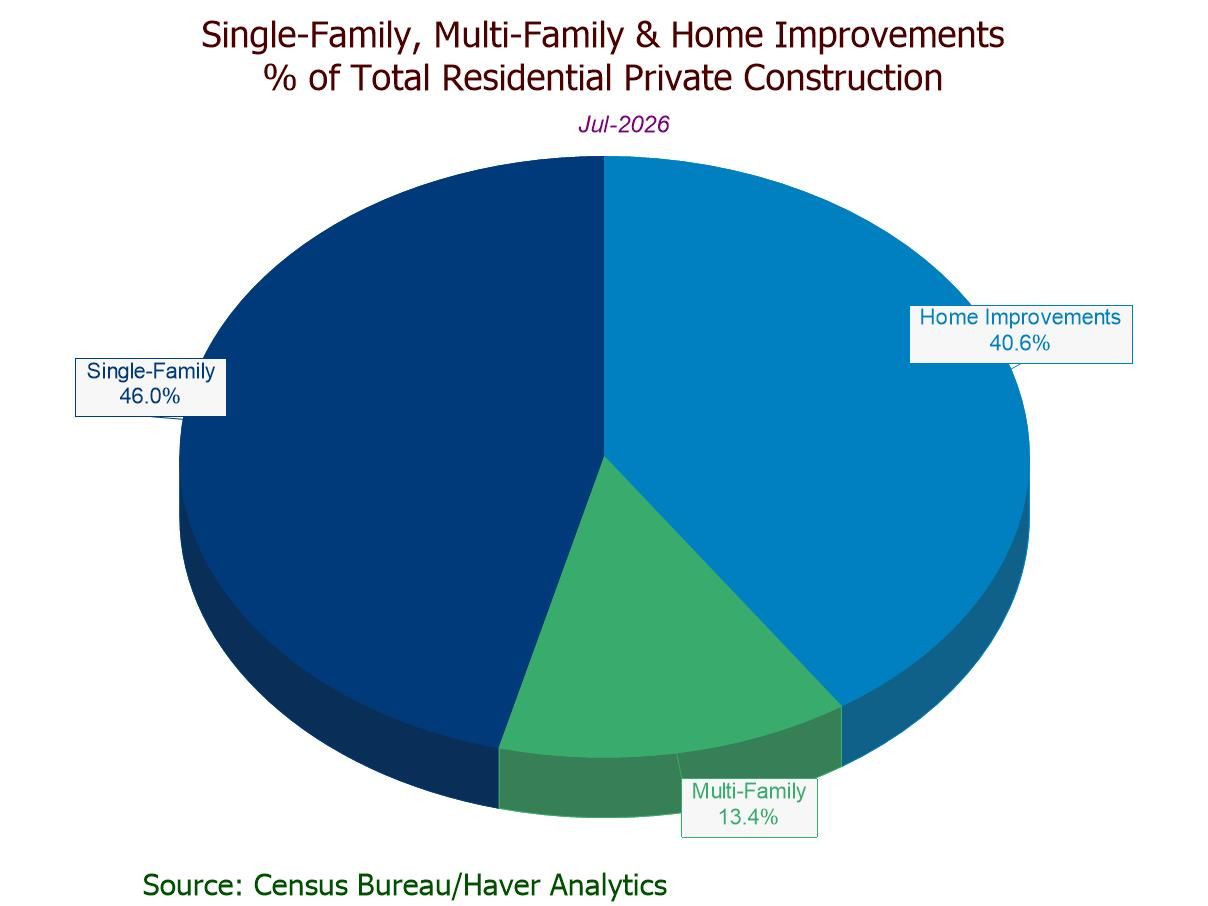
- Headline -0.5% m/m in July, first decrease since Apr.; -3.8% y/y, 12th straight y/y drop.
- Residential private construction -1.3% m/m, driven by a 3.2% fall in single-family building.
- Nonresidential private construction +0.4% m/m, third consecutive monthly gain, boosted by data center office construction.
- Public construction -0.2% m/m, led by a 0.4% decline in residential public building.
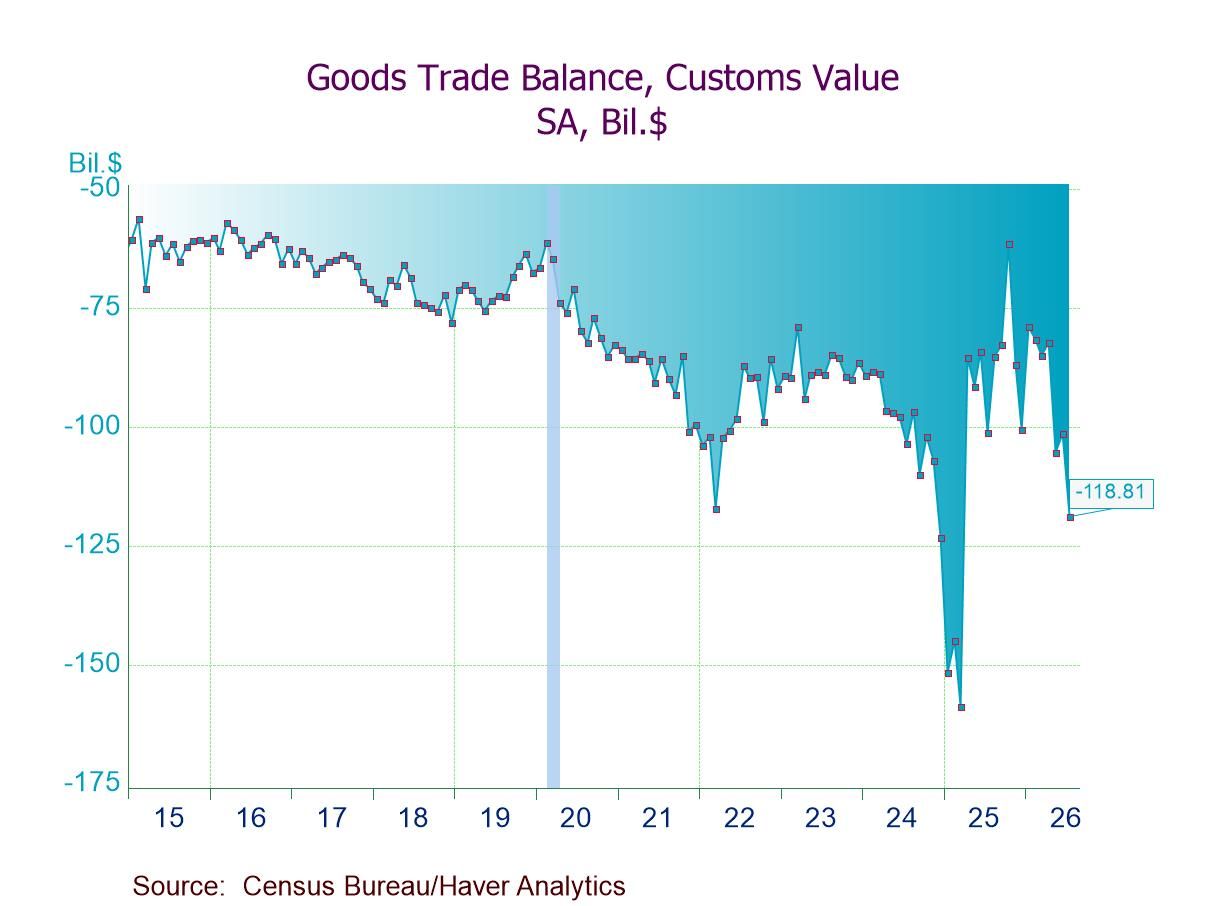
- Deficit: $118.8 bil. in July, up $17.4 bil. (+17.2%) from June’s $101.4 bil.
- Exports -2.9%, third straight m/m decline to a six-month low, driven by an 11.2% drop in industrial supplies & materials exports.
- Imports +3.7%, fifth rise in six mths. to highest level since Mar. ’25, led by an 11.3% rebound in nonauto capital goods imports.
 USA| Aug 25 2026
U.S. New Home Sales Hit a Six-Month Low in July
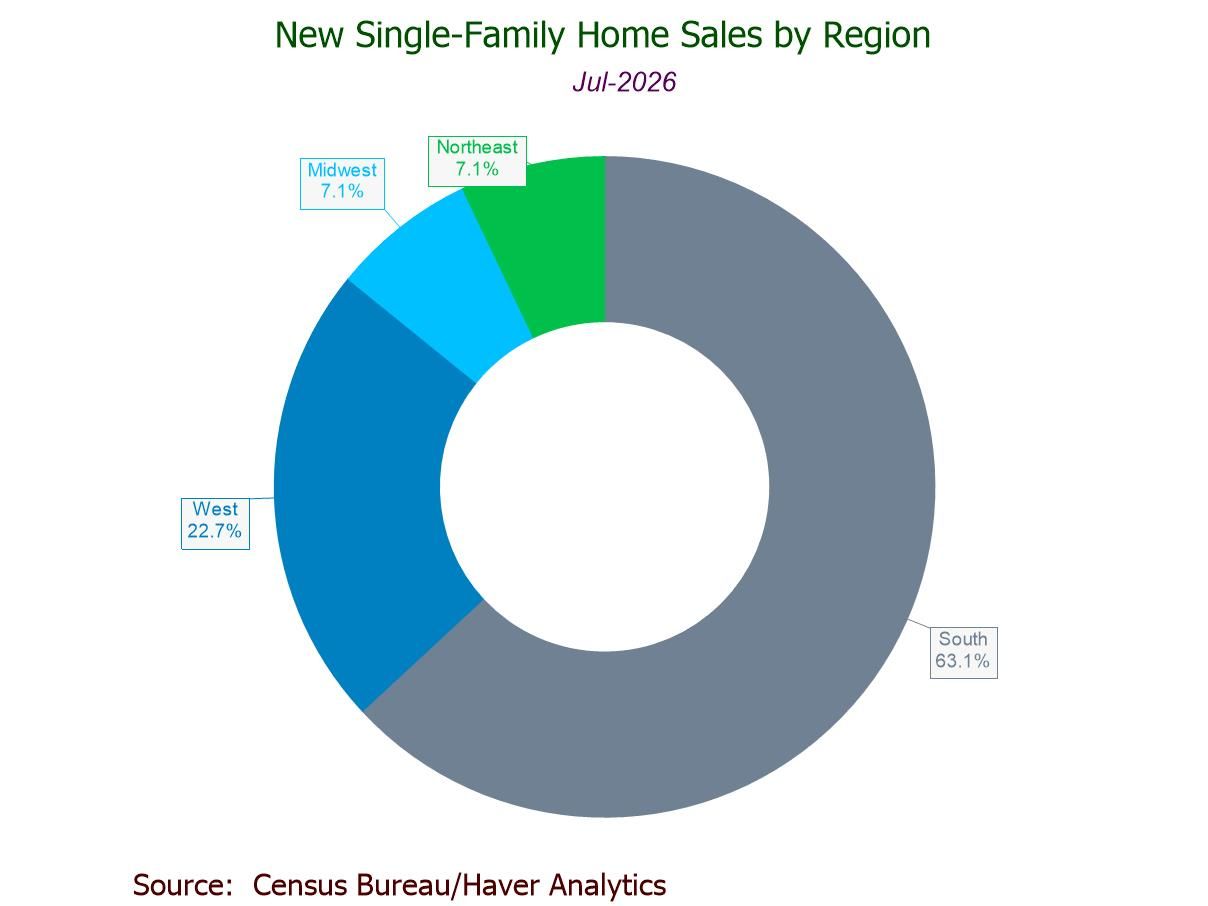
- Sales -10.5% m/m (-6.3% y/y) to 607,000 in July; down 19.8% from a November high.
- Sales m/m down in the Midwest (-42.7%) and South (-13.0%); up in the Northeast (+30.3%) and West (+6.2%).
- Sales y/y plunging in the Midwest (-50.6%); surging in the Northeast (+95.5%).
- Median sales price -2.3% m/m to $393,800, a five-year low; avg. price +4.1% m/m to $508,800.
- Unsold inventory +1.9% m/m (-1.6% y/y) to 488,000, highest since Oct. '25.
- Months' supply up to 9.6 mths., a six-month high.
- of15Go to 1 page