US International Trade in June: Searching for Normal
Summary
- Both exports and imports cool after strong performances in early 2026.
- The US trade balance is moving sideways within a wide range.
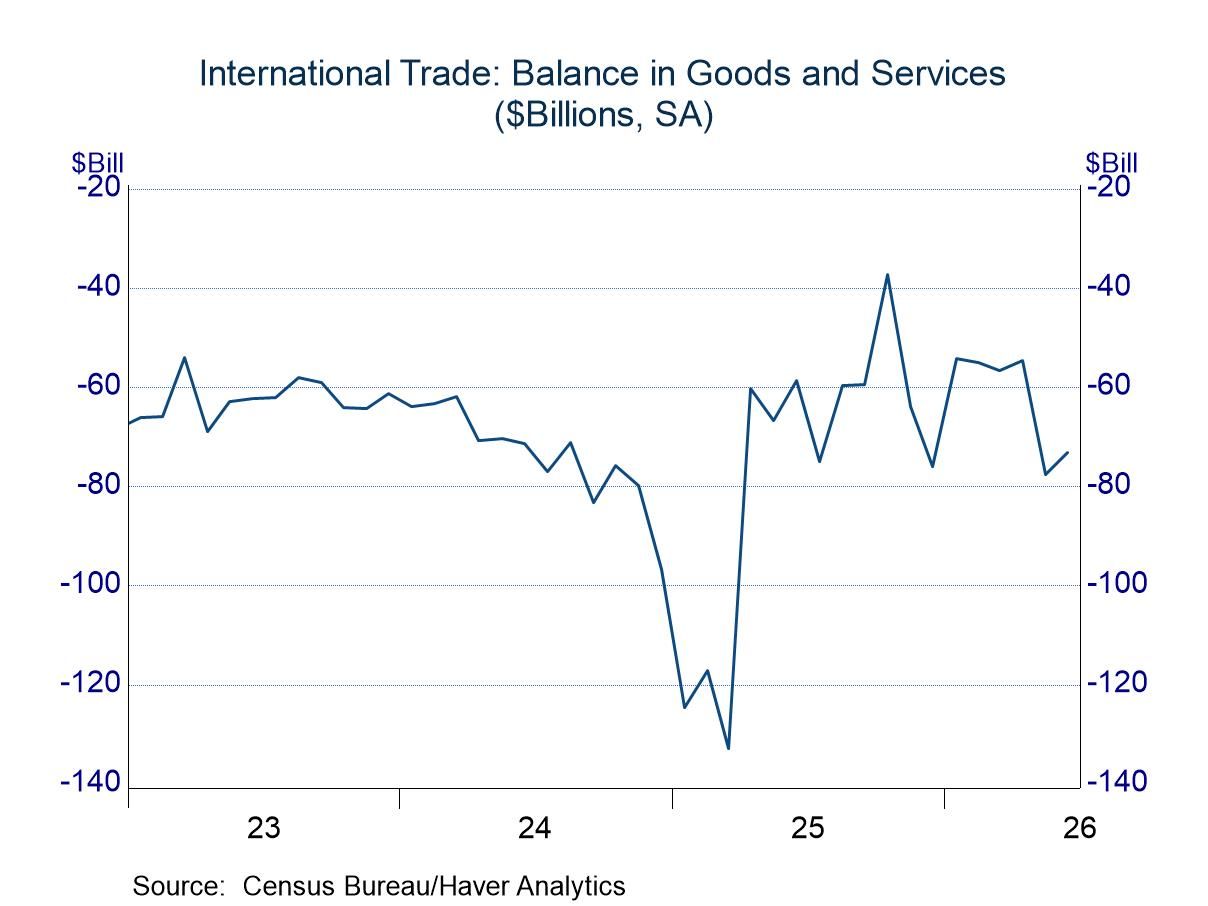
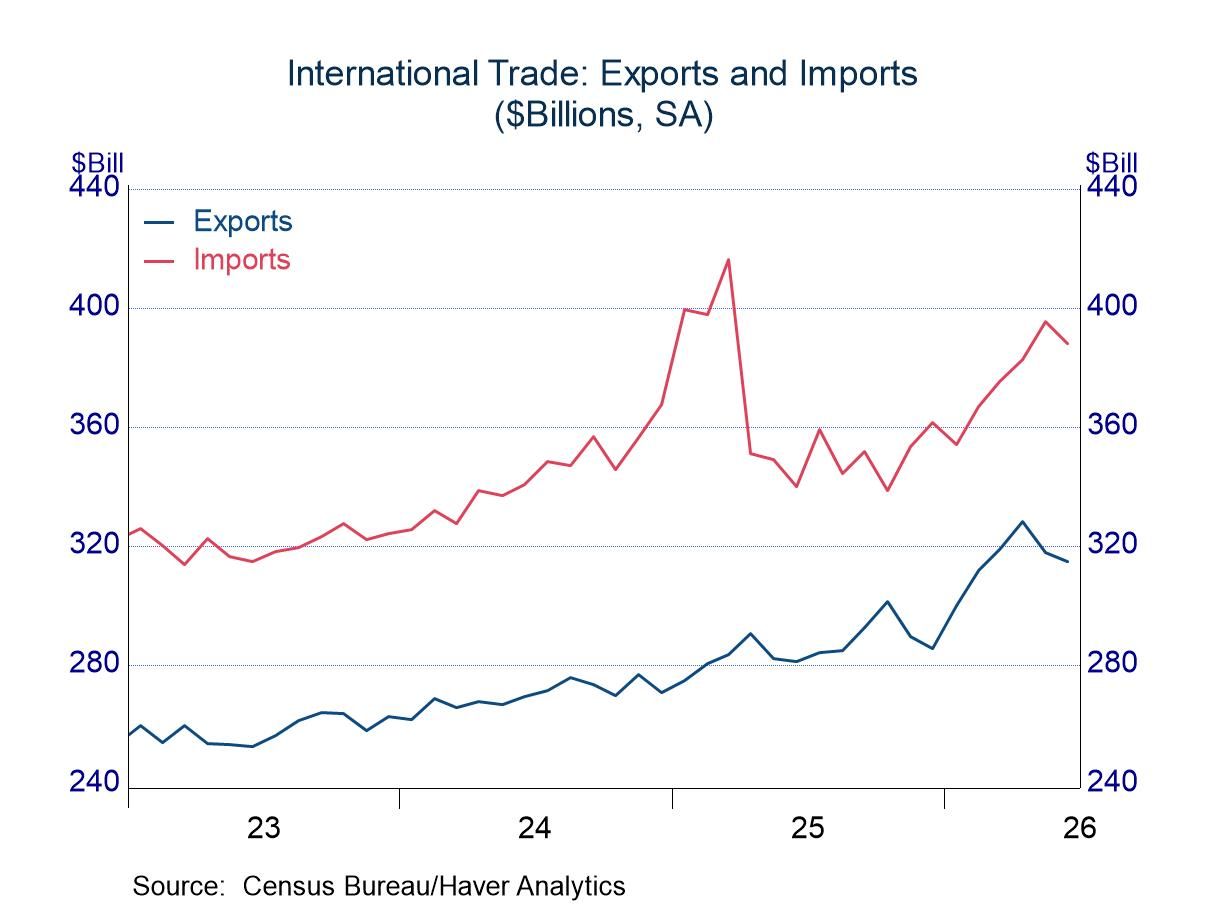
The US trade balance improved slightly in June, as a drop in imports exceeded a dip in exports. The declines represented partial offsets to strong performances in the early months of the year. Exports posted average monthly gains of 3.6% (not annualized) in the first four months of 2026 before giving back a good portion of the gains in May and June (off 3.2% and 0.9%, respectively). Imports rose an average of 2.8% per month from February to May, with these gains sandwiched between drops of 2.0% in January and 1.8% in June.
The ups and downs in exports and imports have left a largely flat trend in the US trade balance, with the monthly deficit in line with the results seen before the tariff-induced noise in 2025. However, results this year have moved within a noticeably wider range, suggesting that the frequently changing tariff regime is generating noise in the monthly trade flows.
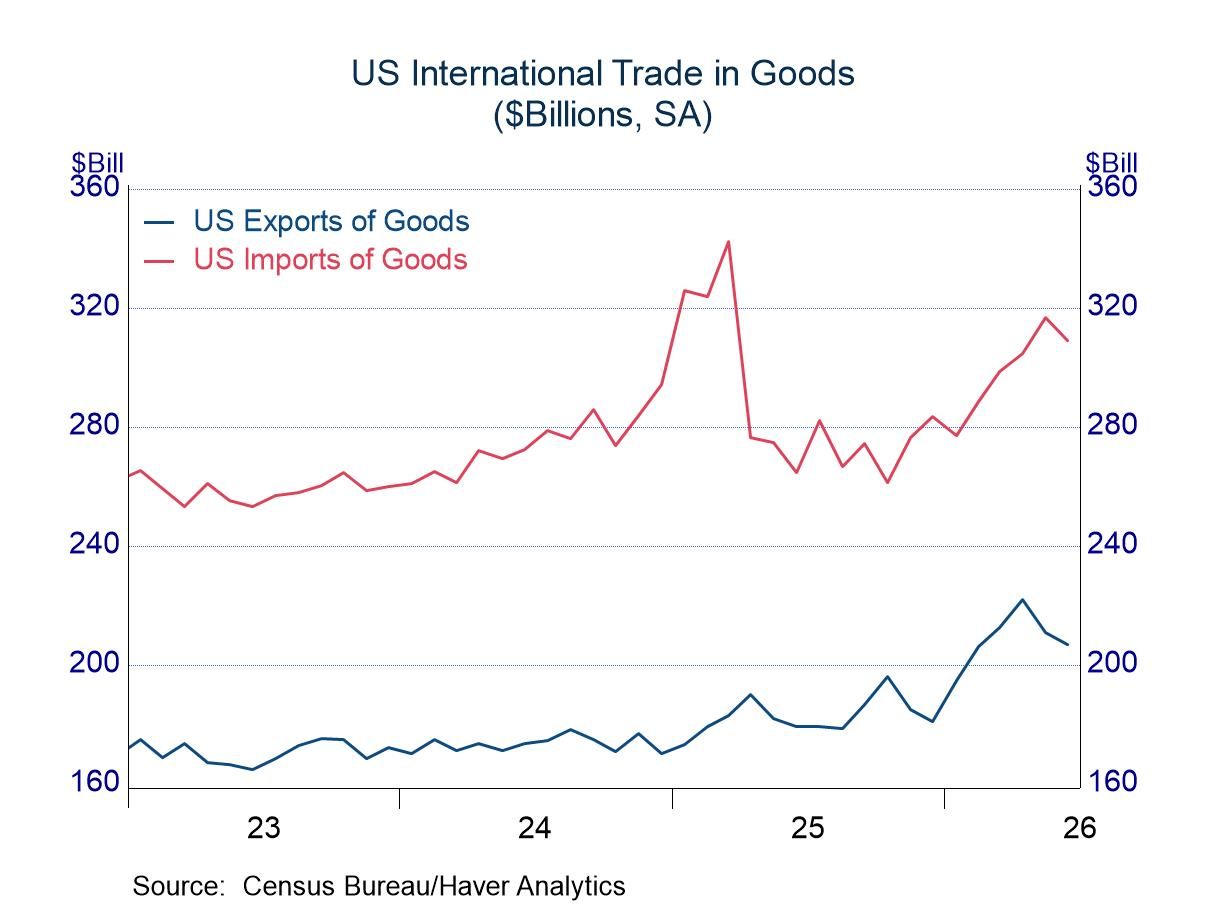
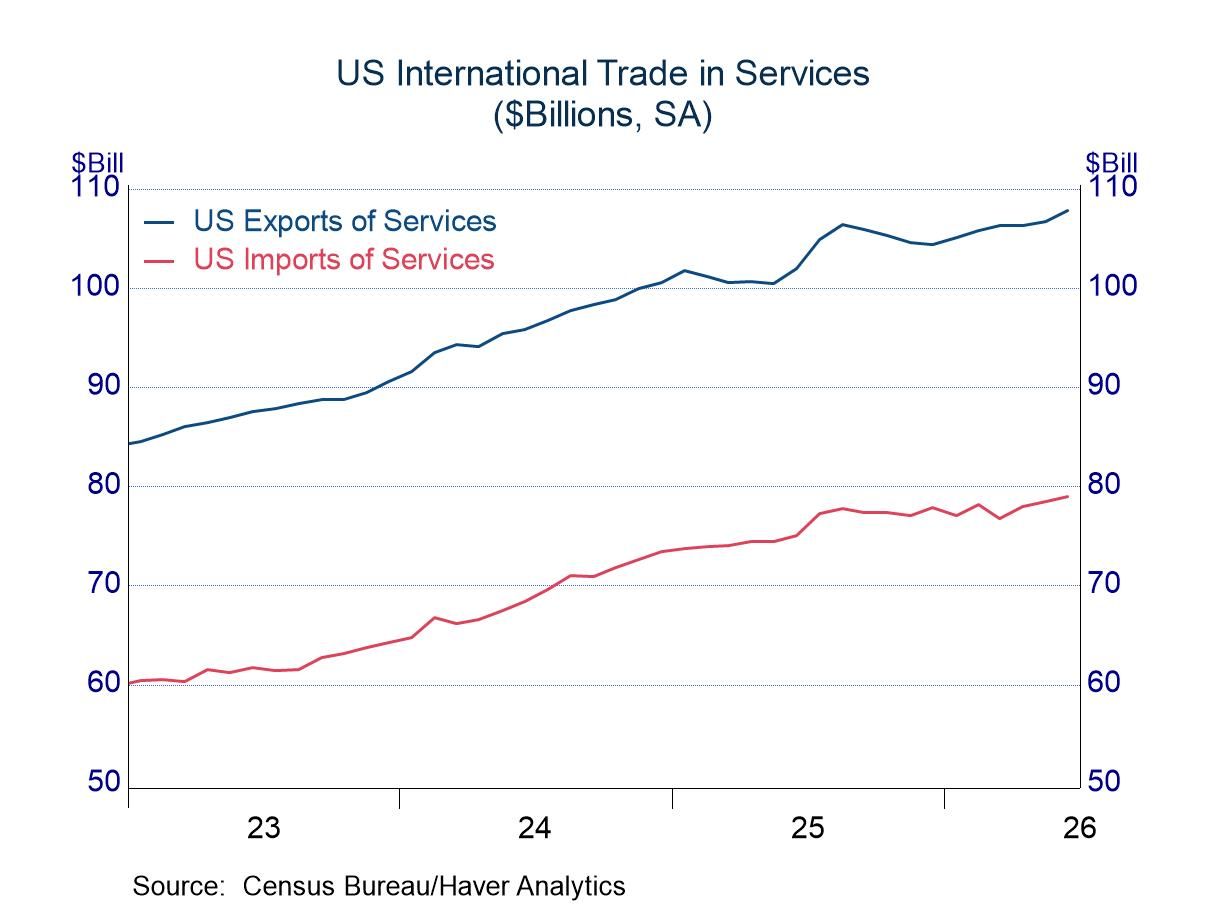
The breakdown of trade flows between goods and services reinforces the view that markets have not settled into an equilibrium in a world of higher US tariffs. Exports and imports of services (generally not subject to tariffs) have changed modestly and moved along generally smooth paths. Exports and imports of goods, in contrast, have shown sizeable monthly changes (charts below).
The effect of international trade on US GDP growth in the past year has resembled the flat trend in the trade deficit. Net exports have made no net contribution to GDP growth in the past four quarters, but the quarterly results have ranged from a contribution of 1.6 percentage points in 2025-Q3 to -1.0 percentage point in 2026-Q2 (and contributions of -0.2 percentage point in 2025-Q4 and -0.4 percentage point in 2026-Q1).
The international trade data can be found in Haver’s USECON database. Detailed figures on international trade are available in the USINT and USTRADE databases. The expectations figures are from the Action Economics Forecast Survey in AS1REPNA.

Michael J. Moran
AuthorMore in Author Profile »Before joining Haver Analytics in 2025, Michael J. Moran was the chief economist of Daiwa Capital Markets America Inc. He was responsible for preparing the firm’s economic forecast and interest rate outlook. He traveled frequently to visit the clients of Daiwa Capital Markets and wrote weekly economic commentary. Mr. Moran also was involved in the flux of financial markets, as he spent a portion of each day on Daiwa’s trading floor interpreting economic statistics and Federal Reserve activity for traders and salespeople. Mr. Moran is quoted frequently in the financial press, and he appears regularly on cable news shows. He also has published articles in several journals and periodicals. Before joining Daiwa Capital Markets America, Mr. Moran worked as an economist at the Federal Reserve Board in Washington, D.C. where he analyzed a broad range of issues dealing with the financial sector of the economy and regularly briefed the Board of Governors. He was on the faculty of Pennsylvania State University from 1979 to 1980 and taught on a part-time basis at George Washington University from 1980 to 1987.
Mr. Moran received his Ph.D. in economics from Pennsylvania State University in 1980 and a B.S. in business administration from the University of Bridgeport in 1975. He was a CFA charter holder from 2002 until 2016.
More Economy in Brief
U.K. Housing Surveys and Consumer Sentiment Support the View of Weak Growth
 Asia
Asia