U.S. Q3 GDP Growth Revised Slightly Faster
by:Sandy Batten
|in:Economy in Brief
Summary
- Real GDP grew 4.4% q/q saar in Q3 2025, up slightly from 4.3% previously reported.
- The modest upward revision was due mostly to slightly stronger nonresidential fixed investment, a larger increase in exports and a smaller decrease in inventories.
- Growth of domestic demand remained solid in Q3 but was revised down 0.1%-point.
- GDP and PCE inflation were unrevised at 3.8% and 2.8%, respectively. Both are meaningful accelerations from Q2.
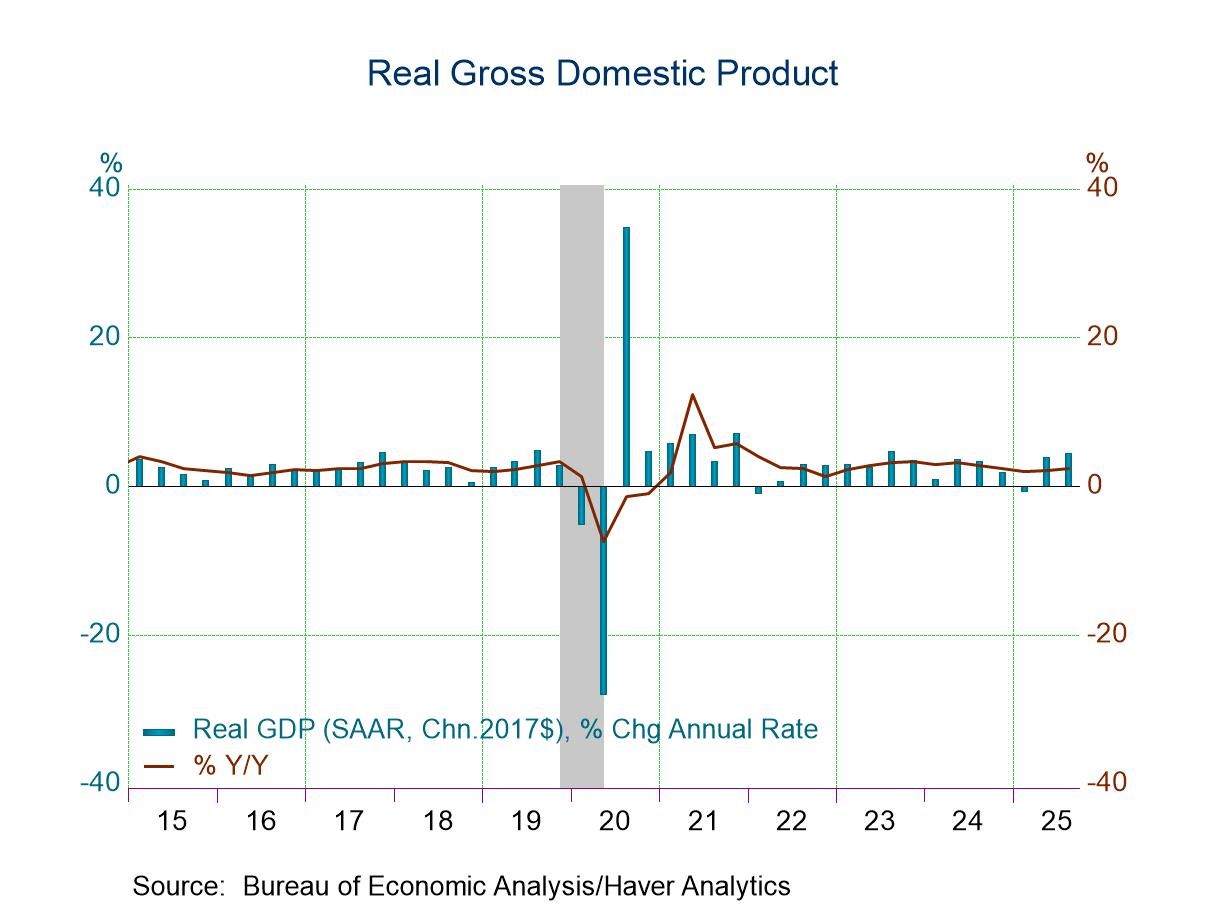
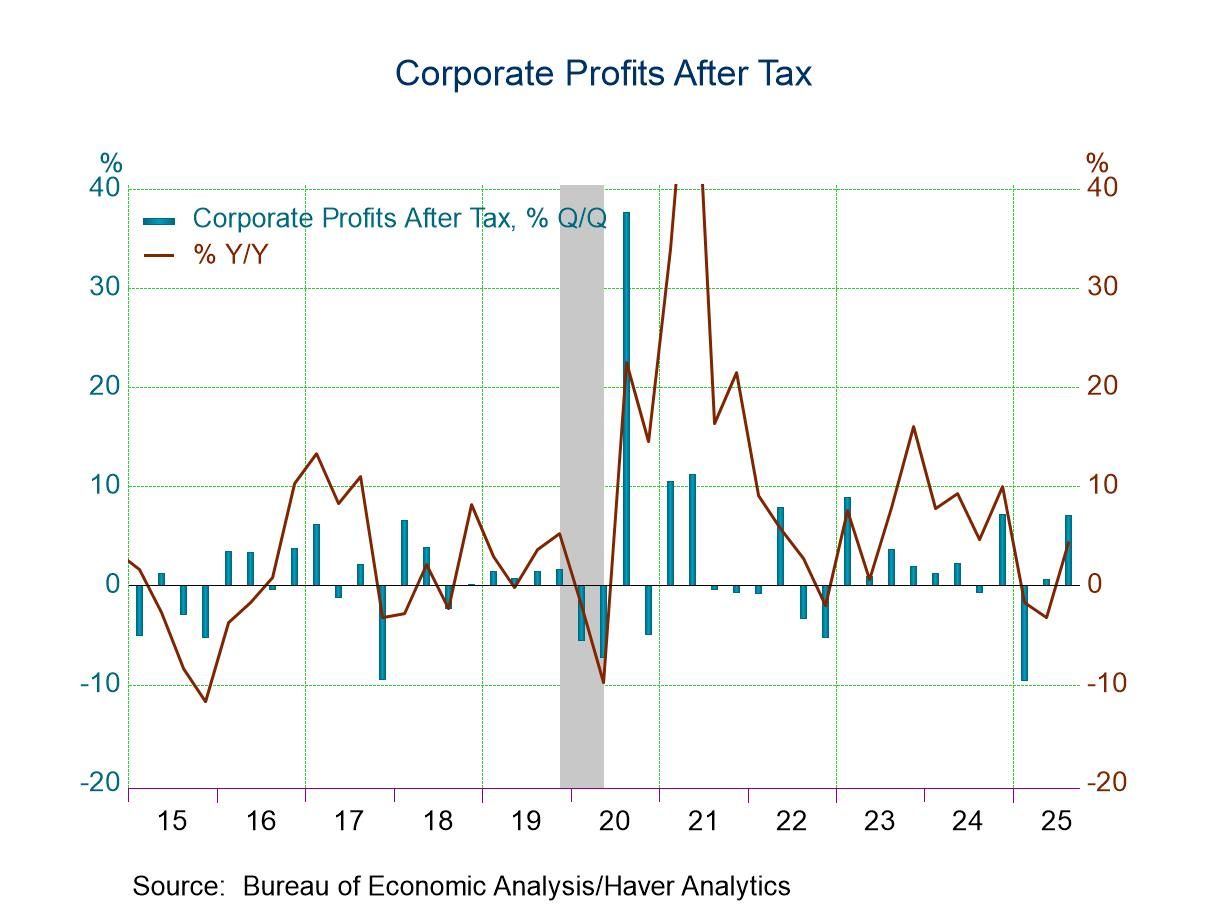
Real GDP increased 4.4% q/q saar in the third quarter of 2025 in the final estimate, up marginally from 4.3% in the first release. The Action Economics Forecast Survey expected no revision. Growth from a year ago was unrevised at 2.3% y/y. Growth of corporate profits was revised up to 4.5% q/q not annualized from 4.2% in the previous report.
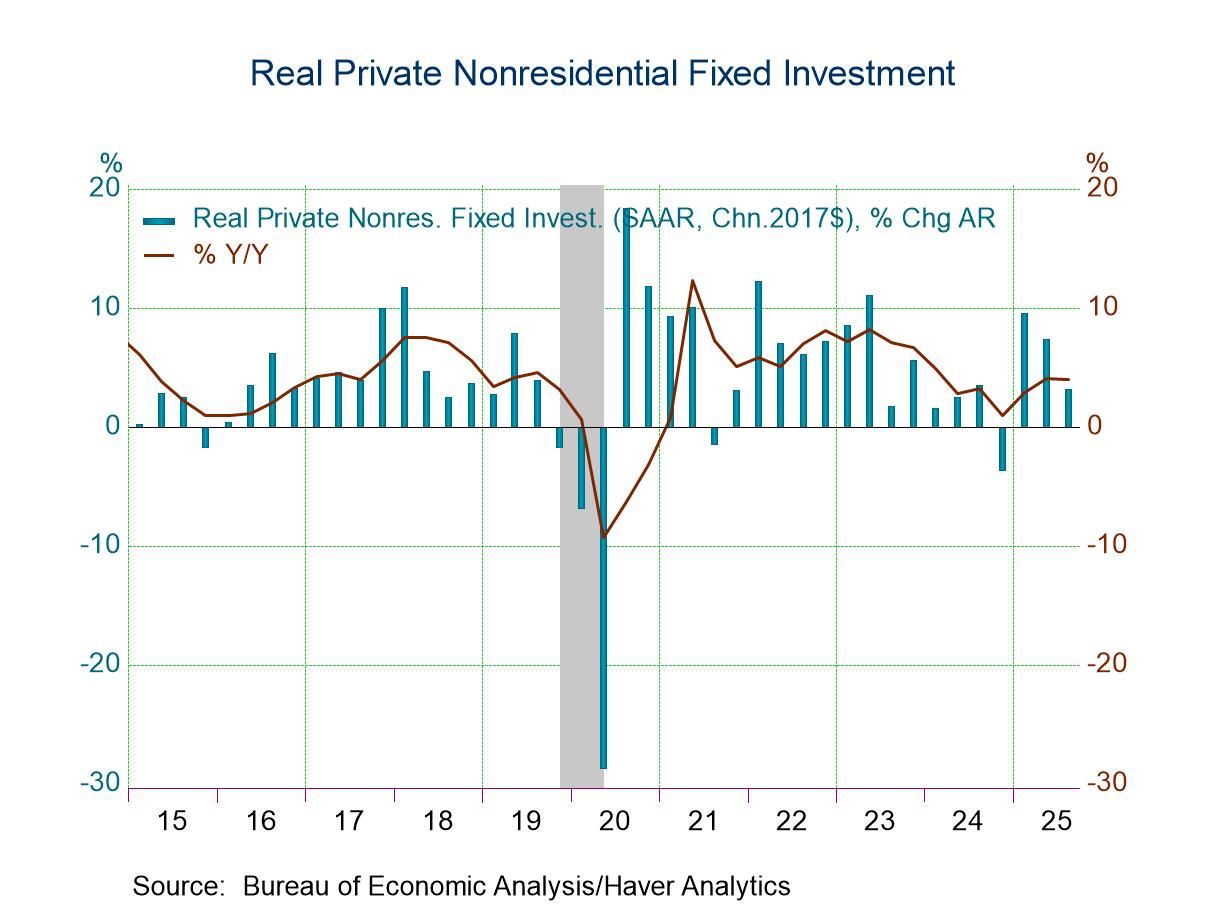
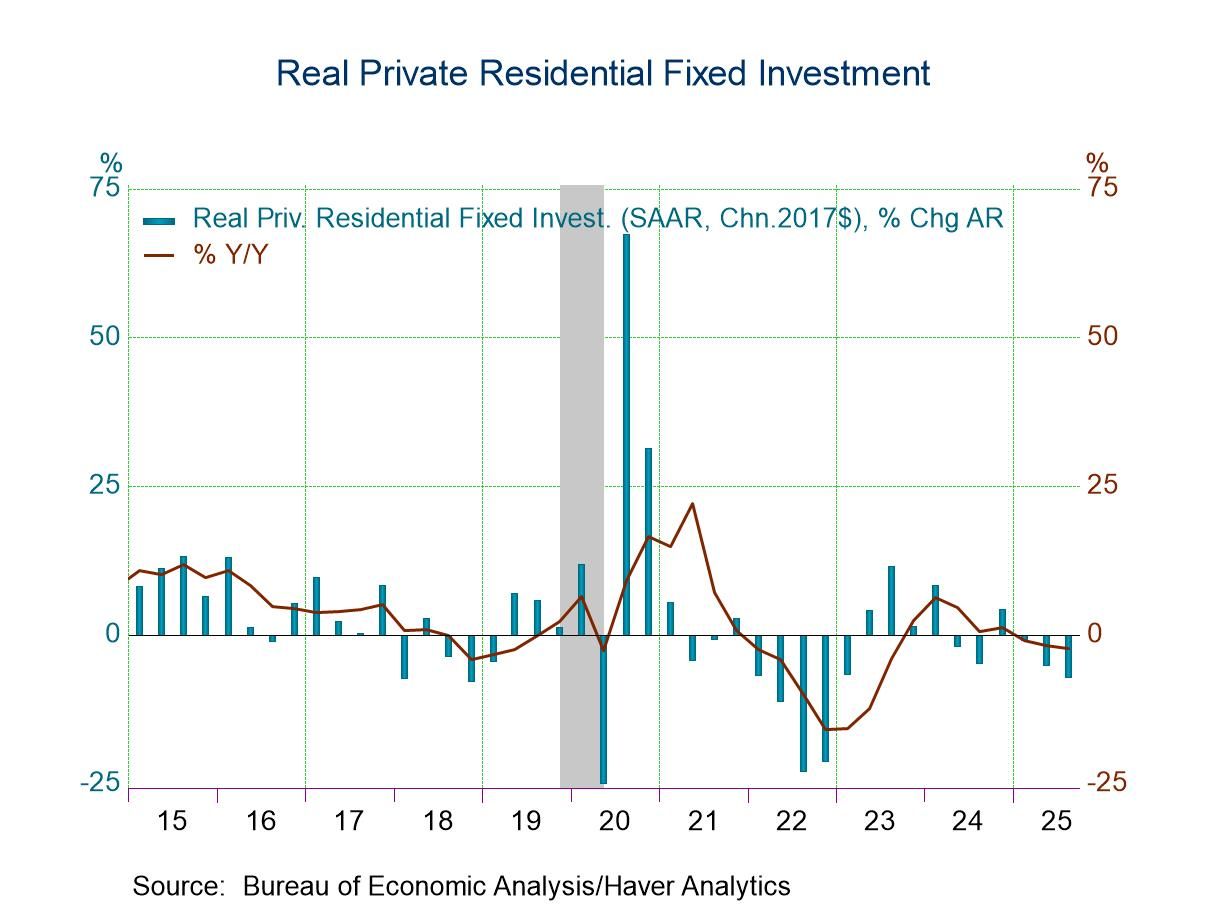
The revision to GDP mostly reflected slightly stronger nonresidential fixed investment, a larger increase in exports and a smaller decrease in inventory investment. Nonresidential fixed investment increased a revised 3.2% q/q saar versus a 2.8% gain in the previous release. This reflected a smaller decline in structures, a smaller increase in equipment and a larger increase in intellectual property products than previously estimated. Residential investment was revised weaker with a 7.1% quarterly decline versus -5.1% in the previous estimate.
Upon revision, exports rose 9.6% q/q in Q3 versus 8.8% in the first estimate. Consequently, the trade deficit narrowed a little more than in the first estimate, resulting in net exports adding 1.62%-points to overall growth, 0.03%-point more previously estimated. The decline in inventory investment in Q3 was smaller than previously estimated, reducing the drag from inventories by 0.1%-point versus the previous estimate. The decline in inventories subtracted 0.12%-point in Q3 on top of a 3.44%-point subtraction in Q2.
Domestic demand growth remained solid in Q3 but was revised down 0.1%-point. Final sales to domestic purchasers grew a revised 2.8% q/q saar in Q3 versus 2.9% in the first estimate. Final sales to private domestic purchasers increased 2.9% q/q, down slightly from 3.0% previously.
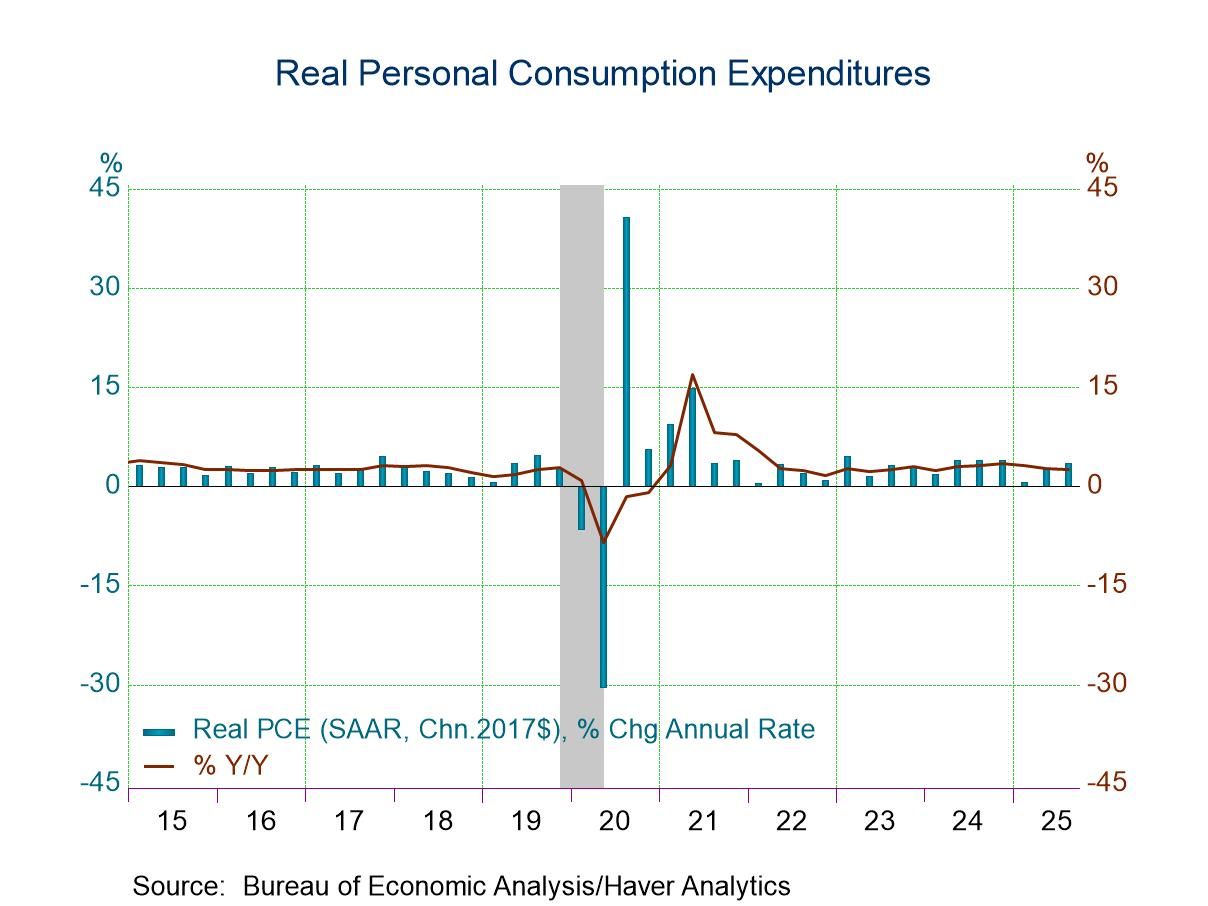
The primary driver of overall growth continued to be personal consumption expenditures. They increased an unrevised 3.5% q/q saar in Q3, adding 2.34%-points to total GDP growth. This reflected a 3.0% increase in spending on goods versus 3.1% previously and a 3.6% gain in spending on services versus 3.7% previously. The rise in government spending was unrevised at 2.2% q/q. However, spending by the federal government was revised slightly slower to 2.7% from 2.9% while spending by state and local governments was revised up slightly to 2.0% from 1.8%.
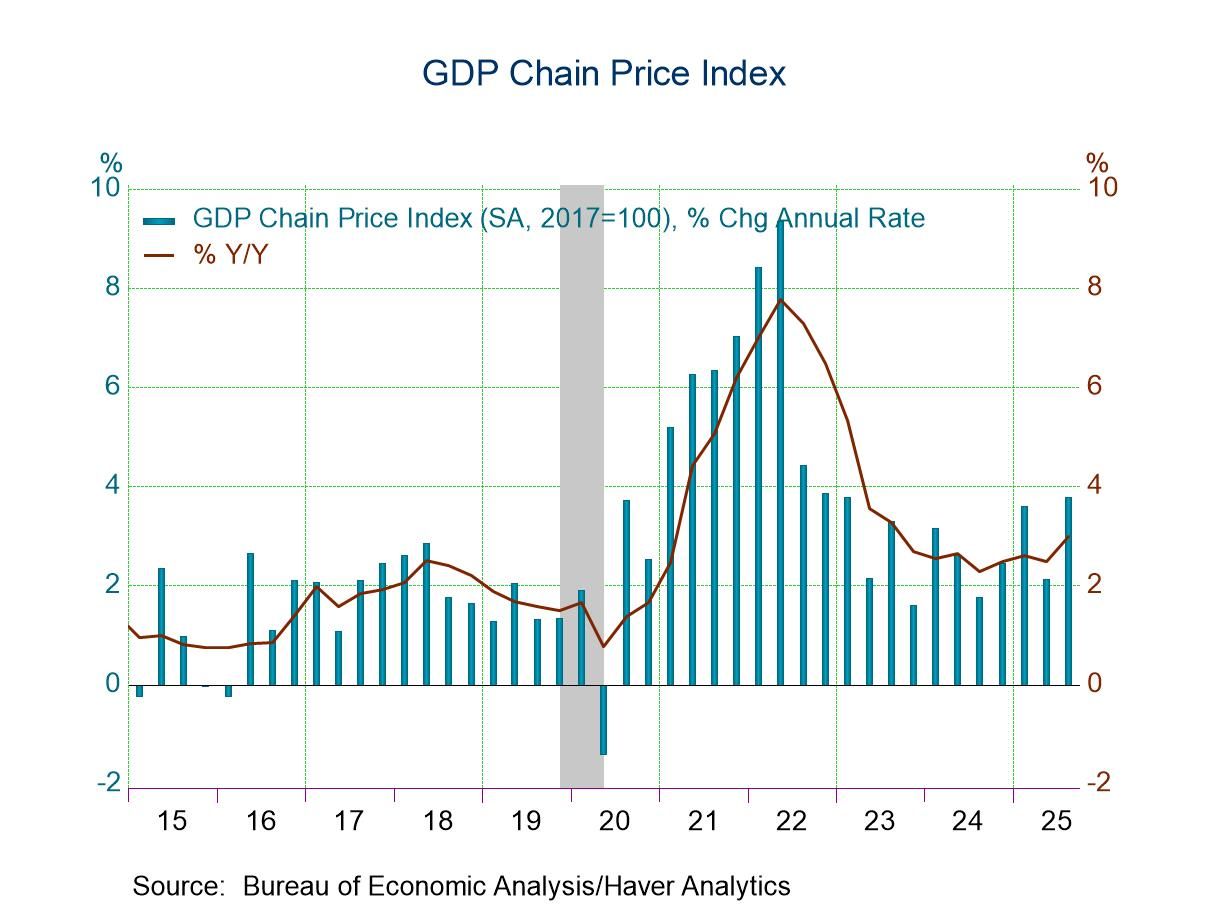
Key measures of inflation were unrevised. Inflation as measured by the GDP price index remained at 3.8% q/q saar in Q3, but this was up markedly from 2.1% in Q2. Similarly, PCE inflation in Q3 was unrevised at 2.8% versus 2.1% in Q2. Core PCE inflation was also unrevised at 2.9% in Q3.
The GDP data can be found in Haver’s USECON and USNA databases. USNA contains virtually all of the Bureau of Economic Analysis detail in the national accounts. The Action Economics consensus estimates can be found in AS1REPNA.

Sandy Batten
AuthorMore in Author Profile »Sandy Batten has more than 30 years of experience analyzing industrial economies and financial markets and a wide range of experience across the financial services sector, government, and academia. Before joining Haver Analytics, Sandy was a Vice President and Senior Economist at Citibank; Senior Credit Market Analyst at CDC Investment Management, Managing Director at Bear Stearns, and Executive Director at JPMorgan. In 2008, Sandy was named the most accurate US forecaster by the National Association for Business Economics. He is a member of the New York Forecasters Club, NABE, and the American Economic Association. Prior to his time in the financial services sector, Sandy was a Research Officer at the Federal Reserve Bank of St. Louis, Senior Staff Economist on the President’s Council of Economic Advisors, Deputy Assistant Secretary for Economic Policy at the US Treasury, and Economist at the International Monetary Fund. Sandy has taught economics at St. Louis University, Denison University, and Muskingun College. He has published numerous peer-reviewed articles in a wide range of academic publications. He has a B.A. in economics from the University of Richmond and a M.A. and Ph.D. in economics from The Ohio State University.
More Economy in Brief


 Global