U.S. ISM Manufacturing PMI Still Expansionary in September; New Orders & Employment Accelerating; Production Moderating
Summary
- ISM Mfg. PMI down slightly to 54.5 in Sept.; ninth straight month of expansion.
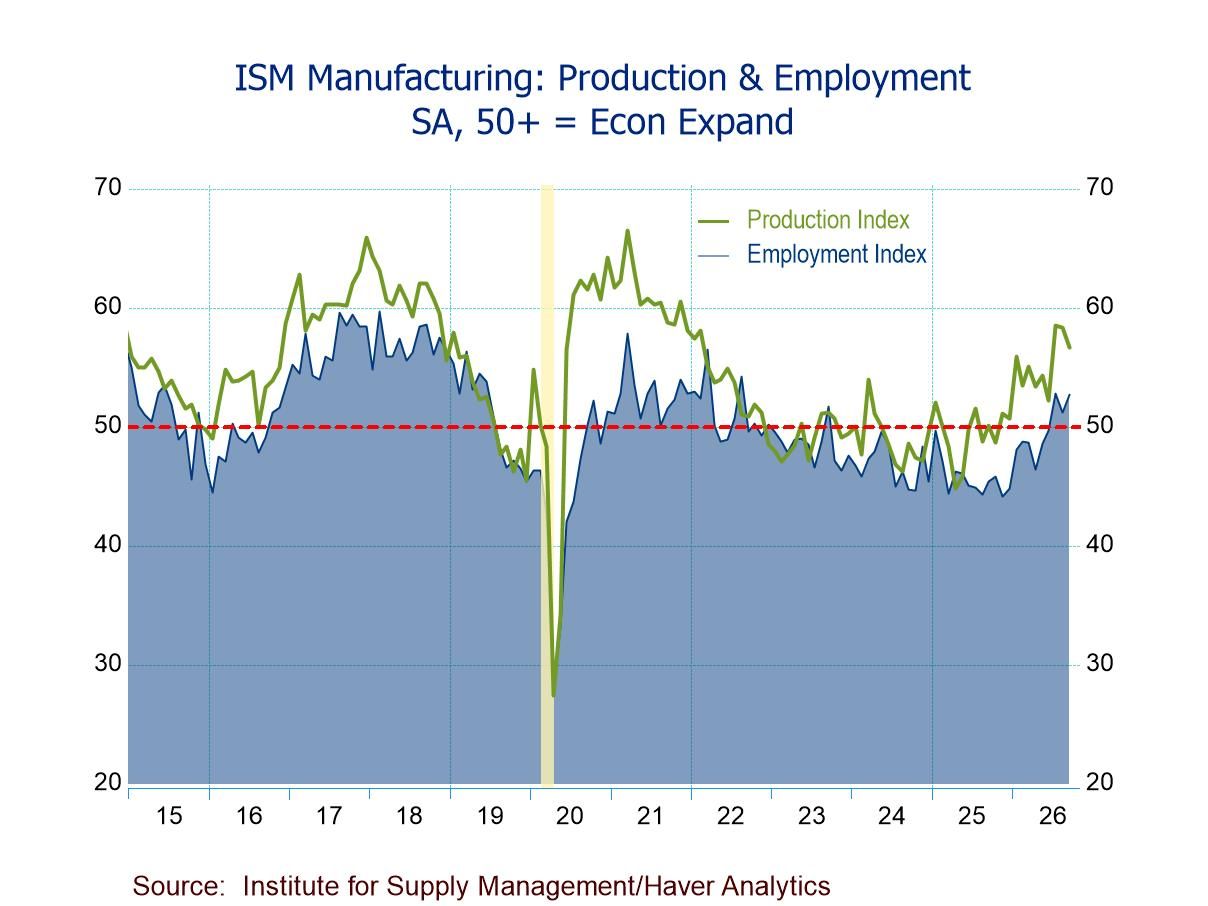
- Production (56.7) lowest since June; still expanding for the 11th consecutive mth.
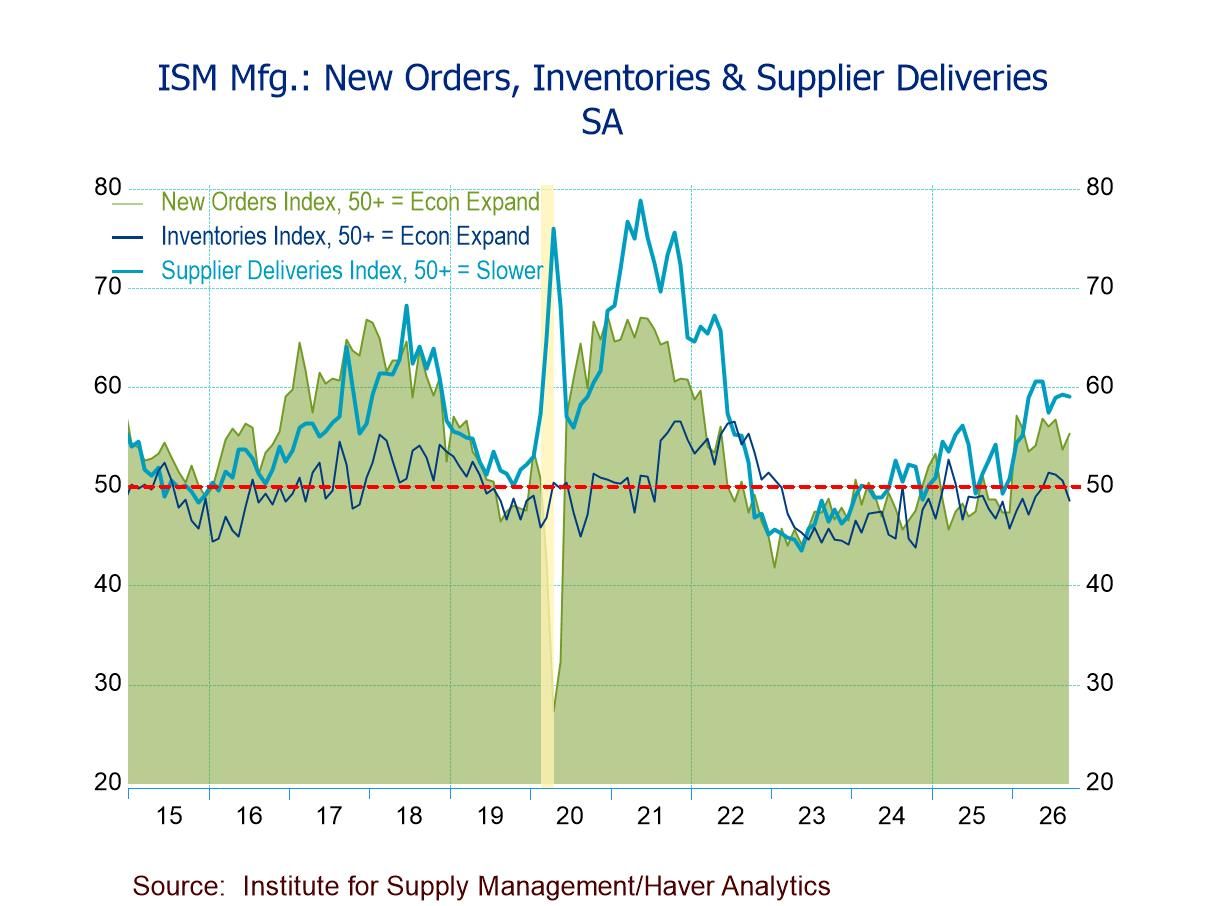
- New orders (55.3) growing at a faster pace; ninth successive mth. above 50.
- Employment (52.7) expanding for the third straight mth., at a faster rate, after 33 mths. of contraction.
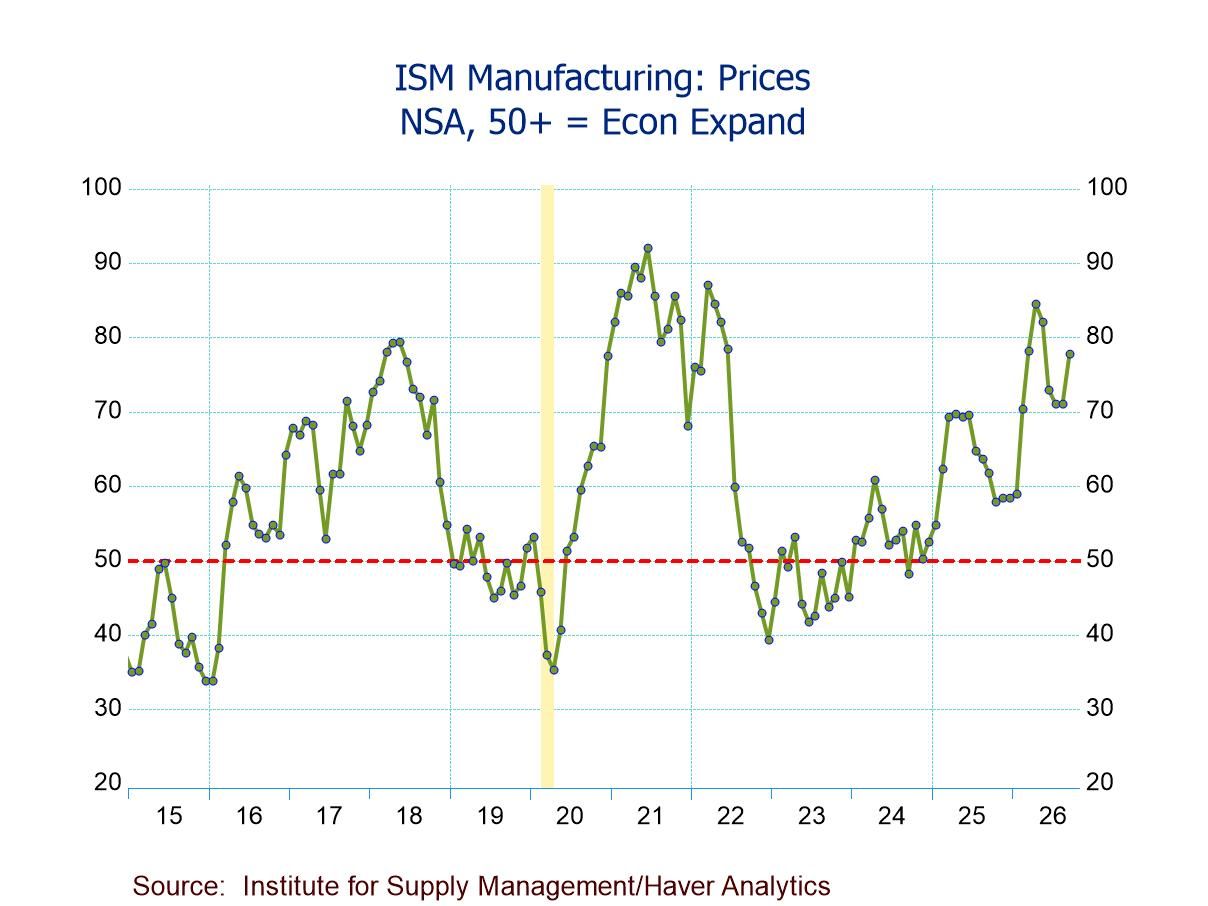
- Prices Index (77.9) highest since May, indicating prices rising for 24 mths. running.
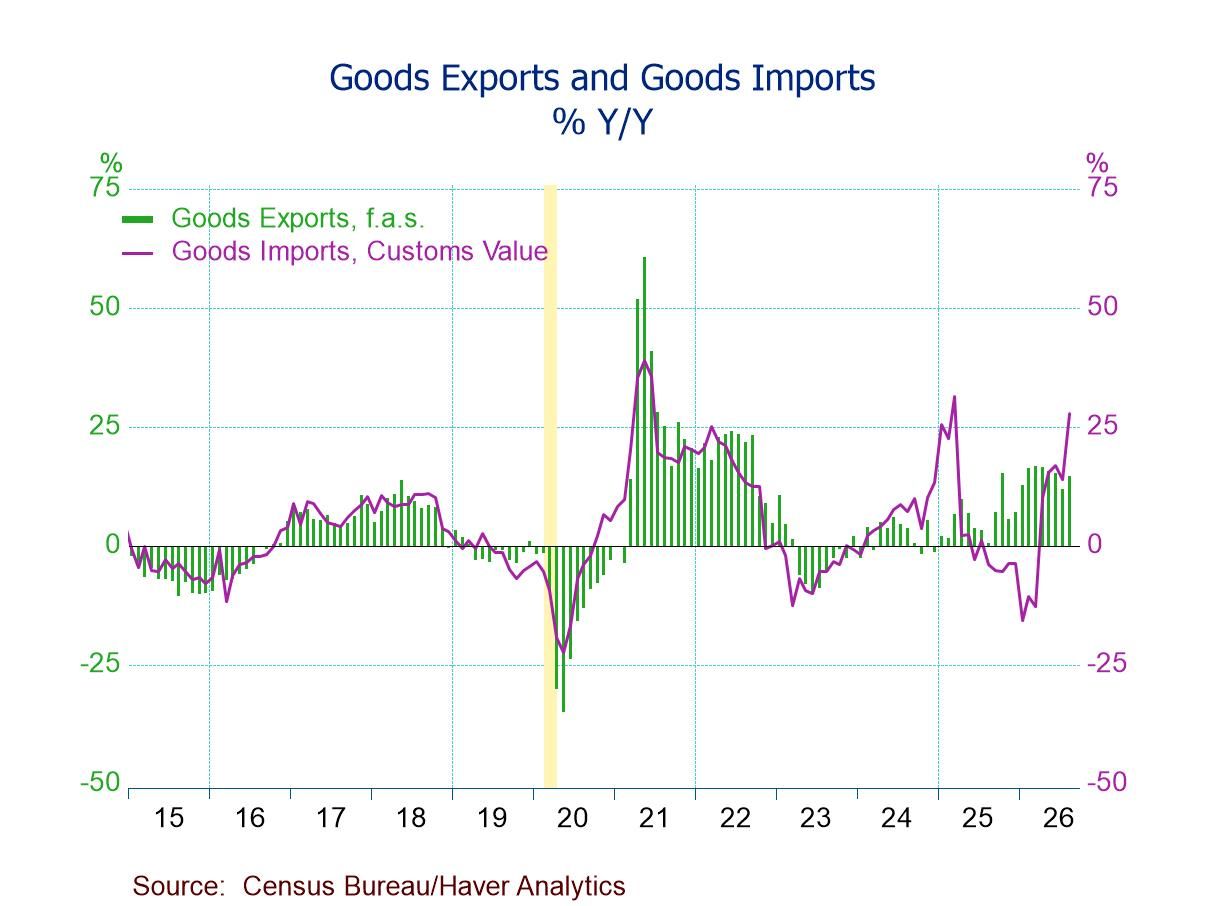
- Exports (50.9) lowest since June and imports (51.0) lowest since April; both still expanding.
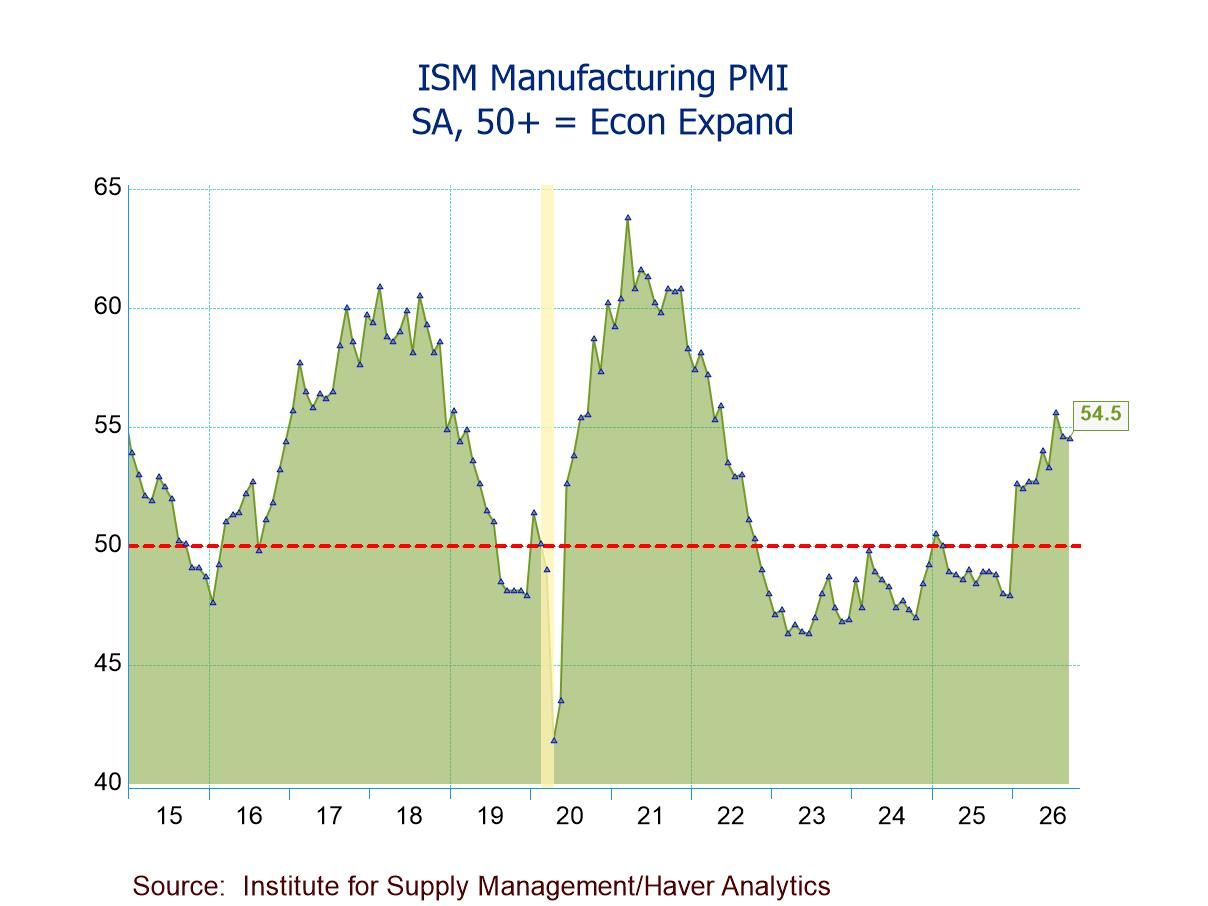
The ISM U.S. manufacturing PMI unexpectedly dipped to 54.5 in September from 54.6 in August and 55.6 in July, according to data from the Institute for Supply Management. The September reading, above the 50 expansion-contraction threshold, indicated the U.S. manufacturing sector expanded for the ninth consecutive month, albeit at a marginally slower pace. A reading of 55.0 for September had been expected in the Action Economics Forecast Survey. The latest manufacturing PMI, while above a contractionary 48.9 in September 2025 and a low of 47.0 in October 2024, remained below a peak of 63.8 in March 2021.
The production index declined to 56.7 in September from 58.3 in August, indicating production expanded for the 11th straight month but at the slowest rate since June. The index was above a low of 44.8 in April 2025 but below a peak of 66.5 in March 2021. In September, 25.4% (NSA) of respondents reported higher production while 11.9% reported lower production. The new orders index rebounded to 55.3 in September from 53.7 in August (the lowest reading since March), signaling new orders grew for the ninth consecutive month following four successive months of contraction. The index remained well above a low of 41.8 in January 2023 but below a high of 67.0 in May 2021. In September, 23.4% (NSA) of respondents reported higher new orders while 15.5% reported declines. The inventories index fell further to 48.6 in September—the first contraction since May and the lowest level since March—from 50.6 in August, returning to the broader contractionary trend in place since May 2025. The index was below a high of 52.7 in March 2025 but above a low of 43.8 in October 2024. Meanwhile, the supplier deliveries index edged down to 59.0 in September from 59.3 in August, indicating slowing delivery performance for the 10th straight month after faster deliveries in November 2025. In September, 21.4% (NSA) of respondents reported slower delivery speeds while 3.4% reported faster speeds.
On the labor front, the employment index rebounded to 52.7 in September from 51.2 in August, showing employment expanded for the third consecutive month, at a stronger pace, following 33 months of contraction. The index was above a low of 44.1 in November 2025 but below a high of 56.5 in March 2022. In September, 15.3% (NSA) of respondents reported higher employment while 14.5% reported lower hiring.
On the pricing front, the prices paid index advanced to 77.9 (NSA) in September from 71.1 in August and 71.1 in July, indicating raw materials prices rose for 24 months running and at the fastest rising pace since May. The index remained well above a low of 39.4 in December 2022 but below a high of 87.1 in March 2022 and a peak of 92.1 in June 2021. In September, 58.6% (NSA) of respondents reported higher prices while only 2.8% reported price declines.
In other ISM series not included in the composite index, the new export orders index decreased to 50.9 in September from 53.2 in August, indicating new export orders grew for the fourth time in five months, albeit at the lowest level since June’s contractionary 48.5. The index was up from a low of 40.1 in May 2025 but down from a peak of 57.1 in February 2022. The imports index slipped to 51.0 in September from 52.5 in August, suggesting imports expanded for the eighth successive month but at the weakest rate since April. The index was above a low of 39.9 in May 2025 but below a peak of 61.0 in June 2021. The order backlog index climbed to 56.4 (NSA) in September from 51.8 in August, showing backlog levels grew for the ninth straight month and at the fastest pace since February’s high of 56.6. The index was well above a low of 37.5 in May 2023 but below a peak of 70.6 in May 2021.
The ISM figures are based on responses from over 400 purchasing and supply executives from 18 industries, which are weighted according to each industry’s contribution to GDP. These data are diffusion indexes where a reading above 50 indicates expansion; below 50 indicates contraction. The ISM Manufacturing PMI is a composite index based on the diffusion indexes of five of the indexes (seasonally adjusted) with equal weights: New Orders, Production, Employment, Supplier Deliveries, and Inventories. The figures from the Institute for Supply Management can be found in Haver’s USECON database; further detail is found in the SURVEYS database. The expectations number is available in Haver’s AS1REPNA database.

Winnie Tapasanun
AuthorMore in Author Profile »Winnie Tapasanun has been working for Haver Analytics since 2013. She has 20+ years of working in the financial services industry. As Vice President and Economic Analyst at Globicus International, Inc., a New York-based company specializing in macroeconomics and financial markets, Winnie oversaw the company’s business operations, managed financial and economic data, and wrote daily reports on macroeconomics and financial markets. Prior to working at Globicus, she was Investment Promotion Officer at the New York Office of the Thailand Board of Investment (BOI) where she wrote monthly reports on the U.S. economic outlook, wrote reports on the outlook of key U.S. industries, and assisted investors on doing business and investment in Thailand. Prior to joining the BOI, she was Adjunct Professor teaching International Political Economy/International Relations at the City College of New York. Prior to her teaching experience at the CCNY, Winnie successfully completed internships at the United Nations. Winnie holds an MA Degree from Long Island University, New York. She also did graduate studies at Columbia University in the City of New York and doctoral requirements at the Graduate Center of the City University of New York. Her areas of specialization are international political economy, macroeconomics, financial markets, political economy, international relations, and business development/business strategy. Her regional specialization includes, but not limited to, Southeast Asia and East Asia. Winnie is bilingual in English and Thai with competency in French. She loves to travel (~30 countries) to better understand each country’s unique economy, fascinating culture and people as well as the global economy as a whole.
More Economy in Brief
 Global