U.S. Initial Claims for Unemployment Insurance Rose in Latest Week
Summary
- Initial claims rose moderately from the prior week.
- Continuing claims increased from the prior week.
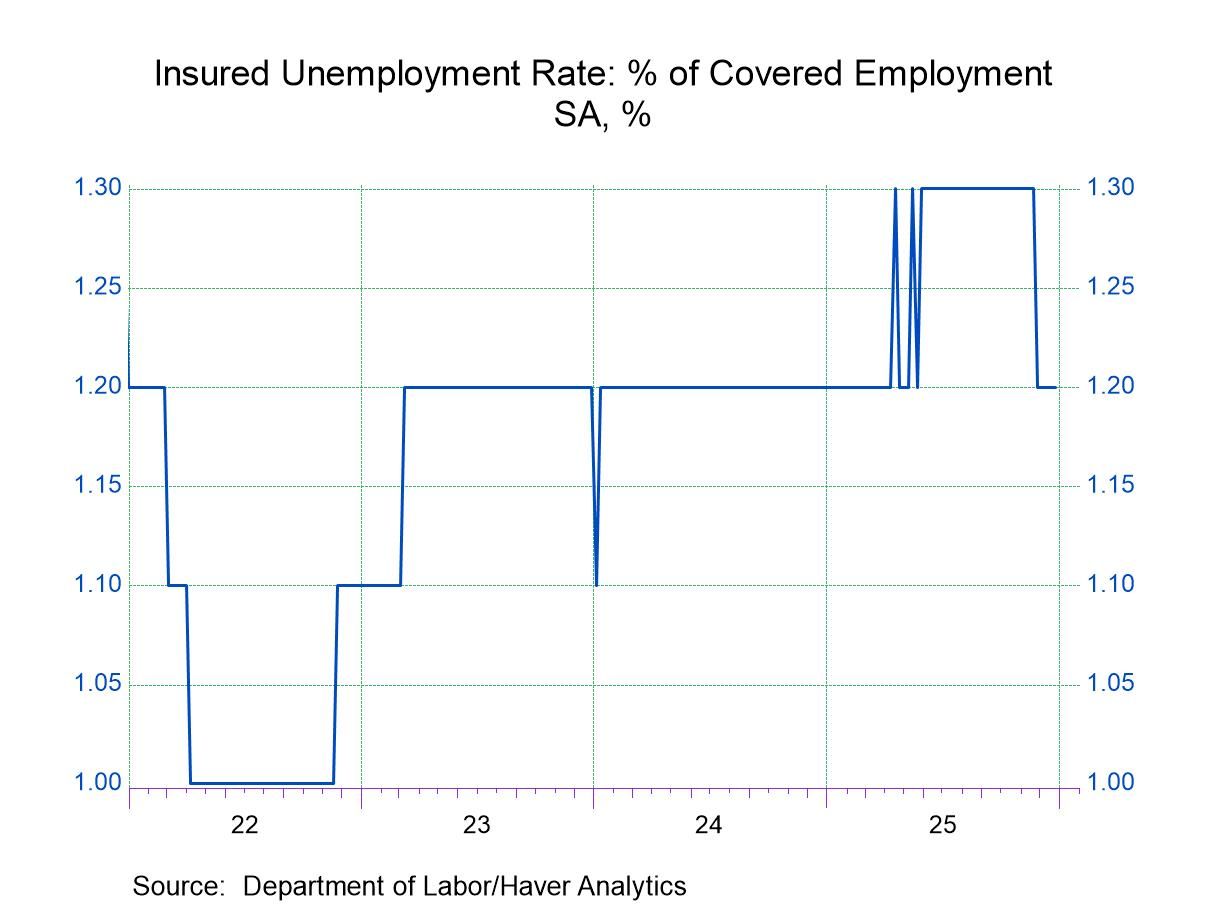
- The insured unemployment rate was unchanged.
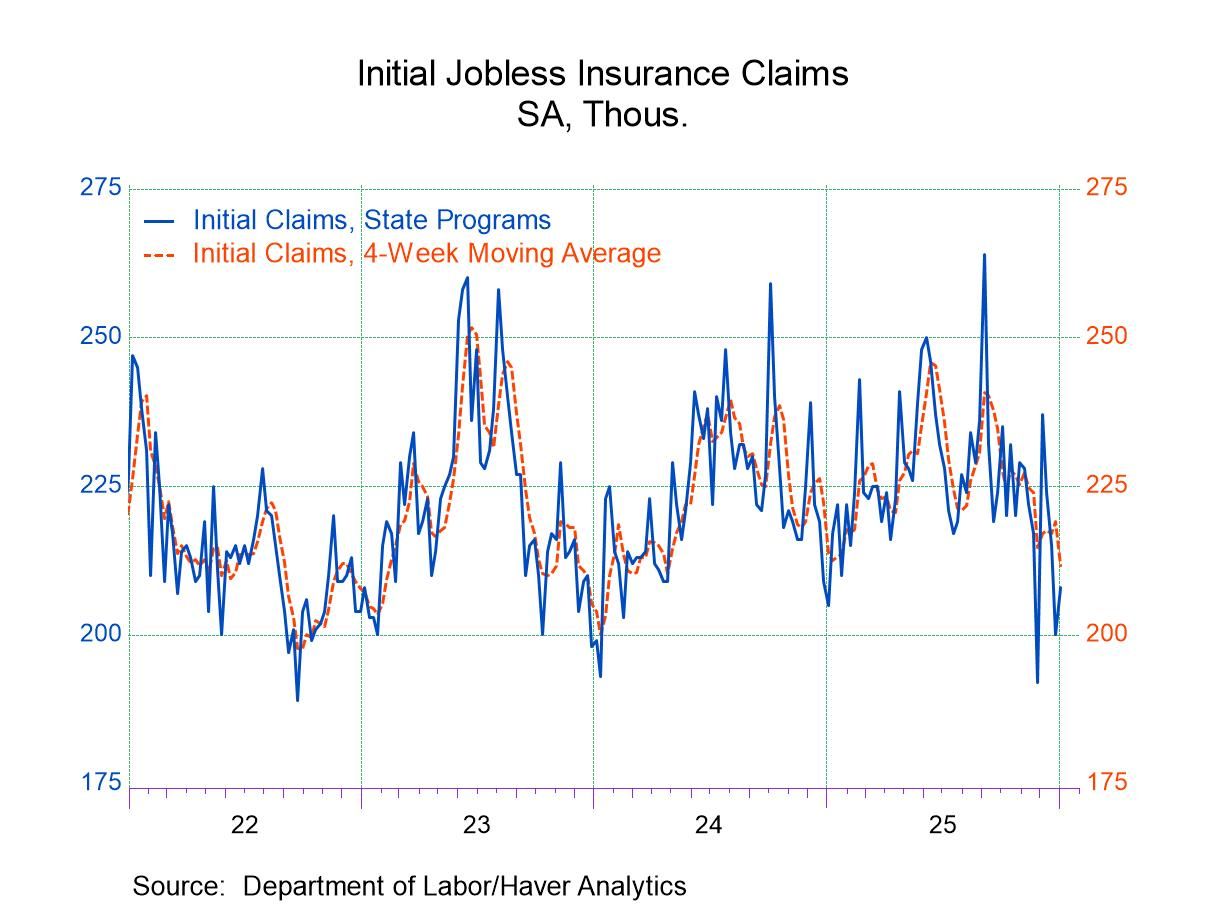
Initial claims for unemployment insurance increased by 8,000 to 208,000 in the week ending January 3, from 200,000 in the week ending December 27, revised from 199,000. The four-week moving average of initial claims was 211,750 in the January 3 week, a decline of 7,250 from 219,000, revised from 218,750 in the December 27 week. The January 3 week four-week average was the lowest level since April 27, 2024.
Federal government employees initially filed 479 (NSA) jobless insurance claims in the week ended December 27, after filing 812 claims in the week ended December 20.
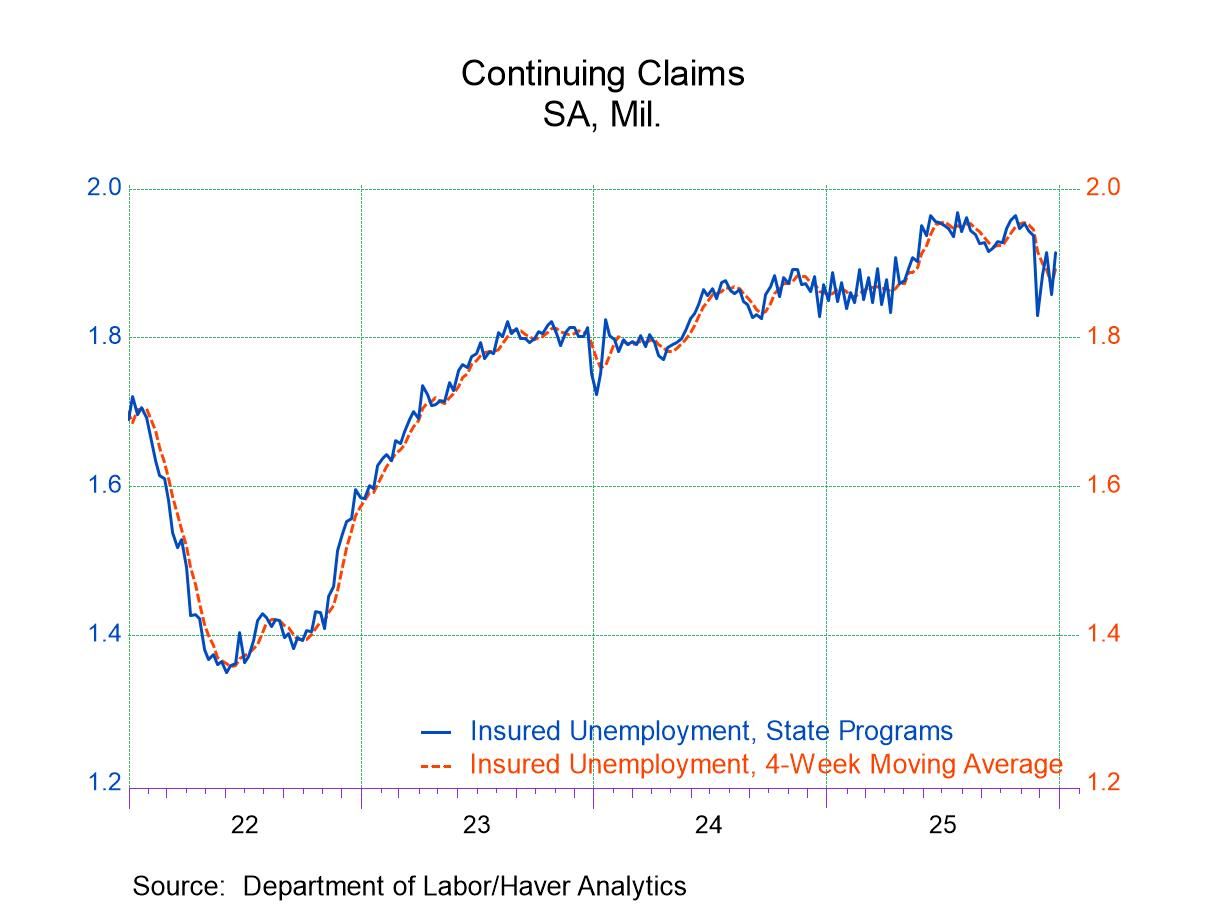
Continuing claims for unemployment insurance rose 56,000 to 1.914 million in the week ending December 27, from 1.858 million in the prior week, revised from 1.866 million. The four-week moving average was 1.893 million in the week ending December 27, from 1.872 million in the December 20 week, revised from 1.873 million. The insured unemployment rate stood at 1.2% in the week of December 27, unchanged from previous week of December 20.
Federal government employees’ continuing benefits claims were 12,161 (NSA) in the week of December 20, down from 13,390 (NSA) in the week ended December 13.
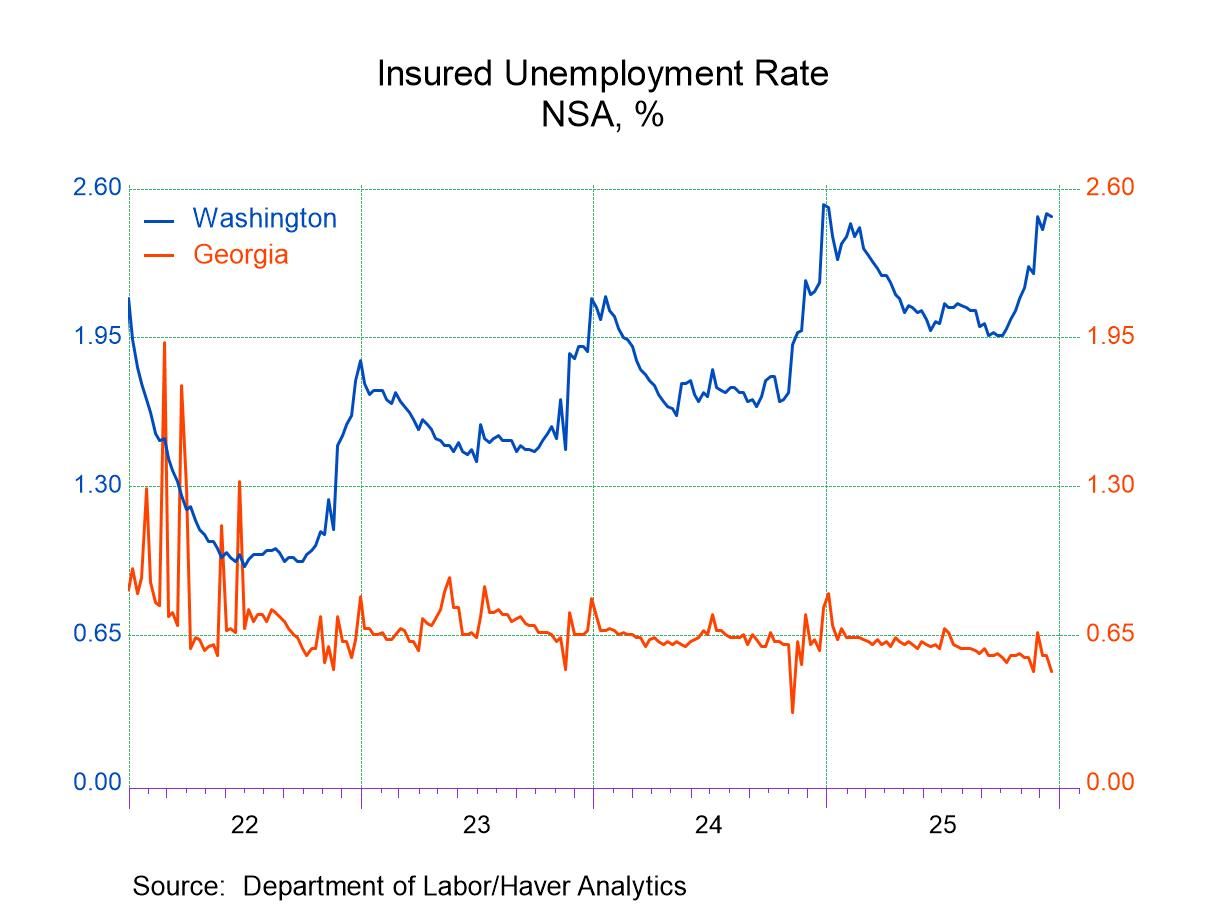
The insured unemployment rate varied greatly across individual states and territories. In the week ending December 20, the highest unemployment rates were in Washington (2.48%), New Jersey (2.38%), Massachusetts (2.27%), and Minnesota and Rhode Island (both 2.22%). The lowest rates were in Florida (0.26%), North Carolina (0.38%), Alabama and Louisiana (both 0.43%), Virgin Islands (0.46%), Virginia (0.47%), and Georgia (0.49%). Rates in other notable states include New York (1.83%), Illinois (1.81%), Pennsylvania (1.72%), and Texas (1.00%). These state data are not seasonally adjusted.
Data on weekly unemployment claims are from the Department of Labor itself, not the Bureau of Labor Statistics. They begin in 1967 and are contained in Haver’s WEEKLY database and summarized monthly in USECON. Data for individual states are in REGIONW back to December 1986.

Kathleen Stephansen, CBE
AuthorMore in Author Profile »Kathleen Stephansen is a Senior Economist for Haver Analytics and an Independent Trustee for the EQAT/VIP/1290 Trust Funds, encompassing the US mutual funds sponsored by the Equitable Life Insurance Company. She is a former Chief Economist of Huawei Technologies USA, Senior Economic Advisor to the Boston Consulting Group, Chief Economist of the American International Group (AIG) and AIG Asset Management’s Senior Strategist and Global Head of Sovereign Research. Prior to joining AIG in 2010, Kathleen held various positions as Chief Economist or Head of Global Research at Aladdin Capital Holdings, Credit Suisse and Donaldson, Lufkin and Jenrette Securities Corporation.
Kathleen serves on the boards of the Global Interdependence Center (GIC), as Vice-Chair of the GIC College of Central Bankers, is the Treasurer for Economists for Peace and Security (EPS) and is a former board member of the National Association of Business Economics (NABE). She is a member of Chatham House and the Economic Club of New York. She holds an undergraduate degree in economics from the Universite Catholique de Louvain and graduate degrees in economics from the University of New Hampshire (MA) and the London School of Economics (PhD abd).
More Economy in Brief
 Global