U.S. Housing Starts Plunged in May
by:Sandy Batten
|in:Economy in Brief
Summary
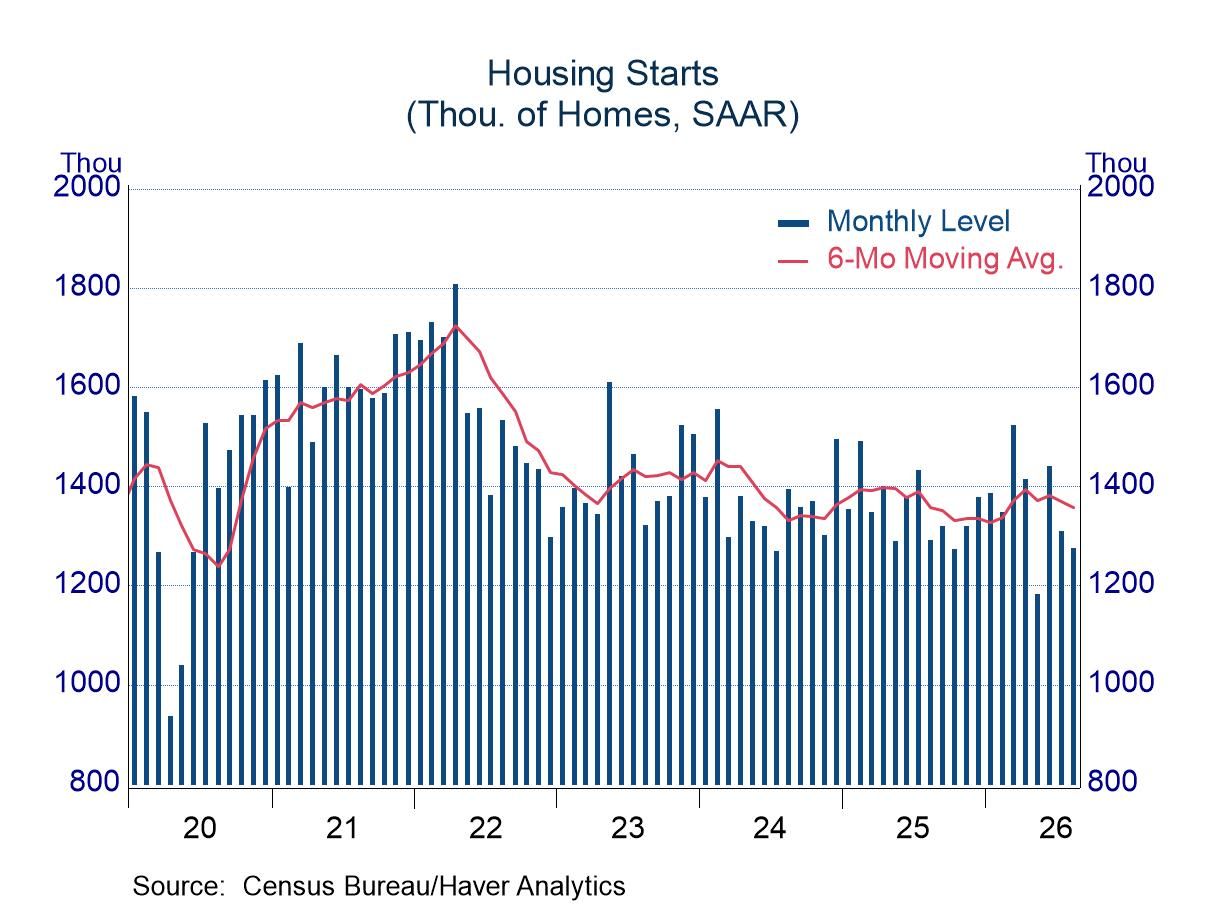
- Housing starts plunged 15.4% m/m in May to the lowest level since May 2020 with a significant downward revision to the previously reported April decline.
- Single family starts fell 1.9% m/m while multi-family starts plummeted 40.2% m/m to their lowest level since November 2024.
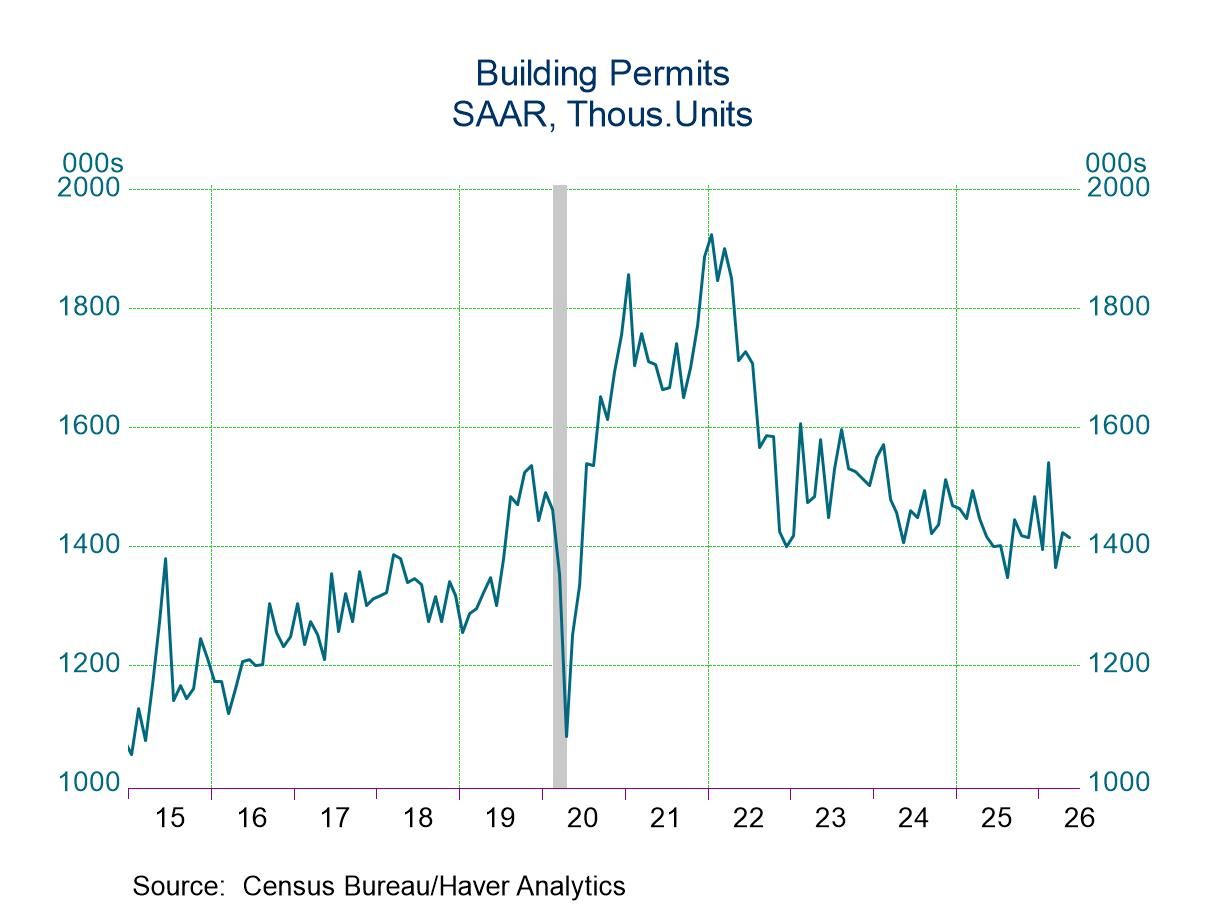
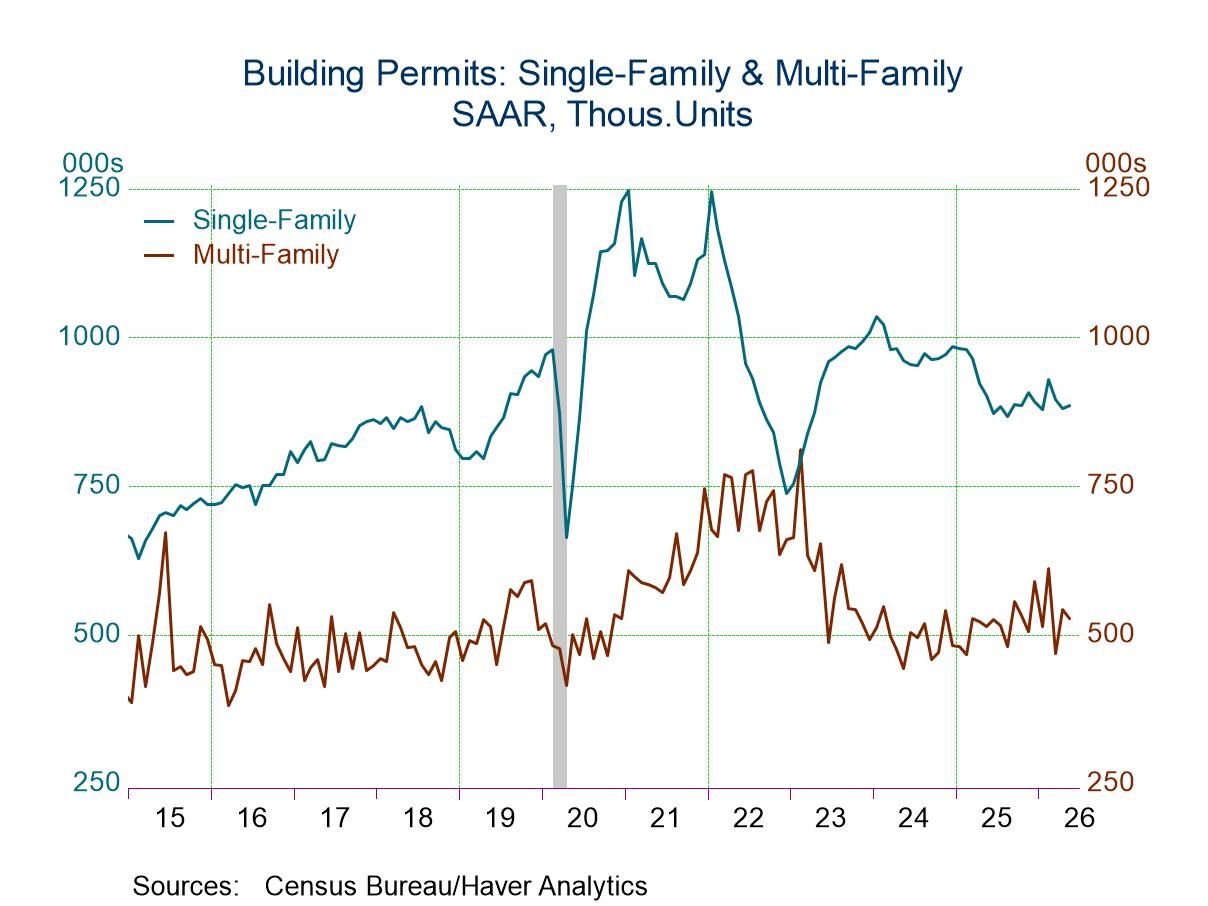
- Less volatile permits slid 0.7% m/m in May with a slight rise (+0.6% m/m) in single-family permits and a 2.8% monthly drop in multi-family permits.
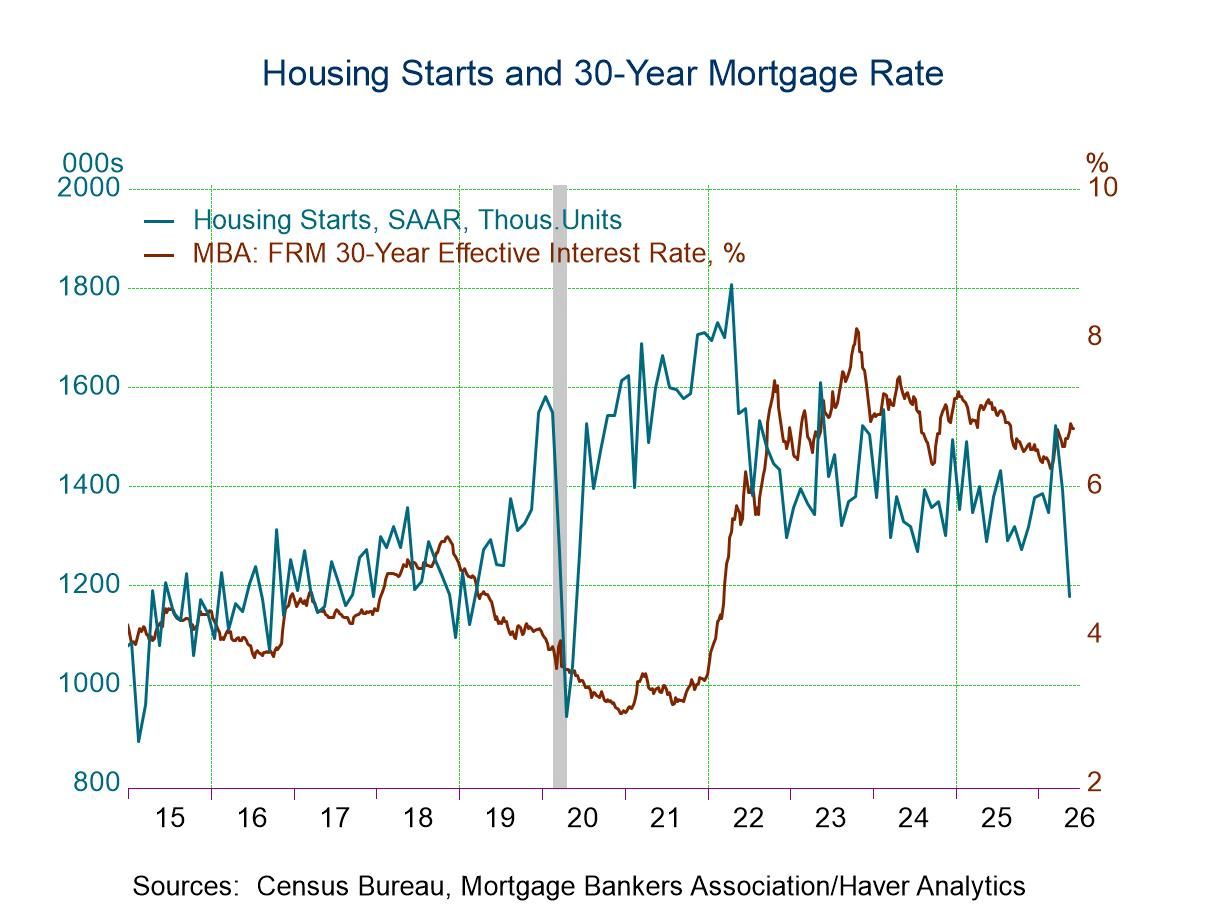
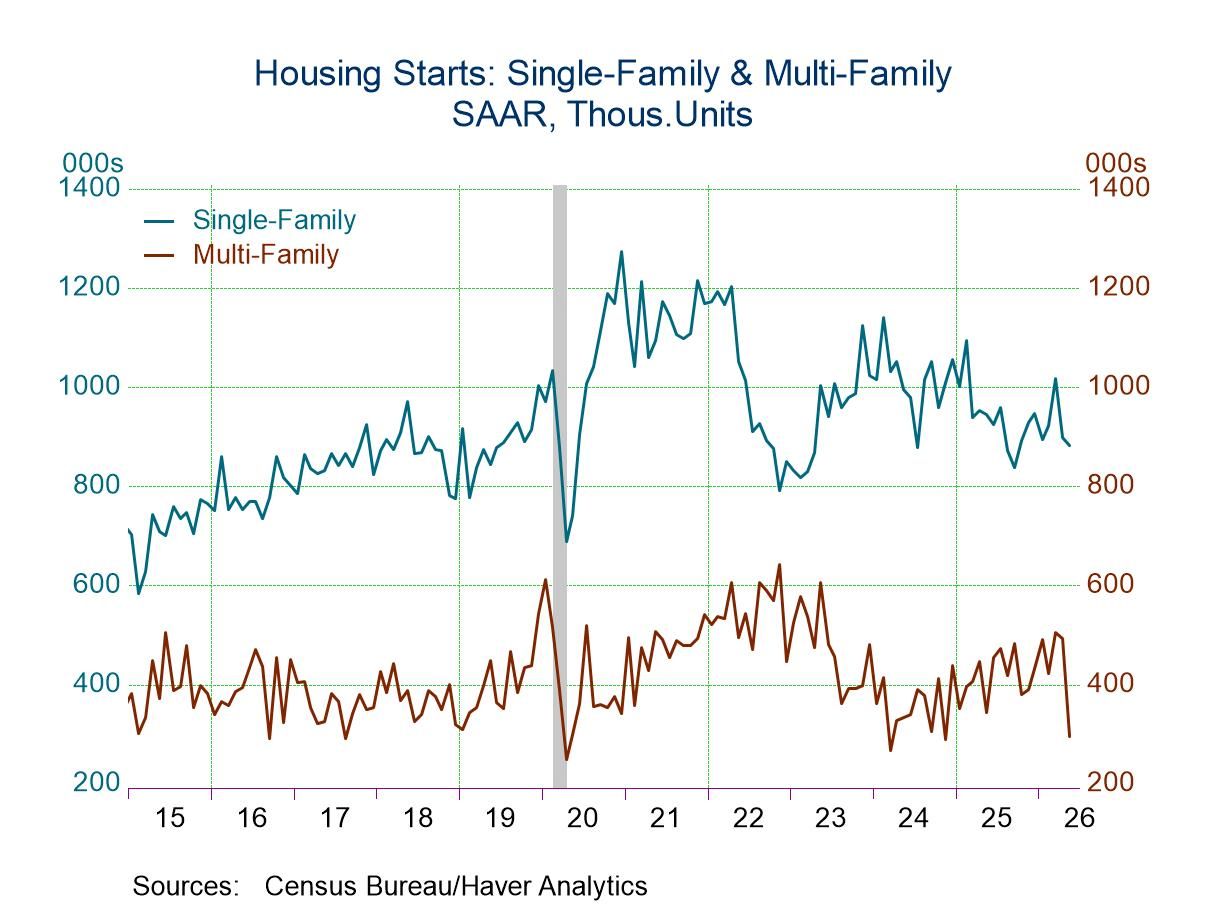
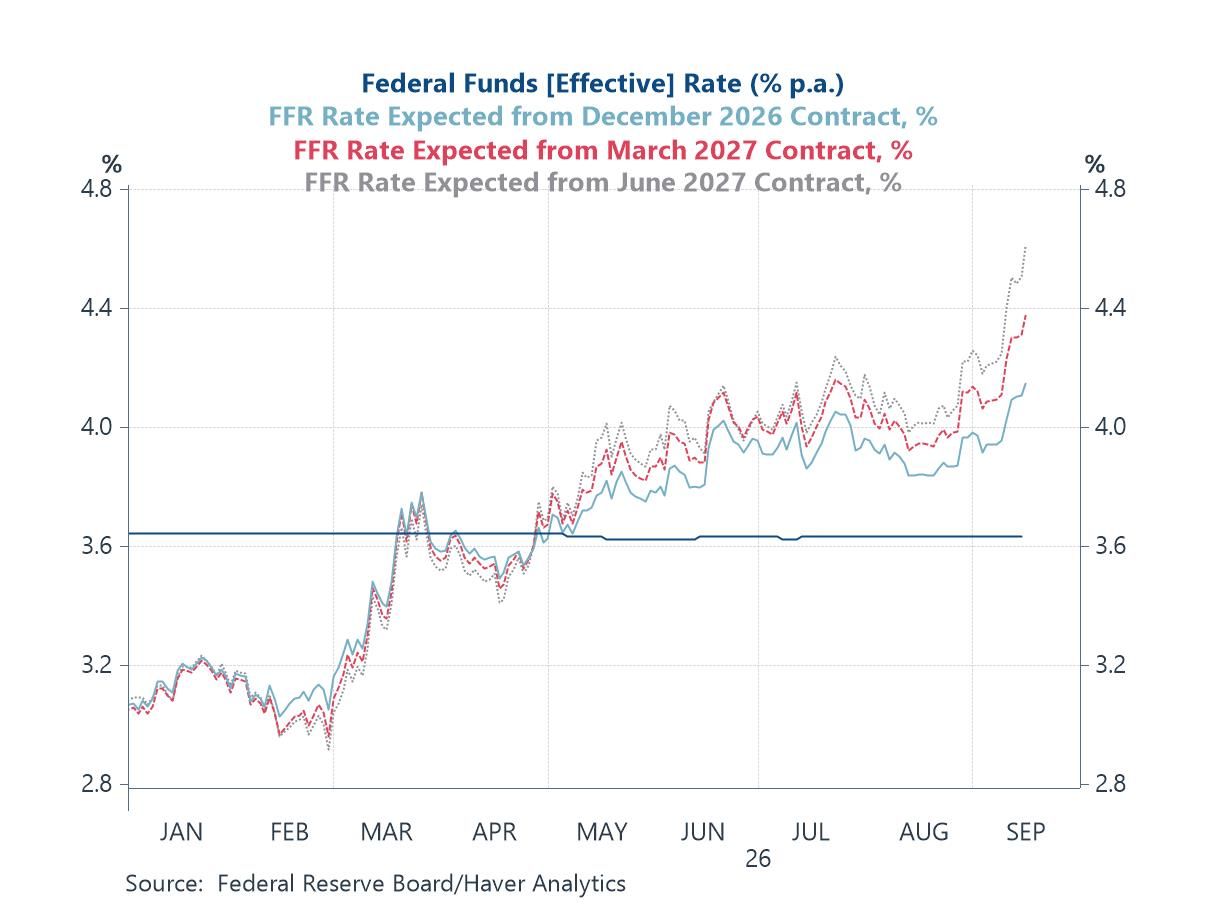
Weighed down by further rises in longer-term interest rates, housing construction continued to languish in May. Housing starts plunged 15.4% m/m (-8.7% y/y) in May on top of a downwardly revised 8.5% monthly decline in April (previously -2.8% m/m). The level of starts plummeted to 1.177 million, the lowest since May 2020 when the economy was locked down during the COVID pandemic. The Action Economics Forecast Survey expected a 2.4% m/m decline to a level of 1.432 million units. The April/May average for starts was 1.285 million, 9.4% below the Q1 average. Residential investment has been a persistent drag on real GDP growth recently, subtracting from overall growth in each of the previous five quarters. Today’s report points to another subtraction in Q2.
Single-family starts fell 1.9% m/m (-6.7% y/y) in May on top of a downwardly revised 11.6% monthly plunge in April (previously -9.0% m/m). Multi-family starts, which had generally been trending up over the past year or so, albeit with quite a bit of volatility, plummeted 40.2% m/m (-14.2% y/y) in May following a downwardly revised 2.4% m/m decline in April (previously +10.3% m/m).
Starts fell in three of the four major geographic regions. Starts rose 3.7% m/m in the Midwest with gains in both single-family and multi-family starts. By contrast, starts fell in each of the other three regions, plunging 26.8% m/m in the Northeast, the third monthly decline in the past four months, falling 17.0% m/m in the South, also the third monthly decline in the past four months, and declining 17.2% m/m in the West, the fourth monthly decline in the past five months.
The performance of building permits is typically less volatile than that of starts. Total permits edged down 0.7% m/m (-0.2% y/y) to 1.413 million units in May following a 4.4% monthly gain in April and an 11.5% m/m fall in March. Expectations were for a 0.3% monthly increase in May. Single-family permits edged up 0.6% m/m (-1.8% y/y) in May versus a 1.6% monthly decline in April and a 3.7% m/m drop in March. By contrast, multi-family permits fell 2.8% m/m (+2.5 y/y) in May but this was after a 15.8% monthly surge in April.
In contrast to the regional performance of starts, permits fell in the Midwest (-18.7% m/m) but rose in each of the other three major geographic regions. Permits increased 3.1% m/m in the Northeast in May on top of a 18.1% monthly jump in April. They edged up 1.6% m/m in the South and rose 5.5% m/m in the West, the first monthly gain in three months.
The housing starts and permits figures can be found in Haver’s USECON database. The expectations figure is contained in the AS1REPNA database.

Sandy Batten
AuthorMore in Author Profile »Sandy Batten has more than 30 years of experience analyzing industrial economies and financial markets and a wide range of experience across the financial services sector, government, and academia. Before joining Haver Analytics, Sandy was a Vice President and Senior Economist at Citibank; Senior Credit Market Analyst at CDC Investment Management, Managing Director at Bear Stearns, and Executive Director at JPMorgan. In 2008, Sandy was named the most accurate US forecaster by the National Association for Business Economics. He is a member of the New York Forecasters Club, NABE, and the American Economic Association. Prior to his time in the financial services sector, Sandy was a Research Officer at the Federal Reserve Bank of St. Louis, Senior Staff Economist on the President’s Council of Economic Advisors, Deputy Assistant Secretary for Economic Policy at the US Treasury, and Economist at the International Monetary Fund. Sandy has taught economics at St. Louis University, Denison University, and Muskingun College. He has published numerous peer-reviewed articles in a wide range of academic publications. He has a B.A. in economics from the University of Richmond and a M.A. and Ph.D. in economics from The Ohio State University.
More Economy in Brief
 Global