U.S. FHFA House Prices Flat in February After Four Straight M/M Gains
Summary
- February FHFA HPI 0.0% m/m; +1.7% y/y, lowest since Mar. ’12.
- House prices down m/m in four of nine census divisions, led by Mountain (-1.1%); up in four, driven by South Atlantic (+0.6%); flat in East North Central.
- House prices up y/y in six of nine regions, led by Middle Atlantic (+4.2%), but down in Mountain (-0.7%), Pacific (-0.4%), and West South Central (-0.1%).
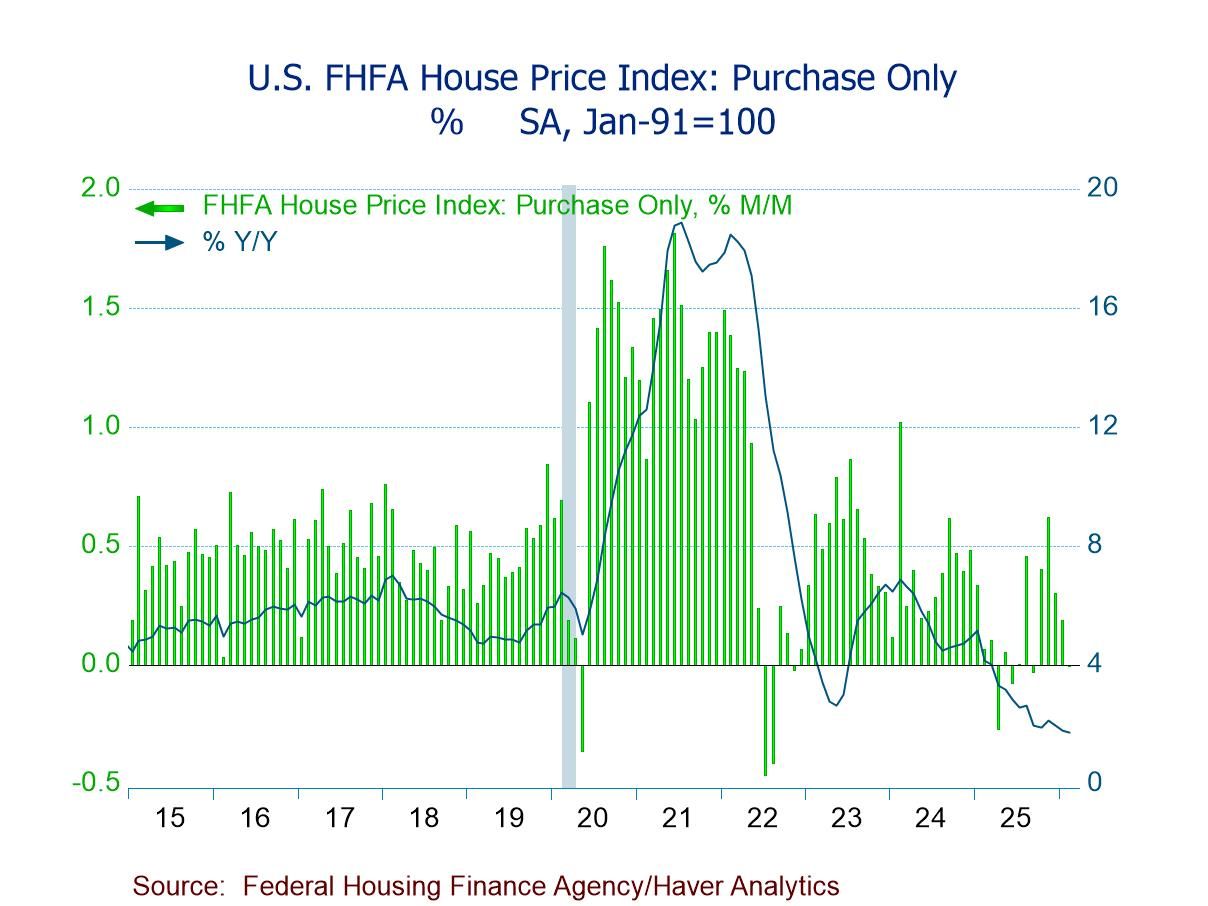
U.S. house prices were essentially unchanged m/m in February after rises of 0.2% in January (+0.1% initially) and 0.3% in December (unrevised), according to the Federal Housing Finance Agency (FHFA) House Price Index. February marked the first flat reading since September following four consecutive m/m increases. The HPI was at 441.43 in February, up 14.8% from its August 2022 low of 384.59. The year-on-year growth rate eased to 1.7% in February—the lowest since March 2012—from 1.8% in January (+4.1% in February 2025), down from a high of 6.9% in February 2024 and well below a peak of 18.5% in February 2022.
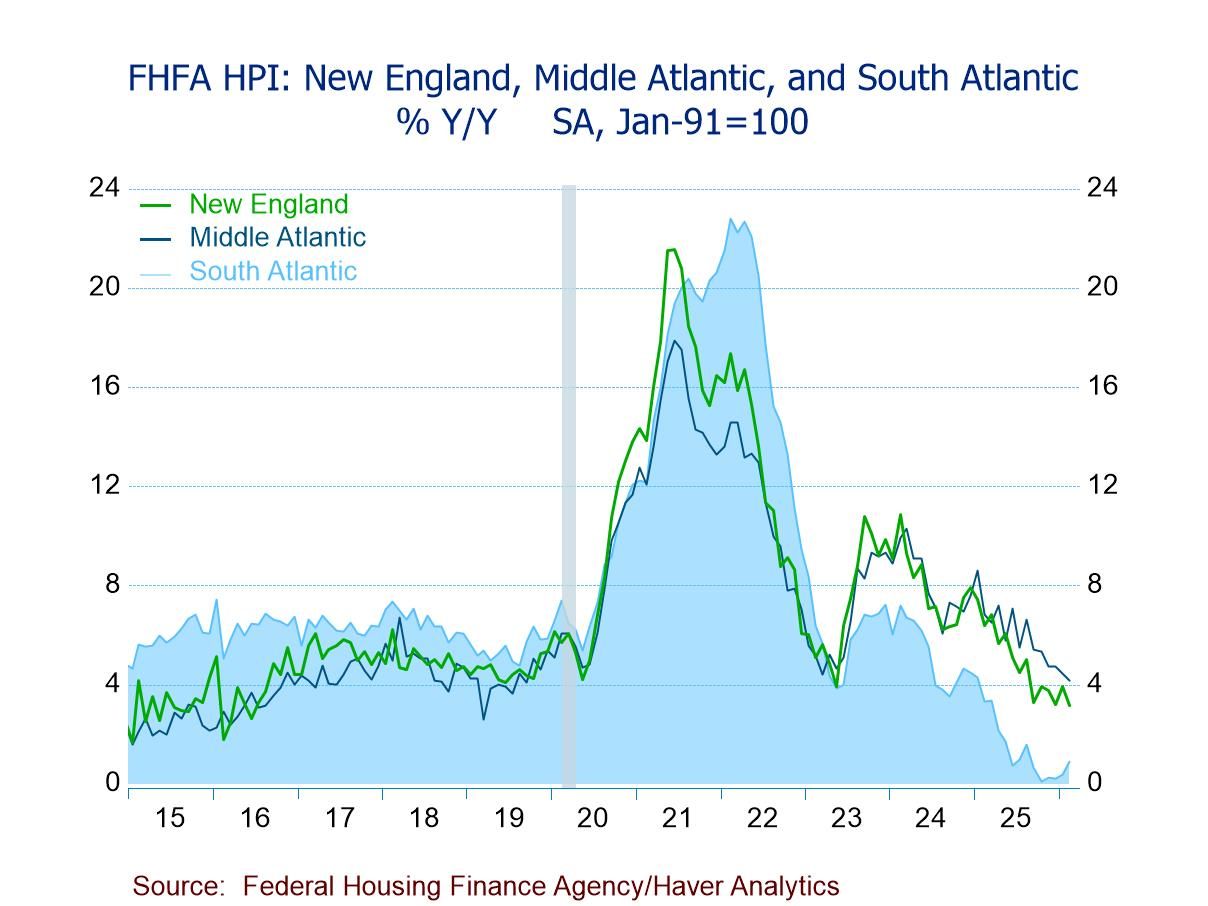
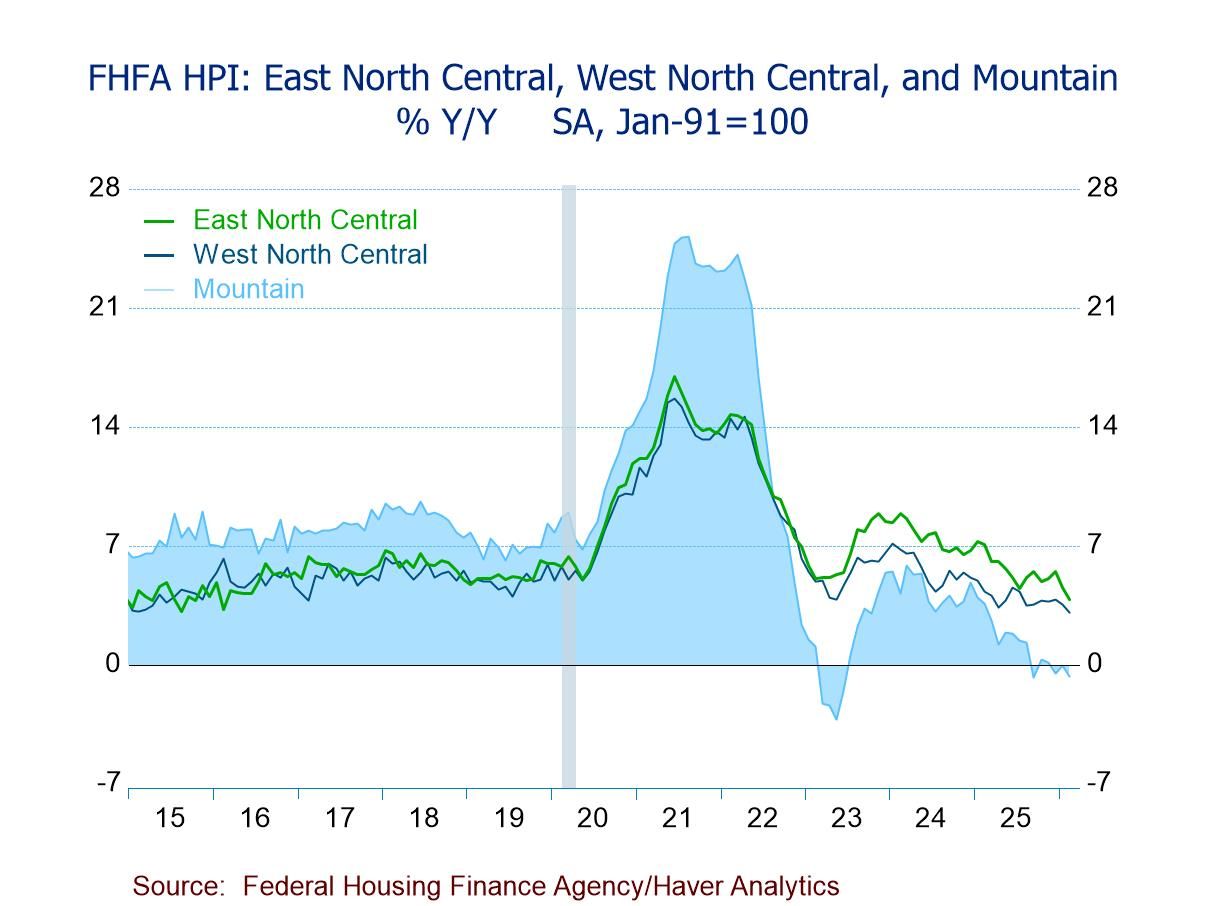
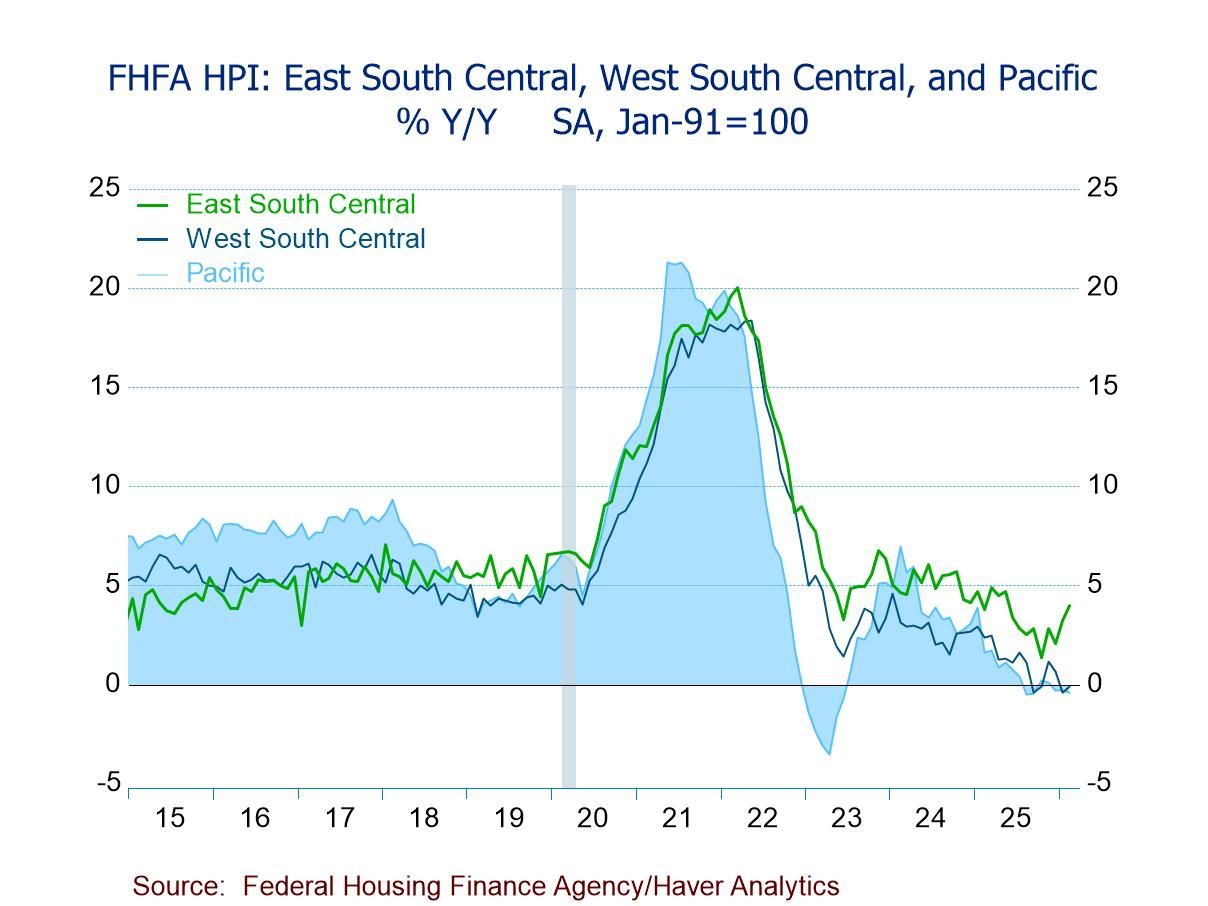
By region, February FHFA house prices showed a mixed performance. House prices fell m/m in February (vs. January) in four of the nine census divisions. Declines were led by Mountain (-1.1% vs. +0.4%), followed by Pacific (-0.5% vs. +0.6%), West North Central (-0.4% vs. +0.3%), and Middle Atlantic (-0.1% vs. +0.3%). To the upside, house prices rose m/m in four census divisions in February (vs. January): South Atlantic (+0.6% vs. -0.2%), East South Central (+0.2% vs. +1.2%), New England (+0.2% vs. +0.6%), and West South Central (+0.2% vs. -0.3%). Meanwhile, house prices in East North Central were virtually unchanged m/m for the second successive month in February following seven straight m/m gains.
Year-on-year house prices continued to rise in February in most regions, except Mountain, Pacific, and West South Central. The y/y growth rate accelerated in February (vs. January) in only two of the nine census divisions: East South Central (+4.0% vs. +3.2%) and South Atlantic (+0.9% vs. +0.4%). Meanwhile, house price growth decelerated y/y in February (vs. January) in four regions: New England (+3.1% vs. +3.9%), West North Central (+3.1% vs. +3.6%), East North Central (+3.8% vs. +4.5%), and Middle Atlantic (+4.2% vs. +4.5%). To the downside, Mountain (-0.7% vs. 0.0%), Pacific (-0.4% vs. -0.3%), and West South Central (-0.1% vs. -0.4%) posted y/y declines in February.
The FHFA house price index is a weighted purchase-only index that measures average price changes in repeat sales of the same property. An associated quarterly index includes refinancing the same kind of properties. The indexes are based on transactions involving conforming conventional mortgages purchased or securitized by Fannie Mae or Freddie Mac. Only mortgage transactions on single-family properties are included.
The FHFA data are available in Haver’s USECON database.

Winnie Tapasanun
AuthorMore in Author Profile »Winnie Tapasanun has been working for Haver Analytics since 2013. She has 20+ years of working in the financial services industry. As Vice President and Economic Analyst at Globicus International, Inc., a New York-based company specializing in macroeconomics and financial markets, Winnie oversaw the company’s business operations, managed financial and economic data, and wrote daily reports on macroeconomics and financial markets. Prior to working at Globicus, she was Investment Promotion Officer at the New York Office of the Thailand Board of Investment (BOI) where she wrote monthly reports on the U.S. economic outlook, wrote reports on the outlook of key U.S. industries, and assisted investors on doing business and investment in Thailand. Prior to joining the BOI, she was Adjunct Professor teaching International Political Economy/International Relations at the City College of New York. Prior to her teaching experience at the CCNY, Winnie successfully completed internships at the United Nations. Winnie holds an MA Degree from Long Island University, New York. She also did graduate studies at Columbia University in the City of New York and doctoral requirements at the Graduate Center of the City University of New York. Her areas of specialization are international political economy, macroeconomics, financial markets, political economy, international relations, and business development/business strategy. Her regional specialization includes, but not limited to, Southeast Asia and East Asia. Winnie is bilingual in English and Thai with competency in French. She loves to travel (~30 countries) to better understand each country’s unique economy, fascinating culture and people as well as the global economy as a whole.
More Economy in Brief
 Asia
Asia