Asia| Apr 27 2026
Economic Letter from Asia: Not Just About the Strait
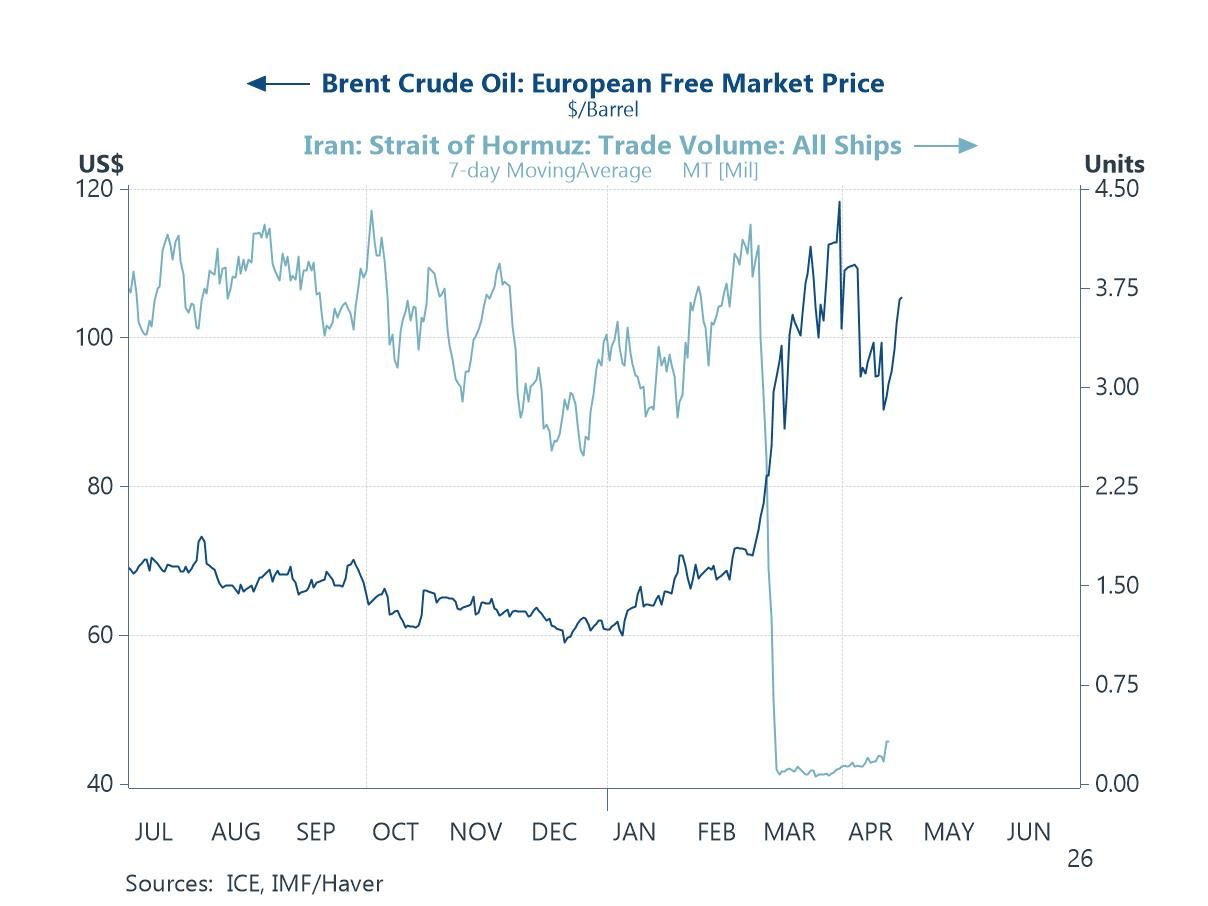
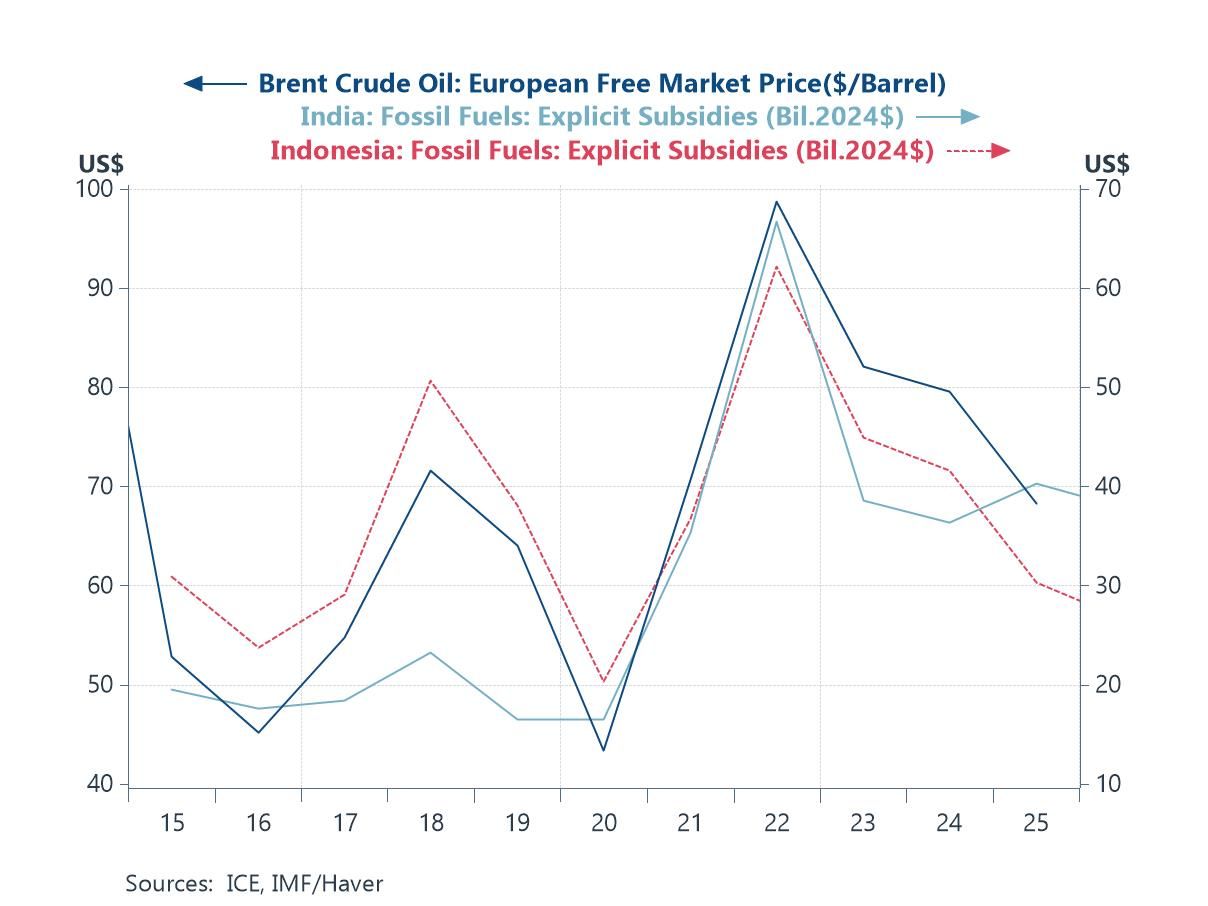
In this week’s Letter, we cover the latest developments and implications of the Middle East conflict for Asia, while also making space for other important themes, including artificial intelligence (AI). The Middle East conflict remains in a no deal state coming out of the weekend, though some early Monday optimism emerged in Asian markets following Iran’s reported offer to reopen the Strait of Hormuz (chart 1). Nonetheless, as the Strait closure drags on, so too do the fiscal costs of domestic fossil fuel subsidies across Asia, which have been shown to move closely with crude oil prices (chart 2). While such measures offer direct relief by cushioning household energy costs, they remain difficult to sustain over the long haul.
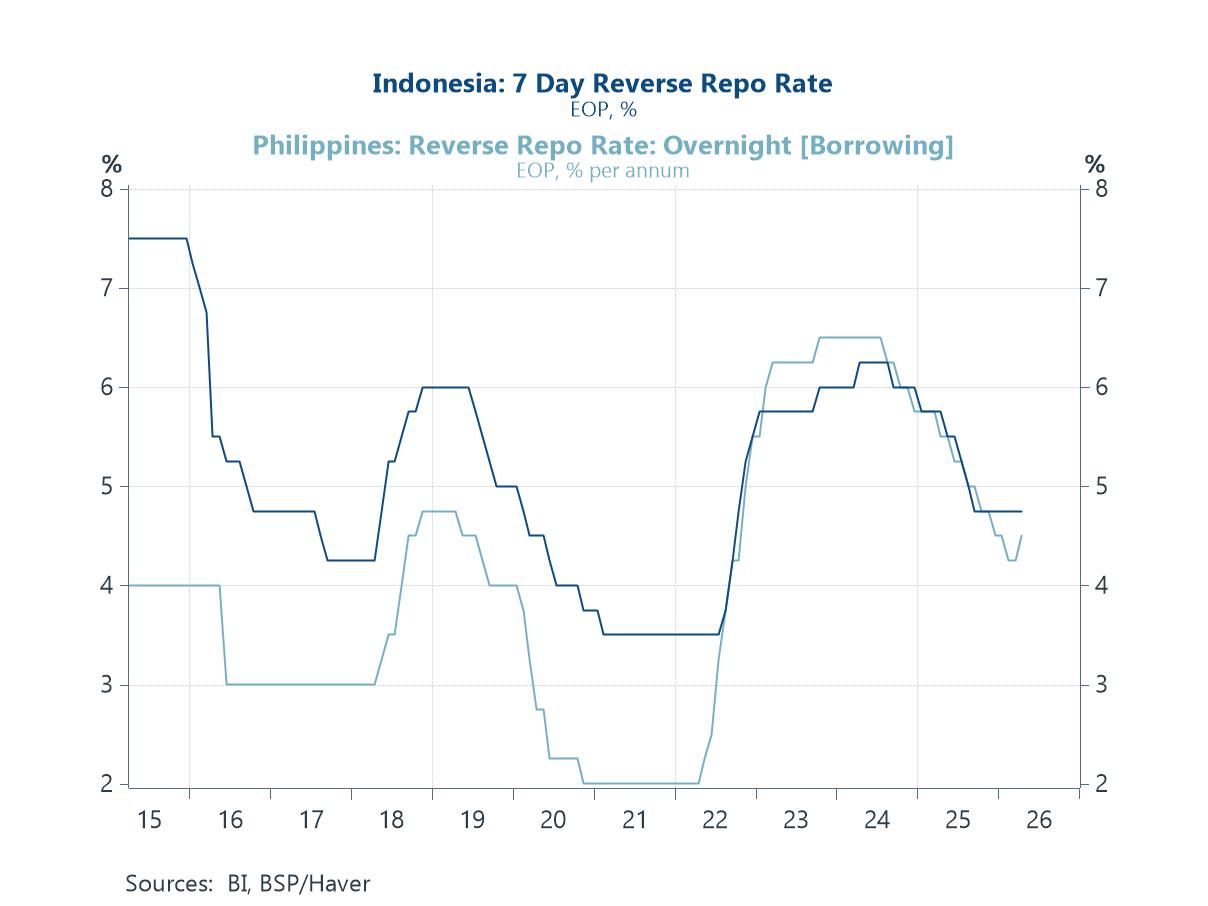
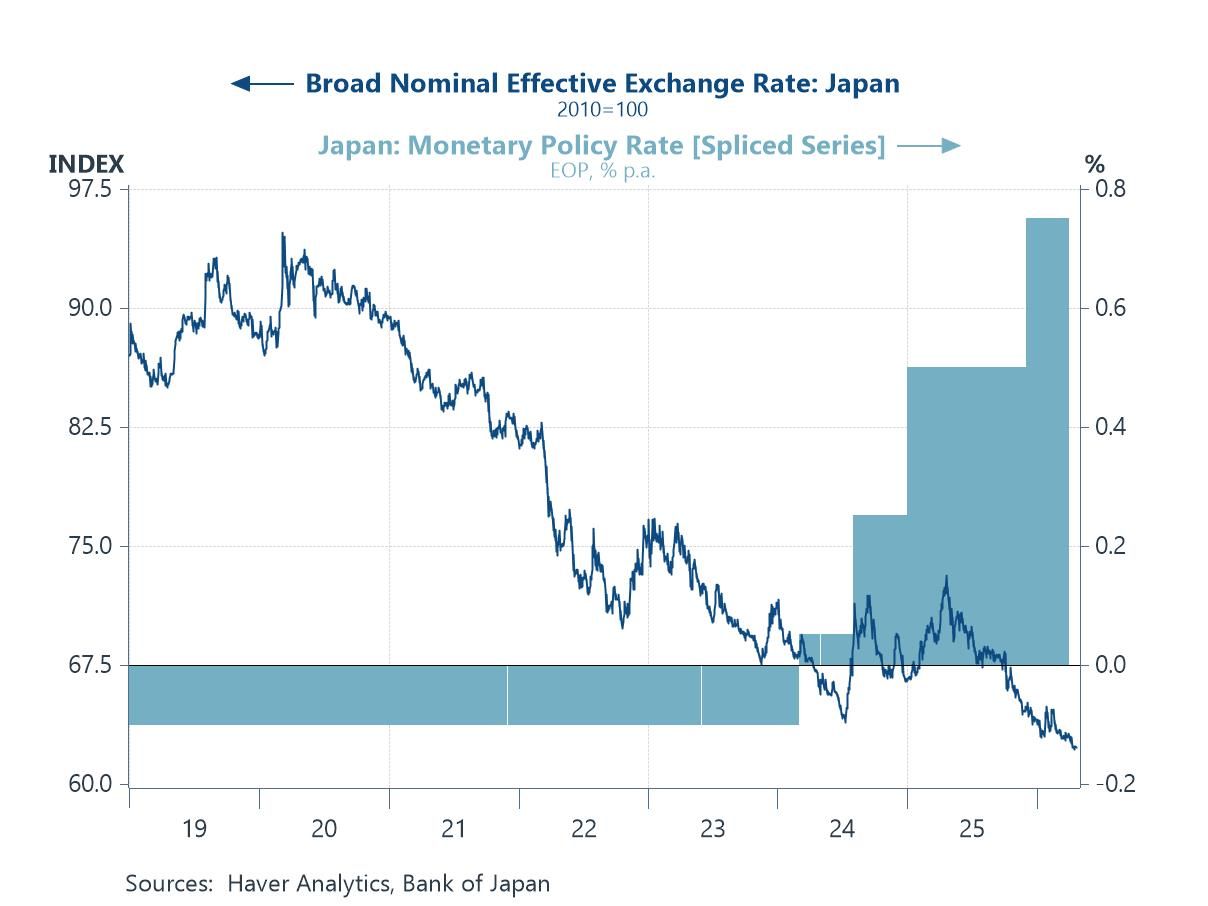
Over the week, we also saw a further fraying in regional monetary policy trends, with the Philippines hiking its policy rate for the first time in about two years amid inflation concerns, while Indonesia stood pat on rates (chart 3). Investor attention is likely to remain fixed on monetary policy this week, with the Bank of Japan due to decide on policy. Expectations for an April hike have faded amid the persistent Middle East conflict, though yen weakness continues to present a source of concern (chart 4). The week also brings China’s latest PMI readings (chart 5), adding to the recent run of hard data accompanying the Q1 GDP release.
Beyond the Middle East conflict, the evolution of AI continues to demand close attention. Before geopolitical tensions took centre stage, AI was the dominant market narrative — and that enthusiasm has hardly faded. If anything, recent developments suggest the story is broadening: use cases are expanding, scalability is improving, and access is widening beyond large corporates to the mass market — increasingly spilling into the realm of physical AI. It may well be this persistent wave of optimism that is helping to underpin equity valuations, even as the geopolitical backdrop darkens (chart 6).
The Middle East conflict About two months in, we remain stuck in the limbo of the US-Iran conflict, which has left the Strait of Hormuz largely closed and much of the world starved of the critical oil flows needed to power the global economy. The back and forth between the US and Iran has persisted in recent weeks, with both sides again failing to reach a peace deal over the weekend, though Monday’s news of Iran offering to reopen the Strait has revived some hope in markets. In truth, commodity and market valuations do not hinge so much on a peace deal itself, but rather on the resumption of oil flows through the Strait, something that could materialise even in the absence of a formal deal, though any agreement that includes and credibly delivers such a reopening would likely be warmly received by markets. Until then, market gyrations are likely to persist, with prices fluctuating in response to each new snippet of news. And until then, the world will continue both to be starved of, while gradually adapting to, the drip feed of oil flows emerging from the Strait.
Chart 1: Brent crude oil price and Strait of Hormuz shipping volumes
The fiscal costs of the Middle East conflict As the Middle East conflict drags on, so too does the strain on fiscal resources across parts of Asia, as the costs of energy-related subsidy programmes continue to mount. While such programmes have an immediate, direct, and tangible impact in shielding households from surging energy costs, they are far from sustainable, particularly if oil prices remain well above targeted levels or stay elevated for an extended period. As chart 2 illustrates, the costs of these explicit subsidy programmes tend to rise closely with crude oil prices, as seen in India and Indonesia. Other measures adopted elsewhere, such as drawing down oil reserves, may be less fiscally costly, but are similarly difficult to sustain indefinitely. In both respects, the clock is ticking, and the world continues to hold its breath as the conflict drags on.
Chart 2: Brent crude oil prices and the costs of explicit fossil fuel subsidies in India and Indonesia
The latest central bank responses to the conflict Over the past week, Asia saw two central bank decisions. The Philippines’ (BSP) opted to deliver its first rate hike in about two years, while Indonesia’s (BI) chose to stand pat on policy rates and instead committed to stepped up FX intervention (chart 3). This latest round of decisions points to a further fraying of what had been a broad regional monetary policy consensus, namely that central banks would delay additional easing while maintaining a high bar for outright tightening. Domestic considerations, however, remain paramount. In the Philippines’ case, the central bank has moved to rein in inflation, which is already showing notable signs of price pass through stemming from disruptions linked to the Strait of Hormuz. That said, BSP is not the first in the region to buck the reluctance to tighten. Singapore’s central bank had already tightened policy in mid-April, albeit through its own distinct framework, given its use of the exchange rate rather than policy rates as the primary channel for monetary policy.
Chart 3: Monetary policy rates for Indonesia and the Philippines
The week ahead Looking to the week ahead, a major central bank decision looms in Japan. Market expectations for the Bank of Japan to deliver a rate hike at its April meeting have ebbed amid the persistence of the Middle East conflict, to which Japan remains particularly vulnerable given its reliance on oil imports flowing through the Strait of Hormuz. At the same time, inflation in Japan has yet to become a major concern, with recent readings having picked up but not yet entering troubling territory. One potential source of concern, however, lies with the Japanese yen, which has remained on a weakening trend since early last year (chart 4). That depreciation has been one of the key arguments underpinning calls for further rate hikes.
Chart 4: The Japanese yen and Japan’s policy rate
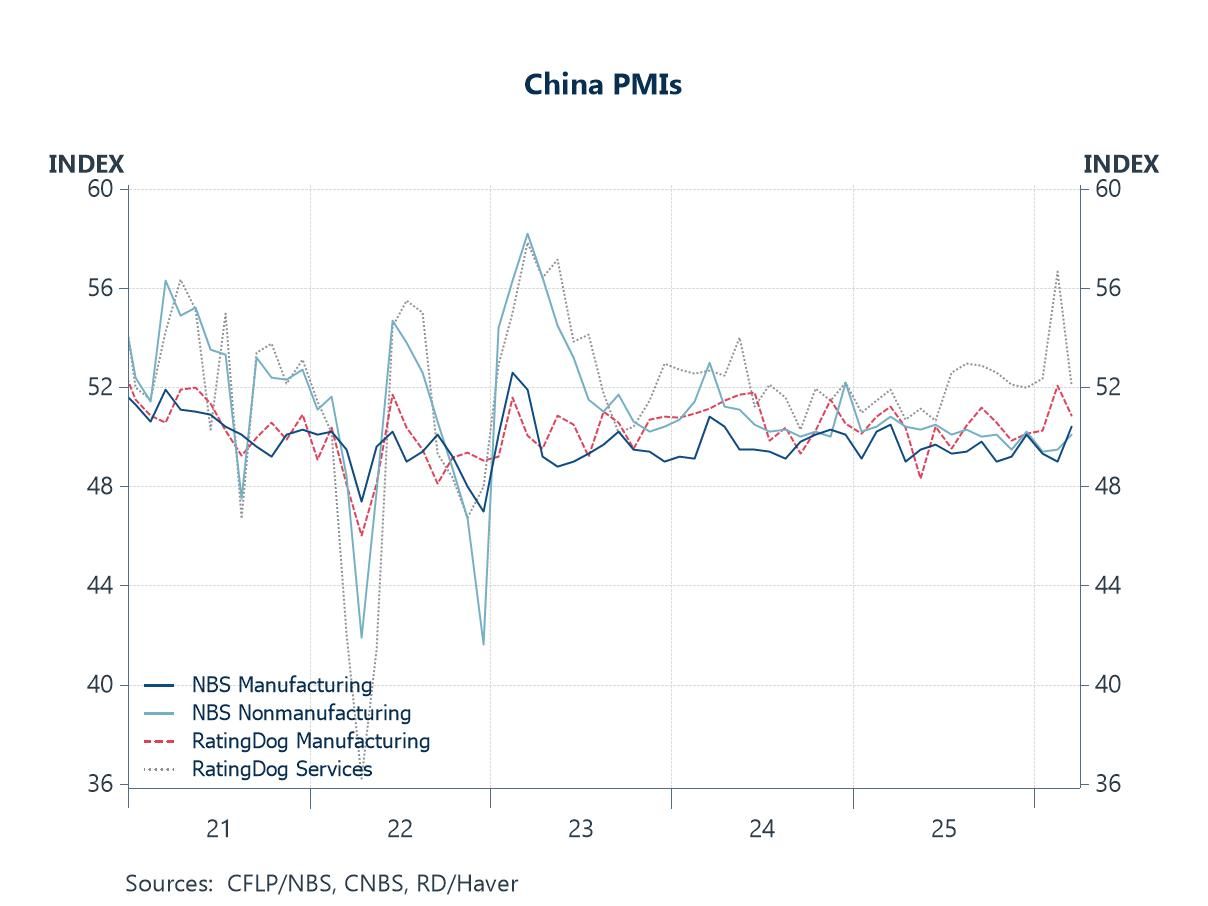
The week also brings China’s latest PMIs into focus. March saw a divergence between China’s official PMI readings, which improved, and the unofficial readings from RatingDog, which instead pulled back. Nonetheless, both official and unofficial gauges remained in expansionary territory (chart 5), with investors now watching closely to see whether that resilience can be sustained amid ongoing stresses from the Middle East, or whether offsetting drivers can continue to keep Chinese business sentiment and prospects buoyant.
Chart 5: China PMIs
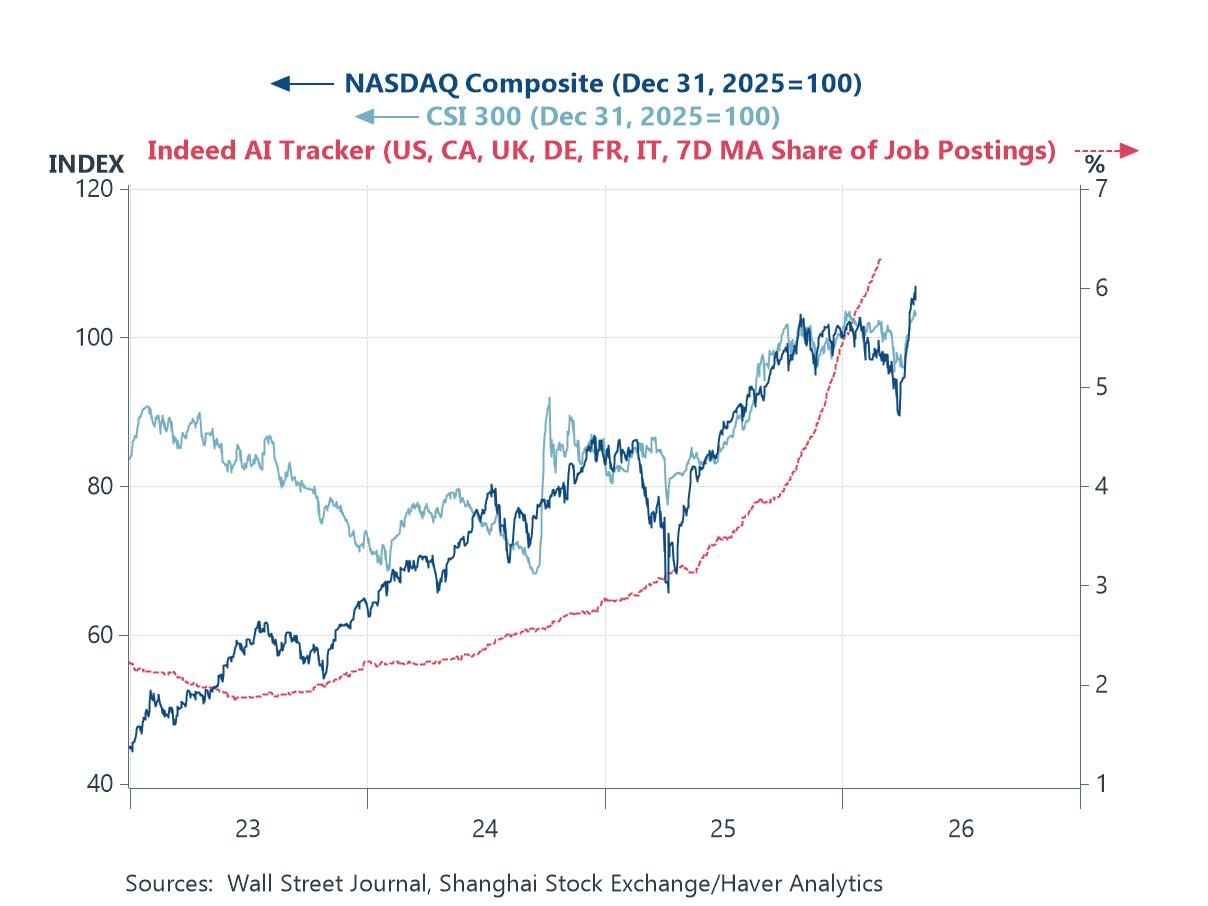
Beyond the strait Moving beyond the Middle East conflict, a whole host of developments continue to unfold globally, many of which have in fact helped offset some of the pessimism wrought by the Strait’s chokehold. One such development is artificial intelligence (AI), which had dominated headlines before the outbreak of the conflict and continues to advance at breakneck pace. AI capabilities are still rapidly evolving, while practical applications, such as physical AI embodied in humanoid robots, are beginning to show broader and stronger use cases. Production of such robots is also becoming increasingly scalable and within reach not just for industrial complexes and healthcare, but for the mass market as well. It is perhaps growing optimism around these prospects that has helped keep equity valuations buoyant, even in the face of the festering conflict in the Middle East. Moreover, while concerns over AI-driven job displacement persist, new opportunities are emerging as well, particularly for AI adopters, with a growing share of job postings in Western economies increasingly referencing AI-related skills, as shown in chart 6.
Chart 6: US and China equities, western economies’ share of AI-related job postings

Tian Yong Woon
AuthorMore in Author Profile »Tian Yong joined Haver Analytics as an Economist in 2023. Previously, Tian Yong worked as an Economist with Deutsche Bank, covering Emerging Asian economies while also writing on thematic issues within the broader Asia region. Prior to his work with Deutsche Bank, he worked as an Economic Analyst with the International Monetary Fund, where he contributed to Article IV consultations with Singapore and Malaysia, and to the regular surveillance of financial stability issues in the Asia Pacific region.
Tian Yong holds a Master of Science in Quantitative Finance from the Singapore Management University, a Master of Science in Analytics from the Georgia Institute of Technology, a Bachelor of Science in Mathematics from the Singapore University of Social Sciences, and a Bachelor of Science in Banking and Finance from the University of London.
More Economy in Brief