U.S. Employment and the Unemployment Rate Rose in November
by:Sandy Batten
|in:Economy in Brief
Summary
- Total payrolls rose 64k in November but fell 105k in October
- The October decline was more than accounted for by a 157k decline in government employment
- The unemployment rate jumped to 4.6% in November from 4.4% in September.
- There were no household survey data collected for October.
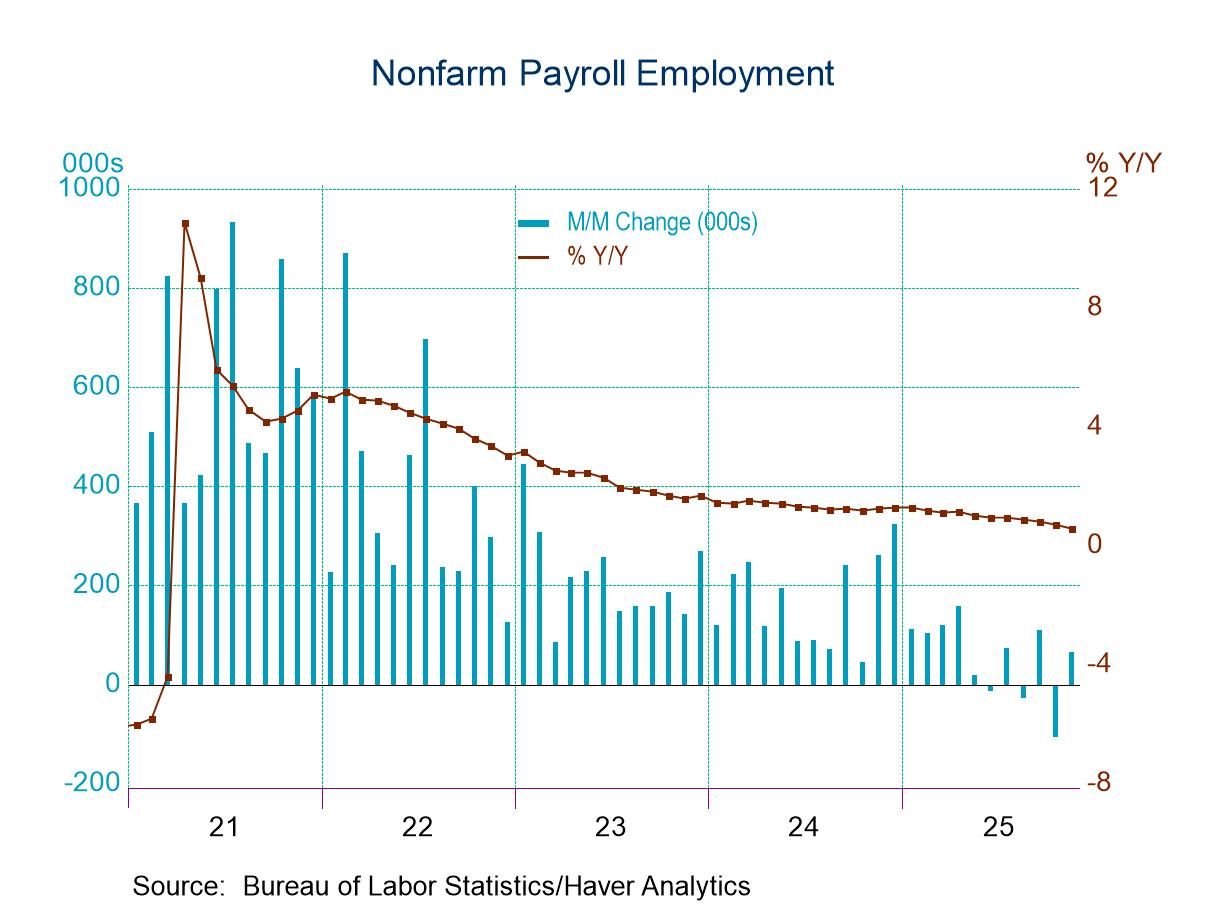
The Bureau of Labor Statistics released establishment survey data for both October and November today. With the government shutdown during the month of October, there was no household survey for that month. Today’s release contained only November data for households. Nonfarm payrolls (from the establishment survey) increased 64,000 in November but fell 105,000 in October. The 119,000 increase previously reported for September was revised down to a 108,000 rise. The Action Economics Forecast Survey had expected an 80,000 decrease in October and a 35,000 increase in November. The three-month average change in payrolls rebounded to 22,000 in November from -8,000 in October. However, this figure has trended down since early this year, pointing to a modest softening of labor-market conditions.
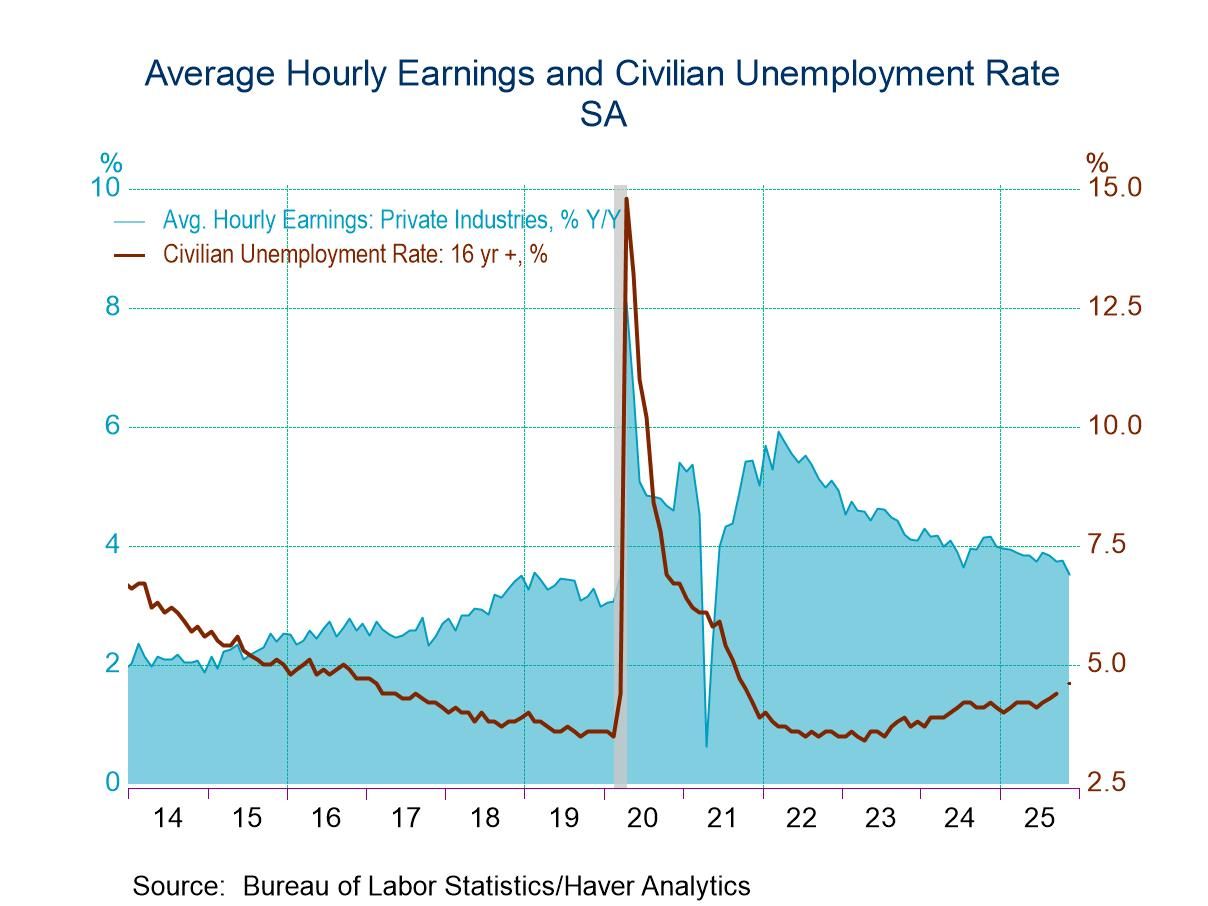
This softening was reinforced by a 0.2%-point jump in the unemployment rate, measured in the household survey, to 4.6% in November from 4.4% in September. (As already noted, there was no household survey in October.) The unemployment rate, including employees working part-time for economic reasons plus all marginally attached workers, surged to 8.7% in November from 8.0% in September. For both series, these were the highest readings since September 2021.
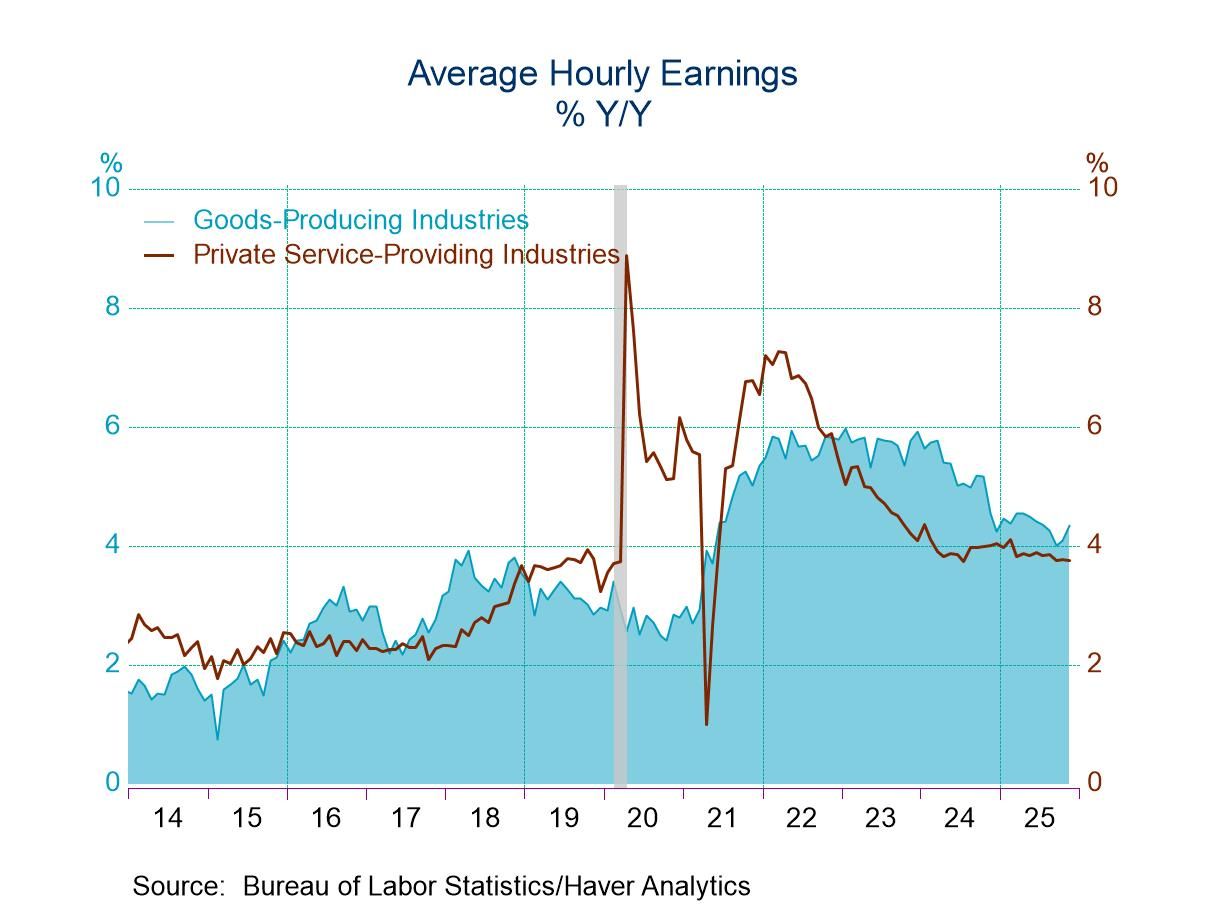
Average hourly earnings (AHE), a key variable for the Federal Reserve, showed a further slowing in wage growth. AHE edged up 0.1% m/m in November after a 0.4% monthly jump in October. Importantly, the y/y rate slowed to 3.5%, the slowest since May 2021, from 3.7% in both September and October. The annual pace of the rise in service-producing wages slowed to 3.4% in November from 3.7% in both September and October while the annual growth of goods-producing wages was unchanged at 4.0%. Depending on your estimate of productivity growth, the current pace of total AHE growth is likely still a little too fast to be consistent with the Fed’s 2% inflation target. But clearly, it is moving in the desired direction.
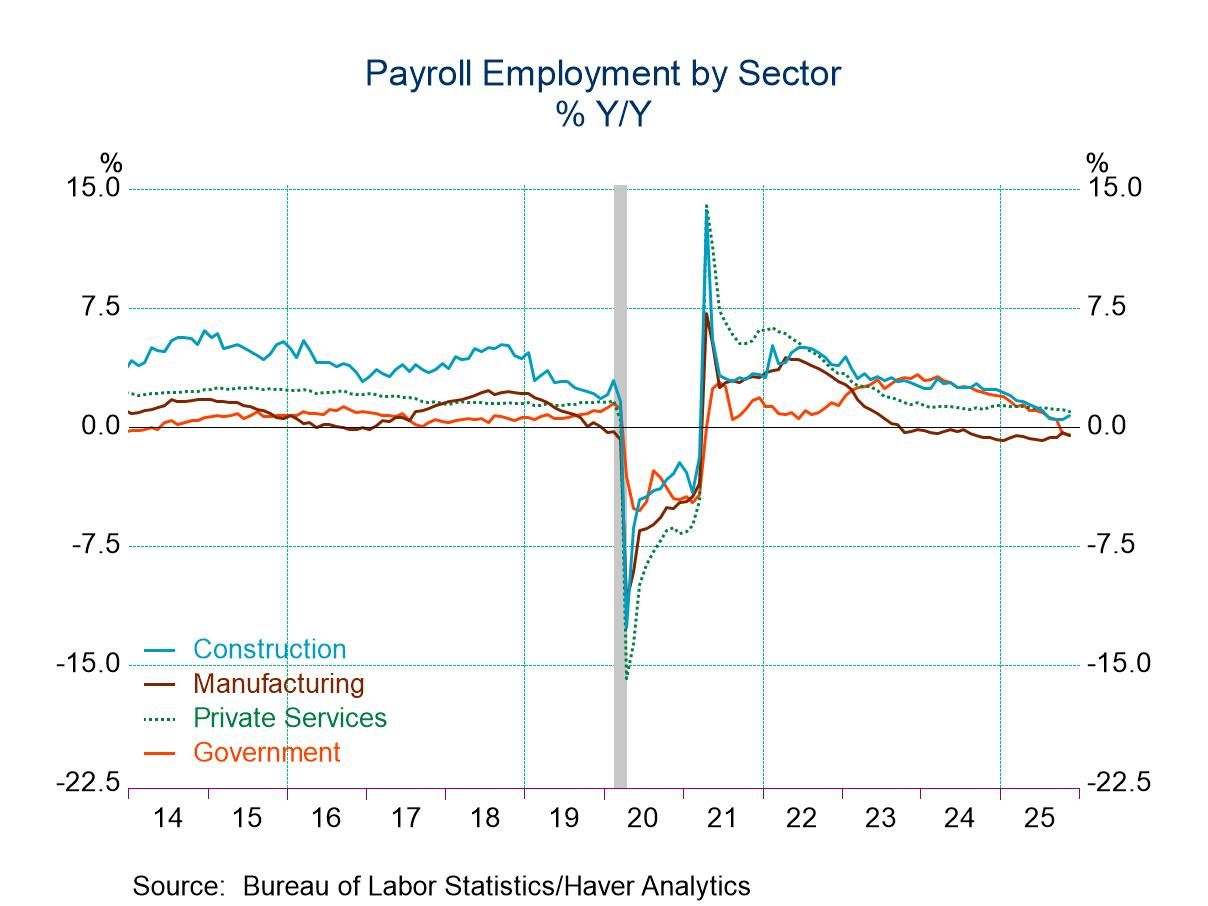
In the establishment survey, much of the recent softening reflects declines in federal government employment. Federal government employment fell again in November (-6,000). This follows a sharp decline of 162,000 in October, as some federal employees who accepted a deferred resignation offer came off federal payrolls. Federal government employment is down by 271,000 since reaching a peak in January. (Note however that federal employees on furlough during the government shutdown were counted as employed in the establishment survey because they received pay, even if later than usual, for the pay period that included the 12th of the month. Employees on paid leave or receiving ongoing severance pay are counted as employed in the establishment survey.)
Private-sector employment rose 69,000 in November and 52,000 in October following an upwardly revised 104,000 increase in September (previously 97,000). Goods sector employment rebounded in November, rising 19,000 after a 9,000 fall in October. Construction jobs increased 28,000 in November, their largest monthly gain in more than a year, but slipped 1,000 in October. Manufacturing jobs continued to decline, falling 5,000 in November and 9,000 in October. They have now declined for seven consecutive months, not the result that the Trump Administration new tariff policy had intended.
Private-sector service-producing jobs gained 50,000 in November on top of a 61,000 increase in October and an 87,000 rise in September. A 46,000 increase in healthcare jobs on top of a 44,000 increase in October and an 18,000 gain in social assistance jobs in November after a 21,000 increase in October led the overall increases in the past two months. Other major sectors mostly experienced either job declines or minimal gains in October and November.
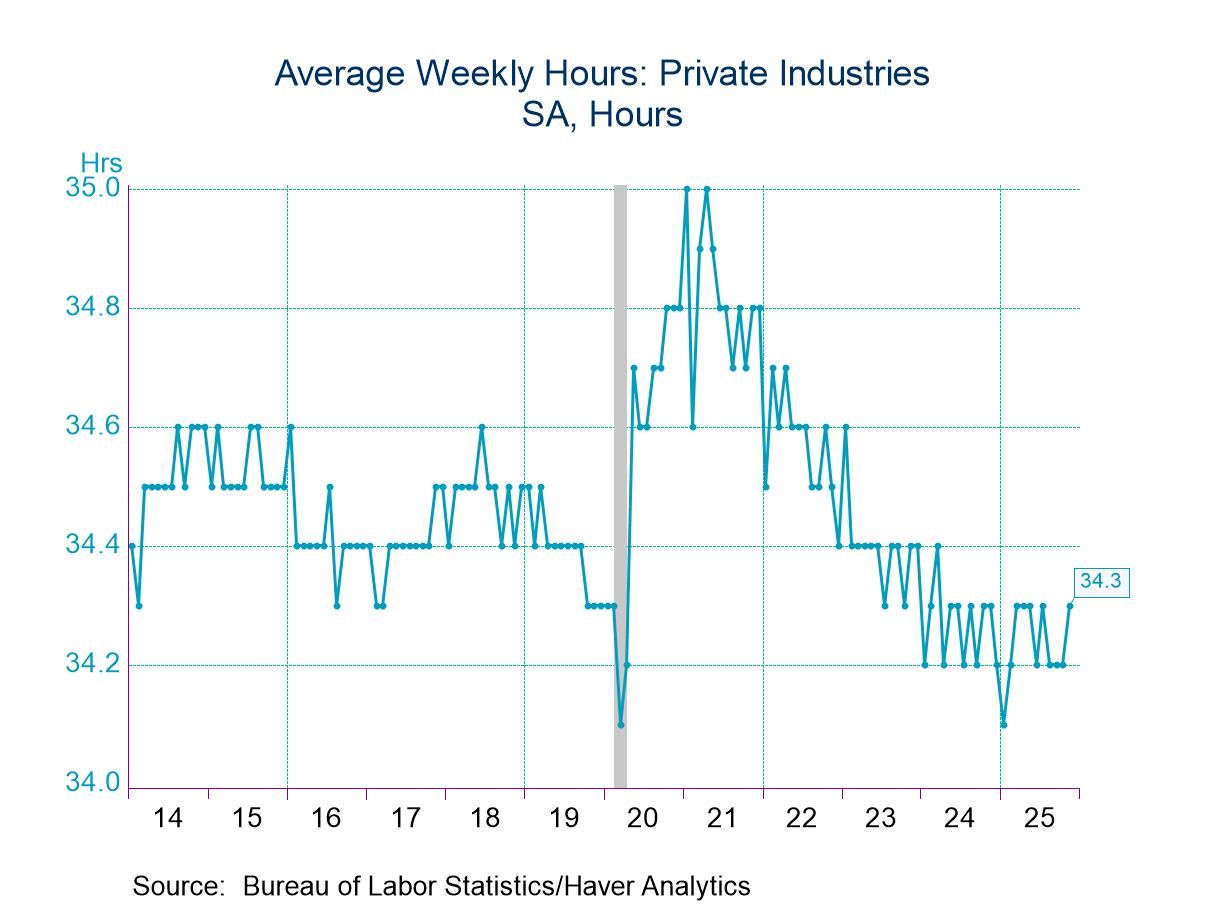
The length of the workweek increased to 34.3 hours in November from 34.2 hours in August, September and October. The goods-producing workweek edged up to 39.8 hours in November from 39.6 hours in October while the private service-producing workweek was unchanged at 33.2 hours in November.
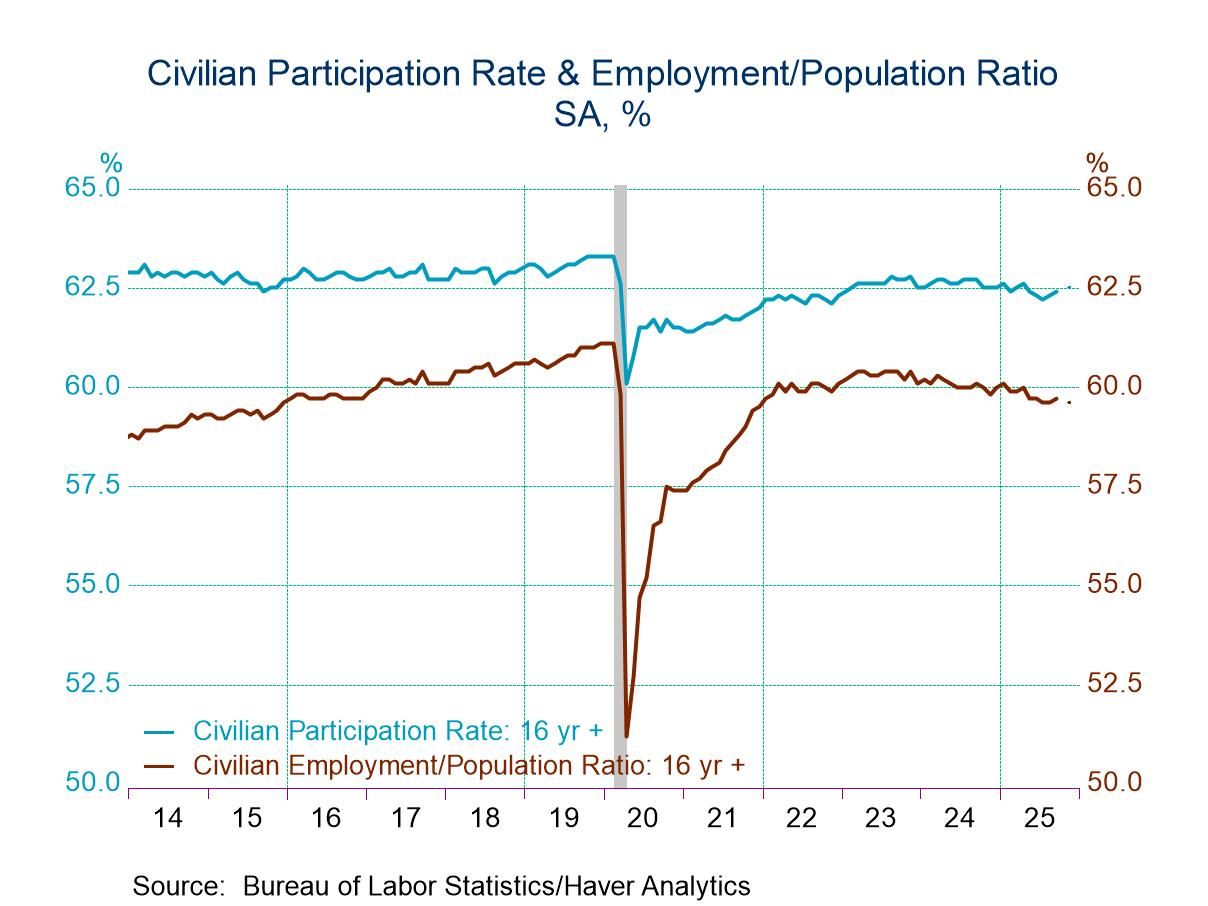
In the household survey, the unemployment rate jumped to 4.6% in November, the highest since September 2021 and up from a recent low of 3.4% in April 2023, from 4.4% in September (again, no data for October). The labor force increased 323,000 in November from September after a 470,000 monthly gain in September. The gain in employment slowed in November with the number of employed rising only 96,000 from September following a 251,000 monthly increase in September. The number of unemployed increased 228,000 in November from September following a 219,000 monthly increase in September. The labor force participation rate rose to 62.5% in November, its highest since April, from 62.4% in September. On a slightly brighter note, the average duration of unemployment slipped to 23.0 weeks in November from 24.1 weeks in September while the median duration of unemployment fell to 9.5 weeks, the lowest since May, from 10.0 weeks in September.
The employment/population ratio for all workers slipped to 59.6% in November from 59.7% in September. It remained below the recent peak reading of 61.1% in February 2020 just prior to the pandemic. For men, the rate slipped to 64.6% in November from 64.8% in September and 65.0% in August, and for women, the rate was unchanged at 54.8% in November.
The employment and earnings data are collected from surveys taken each month during the week containing the 12th day of the month. The labor market data are contained in Haver's USECON database. Detailed figures are in the EMPL and LABOR databases. The expectations figures are in the AS1REPNA database.

Sandy Batten
AuthorMore in Author Profile »Sandy Batten has more than 30 years of experience analyzing industrial economies and financial markets and a wide range of experience across the financial services sector, government, and academia. Before joining Haver Analytics, Sandy was a Vice President and Senior Economist at Citibank; Senior Credit Market Analyst at CDC Investment Management, Managing Director at Bear Stearns, and Executive Director at JPMorgan. In 2008, Sandy was named the most accurate US forecaster by the National Association for Business Economics. He is a member of the New York Forecasters Club, NABE, and the American Economic Association. Prior to his time in the financial services sector, Sandy was a Research Officer at the Federal Reserve Bank of St. Louis, Senior Staff Economist on the President’s Council of Economic Advisors, Deputy Assistant Secretary for Economic Policy at the US Treasury, and Economist at the International Monetary Fund. Sandy has taught economics at St. Louis University, Denison University, and Muskingun College. He has published numerous peer-reviewed articles in a wide range of academic publications. He has a B.A. in economics from the University of Richmond and a M.A. and Ph.D. in economics from The Ohio State University.
More Economy in Brief
 Global