

Putting Current Bond Yields into Historical Perspective
|in:Viewpoints
My key observation about the current angst about “high” bond yields: I much prefer high real interest rates associated with healthy economic growth and high returns to capital than low real interest rates associated with economic malaise and low expectations.
Also, while I have long argued that the persistently high government budget deficits and rising debt/GDP are a major problem that involve a misallocation of national resources and must be addressed, I’m not so sure that the recent rise in rates can be attributable to the government’s rising debt.
It’s a tossup between what was more illogical last week, the headlines lamenting “soaring bond yields” or U.S. Secretary of the Treasury Scott Bessent’s announcement that the Treasury had upped its bond buyback program with the hope of lowering yields on long-duration Treasury securities.
A bit of historical perspective is instructive. Current yields are not “soaring” or even “high”—they are in a range that is consistent with current economic and inflation conditions—and these levels are preferable to the low bond yields that characterized the troubled post-Great Financial Crisis period. And Bessent’s Wall Street career in fixed income presumably taught him that interventions aimed at manipulating the bond market would not work; clearly, his announced intervention was a political ploy to placate President Trump. It didn’t work. I strongly recommend Stanley Druckenmiller’s Wall Street Journal article “Let the Bond Market Speak”, August 24, 2026.
Currently, 10-year US Treasury yields are roughly 4.7%, up from 4.2% earlier in 2026. With inflationary expectations around 2.25%, real rates are in the 2.4%-2.5% range. It’s likely that real rates would be even higher if not for the Trump Administration’s tariffs, clampdown on immigration and other policies that have dampened real growth and threatened longer-run potential. Current real rates are above the low bond yields during 2010-2014 (they ranged between 2.5%-3.25%) that were associated with the disappointingly soft economic recovery from the Great Financial Crisis, lingering high unemployment and diminished expectations, the Fed’s zero interest rates and extended asset purchases and worries that inflation was too low, but significantly below the bond yields of the 1990s and modestly below those that prevailed during portions of the early 2000s.
A cursory comparison of recent decades suggests clearly that the post-GFC period was aberrant period. (Federal Reserve Bank of New York research “Measuring the Natural Rate of Interest”, 2026, estimates that the 2009-2014 period was the low point of the natural rate in modern history.) Yet many financial market participants and commentators use the low rates of that aberrant period as the benchmark for characterizing current yields as high and rising, when economic conditions are far different.
Chart 1 shows 10-year Treasury bond yields and core PCE inflation since 1990. Chart 2 shows the inflation-adjusted bond yields (a measure of inflationary expectations is not available back to 1990) and their correlation to productivity gains.
Chart 1. 10-Year Treasury Yield and Core PCE Inflation
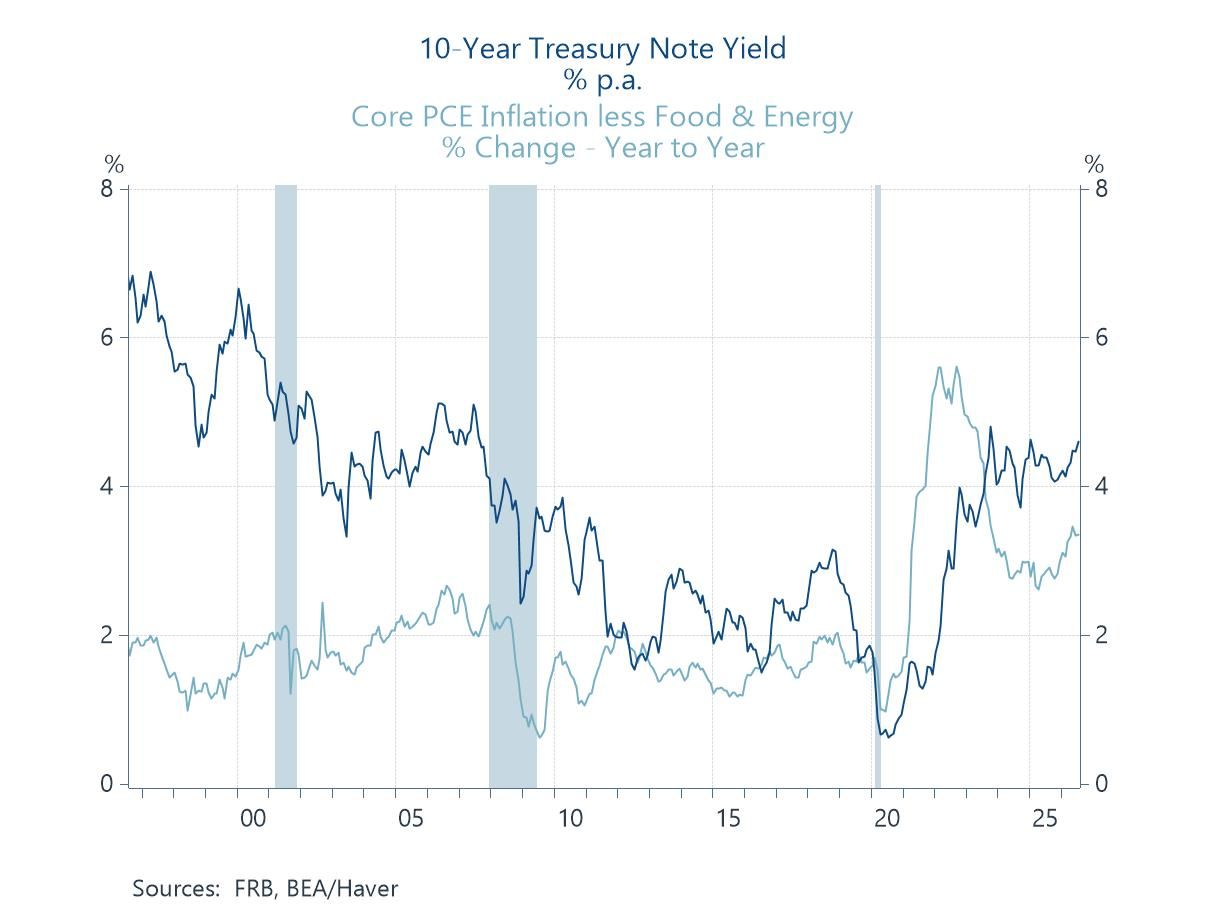
Chart 2. Productivity and 10-Year Treasury Yields
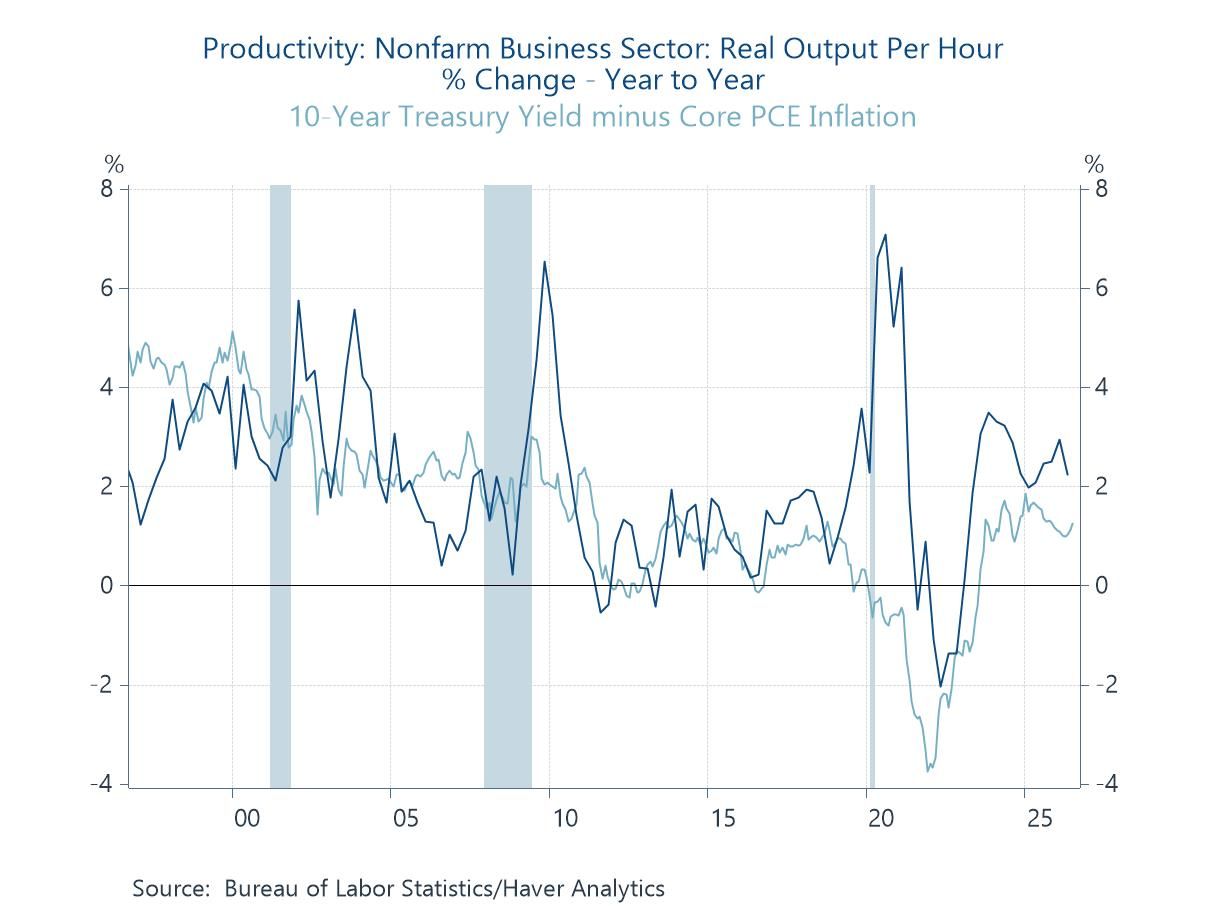
Bond yields were modestly higher in the early 2000s than currently, particularly in real terms, reflecting the economic growth of the period. Obviously, the debt-financed housing bubble and excesses in the MBS market were part of a misallocation of capital that precipitated the GFC.
The most instructive comparison is between current conditions and the 1990s. Bond yields in the 1990s were much higher than currently, in real and nominal terms, associated with solid productivity-driven economic growth, high returns to capital and high expectations. 10-yr Treasury yields hovered between 6.5%-7% during 1994-1997 and averaged 5.4% in 1998-1999, while inflation-adjusted yields were above 4% for most of the period.
The economic and financial highlights of the 1990s included strong growth and rising wealth (the stock market and housing appreciated faster than the economy); the Fed’s highly successful mid-expansion cycle tightening (February 1994-February 1995) that lowered inflationary expectations and resulted in a soft economic landing; Alan Greenspan’s pushback on tightening monetary policy in response to the strong growth and declining unemployment because he believed the productivity boom would lift real growth and constrain inflation; and strength in capital markets and subsequent decade-end surge in capital markets that culminated with the dot.com bubble.
As a side note, one big difference between the dot.com driven stock market of the late 1990s and the stock market of the 2020s is the dramatic speed of the implementation of AI into commerce and society and the magnitude of the revenues and profits of the AI industry, compared to the lack of revenues and profits of a majority of the dot.com firms of the 1990s.
A second side note contrasts the U.S. government budget in the 1990s to the current situation of worrisome budget deficits and rising debt, with some irony. In the 1990s, budget deficits shrank and toward decade-end, there were budget surpluses that shrank government debt outstanding. This trend reflected sizable declines in defense spending related to the “peace dividend” associated with the end of the cold war combined with the surge in tax revenues related to capital gains taxes generated by the strong stock market.
Fed Chair Greenspan subsequently testified to Congress that declines in government debt were potentially harmful to the US Treasury market and financial markets, and recommended tax cuts (“Outlook for the federal budget and implications for fiscal policy”, Committee on the Budget, U.S. Senate, January 25, 2001). However, while the government budget imbalance was improving in cash flow terms, it was deteriorating on an accrual basis, and longer-run projections of future deficits and debt were mounting, reflecting the pending retirement of the post-war baby boom generation.
Policymakers of the 1990s failed to address these issues, and those demographics now dominate the current budget and projections of the future. The shrinking government debt/GDP ratio in the 1990s played little role in the financial market debate about bond yields, whereas in the current environment even small moves in yields draw attention to the extraordinarily high and worrisome budget deficits and debt.
While I have long argued that the persistently high government budget deficits and rising debt/GDP are a major problem that involve a misallocation of national resources and must be addressed, I’m not so sure that the recent rise in rates can be attributable to the government’s rising debt.
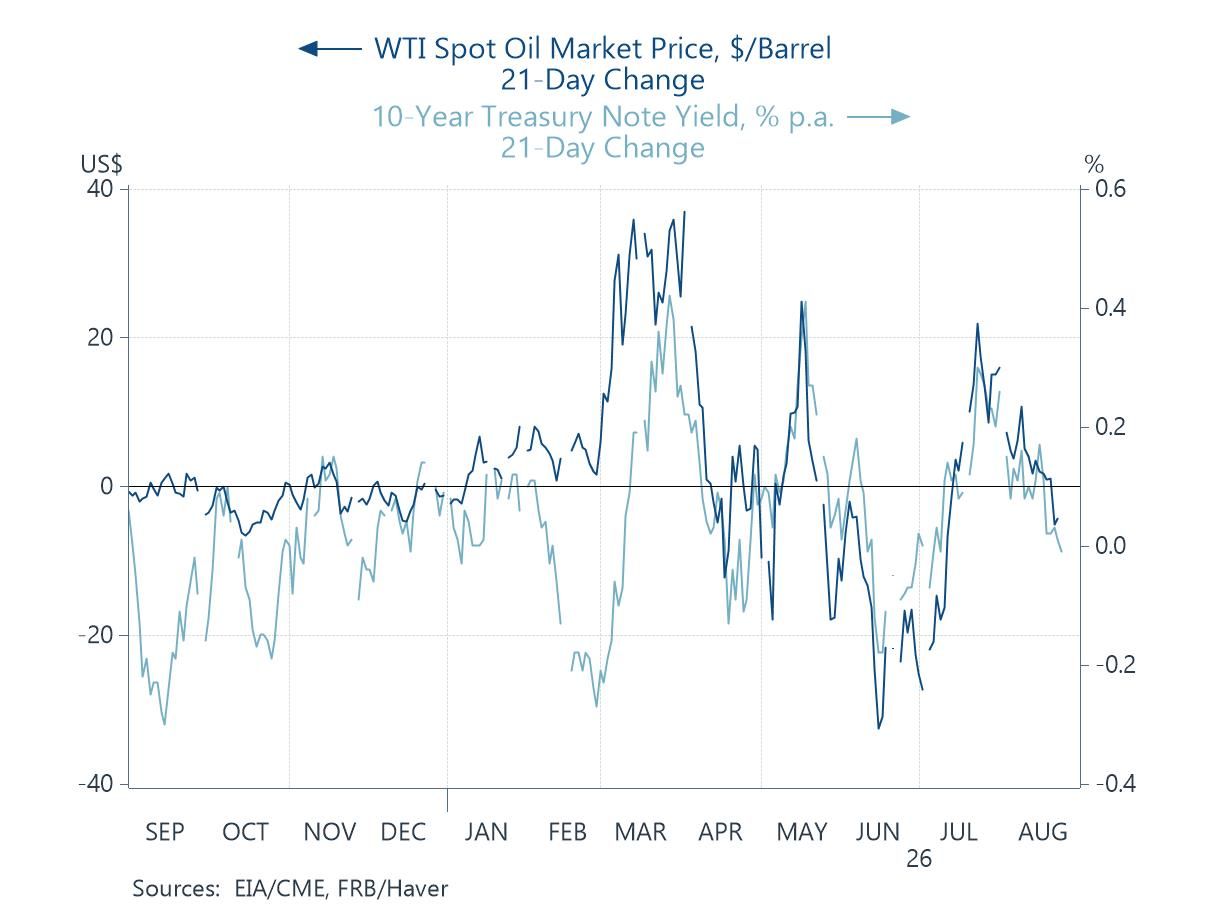
The bottom line is today’s real Treasury bond yields largely reflect the healthy economy and high expected returns on capital, despite erratic policies that constrain growth (Of course, other factors are at play; currently, as shown in Chart 3, high oil prices are clearly influencing bond yields.)
Chart 3. 21-Day Change in WTI Oil Prices and 10-Year Treasury Yield
That doesn’t mean that every investment in AI will provide a healthy return or that the economy will not hit speed bumps along the way. (Nor can the weak housing activity be blamed on “high” mortgage rates; that is attributable primarily to the 50% surge in home values in the early-2020s that the Fed contributed to). But it does reflect the historical perspective that interest rates tend to reflect the economic and inflation conditions of the day. I would prefer even higher real rates and a stronger real US dollar that would stem from reasonable and predictable pro-growth economic policies.

Mickey D. Levy
AuthorMore in Author Profile »Mickey Levy is a macroeconomist who uniquely analyzes economic and financial market performance and how they are affected by monetary and fiscal policies. Dr. Levy started his career conducting research at the Congressional Budget Office and American Enterprise Institute, and for many years was Chief Economist at Bank of America, followed by Berenberg Capital Markets. He is a Visiting Fellow at the Hoover Institution at Stanford University and a long-standing member of the Shadow Open Market Committee.
Dr. Levy is a leading expert on the Federal Reserve’s monetary policy, with a deep understanding of fiscal policy and how they interact. He has researched and spoken extensively on financial market behavior, and has a strong track record in forecasting. Dr. Levy’s early research was on the Fed’s debt monetization and different aspects of the government’s public finances. He has written hundreds of articles and papers for leading economic journals on U.S. and global economic conditions. He has testified frequently before the U.S. Congress on monetary and fiscal policies, banking and credit conditions, regulations, and global trade, and is a frequent contributor to the Wall Street Journal.
He is a member of the Council on Foreign Relations and the Economic Club of New York, and previously served on the Panel of Economic Advisors to the Federal Reserve of New York, as well as the Advisory Panel of the Office of Financial Research.
Dr. Levy holds a Ph.D. in Economics from University of Maryland, a Master’s in Public Policy from U.C. Berkeley, and a B.A. in Economics from U.C. Santa Barbara.
 Global