ISM Services: Favorable News from Every Perspective
Summary
- Headline index for February jumped to a multi-year high.
- Three of the four components contributed positively.
- The prices index, although still elevated, eased.
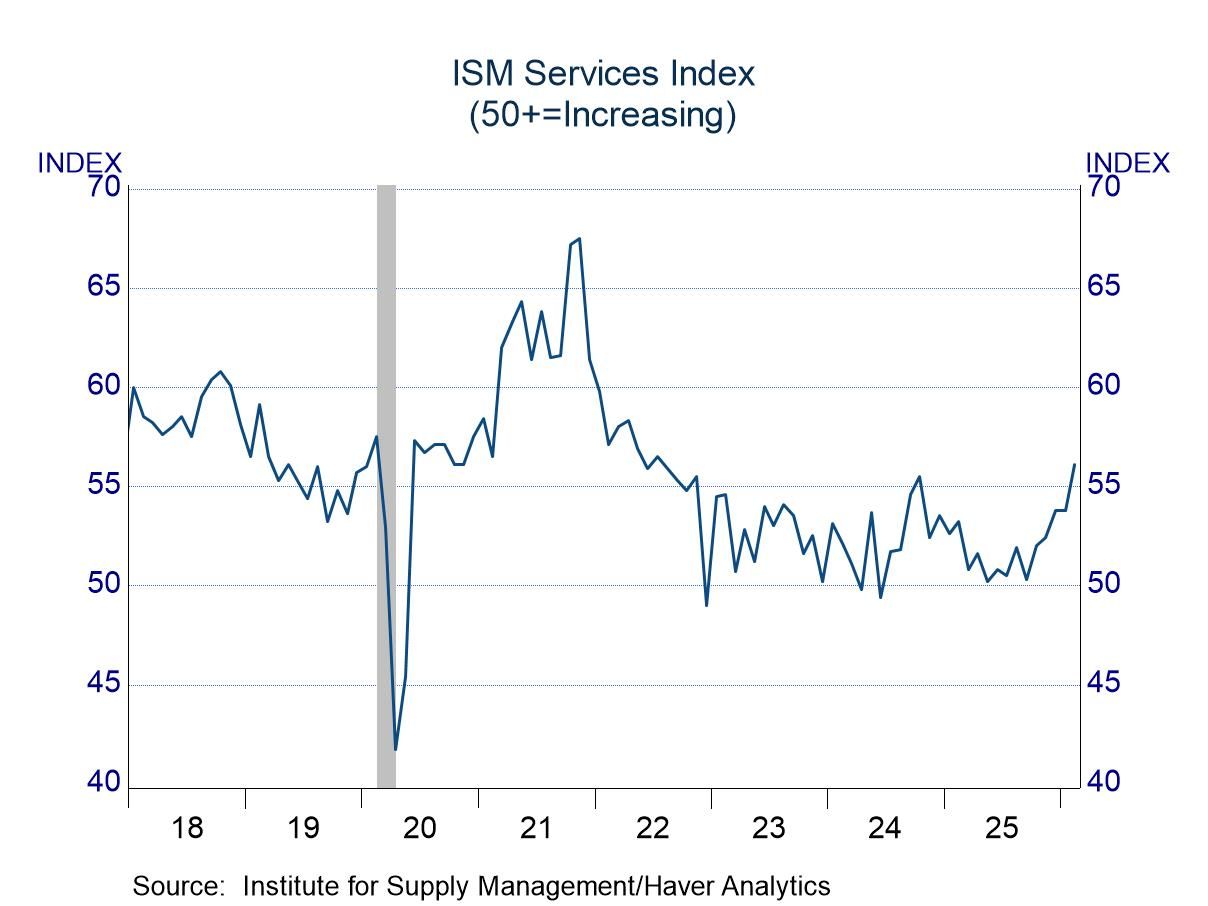
The services index published by the Institute for Supply Management rose 2.3 index points in February to 56.1, signaling solid expansion in the service sectors of the economy. February marked the 20th consecutive month with a reading above the 50 threshold (which separates expansion from contraction), and it was the firmest reading since mid-2022. The increase in the index was broadly based, as three of the four components contributed positively, and all were above the 50 threshold.
The supplier delivery index was the only component that did not boost the headline measure, and its monthly change was minuscule (off 0.3 index point to 53.9). The dip, and the relatively low reading on this measure, could be viewed in a positive light, as the new information suggests that supply-chain problems are not an issue at this time.
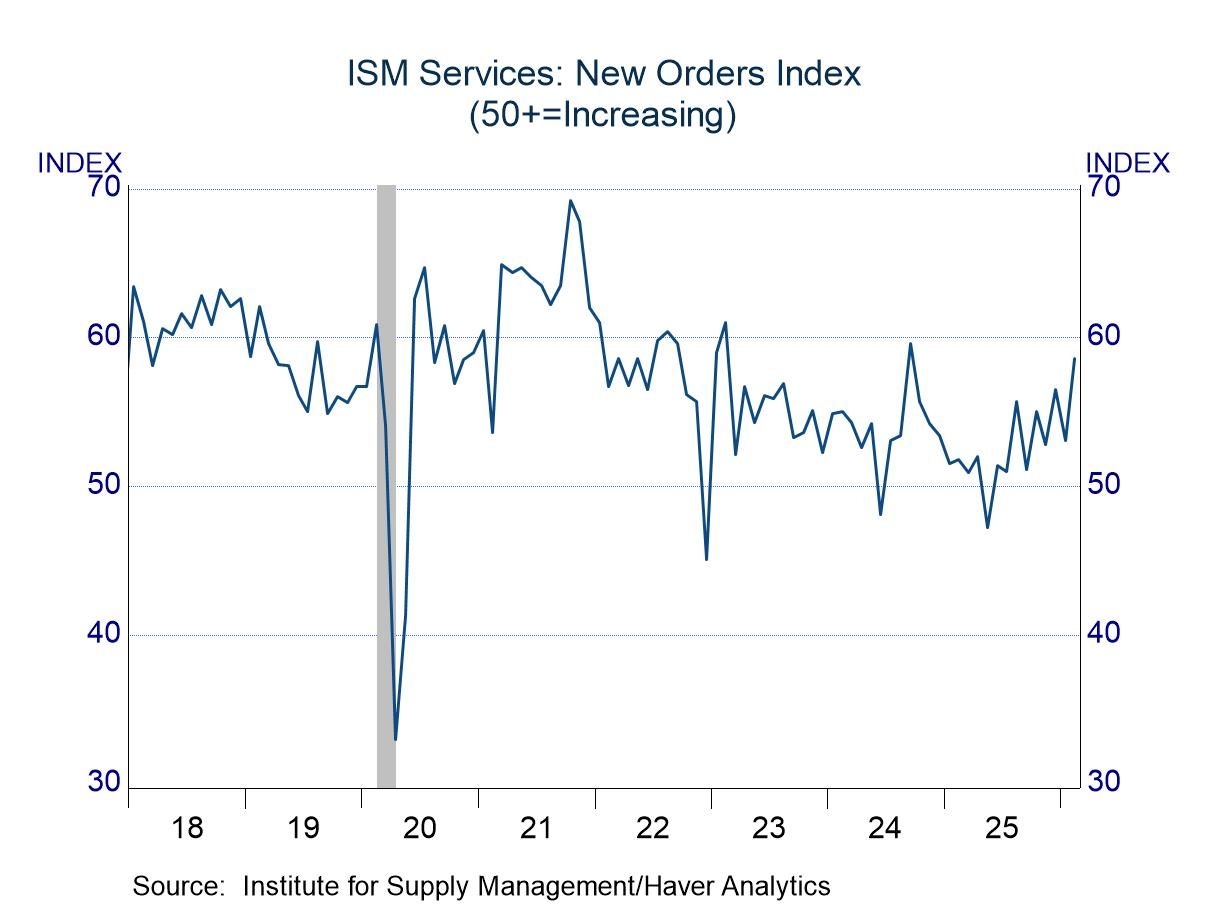
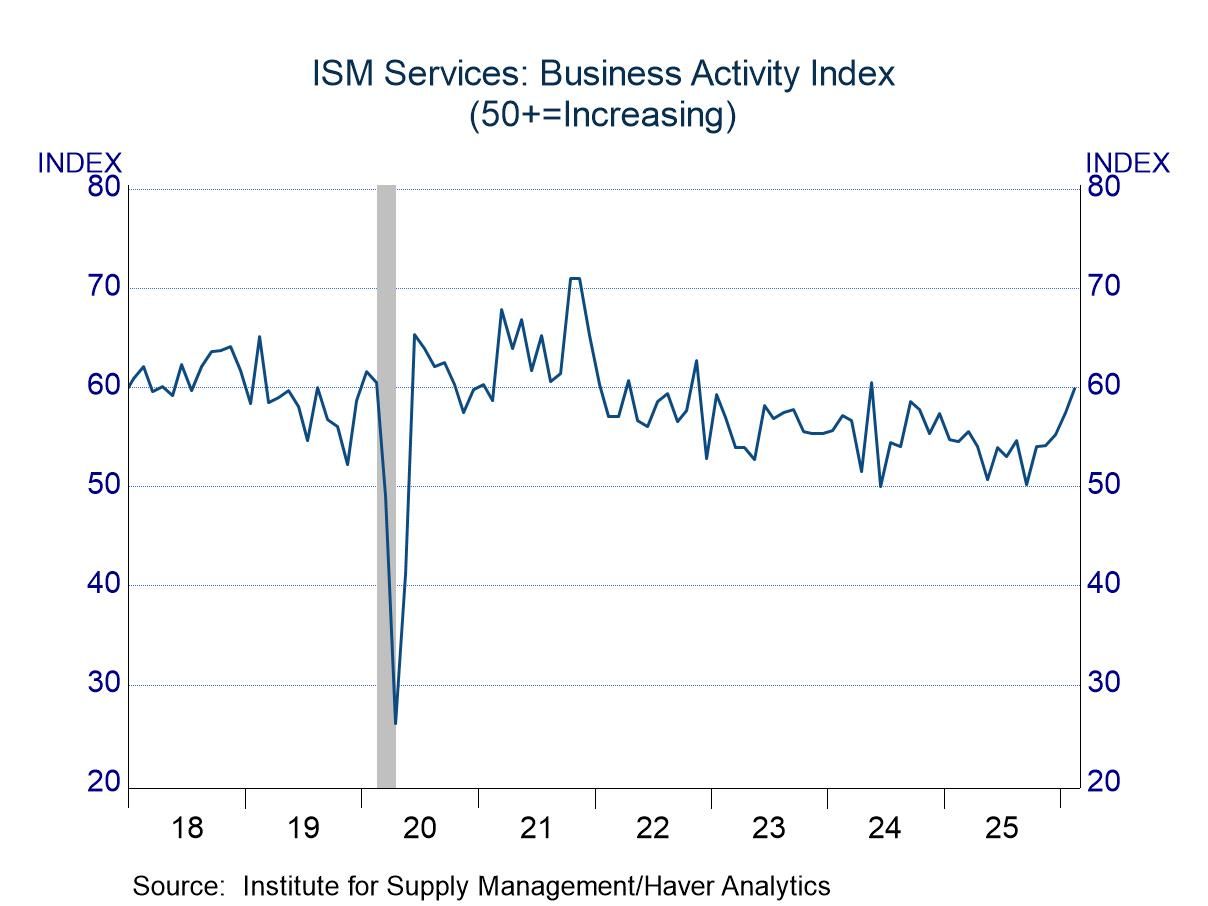
The new orders index made the largest contribution to the advance in the headline measure, jumping 5.5 points to 58.6, moving to the upper end of the range of the past few years. With order flows firm, business activity remained brisk, as this component rose 2.5 points to 59.9. Business activity recovered quickly from the pandemic and has been above 50 since June 2020. The latest reading was in the upper portion of the range in place since 2022. The employment index was a bit of a laggard, as it rose only 1.5 points, and its level of 51.8 was light relative to the other components. Still, the latest reading was encouraging, as it marked the third consecutive month above 50, representing a break from the sub-50 results that were common in 2024 and 2025.
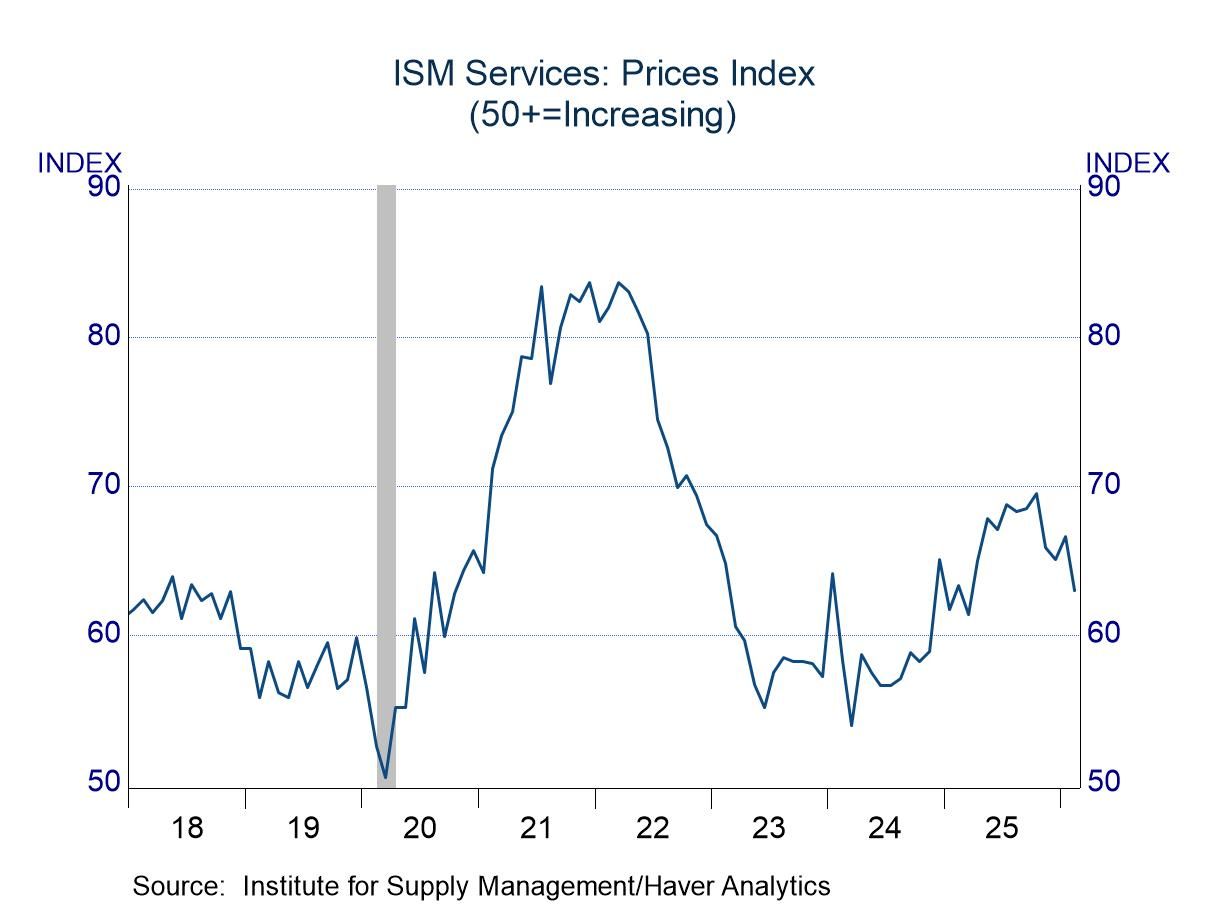
The prices index, which is not a component of the headline index, fell 3.6 points to 63.0. The elevated level is a concern, but it is not a shocking result, as this measure runs high relative to the other indexes in this report. Observations above 70 have occurred several times in years past, and the index was above 80 for most months during the inflation burst of 2021-22. Although still elevated, the prices index seems to be easing, as February marked the third decline in the past four months, and the measure is now noticeably shy of the 69.5 reading in October of last year.
The ISM Services PMI is a composite index consisting of four equally weighted diffusion indexes: Business Activity, New Orders, Employment, and Supplier Deliveries. A reading above 50 indicates expansion in the services sector; below 50 suggests contraction. Supplier Deliveries is the only ISM index that is inversed; a reading above 50 indicates slower deliveries. The ISM figures are available in Haver's USECON database, with additional detail in the SURVEYS database. The expectations figure from Action Economics is in the AS1REPNA database.

Michael J. Moran
AuthorMore in Author Profile »Before joining Haver Analytics in 2025, Michael J. Moran was the chief economist of Daiwa Capital Markets America Inc. He was responsible for preparing the firm’s economic forecast and interest rate outlook. He traveled frequently to visit the clients of Daiwa Capital Markets and wrote weekly economic commentary. Mr. Moran also was involved in the flux of financial markets, as he spent a portion of each day on Daiwa’s trading floor interpreting economic statistics and Federal Reserve activity for traders and salespeople. Mr. Moran is quoted frequently in the financial press, and he appears regularly on cable news shows. He also has published articles in several journals and periodicals. Before joining Daiwa Capital Markets America, Mr. Moran worked as an economist at the Federal Reserve Board in Washington, D.C. where he analyzed a broad range of issues dealing with the financial sector of the economy and regularly briefed the Board of Governors. He was on the faculty of Pennsylvania State University from 1979 to 1980 and taught on a part-time basis at George Washington University from 1980 to 1987.
Mr. Moran received his Ph.D. in economics from Pennsylvania State University in 1980 and a B.S. in business administration from the University of Bridgeport in 1975. He was a CFA charter holder from 2002 until 2016.
More Economy in Brief
 Global