

Even the weather is inflationary
by:Ethan Harris
|in:Viewpoints
One of my core views is that investors should consider the whole range of supply shocks, rather than focus on AI and the Iran war. The trade war is not over, immigrant reduction policy will continue to constrain labor force growth, and if a recent Fed study is correct, the El Nino weather event could boost US inflation by 1% next year.
Team Transitory 2.0
A popular view is that most of the recent inflation is transitory. Optimists argue that the pass through from tariffs to consumer prices is largely complete. Once the Iran war is over energy prices will tumble bringing down headline inflation and reducing the spillover effects on the core. On top of this, as Warsh and others argue, AI investments may be inflationary in the short run, but over time they will be a big boost to productivity, putting downward pressure on costs and inflation. If inflation will return to target on its own, the Fed does not need to be hiking rates.
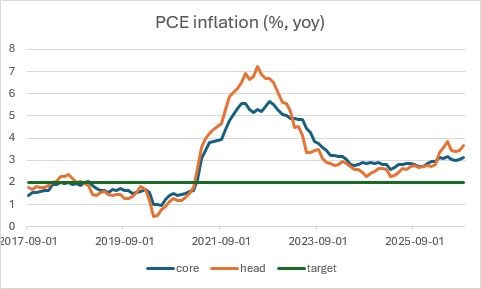
Source: BEA
A full accounting
I’m not drinking the Kool-Aid. I assume that the Iran war will eventually come to an end, and energy prices will come down, but I have no idea when that will happen. By my count, the Trump Administration has forecast a near-term end to the energy shock more than forty times since the war started. The timing also matters for AI. In the short run the AI buildout is inflationary and it could be a long time before, the disinflationary effects become clear.
The bigger story is that Team Transitory underestimates the persistence of other supply shocks. The supply of labor is very weak due to immigration reduction policy and the aging population. Both aren’t going away any time soon. There are a bunch of new tariffs in train, and an escalation of the trade war is likely after the election. The huge 6% of GDP budget deficit is also here to stay, drawing capital away from the private sector.
Finally, adverse weather events impact the productive capacity of the economy, both by disrupting activity and by diverting investment to mitigate their impact. My sense is that the inflationary impact of climate change has been small so far but will certainly build over time.
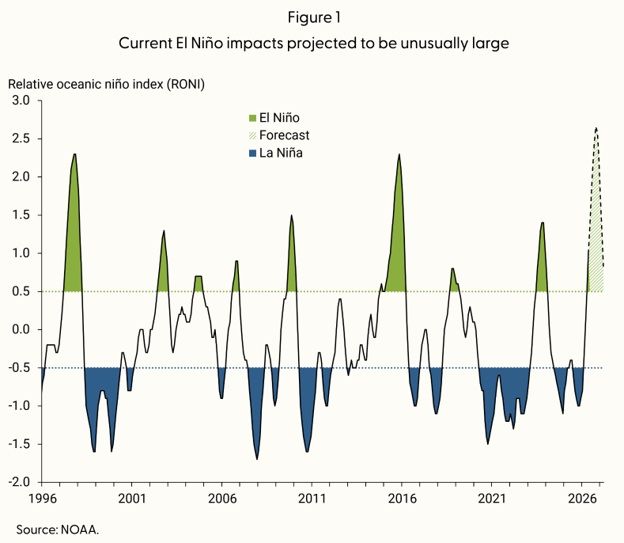
https://www.frbsf.org/research-and-insights/publications/economic-letter/2026/11/impact-of-el-nino-on-us-economy/
The immediate challenge is the El Nino weather event—a shift in trade winds in the Pacific that causes changes in weather. A new piece from the San Fran Fed looks at “The Impact of El Niño on the U.S. Economy.” As the chart above suggests, this is the strongest event in many years. Using data for El Nino’s since the 1950s the study estimates that the current event added about 0.3% to the price level this summer and if its followed by a La Niña it will add about a percentage point to inflation next year (Chart below).
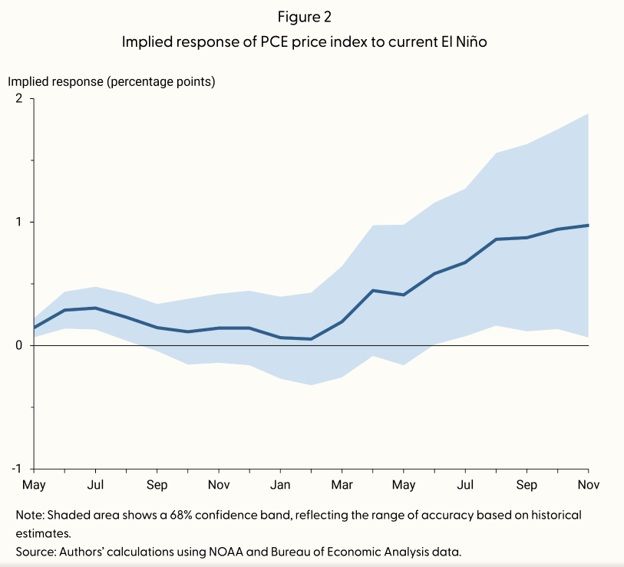
https://www.frbsf.org/research-and-insights/publications/economic-letter/2026/11/impact-of-el-nino-on-us-economy/
The big picture
With all the cross currents in the economy, it is important to look at the whole picture rather than focus on one or two stories. For example, Warsh’s “Task Force on Productivity and Jobs” only looks at the potentially most positive supply side shock—the implementation of AI. Warsh has said AI is “the most productivity-enhancing wave of our lifetimes—past, present or future.” Given the composition of the task force, I’m sure they will agree. However, the more relevant question is how AI fits in with the many other supply shocks hitting the economy.
Sorting through this complicated picture, my guess is that inflation will prove quite resilient. Warsh and the doves on the FOMC think the Fed only needs to remove a “dose” of accommodation to bring inflation down. They do not need to put “sand in the gears” of the economy. I disagree, bringing inflation down requires tight monetary policy to offset both strong demand and persistent supply shocks. Hiking the funds rate three more times, to 4.6%, could do the trick.

Ethan Harris
AuthorMore in Author Profile »Ethan Harris has a Ph.D. in Economics from Columbia University and was the Head of the Domestic Research Division at the NY Fed. He was Chief US Economist at Lehman Brothers from 1996 to 2008 and Head of Global Economics at Bank of America from 2009 to 2023. Currently he is the author of the blog Ethan on the Economy.