Asia| Aug 24 2026
Economic Letter from Asia: Heating Up
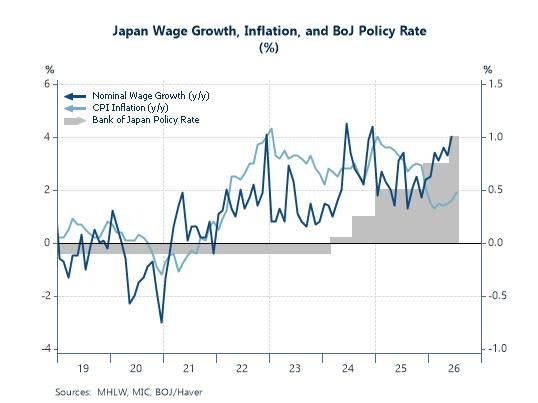
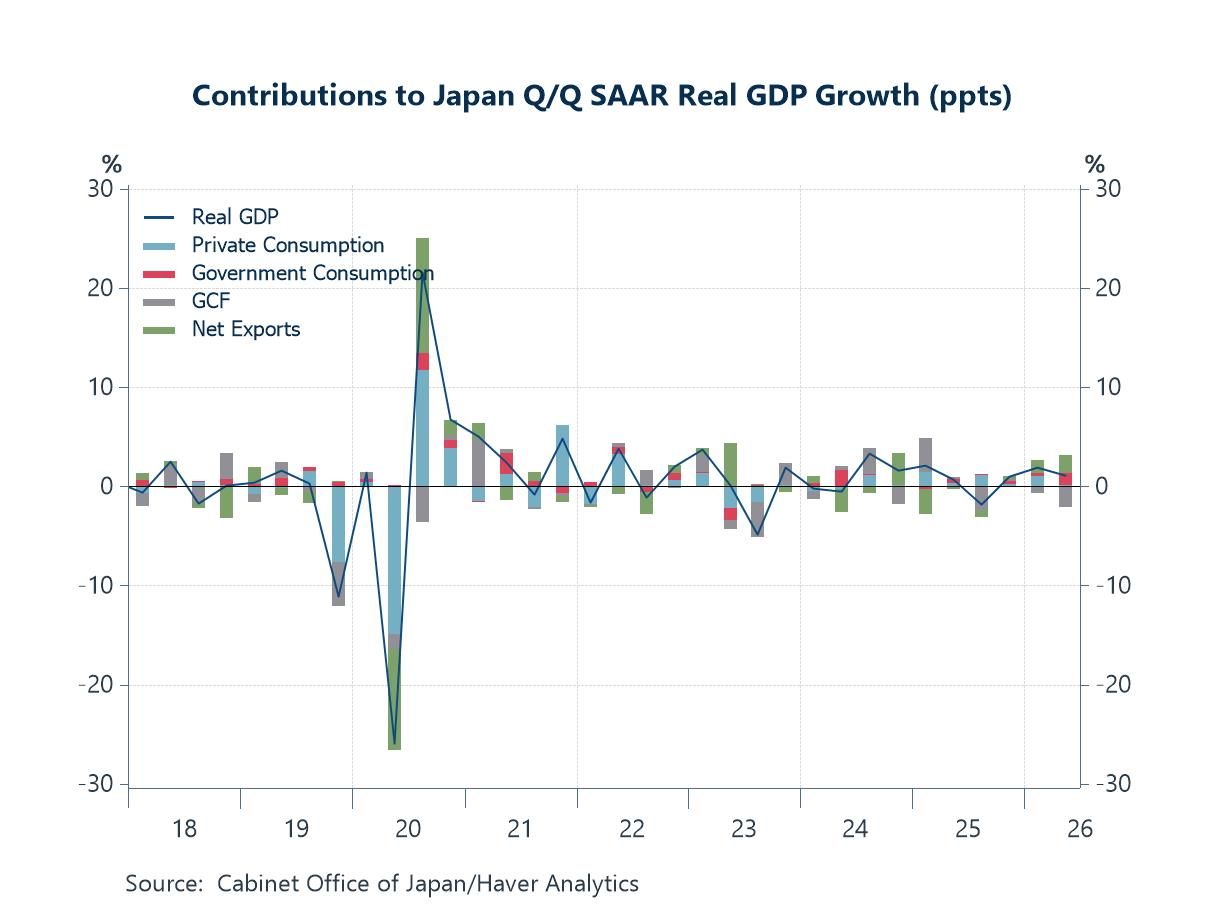
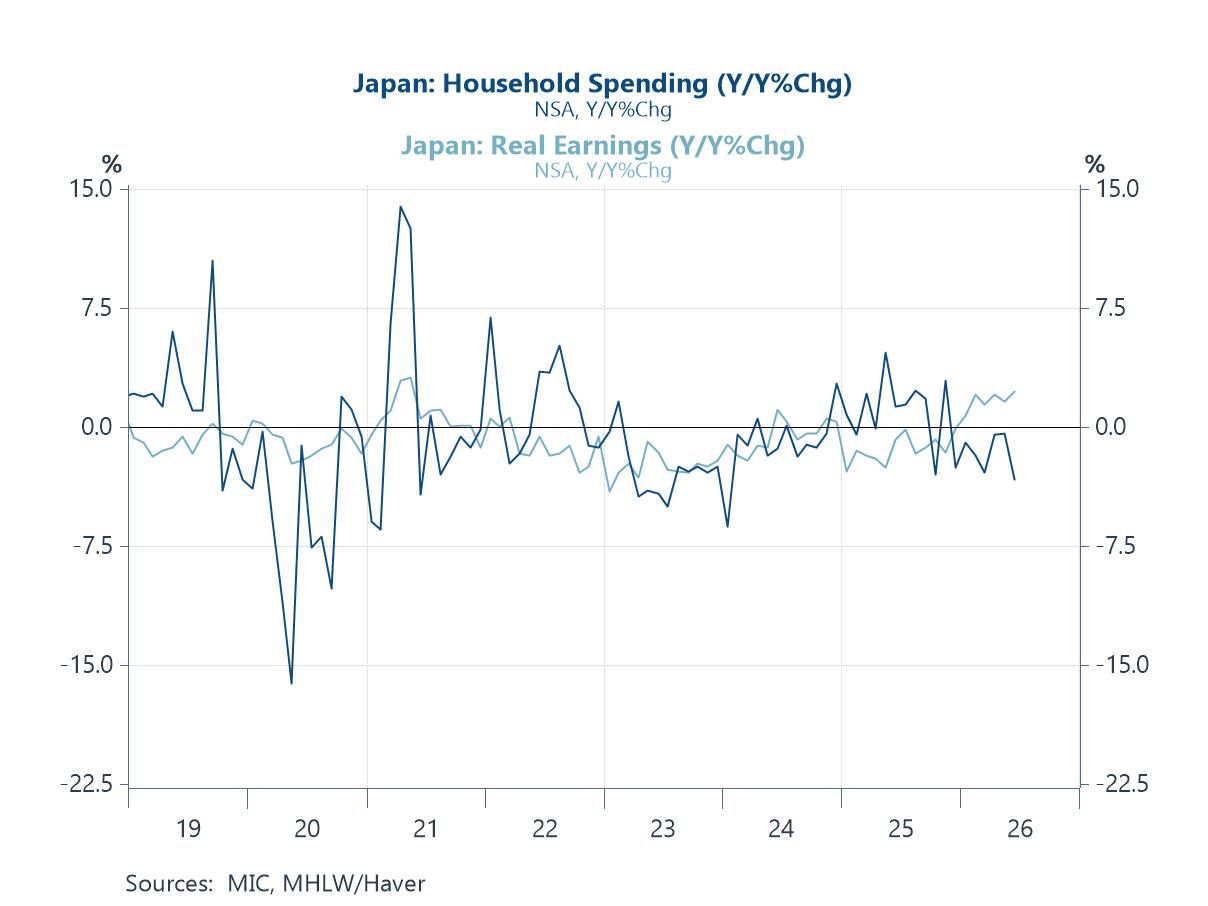
In this week's Letter, we examine how Japan's hard-won reflation is being tested by an energy shock and a fiscal turn. Japan has come a long way in achieving substantive inflation and, more recently, real wage growth, substantiating its tightening cycle (chart 1). Q2 real GDP growth nonetheless underwhelmed, dragged partly by a slump in public inventories that may prove one-off (chart 2). More discouraging was private consumption, whose contribution to growth was flat over the quarter. Delving into the household picture, real spending has continued to shrink despite real wage gains in recent months (chart 3). Elevated energy prices appear to be affecting household behaviour, stalling the translation of higher wages into domestic demand-led growth.
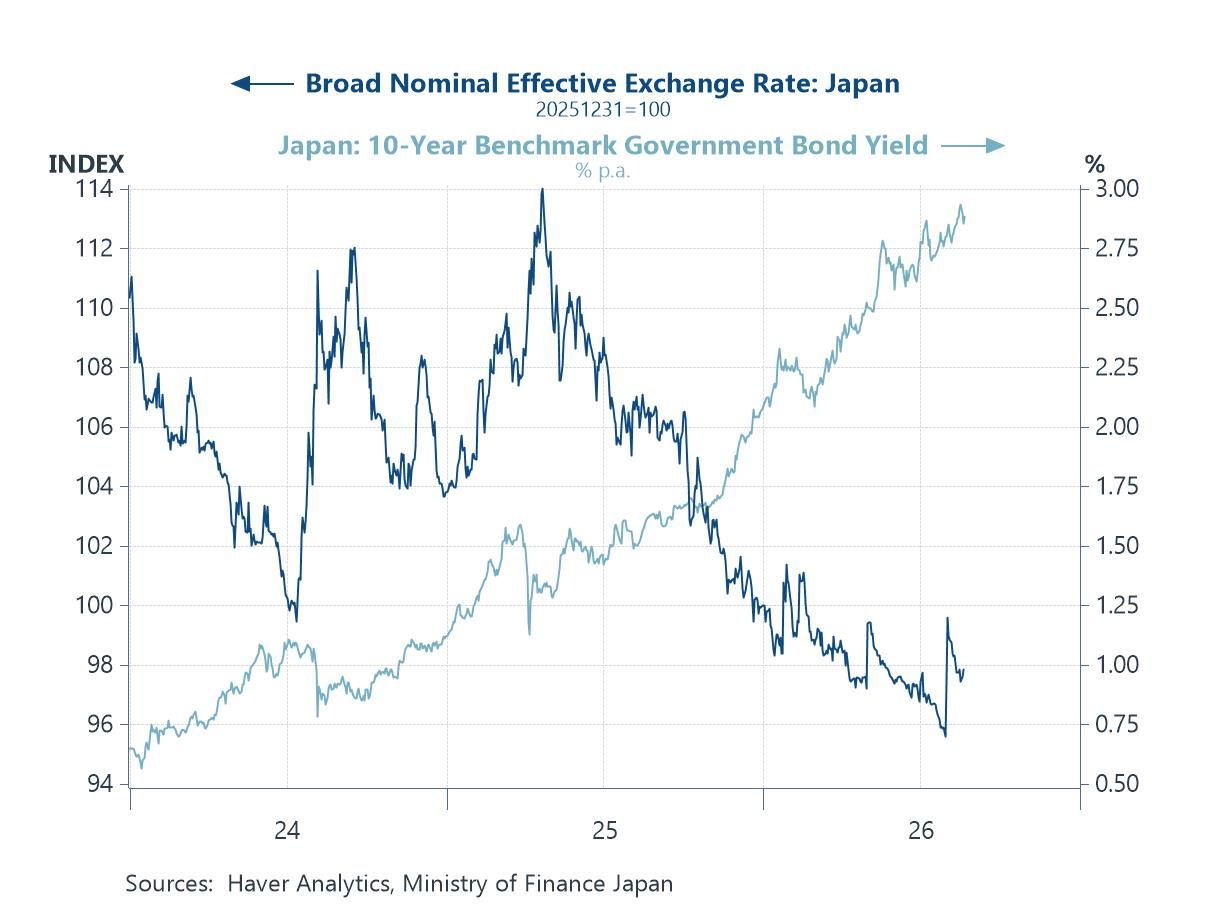
Recent market moves have reflected other drivers, including renewed yen weakness after a short-lived appreciation prompted by intervention. Government bond yields have surged, reflecting both tightening expectations and concerns over Japan's fiscal health, in a climb extending well beyond Japan (chart 4). One potential offset to elevated global oil prices is domestic, and it lies in rice. Last year's constrained supply has evolved into a glut this year, with prices diving (chart 5). Given rice's weight in the consumption basket, the deflationary effects may be significant. Lastly, we turn to fiscal prospects, with talk of the 2027 budget already underway. Investors are watchful of the cabinet's expansionary bias, and how increased spending and food tax cuts may lift bond issuance, with details still scant at this juncture (chart 6).
Japan’s state of play Japan has already managed to get many things going in its favour. After decades of low to negative inflation, consumer inflation rose above 2%, though it has since eased to just above 1% (chart 1). Accompanying the pickup in price pressures is wage growth, which has risen in nominal terms over recent years. Only more recently has it grown in excess of consumer inflation, indicating an interim period of real wage growth that generally benefits households. Sustained inflation alongside wage growth is what the Bank of Japan has long sought. With such conditions among others fulfilled, the central bank had some justification to begin normalising monetary policy, with its latest rate hike in June this year. Complications nonetheless remain. Persisting tensions between the US and Iran are keeping oil prices elevated, threatening to upend Japan's recovery in its domestic sector. They have also prompted government measures to support growth and help households tide through price increases. Those measures have drawn their own concerns, especially over Japan's fiscal health, which we discuss in more detail later.
Chart 1: Japan wage growth, inflation, and policy rate
Japan’s Q2 GDP Touching more on Japan's recent growth readings, the latest Q2 figures grant us an updated snapshot. Real GDP rose 1.1% q/q SAAR, missing estimates, with the drag coming predominantly from private non-residential investment and a sharp decrease in public inventories. Some sources attribute the latter to the release of national oil reserves. If true, that would point to likely one-off growth dampening effects from such a move. These effects aside, the nil contribution of private consumption to growth is more discouraging (chart 2). It underscores some weakness in domestic demand, perhaps as consumers still grapple with rising costs of living. Much of the growth during the quarter was instead driven by government spending and net exports.
Chart 2: Contributions to Japan real GDP growth
Japanese households And therein lies the puzzle, whereby Japan has seen sustained real wage growth over the past few months. At the same time, real household spending has persistently shrunk (chart 3). The largest slumps in June came in apparel, furniture and utilities. These underscore a dialling back of expenditure as elevated costs of living continue to bite, even as real earning power has improved. Thus, at least for now, the supposed transmission mechanism from improved wages to consumption has not yet fully materialised. That may hampers so-called domestic demand-led growth, and may complicate monetary policy decision making should such a bottleneck persist.
Chart 3: Japan real earnings and household spending
The Japanese yen and yields However, recent market moves in Japan have been driven more by a range of other factors. The yen appreciated in late July (chart 3), following intervention by Japanese and US authorities. The spurt proved short-lived, underscoring the limited ability of intervention to buck broader trends. Those trends reflect rate differentials and the currency effects of trade deficits, the latter sharpened by the energy price shock. Japanese government bond yields have likewise surged this year, lifted by the Bank of Japan's rate hikes and expectations of more to come. Fiscal dynamics have also played a part, as discussed in a later section. The climb is not confined to Japan, extending to the US, the UK and Germany, among others. The move perhaps reflects wider macro concerns, with elevated crude oil prices raising the prospect of more persistently high inflation. That feeds expectations of tighter monetary policy, whilst worries over ballooning government debt financed by bond issuance add further pressure. Both concerns show up most prominently at the longer end of the curve.
Chart 4: Japanese yen and 10-year yields
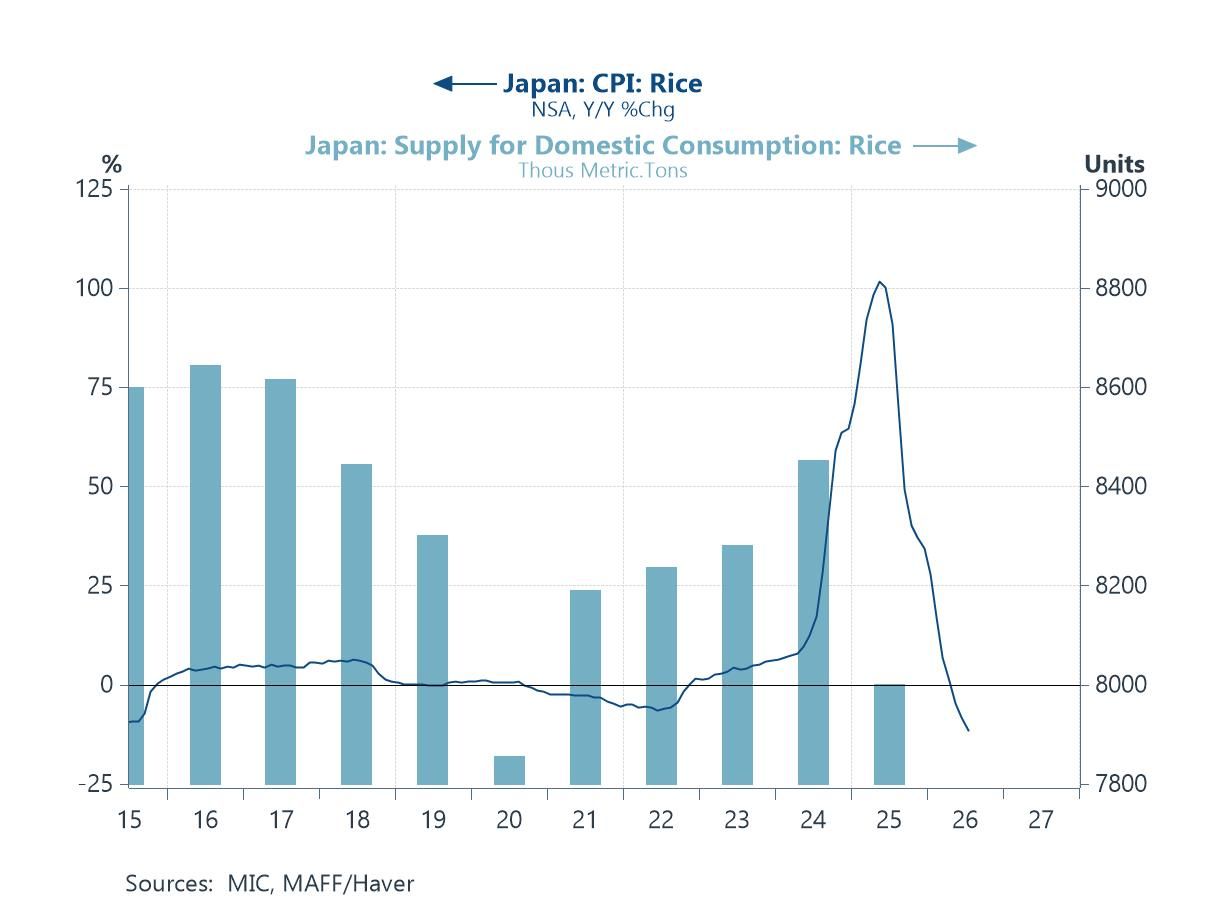
Rice dynamics in Japan Coming back to Japan-specific dynamics, a developing phenomenon lies in diving rice prices, driven by ongoing excess rice supply. This may present an offset against the inflation-inducing effects of surged energy prices. The picture contrasts with last year, when constrained rice supply saw prices surge. The government even had to unlock its reserves to help clear the demand and supply balance at more reasonable levels. Those high prices nonetheless turned away many buyers, and the resulting inventory buildup has contributed partially to today's glut. An expected bumper crop this year would likely add further to the glut. Some sources report that advance payment prices have already fallen below production costs.
Chart 5: Japan rice price inflation and domestic supply
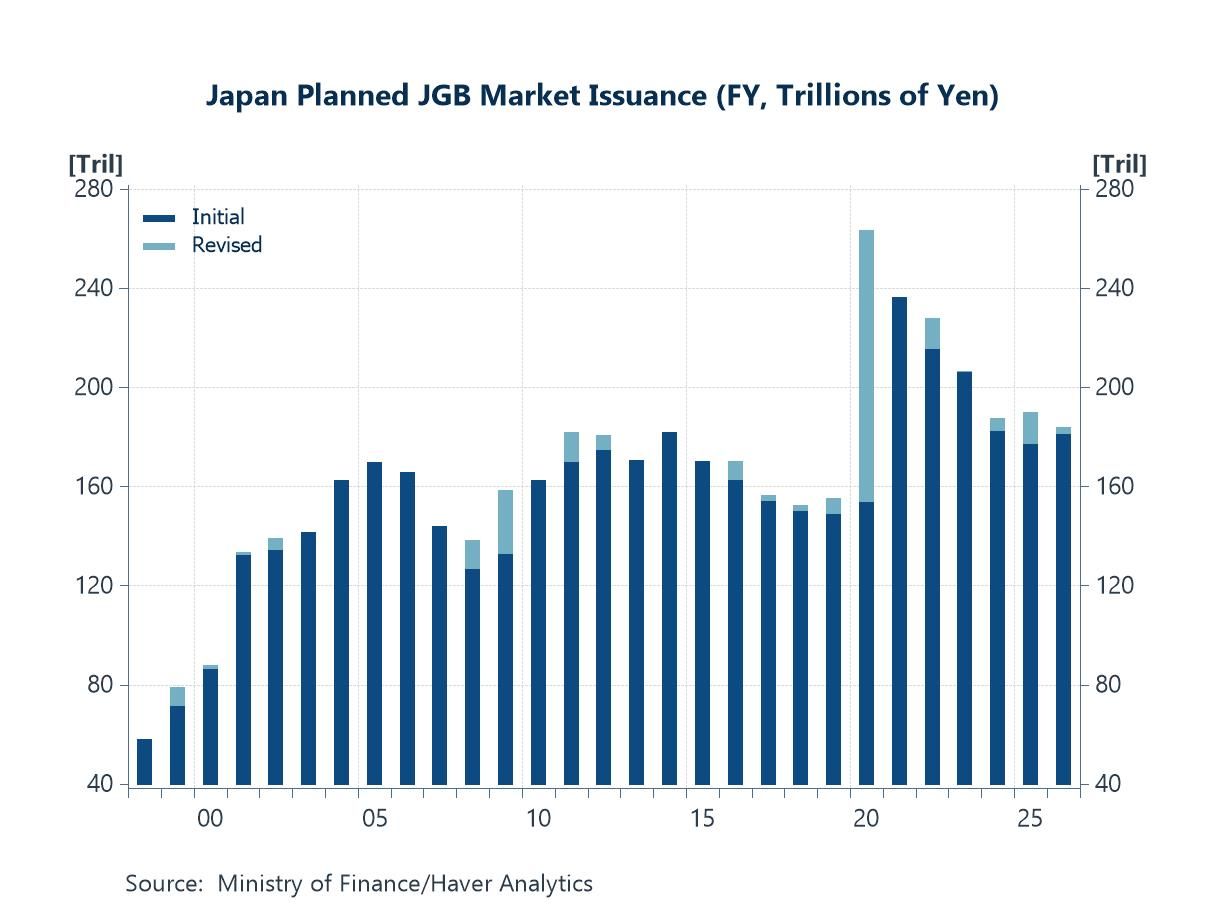
Japan’s fiscal prospects Given the spectre of elevated global oil prices and their hit on Japanese households' cost of living, PM Takaichi's cabinet is now taking these into account. It is doing so alongside its desire to boost growth when compiling the budget for fiscal year 2027. The government has already approved a two-year food tax cut to 1%, from 8%. It has also approved the removal of investment limits from ministries' budget requests, to foster growth and enable crisis management. These moves have fed investor perceptions of a more fiscally expansionary direction, fuelling concerns about Japan's fiscal position. Reduced revenue from the tax cut, coupled with likely increased spending, has raised expectations of swelling government bond issuance. Little has been said so far on how the shortfall will be financed apart from debt issuance. That lack of detail has exerted downward pressure on government bond prices, and, alongside expectations of tighter BoJ policy, has driven yields upward in recent weeks.
Chart 6: Japan planned JGB issuance

Tian Yong Woon
AuthorMore in Author Profile »Tian Yong joined Haver Analytics as an Economist in 2023. Previously, Tian Yong worked as an Economist with Deutsche Bank, covering Emerging Asian economies while also writing on thematic issues within the broader Asia region. Prior to his work with Deutsche Bank, he worked as an Economic Analyst with the International Monetary Fund, where he contributed to Article IV consultations with Singapore and Malaysia, and to the regular surveillance of financial stability issues in the Asia Pacific region.
Tian Yong holds a Master of Science in Quantitative Finance from the Singapore Management University, a Master of Science in Analytics from the Georgia Institute of Technology, a Bachelor of Science in Mathematics from the Singapore University of Social Sciences, and a Bachelor of Science in Banking and Finance from the University of London.
More Economy in Brief