U.S. Philly Fed Manufacturing Index Rose to Five-Year High in August
by:Sandy Batten
|in:Economy in Brief
Summary
- The headline index increased to 47.4 in August, a five-year high, after having jumped to 41.4 in July. Expectations were for a meaningful decline to 25.0.
- However, the ISM-adjusted index edged down to 57.5 in August from 58.1 in July but was still well above the critical 50 level.
- Price indexes declined in August but remained elevated.
- Delivery times continued to lengthen but at a slower pace than in July.
- The diffusion index for future general activity climbed 39 points to 73.6 this month, its highest reading since August 1983.
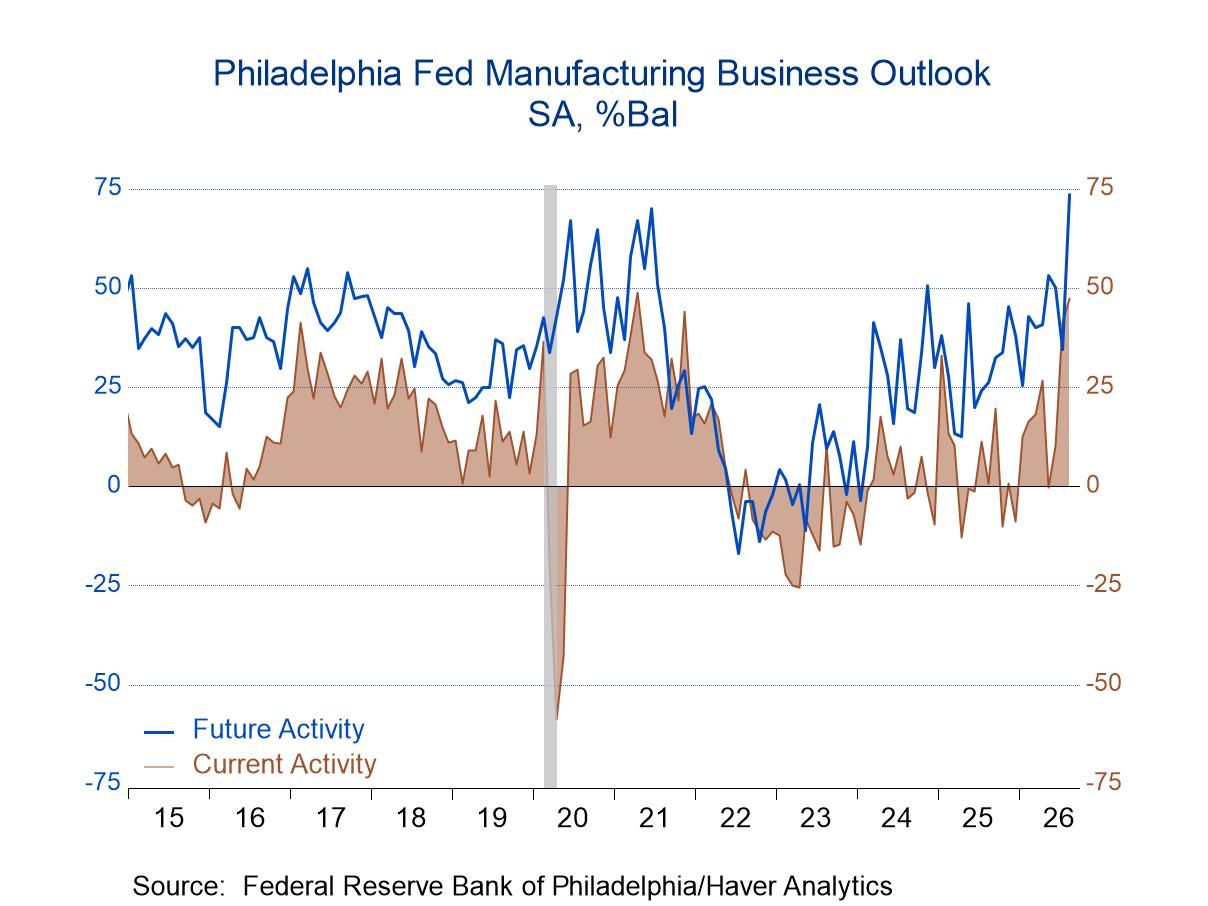
The Current Activity Diffusion Index from the latest Manufacturing Business Outlook Survey (MBOS) conducted by the Federal Reserve Bank of Philadelphia rose further to 47.4 in August, a five-year high, after having jumped to 41.4 in July from 10.3 in June. A reading of 25.0 for August was expected by the Action Economics Forecast Survey. Almost 57% of respondents reported increases in current activity (up from 53% in July and 32% in June), far exceeding the 9.6% reporting decreases (down from 11.7% in July and 21.9%); 28.8% of respondents reported no change in current activity (up from 24.% in July). Survey responses were collected from August 10- August 17.
The headline index is the answer to just one question: whether activity increased, decreased or was unchanged from the previous month. Haver Analytics calculates an ISM-adjusted current activity diffusion index from the five key component indexes using the methodology employed to construct the national ISM index. This figure slipped to 57.5 in August from 58.1 in July but was still well above the critical 50 value that separates contraction from expansion.
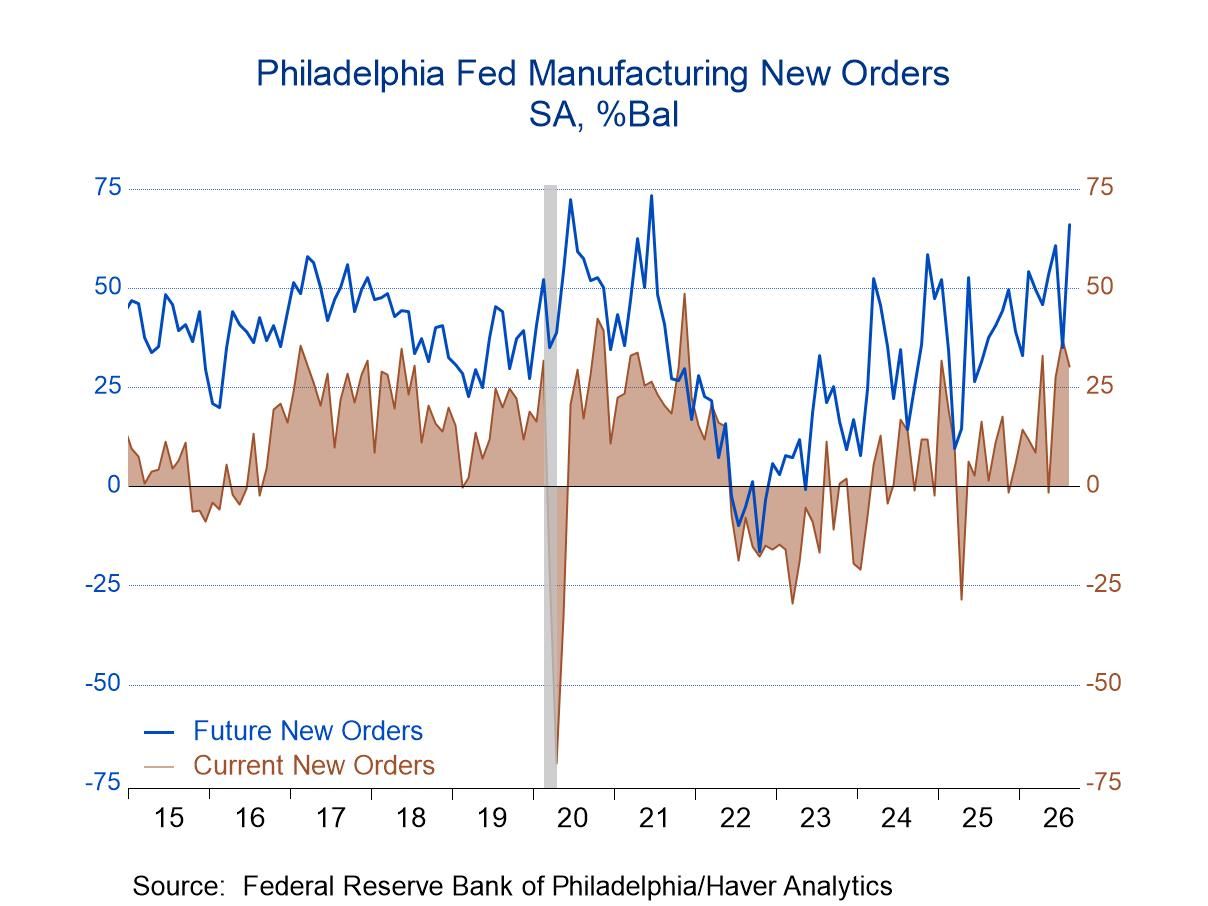
For the component indexes, the current new orders and shipments indexes both declined in August but remained above their long-run non-recession averages. The new orders index fell 7 points to 30.1. Almost 46% of respondents reported an increase in new orders, 16% reported a decrease, and 36% reported no change. The shipments index declined from 33.7 to 27.7 in August with 41% of respondents reporting an increase (down from 45% in July) and 12% reporting a decrease versus 9% in July. Delivery times continued to lengthen in August but at a slower pace than in July with the index slipping to 3.7 in August from 9.6 in July.
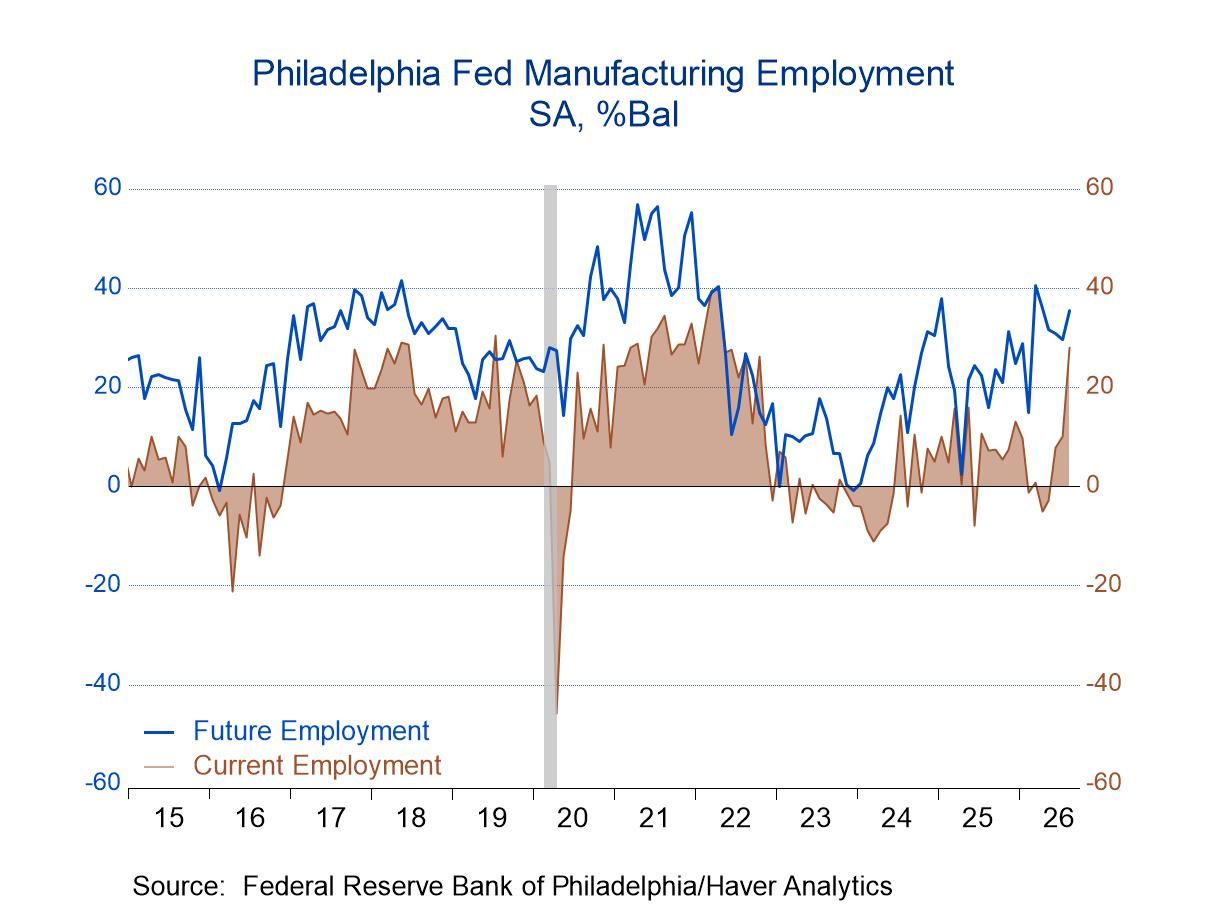
The August survey showed tighter labor market conditions. The employment index rose 18 points to 27.9, its highest reading since April 2022. Nearly 33% of respondents reported an increase in employment levels (up from 13% in July), 5% reported decreases (up from 3% in July), and 62 percent reported no change (down from 83%), the lowest reading in two years. The average workweek index rose from 14.0 to 26.5, the highest reading since December 2021.
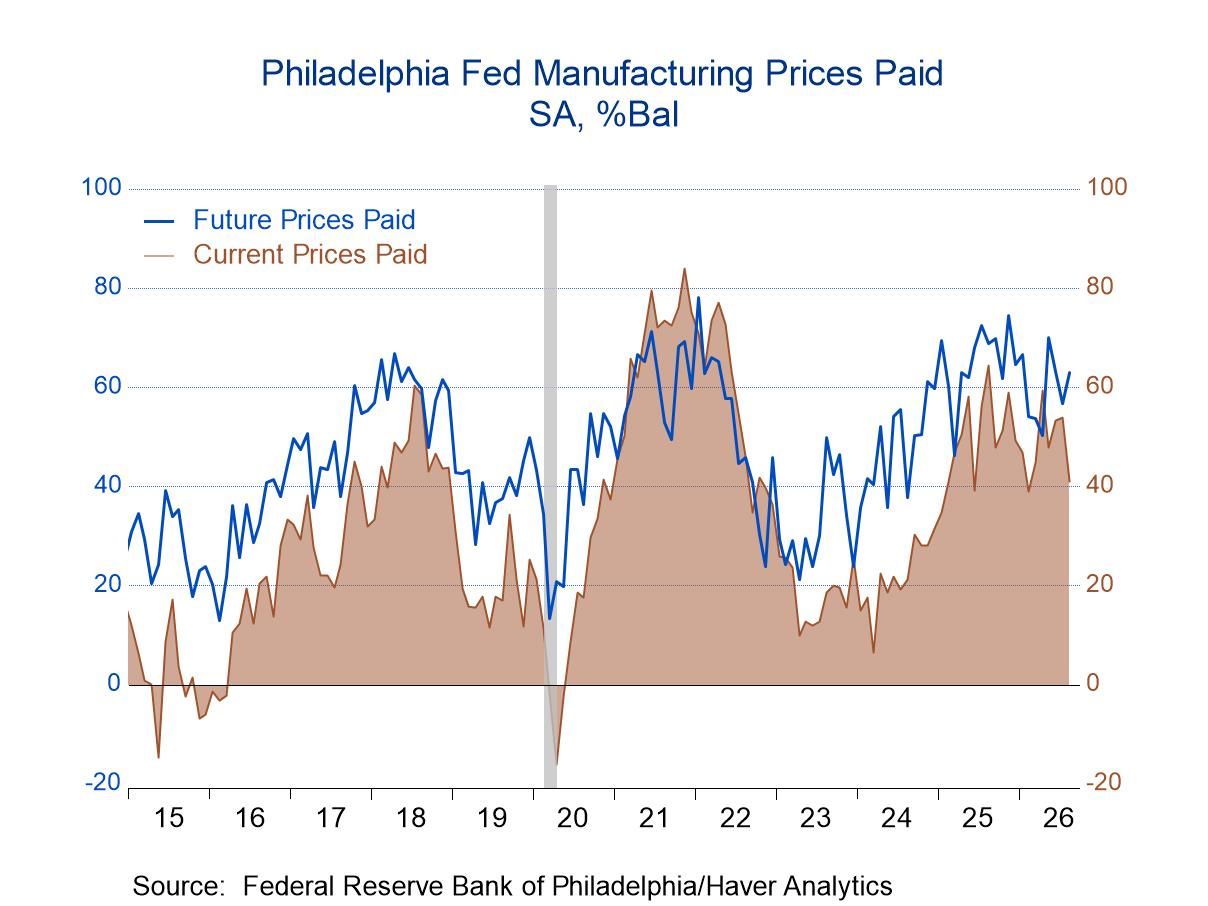
Both price indexes declined in August to their lowest readings since February but remained above their long-run non-recession averages. The prices paid index fell 13 points to 40.9 in August. Nearly 41% of respondents reported increases in input prices (down from 54% in July), while none reported decreases (unchanged); 59% reported no change (up from 46%). The current prices received index declined 10 points to 17.7. More than 21% of respondents reported increases in the prices of their own goods, 3% reported decreases, and 74% reported no change.
The diffusion index for future general activity jumped 39 points to 73.6 in August, its highest reading since August 1983. The future new orders index increased 31 points to 66.0, and the future shipments index rose 24 points to 63.5, each reaching its highest reading in more than five years. Firms continue to expect increases in employment over the next six months. The future employment index rose 6 points to 35.4, after having declined for four consecutive months. Both future price indexes moved further above their long-run averages, mostly offsetting last month’s declines. The future prices paid index rose 6 points to 62.9, and the future prices received index increased 18 points to 59.8. The index for future capital expenditures increased 18 points to 48.2, its highest reading in 53 years.
The Manufacturing Business Outlook Survey (MBOS), conducted by the Federal Reserve Bank of Philadelphia, is a monthly survey of manufacturers in the Third Federal Reserve District. Participants indicate the direction of change in overall business activity and in the various measures of activity at their plants. The diffusion indexes in the MBOS represent the percentage of respondents indicating an increase minus the percentage indicating a decrease. The indexes range from -100 to +100 with positive values indicating an increase in activity. The series from the survey dating back to May 1968 can be found in Haver’s SURVEYS database. The expectations forecast figures are from the Action Economics Forecast Survey in AS1REPNA.

Sandy Batten
AuthorMore in Author Profile »Sandy Batten has more than 30 years of experience analyzing industrial economies and financial markets and a wide range of experience across the financial services sector, government, and academia. Before joining Haver Analytics, Sandy was a Vice President and Senior Economist at Citibank; Senior Credit Market Analyst at CDC Investment Management, Managing Director at Bear Stearns, and Executive Director at JPMorgan. In 2008, Sandy was named the most accurate US forecaster by the National Association for Business Economics. He is a member of the New York Forecasters Club, NABE, and the American Economic Association. Prior to his time in the financial services sector, Sandy was a Research Officer at the Federal Reserve Bank of St. Louis, Senior Staff Economist on the President’s Council of Economic Advisors, Deputy Assistant Secretary for Economic Policy at the US Treasury, and Economist at the International Monetary Fund. Sandy has taught economics at St. Louis University, Denison University, and Muskingun College. He has published numerous peer-reviewed articles in a wide range of academic publications. He has a B.A. in economics from the University of Richmond and a M.A. and Ph.D. in economics from The Ohio State University.
More Economy in Brief
 Global