Consumer Confidence: Slightly Lower in May
Summary
- Assessments of the present situation slipped, but views were still above long-run norms.
- Expectations improved slightly in April, but they are still below the long-run average.
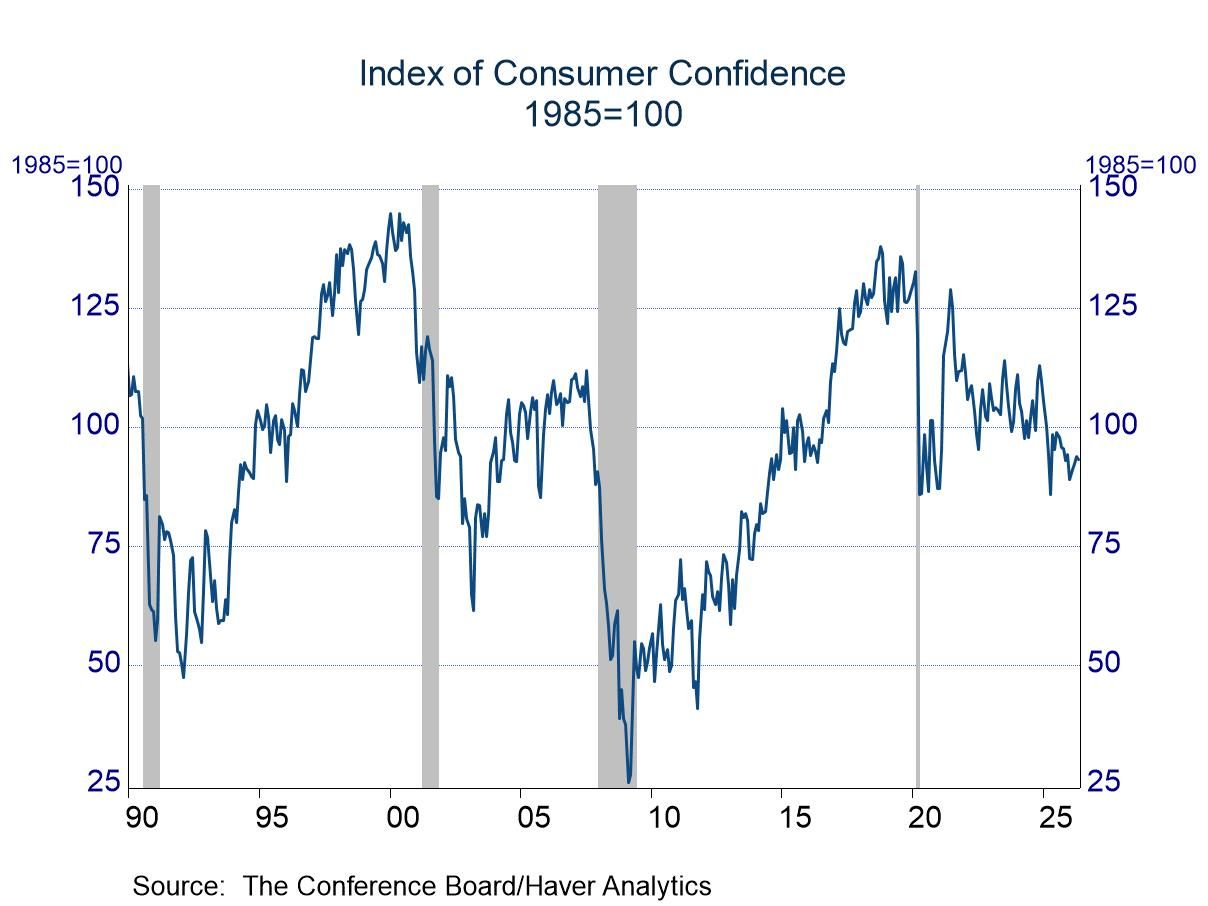
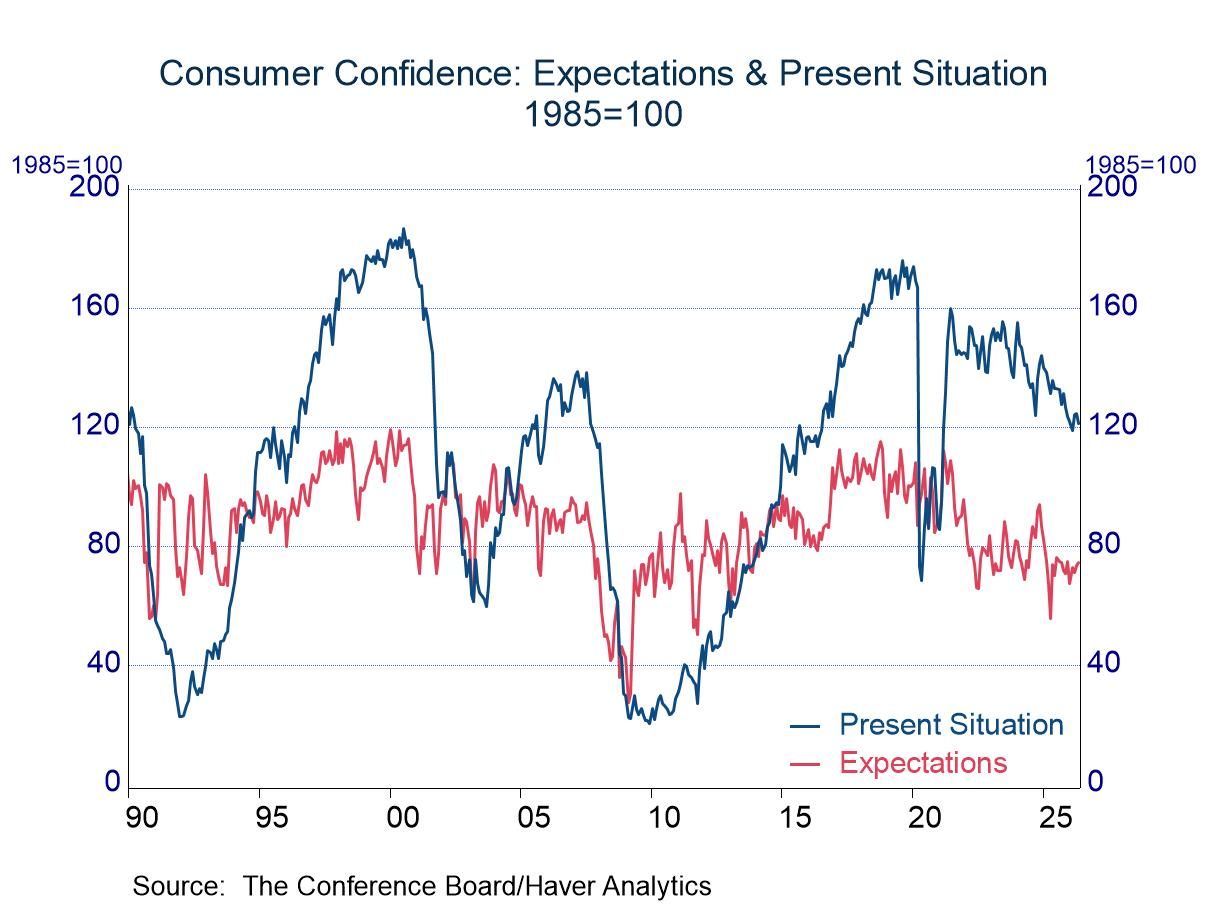
The Conference Board’s index of Consumer Confidence inched lower in May (off 0.7%), but the change occurred from an upward revised level in April (firmer by 1.1%). These changes continued the recent pattern of modest month-to-month shifts, although the headline index lost noticeable ground during 2025, leaving recent readings in the low end of the range for the current expansion. From a long-term perspective, the current index value of 93.1 was nearly equal to the average of 92.9 from 2000-2025.
A drop in assessments of the present situation led the decline in May, with this component falling 2.6%. The expectations index improved slightly, increasing 1.4%. This pattern matches the usual cyclical shifts, as the index for the present situation shows wide swings between peaks and troughs. Usually, however, the pronounced declines do not occur until the economy has entered a recession. The change in the past year or so has been large for an economy still in a business expansion.
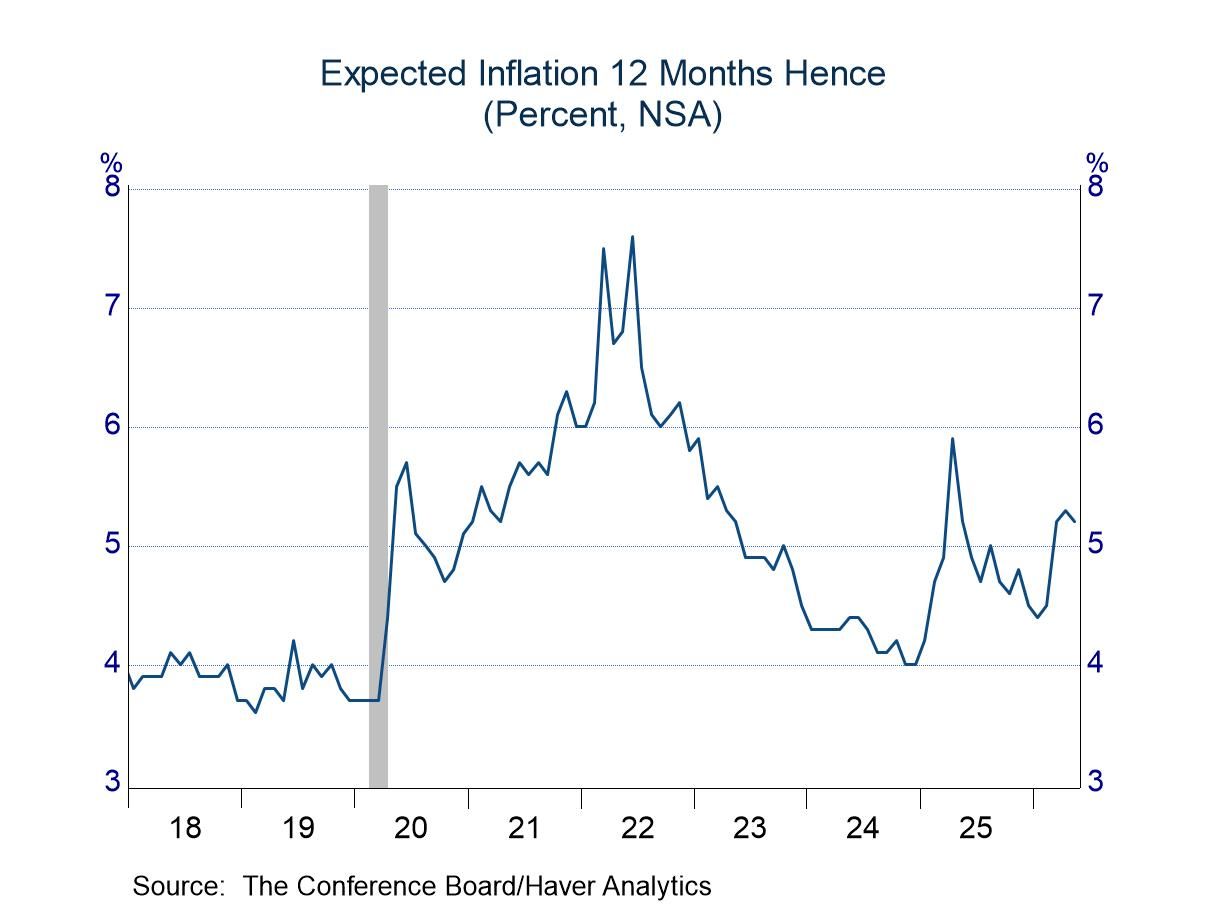
The uncomfortable inflation setting has most likely influenced the views of consumers, which is evident in the inflation expectations question in the survey. The median view on inflation 12 months hence totaled 5.2% in May, down 0.1 percentage point from April, but well above readings near 4% in 2024 and in the calmer environment before the pandemic. Inflation concerns were more intense last year when tariffs were in the news (median inflation expectation of 5.9% in April 2025), but 5.2% is still hefty.
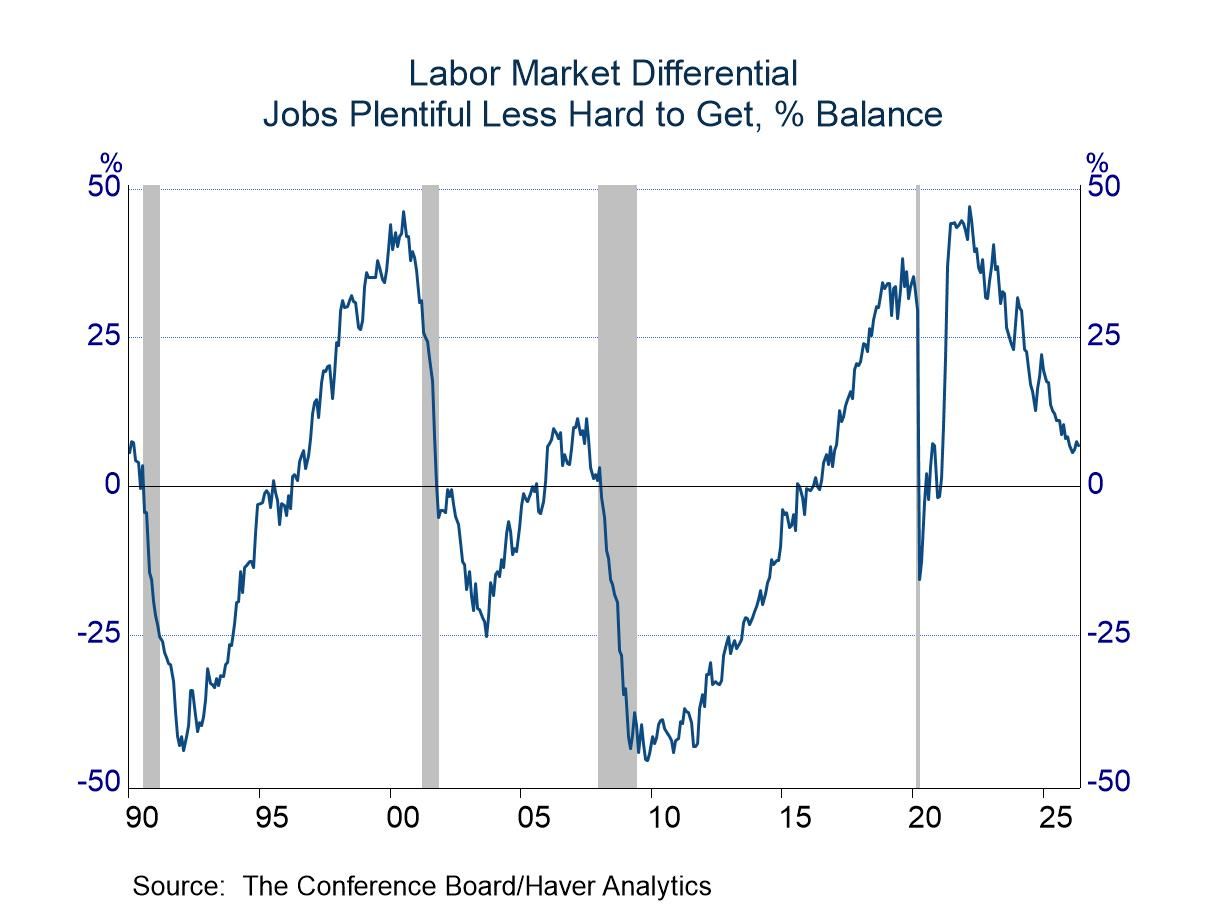
The labor market does not have the vigor it did in 2024 and early 2025, and that change has probably influenced assessments of the present situation. However, individuals still have a slightly favorable view of the job market. The share of respondents viewing jobs as plentiful totaled 25.5% in May, while 18.6% viewed jobs as hard to get. The differential of 6.9 percentage points, like the present-situation index, is low for an expanding economy, but it is far above readings seen in past recessions.
The results from the Conference Board survey of consumers differ markedly from those of the University of Michigan Survey Research Center. The Michigan results show consumer sentiment at a record low, while the Conference Board index essentially matches its long-run average. The difference most likely reflects the nature of the questions in the surveys. The Conference Board focuses on business and employment conditions, while Michigan emphasizes personal finances. The focus on finances, along with questions on inflation, probably picks up concerns about affordability.
The Consumer Confidence data are available in Haver’s CBDB database. The total indexes, which are indexed to 1985=100, appear in USECON, and market expectations are in AS1REPNA.

Michael J. Moran
AuthorMore in Author Profile »Before joining Haver Analytics in 2025, Michael J. Moran was the chief economist of Daiwa Capital Markets America Inc. He was responsible for preparing the firm’s economic forecast and interest rate outlook. He traveled frequently to visit the clients of Daiwa Capital Markets and wrote weekly economic commentary. Mr. Moran also was involved in the flux of financial markets, as he spent a portion of each day on Daiwa’s trading floor interpreting economic statistics and Federal Reserve activity for traders and salespeople. Mr. Moran is quoted frequently in the financial press, and he appears regularly on cable news shows. He also has published articles in several journals and periodicals. Before joining Daiwa Capital Markets America, Mr. Moran worked as an economist at the Federal Reserve Board in Washington, D.C. where he analyzed a broad range of issues dealing with the financial sector of the economy and regularly briefed the Board of Governors. He was on the faculty of Pennsylvania State University from 1979 to 1980 and taught on a part-time basis at George Washington University from 1980 to 1987.
Mr. Moran received his Ph.D. in economics from Pennsylvania State University in 1980 and a B.S. in business administration from the University of Bridgeport in 1975. He was a CFA charter holder from 2002 until 2016.
More Economy in Brief
 Global