Consumer Confidence: Improvement in February from Upward Revised Levels in January, but Individuals Are Still Unhappy
Summary
- Firmer expectations offset dimmer views on the present situation.
- Although views on the present situation dipped, assessments of the labor market picked up.
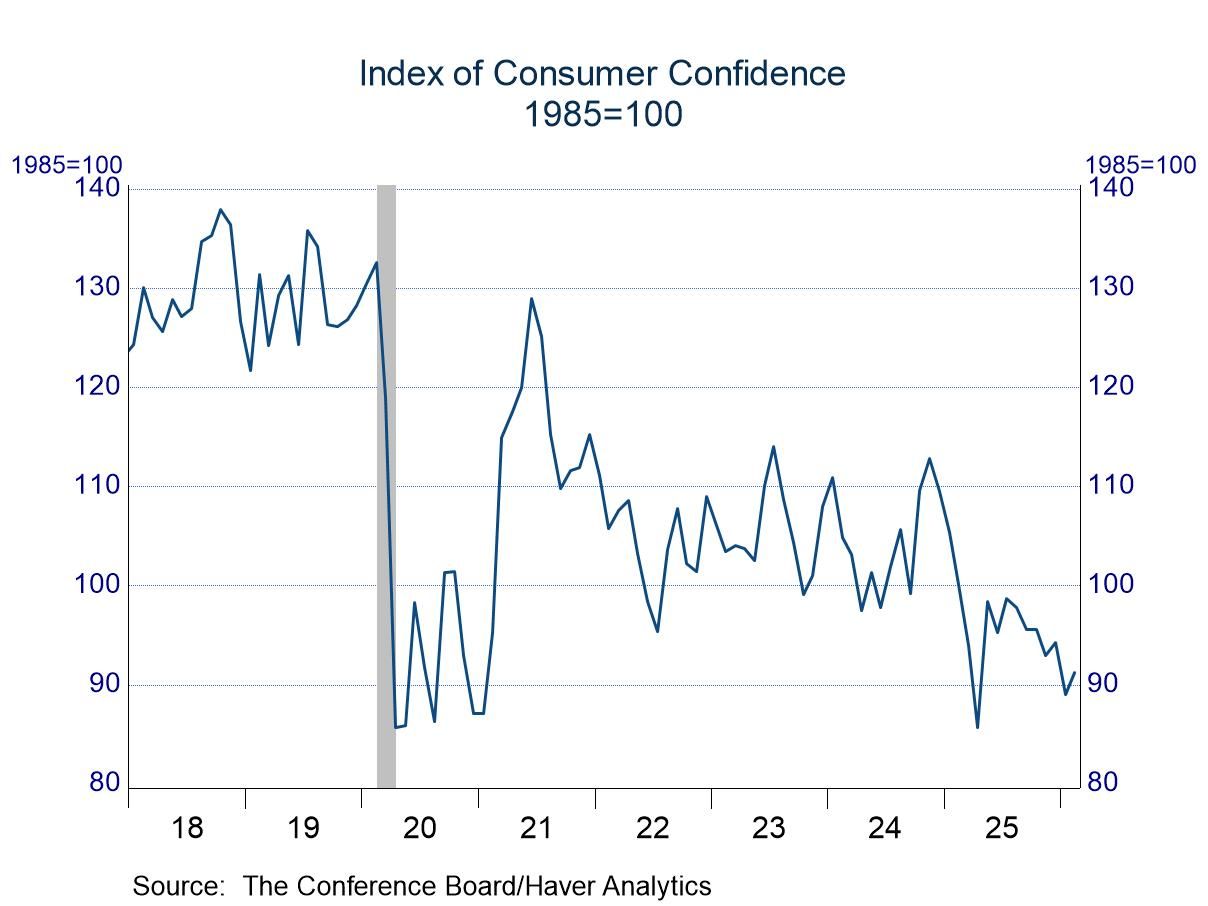
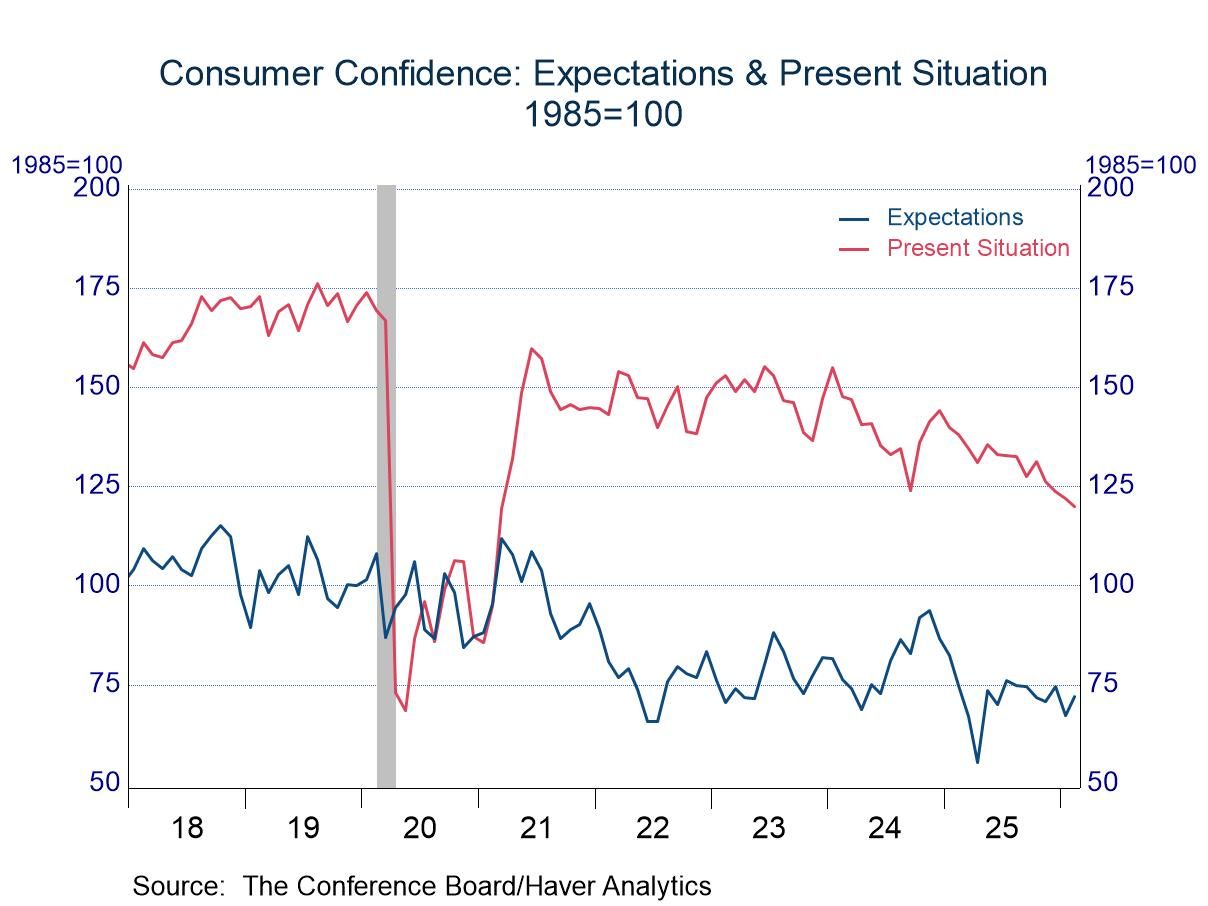
The index of consumer confidence published by the Conference Board rose 2.2 index points in February to 91.2, with the change coming from an upward revised level in January (now 89.0 rather than 84.5). The improvement is certainly welcome, but it does not meaningfully alter the picture of gloomy moods in the household sector. The preliminary index in January was below the low seen during the pandemic, and the new reading is only slightly above that trough.
The month-to month change in January was driven by the expectations component of the headline measure, which rose 4.8 index points to 72.0 (7.1%) from a revised level that was 3.2% firmer than previously believed. Individuals, though, are not especially optimistic about the future. The expectations measure still trails readings generally above 100 before the pandemic and it is light by historical norms (the measure is typically above 80 in non-recessionary periods or their aftermaths).
Assessments of the present situation naturally improved from the lows seen during the pandemic, but they never returned to pre-Covid levels and they have slipped considerably since early 2024. The latest figures did not meaningfully alter the picture. Although January results were revised 7.1% higher, the February index offset a portion of that gain by slipping 1.5%. The measure is not at a recession-like level, but it seems low for an economy that has low unemployment and is growing at a rate close to its potential.
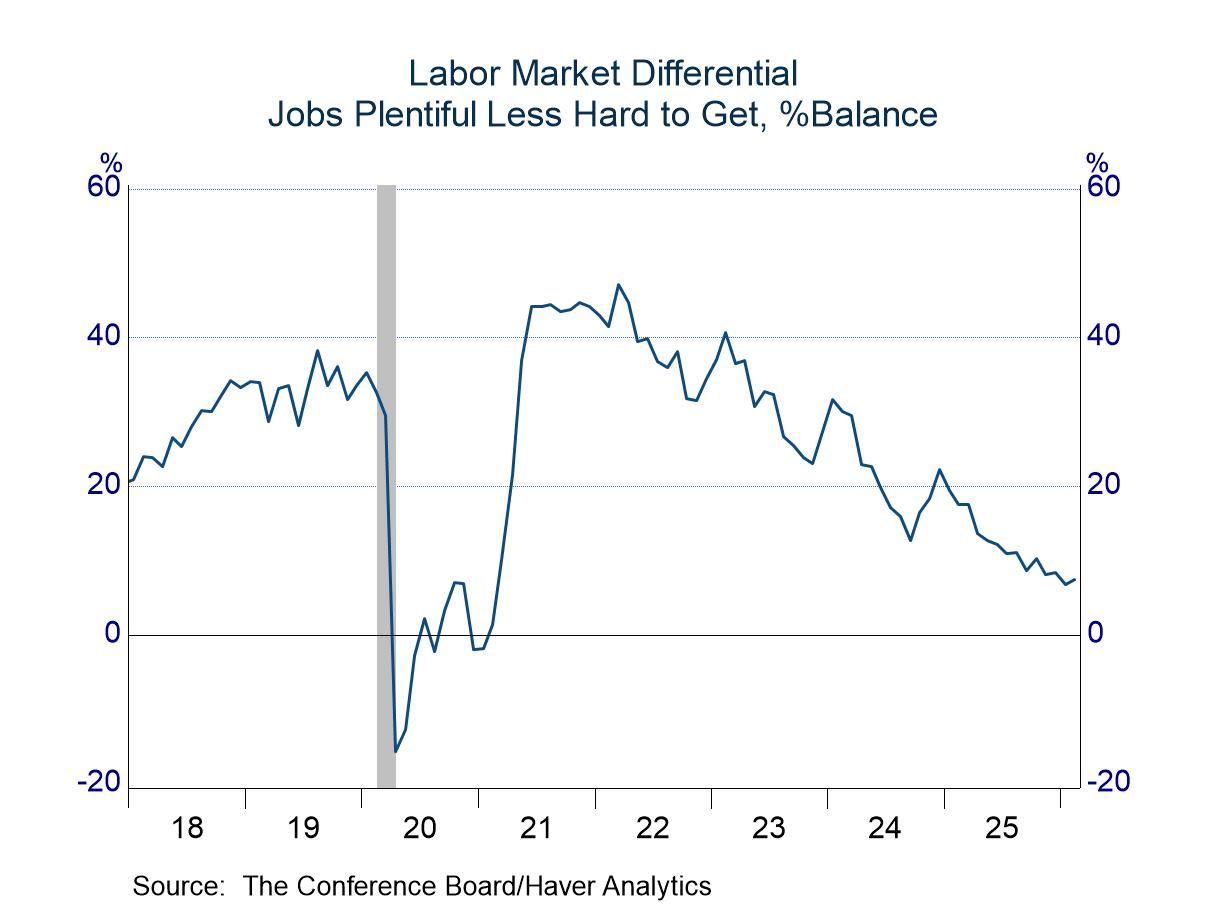
The detail of the Conference Board report provides insight into factors that are fueling the sour moods of individuals. The loss of vigor in the labor market is perhaps the most important consideration. The monthly survey of consumers asks if jobs are plentiful or hard to get, and the difference in the in the shares responding optimistically and pessimistically has shifted markedly. After touching a record high of 47.1% in in 2022 (sharer saying jobs are plentiful less share saying Jobs are hard to get) the differential has eased to 6.8% in January before edging up to 7.4% in February. Like the assessment of the present situation, the job differential is not recession-like, as it has moved below 040% at times and the record low is 58.7% in 1982. Still, it shows that individuals very much sense a deterioration in the labor market.
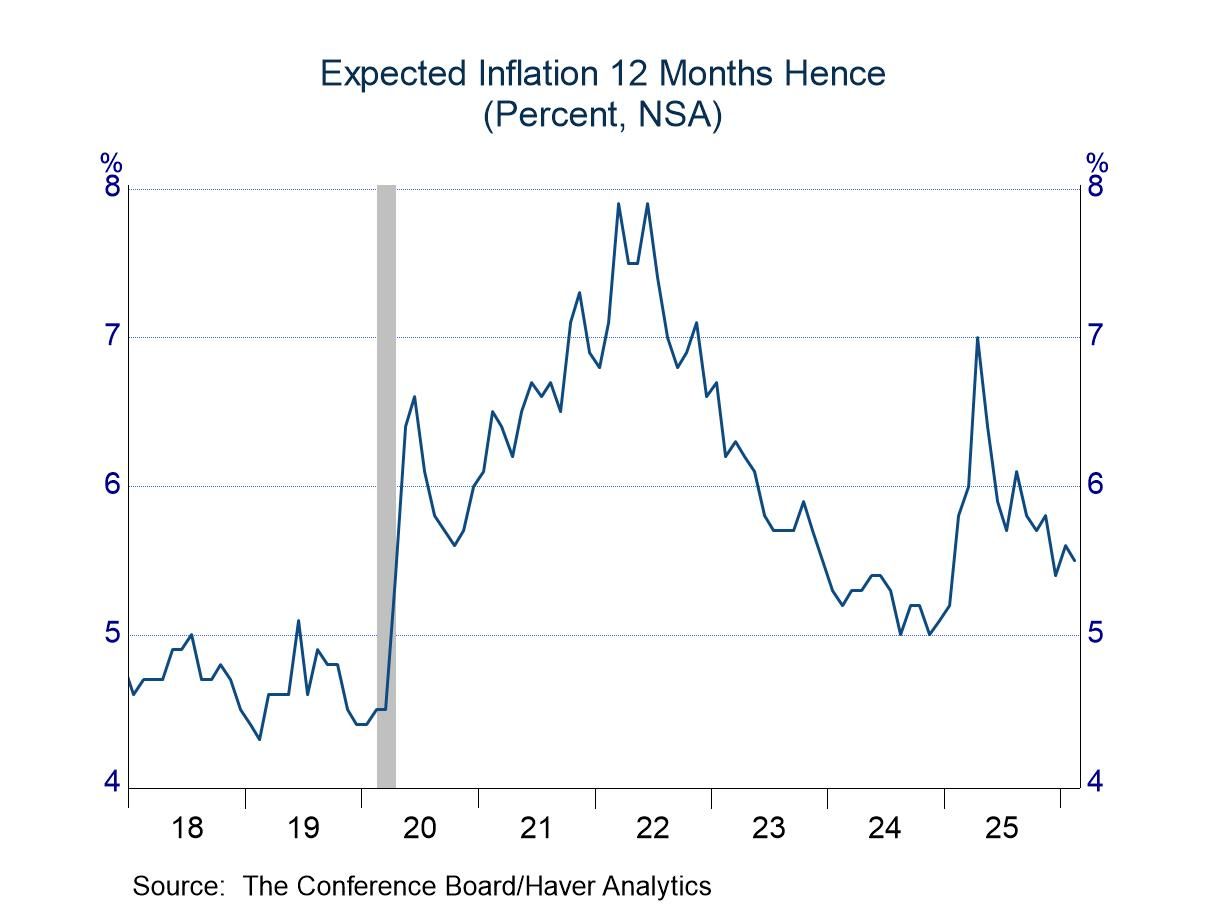
Politicians have seized on affordability as a key campaign issue, and the Conference Board survey shows that individuals are sensitive to inflation. After the inflation burst in 2022, expectations of inflation one year hence cooled to 5% in late 2024. However, inflation views picked up in 2025, briefly touching 7% before easing to 5.5% in February – still a above the 2024 low and most readings in the years before the pandemic.
One factor that has not dampened the moods of individuals is the performance of the equity market. The survey asks if stock prices are likely to be higher, lower , or the same 12 month hence. Here, optimism reigns, with 53.1% of respondents in February looking for higher prices. Only 23.5% expect the stock market to lose ground.
The Consumer Confidence data are available in Haver’s CBDB database. The total indexes, which are indexed to 1985=100, appear in USECON, and market expectations are in AS1REPNA.

Michael J. Moran
AuthorMore in Author Profile »Before joining Haver Analytics in 2025, Michael J. Moran was the chief economist of Daiwa Capital Markets America Inc. He was responsible for preparing the firm’s economic forecast and interest rate outlook. He traveled frequently to visit the clients of Daiwa Capital Markets and wrote weekly economic commentary. Mr. Moran also was involved in the flux of financial markets, as he spent a portion of each day on Daiwa’s trading floor interpreting economic statistics and Federal Reserve activity for traders and salespeople. Mr. Moran is quoted frequently in the financial press, and he appears regularly on cable news shows. He also has published articles in several journals and periodicals. Before joining Daiwa Capital Markets America, Mr. Moran worked as an economist at the Federal Reserve Board in Washington, D.C. where he analyzed a broad range of issues dealing with the financial sector of the economy and regularly briefed the Board of Governors. He was on the faculty of Pennsylvania State University from 1979 to 1980 and taught on a part-time basis at George Washington University from 1980 to 1987.
Mr. Moran received his Ph.D. in economics from Pennsylvania State University in 1980 and a B.S. in business administration from the University of Bridgeport in 1975. He was a CFA charter holder from 2002 until 2016.
More Economy in Brief
 Asia
Asia