Haver Analytics
Haver Analytics

Featured Data Additions: April 2026

  • G10US or EA → Business Cycle Indicators and Surveys → Nowcast Recession Risk

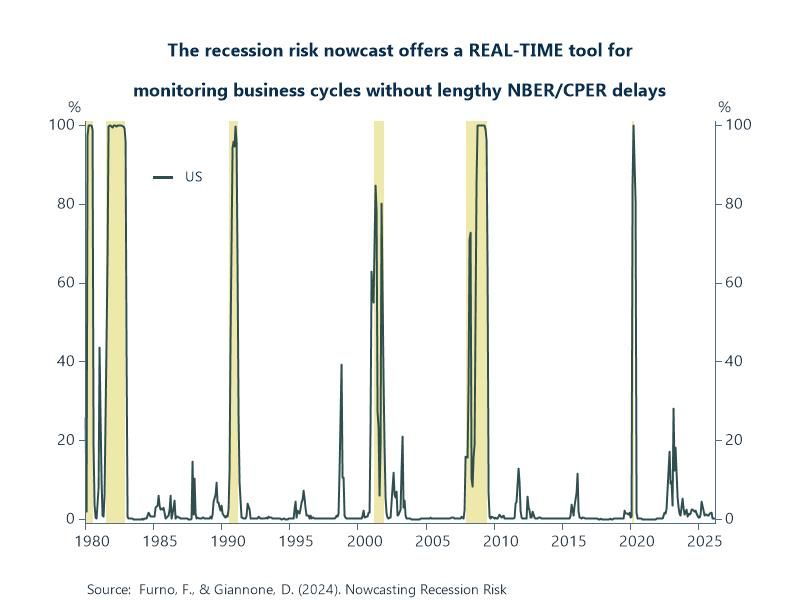
    Nowcasting recession risks for the US and the euro area were added to G10. The model combines a macroeconomic and a financial conditions indicator for each area. For the US, it uses the ISM Manufacturing PMI and the CISS. For the euro area, it uses the Economic Sentiment Indicator and the CISS. This approach delivers accurate, real-time nowcasts of recession risk. The monthly data sourced from Ferno & Giannoni are available on the first business day after the reference month closes and start in January 1980.

    Chart: How accurate is this recession risk nowcast? The yellow columns are the official recessions declared by NBER that can take several months and up to a year to announce. The dark line is the recession risk nowcast probabilities. It spikes up almost 100% at the beginning of the official recessions – and just as important, it is accurate in timing the end of a recession – unlike the Sahm recession indicator, which tends to stay elevated after a recessionary period is over.
  • EMERGEAPFiji → Housing and Construction → Estimated Value of Work Put in Place

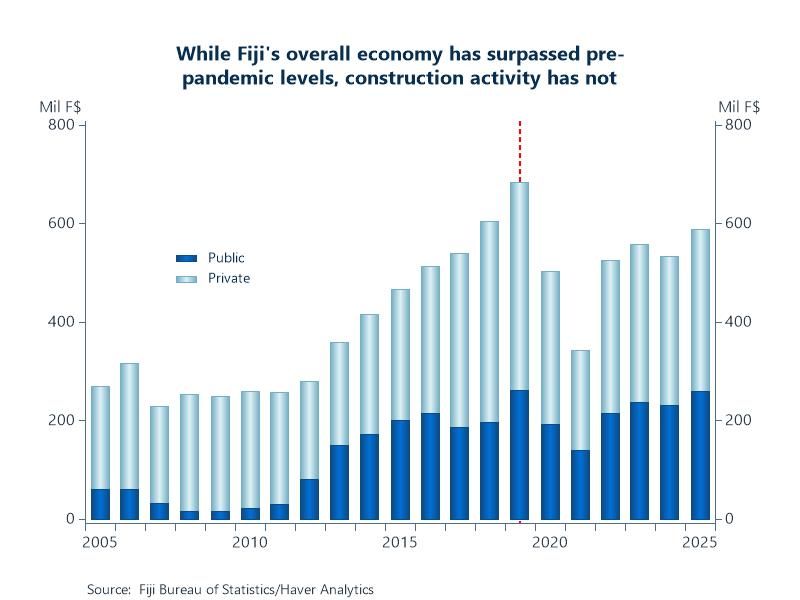
    Value of construction put in place statistics for Fiji were added to EMERGEAP. Series reported in Fijian dollars are available for new buildings and capital repairs, current repairs and maintenance, and civil engineering works. Detail for private vs public is available for each. Quarterly data are sourced from the Fiji Bureau of Statistics and start in Q1 2005.

    Chart: Total estimated value of work put in-place stood at $589.1 million for 2025, an increase of 0.8% ($4.5 million) when compared to 2024. Despite this increase, construction activity remains below its 2019 peak due to surging material costs (up 33% since 2019), a shortage of skilled labor (migration to AUS/NZ), a slow-building pipeline of new projects (canceled or delayed due to logistical/environmental shocks), and high government debt (projected to reach 80% of GDP this year) has limited Fiji’s ability to fund new public infrastructure projects.

  • EMERGEMAAngola → Production → Oil and Gas Production

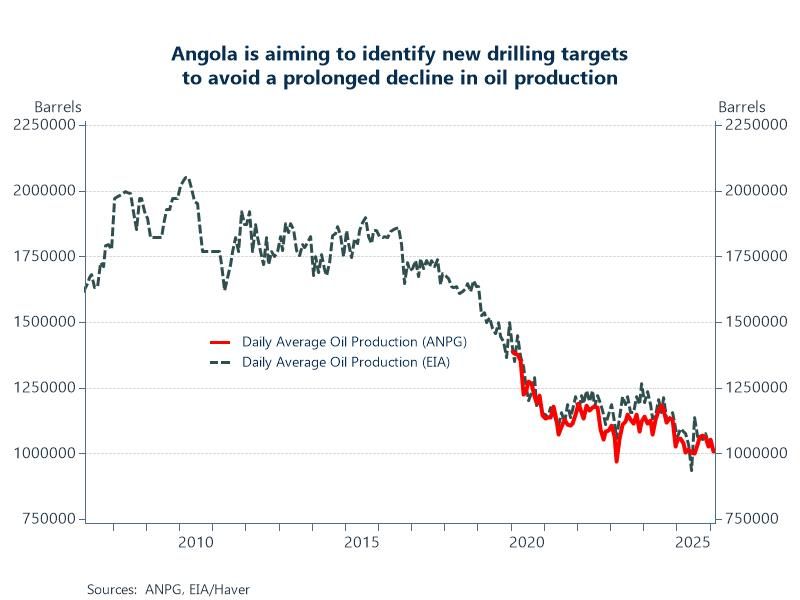
    Oil and gas production statistics for Angola were added to EMERGEMA and ENERGY. Monthly production totals and daily flow rates are available with detail by the 17 oil fields in Angola for the flow rates. Data are sourced from ANPG and start in January 2020.

    Chart: Crude oil is the cornerstone of Angola's economy, representing >90% of export revenues, ~75% of government income, and ~50% of its GDP. Production has been declining due to natural depletion of aging fields and lack of investment in new exploration, falling from roughly 2 mil bbl/day in 2010 to around 1 mil currently. This decline has caused severe economic strains, including high inflation, massive currency depreciation, and reduced economic growth, highlighting the urgent need for economic diversification, contrary to Angola’s current strategy to intensify efforts to discover new oil reserves.

  • EMERGEPRSingapore → Employment and Earnings → Graduate Employment Survey

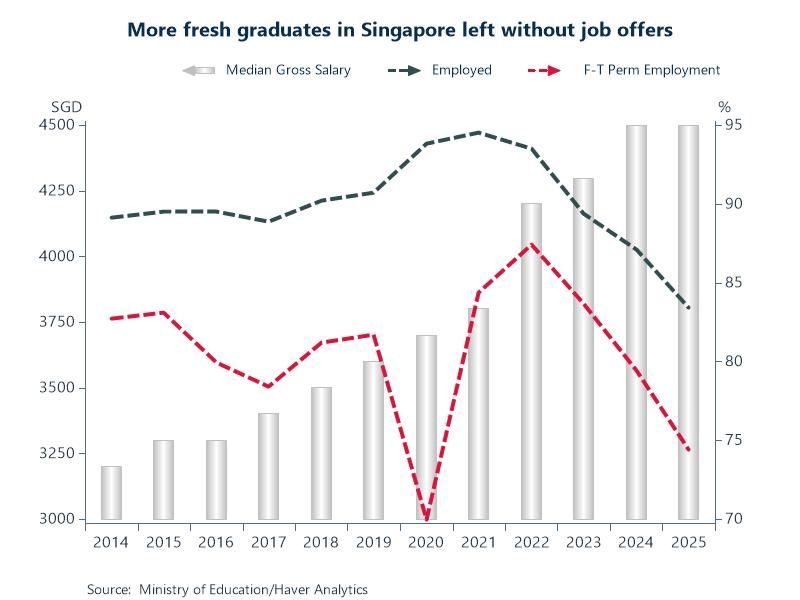
    The Graduate Employment Survey for Singapore was added to EMERGEPR. This survey is conducted annually by the six Autonomous Universities in Singapore to collect information regarding the employment status of graduates 6 months after taking final exams. Employment rates by type of employment and by type of graduates are available in addition to median gross salary series. Data are sourced from the Ministry of Education and start in 2014.

    Chart: Latest results show that 83.4% of graduates found employment within 6 months, down from 87.1% in 2024 – the fourth consecutive annual decline. 74.4% of graduates secured FT positions in 2025, down from 79.4% in 2024 – the third consecutive annual decline. Among those who found FT jobs, the median gross monthly salary remained at S$4,500, the first non-increase since 2016. These results may be due to a combination of cyclical economic caution and structural changes in the labor market, such as how entry-level jobs may be increasingly automated by AI.