

 Global| Apr 08 2026
Featured Data Additions, April 8, 2026
EMERGEMA → Angola → Production → Oil and Gas Production
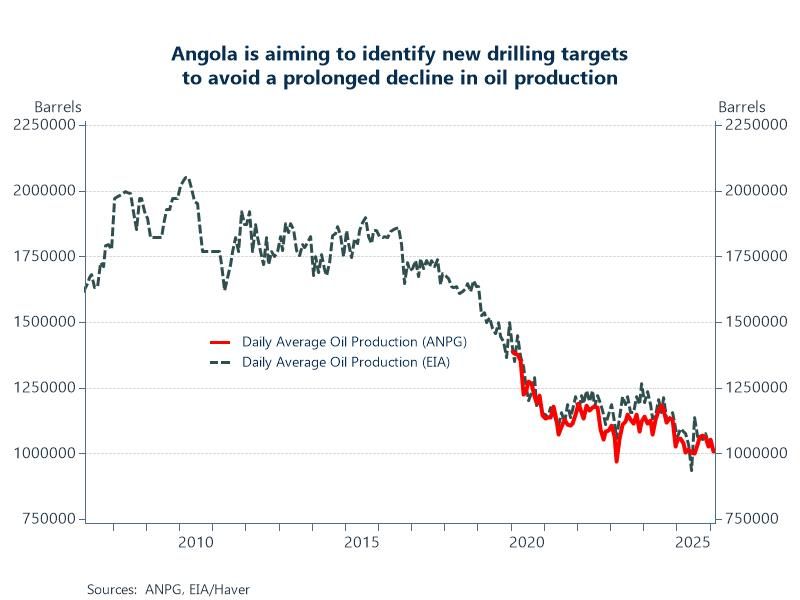
Oil and gas production statistics for Angola were added to EMERGEMA and ENERGY. Monthly production totals and daily flow rates are available with detail by the 17 oil fields in Angola for the flow rates. Data are sourced from ANPG and start in January 2020.
Chart: Crude oil is the cornerstone of Angola's economy, representing >90% of export revenues, ~75% of government income, and ~50% of its GDP. Production has been declining due to natural depletion of aging fields and lack of investment in new exploration, falling from roughly 2 mil bbl/day in 2010 to around 1 mil currently. This decline has caused severe economic strains, including high inflation, massive currency depreciation, and reduced economic growth, highlighting the urgent need for economic diversification, contrary to Angola’s current strategy to intensify efforts to discover new oil reserves.
EMERGEMA → Cote d'Ivoire (Ivory Coast) → Demographics → Socio-Demographic Indicators
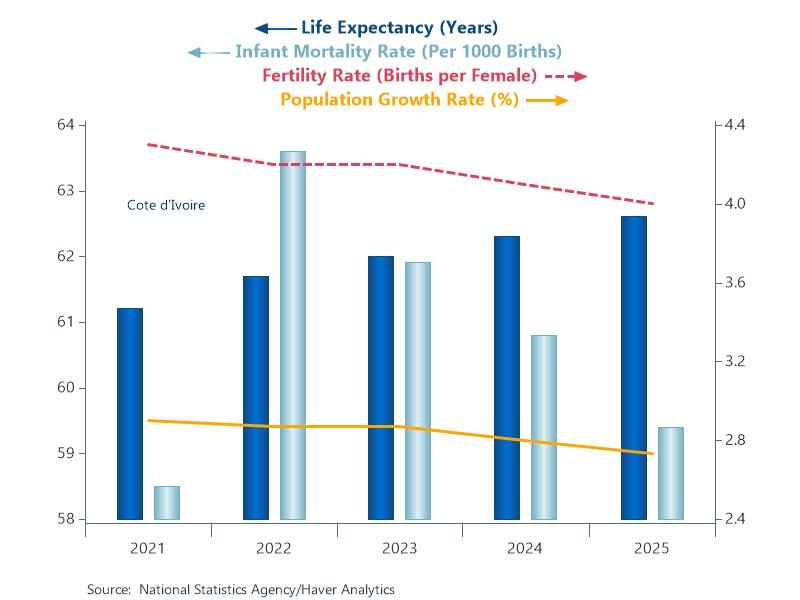
Socio-demographic indicator statistics for the Ivory Coast were added to EMERGEMA. Series include metrics relating to education, population, reproduction, life expectancy, birth/death rates, and infant mortality. These annual data are sourced from the National Statistics Agency and start in 2021.
Chart: Ivory Coast has a rapidly growing population (2.73%) with a high fertility rate of 4.0 children per woman, a relatively low life expectancy of 62.6 years, and an infant mortality rate of 59 per thousand births – largely typical of west African nations, but starkly contrasts with values for developed nations. For comparison, Norway has population growth of 0.7% with a low fertility rate of 1.4 children per woman, a high life expectancy of 83.2 years, and a low infant mortality rate of 1.9 per thousand births.
EMERGELA → Chile → Housing and Construction → Real Construction Investment
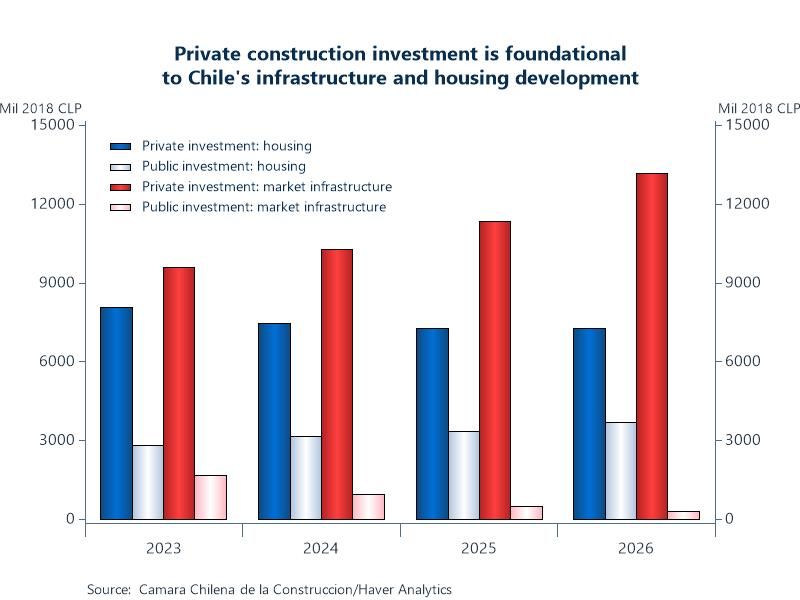
Construction investment statistics for Chile were added to EMERGELA. The table includes series for infrastructure and housing with detail for nonmarket vs market infrastructure and public vs private investment. These annual data are sourced from Camara Chilena de la Construccion, which is a construction trade association, start in 2023, and include one-year projections.
Chart: Private construction investment is foundational to Chile's infrastructure and housing development. Housing investment has been relatively flat since 2023 – but on average, private funding has made up ~70% of total housing investment during this time. Market infrastructure is infrastructure for industry, mining, energy and ports that focuses on generating economic growth vs social wellbeing. From 2023-2026, private investment in market infrastructure is expected to increase by 37% while public is expected to decrease by 83%, illustrating Chile’s growing reliance on private investment.
INSECTOR → Production → Mineral Production by Type of Mineral by Region
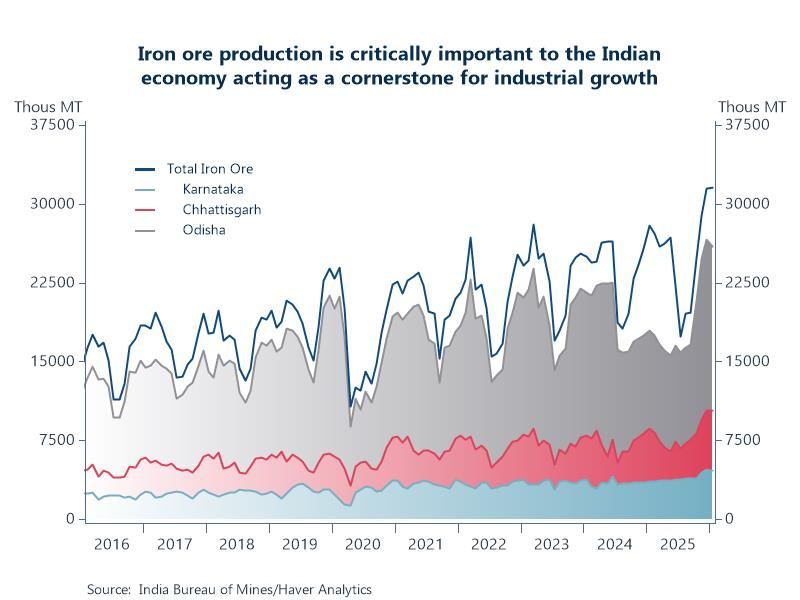
Mineral production statistics for India were added to INSECTOR. Value and volume series are available for fuel minerals, metallic minerals, and nonmetallic minerals by Indian state. Monthly data are sourced from the India Bureau of Mines and start in December 2015.
Chart: Iron ore is widely considered the most important mineral produced in India. It makes up ~68% of the total value of metallic minerals produced in the country. Production is currently 31.5 mil MT/month and on an upward trend to meet growing domestic demand for steel. Odisha is the leading iron ore-producing state, accounting for ~50% of total production. Chhattisgarh is also an important producer accounting for ~20% of the total. Karnataka accounts for ~15%, but it is specifically of a high-grade ore. Together, these three states account for 85% of total iron-ore production.
More Featured Data Additions
 Global| Sep 18 2026
Featured Data Additions, September 18, 2026
 Global| Sep 02 2026
Featured Data Additions, September 2, 2026
 Global| Aug 27 2026
Featured Data Additions, August 27, 2026
 Global| Aug 19 2026