

U.S. Trade Deficit Widened in March
by:Sandy Batten
|in:Economy in Brief
Summary
- The deficit in goods and services widened to $60.3 billion in March from $57.8 billion in February,
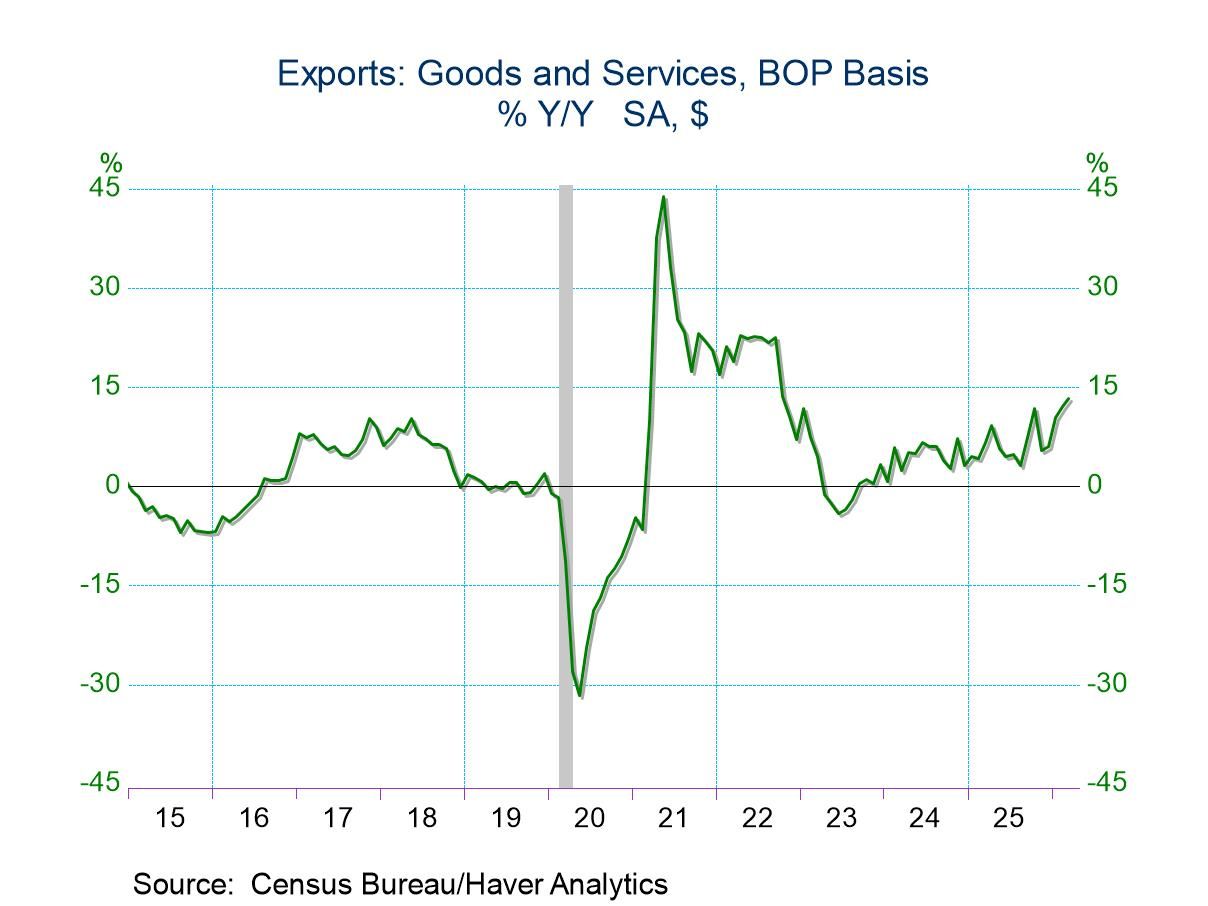
- Exports rose 2.0% m/m, led by a 33% monthly jump in petroleum exports.
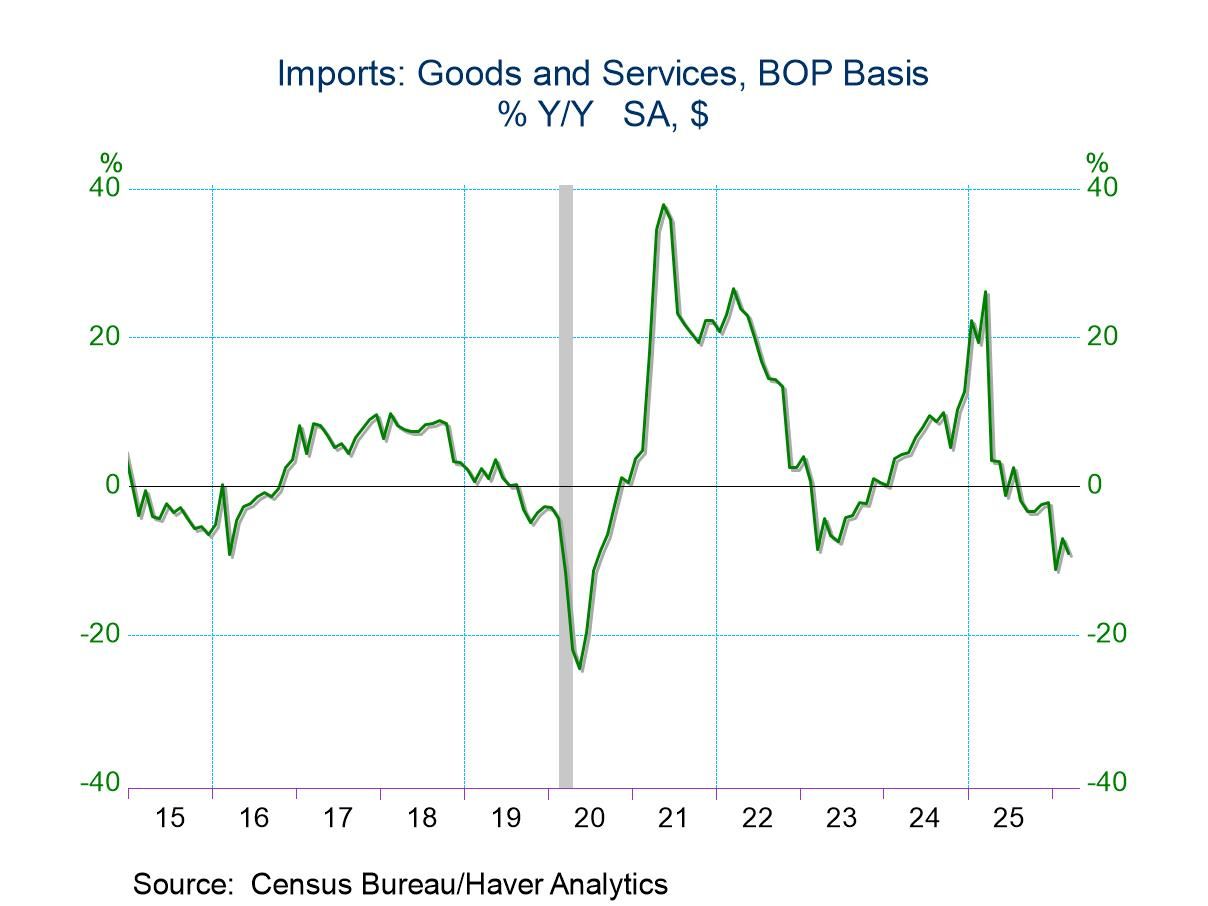
- Imports increased 2.3% m/m, led by an 11.2% m/m jump in auto imports.
- The goods deficit widened to $88.7 billion while the services surplus widened to $28.4 billion.
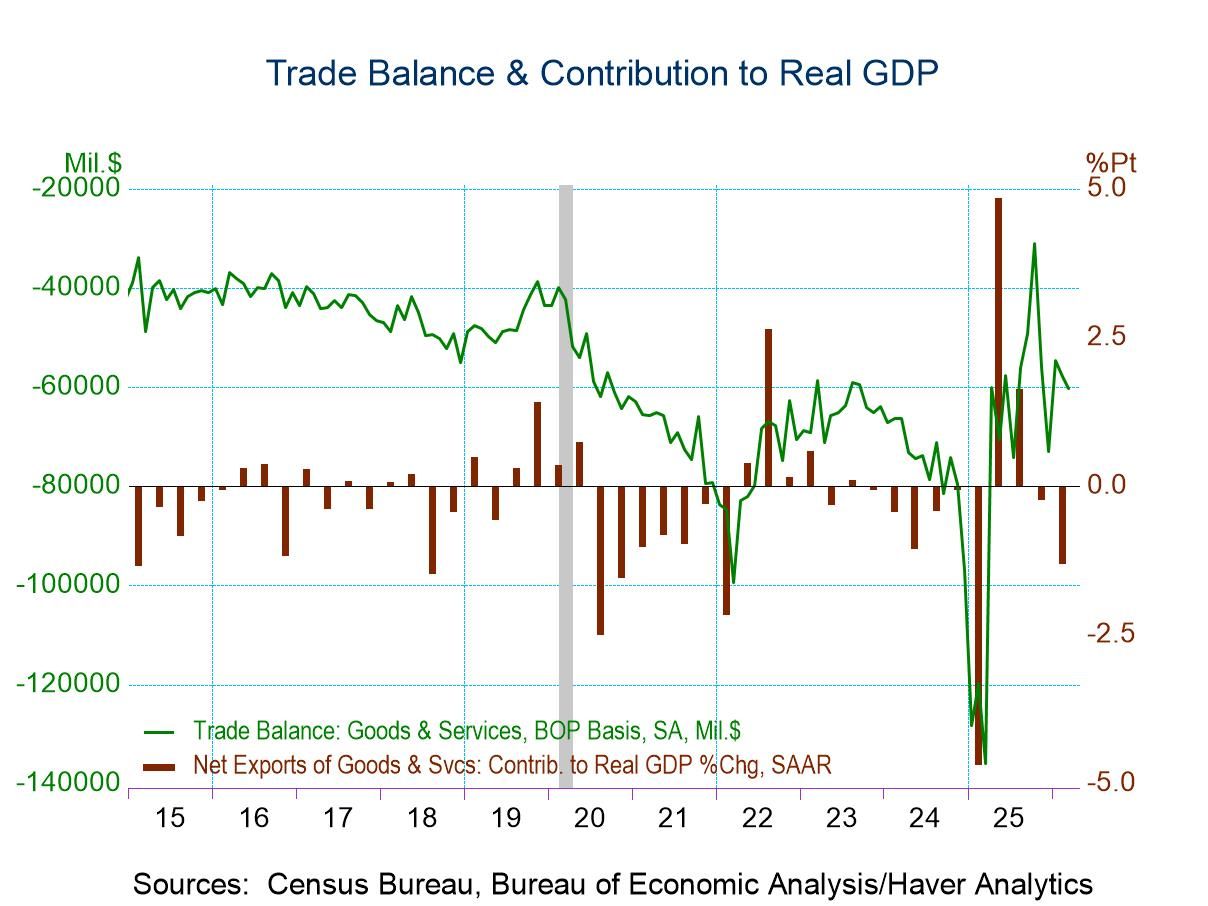
The U.S. trade deficit in goods and services (BOP basis) widened to $60.3 billion in March from a revised $57.8 billion February (previously -57.3 billion), according to the U.S. Census Bureau. The Action Economics Forecast Survey looked for a deficit of $60.1 billion. The goods deficit increased to $88.7 billion in March from $84.6 billion in February while the services surplus widened $28.4 billion from a downwardly revised $26.8 in February (previously +$27.3 billion).
The real (inflation-adjusted) trade deficit in goods widened to $90.8 billion (2017$) in March from $85.2 billion in February. For all of the first quarter, the real goods deficit widened to $258.9 billion from $245.8 billion in last year’s fourth quarter. Accordingly, as reported last week, the widening real trade deficit subtracted 1.3%-points from overall GDP growth in Q1.
Exports of goods and services increased 2.0% m/m (13.3% y/y) in March following monthly gains of 4.1% in February and 5.6% in January. For all of Q1, exports were up 6.8% q/q, the largest quarterly increase since Q2 2022. Goods exports (Census basis) increased 3.0% m/m in March, led by a 6.1% m/m increase in exports of industrial supplies, which included a 33.5% monthly jump in exports of petroleum and petroleum products. This was the largest monthly increase in petroleum exports since June 2008 and reflected meaningful gains in both volume and prices. The $6.9 billion increase in exports of petroleum and petroleum products more than accounted for the $6.3 billion increase in total goods exports in March. However, apart from a 7.5% m/m decline in exports of nonfood consumer goods ex autos, exports of all of the other major sectors increased in March. Service exports edged down 0.3% m/m (+8.2% y/y) in March following a 0.8% m/m increase in February and their first monthly decline in four months. Exports of transport services rebounded, rising 2.7% m/m in March after a 1.5% monthly decline in February. By contrast, travel exports slumped 5.8% m/m in March, the second decline in the past three months.
Imports of goods and services increased 2.3% m/m in March (-9.0% y/y) on top of a 4.4% monthly gain in February. The annual comparison is distorted by an outsized jump in imports last March (particularly of nonmonetary gold) ahead of expected tariff increases. Good imports (Census basis) increase 3.5% m/m in March following a 5.1% monthly rise in February. While the March increase was relatively widespread, it was led by a 11.2% m/m jump in imports of autos, parts and engines (accounting for more than a third of the monthly. increase in total goods imports). Imports of nonfood consumer goods ex auto rose 4.4% m/m in March after a 4.2% m/m gain in February. Imports of industrial supplies rose 3.9% m/m in March on top of a 6.1% m/m jump in February. Service imports fell 2.3% m/m in March, their first monthly decline in four months. Imports of intellectual property plummeted 19.6% m/m in March, their largest monthly decline since March 2022. Travel services imports fell 2.4% m/m, their second decline in the past three months.
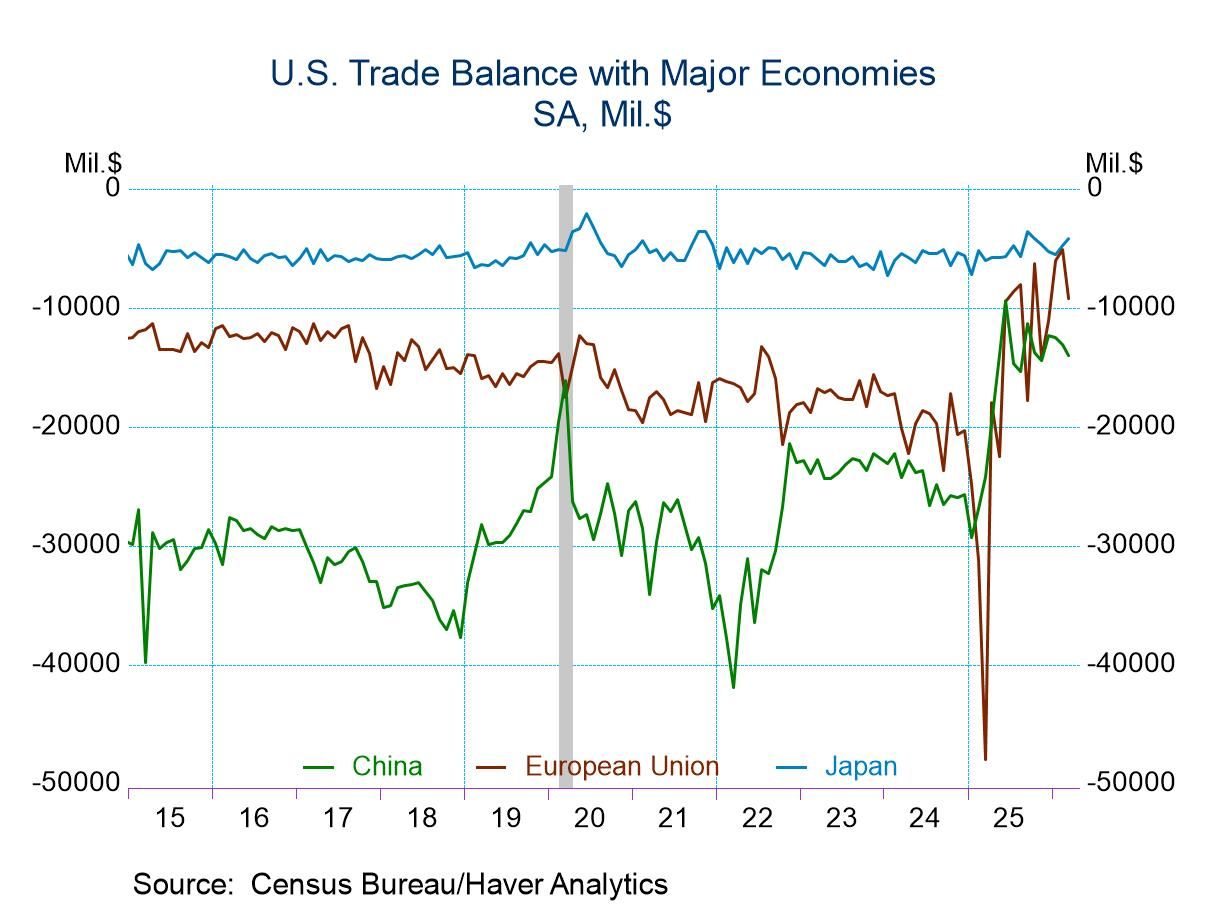
By country, the goods trade deficit with China widened slightly to $14.0 billion in March from $13.1 billion in February. Exports to China jumped 23.5% m/m while imports from China rose 13.5% m/m. The trade deficit with the European Union widened markedly to $9.2 billion March from $5.1 billion in February, reflecting a 0.8% m/m fall in exports and a 9.0% m/m jump in imports. The trade deficit with Japan narrowed to $4.1 billion in March, the smallest since last September, from $4.7 billion in February.
The international trade data can be found in Haver’s USECON database. Detailed figures on international trade are available in the USINT and USTRADE databases. The expectations figures are from the Action Economics Forecast Survey in AS1REPNA.

Sandy Batten
AuthorMore in Author Profile »Sandy Batten has more than 30 years of experience analyzing industrial economies and financial markets and a wide range of experience across the financial services sector, government, and academia. Before joining Haver Analytics, Sandy was a Vice President and Senior Economist at Citibank; Senior Credit Market Analyst at CDC Investment Management, Managing Director at Bear Stearns, and Executive Director at JPMorgan. In 2008, Sandy was named the most accurate US forecaster by the National Association for Business Economics. He is a member of the New York Forecasters Club, NABE, and the American Economic Association. Prior to his time in the financial services sector, Sandy was a Research Officer at the Federal Reserve Bank of St. Louis, Senior Staff Economist on the President’s Council of Economic Advisors, Deputy Assistant Secretary for Economic Policy at the US Treasury, and Economist at the International Monetary Fund. Sandy has taught economics at St. Louis University, Denison University, and Muskingun College. He has published numerous peer-reviewed articles in a wide range of academic publications. He has a B.A. in economics from the University of Richmond and a M.A. and Ph.D. in economics from The Ohio State University.
More Economy in Brief
 Asia
Asia
