U.S. Retail Sales Rebounded in February
by:Sandy Batten
|in:Economy in Brief
Summary
- Total sales increased 0.6% m/m after a 0.1% m/m decline in January
- Excluding autos, sales increase 0.5% m/m in February after having been unchanged in January.
- Sales of the retail control group that is used to construct PCE rose 0.5% m/m in February.
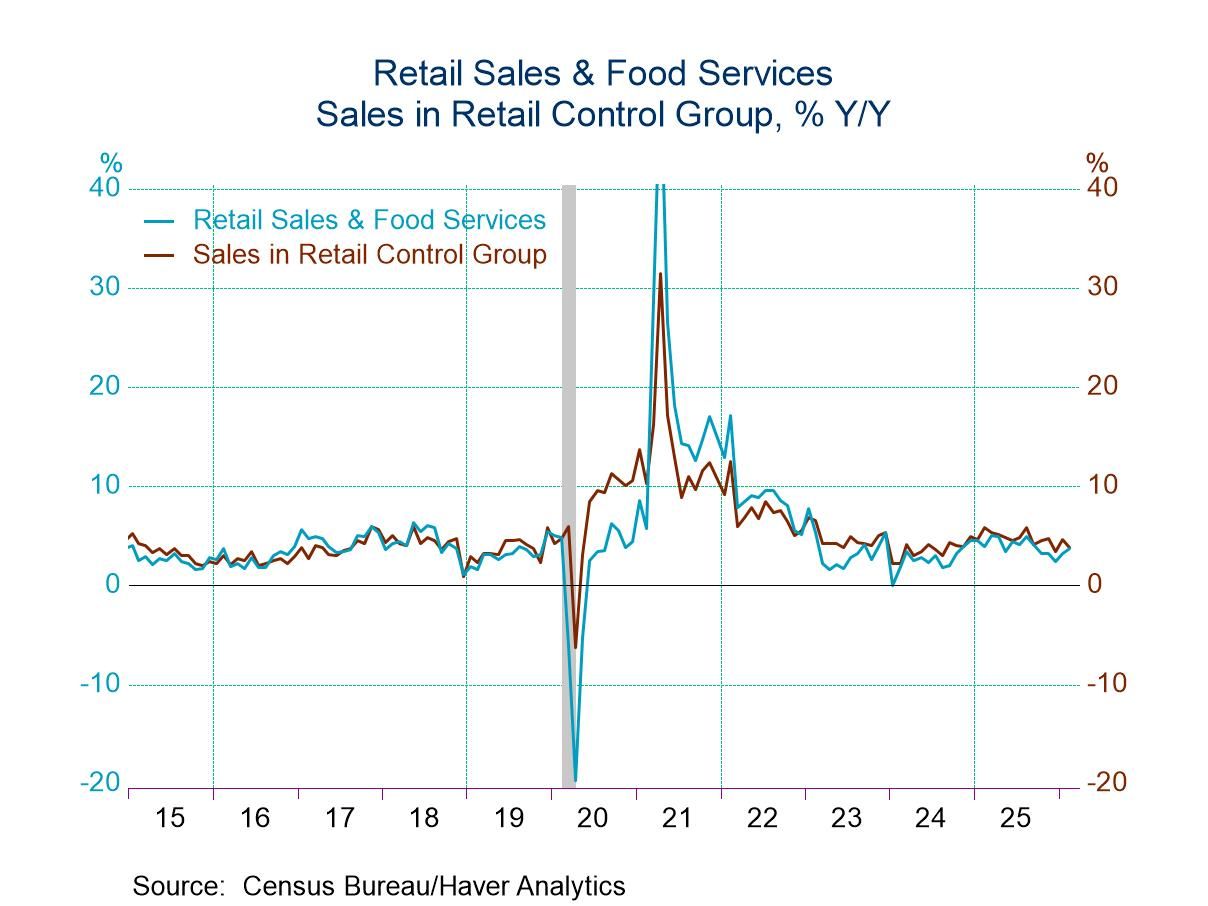
Total retail sales rebounded in February, rising a larger-than-expected 0.6% m/m (+3.7% y/y) following an upwardly revised 0.1% monthly decline in January (previously -0.2% m/m), according to data from the U.S. Census Bureau. The Action Economics Forecast Survey expected a 0.4% monthly increase. Excluding autos, other sales were up 0.5% m/m (+3.6% y/y), the first monthly increase in three months. The Action Economics Forecast Survey looked for a 0.3% m/m increase.
The control group of sales (those categories that the BEA uses to construct PCE in the national accounts) increased 0.5% m/m in February following a 0.2% increase in January. The January/February average for this variable is 2.1% annualized above the Q4 average. In Q4, the control group rose 2.8% saar from Q3. So, today’s figures point to a slight slowdown in PCE growth in the first quarter. Note, however, that the data released today predates the escalation of the conflict between the US/Israel and Iran which has led to a marked rise in gasoline/energy prices. The increase in energy prices to date, if maintained, could stress household finances and thereby significantly slow consumer spending ahead.
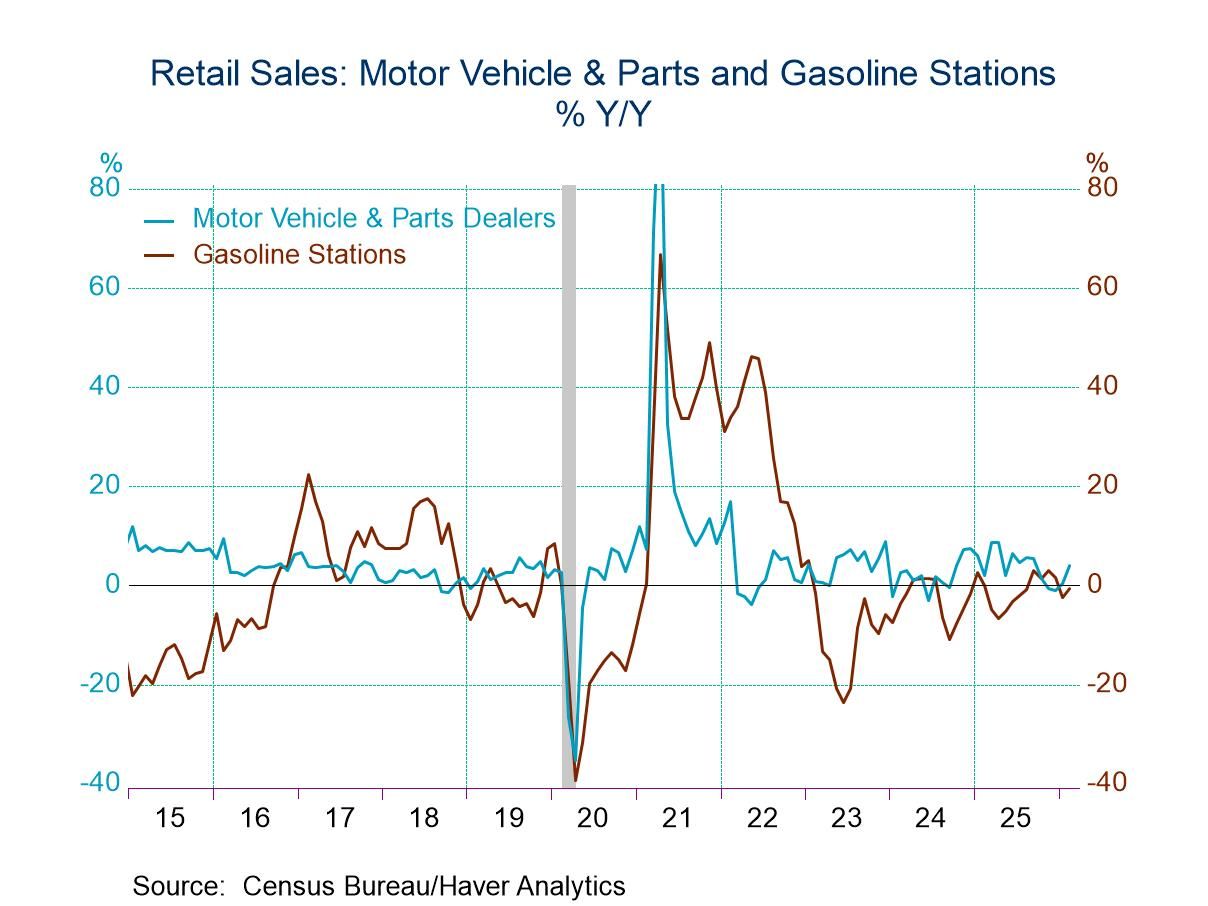
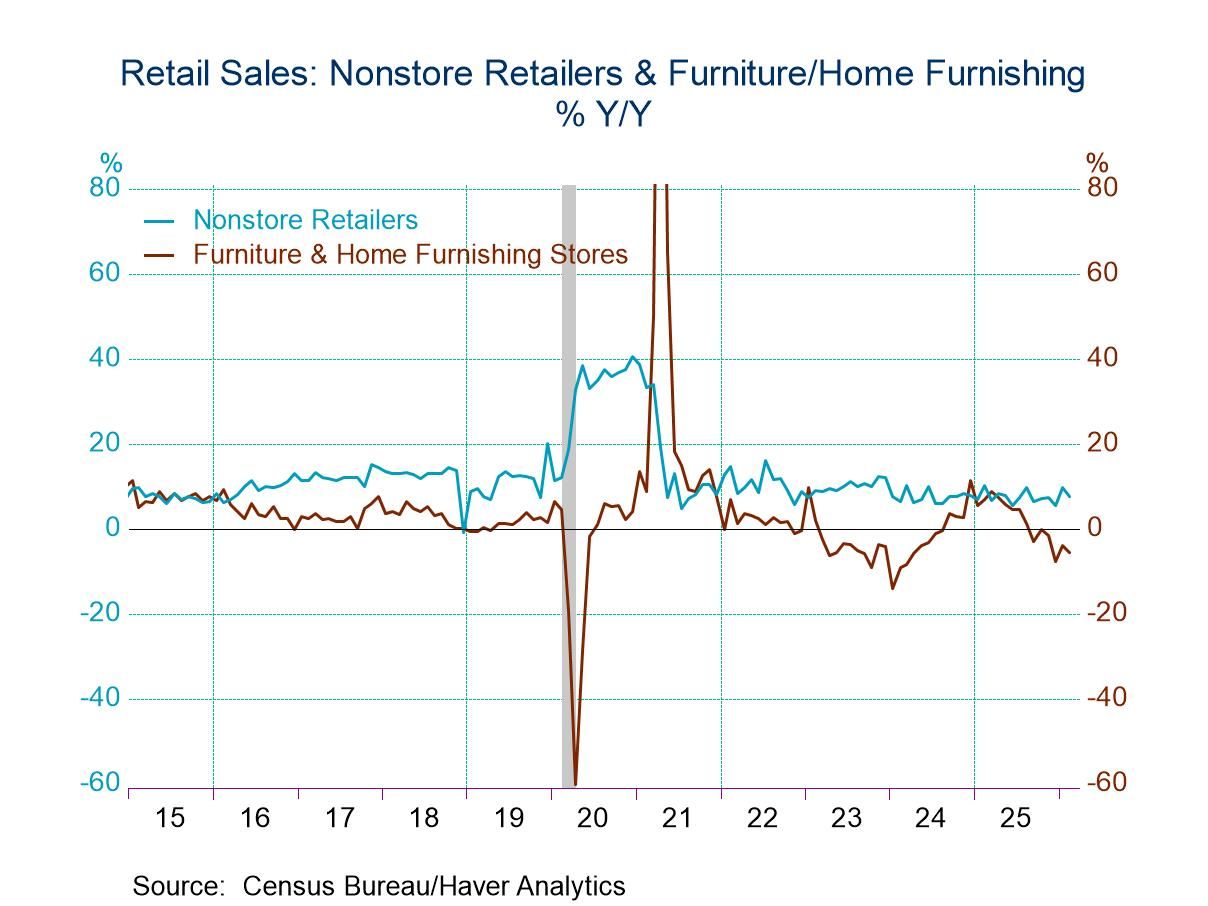
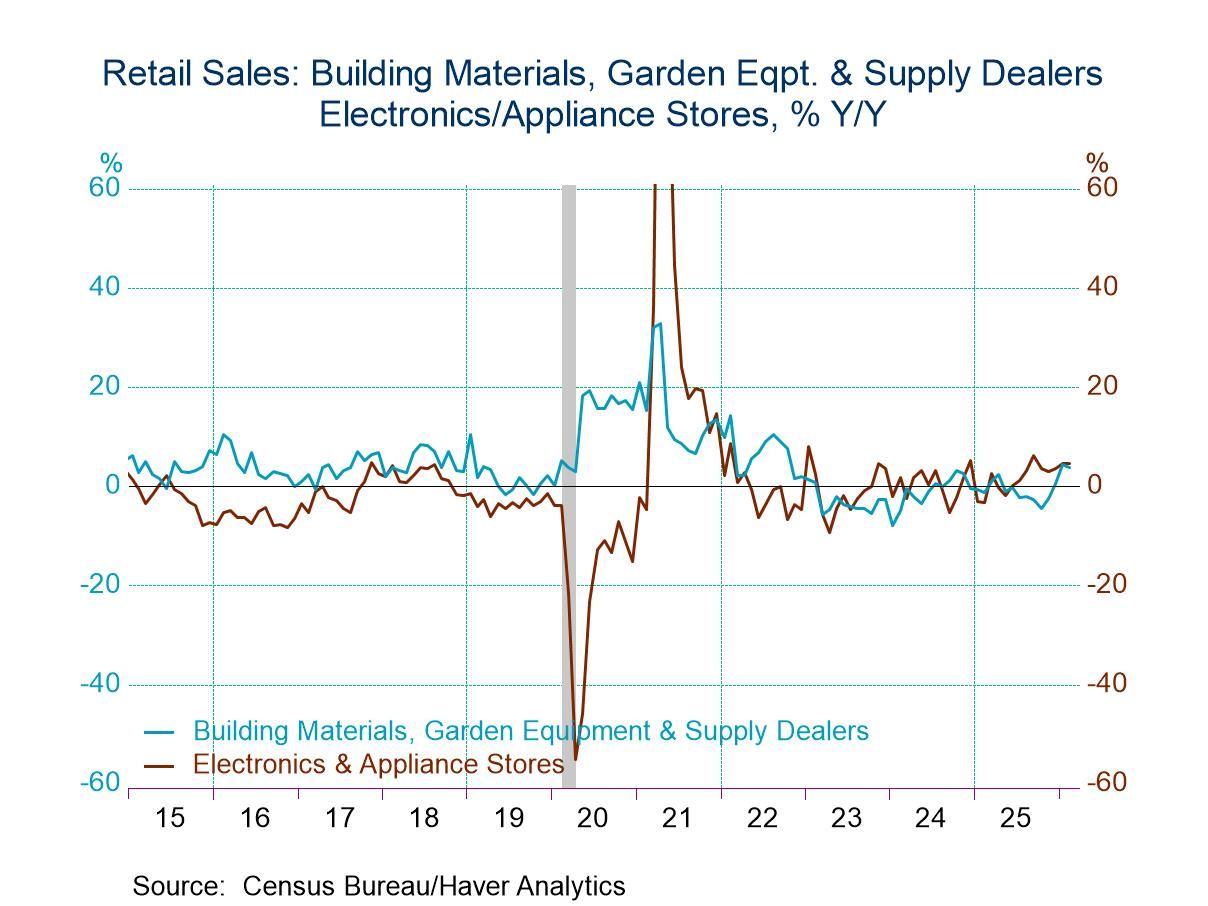
Sales of motor vehicles and parts jumped 1.2% m/m in February, their first monthly gain in three months and their largest monthly increase since last July. Furniture sales declined 1.0% m/m in February while sales of electronics and appliances rose 0.5% m/m. Sales of building materials increased 0.4% m/m, their fourth consecutive monthly gain. Sales at health and personal care stores jumped 2.3% m/m, their first monthly gain in five months. Sales at gasoline stations rose 0.9% m/m in February, their third monthly gain in the past four months, ahead of the sharp price increases that occurred in March. Clothing store sales jumped 2.0% m/m, their first monthly increase in three months. Department store sales gained 3.0% m/m, their first monthly increase in four months. Food sales slumped 1.0% m/m in February, their first monthly decline in three months. Sales of nonstore retailers increased 0.7% m/m in February on top of a 1.4% m/m jump in January. Eating out sales rose 0.4% m/m, their first monthly gain in three months.
Retail sales data can be found in Haver’s USECON database. The expectations figures are from the Action Economics Forecast Survey in AS1REPNA.

Sandy Batten
AuthorMore in Author Profile »Sandy Batten has more than 30 years of experience analyzing industrial economies and financial markets and a wide range of experience across the financial services sector, government, and academia. Before joining Haver Analytics, Sandy was a Vice President and Senior Economist at Citibank; Senior Credit Market Analyst at CDC Investment Management, Managing Director at Bear Stearns, and Executive Director at JPMorgan. In 2008, Sandy was named the most accurate US forecaster by the National Association for Business Economics. He is a member of the New York Forecasters Club, NABE, and the American Economic Association. Prior to his time in the financial services sector, Sandy was a Research Officer at the Federal Reserve Bank of St. Louis, Senior Staff Economist on the President’s Council of Economic Advisors, Deputy Assistant Secretary for Economic Policy at the US Treasury, and Economist at the International Monetary Fund. Sandy has taught economics at St. Louis University, Denison University, and Muskingun College. He has published numerous peer-reviewed articles in a wide range of academic publications. He has a B.A. in economics from the University of Richmond and a M.A. and Ph.D. in economics from The Ohio State University.
More Economy in Brief
 Global