Personal Income, Consumption, and Prices in September
Summary
- Inflation was as expected in September, but still unsettling.
- Inflation eroded increases in nominal income and consumption.
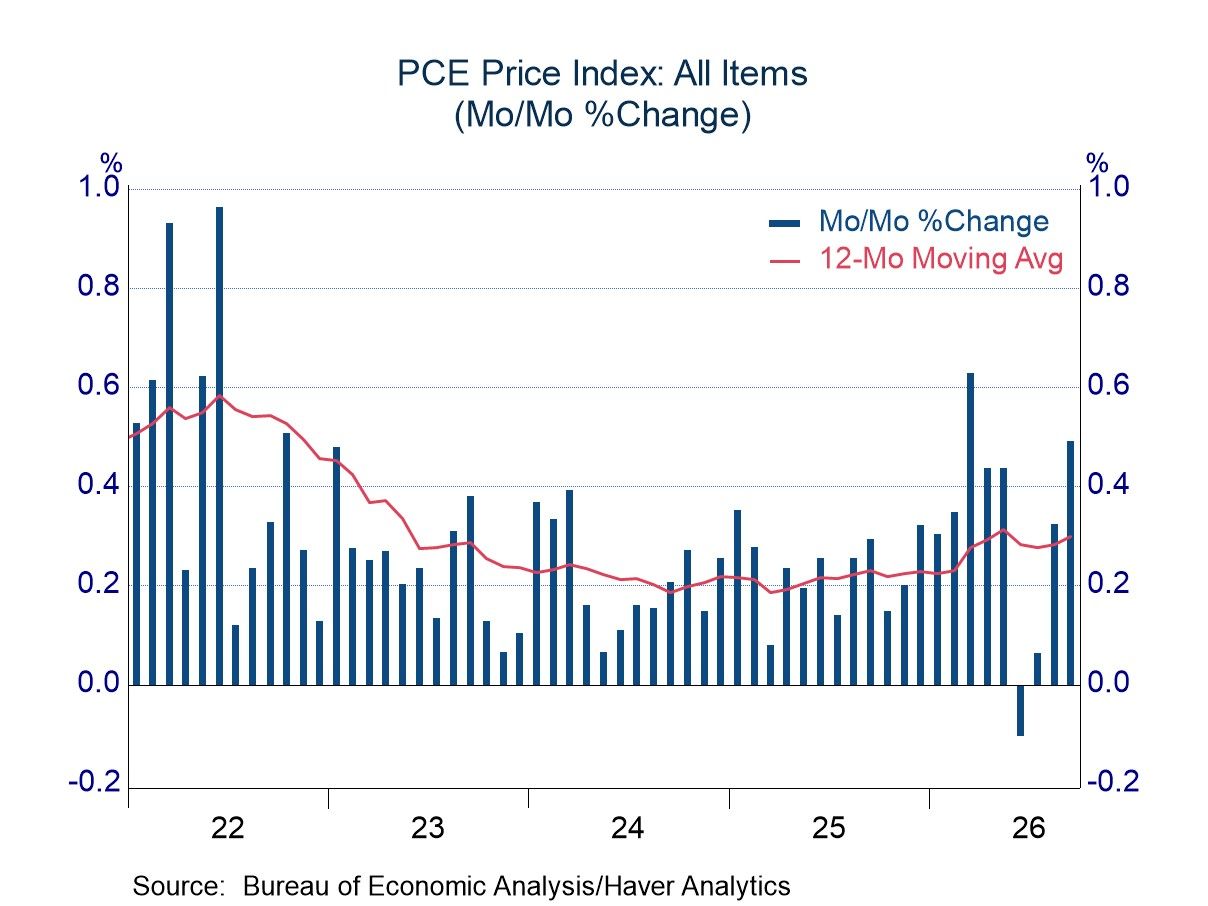
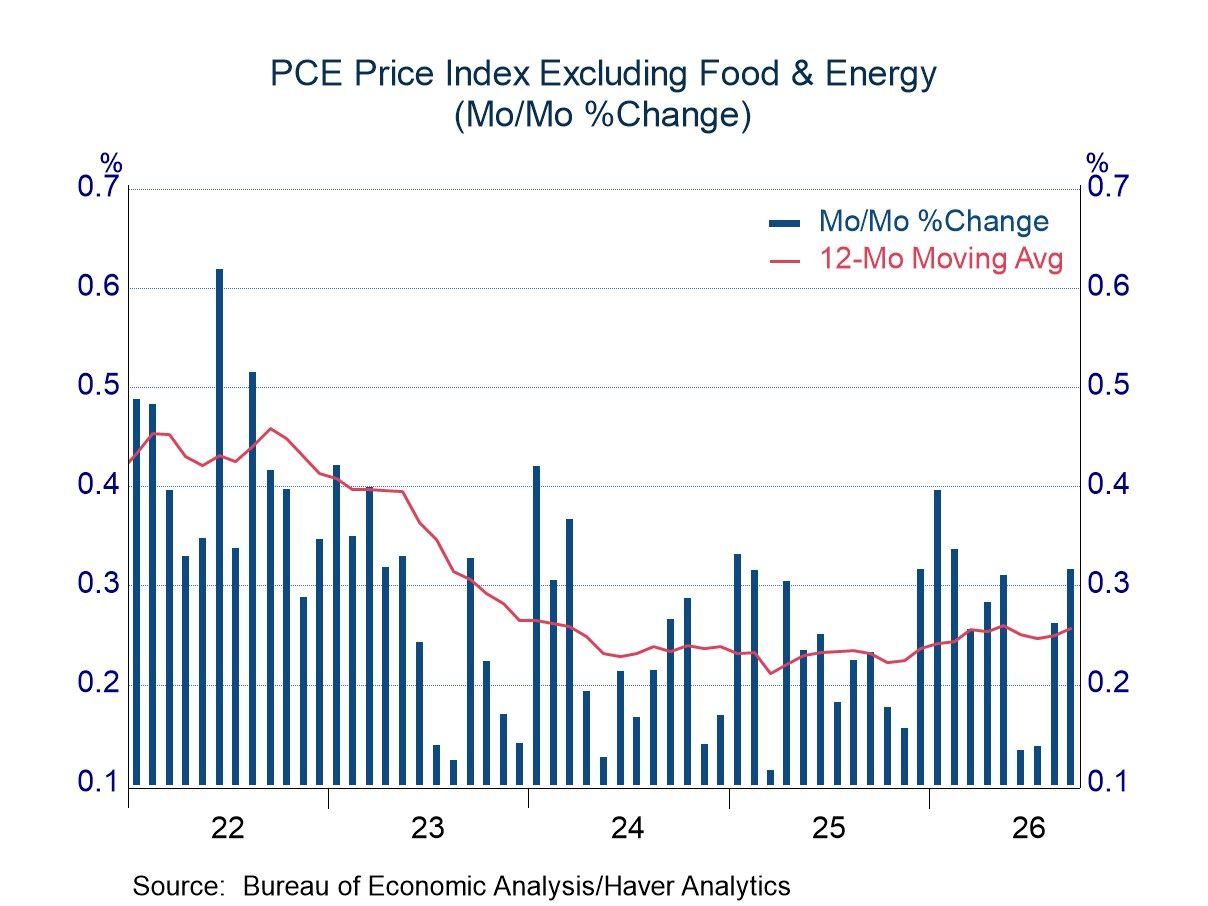
With inflation and tighter monetary policy now front-line issues, the price index for personal consumption expenditures is arguably the most important component of this report. Results for September were as expected, with the headline measure increasing 0.5% and the core index (excluding food and energy) increasing 0.3%. Although the results were not surprising, they were unsettling, as they reinforced the notion that inflation has accelerated this year. The headline measure rose 3.6% on a year-over-year basis, up two ticks from the reading in August and well above the increase of 2.8% in 2025. Excluding food and energy, the increase of 0.3% in September left the year-over-year increase at 3.1%, versus 3.0% in August and 2.9% over the 12 months of 2025. The core index has picked up only modestly, but it has moved in the wrong direction relative to the 2% target of the Federal Reserve.
Most of the price acceleration this year has occurred in the goods sector. Energy prices stand out as a force driving goods prices higher, but pressure has also been evident in recreational goods and apparel. Inflation in the services sector has been approximately steady, although at an uncomfortable pace (3.5% so far this year versus 3.3% in 2025). A services measure closely followed by many analysts and Federal Reserve officials has quickened a bit more (3.6% versus 3.2% in 2025).
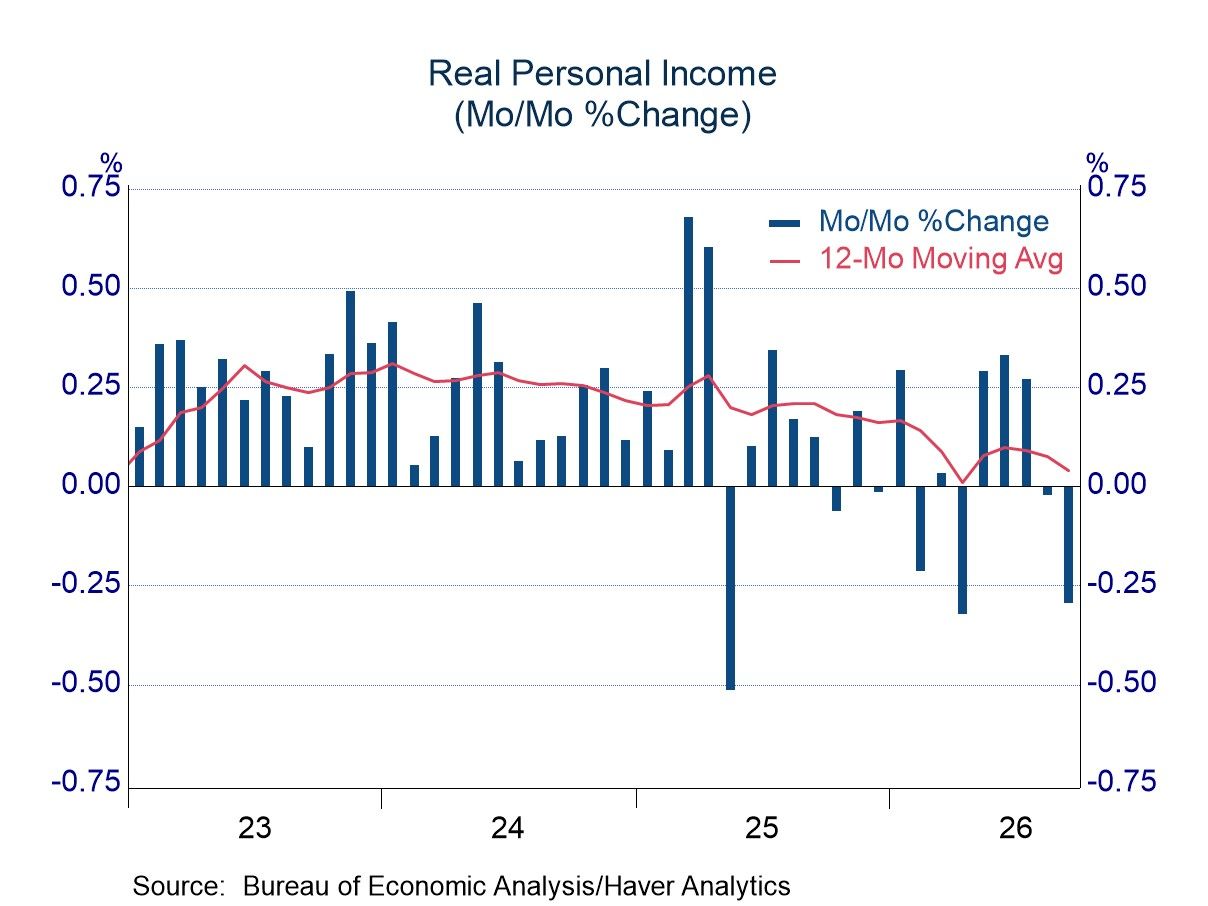
The price indexes will probably capture most of the media and market attention, but the income and consumption components are important as well. Nominal personal income rose 0.2% in September, a change that translated to a decline of 0.3% after adjusting for inflation. September marked the second consecutive decline in real personal income, and the year-over-year change totaled only 0.5%. Personal income has been trending downward in the past few years, reflecting primarily an easing in the labor market. Inflation has added to the softening trend.
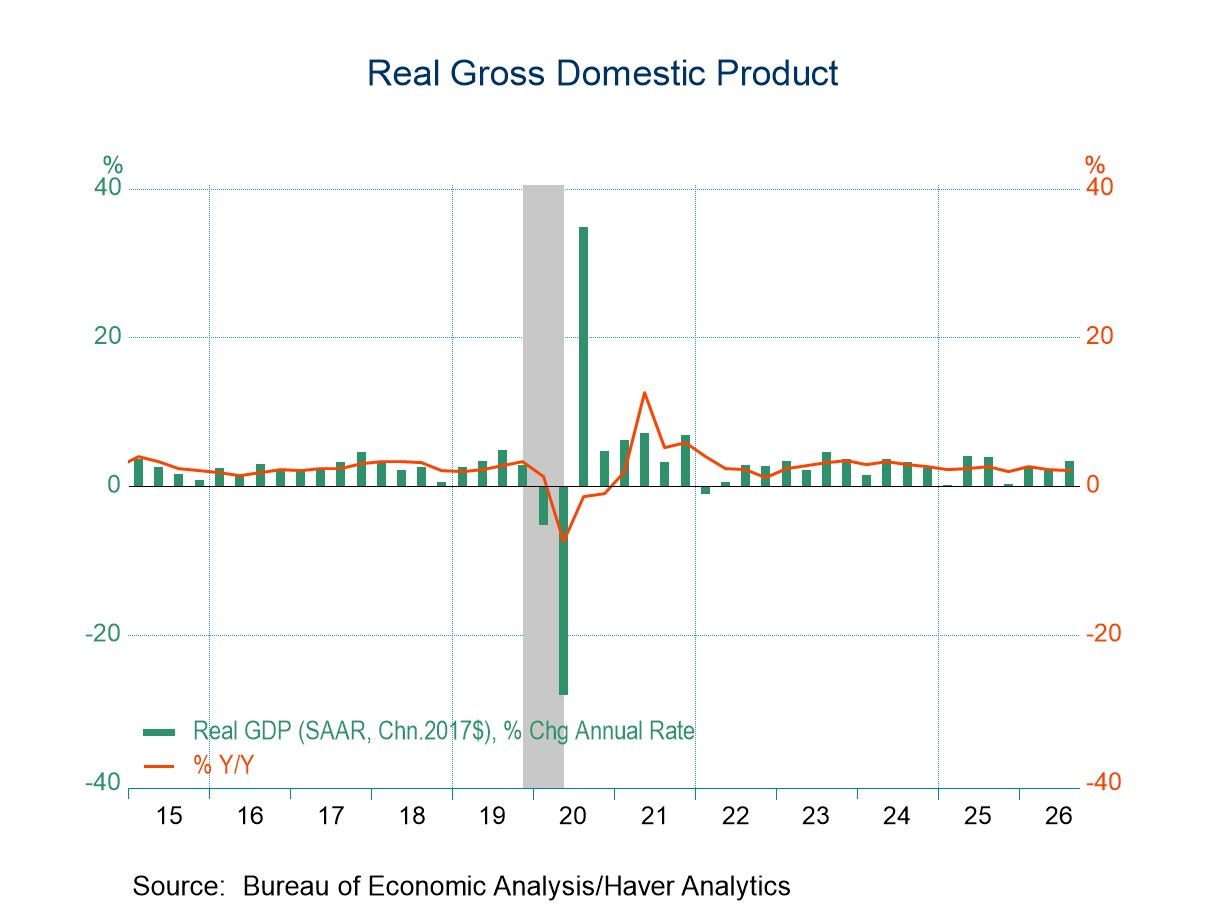
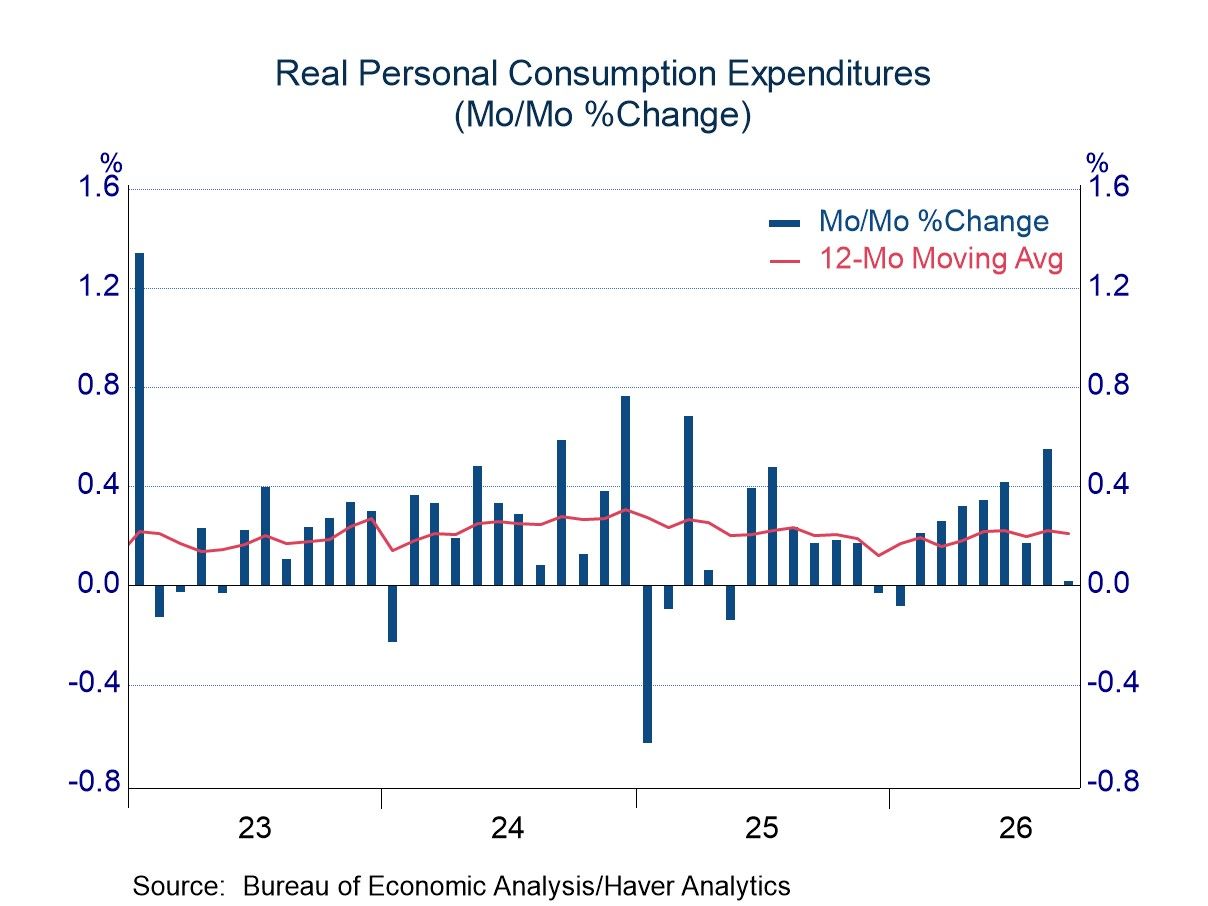
Real consumer spending has been well maintained this year, including the third-quarter advance of 3.8% (annual rate). However, the recent performance has been choppy, with most of the third-quarter increase reflecting strong spending in August (real expenditures up 0.6%). Consumer activity was moderate in July (0.2% in real terms) and essentially unchanged in September.
The monthly spending figures feed into GDP on a quarterly average basis, and thus the September figures offer hints on prospects for the fourth quarter. Real outlays in September, although up less than 0.1%, were still ahead of the average for Q3. Thus, even if spending showed no real growth in the next three months, the GDP accounts would show an increase of 0.8% in the final quarter of the year (annual rate, assuming no revisions to existing data). If outlays were to grow 0.2% in each of the next three months, the growth of real consumer spending in Q4 would total 2.4%.
The personal income and consumption figures are available in Haver’s USECON database with detail in the USNA database. The Action Economics forecasts are in AS1REPNA.

Michael J. Moran
AuthorMore in Author Profile »Before joining Haver Analytics in 2025, Michael J. Moran was the chief economist of Daiwa Capital Markets America Inc. He was responsible for preparing the firm’s economic forecast and interest rate outlook. He traveled frequently to visit the clients of Daiwa Capital Markets and wrote weekly economic commentary. Mr. Moran also was involved in the flux of financial markets, as he spent a portion of each day on Daiwa’s trading floor interpreting economic statistics and Federal Reserve activity for traders and salespeople. Mr. Moran is quoted frequently in the financial press, and he appears regularly on cable news shows. He also has published articles in several journals and periodicals. Before joining Daiwa Capital Markets America, Mr. Moran worked as an economist at the Federal Reserve Board in Washington, D.C. where he analyzed a broad range of issues dealing with the financial sector of the economy and regularly briefed the Board of Governors. He was on the faculty of Pennsylvania State University from 1979 to 1980 and taught on a part-time basis at George Washington University from 1980 to 1987.
Mr. Moran received his Ph.D. in economics from Pennsylvania State University in 1980 and a B.S. in business administration from the University of Bridgeport in 1975. He was a CFA charter holder from 2002 until 2016.
More Economy in Brief

 Global