Personal Income, Consumption, and Prices in April: Consumers Soldier on Despite Inflation and Income Issues
Summary
- Food and energy prices rose sharply in April; core inflation slowed slightly, although it remained uncomfortable.
- With inflation stirring, real personal income has been soft in recent months.
- Despite softness in real income, consumers have not retrenched.
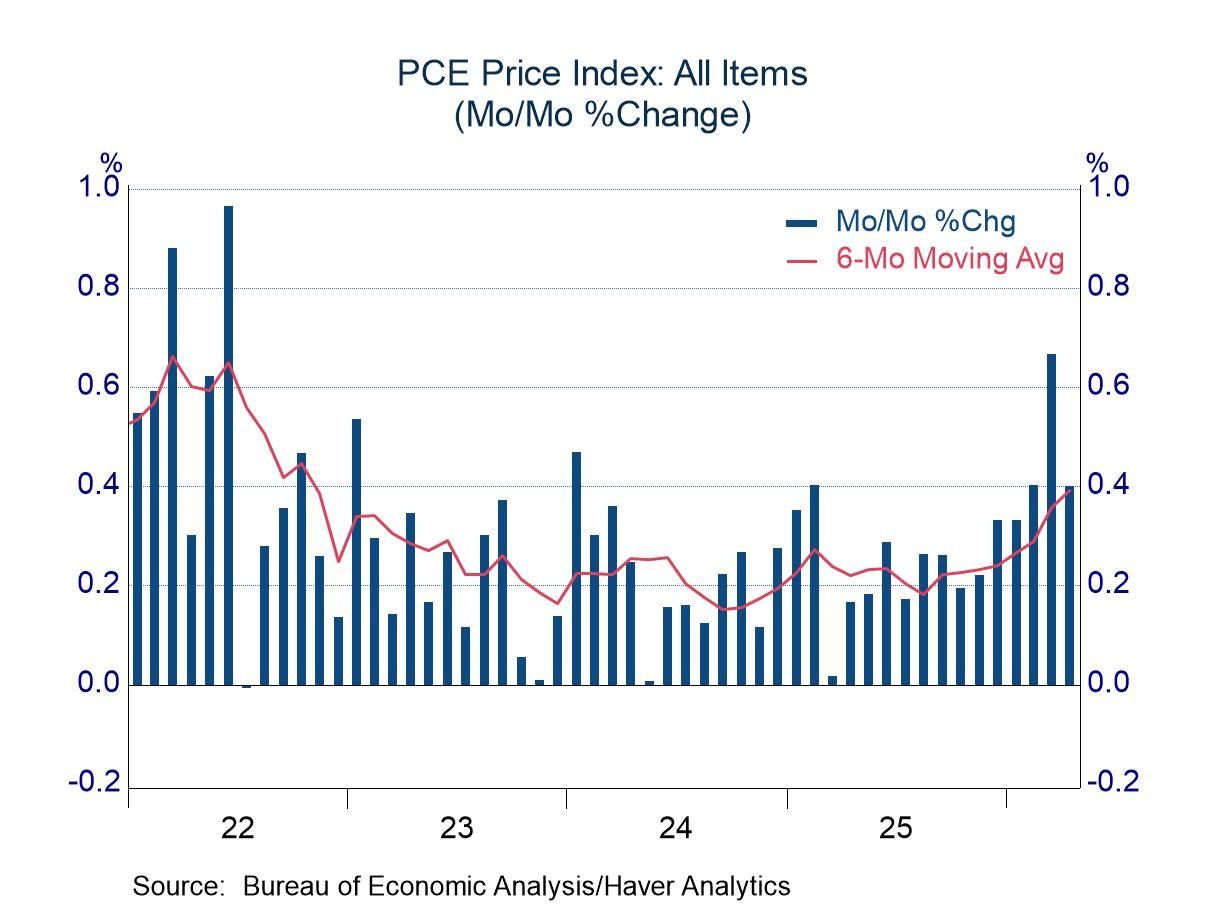
The price index for personal consumption expenditures rose 0.4% in April, marking the third consecutive month of rapid inflation (following two months of uncomfortable readings before the recent burst). The latest increase left the year-over-year inflation rate at 3.8%. The energy component again led the advance, with a jump of 3.9% in the latest month after a surge of 11.6% in March. Food prices also misbehaved in April, increasing 0.5%. The shift in food prices might be viewed as random, as it followed a dip of 0.1% in March. Still, the year-over-year increase of 2.5% was the quickest since late 2023.
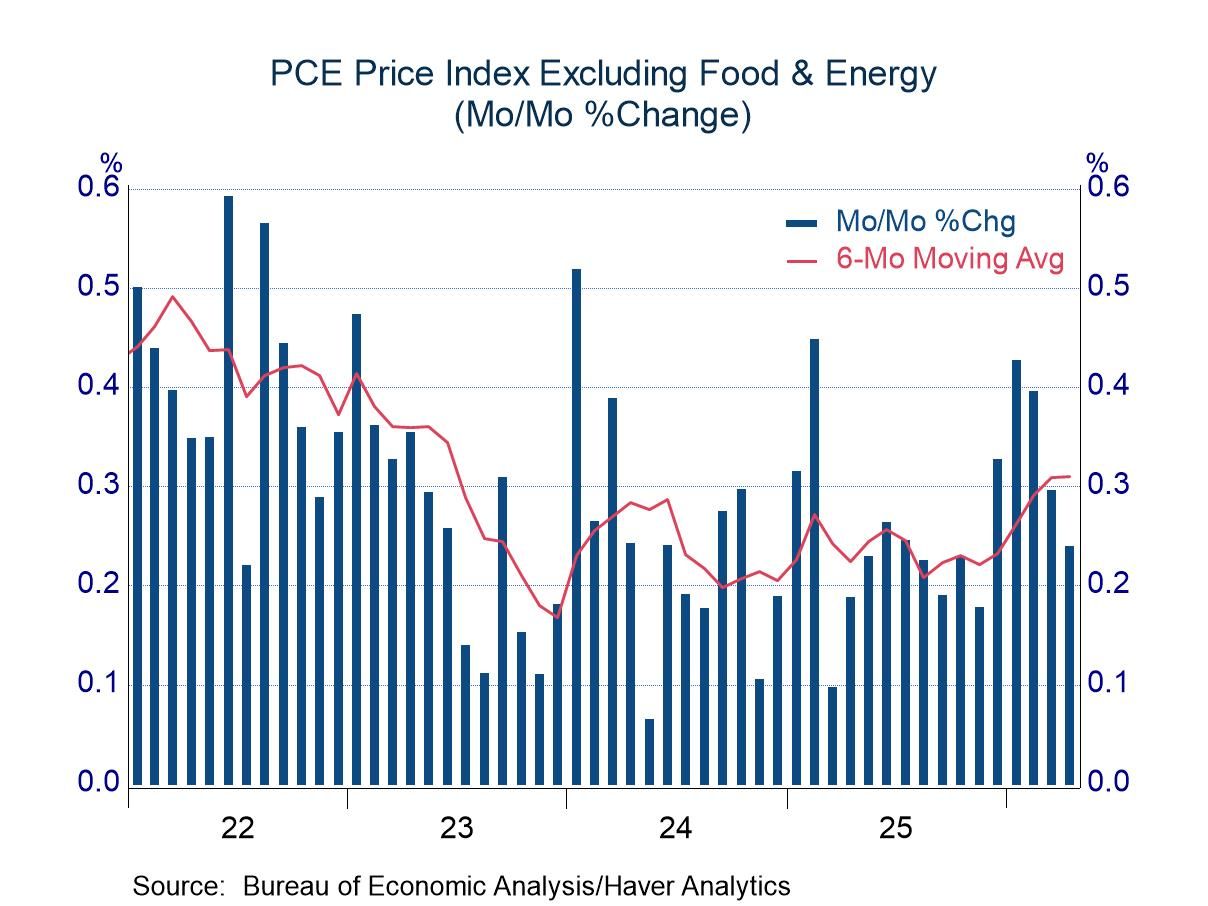
The core price index rose 0.2% in April, but it was not far from rounding up to 0.3% (0.239%). Also, the latest change followed increases of 0.3% or 0.4% in each of the preceding four months. All told, the year-over-year change in core prices totaled 3.3% in April, far above the desired pace of Federal Reserve officials.
Personal income showed no change in April, but the softness reflected random volatility in farm income (a decline of 54.8% from an elevated level in March, which was driven by government support payments). Excluding the farm component, personal income rose 0.2% in April. In most settings, an increase of 0.2% could be viewed as respectable, but with inflation stirring, the gain translated into a drop of 0.4% in real terms. This decline was not an isolated event, as real personal income has been essentially flat or down in six of the past seven months (chart, lower left).
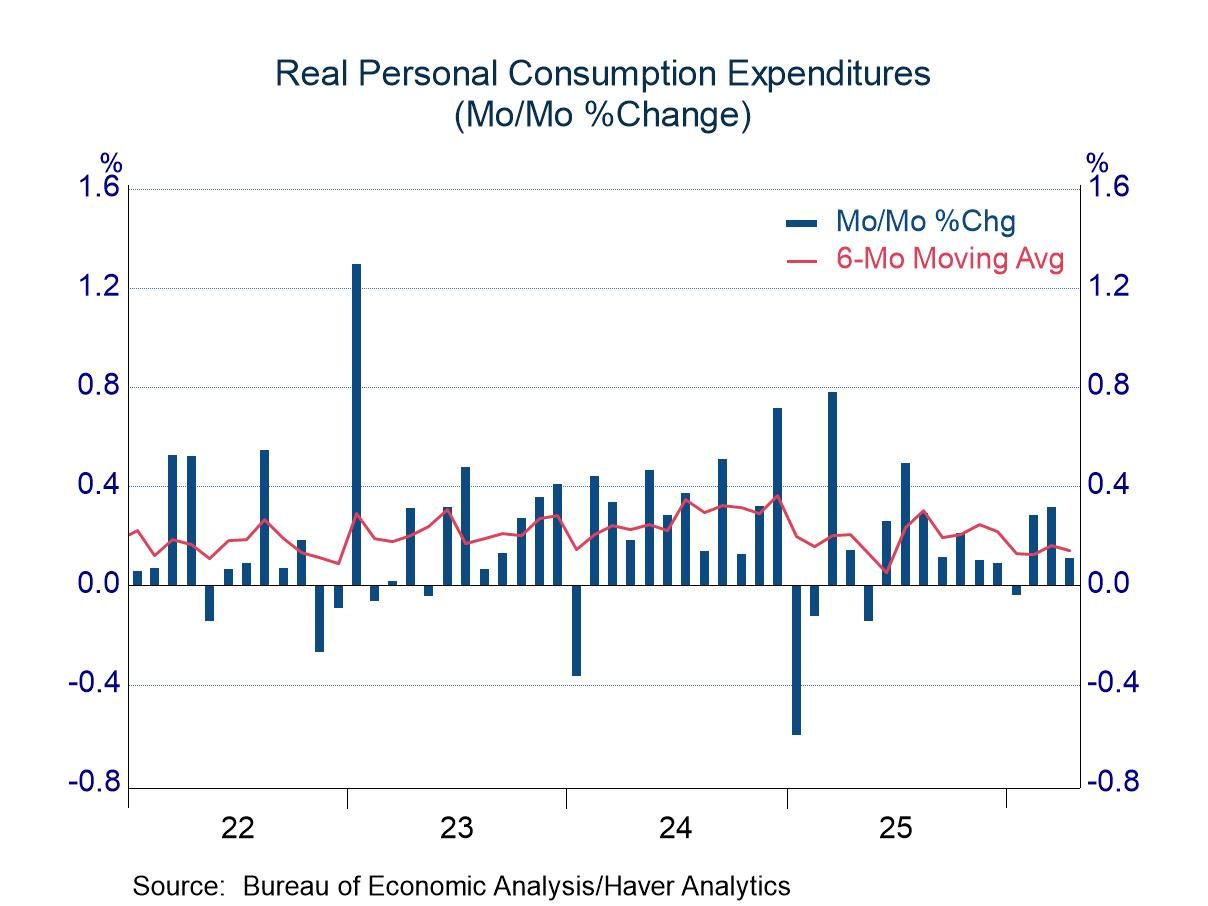
Despite the contraction in real income, consumers have not retrenched in a meaningful way. After growing 2.1% over the four quarters of 2025, real personal consumption expenditures rose 1.4% (annual rate) in the first quarter, and real outlays inched up 0.1% month to month in April. Relative to average real outlays in Q1, the April increase puts consumers on track for a gain of 1.5% to 2.0% in Q2.
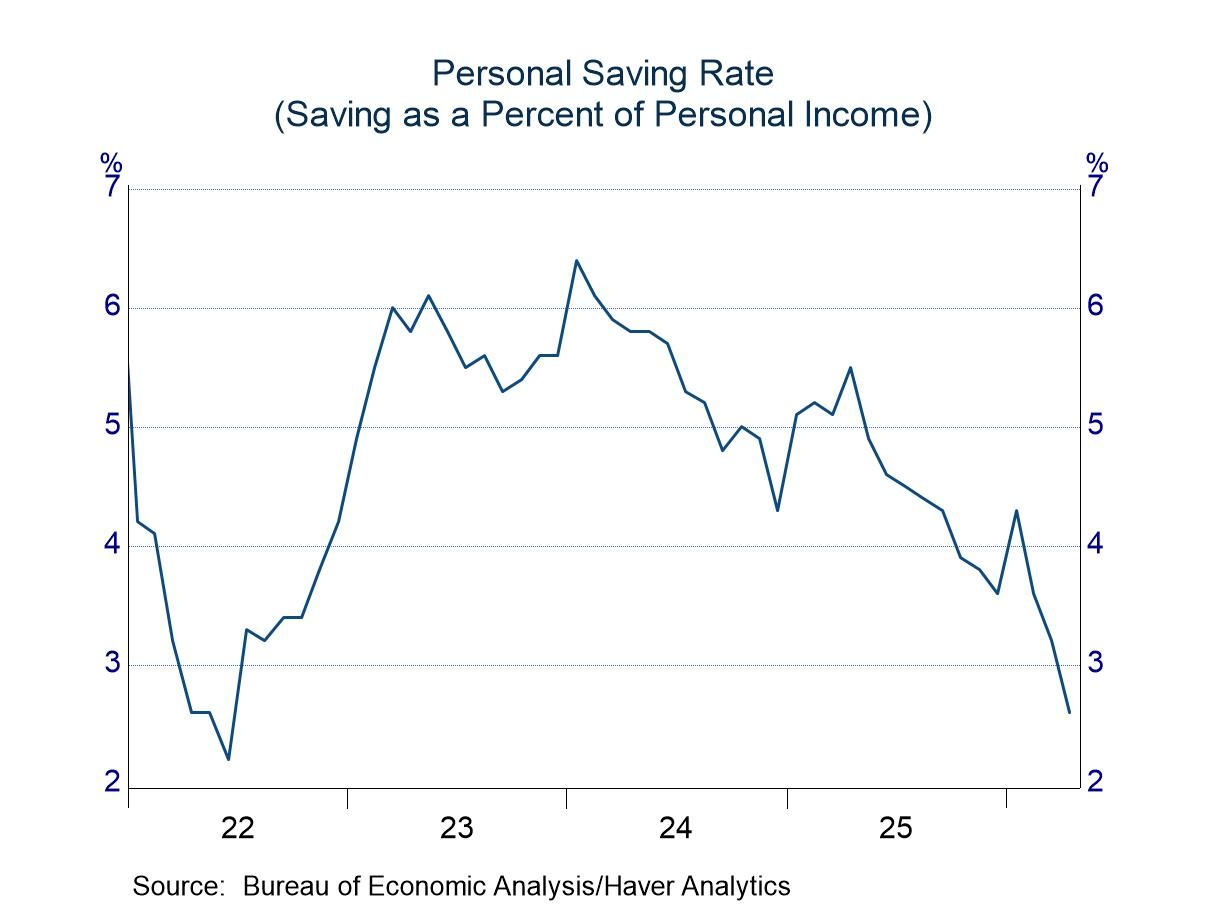
Without strong income support, recent spending by consumers has led to a marked decline in the personal saving rate (2.6% in April versus averages of 4.6% in 2025 and 5.4% in 2024; chart, lower right). Part of the resilience in consumer spending most likely reflects higher-than-normal tax refunds. Some of the tax cuts from the One Big Beautiful Budget Act became effective last year, but withholding schedules were not adjusted until this year, resulting in hefty refunds this tax season. This influence will most likely fade as the year progresses. Another influence, though, might be longer lasting: the robust stock market has boosted the financial standing of many households, reducing the need to save and opening the door to more active spending.
The personal income and consumption figures are available in Haver’s USECON database with detail in the USNA database. The Action Economics forecasts are in AS1REPNA.

Michael J. Moran
AuthorMore in Author Profile »Before joining Haver Analytics in 2025, Michael J. Moran was the chief economist of Daiwa Capital Markets America Inc. He was responsible for preparing the firm’s economic forecast and interest rate outlook. He traveled frequently to visit the clients of Daiwa Capital Markets and wrote weekly economic commentary. Mr. Moran also was involved in the flux of financial markets, as he spent a portion of each day on Daiwa’s trading floor interpreting economic statistics and Federal Reserve activity for traders and salespeople. Mr. Moran is quoted frequently in the financial press, and he appears regularly on cable news shows. He also has published articles in several journals and periodicals. Before joining Daiwa Capital Markets America, Mr. Moran worked as an economist at the Federal Reserve Board in Washington, D.C. where he analyzed a broad range of issues dealing with the financial sector of the economy and regularly briefed the Board of Governors. He was on the faculty of Pennsylvania State University from 1979 to 1980 and taught on a part-time basis at George Washington University from 1980 to 1987.
Mr. Moran received his Ph.D. in economics from Pennsylvania State University in 1980 and a B.S. in business administration from the University of Bridgeport in 1975. He was a CFA charter holder from 2002 until 2016.
More Economy in Brief
 Global