

Oil Prices, the General Price Level and Inflation
|in:Viewpoints
This note assesses how the surge in oil prices affects inflation and the general price level, and how the Fed may respond.
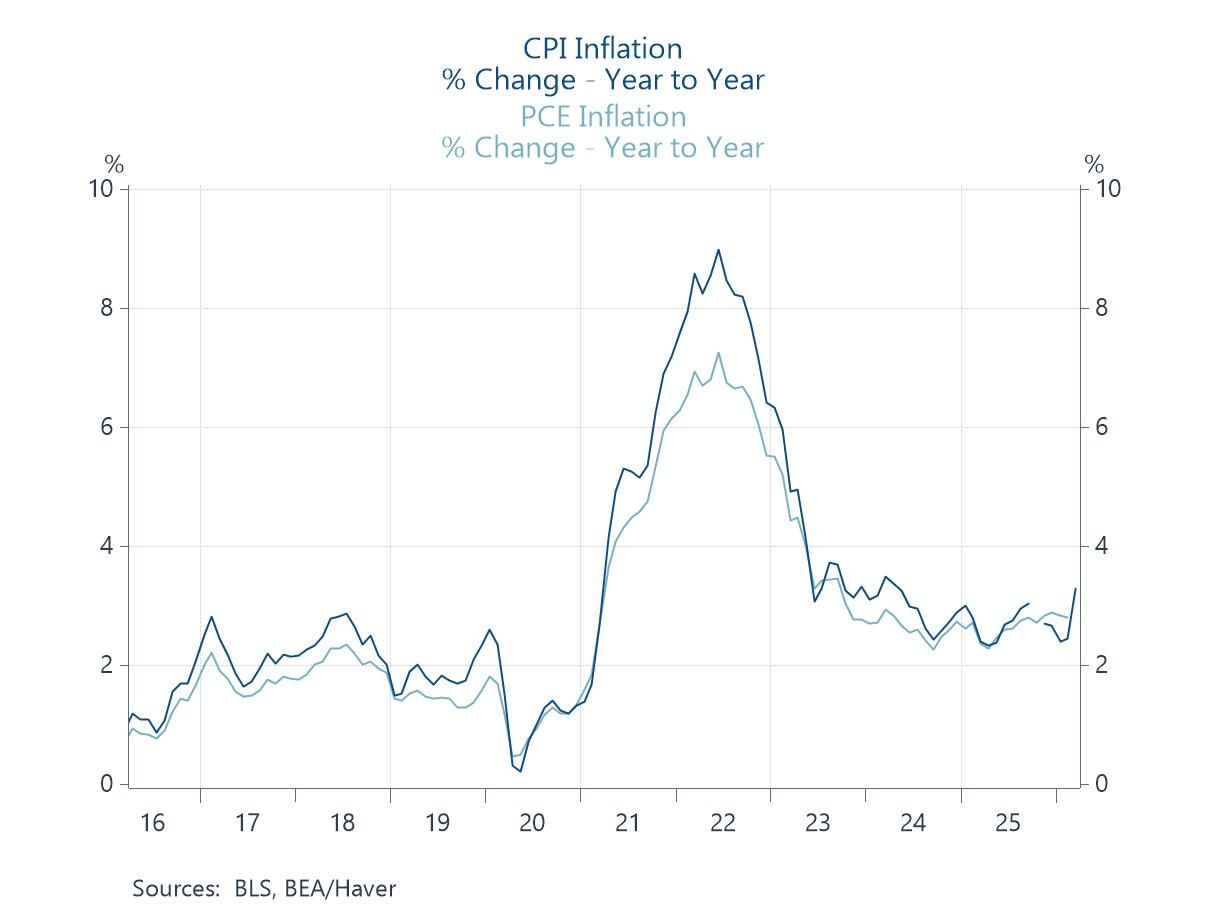
The general price level is the cost of a basket of goods and services in either the Consumer Price Index or the Personal Consumption Price Index. (For both baskets, the Bureau of Economic Analysis adjusts retail prices of goods and services for estimated changes in quality). Inflation measures the percentage increase in either the CPI or PCE Price Index; deflation measures the percentage decline in the index. Chart 1 shows the monthly percentage changes in the CPI and PCE Price Index in the last several years and Chart 2 shows the yr/yr change.
Chart 1. PCE and CPI Inflation, monthly % chg
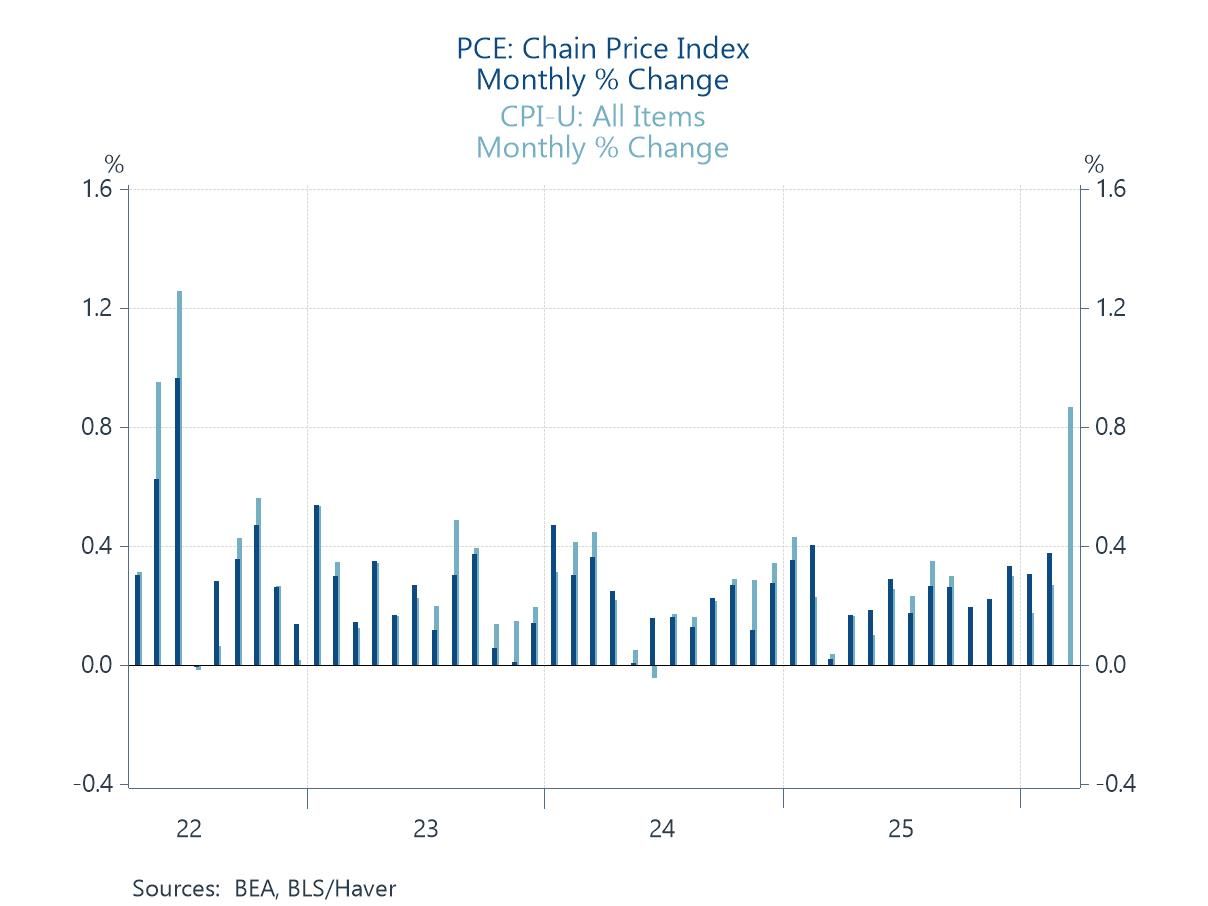
Chart 2. CPI and PCE Inflation, yr/yr %chg
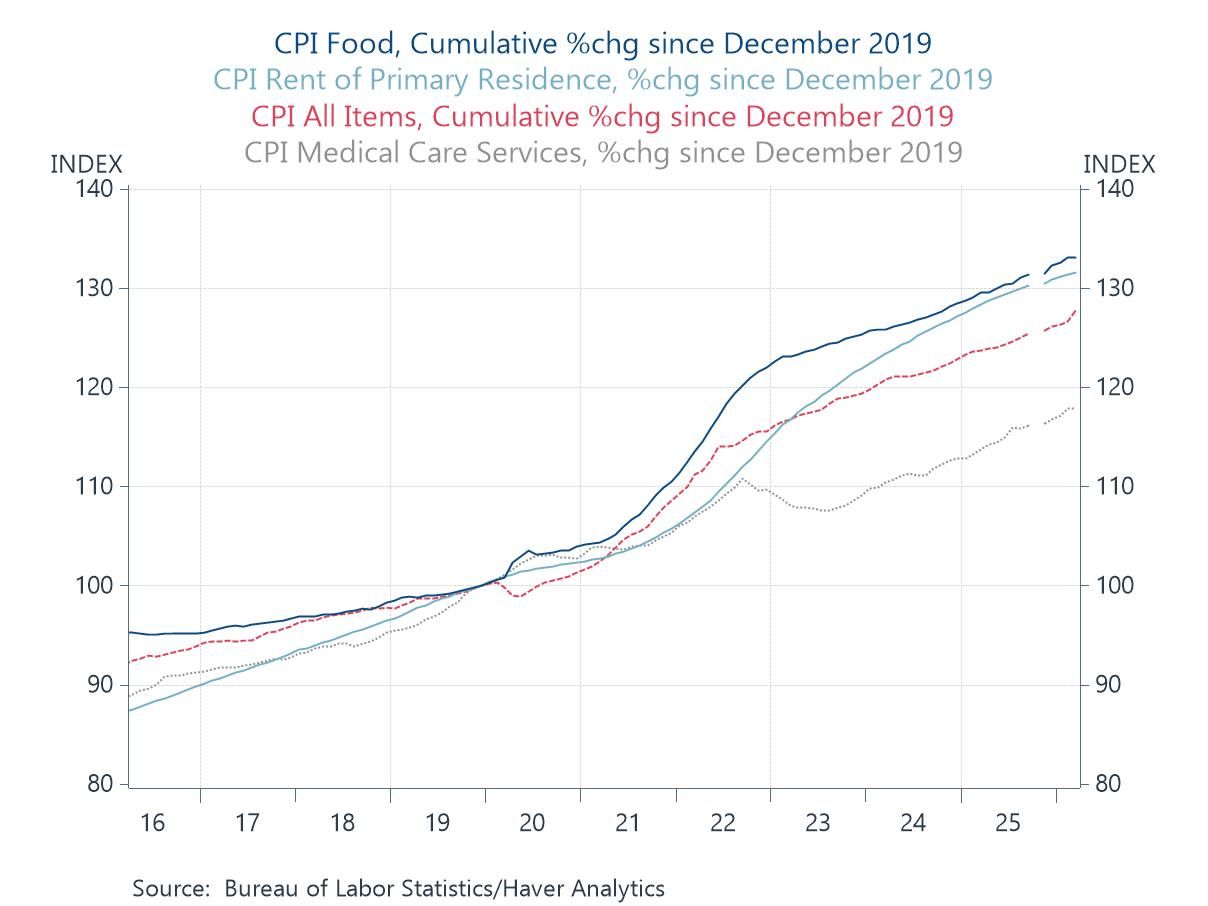
Changes in the indexes cumulate overtime: Chart 3 shows the cumulative percent changes in the CPI and selective components since December 2019. The CPI is up 27% since just before the Covid pandemic (while the PCE price Index is up 24%). During the same period, food prices are up 33%, rental costs up 31.6%, medical care services are up 17.8% and motor vehicle insurance is up 55%. Consumers relate more to prices they pay (adjusted for quality) while economists, financial markets and the Fed focus more on inflation and changes in inflation.
Chart 3. CPI and Components, Cumulative %chg since December 2019
PCE inflation was 2.8% yr/yr through February 2026 before the Middle East conflict began and oil prices spiked, and core PCE inflation excluding food and energy was 3.0%, while CPI inflation was 2.4% and 2.5% excluding food and energy. The Fed’s preferred measure of inflation is the PCE and it equates 2% PCE inflation to price stability. The CPI measures a narrower mix of goods and services than the PCE: by excluding goods and services that are paid for by third parties, including Medicare, Medicaid and employer-financed health insurance, it is the best measure of consumer out of pocket expenses. Basically, the CPI has a much heavier weighting of shelter costs--rental costs and OER--and a much lower weighting of health care services than the PCE. The rationale for the core measures of inflation is twofold: the food and energy components tend to be volatile, and earlier empirical research showed that core inflation (rather than headline inflation) is a more accurate predictor of future headline inflation (I have not seen any updated empirical research on this).
The surge in oil prices in response to the Middle East conflict that constrained global supplies of oil is a negative supply shock to the U.S. economy. The Fed is wisely deciding not to accommodate the oil shock: it kept rates unchanged at its March 17-18 FOMC meeting and is expected to remain on hold at its late-April FOMC meeting. As a result, the negative supply shock will temporarily generate higher monthly inflation data for several months as the higher oil prices are reflected in retail prices, after which the monthly inflation data will fall back to its pre-inflation trend. The negative supply shock will dent real economic activity. That is, nominal GDP growth will slow temporarily and a larger portion of it will be inflation and a smaller portion will be real.
Two major issues arise. First, how long is "temporary"? Second, if oil prices fall from their recent $95/barrel, what happens?
The oil price surge should boost the monthly CPI and PCE inflation data for 2-3 months. The CPI jumped 0.9% in March, reflecting the 21.3% surge in prices of energy commodities, while the core CPI was unaffected, rising 0.2%, on its prior path. PCE inflation data for March has not yet been released. Both should jump in April. Retail prices of energy--primarily gasoline and diesel--are adjusting very quickly to the rise in crude oil prices (“Oil Price Spike: Temporary Boost to Inflation, but for How Long?”, April 13, 2026). This suggests that the bulk of the impact of the oil price surge will be in March and April, with the residual in May. The higher oil prices have also pushed up business operating costs. However, slower aggregate demand resulting from the negative shock and hit to confidence will constrain the flexibility of businesses to raise prices on consumer products.
This “temporary” impact on inflation is not like the surge in inflation beginning in 2021. That episode of high inflation persisted despite the Fed's erroneous reference to it as a "transitory supply shock". No question, the Covid pandemic gummed up global supply chains and was a temporary negative shock to supply. However, unprecedented fiscal and monetary stimulus--a 25%+ increase in deficit spending, plus the Fed's zero interest rates and massive asset purchases (it effectively purchased approximately one-half of the increase in US Treasury bond issuance) generated the strongest acceleration of aggregate demand in modern U.S. history. The Fed somehow (purposely?) chose to ignore its role in generating the surge in aggregate demand and inflation, instead blaming it on a transitory supply shock. If the Fed had accommodated the current oil price shock by lowering rates, stronger aggregate demand could have transformed a temporary inflation into a more permanent one. But the Fed has wisely decided to avoid past mistakes.
If oil prices stay near recent elevated levels, once the temporary impacts of the oil shock work their way through the monthly inflation data, the monthly increases will settle back to their prior pace, but along a higher channel. Their yr/yr inflation measures will reflect several months' of big increases and gradually decelerate toward its pre-shock rate. The general price level will remain higher than where it would have been absent the higher oil prices.
However, if oil prices fall from their recent peak, subsequent months' CPI and PCE Price Index data will actually decline to reflect lower retail prices of energy, and the temporary months of deflation will reduce the general price level from its oil price-driven peak. If oil prices fall all of the way back to their pre-conflict level of $65/bbl--which seems doubtful since markets are expected to build in a risk premium even if global oil markets settle down--then the months of decline in the CPI and PCE Price Index (deflation) will largely offset their temporary spikes, and the price indexes will recede their pre-oil price spike paths.
It is noteworthy that market-based inflationary expectations have risen only very modestly in response to the surge in oil prices and CPI inflation. This reflects expectations that oil prices will recede back toward their pre-crisis level (as oil price futures markets are predicting) and the Fed's credibility that it will continue to pursue its long-run target of 2% inflation.
Outlook for the Fed. Kevin Warsh will assume his role as Chair of the Federal Reserve as these trends and the impact of the Middle Wast conflict on the economy and labor markets are sorting. Prior to the oil price shock, Fed members were saying that further rate cuts would be appropriate, and the futures market had priced in rate cuts. Since the oil price spike, the Fed has spoken about the need to be prudent while the futures markets have delayed expectations of a rate cut until later in 2026.
Warsh is like an old-fashioned conservative central banker who understands that the Fed must pursue monetary policy that achieves 2% inflation and maximum employment, and that the oil price shock impact on inflation is temporary. Warsh also has a practical nature. If all goes well and the monthly inflation data simmer following their temporary jump in March-April-May while the weakness in labor markets is accentuated by the oil shock, then it seems likely that the Warsh-led Fed may justify the need to ease earlier than the market now expects.

Mickey D. Levy
AuthorMore in Author Profile »Mickey Levy is a macroeconomist who uniquely analyzes economic and financial market performance and how they are affected by monetary and fiscal policies. Dr. Levy started his career conducting research at the Congressional Budget Office and American Enterprise Institute, and for many years was Chief Economist at Bank of America, followed by Berenberg Capital Markets. He is a Visiting Fellow at the Hoover Institution at Stanford University and a long-standing member of the Shadow Open Market Committee.
Dr. Levy is a leading expert on the Federal Reserve’s monetary policy, with a deep understanding of fiscal policy and how they interact. He has researched and spoken extensively on financial market behavior, and has a strong track record in forecasting. Dr. Levy’s early research was on the Fed’s debt monetization and different aspects of the government’s public finances. He has written hundreds of articles and papers for leading economic journals on U.S. and global economic conditions. He has testified frequently before the U.S. Congress on monetary and fiscal policies, banking and credit conditions, regulations, and global trade, and is a frequent contributor to the Wall Street Journal.
He is a member of the Council on Foreign Relations and the Economic Club of New York, and previously served on the Panel of Economic Advisors to the Federal Reserve of New York, as well as the Advisory Panel of the Office of Financial Research.
Dr. Levy holds a Ph.D. in Economics from University of Maryland, a Master’s in Public Policy from U.C. Berkeley, and a B.A. in Economics from U.C. Santa Barbara.
 Asia
Asia