New Home Sales: Improvement in June, but a Still-Soft Performance
Summary
- Respectable advance in the latest month…
- …and net upward revisions in the prior three months
- …but still trailing results in the prior three months
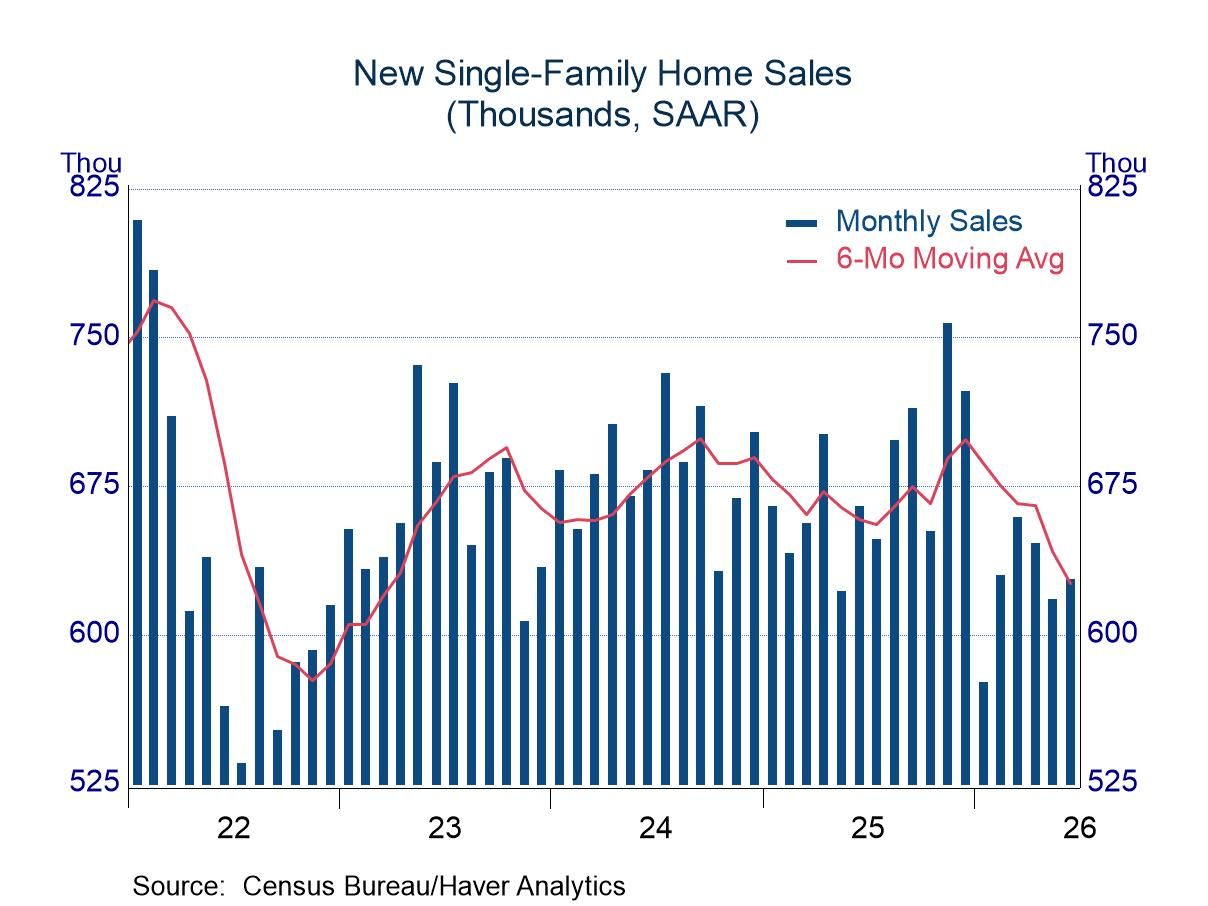
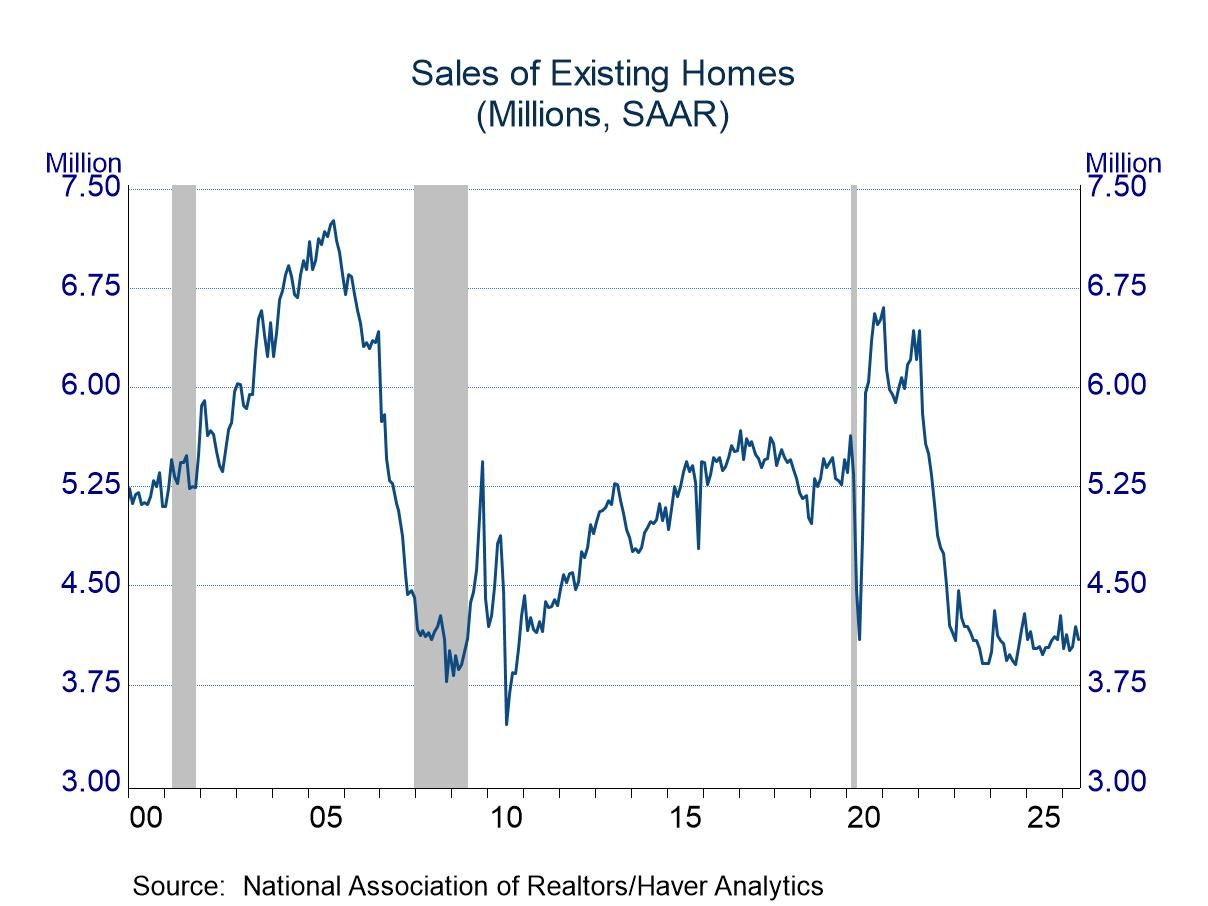
Sales of new homes rose 1.6% in June, and results in the prior three months were revised upward by a combined 2.8%. The results were favorable when viewed in isolation, but they still left the performance so far this year lagging that in the prior three years. Annual sales from 2023 to 2025 averaged 676,000 units; the average annual rate so far this year has totaled 626,000 (chart, upper left).
Not only are results this year lagging those of the prior three years, but they are light relative to the experience in the 1990s (a period not affected by the inflating and bursting of a housing bubble, and one not influenced by a pandemic). New home sales in the latter portion of that decade topped 800,000. With the number of households now much larger than at that time (133 million versus approximately 100 million), one might expect current sales to be at least as firm as in that earlier period.
Developments in the existing home market also would lead one to expect strong results in the new home market. Many homeowners with low-rate mortgages have postponed or cancelled plans to move in order to retain their attractive financing. This has led to a dearth of existing homes for sale and pushed activity to a dreadfully low level – the lowest since the trough that followed the bursting of the housing bubble (chart, upper right). Aspiring homeowners could turn to the new home market to satisfy their demand, but uninspiring sales of new homes suggest that such shifts have not been pronounced.
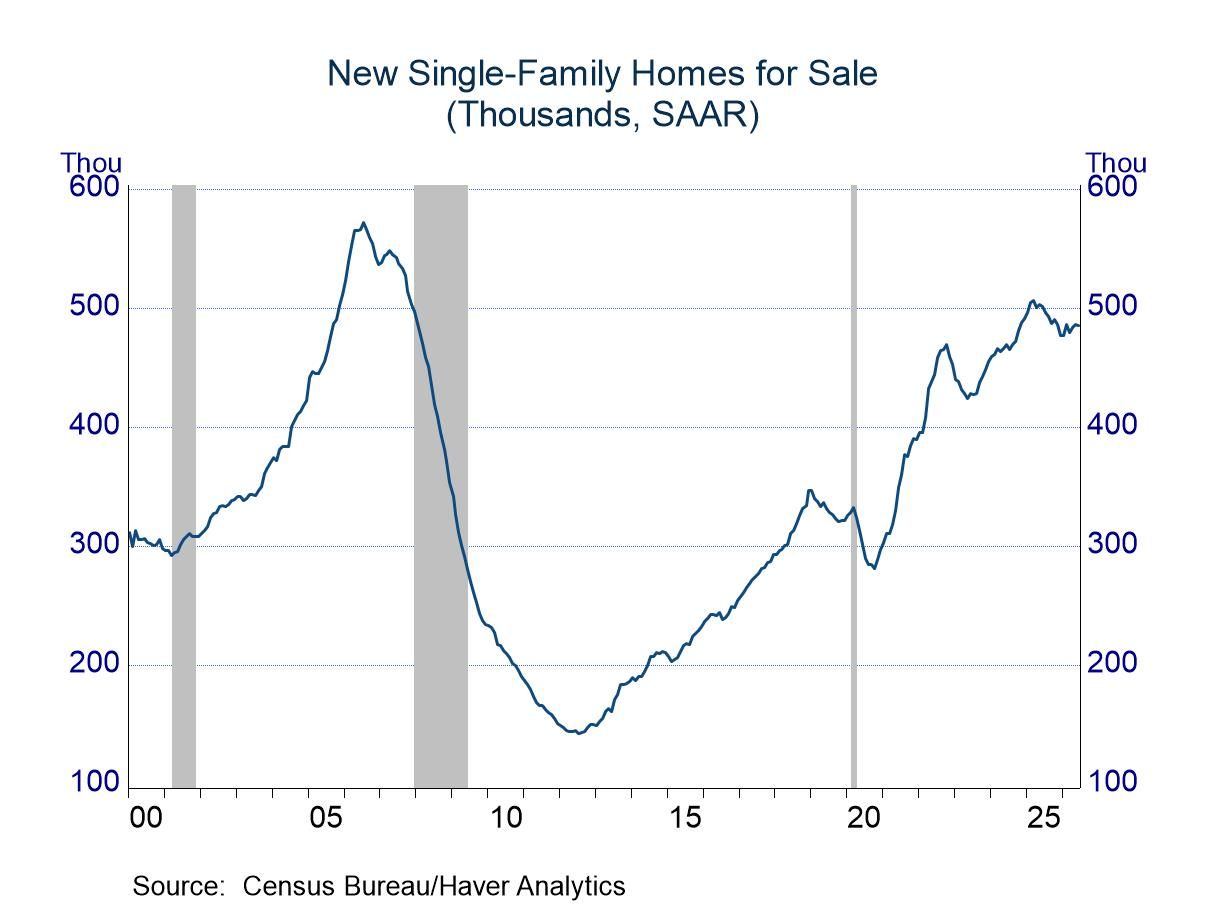
The supply of new homes on the market does not seem to be a factor in restraining activity, as the number of homes for sale is in the upper reaches of the historical experience. The number of listings at the peak of the housing bubble in 2006 was notably larger, but otherwise, observations in the past year exceed previous results by a sizeable margin (chart, lower left). The months’ supply of homes (the length of time to clear inventory at the current sales pace) also is in the upper portion of its historical range.
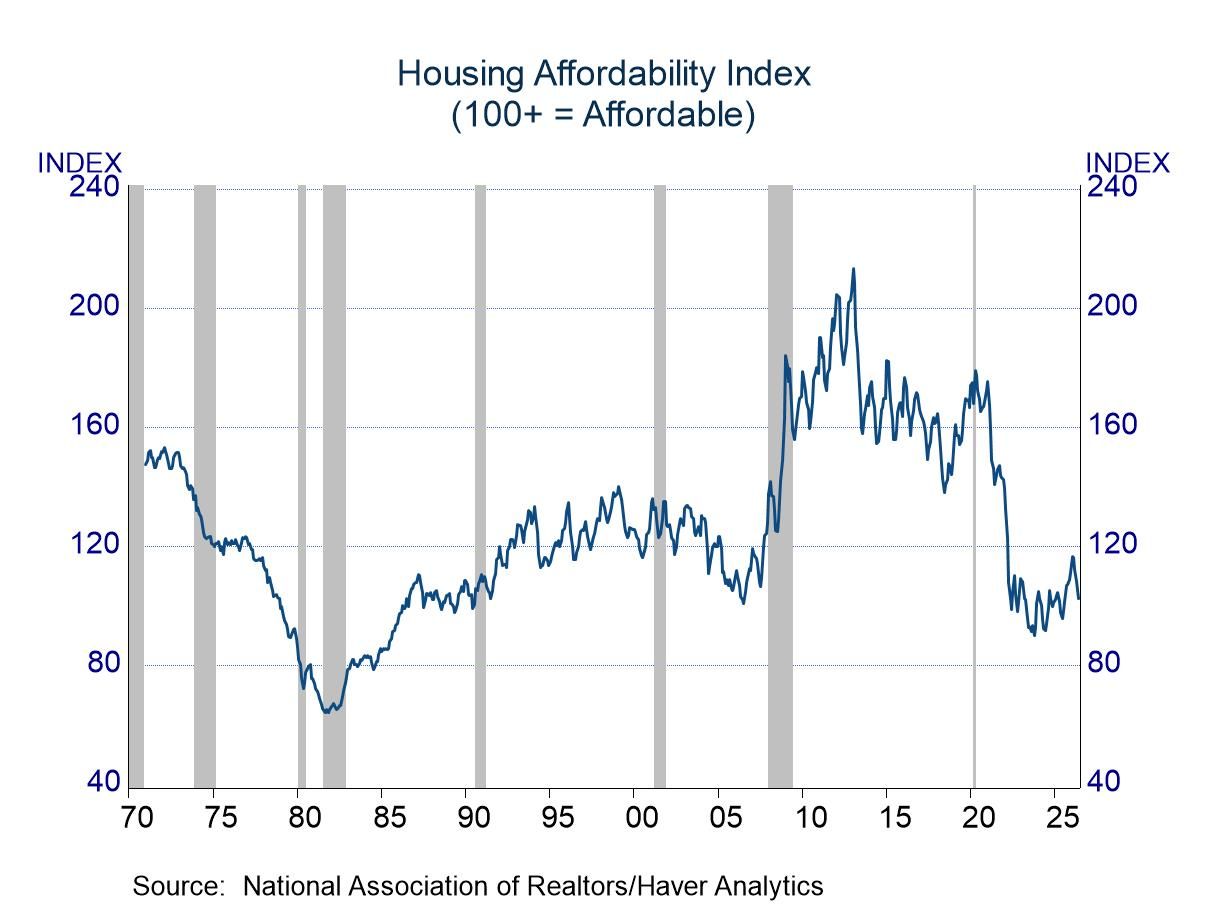
Soft demand seems to explain recent results, with affordability being the key consideration. The housing affordability index published by the National Association of Realtors has moved to the low portion of its historical range. Indeed, the only time with lower readings was in the late 1970s and 1980s, when double-digit mortgage rates pushed the measure to its record low (chart, lower right). With housing costs joining other financial challenges (health care, child care, education), housing activity is lacking vigor.
New home sales are recorded when the sales contract is signed. New home sales activity and prices are available in Haver's USECON database. The consensus expectation figure from Action Economics is available in the AS1REPNA database.

Michael J. Moran
AuthorMore in Author Profile »Before joining Haver Analytics in 2025, Michael J. Moran was the chief economist of Daiwa Capital Markets America Inc. He was responsible for preparing the firm’s economic forecast and interest rate outlook. He traveled frequently to visit the clients of Daiwa Capital Markets and wrote weekly economic commentary. Mr. Moran also was involved in the flux of financial markets, as he spent a portion of each day on Daiwa’s trading floor interpreting economic statistics and Federal Reserve activity for traders and salespeople. Mr. Moran is quoted frequently in the financial press, and he appears regularly on cable news shows. He also has published articles in several journals and periodicals. Before joining Daiwa Capital Markets America, Mr. Moran worked as an economist at the Federal Reserve Board in Washington, D.C. where he analyzed a broad range of issues dealing with the financial sector of the economy and regularly briefed the Board of Governors. He was on the faculty of Pennsylvania State University from 1979 to 1980 and taught on a part-time basis at George Washington University from 1980 to 1987.
Mr. Moran received his Ph.D. in economics from Pennsylvania State University in 1980 and a B.S. in business administration from the University of Bridgeport in 1975. He was a CFA charter holder from 2002 until 2016.
More Economy in Brief
 Global