Haver Analytics
Haver Analytics

Featured Data Additions: March 2026

  • EMERGECWRomania → Prices → BNR Inflation Target and Forecast → Financial Market Projections

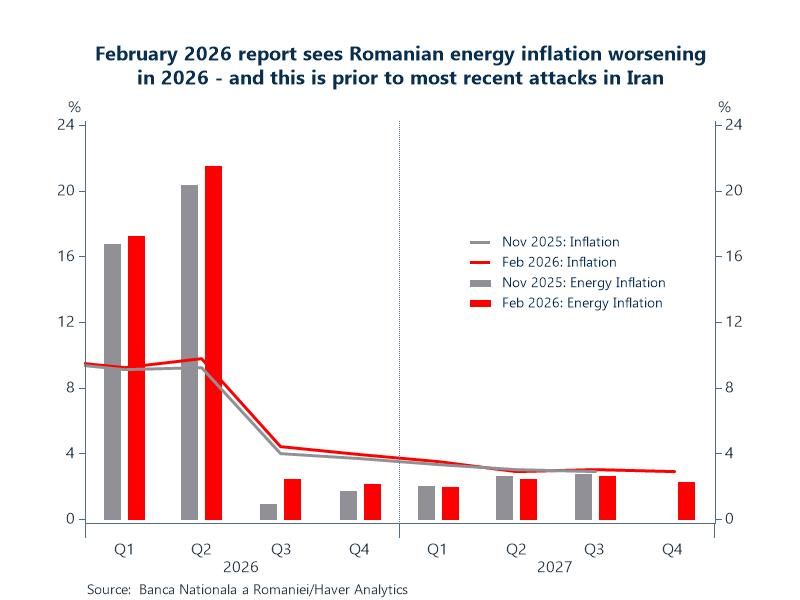
    Quarterly forecasts for Romania were added to the EMERGECW database. These series have a forecast horizon of 2 years and include series for overall inflation, core inflation, fuel, energy, food and administered prices. Also included are inflation target forecasts and forecast uncertainty for CPI, both with upper and lower bounds. These data are sourced from the National Bank of Romania and start in Q4 2023.

    Chart: Since the November 2025 report, overall inflation forecasts for 2026 in Romania worsened from a quarterly average of 6.5% to 6.8% in the February 2026 report. Energy inflation increased almost a full percentage point for 2026 from a quarterly average of 9.9% to 10.8%. Note that the February report was released a full 10 days prior to the February 28 attacks on Iran, so it will be interesting to see how these forecasts change when the National Bank of Romania updates them in May.

  • CANADA → Financial → Debt Securities by Sector, Currency, Maturity, Type of Interest Rate

    Over 5,000 series relating to Canadian debt securities issues were added to CANADA. Detail is available by sector (private vs public), currency (C$ vs foreign currency), maturity (ST vs LT), type of interest rate (fixed vs variable) and market of issuance (domestic vs foreign). These quarterly data are sourced from Statistics Canada and start in Q1 2012.

    Chart: The stock of Canadian debt securities, in book value terms, reached $6,321 billion at the end of Q3, up $127 billion from the previous quarter. By sector of issuer, the stock issued by governments was the highest, at $2,822 billion, followed by financial corporations ($2,580 billion) and non-financial corporations ($919 billion). The government sector became the main borrowing sector starting in Q1 2021, a period marked by strong borrowing needs related to the COVID pandemic.

  • EMERGEPRPhilippines → Public Finance and Debt → Holders of Onshore Government Securities

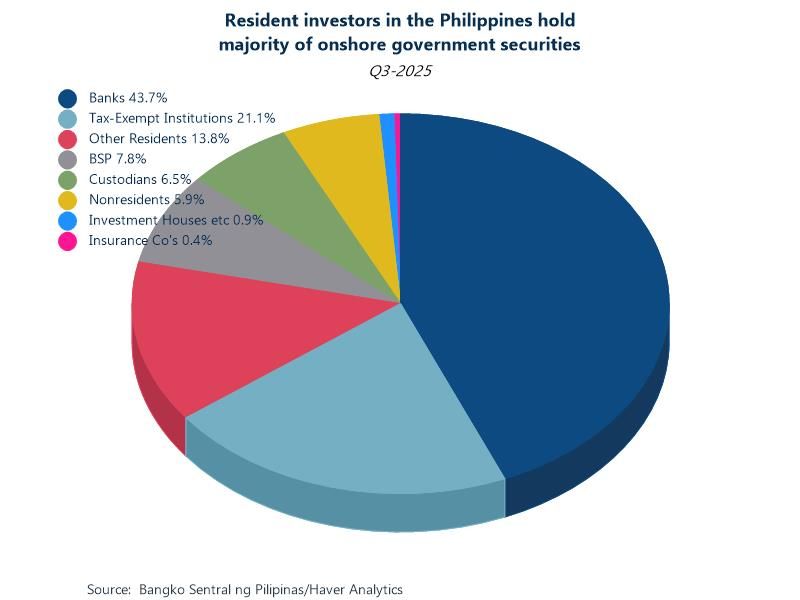
    Ownership of onshore government securities statistics for the Philippines were added to EMERGEPR. Onshore securities are issued within the Philippines in Pesos targeting the domestic investor base. These series are reported as percentage shares of the total and cover the major holders. Quarterly data are sourced from the Central Bank of the Philippines and start in Q2 2022.

    Chart: As of the end of September 2025, foreign holdings of onshore peso government securities rose to 5.9% from 5.1% at the end of Q2 2025. These percentages are significantly higher than only two years ago when the share was 1.7%. Meanwhile, resident investors held the remaining 94.1% of onshore government securities, with banks holding the largest share at 43.7%, followed by tax-exempt institutions (21.1%), other residents (13.8%), and the Central Bank of the Philippines (7.8%).